Destinations / Europe
Tarifa, Spain travel guide
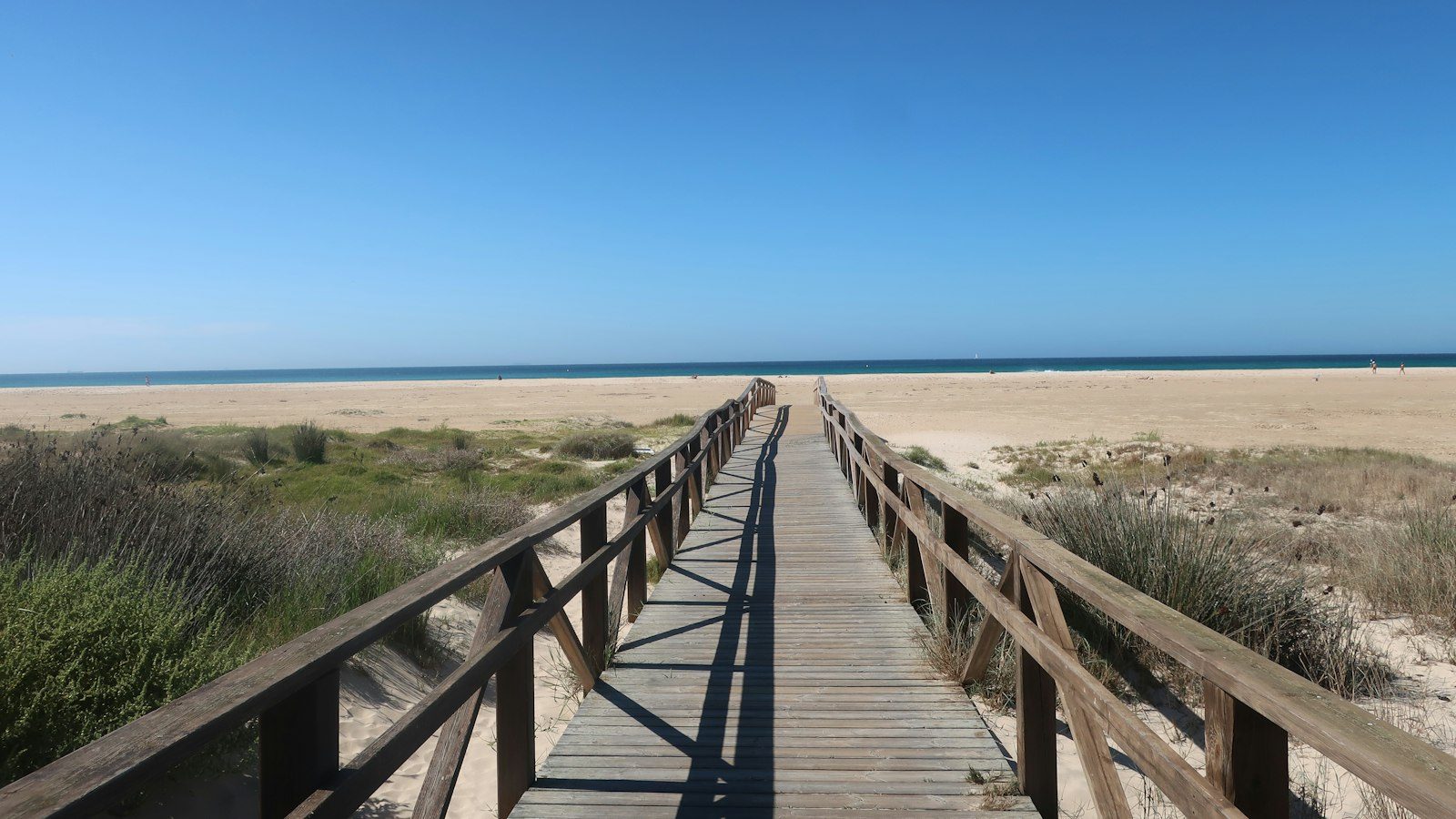
A whitewashed walled town at the southern tip of mainland Spain, with Morocco just 14km across the water. You learn to kitesurf on long Atlantic beaches, watch dolphins in the Strait and take the ferry to Tangier for the day.
- Best time to visit: May to June and September to October
- Daily budget (budget traveller): $75 to $240 USD
- Ideal trip length: 4 to 7 days
Tarifa sits at the southern tip of mainland Spain, where the Mediterranean meets the Atlantic and Africa is close enough to see the houses in Morocco on a clear day. It is about 22km west of Algeciras and roughly three hours by bus from Seville. The old town is small and walled, with a Moorish gate, a 10th-century castle and narrow white lanes full of tapas bars, surf shops and late-night cafés. The thing everyone talks about is the wind. The levante from the east and the poniente from the west blow for much of the year, and that has made Tarifa one of Europe's big kitesurfing and windsurfing centres. Outside town, a string of wide, wild beaches runs north-west to Valdevaqueros, the huge sand dune at Punta Paloma and the Roman ruins at Bolonia. You can also go whale watching in the Strait or take a one-hour ferry to Tangier. Summer is crowded and rooms get expensive, and the wind can blow sand in your face for days. Even so, a hostel bed, cheap tapas, free beaches and an easy social scene make it a very good place to travel alone.
Tarifa is the southernmost town in mainland Europe, a compact walled settlement of around 18,000 people looking straight across the Strait of Gibraltar to Morocco. The Moors held it for centuries, and you can still see their legacy in the castle, the gate into the old town and the maze of white lanes inside. Today it is better known for wind than for history. Steady levante and poniente winds turned it into one of Europe's kitesurfing capitals, and the long beaches west of town fill with colourful kites much of the year. Most visitors come in July and August. Arrive in May, June or September instead and you get warm days, quieter beaches, cheaper rooms and the same easy-going surf-town mood. Tarifa is not cheap in summer, but hostel beds, tapas, free beaches and plenty of other solo travellers make it a good place to be alone.
Getting here takes a little planning, as there is no train. Comes buses run from Algeciras, which has a rail link to Madrid and Granada, and direct services come from Seville, Cádiz and Málaga. The nearest airports are Gibraltar, Jerez, Málaga and Seville. Once you are here, the old town, the port and the start of Los Lances are all within walking distance. For the kite beaches at Valdevaqueros, the Punta Paloma dune and Bolonia, you will need a bike, a car, a scooter or a taxi, as buses are limited. Base yourself in the old town for bars and atmosphere, or along Los Lances if you are here mainly to kite.
Timing and wind shape every day. Late spring and early autumn are the best all-round months, with warm sea, good wind for lessons and fewer crowds. July and August bring orcas in the Strait, beach parties and peak prices. In winter the town quietens down, some beach places close and storms roll in, but it stays mild and the light is lovely. Most people speak some English, especially in kite schools and hostels. The evenings run late in the Spanish way, with dinner from 9pm and bars busy until well after midnight. If the wind blows too hard on the beach one day, take the ferry to Tangier and come back for sunset.
Tarifa itinerary
Arrive and find your feet
Morning: Take a morning bus from Seville or Algeciras. Drop your bag and walk in through the Puerta de Jerez for a coffee at Café Central.
Afternoon: Wander the old town lanes and walk out along the causeway towards the Isla de las Palomas. Swim at Playa Chica if the wind allows.
Evening: Watch the sun set over the Strait from Plaza del Viento, then make a slow tapas crawl with tortillitas de camarones and a fino.
Castle and whales
Morning: Visit the Castillo de Guzmán el Bueno (about €4) and climb the towers for views of Morocco. Look into the Church of San Mateo on the way back.
Afternoon: Take a two-hour whale and dolphin trip from the port (about €35-50). Check in the night before, as departures depend on the sea.
Evening: Dinner of bluefin tuna in the old town, then a drink in one of the lanes around Calle Sancho IV el Bravo.
Kite lesson and Valdevaqueros
Morning: Take your first kitesurfing lesson at Los Lances or Valdevaqueros. If the wind is wrong, swap the day with day 4.
Afternoon: Lunch at a beach bar, then climb the Punta Paloma dune for the view over the bay full of kites.
Evening: Stay for sunset with a drink at Valdevaqueros, then take a taxi back to town.
Bolonia and Baelo Claudia
Morning: Head west to Bolonia by car, bike or taxi. Explore the Roman ruins of Baelo Claudia early, before the heat (closed on Mondays).
Afternoon: Fish lunch in the village, then swim in the clear bay and climb the Bolonia dune. Walk towards the Camarinal lighthouse if you have energy.
Evening: Back in Tarifa for a quiet dinner. Check the ferry times for tomorrow and pack your passport.
A day in Tangier
Morning: Catch an early fast ferry to Tanger Ville (about an hour, roughly €40-45 each way). Walk up from the port into the medina and the Kasbah.
Afternoon: Lunch in the medina, then mint tea with sea views at Café Hafa. Change only a little money into dirhams.
Evening: Take a late afternoon ferry back. Remember the time difference and allow time for passport checks at the port.
Gibraltar or a rest day
Morning: Take a Comes bus to La Línea (about an hour) and walk across the border into Gibraltar. Bring your passport and check the current border arrangements.
Afternoon: Ride the cable car or walk up the Rock to see the apes and the views of two continents. Gibraltar uses the pound, but euros are widely taken.
Evening: Bus back to Tarifa and a farewell dinner with tuna and sherry in the old town.
Slow morning and depart
Morning: Have a last swim at Playa Chica or a walk along Los Lances before breakfast.
Afternoon: Pick up some tuna in oil or local cheese for home, then catch an afternoon bus to Seville, Algeciras or Málaga. Book your ticket online the day before.
Evening: Arrive in Seville or carry on to your next stop.
Best neighbourhoods
- Old town (casco antiguo): The walled centre behind the Puerta de Jerez, with the castle, the Church of San Mateo, small squares and most of the tapas bars. It is lively and atmospheric, and Playa Chica and the port are a few minutes away on foot. Bars stay open late in summer, so ask for a quiet room if you sleep lightly.
- Batalla del Salado and the new town: The modern streets just north of the old walls, around Calle Batalla del Salado, where you find the bus stop, supermarkets, surf shops and cheaper apartments. It is less pretty but practical, and the old town and the start of Los Lances beach are both within 5 to 10 minutes' walk.
- Los Lances: The long town beach stretching north-west from the edge of Tarifa, backed by hotels, apartments and beach bars. It is the best base if you want sand on your doorstep and kite schools nearby. When the levante blows hard, the sand flies, so check the forecast before you book a beachfront room.
- Valdevaqueros and the N-340 coast: The kite strip about 10km north-west of town, with campsites, surf hotels, beach bars and the big Punta Paloma dune. It is the place for wind sports and sunsets with a drink in hand. You really need a car, a bike or taxis, as buses are limited.
- Bolonia: A small village about 20km west, on a wide bay with clear water, a giant dune and the Roman ruins of Baelo Claudia. It is calm, beautiful and much quieter than Tarifa. There are a few guesthouses and fish restaurants, but public transport is very limited, so it suits people with a car or a night or two to spare.
Must-do experiences
- Walk the old town walls and the castle: Enter through the Puerta de Jerez and wander the white lanes to the Castillo de Guzmán el Bueno, first built in the 10th century. Adult entry is about €4. Climb the towers for views over the port and across the Strait to the Rif mountains in Morocco.
- Take a kitesurfing lesson: Tarifa is one of the best places in Europe to learn. Dozens of schools at Los Lances and Valdevaqueros run group and private lessons, and a three-day beginner course costs roughly €250 to €350. Lessons depend on the wind, so stay flexible.
- Go whale and dolphin watching: Boats leave the port for two-hour trips into the Strait, where common dolphins and pilot whales live all year. Standard adult tickets cost around €35 to €50, and longer orca trips in July and August cost about €70. Trips are cancelled in rough seas.
- Stand at the southern tip of Europe: Walk the causeway between Playa Chica and Los Lances towards the Isla de las Palomas, the southernmost point of continental Europe. The Mediterranean is on one side and the Atlantic on the other. The island itself is military land and usually closed.
- Climb the Punta Paloma dune: A huge white sand dune has spilled over the pine woods at the north end of Valdevaqueros. Climb it barefoot for the view over the bay and the kites, then run down to the beach. Go late in the afternoon, and expect stinging sand if the levante is blowing.
- Explore Baelo Claudia and Bolonia: The Roman fish-salting town of Baelo Claudia sits right on the beach at Bolonia, with a forum, temples, a theatre and garum factories. Entry is free for EU citizens and €1.50 for everyone else, and it is closed on Mondays. Afterwards, swim in the bay and climb the dune.
- Day trip to Tangier: Fast ferries cross from Tarifa port to Tanger Ville in about an hour, landing right below the medina. Walk-on fares are roughly €40 to €45 each way. Bring your passport, and remember Morocco is an hour behind Spain in summer.
Hidden gems
- Plaza del Viento on Calle Aljaranda, a small viewpoint on the old walls where you can look straight across to Africa
- Playa Chica, the tiny sheltered beach by the causeway, which is often the calmest place to swim when the wind is howling elsewhere
- The Mirador del Estrecho on the N-340 east of town, a roadside viewpoint with one of the widest views of the Strait and the Moroccan coast
- The Cazalla bird observatory near town, where from August to October you can watch thousands of storks and raptors crossing to Africa
- The walk from Bolonia to the Camarinal lighthouse and the rocky coves beyond, which feels a world away from the busy kite beaches
Daily budget
- Accommodation: budget €25-55 / night (hostel dorm), mid-range €90-170 (old town guesthouse or 3-star hotel), splurge €250+ (boutique hotel or beachfront hotel in summer). Prices roughly double in July and August. Single rooms are scarce, so book early. Beachfront hotels on the N-340 add taxi costs.
- Food: budget €20-30 / day (toast breakfast, tapas lunch, supermarket picnic), mid-range €40-65 (café breakfast, tapas and a sit-down dinner), splurge €90+ (bluefin tuna tasting menu with wine). Tapas cost around €3-6 each and mains €14-25. Bluefin tuna dishes cost more. Prices are rough guides.
- Transport: budget €0-10 / day (walking, a cheap bus), mid-range €15-35 (bike hire or taxis to the beaches), splurge €50-80 (car hire in summer plus fuel and parking). Seville to Tarifa by bus is around €26. The Tangier ferry is roughly €40-45 each way. A taxi to Bolonia is about €35-50.
- Activities: budget €0-10 / day (beaches, dunes, castle at about €4, Baelo Claudia free or €1.50), mid-range €35-50 (whale and dolphin watching), splurge €250-350 (three-day kitesurfing course). Orca trips in July and August cost about €70. Baelo Claudia is free for EU citizens and closed on Mondays.
- Drinks & nightlife: budget €5-10 (a caña or a glass of sherry at a bar), mid-range €15-30 (a few drinks at a beach bar at sunset), splurge €50+ (cocktails and clubs on a summer night). A coffee costs about €1.50-2.50 and a small beer €2-3. Beach bar prices at Valdevaqueros are higher than in the old town.
Where to stay
- Social hostel in Old town and new town edge (€25-55 / night (dorm)): Melting Pot Hostel is a long-running, sociable hostel just outside the old walls, with a kitchen, a common room and lots of kite and surf travellers. The bus stop, bars and Playa Chica are all a short walk away.
- Boutique hotel in Old town (€110-220 / night): La Casa del Califa is a characterful hotel in old Moorish-style houses in the heart of the walled town. You are steps from the castle, the church and the best tapas bars.
- Apartment in Batalla del Salado and Los Lances (€80-160 / night): Apartments in the new town or near the start of Los Lances give you a kitchen and space for kite gear. You can walk to both the beach and the old town.
- Splurge in N-340 coast (€250-450+ / night): Hurricane Hotel sits in lush gardens right on the beach west of town, with pools, a spa and kite and surf schools nearby. It is a short taxi ride from the old town.
What to eat
- Atún rojo de almadraba: bluefin tuna caught with traditional nets off Barbate and Zahara, served as tataki, tartare or grilled in tapas bars across town, best in May and June
- Tortillitas de camarones: crisp, lacy shrimp fritters from the Cádiz coast, sold as a cheap tapa in most old town bars
- Pescaíto frito and chocos: fried fish and cuttlefish, eaten by the portion at the port or in back-lane bars
- Breakfast at Café Central: toast with tomato and olive oil, fresh orange juice and coffee on the busy terrace by the church
- Moroccan-Andalusian cooking: tagines, couscous and mint tea at places such as Mandrágora in the old town, a good warm-up for Tangier
- Sherry and tapas at the bar: a cold fino or manzanilla from nearby Jerez and Sanlúcar with a few small plates, often for a few euros each
Day trips
- Bolonia and Baelo Claudia (About 20km west of Tarifa, 25 minutes by car): A wide, clear bay with a giant dune and the remarkably complete ruins of a Roman fish-salting town on the beach. It is one of the best days out on this coast. Drive, cycle or take a taxi, which costs roughly €35-50 each way. Public buses are very limited, so ask about seasonal services. Baelo Claudia is free for EU citizens, €1.50 for others and closed on Mondays.
- Tangier (About an hour by fast ferry across the Strait): Morocco's northern port city, with a whitewashed medina, the Kasbah, busy souks and the cliff-top Café Hafa. It feels completely different from Spain. Take a Baleària or Africa Morocco Link fast ferry from Tarifa port to Tanger Ville for roughly €40-45 each way. Bring your passport, arrive 45 to 60 minutes early and check the time difference.
- Gibraltar (About 45km east, 1 hour by bus to La Línea): The British territory on the Rock, with Barbary macaques, the cable car, tunnels from old sieges and views across to Africa. It makes an odd, fun contrast to Andalucía. Take a Comes bus to La Línea, then walk across the border. Carry your passport and check current border rules, as arrangements have been changing. Gibraltar uses the pound, but euros are widely accepted.
When to visit
- Spring (March - May): 16-23°C, mostly sunny with some showers early on, Atlantic sea still cool. Crowds: Low to moderate, busy at Easter and on May weekends. Great for walking, bird migration and cheaper rooms. Good wind for kite lessons. The bluefin tuna season starts in late spring.
- Early summer (June): 22-27°C, sunny, sea around 18-20°C. Crowds: Moderate, rising towards the end of the month. Possibly the best month. Long evenings, reliable sun and the beaches are still not packed. Book kite courses ahead.
- High summer (July - August): 25-30°C, hot but cooled by wind, sea around 19-21°C. Crowds: Very busy, especially in August and at weekends. Peak season for parties, orca trips and beach life, but rooms cost the most and the old town is packed. Book well ahead.
- Autumn and winter (September - February): September and October 22-26°C, then 12-17°C in winter with rain and storms. Crowds: Moderate in September and October, quiet from November. September and October are the locals' pick, with warm water and calm streets. Winter is cheap and peaceful, but some places close.
Entry rules for your passport
Visa rules for Spain depend on the passport you travel on. Check the official source before you book: European Commission: Schengen visa policy
Getting there
There is no airport or train station in Tarifa. The nearest airports are Gibraltar, about 45 minutes away, Jerez, about 1.5 hours, Málaga, about 2 hours, and Seville, about 2.5 hours by road. From Seville, Comes runs about four direct buses a day to Tarifa, taking around 3 hours and costing about €26. Comes also runs several buses a day from Algeciras and La Línea, plus services from Cádiz and a few from Málaga and Marbella. The ticket office in Tarifa has closed, so book online or pay cash to the driver. By train, you can reach Algeciras from Madrid, Granada or Ronda, then take a bus for the last 40 minutes. By sea, Baleària and Africa Morocco Link run fast ferries between Tangier and Tarifa several times a day, taking about an hour. Walk-on fares are roughly €40-45 one way, and prices go up in July and August. If you drive, the N-340 from Algeciras and Cádiz runs right past town. Parking in the old town is very limited, so use the car parks by the port or at the town entrance.
Border checks: non-EU visitors (other than Swiss, Norwegian, Icelandic, Liechtenstein, Andorran, Monegasque, San Marinese and Vatican citizens, and holders of an EU residence permit or long-stay visa) are registered in the EU's Entry/Exit System (EES) instead of getting a passport stamp. On your first crossing, officers take your photo and/or fingerprints, so allow extra time at passport control. ETIAS, the planned travel authorisation, is not in operation yet, so don't pay any website for one.
Getting around
The old town and the port are small and you walk everywhere. It takes about 10 minutes to cross from the Puerta de Jerez to the castle and Playa Chica, and about 15 minutes to reach the start of Los Lances. The beaches further west are a different story. Valdevaqueros and Punta Paloma are about 10km out along the N-340, and Bolonia is about 20km. There is no regular year-round bus to most of them. Some seasonal buses and kite school shuttles run in summer, so ask locally. Otherwise, hire a bike, a scooter or a car, or take a taxi. Expect a taxi to Valdevaqueros to cost roughly €15 to €20, and to Bolonia roughly €35 to €50 each way. Cycling the coast is popular, but the N-340 is busy and the wind can be brutal, so take the cycle paths and side roads where you can. Comes buses link Tarifa with Algeciras, La Línea, Cádiz and Seville. The ticket office in town has closed, so buy online or pay cash on board. Parking in the centre is tight in summer, so leave a car in the larger car parks by the port or the town entrance.
Safety
Tarifa is safe and relaxed, and violent crime against visitors is rare. Watch for bag and phone theft on busy summer nights in the old town and at beach car parks, and never leave valuables on the sand while you swim or kite. Break-ins at cars parked along the N-340 beaches do happen. The real dangers are natural. The wind and currents in the Strait are strong, so only kite or windsurf with a school until you are competent, and do not swim out far on windy days. Respect the red flags at Los Lances and Bolonia. The levante can blast sand hard enough to hurt, and the sun is strong even when the wind makes it feel cool. Wear sunscreen and drink plenty of water. Tap water is safe to drink, though many locals buy bottled because of the taste. The EU emergency number is 112. EU travellers should carry an EHIC and UK travellers a GHIC, and everyone else needs travel insurance with medical cover. Make sure yours covers wind sports and a day trip to Morocco.
Solo travel tips
- Plan days around the wind: Check the forecast every evening. On strong levante days, swap the beach for the old town, Bolonia or Tangier, and save calm days for swimming and whale trips.
- Stay in the old town for company: Hostels, tapas bars and evening crowds make the old town the easiest place to meet people. Beach hotels on the N-340 are lovely but can feel isolated without a car.
- Book kite lessons in a group: Group lessons are cheaper than private ones and come with ready-made company. Many schools run sunset drinks or social evenings for their students.
- Eat tapas at the bar: Ordering a few tapas at the counter is cheaper than a full dinner, and sitting at the bar is the natural way to eat alone in Spain.
- Safety for solo travellers: The main risks are strong currents, wind and sun rather than crime. Never kite alone without lessons, respect red flags, and take a taxi back to beach hotels at night.
- Keep Tangier simple: Go on a weekday outside August, carry little cash, and politely ignore unofficial guides at the port. If it is your first time in Morocco, a small group tour from Tarifa takes the stress out of it.
Cultural etiquette
- Greet people in shops and bars with 'hola' or 'buenas', and say 'gracias' when you leave. A little Spanish goes a long way.
- Eat on Spanish time. Lunch runs from about 2pm to 4pm and dinner rarely starts before 9pm, and many kitchens close in between.
- Cover up when you leave the beach. Walking around the old town or into churches in swimwear or without a shirt is frowned upon.
- Keep noise down in the old town lanes late at night. People live above the bars, and sound carries between the white walls.
- On kite beaches, follow the school's rules, keep clear of launch areas and give swimmers plenty of room.
- In Tangier, dress modestly, ask before photographing people and accept that bargaining is normal in the souks.
- Tipping is not compulsory. Rounding up or leaving 5 to 10% for good table service is appreciated.
Frequently asked questions
How do I get to Tarifa and from the bus stop to my room?
Most people come by bus. Comes runs several buses a day from Algeciras, about 40 minutes away, and four or so direct buses a day from Seville, which take about 3 hours and cost around €26. There are also buses from Cádiz and Málaga. The Tarifa ticket office has closed, so book online or pay cash on board. Buses stop on Calle Batalla del Salado, just north of the old town, and most rooms in the centre are within a 5 to 15 minute walk. Beachfront hotels further out will need a taxi.
How many days do I need in Tarifa?
Two or three nights covers the old town, the castle, a whale-watching trip and a couple of beach afternoons. Four to five nights lets you add a kitesurfing course, Bolonia and Baelo Claudia, and a day in Tangier. A week works well if you want to learn to kite properly, since wind days are never guaranteed.
When is the best time to visit Tarifa?
May, June, September and early October are the sweet spot. It is warm, the beaches are quieter and room prices are lower than in high summer. July and August are hot, busy and the most expensive, with a big party scene. Winter is mild and calm in town, but some beach bars and hotels close, and rain and storms are more likely. Wind can blow in any month.
Do I need to know how to kitesurf to enjoy Tarifa?
Not at all. Plenty of visitors never touch a board. You can swim, walk the beaches, climb the dunes, go whale watching, visit the Roman ruins at Bolonia and take the ferry to Morocco. If you are curious, a single taster lesson is a good way to try it without committing to a full course.
What do I need for a day trip to Tangier?
Your passport, as you leave Schengen and pass Moroccan border checks, usually on board the ferry. Citizens of the UK, the EU, the US, Canada and Australia can visit Morocco visa-free, but check your own rules. Baleària and Africa Morocco Link run fast ferries to Tanger Ville in about an hour, with walk-on fares of roughly €40 to €45 each way. Arrive at the port 45 to 60 minutes early, and remember Morocco is usually an hour behind Spain in summer.
How do I deal with the wind?
Check a wind forecast app every evening. When the levante blows from the east, the town beaches at Los Lances can be sandblasted, so head to Playa Chica, Bolonia or a sheltered spot, or spend the day in the old town or in Tangier. The poniente from the west is cooler and gentler, and it is often better for beginners and beach days. Pack a windproof layer whatever the season.
Is Tarifa safe for solo female travellers?
Yes. It is relaxed, friendly and full of solo travellers, many of them women on kite courses or long surf stays. The old town is busy and well lit in the evening. Take normal care with drinks on big nights out in summer, keep your phone and bag close in crowded bars and take a taxi back to beach hotels along the N-340 rather than walking the main road in the dark.
What entry rules apply to Spain in 2026?
Spain is in the EU and the Schengen area. Many non-EU visitors, including those from the UK, US, Canada and Australia, can stay visa-free for up to 90 days in any 180-day period across Schengen. The EU's Entry/Exit System has been fully running since April 2026 and records non-EU travellers' fingerprints and photos at the border, including when you return from Tangier. ETIAS is expected to start in late 2026, but no exact date had been announced by early November, so check official EU and Spanish government sites and your own government's travel advice before you go.
More about Tarifa
Tours and activities in Tarifa | Tarifa in 2 days | Tarifa in 3 days | Tarifa in 4 days | Tarifa in 5 days | Tarifa in 7 days
Can't decide? Compare Tarifa with...
Joy Plus home | Destinations | Itineraries | Activities | Flights | Budget planner | Calendar | Map | Blog | Lifetime access