Destinations / Asia
Taroko Gorge, Taiwan travel guide
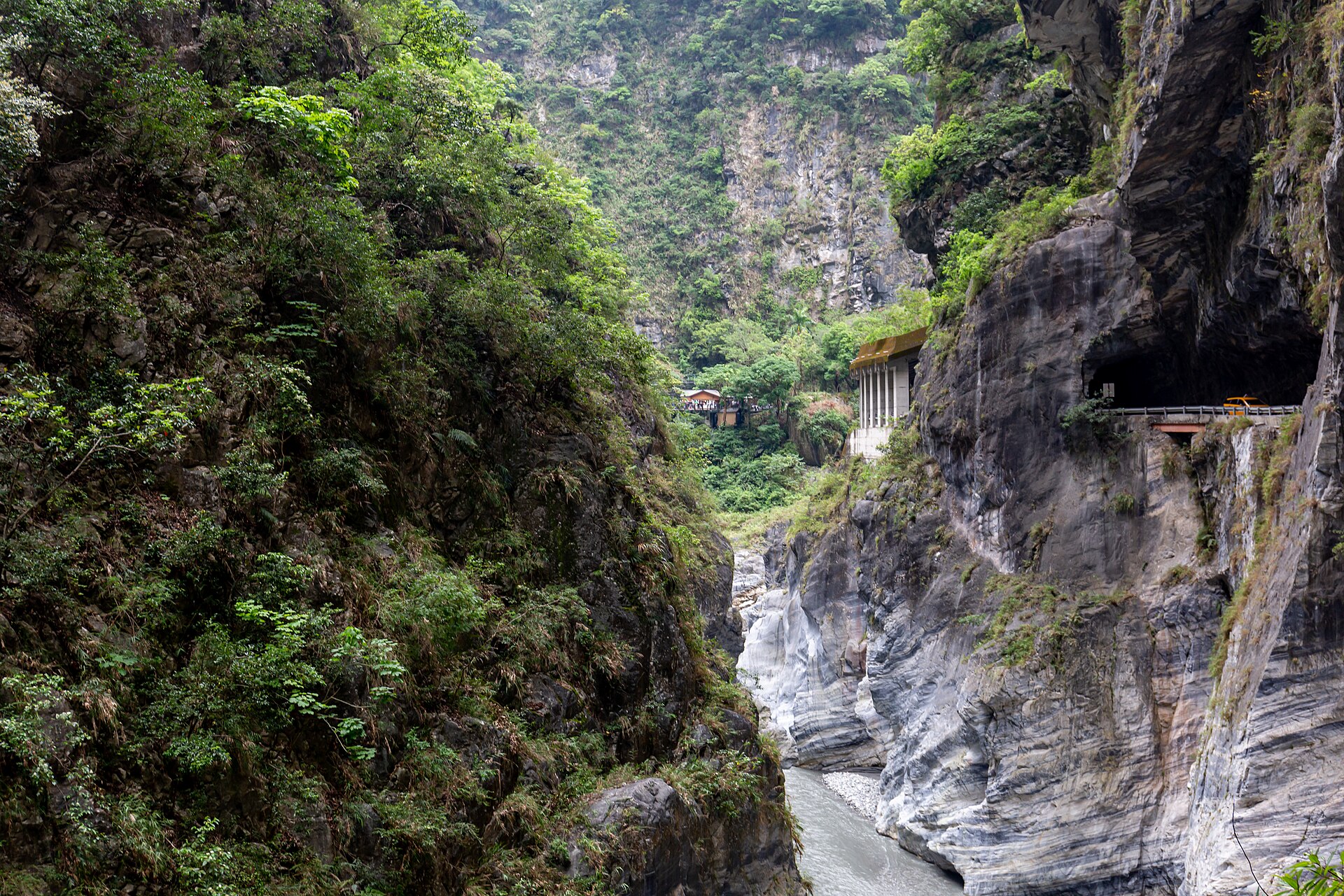
A marble gorge in eastern Taiwan that is still recovering from the 2024 earthquake. You time your drive to the road's opening windows, walk the trails that have reopened at Tianxiang, then head back to the Pacific coast and Hualien's night market.
- Best time to visit: October to November and March to May
- Daily budget (budget traveller): $50 to $185 USD
- Ideal trip length: 3 to 7 days
Taroko Gorge is a deep marble canyon cut by the Liwu River, just north of Hualien on Taiwan's east coast. Its best-known section follows Provincial Highway 8 for about 18km, from the Taroko entrance arch up to Tianxiang. The magnitude 7.4 earthquake on 3 April 2024, and the typhoons that came after it, did serious damage. In late 2026 the gorge is only partly open. Shakadang Trail, Swallow Grotto, the Tunnel of Nine Turns, Baiyang Trail, Eternal Spring Shrine and Zhuilu Old Road are all still closed. The road between the entrance and Tianxiang only opens in set daytime windows, and the public buses through the gorge are suspended. You can still come, but it is a different trip from the old one. You get the visitor centre and the Dekalun Trail at the mouth of the gorge, a timed drive between huge marble walls, short walks and a temple at Tianxiang, the Qingshui Cliffs dropping into the Pacific, and Hualien itself, a relaxed small city with an excellent night market that needs visitors back. Go with realistic expectations and a flexible plan. You will see more of the gorge than you might think.
Taroko Gorge was Taiwan's most famous natural sight until 3 April 2024, when a magnitude 7.4 earthquake brought down huge sections of marble cliff. Typhoons in 2024 and 2025 did more damage. Repairs are under way, with about NT$3 billion set aside for restoration, but they will take years. New tunnels on Highway 8 are not expected to be finished before 2028, and Eternal Spring Shrine is unlikely to reopen before 2029. So the classic visit, with Shakadang, Swallow Grotto and the Tunnel of Nine Turns on foot, is not possible right now. What you can do is drive through the gorge in timed windows, walk at the entrance and at Tianxiang, stand under the Qingshui Cliffs and spend your evenings in Hualien, which is quieter than it used to be and happy to see travellers.
Logistics are simple until you reach the gorge itself. Express trains from Taipei reach Hualien in a little over two hours for about NT$583. Book ahead, because seats on the Puyuma and Taroko trains go fast. Stay near Hualien Station for transport, or in the old town for food and evenings. The 310 shuttle bus goes as far as the visitor centre, but buses to Tianxiang are suspended. For the inner gorge, hire a car, charter a driver or join a small tour. The road between the entrance and Tianxiang opens five times a day, two of them for only five minutes. Plan your day around those windows and check the monthly notice before you go.
Timing matters even more than usual. Autumn and spring are the most reliable seasons. Summer brings heat, afternoon storms and typhoons that can shut Highway 8 for days, so build in a spare day. Winter is cool and often drizzly on the east coast. Taiwan is very safe, transport works well and people are helpful, even if English is limited outside hotels. The real risks here are natural ones: rockfalls, earthquakes and rough seas. Respect the closures, keep your plans loose, and Taroko still makes an impressive solo trip.
Taroko Gorge itinerary
Train to Hualien and the night market
Morning: Take a morning express train from Taipei Main Station. Sit on the left for sea views after Yilan. Arrive in about 2 hours 15 minutes.
Afternoon: Drop your bags near the station, then walk into the old town for wontons and a stroll along the Railway Pedestrian Street.
Evening: Dinner at Dongdamen Night Market. Head for the Indigenous section, try grilled wild boar and millet wine, and stay for the live music.
Qixingtan by bike
Morning: Hire a bike near the station and follow the coastal cycle path north to Qixingtan. Stop at Hualien Harbour on the way. Whale-watching boats leave from here in season, so book one if the sea is calm.
Afternoon: Lunch in Qixingtan village, then sit on the pebbles with views north to the Qingshui Cliffs. Do not swim, because the shore drops steeply.
Evening: Watch the sunset from the beach, then ride back before dark or take a taxi. Make an early night of it before tomorrow.
The mouth of the gorge
Morning: Take the 310 shuttle from Hualien Station to the Taroko Visitor Center. Look round the exhibits, then climb the Dekalun Trail for views over the river mouth.
Afternoon: Walk to the restored entrance arch and cross Jinwen Bridge to Taroko Terrace. Take a taxi to Xincheng to see the old street and the Catholic church with its Japanese-era torii.
Evening: Back to Hualien. Collect your hire car this evening so you can make the 06:30 window tomorrow, or confirm a pickup time with your driver or tour.
Through the gorge to Tianxiang
Morning: Be at the checkpoint near the Shakadang Tunnel well before 06:30 and drive up in the first window. Do not stop in the controlled zones. Breakfast at Tianxiang.
Afternoon: Walk the Tabido Trail, then climb to Xiangde Temple and its pagoda. Drive down to Lushui and walk the reopened first section of the trail.
Evening: Stay at Silks Place Taroko or the Tienhsiang Youth Activity Center. The road is closed overnight, so you have the gorge almost to yourself.
Down the gorge to the Qingshui Cliffs
Morning: Early walk around Tianxiang while it is quiet, then drive out in the 10:00 or 12:00 window. Check the times again, as they can change.
Afternoon: Head north on the Suhua Highway to the Chongde area for the Qingshui Cliffs views, then walk down to the black pebble beach below.
Evening: Return the car in Hualien. Have a simple dinner in the old town and catch up on sleep.
Liyu Lake
Morning: Take a taxi, scooter or car to Liyu Lake, about 20km southwest of the city. Hire a bike and ride the loop around the lake.
Afternoon: Paddle a pedal boat or walk a short forest trail, then have a late lunch by the lake.
Evening: Back in Hualien for a final round at Dongdamen, or try a cocktail bar in the old town.
Pine Garden and the train back
Morning: Breakfast buns at Gongzheng Baozi, then walk up to Pine Garden for views over the harbour and a coffee among the old pines.
Afternoon: Buy mochi near the station for the journey and take an afternoon express train back to Taipei.
Evening: Arrive in Taipei in the early evening. If you are flying out, stay near Taipei Main Station for the airport MRT.
Best neighbourhoods
- Hualien Station area: The practical base. Hostels such as Hualien Wow Hostel are a few minutes' walk from the station, and so are the car and scooter hire shops and the bus stop for the Taroko shuttle. It is not pretty, but you will never miss a train or a pickup.
- Hualien old town and Dongdamen: The old centre between the station and the sea, with the Railway Pedestrian Street, cafés, wonton shops and Dongdamen Night Market. It is the liveliest area in the evening and about a 30-minute walk from the station.
- Qixingtan: A crescent of pebble beach and a small village north of the city, near the airport. It has guesthouses, a coastal cycle path and views towards the Qingshui Cliffs. It is quiet and breezy, and best if you have a scooter or a car.
- Xincheng: The town nearest the gorge, with Xincheng (Taroko) station and a short old street. It is a few minutes' drive from the entrance arch and handy for early starts, but only a couple of express trains a day stop here.
- Tianxiang: The terrace at the top of the gorge section, with Silks Place Taroko, the Tienhsiang Youth Activity Center, the Tabido Trail and Xiangde Temple. Staying here means a quiet evening inside the gorge after the road has closed for the night.
Must-do experiences
- Drive the gorge in a release window: Between the Taroko entrance and Tianxiang, Highway 8 opens five times a day. In October 2026 the windows were 06:30-08:00, 10:00-10:05, 12:00-13:00, 15:00-15:05 and 17:00-18:00. Join the queue early, follow the convoy and do not stop in the closed zones.
- Walk the Dekalun Trail: A short, steep boardwalk climbing the hillside behind the Taroko Visitor Center, with views down to the river mouth. It reopened in 2025 and you can get there by the 310 bus from Hualien, no car needed.
- Cross Jinwen Bridge to Taroko Terrace: The restored entrance arch and the repaired bridge walkway lead to Taroko Terrace, a short trail at the very mouth of the gorge. Combine it with the visitor centre exhibits for a gentle first look.
- Spend time at Tianxiang: Walk the easy Tabido Trail, then climb up to Xiangde Temple and its pagoda above the river junction. Tianxiang came through the quake with little damage and is the main walking area inside the gorge for now.
- Look down on the Qingshui Cliffs: Sheer cliffs fall straight into turquoise sea along the Suhua Highway north of the gorge. The national park recommends the Chongde area for views, and a path leads down to the black pebble beach below.
- Eat your way round Dongdamen Night Market: Hualien's big night market has a whole Indigenous food section, with grilled wild boar, millet wine and live music. Stalls have struggled since tourism dropped, so dinner here does some good.
- Cycle the coast to Qixingtan: Hire a bike near the station and follow the coastal path north to Qixingtan's pebble crescent. Sunset and stargazing are good here, but the shore drops steeply, so do not swim.
Hidden gems
- Lushui, below Tianxiang, where the first sections of the Lushui trails reopened in 2026 and the exhibition hall car park is a calm place to wait for your road window
- Xincheng Catholic Church, built on the site of an old Japanese shrine, with the torii gate and stone lanterns still standing in the churchyard
- Chongde's black pebble beach, a short walk down from the road, where you look straight up at the Qingshui Cliffs instead of out from a viewpoint
- The Railway Pedestrian Street in Hualien, a strip of cafés and small shops laid along an old railway line, good for a slow evening
- Pine Garden, a hilltop Japanese-era building among old pines, with views over Hualien Harbour and a quiet café
Daily budget
- Accommodation: budget NT$450-800 / night (hostel dorm near Hualien Station), mid-range NT$2,000-4,000 (city hotel or Qixingtan guesthouse), splurge NT$10,000+ (Silks Place Taroko at Tianxiang). Hualien has plenty of hostels, and prices have stayed soft since the earthquake. Tianxiang has only two options, so book early. Prices rise at weekends and on holidays.
- Food: budget NT$300-500 / day (wontons, buns, night market), mid-range NT$700-1,200 (café lunch and a sit-down dinner), splurge NT$2,000+ (hotel buffets, seafood dinners). Breakfast shops and night markets keep costs very low. A bowl of wontons or a few buns costs well under NT$100. Prices are rough guides.
- Transport: budget NT$100-300 / day (310 bus, bike hire, local trains), mid-range NT$1,800-3,000 (car hire plus fuel), splurge NT$4,000+ (private driver for a full day). Taipei to Hualien costs about NT$583 by express train or NT$376 by fast local train. Buses to Tianxiang are suspended, so budget for a car, a tour or a driver on at least one day.
- Activities: budget NT$0-200 / day (park entry is free, as are trails and beaches), mid-range NT$800-1,200 (whale watching or a shared gorge tour), splurge NT$3,000+ (private guided day). The national park has no entry fee. Whale-watching boats leave from Hualien Harbour, mainly from spring to autumn. Confirm current prices with operators.
- Drinks & nightlife: budget NT$50-150 (convenience store beer), mid-range NT$300-600 (millet wine and drinks at the night market), splurge NT$1,000+ (cocktail bars in the old town). Nightlife is low-key. Dongdamen has stalls selling drinks and live music, and there are a few small bars in the old town. Tianxiang is very quiet after dark.
Where to stay
- Social hostel in Hualien Station area (NT$450-800 / night): Hualien Wow Hostel is a two-minute walk from the station, with dorms and private rooms. Sleeping Boot Hostel, about ten minutes away, is popular with solo travellers and is close to the shuttle bus stops.
- Boutique hotel in Hualien old town (NT$2,200-4,000 / night): A mid-range city hotel such as Just Sleep Hualien Zhongzheng puts you within walking distance of the Railway Pedestrian Street, the wonton shops and Dongdamen Night Market.
- Apartment in Qixingtan (NT$1,800-3,500 / night): Family-run guesthouses and self-catering rooms near the beach suit you if you have a scooter or a car. The evenings are quiet, sunsets are good and it is quicker to reach the gorge and the cliffs from here.
- Splurge in Tianxiang (NT$10,000-20,000+ / night): Silks Place Taroko is the only upmarket hotel inside the gorge, with a rooftop pool and a guest shuttle from Hualien. The simpler Tienhsiang Youth Activity Center nearby is a cheaper way to sleep in the gorge.
What to eat
- Bianshi: Hualien-style wontons in a light broth, a cheap breakfast or late-night bowl all over the old town
- Steamed dumplings and buns from Gongzheng Baozi, a long-running Hualien institution that is open from early morning
- Indigenous grilled wild boar and sausage at Dongdamen Night Market, best with a cup of sweet millet wine
- Bamboo-tube rice: sticky rice steamed inside a length of bamboo, sold at Indigenous stalls and around Xincheng
- Hualien mochi, the soft, filled rice cakes that people take home as gifts, sold in shops near the station
- Fresh seafood and fried fish along the coast towards Qixingtan, usually ordered by weight and pointing
Day trips
- Qingshui Cliffs and Chongde (About 30-40 minutes by road north of Hualien): Cliffs about 1,000m high plunge into deep blue sea along the Suhua Highway. The Chongde area has viewpoints and a path down to a black pebble beach. Mt Qingshui Trail is a different place and is still closed. Drive or ride north on Highway 9, or take bus 1126 or 1129 from Hualien Station to Chongde and walk about 15 minutes. Many gorge tours include it.
- Liyu Lake (About 20km southwest of Hualien, 30 minutes by car): A calm lake surrounded by forested hills, with a flat cycle loop, pedal boats and short trails. It is a gentle contrast to the gorge and the coast. A taxi, scooter or hire car is easiest. Bikes can be hired at the lake. Agree a return pickup time with your taxi driver, or bring a car.
- Whale watching from Hualien Harbour (Boats leave from the harbour on the city's northern edge, and trips last about 2 hours): Dolphins are common off the east coast, and whales are seen sometimes. Trips run mainly from spring to autumn when the sea allows, and operators such as Turumoan have long run boats from here. Book a day or two ahead through an operator or your hostel. Taxis from the station take about 10 minutes. Expect roughly NT$800-1,000 per person, and take seasickness tablets if you need them.
When to visit
- Spring (March - May): 18-28°C, mostly mild, with plum rain showers arriving in May. Crowds: Moderate, busier around the Qingming holiday. A good window, with comfortable walking temperatures and green slopes. Check the road windows, which sometimes change for holidays.
- Summer and typhoon season (June - September): 27-33°C, humid, afternoon thunderstorms, typhoons. Crowds: Busy at weekends and in school holidays. Hot and the riskiest time. A typhoon can close Highway 8 for days. It is the best season for whale watching, but leave spare days.
- Autumn (October - November): 21-28°C, drier, clearer skies. Crowds: Moderate, with a bump around National Day. The local favourite. Typhoon risk drops through October, and the light in the gorge is lovely. Book trains for long weekends.
- Winter (December - February): 14-22°C, cool, drizzly northeast monsoon. Crowds: Quiet, except Lunar New Year, which is very busy. Cheap and calm, but grey days are common and Tianxiang is chilly at night. Avoid Lunar New Year, when trains sell out.
Entry rules for your passport
Visa rules for Taiwan depend on the passport you travel on. Check the official source before you book: Taiwan Bureau of Consular Affairs
Getting there
Most international travellers fly into Taoyuan International Airport (TPE) and take the Airport MRT to Taipei Main Station, which takes about 35-50 minutes. Taiwan Railway express trains then run to Hualien in about 2 hours 15 minutes to 3 hours. Puyuma, Taroko and Tze-Chiang trains cost about NT$583 one way, the Chu-Kuang about NT$450 and the fast local train about NT$376. Puyuma and Taroko trains do not accept standing tickets and sell out at weekends, so book on the Taiwan Railway app or website as soon as your dates are fixed. A few trains a day also stop at Xincheng (Taroko) station, closer to the gorge. There is no high-speed rail on the east coast. If trains are full, you can take a bus from Taipei to Luodong and change there for a train. From Hualien Station, the 310 Taiwan Tourist Shuttle runs to the Taroko Visitor Center, and taxis and hire cars are available outside the station. Many nationalities can enter Taiwan visa-free for up to 90 days, but check the current rules for your passport.
Getting around
For the inner gorge, a car is the most practical option. Buses between the Taroko Visitor Center and Tianxiang are suspended, so without a car you need a tour or a private driver. The Taiwan Tourist Shuttle 310 runs from Hualien Station to the visitor centre at the mouth of the gorge, and fares are low and can be paid by EasyCard. Car hire in Hualien costs roughly NT$1,800-3,000 a day. Scooters cost about NT$400-700 a day, but you need a licence that is valid for motorbikes in Taiwan, usually your home licence plus an International Driving Permit. Highway 8 between the entrance and Tianxiang opens in set windows and closes at night, and the times change with each monthly notice. Check the Taroko National Park website the day before. Taxis are easy to find at Hualien Station and can be chartered for a half or full day if you agree the price first. In the city, bikes, buses and walking cover most things. Trains run up the coast to Xincheng station, although only a couple of express trains a day stop there.
Safety
The biggest risk in the gorge is falling rock. Do not enter closed trails or stop your car on the controlled section of Highway 8, and do what road crews tell you. The road can close suddenly after heavy rain or aftershocks, so keep fuel in the tank, snacks and water in the car and enough time in your plan. Earthquakes are common in Hualien. In a strong one, drop, cover and hold on indoors, and stay away from cliffs and slopes outdoors. Typhoon season runs from roughly June to October. Follow Central Weather Administration warnings and expect closures for a day or two afterwards. Do not swim at Qixingtan or Chongde, because the pebble beaches shelve steeply and waves pull hard. Traffic on the Suhua Highway includes gravel trucks, so ride or drive carefully. Taiwan is otherwise very safe for solo travellers. Emergency numbers are 110 for police and 119 for fire and ambulance.
Solo travel tips
- Stay near Hualien Station: Trains, the 310 bus, bike shops and car hire are all within a few minutes' walk. That makes early starts for the road windows easy, and the hostels here are full of other travellers heading the same way.
- Share the driving day: Car hire is the biggest single cost. Ask in your hostel common room or join a small-group tour, and you can split the cost of reaching Tianxiang.
- Check the road notice the night before: The Highway 8 windows change every month, and some last only five minutes. Screenshot the current notice and aim to be in the queue at least 20 minutes early.
- Sleep a night at Tianxiang: Once the road closes, the gorge goes quiet. A single night there turns a rushed drive into a proper visit, and it means you are already in place for a morning walk.
- Safety for solo travellers: Hualien is very safe, including at night. The real risks are rockfall, earthquakes and rough seas. Stay out of closed areas, tell your hostel your plans on gorge days and never swim off the pebble beaches.
- Get an EasyCard and offline maps: An EasyCard works on buses, local trains and in convenience stores. Mobile signal fades inside the gorge, so download offline maps and save your car hire and hotel details.
Cultural etiquette
- The gorge is the homeland of the Truku people. Treat village areas, churches and any ceremonies with respect, and ask before taking photos of people.
- Take your shoes off where you see a step up or a rack of slippers, which is common in guesthouses and some homes.
- At temples such as Xiangde Temple, speak quietly, do not point at statues and walk round people who are praying rather than between them and the altar.
- Do not eat or drink on the Taipei MRT, and queue in the marked lines on the platform. On trains, keep phone calls short and quiet.
- There are few public bins. Carry your rubbish until you find a convenience store, and sort it into the recycling sections.
- Never leave chopsticks standing upright in a bowl of rice, as this is linked to funerals.
- Follow park staff and road crews without arguing. The closures are there because the cliffs are still unstable.
Frequently asked questions
Is Taroko Gorge open in 2026?
Partly. The visitor centre, entrance arch, Dekalun Trail, Taroko Terrace, the Tianxiang area with the Tabido Trail and Xiangde Temple, and the first sections of the Lushui trails are open. Shakadang, Swallow Grotto, the Tunnel of Nine Turns, Baiyang, Eternal Spring Shrine and Zhuilu Old Road are still closed. Eternal Spring Shrine is not expected to reopen before 2029. Check the park's roads and trails page shortly before you go.
How do I get to Taroko Gorge from Taipei?
Take a Taiwan Railway express train from Taipei Main Station to Hualien. The Puyuma, Taroko and Tze-Chiang trains take about 2 hours 15 minutes to 3 hours and cost about NT$583, and the slower fast local train is about NT$376. Express seats sell out at weekends, so book on the railway app. From Hualien Station, the 310 shuttle bus goes to the Taroko Visitor Center.
Can I visit without a car?
Yes, but only the edges of the gorge. The 310 bus reaches the visitor centre, the Dekalun Trail and Taroko Terrace, and buses to the Chongde area can get you near the Qingshui Cliffs. Buses up to Tianxiang are suspended. To get there, join a small-group tour, hire a driver or book Silks Place Taroko, which runs a guest shuttle from Hualien.
Is there an entry fee or permit?
There is no fee to enter Taroko National Park, and you do not need a permit for the visitor centre, Tianxiang or other normal open areas. Some high mountain routes in the protected areas need permits through the national park permit system. Check the status of any longer hike before you plan around it.
How do the Highway 8 traffic windows work?
Between the Taroko entrance and Tianxiang, traffic is let through at set times. In October 2026 these were 06:30-08:00, 10:00-10:05, 12:00-13:00, 15:00-15:05 and 17:00-18:00, and the road closes overnight. The five-minute windows are strict, so queue early at the checkpoint. The times are reissued every month and can change after storms, so check the official notice.
How many days do I need?
Three days covers the mouth of the gorge, one full day up to Tianxiang and the Qingshui Cliffs. Five days lets you stay a night at Tianxiang and add a spare day for weather. A week gives you time for Liyu Lake, whale watching in season and slow evenings in Hualien.
When is the best time to visit?
October to November and March to May usually bring the most settled weather. June to October is typhoon season, and storms can close the road for days. Winter is cooler, with drizzle from the northeast monsoon. Avoid Lunar New Year and long weekends if you can, as trains sell out and the road queues get longer.
What are Taiwan's entry rules in 2026?
Many nationalities, including the UK, EU, US, Canada, Australia and New Zealand, have generally been able to visit Taiwan without a visa for up to 90 days. You need a passport valid for at least six months and an onward ticket, and you should fill in the online arrival card before you land. Rules vary by nationality and can change, so check the Bureau of Consular Affairs website and your own government's advice before booking.
Tours and activities in Taroko Gorge | Taroko Gorge in 2 days | Taroko Gorge in 3 days | Taroko Gorge in 4 days | Taroko Gorge in 5 days | Taroko Gorge in 7 days
Joy Plus home | Destinations | Itineraries | Activities | Flights | Budget planner | Calendar | Map | Blog | Lifetime access