Destinations / Asia
Thimphu, Bhutan travel guide
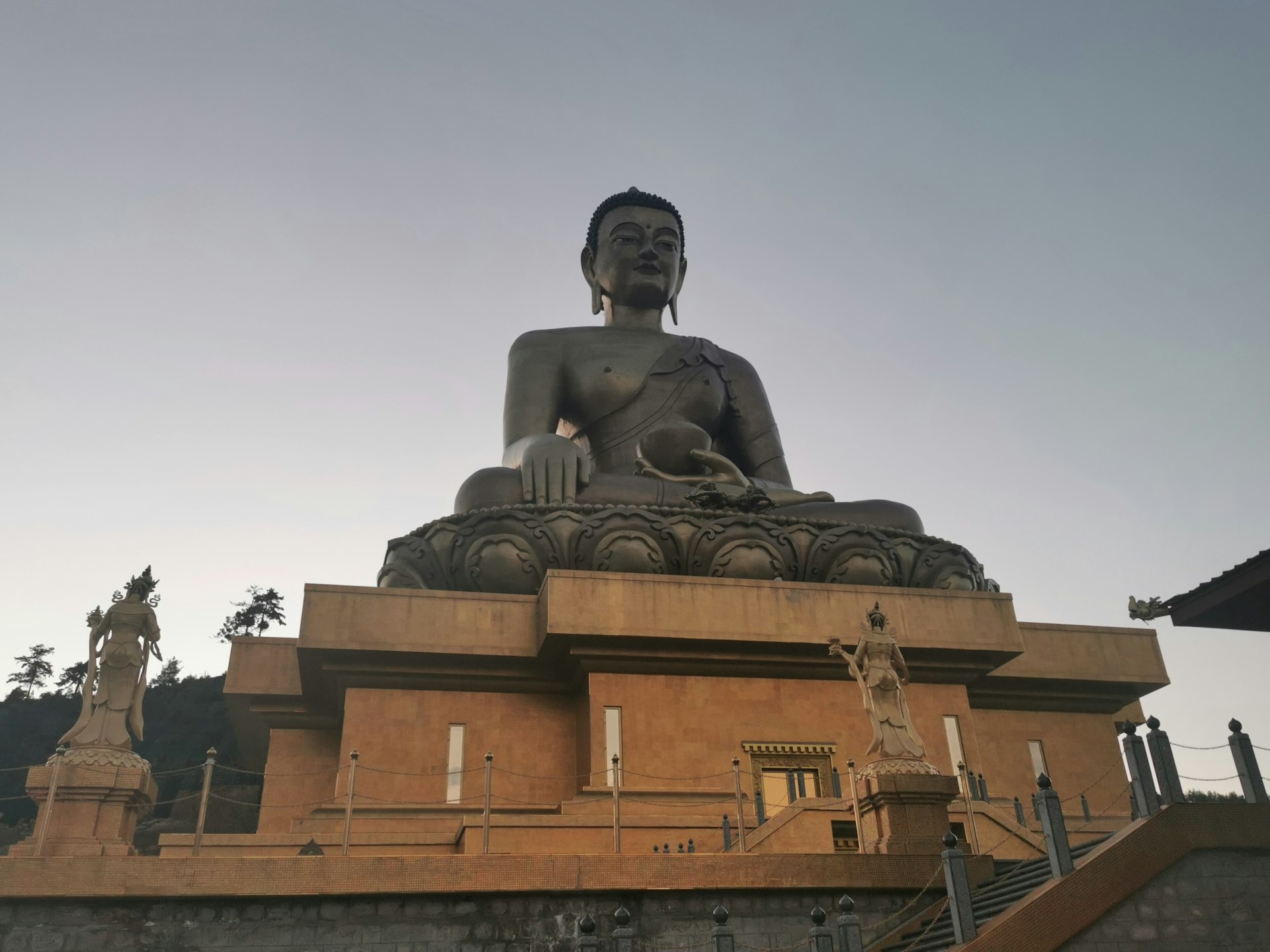
The Himalayan capital where Gross National Happiness is policy.
- Best time to visit: March to May and September to November
- Daily budget (budget traveller): $250 to $300 USD
- Ideal trip length: 2 to 3 days
Thimphu, Bhutan's capital, is a city like no other: no traffic lights, architecture in traditional Bhutanese style by law, and a giant golden Buddha gazing over the valley. It mixes monasteries and archery grounds with cafes and a weekend market, and serves as the gateway to Paro's Tiger's Nest and the high Himalayan valleys.
Thimphu is the only capital city on earth with no traffic lights. A white-gloved officer waves cars through the Norzin Lam intersection by hand, and when signals were trialled in the late 1990s they were pulled within days because nobody liked them. Around 115,000 people live at 2,320 metres in a valley split by the Wang Chhu river. Every building follows a royal design code: painted wooden window frames, sloping roofs, no glass towers. The city is small, calm and strange in the best way. You will see a banker in a gho (the knee-length robe men wear) pause outside a temple to spin a prayer wheel.
Bhutan is not a go-where-you-like destination, and Thimphu is where the system makes the most sense. All visitors pay the Sustainable Development Fee of USD 100 per person per night (about Nu 9,500 at roughly Nu 95 per dollar in October 2026, valid through August 2027). A package through an operator is no longer compulsory, but a licensed guide is still required for the dzongs and for travel beyond the Thimphu and Paro valleys. Treat the fee as your base layer and budget on top of it. Thimphu's best things sit within about 5 km of each other: the Memorial Chorten at dawn, the weekend market, an archery match at Changlimithang, Tashichho Dzong after office hours, and the Buddha Dordenma over the valley. Two to three days covers them, and every extra day buys you Cheri monastery, the Textile Museum, or a hot stone bath.
Use Thimphu as the hinge of a longer trip. Dochula Pass (3,100 m) and Punakha Dzong are a long day east. Paro and the Tiger's Nest are 90 minutes west, and Paro is also where you fly in and out. Prices here are in ngultrum (Nu), pegged one to one with the Indian rupee. Pack layers for a valley that swings from 20°C sun to near freezing at night, and plan around Friday to Sunday, when the Centenary Farmers' Market is at full volume.
How many days in Thimphu?
For Thimphu, we recommend 2 to 3 days. With more time, add a day trip to Phajoding Monastery hike.
| Trip length | What you'll see | Itinerary |
|---|---|---|
| 2 days · Recommended | Paro, drive to Thimphu; Chorten, museums, archery and the dzong | Thimphu in 2 days |
| 3 days · Recommended | Adds: Weekend market and the takin | Thimphu in 3 days |
| 4 days | Adds: Cheri monastery and Buddha Point | Thimphu in 4 days |
| 5 days | Adds: Dochula Pass and Punakha | Thimphu in 5 days |
| 7 days | Adds: Paro and the Tiger's Nest | Thimphu in 7 days |
Thimphu itinerary
Arrive in Paro, drive to Thimphu
Morning: Land at Paro (PBH), sit on the left side if you fly from Kathmandu for Everest views. Meet your guide, then drive 90 minutes to Thimphu, stopping at the Chuzom river confluence.
Afternoon: Check in, then lunch at Folk Heritage Restaurant or a Norzin Lam local spot. Walk to the Memorial Chorten to see locals turning prayer wheels at dusk.
Evening: Dinner at Bhutan Kitchen, a stroll down Norzin Lam, early night. At 2,320 m you will sleep better with water and no beer.
Chorten, museums, archery and the dzong
Morning: Dawn at the National Memorial Chorten (about 6am) to circle with elderly locals. Breakfast, then the Royal Textile Museum and the Folk Heritage Museum in Kawajangsa.
Afternoon: Late lunch at Zombala or Ambient Café. Watch archery at Changlimithang, then browse the Craft Bazaar on Norzin Lam.
Evening: Tashichho Dzong at about 5pm when office hours end and visitors are allowed in. Dinner at Seasons or Babesa Village Restaurant.
Weekend market and the takin
Morning: Centenary Farmers' Market by the river, best Saturday or Sunday from 7am. Try momos, dried cheese and red rice. If you arrive Monday to Thursday, swap this with Day 5.
Afternoon: Jungshi Handmade Paper Factory, then the Motithang Takin Preserve for Bhutan's goat-cow national animal.
Evening: Mojo Park for a Thursday to Saturday live set. One Red Panda wheat beer, home by 11pm.
Cheri monastery and Buddha Point
Morning: Drive north to Dodena and climb to Cheri monastery, about an hour up through blue pine forest. Wild goats and meditation students on the trail.
Afternoon: Buddha Dordenma at Kuenselphodrang. Walk the forest trails behind the statue, sunset over the valley.
Evening: Hot stone bath (dotsho) at your hotel or a local farmhouse, then ema datshi and ara.
Dochula Pass and Punakha
Morning: Leave at 7am for Dochula Pass (3,100 m), 108 chortens and, on clear days, Gangkhar Puensum on the horizon. Continue to Punakha.
Afternoon: Punakha Dzong at the river confluence, the 160 m suspension bridge, and the 20-minute walk to Chimi Lhakhang.
Evening: Back in Thimphu by about 6pm, or overnight in Punakha if you hate long drives. Light dinner, early night.
Paro and the Tiger's Nest
Morning: Drive 90 minutes to Paro and start the Tiger's Nest hike at 7am. About 900 m of climbing, 5 to 6 hours round trip, with a cafeteria halfway for tea.
Afternoon: Late lunch in Paro town. Short visit to Paro Rinpung Dzong or the National Museum of Bhutan.
Evening: Drive back to Thimphu or overnight in Paro near the airport. Tired legs, easy dinner.
Slow morning and departure
Morning: Last stop at the Craft Bazaar for textiles or paper. Pick up butter tea or dried cheese to take home.
Afternoon: Drive to Paro airport (about 90 minutes). Most flights leave in the morning, so confirm your time and aim to leave Thimphu 3 to 4 hours early.
Evening: Fly out. If your flight is late, Paro town has a few cafes for a final suja.
Best neighbourhoods
- City Centre (Norzin Lam): The main street with handicraft shops, cafes and the clock tower square, all walkable.
- Motithang: A quieter hilltop district with hotels and views over the valley.
- Upper Thimphu (Buddha Point): The hillside crowned by the 54 metre Buddha Dordenma statue, with hiking trails in Kuenselphodrang park.
Must-do experiences
- Visit Buddha Dordenma: One of the world's largest sitting Buddhas, 54 metres of gilded bronze overlooking the valley, filled with 125,000 smaller Buddhas.
- Explore Tashichho Dzong: The fortress monastery housing the throne room and government, open to visitors after office hours.
- Browse the Weekend Market: Farmers from across the valley sell chilies, cheese, incense and yak products along the river.
- Watch an archery match at Changlimithang: Bhutan's national sport, with singing, dancing and near impossible accuracy at 145 metres.
- Hike to Cheri Monastery: A gentle one hour climb north of the city to a 17th century monastery frequented by meditation students and wild goats.
- See takin at the Motithang Preserve: Bhutan's odd national animal, part goat, part cow, in a pine forest reserve minutes from town.
Hidden gems
- Simply Bhutan, a living museum where you can try archery and butter tea
- The National Memorial Chorten at dawn with elderly locals circumambulating
- Jungshi paper factory to see traditional daphne paper made by hand
- The craft bazaar stalls along the main street for woven textiles
Daily budget
- Accommodation: budget Nu 3,500-5,500 / night (3-star guesthouse double, per room), mid-range Nu 8,000-14,000 (Namgay Heritage Hotel, Le Meridien Thimphu), splurge Nu 35,000+ (Taj Tashi, Amankora Thimphu). The USD 100 SDF (about Nu 8,800 per person per night) is billed separately on top. Check whether your operator package bundles it.
- Food: budget Nu 900-1,500 / day (local restaurants, market momos), mid-range Nu 2,500-4,000 (hotel buffet breakfast, Seasons or Folk Heritage dinner), splurge Nu 6,000+ (Taj Tashi dining, private Bhutanese banquet). Ema datshi with red rice is Nu 250-450 at a local lunch spot. Many tours are full board, so confirm before you pay twice.
- Transport: budget Nu 150-400 / day (walking plus short local taxis), mid-range Nu 1,500-3,000 (private taxi for half a day around town), splurge Nu 10,000+ (premium vehicle for a day to Punakha). Your operator's driver covers most movement. Town taxis run roughly Nu 80-250. Budget operators typically bill Nu 6,000-9,000 per day for guide and vehicle shared by two.
- Activities: budget Nu 0-500 (Memorial Chorten, market, Buddha Point, one museum), mid-range Nu 2,000-4,000 (archery lesson, hot stone bath, Tiger's Nest entry), splurge Nu 10,000+ (private tailor-made day with a cultural expert). Dzongs and chortens are free or covered by your package. Museums run around Nu 300-500. Hot stone baths (dotsho) are about Nu 1,500-2,500 per person.
- Drinks & nightlife: budget Nu 300-600 (Druk 11000 beer, butter tea, a shot of ara), mid-range Nu 1,500-2,500 (Mojo Park gig night, Space 34), splurge Nu 4,000+ (hotel bar cocktails, Bhutan whisky flights). Tuesday is an official dry day, so many bars close or serve residents only. Nightlife winds down by 11pm to midnight.
Where to stay
- Social hostel in City Centre (Norzin Lam) (Nu 3,500-5,500 / night per room): No true hostels exist in Bhutan. A central guesthouse such as Hotel Jumolhari keeps you walkable to cafes, the Craft Bazaar and the market, with the cheapest rates available.
- Boutique hotel in Motithang (Nu 8,000-14,000 / night): Terma Linca Resort & Spa or Namgay Heritage Hotel, quieter hillside setting with valley views, a short drive from the centre.
- Apartment in Babesa / Olakha (Nu 4,000-7,000 / night): Airbnb is thin in Bhutan, but a few serviced apartments and family homestays appear through operators. Good for longer stays and a kitchen.
- Splurge in Motithang forest and city centre (Nu 35,000-140,000 / night per room): Amankora Thimphu in the pines or Taj Tashi near the dzong. Full service, spa, rooms with mountain light.
What to eat
- Ema datshi, the national dish of chilies and cheese, at a local restaurant
- Momos, steamed dumplings, at the weekend market
- Red rice with dried yak and vegetables
- Butter tea (suja) for the full Bhutanese experience
Day trips
- Dochula Pass and Punakha (3 hours each way (about 75 km)): Cross Dochula Pass (3,100 m) with its 108 chortens, then descend to Punakha Dzong at the river confluence. Add the suspension bridge and a field walk to Chimi Lhakhang. Private car with your guide. Leave at 7am. Overnight in Punakha if you want a gentler pace.
- Paro and the Tiger's Nest (1.5 hours by road (54 km)): The cliff-hanging Taktsang monastery sits at 3,120 m. The hike is 5 to 6 hours round trip with about 900 m of climbing and a tea stop halfway. Private car with your guide. Start at 7am to beat the heat and tour groups. Entry is roughly Nu 1,000, check with your operator.
- Phajoding Monastery hike (20 min drive to trailhead, 3 to 4 hours on foot): A steep forested climb above the city to a quiet monastery at about 3,600 m. Good acclimatisation and views of Thimphu valley. Drive to the trailhead above Motithang with your guide, then hike up. Start early and bring a warm layer.
When to visit
- Spring (March - May): 8-22°C, clear mornings, afternoon showers from late April, rhododendrons blooming above 3,000 m. Crowds: Busy from mid-March, peaks around Paro Tshechu in late March or April. Prime window. Flowers, clear Himalayan views and long days. Book flights into Paro 3 to 4 months ahead.
- Summer (Monsoon) (June - August): 16-25°C, heavy rain most afternoons, landslides can close roads east. Crowds: Light. Green, cheap and quiet, but wet. Leeches on forest trails and delayed drives to Punakha. Fine for museums and dzongs.
- Autumn (September - November): 10-22°C by day, 2-8°C at night, crisp and dry, the best mountain views of the year. Crowds: Peak, especially during Thimphu Tshechu (late September or early October, check dates). The best season overall. Festival masks, harvest light and the clearest skies. Book hotels and Drukair seats early.
- Winter (December - February): -3 to 13°C, sunny and dry, occasional snow, cold nights. Crowds: Low. Cheapest hotels and empty dzongs, with brilliant blue skies. You need real warm layers, and many hotels heat rooms only in the evening.
Entry rules for your passport
Visa rules for Bhutan depend on the passport you travel on. Check the official source before you book: Bhutan Department of Immigration
Getting there
Paro International Airport (PBH) is Bhutan's only international airport, about 54 km and 1 to 1.5 hours by road from Thimphu. Drukair and Bhutan Airlines fly in from Delhi, Kolkata, Mumbai, Kathmandu, Dhaka, Guwahati, Bagdogra, Bangkok and Singapore. If you fly from Kathmandu, sit on the left for Everest views. Flights run in daylight only, so most land in the morning. Your operator arranges the airport pickup, but an independent private taxi runs roughly Nu 2,500-3,500. By road, the main border gate is Phuentsholing (from Jaigaon in India), 170 km and about 5 to 6 hours to Thimphu. The visa (about USD 40) can be applied for directly online or through an operator, plus the SDF. Indian nationals pay INR 1,200 per night instead.
Getting around
Thimphu is compact and walkable, with plentiful taxis (meters are supposed to be used; negotiate for longer trips). Most visitors still travel with a guide and driver, who are compulsory beyond Thimphu and Paro, which simplifies all transport. Paro airport is about 1.5 hours away by road.
Safety
Thimphu is exceptionally safe, with very low crime. Main considerations are altitude (2,300 m, mild for most people), stray dogs at night, and road conditions on mountain passes. Respect local customs: dress modestly for dzongs and walk clockwise around religious sites.
Solo travel tips
- Join a small group departure: A solo traveller pays the full SDF plus a whole guide and vehicle. A small-group trip splits those costs and gives you instant company. Ask operators for scheduled departures.
- There are no hostels, so use guesthouses and homestays: Bhutan has no true social hostels. Book a central 3-star guesthouse on Norzin Lam, and add a farmhouse homestay in Paro or Punakha for evenings with a family around the stove.
- Eat where locals eat: Ask your guide to take you to a local restaurant for ema datshi and red rice rather than only hotel buffets. You will pay Nu 250-450 and often end up talking to the cook.
- Carry a torch after dark: Stray dogs roam Thimphu at night and can be noisy. Carry a small torch or phone light, walk with confidence and keep to lit streets like Norzin Lam.
- Solo female travellers: Bhutan is among the safest places in Asia for women alone. Standard rules apply, watch your drink, dress modestly at dzongs, and keep your guide's number handy.
- Find your tribe at the market or a Tshechu: The Centenary Farmers' Market and Thimphu Tshechu are where visitors and locals mix easily. Ask for the mask dance schedule and sit with families on the courtyard steps.
Cultural etiquette
- Walk clockwise around chortens, prayer wheels and temples. Spin prayer wheels with your right hand.
- Dress modestly at dzongs and temples: long trousers or skirts below the knee, covered shoulders, hats off.
- Remove shoes and hats before entering a lhakhang, and do not step on the threshold. Photography is usually banned inside, so ask first.
- Point with an open hand, not a finger. Never point your feet at altars or sit with feet toward a shrine.
- Say Kuzuzangpo la (hello) and Kadrinchey la (thank you). Locals love the effort.
- Hosts often insist you take more food and drink. Politely refuse once or twice, covering your cup with your hand, then accept.
- Smoking in public is restricted and Tuesday is a dry day. Respect both, and do not feed or tease stray dogs near temples.
Frequently asked questions
Do I need a visa to visit Bhutan?
Yes. All visitors except Indian nationals, who use a permit instead, need a visa before travel (about $40; Bangladeshi and Maldivian nationals apply through a separate process), which you can apply for online yourself or have a licensed Bhutanese tour operator or hotel arrange, plus the daily Sustainable Development Fee of $100 per person per night. That rate is fixed until 31 August 2027.
How much does it cost to visit Bhutan?
Budget $250 to $300 per day all in: the $100 daily fee plus accommodation, guide, driver, food and entry fees, typically bundled by your operator. Bhutan is deliberately high value, low volume tourism, and most travelers find the quality justifies the cost.
What is the best time to visit Thimphu?
March to May brings rhododendron blooms and clear views, September to November crisp skies and festivals. The Thimphu Tshechu festival in autumn is the city's biggest event. Winter is cold but sunny and crowd free.
How many days should I spend in Thimphu?
Two to three days covers the dzong, Buddha Point, markets, archery and a monastery hike without rushing. Most Bhutan itineraries spend 7 to 10 days total, combining Thimphu with Paro, Punakha and the Tiger's Nest.
Can I travel independently in Bhutan?
Partly. Since the 2022 reform you no longer have to book a package through an operator, and you may walk around Thimphu and Paro towns on your own. A licensed guide is still compulsory for dzongs and for travel beyond those two valleys, so most visitors book a guide and driver anyway. Rules have shifted more than once, so confirm before you book.
What should I wear in Bhutan?
Dress modestly: long trousers and covered shoulders for dzongs, monasteries and government buildings, where formal dress rules apply. Layers are essential year round as mountain weather shifts quickly between warm sun and cold wind.
Is there internet and mobile coverage in Thimphu?
Yes, Thimphu has good 4G coverage and hotels have wifi, often faster than travelers expect from a Himalayan kingdom. Local SIM cards are cheap and easy to buy with a passport copy.
Tours and activities in Thimphu | Thimphu in 2 days | Thimphu in 3 days | Thimphu in 4 days | Thimphu in 5 days | Thimphu in 7 days
Can't decide? Compare Thimphu with...
Joy Plus home | Destinations | Itineraries | Activities | Flights | Budget planner | Calendar | Map | Blog | Lifetime access