Destinations / Caribbean
Trinidad, Cuba travel guide
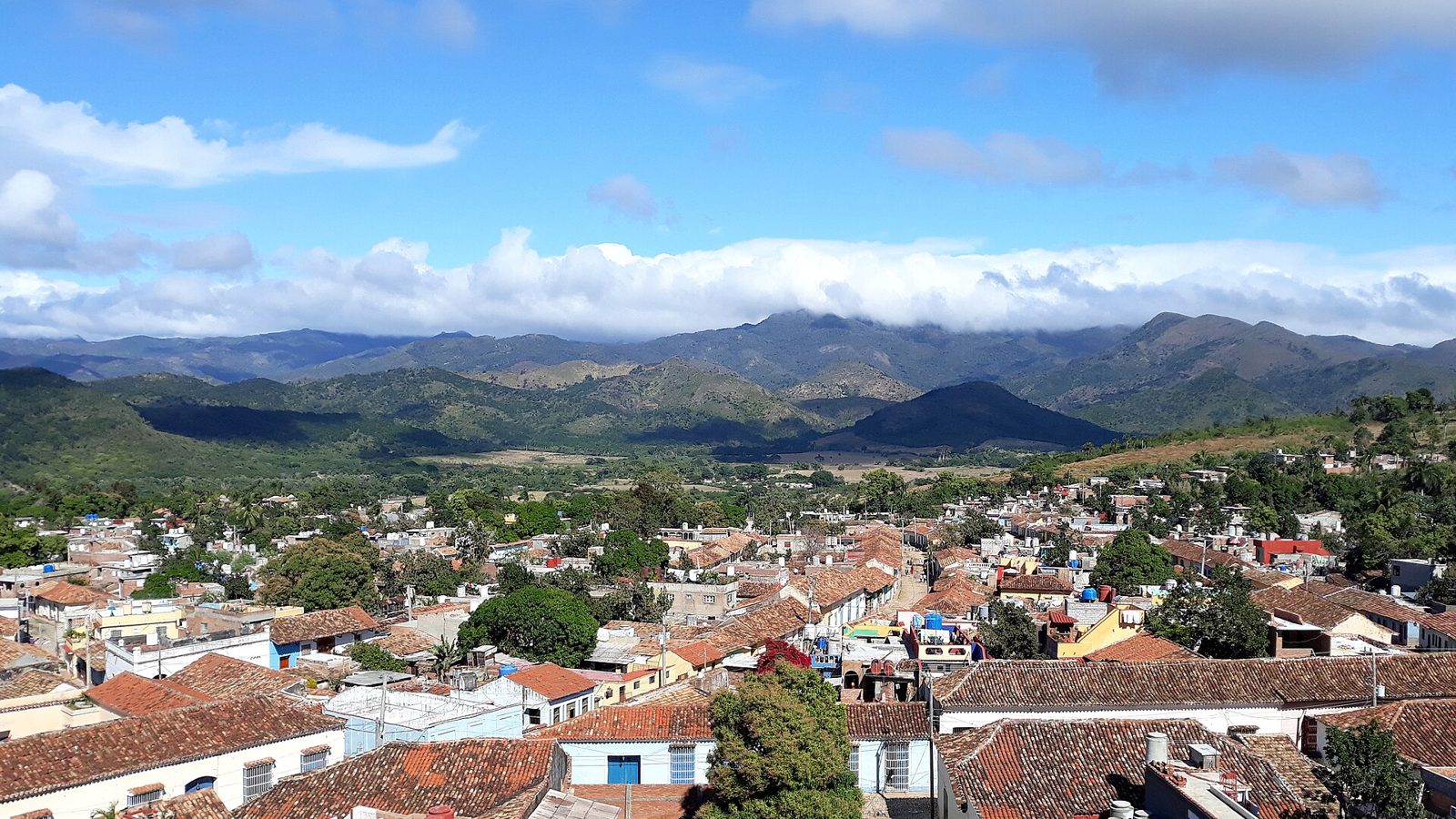
A colonial sugar town between the Escambray mountains and the Caribbean, built on cobbled streets and painted in faded pastels. You climb old bell towers in the morning, ride out to the sugar valley or a waterfall, and dance on the steps by the main square at night.
- Best time to visit: December to April
- Daily budget (budget traveller): $45 to $150 USD
- Ideal trip length: 3 to 5 days
Trinidad sits on the south coast of central Cuba, roughly 320km from Havana and about six to eight hours away by bus. Spanish settlers founded it in 1514, and the town grew rich on sugar in the 18th and 19th centuries. When the sugar trade collapsed, the money left and the buildings stayed. Today the cobbled old centre and the Valle de los Ingenios, the valley of sugar mills just east of town, share a UNESCO World Heritage listing. Plaza Mayor is lined with palaces that have become museums, horse carts still clatter down the side streets, and every evening live son and salsa drift down the steps of the Casa de la Música. Beyond the town you can hike to waterfalls in Topes de Collantes, climb the slave-era watchtower at Manaca Iznaga or swim at Playa Ancón. Trinidad is also part of a country in a deep crisis in 2026. Fuel and power shortages, frequent blackouts and reduced flights affect every trip, and several governments, including the UK's, advise against all but essential travel. If you do go, a family-run casa particular, cash in hand and a flexible plan make Trinidad one of the friendliest places in the Caribbean to spend a few days alone.
Trinidad is one of the best-preserved colonial towns in the Americas. It is a low grid of cobbled streets, tiled roofs and barred windows, sitting on a slope between the Escambray mountains and the sea. It was founded in 1514 and made rich by sugar, grown with enslaved labour in the valley to the east. When the industry declined in the 19th century, the town was largely left alone, which is why so much survives. The old centre and the Valle de los Ingenios became a UNESCO World Heritage Site together in 1988. Most visitors stay two or three nights between Havana and the east. Stay a little longer and you get the slower version: the square empty at dawn, a morning hike to a waterfall, an afternoon swim at Ancón and a night of live music on the steps.
Getting here takes patience in 2026. International flights to Cuba have been cut back because of a jet fuel shortage, several airlines have suspended routes and others stop elsewhere to refuel, so check your flight close to departure. From Havana, the Viazul bus takes roughly six to eight hours for about $25, or a shared colectivo taxi costs a little more and is a little quicker. Fuel shortages can disrupt both. Once you arrive, walk. The old centre is small, and your casa host can arrange a driver, a tour or a bike for everything beyond it.
The 2026 situation shapes every trip. Blackouts can last many hours, water supplies stop, and food and medicine are scarce. The UK and Canada advise against travel unless it is essential, and the Cuban peso has been falling fast. On the other hand, many good casas and paladares have their own solar panels or generators, the music has not stopped, and Trinidad's people remain famously warm. If you go, bring cash, a torch, a medical kit and a flexible plan. Book a well-reviewed casa with backup power, and spend your money with local families, who need it most.
Trinidad itinerary
Arrive and find your feet
Morning: Take the Viazul bus or a colectivo from Havana, or arrive the night before. Expect a long ride and pack water and snacks.
Afternoon: Check into your casa, then wander the cobbled lanes down to Plaza Mayor. Sit on a bench as the heat drops.
Evening: Dinner at a paladar near the square, then listen to the bands on the Casa de la Música steps.
Plaza Mayor and the museums
Morning: Visit the square at dawn, then the Museo Romántico when it opens. Climb the San Francisco bell tower before the midday heat.
Afternoon: Escape the sun inside the Palacio Cantero museum and climb its tower. Look into the Santander pottery workshop on the way back.
Evening: A canchánchara at La Canchánchara, then Afro-Cuban drumming at the Palenque de los Congos Reales.
Valle de los Ingenios
Morning: Go by taxi, tour or horse to the Manaca Iznaga estate, about 14km east, and climb the 45-metre watchtower for the view over the valley.
Afternoon: Stop at a valley viewpoint on the way back and have a late lunch in town. Rest through the hottest hours.
Evening: Walk up to La Popa and Cerro de la Vigía for sunset over the town and coast. Take a torch for the walk back.
Topes de Collantes
Morning: Leave early with a driver your casa trusts for the mountain park, about 20km north. Hike down to the Salto del Caburní waterfall.
Afternoon: Swim in the cold pool, then climb back up. The return is steep and often muddy. Have lunch in the park if the restaurant is open, or bring food.
Evening: A quiet dinner and an early night after the hike.
Beach day at Ancón and La Boca
Morning: Take a taxi or cycle to Playa Ancón. Walk away from the hotel area to find a cleaner, quieter stretch of sand.
Afternoon: Lunch at a beach shack, then stop in La Boca on the way back for a swim off the rocks where the river meets the sea.
Evening: Back in town for a rooftop drink at sunset and dinner off the main square.
A day in Cienfuegos
Morning: Take a colectivo or arranged taxi along the coast to Cienfuegos, about 80km west, which takes about 1.5 hours.
Afternoon: Walk the French-founded centre around Parque José Martí and the Tomás Terry Theatre, then the Malecón to Punta Gorda.
Evening: Return to Trinidad before dark, as roads are unlit. A last night of music on the steps.
Slow morning and depart
Morning: Have breakfast on your casa's terrace, then walk the quiet lanes around Plaza Santa Ana one more time.
Afternoon: Take the bus or a colectivo onward to Havana, Cienfuegos or Santa Clara. Confirm the time with your host the day before.
Evening: Arrive at your next stop, keeping some cash back for the first night.
Best neighbourhoods
- Historic centre and Plaza Mayor: The cobbled heart of Trinidad, around the main square, its palace museums and the Casa de la Música steps. Most of the best casas and paladares are here, and everything is a short walk away. Music carries late into the night, so ask for a room at the back if you sleep lightly.
- Parque Céspedes and the newer streets: The busier, more everyday part of town a few blocks south of the old centre, around the leafy square where locals gather in the evening. Casas here are often cheaper and the streets are flatter. Plaza Mayor is 5 to 10 minutes away on foot.
- Plaza Santa Ana and the eastern lanes: A quieter, poorer working neighbourhood on the eastern edge of the old town, near the ruined Santa Ana church and the old jail. You will see real daily life here and pay less for a room. It is a short climb to the Plaza Mayor, but the streets are darker during blackouts.
- Casilda: A small port village about 6km south of town, on the road towards Playa Ancón. There are a few simple casas and fishing boats but little else. It suits you if you want to be near the coast and do not mind relying on taxis or bikes to get into Trinidad.
- La Boca and Playa Ancón: La Boca is a small fishing village about 5km west of Trinidad where the river meets the sea, with seafront casas and a rocky little beach. Playa Ancón, on the peninsula to the south, has the long white-sand beach and a handful of state hotels. It is good for a slower stay by the sea, but you need transport to reach the town.
Must-do experiences
- Walk Plaza Mayor at first light: Get to the main square before 8am, when the cobbles are empty and the light is soft on the palm trees, the iron railings and the yellow and blue façades. By mid-morning it fills with tour groups and touts. Come back at dusk, when the tour buses have gone.
- Visit the Museo Romántico: The Palacio Brunet on the corner of Plaza Mayor, begun in 1740, is filled with 19th-century furniture, porcelain and chandeliers from the town's sugar boom. It is closed on Mondays. Entry is a small fee usually paid in pesos, and staff in period dress may expect a tip if they show you round.
- Climb the San Francisco bell tower: The yellow tower of the old convent of San Francisco, now the Museo Nacional de la Lucha Contra Bandidos, is the symbol of Trinidad. Climb the narrow stairs for the best view over the red roofs to the mountains and the sea. Go in the morning before the heat.
- Dance on the Casa de la Música steps: Every night from around 9pm, bands play son, salsa and timba on the wide staircase beside the church on Plaza Mayor. Entry to the steps is free and drinks cost a few dollars. Locals will ask you to dance, and a polite no is fine.
- Hike up to La Popa and Cerro de la Vigía: Walk uphill from the top of the old town to the ruined hermitage of La Popa, then carry on to the Cerro de la Vigía lookout. It takes 30 to 45 minutes. You can see the whole town, the Valle de los Ingenios and the Caribbean coast.
- Learn the town's history at Palacio Cantero: The Museo Histórico Municipal fills a grand sugar baron's mansion just off Plaza Mayor. It tells the story of the town's slavery, sugar and piracy. Climb its small tower for a second, quieter view over the rooftops.
- Spend a day at Playa Ancón: The white-sand beach on the peninsula about 12km south has calm, warm water. Get there by taxi, bike or the bus from town when it runs. Rubbish was a problem by the end of summer 2026, so walk away from the hotel area to find a cleaner stretch.
Hidden gems
- The Palenque de los Congos Reales, a courtyard off Calle Echerri where Afro-Cuban drumming and dance groups perform, far less crowded than the main steps
- The Santander family pottery workshop, where you can watch clay pots and dishes being thrown on the wheel by a family that has potted here for generations
- The ruined Iglesia de Santa Ana and its quiet square on the eastern edge of town, where children play baseball in the late afternoon
- Cerro de la Vigía at sunrise, when the valley is still in mist and you will usually have the hilltop to yourself
- The small Yemayá Santería house-temple in the old town, where you can see an altar to the sea goddess. Dress modestly and ask before taking photos
Daily budget
- Accommodation: budget $20-35 / night (private room in a casa particular), mid-range $40-80 (en-suite casa with air conditioning and backup power), splurge $120+ (boutique colonial casa or beach hotel). There are few hostels, so a private casa room is the norm and good value for solo travellers. Breakfast is often included or costs $3-6. Ask whether the casa has solar panels or a generator.
- Food: budget $12-20 / day (casa breakfast, peso street snacks, one paladar meal), mid-range $25-45 (two paladar meals and drinks), splurge $60+ (lobster, rooftop dinners, cocktails). Paladar mains usually cost $8-15. Shortages can mean short menus and higher prices, so ask before ordering seafood. All prices are rough guides.
- Transport: budget $0-5 / day (walking, bike hire), mid-range $10-30 (taxi to Ancón or La Boca, bici-taxis), splurge $60-120 (private driver for a full day out). The Viazul bus from Havana costs about $25, and colectivos cost 30-50% more. Fuel shortages make every option less reliable, so agree prices in advance and pay in cash.
- Activities: budget $0-5 / day (old town walks, viewpoints, Casa de la Música steps), mid-range $10-25 (museums, Manaca Iznaga tower, Topes de Collantes trail fees), splurge $40+ (guided hikes, horse riding, private tours). Many museums now charge in Cuban pesos, so carry some small change. The Manaca Iznaga tower costs about 70 pesos. Most museums close on Mondays.
- Drinks & nightlife: budget $3-6 (a couple of beers or a canchánchara), mid-range $10-20 (a night of cocktails on the steps), splurge $30+ (rooftop bars and a club night). Drinks on the Casa de la Música steps cost a few dollars and entry is free. Tip the musicians when they pass the hat.
Where to stay
- Budget casa in Parque Céspedes or Plaza Santa Ana ($20-35 / night): Simple licensed casas particulares a few blocks from the old centre, with a private room, a fan or air conditioning and often breakfast. Look for the blue anchor sign on the door, which shows the casa is licensed.
- Colonial boutique casa in Historic centre ($45-80 / night): Restored colonial homes near Plaza Mayor with courtyards, rooftop terraces and en-suite rooms. Casa de la Trinidad is a well-reviewed mid-range example, with a bar and breakfast included, about five minutes' walk from the square.
- Seaside casa in La Boca ($25-50 / night): Family casas on the water in the fishing village west of town, with sea views and swimming from the rocks. It is good for slow days, but you will need a taxi or a bike to get into Trinidad.
- Splurge in Playa María Aguilar, Ancón peninsula ($120-250+ / night): Trinidad Península is an all-inclusive beach hotel on the Ancón road with pools and sea and mountain views. Many Cuban hotels have closed in 2026, so confirm it is open before booking. US travellers should check the State Department's restricted accommodation list.
What to eat
- Canchánchara: the town's own drink of rum, honey, lime and water, served in a clay cup at La Canchánchara tavern, usually with live music
- Ropa vieja and congrí: shredded slow-cooked beef with rice and black beans, the classic paladar main at roughly $8-15
- Casa breakfast: fruit, eggs, bread, juice and strong Cuban coffee, usually included or about $3-6 extra. Often the best value meal of the day
- Lobster and fish: served at paladares and the beach shacks near Ancón. Ask the price before you order, as shortages push it up
- Peso street snacks: small pizzas, ham sandwiches and fruit sold from windows and street stalls, paid in pesos for a fraction of paladar prices
- A cold beer or a mojito on a rooftop terrace at sunset, at a couple of dollars a drink
Day trips
- Valle de los Ingenios and Manaca Iznaga (About 14km east of Trinidad, 20 to 30 minutes by road): A green UNESCO-listed valley that was once dotted with dozens of sugar mills. The 45-metre Manaca Iznaga tower was used to watch over enslaved workers, and from the top you can see the whole valley. Go by taxi or tour through your casa, or on horseback with a local guide. The old tourist train is unreliable in 2026. The tower costs about 70 Cuban pesos to climb.
- Topes de Collantes (About 20km north of Trinidad in the Escambray mountains, 40 minutes by road): A cooler, forested mountain park with waterfalls, coffee farms and hiking trails. The walk to the Salto del Caburní waterfall is steep and often muddy but well worth it. Arrange a driver or a tour through your casa, as there is no public transport you can rely on. Trail fees are roughly $10 USD, paid in cash. Check opening and prices locally first.
- Cienfuegos (About 80km west of Trinidad, 1.5 hours by road): A neat, French-founded bay city with a grand central square, the 19th-century Tomás Terry Theatre and a long seafront Malecón. Its wide streets are a good contrast to Trinidad's cobbles. Take a colectivo or a private taxi arranged through your casa, or the Viazul bus if it is running. Set off early and plan to return before dark.
When to visit
- Peak dry season (December - February): 24-28°C by day, cooler evenings, little rain. Crowds: The busiest time of year, though visitor numbers are well down in 2026. The most comfortable time for walking and hiking. Book the better casas early, especially over Christmas and New Year.
- Late dry season (March - April): 27-31°C, sunny and dry, sea warming up. Crowds: Moderate, busier around Easter. Arguably the best balance of warm sea, dry trails and calmer streets. Midday heat is strong, so start early.
- Early wet season (May - June): 30-32°C, humid, with afternoon storms. Crowds: Low. Cheaper and quieter, and the waterfalls at Topes de Collantes are fuller. Blackouts make the heat harder to escape.
- Hurricane season (July - November): 30-33°C and very humid, risk of tropical storms, peaking August to October. Crowds: Low, with Cuban holidaymakers at Ancón in July and August. The riskiest time to travel. Buy insurance that covers storms, watch forecasts and keep your plans loose. Late November starts to dry out.
Entry rules for your passport
Visa rules for Cuba depend on the passport you travel on. Check the official source before you book: Cuba Ministry of Foreign Affairs
Getting there
Most visitors fly into Havana's José Martí airport and continue overland. In 2026, jet fuel has been unavailable at Cuba's main airports. Air Canada, WestJet and Air Transat have suspended all their Cuba flights, and European airlines including Iberia and Air France have cancelled or cut routes, so check the latest schedules carefully. Flights from Miami still operate by carrying enough fuel for the return trip. From Havana, the Viazul bus to Trinidad costs about $25 and takes roughly six to eight hours. Seats are limited, so book online before you travel if you can, or ask your casa host to help. Shared colectivo taxis leave from near the Viazul station in Havana and usually cost 30-50% more, but they are a little quicker. From Cienfuegos, the ride is about 1.5 hours along the coast. Driving yourself is not recommended in 2026, because petrol is scarce and the roads are unlit at night.
Getting around
Old Trinidad is compact and best on foot. Almost everything in the centre is within 10 to 15 minutes' walk, though the cobbles are rough and steep in places, so wear good shoes. Bici-taxis and horse carts wait around the squares for short hops, and you should agree the price before you get in. For Playa Ancón, La Boca and Casilda, take a taxi, often a classic car, and agree a return price, or hire a bike through your casa. A local bus to Ancón has run from the bus station for about $2 return, but in 2026 fuel shortages make it unreliable. Fuel is the big problem across Cuba right now. Colectivos, taxis and the old tourist train to the Valle de los Ingenios often run late, change plans or do not run at all. For Topes de Collantes and the valley, ask your casa host to arrange a driver or a tour a day ahead, and pay the driver in cash. During blackouts, the streets are very dark at night, so carry a torch.
Safety
Check your government's advice before you book. As of November 2026, the UK advises against all but essential travel to Cuba, and Canada advises against non-essential travel. This can invalidate standard travel insurance, which is compulsory for entry, so read your policy carefully. Violent crime against visitors is rare, and the main problems in Trinidad are hustlers (jineteros) steering you to restaurants or casas, fake cigars, short-changing and petty theft. Decline firmly and keep your phone and cash out of sight. Power cuts are frequent, so the streets can be very dark at night, and water supplies can stop. Do not drink tap water. Health warnings in 2026 include hepatitis A, a rise in diarrhoeal illness and mosquito-borne diseases such as dengue. Hospitals are short of basic medicines, so bring a full medical kit and any prescriptions. Hurricane season runs from June to November. Emergency numbers are 106 for police and 104 for an ambulance.
Solo travel tips
- Choose a casa with backup power: Ask directly whether the casa has solar panels or a generator before booking. It means a working fan, a charged phone and cold water during blackouts, and the family becomes your local support network.
- Bring all your money in cash: Bring clean dollar or euro notes in small denominations, and split them between your bag, your room and your body. Work out a daily budget at the start, as you cannot top up from an ATM with a foreign card.
- Let your host book transport: With fuel so scarce, the best drivers work through word of mouth. Ask your casa to arrange taxis, tours and onward colectivos a day ahead, and confirm again the night before.
- Get out early: Day-trip groups arrive mid-morning and the heat peaks after midday. Do the square, the towers and any hikes before 10am, rest in the afternoon and head out again at dusk.
- Safety for solo travellers: Expect hustlers offering to guide you or find you a casa. Turn them down politely but firmly, and walk on. Carry a torch at night, keep your phone out of sight and use a bici-taxi to get home late.
- Meet people through music: The Casa de la Música steps, salsa classes and the shared table at a casa breakfast are easy ways to meet locals and other travellers. A short dance lesson on your first day makes the nights much more fun.
Cultural etiquette
- Greet people with 'buenos días' or 'buenas tardes', and use 'gracias' freely. A little Spanish goes a long way.
- Tip musicians when the hat comes round, and tip your casa staff and guides. Tips matter a great deal to families in 2026.
- Ask before photographing people, especially older residents posing in doorways, who may expect a small tip.
- Dress modestly in churches and at Santería shrines, and save swimwear for the beach.
- Be thoughtful about shortages. Do not waste water or power in your casa, and do not complain loudly about what is missing.
- Agree prices for taxis, bici-taxis and horse carts before you set off.
- Political conversations can be risky for Cubans. Let your hosts lead, and do not push them.
Frequently asked questions
How do I get to Trinidad and from the bus station to my casa?
There is no airport with scheduled flights in Trinidad, so most people fly into Havana and take the Viazul bus, which costs about $25 and takes roughly six to eight hours. Book online before you travel if you can, as seats are limited. Shared colectivo taxis leave from near the bus stations and usually cost 30-50% more than the bus. Fuel shortages in 2026 mean both can be disrupted. The Trinidad bus station is on the edge of the old town, and most casas are a 5 to 10-minute walk away. Hosts will often meet you if you send your arrival time.
How many days do I need in Trinidad?
Two or three days covers the old town, the museums, a night on the Casa de la Música steps and half a day at Playa Ancón. Four or five days lets you add the Valle de los Ingenios and a waterfall hike in Topes de Collantes. A week works if you want to slow down, add a day in Cienfuegos and leave room for transport delays, which are common in 2026.
When is the best time to visit Trinidad?
December to April is the dry season, with warm days of around 25-29°C and less humidity, so it is the best time to visit. March and April are hot but still dry. From May to October it is hotter, wetter and very humid, and hurricane season runs from June to November, peaking from August to October. Blackouts make the heat harder to escape, so a casa with backup power matters most in summer.
Is it safe to travel to Trinidad right now?
Trinidad itself is calm, and crime against visitors is mostly scams and petty theft. The bigger risks in 2026 come from the national crisis: fuel shortages, long blackouts, unreliable water, short supplies of medicine and cancelled flights. The UK advises against all but essential travel, Canada advises against non-essential travel, and Australia says to reconsider your need to travel. Read your government's latest advice, check that your insurance still covers you and keep your plans flexible.
Can I use cards, or do I need cash?
Plan to bring all your money in cash. The UK government reports that Visa and Mastercard are no longer accepted in Cuba, and US-issued cards have never worked there. Bring clean, undamaged US dollar or euro notes, including small ones. Casas, paladares and drivers often price in dollars, while street food and some museums charge in Cuban pesos. Your host can usually change money at a fair rate.
How do I visit the Valle de los Ingenios?
The old tourist train to Manaca Iznaga is unreliable in 2026, so a taxi, a tour or a horse-riding trip arranged through your casa is the safer bet. The Manaca Iznaga estate is about 14km east of town, and climbing its 45-metre watchtower costs around 70 Cuban pesos. Combine it with lunch at the estate and a stop at one of the valley's viewpoints. Bring cash, water and sun protection.
Is Trinidad safe for solo female travellers?
Generally yes. Many women travel through Trinidad alone and find people warm and helpful. Expect compliments, invitations to dance and hustlers offering to be your guide. A firm, friendly no usually ends it. Stay in a licensed casa, where the family will look out for you, carry a torch for streets during blackouts, and take a bici-taxi or ask your host for a driver late at night.
What entry rules apply to Cuba in 2026?
Almost all visitors need a Cuban e-Visa, which replaced the paper tourist card in July 2025. It is single-entry and allows a 90-day stay. You must also complete the online D'Viajeros form shortly before arrival and show its QR code. You also need a passport valid for six months, medical insurance valid in Cuba, a return or onward ticket and your first accommodation address. US citizens cannot travel as tourists under US law and must fit an authorised category such as Support for the Cuban People. Check official Cuban and home government sources before you go.
Tours and activities in Trinidad | Trinidad in 2 days | Trinidad in 3 days | Trinidad in 4 days | Trinidad in 5 days | Trinidad in 7 days
Joy Plus home | Destinations | Itineraries | Activities | Flights | Budget planner | Calendar | Map | Blog | Lifetime access