Destinations / Europe
Tropea, Italy travel guide
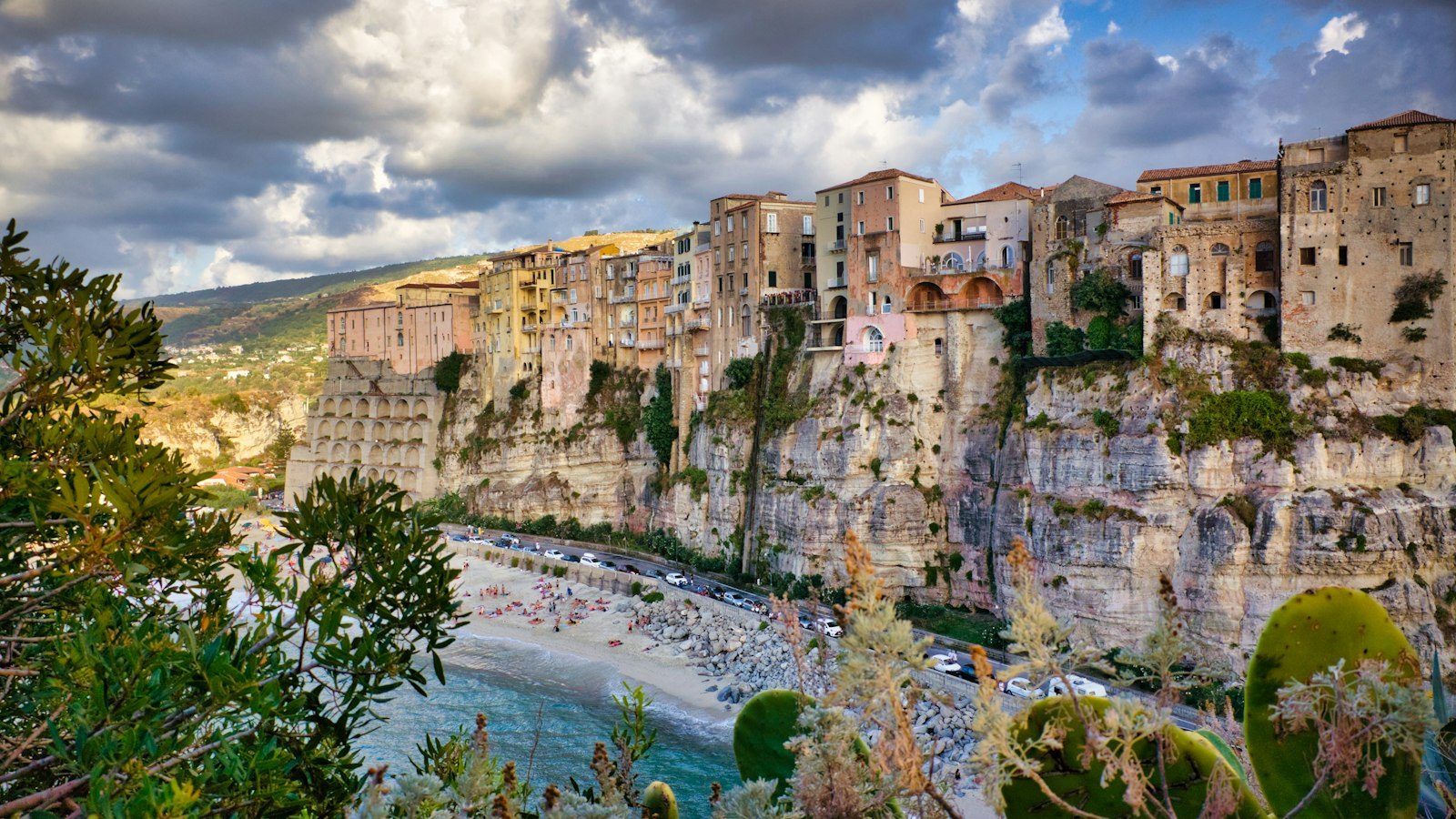
A clifftop town on Calabria's Costa degli Dei, with old palazzi built right up to the edge of a sandstone cliff. You swim from pale sandy beaches below, climb to the church on the rock and eat red onions with almost everything while Stromboli sits on the horizon.
- Best time to visit: June and September
- Daily budget (budget traveller): $70 to $225 USD
- Ideal trip length: 4 to 7 days
Tropea sits on a sandstone cliff above the Tyrrhenian Sea, on the stretch of Calabrian coast known as the Costa degli Dei, the Coast of the Gods. It is about an hour by regional train from Lamezia Terme, where most visitors fly in, and it is small, with fewer than 6,000 residents. The old town is a tight grid of lanes, churches and faded noble palazzi that stops abruptly at the cliff edge. From the belvederes you look straight down onto white sand and clear, pale blue water. Just offshore stands Santa Maria dell'Isola, a church on top of a rock that used to be an island and is now the town's symbol. Below the cliff you swim from free beaches or rent a sunbed at a lido. Further along the coast are the coves of Capo Vaticano, and in summer boats leave the port for Stromboli and the Aeolian Islands. Tropea is very seasonal. It gets packed in August and many places shut from November to March. In June and September, though, a cheap guesthouse room, free beaches, €5 trains and plates of 'nduja pasta make it a relaxed and affordable place to spend a slow week on your own.
Tropea is the most famous town on the Costa degli Dei, the stretch of Calabrian coast between Pizzo and Capo Vaticano. It is built on a sandstone cliff, with noble palazzi, churches and narrow lanes running right up to the drop, and fine pale sand and clear water below. Fewer than 6,000 people live here, but in summer the population swells many times over. Most visitors come for the beach and the view of Santa Maria dell'Isola, the church on the rock just offshore. Stay a few nights and you get more than that: the Corso empty at 8am, a swim before the lidos open, sunset from the Affaccio del Cannone and a late dinner of 'nduja pasta and red onion salad. Calabria is one of Italy's cheaper regions, and with free beaches, regional trains and simple food, Tropea can be good value outside August.
Most people arrive via Lamezia Terme airport, then take the regional train, which costs about €5 and takes roughly an hour. Trains are not frequent, so plan around the timetable. Once you are here, walk. The old town is small and largely pedestrian, and the beaches are a steep staircase below. Stay in the old town for views and evenings out, by the marina if you want to be close to the sea, or near the station for cheaper rooms. Use the train for Capo Vaticano and Pizzo, and the boats from the port for the coves and the Aeolian Islands.
Timing matters more than usual here. June and September bring warm sea, long evenings and fair prices. July and August are hot, very busy and expensive, with lidos and rooms booked out on weekends, though it is also the liveliest time, with every bar open and boats leaving daily. From November to March, Tropea is very quiet. Many hotels and restaurants close, boat trips stop and the town goes back to the locals. Tropea is safe and easy-going. English is spoken in hotels and tourist businesses but less so elsewhere, so a few words of Italian help. Evenings mean a walk along the Corso, an aperitivo at the belvedere and a long dinner rather than clubs.
Tropea itinerary
Arrive and find your feet
Morning: Fly into Lamezia Terme and take the shuttle to Lamezia Terme Centrale, then the regional train to Tropea (about an hour, around €5).
Afternoon: Drop your bag and walk the Corso Vittorio Emanuele to Piazza Ercole. Head down the steps for a first swim below the cliff.
Evening: Watch the sunset from the Affaccio del Cannone, then have 'nduja fileja and a red onion salad at a trattoria in the old town.
Church on the rock and old town
Morning: Visit Santa Maria dell'Isola early, before the heat. The church is free, and the garden and terrace cost €3. Cover shoulders and knees.
Afternoon: Swim from the free beach beside the rock, then climb back up to see the Norman cathedral and its Madonna di Romania icon in the cooler late afternoon.
Evening: Wander the side lanes around Largo Duomo and Porta Vaticana, then have an aperitivo at a belvedere bar.
Capo Vaticano by train
Morning: Take a morning train south to Santa Domenica or Ricadi and walk to the beach at Riaci or Grotticelle. Bring water and cash.
Afternoon: Swim and snorkel in the coves, then walk or take a taxi up to the Capo Vaticano lighthouse viewpoint.
Evening: Stay for sunset over the Aeolian Islands if the train times allow, then head back to Tropea for a late pizza.
Stromboli by boat
Morning: Slow morning in town, with granita and brioche for breakfast and a short swim.
Afternoon: Board a boat at Tropea port for Panarea and Stromboli (about €45-95). Wander Panarea's white lanes, then Stromboli's black-sand village.
Evening: Watch for eruptions from the boat off the Sciara del Fuoco after dark. You will be back around 10:30pm.
Pizzo
Morning: Take the train to Pizzo and visit the Chiesa di Piedigrotta, the rock-cut church on the beach (€5, or €8 with the castle).
Afternoon: Climb to the old town, see the Aragonese castle and eat tartufo ice cream in Piazza della Repubblica.
Evening: Train back to Tropea. Have a swim at sunset, then a simple dinner on the Corso.
Beach day and the port
Morning: Walk past the marina to the port and the quieter beaches towards Parghelia. Swim before the crowds arrive.
Afternoon: Treat yourself to a lido sunbed for the hot hours, or join a short boat tour of the Coast of the Gods with swimming stops.
Evening: Farewell dinner of grilled swordfish or fish by weight. Ask the price first, then take a last walk along the cliff.
Slow morning and depart
Morning: Take a last early swim below Santa Maria dell'Isola, then have a coffee on Piazza Ercole.
Afternoon: Buy red onion jam, 'nduja or dried chillies to take home, then take the train to Lamezia Terme. Check times the day before.
Evening: Fly out of Lamezia, or carry on by train towards Naples or Sicily.
Best neighbourhoods
- Old town (centro storico): The heart of Tropea, along Corso Vittorio Emanuele and around Piazza Ercole, with the cathedral, the cliff belvederes and most of the bars and restaurants. Everything is on foot and the views are right there. It is noisy until late in summer, so if you sleep lightly, ask for a room away from the Corso.
- The marina and the beaches: The flat strip at the bottom of the cliff, between Santa Maria dell'Isola and the port. You get beach clubs, a few hotels and apartments, and you can be in the sea in two minutes. Getting up to the old town means about 200 steps or a walk round by road, which is hard work in the heat.
- Around the station: The newer part of town, inland from the old centre, with apartment blocks, supermarkets and cheaper guesthouses. It is plain to look at, but the old town is only 5 to 10 minutes away on foot. It is practical if you come by train or plan day trips.
- The port and towards Parghelia: Head north-east past the marina and you reach Tropea's port, where the Aeolian boats leave from, and then the quieter beaches towards Parghelia. You will find a few resort hotels and apartments with sea views. It is calmer than the centre, but you will be walking back along the shore road at night.
- Santa Domenica and Capo Vaticano: Villages in the municipality of Ricadi, a few minutes south by train or car, with some of the best coves on the coast, including Riaci and Grotticelle. Villas, agriturismi and campsites are the main options. It suits a beach-focused stay, but without a car you will rely on infrequent trains and summer shuttles.
Must-do experiences
- Visit Santa Maria dell'Isola: Walk down from the old town, cross to the rock and climb the stone steps to the church. The church is free. The garden, the historical route and the rooftop terrace cost €3 (€2 for ages 7 to 18). It opens daily from about 9:30am, and you need to cover shoulders and knees.
- Look down from the cliff belvederes: The Affaccio del Cannone at the end of the Corso has the classic view of the church on the rock and the beach below. Go at sunset, then try the smaller viewpoints along the cliff edge. On clear evenings you can see Stromboli out to sea.
- Swim below the cliff: The beaches either side of Santa Maria dell'Isola have fine sand and clear water. Free stretches are marked spiaggia libera, and lidos charge roughly €20-35 a day for a sunbed and umbrella in summer. Arrive early in July and August.
- Explore the Norman cathedral: Tropea's cathedral dates back to Norman times and stands at the edge of the old town. Inside is the revered icon of the Madonna di Romania and two American bombs from 1943 that never went off. Entry is free, so dress for a church.
- Take the train to Capo Vaticano: Regional trains run south to Santa Domenica and Ricadi, the nearest stops for the coves of Capo Vaticano. Walk to the lighthouse viewpoint above the headland, then swim at Grotticelle or Riaci. Check return times before you go.
- Sail to Stromboli: From spring to early autumn, boats leave Tropea port for Stromboli and Panarea, often with Lipari as well. Day and evening trips cost about €45-95. The night trips stop off the Sciara del Fuoco so you can watch for eruptions, and get back around 10:30pm.
- See the rock church in Pizzo: Take the train to Pizzo for the Chiesa di Piedigrotta, a small church carved into the sandstone right on the beach in the 17th century. Adult entry is €5, or €8 with the town's Aragonese castle. Then eat tartufo ice cream in the main square.
Hidden gems
- Porta Vaticana, one of the old town gates, where a short lane drops off the cliff and you see the coast from a less photographed angle
- The early morning beach below Santa Maria dell'Isola, empty before the lidos open, when the cliff catches the first sun
- The cathedral side lanes around Largo Duomo, quiet even in August, with crumbling palazzo doorways and carved coats of arms
- The Capo Vaticano lighthouse viewpoint at sunset, with the Aeolian Islands lined up on the horizon on clear days
- The garden behind Santa Maria dell'Isola, which most people skip, with cacti, flowers and a sea view that is worth the €3
Daily budget
- Accommodation: budget €45-70 / night (guesthouse or B&B single room), mid-range €100-170 (old town boutique hotel or sea-view apartment), splurge €280+ (5-star relais or suite with a terrace). Prices double in August. A per-person tourist tax is added on top for up to 15 nights, starting at around €1.50 a night and higher in starred hotels. Book June to September early.
- Food: budget €20-30 / day (bar breakfast, panino or pizza, simple trattoria dinner), mid-range €40-60 (lunch out and a sit-down seafood dinner), splurge €80+ (fish by weight, wine, tasting menus). A pizza is about €7-12 and pasta dishes roughly €10-16. Restaurants usually add a small cover charge (coperto). Fish is often priced by weight, so ask first. Prices are rough guides.
- Transport: budget €0-6 / day (walking, regional trains), mid-range €10-25 (trains plus a taxi or tourist train), splurge €45-95 (Aeolian Islands boat trip). The train from Lamezia Terme is about €5. Short hops to Capo Vaticano or Pizzo cost a few euros. Parking near the centre is paid by the hour in summer.
- Activities: budget €0-10 / day (free beaches, cathedral, Santa Maria dell'Isola garden at €3), mid-range €15-35 (lido sunbed, Piedigrotta at €5, castle combo at €8), splurge €45+ (Capo Vaticano boat tour, snorkelling, private boats). The church on the rock is free, and the garden and terrace cost €3. Lido prices rise in August. Coastal boat tours often include swimming stops and an aperitivo.
- Drinks & nightlife: budget €5-10 (an espresso, a beer or a glass of Calabrian wine), mid-range €15-30 (aperitivo and a few drinks on the Corso), splurge €50+ (cocktails at a beach club or terrace bar). An espresso at the bar costs around €1.20-1.50 and a spritz €6-9. Nightlife means bars and terraces on the Corso and the beach clubs in summer.
Where to stay
- Budget guesthouse in Around the station and the old town edges (€45-70 / night): Family-run B&Bs and affittacamere (rooms to rent) are the main budget option, as Tropea has few hostels. Many offer single rooms, and the old town is a short walk away.
- Boutique hotel in Old town (€110-200 / night): Small hotels in restored palazzi, such as Villa Antica Tropea, put you right among the lanes and belvederes, often with a roof terrace for breakfast.
- Apartment in Marina and the old town lanes (€80-160 / night): Apartments give you a kitchen and sometimes a sea-view balcony. Down by the marina you are close to the beach, but check how many stairs lie between you and the centre.
- Splurge in Just outside the old town (€300-600+ / night): Villa Paola is a luxury relais in a former convent above Tropea, with gardens, a pool and sea views. The old town is a short ride or walk away.
What to eat
- Tropea red onions (cipolla rossa di Tropea): sweet and mild, eaten raw in salads, cooked into jam, put on pizza and even used in ice cream
- 'Nduja: the soft, spicy pork spread from nearby Spilinga, spread on bread, stirred into pasta or melted on pizza
- Fileja: hand-twisted Calabrian pasta, usually served with 'nduja and tomato or with onion sauce
- Swordfish (pesce spada): grilled or rolled in involtini, best from late spring into summer, when it is in season along this coast
- Tartufo di Pizzo: a ball of hazelnut and chocolate ice cream with a soft fudgy centre, the reason half the visitors go to Pizzo
- Granita and a brioche for breakfast in summer, or a quick panino with 'nduja and provola for a cheap beach lunch
Day trips
- Capo Vaticano (About 10km south of Tropea, 10 to 15 minutes by train or car): A granite headland with a lighthouse viewpoint and some of the clearest water in Calabria, at coves such as Grotticelle and Riaci. It is the best beach day on the coast. Take a regional train to Santa Domenica or Ricadi and walk or take a taxi to the beaches, or join a boat tour from Tropea port. Check return train times, as services are not frequent.
- Pizzo (About 30km north-east, 30 to 45 minutes by train): A clifftop fishing town known for tartufo ice cream, an Aragonese castle and the Chiesa di Piedigrotta, a church carved into the rock on the beach. Take a regional train to Pizzo and walk up to the centre. Piedigrotta is about 1km north of town. Entry is €5, or €8 with the castle, and from March to October it opens mornings and afternoons with a lunch break.
- Stromboli and the Aeolian Islands (About 60km offshore, 1.5 to 2.5 hours by boat): An active volcano rising straight out of the sea, with a black-sand village. Trips usually add Panarea or Lipari, and evening trips watch for eruptions from the water. Book a day or evening boat trip from Tropea port, which costs about €45-95 and runs roughly from spring to early autumn. Trips are cancelled in rough seas, and hiking the volcano needs an authorised guide and depends on the alert level.
When to visit
- Spring (April - May): 17-25°C, sunny and fresh, sea still cool until late May. Crowds: Low to moderate, busier at Easter and on long weekends. Good for walking, views and cheap rooms. Boat trips and lidos start up during these months, but some places do not open until May. Swimming is bracing until the end of May.
- Early summer (June): 24-29°C, sunny, sea around 22-25°C. Crowds: Moderate, rising towards the end of the month. Arguably the best month. Warm water, long evenings, all services running and prices still below the August peak.
- High summer (July - August): 29-34°C, hot and humid, sea up to about 27°C. Crowds: Very busy, especially in August and around 15 August (Ferragosto). Great for swimming, boat trips and nightlife, but rooms and lidos cost the most and the beaches get packed. Book early and swim in the early morning or late afternoon.
- Autumn and winter (September - March): September 24-28°C, then cooling to 10-16°C in winter, with rain and rough seas. Crowds: Moderate in September, very quiet from November. September is the local pick, with warm water and calmer beaches. October can still be lovely. In winter many places close, so it suits a quiet stopover rather than a beach holiday.
Entry rules for your passport
Visa rules for Italy depend on the passport you travel on. Check the official source before you book: European Commission: Schengen visa policy
Getting there
Tropea has no airport. The nearest is Lamezia Terme, about an hour away, with flights from Italian cities and seasonal and year-round routes from around Europe. From the airport, take the shuttle bus or a taxi to Lamezia Terme Centrale, then a regional train to Tropea. It takes roughly 50 to 70 minutes and costs about €5. Direct trains run a handful of times a day, there are fewer on Sundays, and the last departure is usually in the early evening, so check before you book a late flight. From Rome or Naples, take a fast train to Lamezia Terme Centrale or Vibo Valentia-Pizzo and change to a regional train. In summer, Liberty Lines runs limited hydrofoils linking Tropea and Vibo Valentia with the Aeolian Islands. If you drive, take the A2 motorway to the Pizzo exit and follow the coast road. The old town is a ZTL, so park outside it.
Border checks: non-EU visitors (other than Swiss, Norwegian, Icelandic, Liechtenstein, Andorran, Monegasque, San Marinese and Vatican citizens, and holders of an EU residence permit or long-stay visa) are registered in the EU's Entry/Exit System (EES) instead of getting a passport stamp. On your first crossing, officers take your photo and/or fingerprints, so allow extra time at passport control. ETIAS, the planned travel authorisation, is not in operation yet, so don't pay any website for one.
Getting around
Tropea's old town is small and mostly pedestrian, so you will walk almost everywhere. It takes about 5 to 10 minutes from the railway station to Piazza Ercole. Getting between the old town and the beaches means steep stone staircases of around 200 steps, or a longer walk down by road. Allow time for the climb back up in summer. The old town is a limited traffic zone (ZTL), so if you drive, leave the car in a paid car park on the edge of the centre and check the signs carefully, as camera fines are common. Regional trains on the coastal line link Tropea with Santa Domenica and Ricadi for Capo Vaticano to the south, and Vibo Marina, Pizzo and Lamezia Terme to the north. Short hops cost a few euros, but trains are not frequent, so check times on the Trenitalia app. In summer, small tourist trains and shuttles run to some beaches. Taxis are limited and expensive, so book through your accommodation. Boats are the best way to see the coves of Capo Vaticano, and from roughly Easter to October they also go to the Aeolian Islands.
Safety
Tropea is generally safe, and violent crime against visitors is rare. Watch your bag and phone on the crowded Corso on summer evenings and on busy beaches. The real risks are physical. The staircases between the old town and the beaches are steep and uneven, the summer heat is strong and the sea can get rough. Look for lifeguard flags at the lidos, and be careful on free beaches, which often have no lifeguard. Waves and currents pick up when the wind blows from the west. Jellyfish turn up some summers. Scooters and cars move fast on the narrow coast roads, so take care walking along them at night. Boat trips to Stromboli depend on the weather and the volcano's alert level, and hiking up Stromboli is restricted and needs an authorised guide. Tap water is treated and generally safe, though many locals drink bottled. The EU emergency number is 112. EU travellers should carry an EHIC and UK travellers a GHIC, and everyone else needs travel insurance with medical cover.
Solo travel tips
- Stay in the old town: You get the views, the evening walk on the Corso and plenty of places to eat alone without feeling out of place. The beach is still just a staircase away.
- Plan around the trains: Direct trains to Lamezia and along the coast are not frequent and thin out on Sundays and in the evenings. Check the Trenitalia app before every day trip and do not miss the last train.
- Book Stromboli early in your stay: Boat trips get cancelled in rough seas. Do them in the first few days so you have a spare day if the weather turns.
- Eat well for little: A bar breakfast, a panino with 'nduja on the beach and a pizza in the evening keep costs low. Save the fish by weight for one good dinner.
- Safety for solo travellers: The main risks are steep stairs, heat, rough sea on unguarded beaches and fast traffic on coast roads. Swim near other people or at a lido with a lifeguard, carry water and stick to the lit centre late at night.
- Meet people on a boat: Group boat tours to Capo Vaticano or Stromboli, aperitivo cruises and walking tours of the old town are the easiest way to chat to other travellers. Locals are also used to visitors and happy to talk at the bar.
Cultural etiquette
- Greet people with 'buongiorno' in the morning and 'buonasera' from mid-afternoon, and say 'grazie' (thank you).
- Cover up when you leave the beach. Walking through the old town or into shops in swimwear is frowned upon.
- Dress modestly in churches, including Santa Maria dell'Isola and the cathedral, with shoulders and knees covered.
- Expect many shops to close for a long lunch break in the afternoon, and plan on dinner from about 8:30pm.
- A cover charge (coperto) on the bill is normal and is not a tip. Ask the price of fish by weight before you order.
- Tipping is not expected. Rounding up or leaving a few euros for good service is appreciated.
- Keep noise down in the old town lanes late at night, take your rubbish home from free beaches and never take sand or stones.
Frequently asked questions
How do I get to Tropea from the airport?
Most people fly to Lamezia Terme. From the airport, take the short shuttle bus or a taxi to Lamezia Terme Centrale station, then a regional train to Tropea. The train takes roughly 50 to 70 minutes and costs about €5. Direct trains run only a handful of times a day, there are fewer on Sundays, and the last one usually leaves in the early evening, so check times before you book a late flight. Tropea station is a 5 to 10 minute walk from the old town.
How many days do I need in Tropea?
Two or three nights covers the old town, Santa Maria dell'Isola and a couple of beach days. Four to five nights lets you add Capo Vaticano and a Stromboli boat trip. With a week you can also fit in Pizzo, quieter beaches along the coast and a spare day in case the weather cancels a boat.
When is the best time to visit Tropea?
June and September are the best months. The sea is warm, the days are long, and prices and crowds are lower than in high summer. July and especially August are hot, crowded and the most expensive time. Book rooms and lidos well ahead. From November to March the town is very quiet and many hotels, restaurants and boat trips stop completely.
Do I need a car in Tropea?
Not for Tropea itself. The old town is walkable and a limited traffic zone, and trains reach Capo Vaticano, Pizzo and Lamezia. A car helps if you stay in the villages around Ricadi or want to explore remote coves and the hills inland. If you drive, park outside the ZTL and check the signs, as camera fines are common.
Can I visit Stromboli from Tropea?
Yes, from roughly spring to early autumn. Several companies run boat trips from Tropea port to Stromboli and Panarea, sometimes with Lipari or Vulcano too, for about €45-95. Evening trips stop off the Sciara del Fuoco after dark, where you can watch for eruptions, and get back around 10:30pm. Trips are cancelled in rough seas, so book for early in your stay. Liberty Lines also runs limited summer hydrofoils if you want to stay overnight on the islands.
Are the beaches in Tropea free?
Many are. Free beaches (spiaggia libera) sit between the lidos below the old town. Lidos rent sunbeds and umbrellas for roughly €20-35 a day in summer and have toilets, showers and bars. In August, free stretches fill up early, so get down before 10am. The coves at Capo Vaticano mix free beaches and lidos.
Is Tropea safe for solo female travellers?
Yes. Tropea is a busy, friendly holiday town, and the old town is lively and well lit on summer evenings. Take normal care with drinks in bars and with your belongings in crowds. Avoid walking alone on dark coast roads or empty beaches late at night. Off season the streets get very quiet after dark, so stay central.
What entry rules apply to Italy in 2026?
Italy is in the EU and the Schengen area. Many non-EU visitors, including those from the UK, US, Canada and Australia, can stay visa-free for up to 90 days in any 180-day period across Schengen. The EU's Entry/Exit System has been fully running since 10 April 2026 and records fingerprints and a photo at the external border. ETIAS, the new travel authorisation, is not running yet. As of early November 2026 there is no start date, and the EU says it will give several months' notice. Check official EU and Italian government websites and your own government's travel advice before you go.
More about Tropea
Tours and activities in Tropea | Tropea in 2 days | Tropea in 3 days | Tropea in 4 days | Tropea in 5 days | Tropea in 7 days
Joy Plus home | Destinations | Itineraries | Activities | Flights | Budget planner | Calendar | Map | Blog | Lifetime access