Destinations / Asia
Ulaanbaatar, Mongolia travel guide
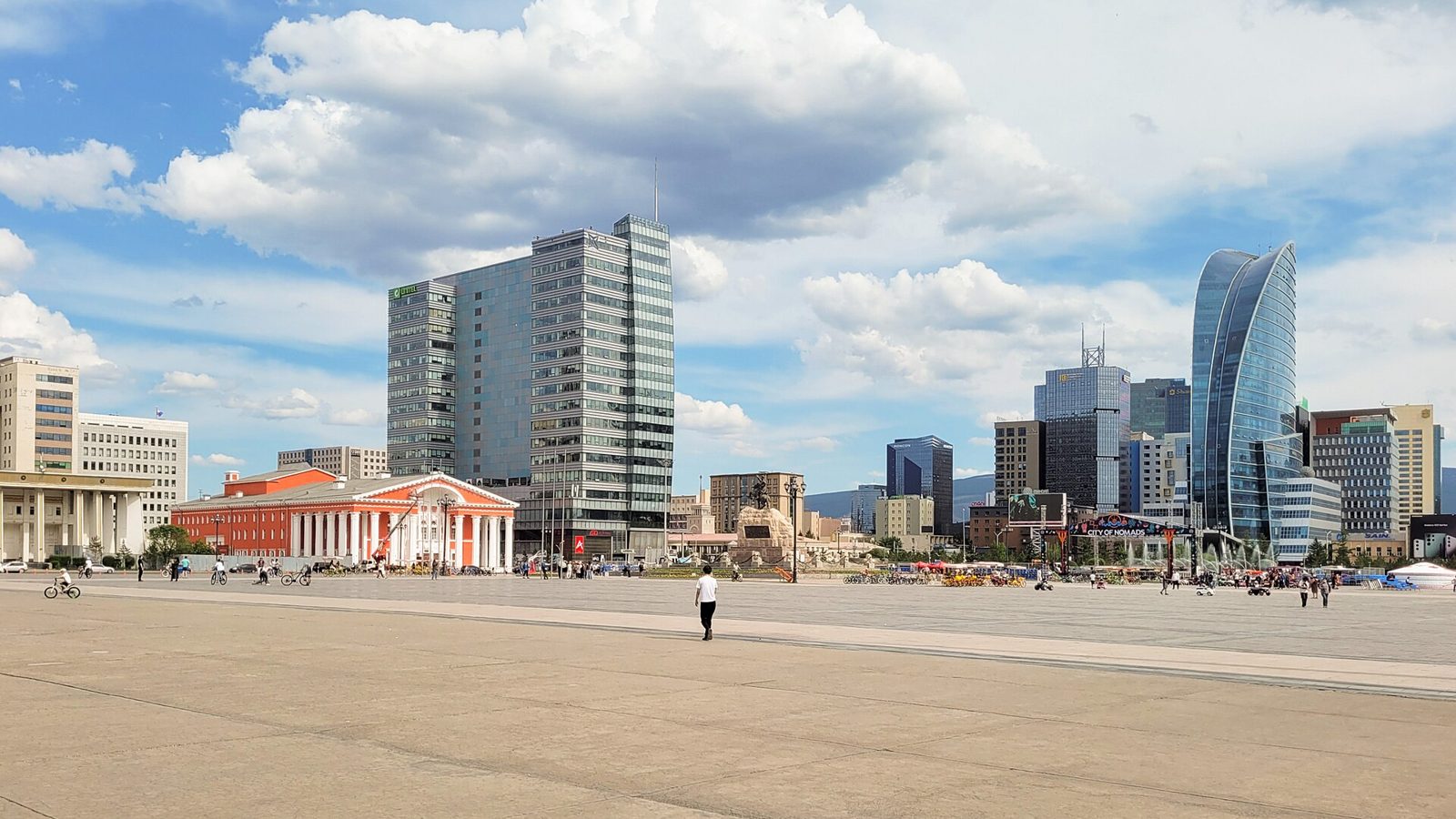
Mongolia's sprawling, high-altitude capital, where Soviet blocks, glass towers and ger districts meet the open steppe. You hear monks chanting at Gandan in the morning, see a whole empire's history in one museum and are out among the horses and granite hills of Terelj within a couple of hours.
- Best time to visit: June to September
- Daily budget (budget traveller): $40 to $160 USD
- Ideal trip length: 3 to 7 days
Ulaanbaatar sits in a broad valley on the Tuul River at about 1,350m, ringed by bare hills and pine-covered mountains. Nearly half of Mongolia's population lives here, and it shows: the traffic is heavy, the skyline keeps growing and the ger districts spread up the slopes on every side. It is not a pretty city at first glance. It is a fascinating one, though. Within a short walk of Sükhbaatar Square you have the huge Chinggis Khaan National Museum, the National Museum of Mongolia and the old Choijin Lama temples, and Gandan Monastery is a short bus ride west. Climb Zaisan hill for the view, see a throat singing show in the evening and eat buuz dumplings in a canteen for a couple of dollars. Most travellers use Ulaanbaatar as a base for the countryside, and that works well. Terelj National Park, the giant steel Chinggis Khaan statue and the wild horses of Hustai are all within a day trip. Hostels here are cheap and sociable, and the shared tours they organise are often the easiest way for a solo traveller to see the steppe. The catch is the climate. This is the coldest capital in the world, and winter brings serious smog, so most people come between June and September.
Ulaanbaatar began life in 1639 as a moving monastery that travelled across the steppe, and it only settled in its present valley in 1778. Today it is home to around 1.7 million people, almost half of the country, and it is growing fast. Soviet apartment blocks, glass towers and Buddhist temples sit side by side, and on the hills all around are the ger districts, where families who have moved from the countryside live in felt tents and wooden houses. It is loud, crowded and often traffic-bound, and many travellers rush straight through. Give it a few days, though, and it pays you back. You get morning chanting at Gandan, a world-class museum on the Mongol Empire, a throat singing show, Korean barbecue on Seoul Street and sunset from Zaisan, all for less than you would spend in most capitals.
Getting here usually means flying. Chinggis Khaan International Airport, about 50km south of the city, has flights from Beijing, Seoul, Tokyo, Istanbul and other hubs. The X19 bus runs to Sükhbaatar Square for 15,000 MNT until about 11pm. The Trans-Mongolian railway is the classic overland route from Beijing. Once you are here, base yourself around Sükhbaatar Square or Peace Avenue so you can walk to most of the museums, and use a U-Money card for the buses to Gandan, Zaisan and the Winter Palace. Hostels in the centre run day trips and longer tours, which is the easiest way for a solo traveller to get out to Terelj, the Chinggis Khaan statue and Hustai.
Timing shapes everything. June to September is warm and green, though July brings Naadam crowds and peak prices, and thunderstorms are common in July and August. Spring is dry and windy, with dust storms. From November to March, temperatures can drop below -30°C at night, and smoke from coal stoves in the ger districts makes the air some of the worst in the world. English is spoken in hostels, hotels and younger circles, but less so elsewhere, and street signs are in Cyrillic, so learning the alphabet helps a lot. Mongolians can seem reserved at first but are generous once you get talking, and the city is the best place to prepare for the countryside.
How many days in Ulaanbaatar?
For Ulaanbaatar, we recommend 3 to 7 days.
| Trip length | What you'll see | Itinerary |
|---|---|---|
| 2 days | Museums around the square | Ulaanbaatar in 2 days |
| 3 days · Recommended | Adds: Gandan and old Buddhist Ulaanbaatar | Ulaanbaatar in 3 days |
| 4 days · Recommended | Adds: Winter Palace and Zaisan | Ulaanbaatar in 4 days |
| 5 days · Recommended | Adds: Terelj and the Chinggis Khaan statue | Ulaanbaatar in 5 days |
| 7 days · Recommended | Adds: Wild horses at Hustai; Shopping | Ulaanbaatar in 7 days |
Ulaanbaatar itinerary
Arrive and find your feet
Morning: Take the X19 bus from the airport to Sükhbaatar Square (15,000 MNT, about an hour). Drop your bag at your hostel and buy a U-Money card at a CU or Circle K.
Afternoon: Walk around Sükhbaatar Square and the Government Palace, then along Peace Avenue to the State Department Store and the Beatles monument.
Evening: Dinner of buuz and milk tea in a local guanz, then an early night to adjust to the altitude and time zone.
Museums around the square
Morning: Be at the Chinggis Khaan National Museum when it opens (about 30,000 MNT, or 45,000 MNT with the gold statue). Allow at least three hours.
Afternoon: Lunch nearby, then the National Museum of Mongolia for traditional dress, gers and the socialist period.
Evening: Watch a throat singing and folk show, then have a drink or Korean barbecue on Seoul Street.
Gandan and old Buddhist Ulaanbaatar
Morning: Take a bus or taxi to Gandan Monastery for 9 to 10am to hear the monks chanting. Walk around the main temple clockwise.
Afternoon: Back in the centre, visit the Zanabazar Museum of Fine Arts and the Choijin Lama Temple Museum, a short walk apart.
Evening: Dinner of tsuivan or khuushuur, and a walk through the square as the lights come on.
Winter Palace and Zaisan
Morning: Take a bus south to the Bogd Khan Winter Palace (roughly 15,000 to 20,000 MNT) and wander the temple halls.
Afternoon: Walk on to the Buddha park, then follow a trail up the edge of Bogd Khan Mountain if the weather is fine.
Evening: Climb the steps to the Zaisan Memorial for sunset over the city, then eat at one of the cafés in the Zaisan area.
Terelj and the Chinggis Khaan statue
Morning: Join a hostel day tour or shared driver to the Chinggis Khaan Equestrian Statue at Tsonjin Boldog, about an hour east. Ride the lift up to the horse's head.
Afternoon: Continue to Gorkhi-Terelj National Park for Turtle Rock and the walk up to Aryabal Meditation Temple. Ride a horse with a local family if you like.
Evening: Back in the city for a relaxed dinner, or stay overnight in a ger camp in Terelj instead.
Wild horses at Hustai
Morning: Set off with a tour or driver for Hustai National Park, about two hours west of the city.
Afternoon: Visit the information centre, then drive and walk into the hills to look for takhi, the Przewalski's horses that were reintroduced here.
Evening: The horses are easiest to spot in the late afternoon and evening, so return late or stay in the park's ger camp.
Shopping and depart
Morning: Buy cashmere, felt slippers and souvenirs at the State Department Store, or brave Narantuul market with your valuables zipped away.
Afternoon: A last plate of buuz, then catch the X19 bus from Sükhbaatar Square to the airport. Leave plenty of time for traffic.
Evening: Fly out, or board the train towards Beijing or on into the countryside.
Best neighbourhoods
- Sükhbaatar Square and the centre: The heart of the city, with the Government Palace, the Chinggis Khaan National Museum, the National Museum and the opera house all around the square. The airport X19 bus stops here, and most mid-range hotels are within a few blocks. It is the easiest base for a first visit, but the main roads are loud and busy.
- Peace Avenue and the State Department Store: The main east-west road, known locally as Enkh Taivny Örgön Chölöö. You have the State Department Store (Ikh Delguur), the Beatles monument square, banks, supermarkets and several of the best-known backpacker hostels. Everything is a 10 to 15-minute walk from the square, and buses run west towards Gandan.
- Seoul Street: A strip just south of the centre lined with Korean restaurants, pubs, karaoke bars and clubs. It is the liveliest part of town after dark and good for a night out. It suits you if you want food and drink on the doorstep, but it can be noisy and a little rowdy late at night.
- Gandan and the west: The older, hilly area around Gandan Monastery, with small streets, temples and ger houses pushing up the slopes behind. It feels more local and less polished than the centre. Accommodation is limited, so most people visit for a morning rather than stay.
- Zaisan and Khan-Uul: The newer, wealthier south of the city, below the Zaisan Memorial and the forested slopes of Bogd Khan Mountain. You will find modern apartment towers, malls, cafés and good walking trails. It is quieter and greener than the centre, but you will rely on buses or taxis across the Tuul River.
Must-do experiences
- Spend a morning at the Chinggis Khaan National Museum: The city's newest and biggest museum stands just behind Sükhbaatar Square and traces Mongolian history from the Xiongnu to the 20th century across nine floors. Adult tickets are about 30,000 MNT, or 45,000 MNT including the gold Chinggis statue on the top floor. Allow at least three hours.
- Hear the monks chant at Gandan Monastery: Gandan is the country's most important Buddhist monastery and one of the few that survived the 1930s purges. Go around 9 to 10am, when the monks gather to chant. Entry to the main temple, with its 26m statue of Avalokiteshvara, costs a few thousand tögrög, and there is a fee for taking photos.
- Climb Zaisan hill at sunset: The Soviet-era Zaisan Memorial sits on a hill south of the river, with a circular mural and a panoramic view over the whole valley. It is free. Expect about 300 steps, and pair it with the large Buddha park at the foot of the hill.
- Visit the Bogd Khan Winter Palace: This was the home of the last Bogd Khan, Mongolia's theocratic ruler, until his death in 1924. The temple gates, painted halls and odd collection of gifts and stuffed animals make it one of the city's most interesting museums. Tickets cost roughly 15,000 to 20,000 MNT.
- See a throat singing show: The Tumen Ekh ensemble and other troupes put on evening shows of khöömii throat singing, morin khuur horsehead fiddle, contortion and masked tsam dance. Shows run most evenings in summer and last about an hour. Tickets are usually around 30,000 to 40,000 MNT, so check the current price.
- Learn the basics at the National Museum of Mongolia: Just west of the square, this older museum covers prehistory, traditional dress, gers and the 20th century in a compact way. It makes a good second museum, especially for the clothing and the hall on the socialist period. Allow one to two hours.
- Stand in Sükhbaatar Square: The vast central square is where the city gathers. Look out for the seated Chinggis Khaan at the Government Palace, the statue of the revolutionary hero Sükhbaatar and the pink opera house. It costs nothing, and in early July the Naadam parade starts here.
Hidden gems
- The Choijin Lama Temple Museum, a group of early 20th-century temples with wild tsam masks and Buddhist art, now hemmed in by glass towers just south of the square
- The Zanabazar Museum of Fine Arts, with bronze Buddhas by Mongolia's great 17th-century sculptor and monk, and far fewer visitors than the big museums
- The trails above Zaisan into Bogd Khan Mountain, where pine forest begins a short walk from the last apartment blocks
- Dashchoilin Monastery, a working monastery with temples built in the shape of large concrete gers, east of the centre
- The Beatles monument square near the State Department Store, where local students and musicians gather in the evenings
Daily budget
- Accommodation: budget $10-20 / night (hostel dorm), mid-range $50-100 (3-star hotel or central apartment), splurge $180+ (Shangri-La or Kempinski Khan Palace). Prices rise sharply in July, especially around Naadam, when the best hostels fill months ahead. Single rooms in guesthouses cost from about $25-35.
- Food: budget $8-15 / day (buuz, khuushuur, canteen set lunches), mid-range $25-40 (café lunch and a sit-down dinner), splurge $60+ (steakhouse or hotel restaurant with wine). A plate of buuz or tsuivan in a guanz costs a few dollars. Imported food, coffee and Western restaurants are much pricier. Prices are rough guides.
- Transport: budget $1-3 / day (city buses with a U-Money card), mid-range $10-20 (UBCab and taxis), splurge $60-100+ (private car and driver for a day). The X19 airport bus costs 15,000 MNT and an airport taxi about $30. The U-Money card costs about 3,600 MNT, and bus rides are 500 to 1,000 MNT.
- Activities: budget $3-10 / day (Gandan, Zaisan and the square), mid-range $15-30 (Chinggis Khaan museum, Winter Palace, folk show), splurge $80-150+ (day tour to Terelj or Hustai). The Chinggis Khaan National Museum costs about 30,000 MNT, or 45,000 MNT with the gold statue. Photo permits cost extra in most museums and temples.
- Drinks & nightlife: budget $3-6 (a local beer in a pub), mid-range $15-30 (a few drinks on Seoul Street), splurge $50+ (cocktails at a rooftop bar). Local beers and vodka are cheap. Imported wine and cocktails cost close to European prices. Pubs and clubs cluster around Seoul Street.
Where to stay
- Social hostel in Peace Avenue, near the State Department Store ($10-20 / night (dorm)): Golden Gobi Hostel is one of the city's longest-running backpacker hostels, a short walk from Sükhbaatar Square. It has a busy common room, and its tour desk helps solo travellers share countryside trips.
- Boutique hotel in Around Sükhbaatar Square ($60-120 / night): Small boutique and business hotels sit within a few blocks of the square, close to the museums and the airport bus. Ask for a room facing away from the main roads, as traffic noise carries.
- Apartment in Central Sükhbaatar district or Zaisan ($40-90 / night): Rented apartments give you a kitchen, space and heating that you control, which helps in the shoulder seasons. Check whether there is a lift, as many older blocks do not have one.
- Splurge in South of Sükhbaatar Square ($180-350+ / night): Shangri-La Ulaanbaatar is the city's top hotel, with large rooms, a spa and a mall and cinema next door. It is a 10-minute walk from the square and the Chinggis Khaan museum.
What to eat
- Buuz: steamed mutton dumplings and the national comfort food, served in canteens (guanz) and chains such as Khaan Buuz for a few dollars a plate
- Khuushuur: deep-fried flat pastries filled with minced meat, sold everywhere and eaten in huge numbers during Naadam
- Tsuivan: fried hand-cut noodles with mutton and vegetables, a cheap and filling lunch in any guanz
- Suutei tsai: salty milk tea, served with almost every meal. It is an acquired taste, but worth trying with a plate of buuz
- Airag: fermented mare's milk, sold in summer in plastic bottles or in a family's ger. It is mildly alcoholic, so start with a small bowl
- Korean barbecue and hot pot along Seoul Street, plus local beers such as Khan Bräu and Chinggis, when you need a break from mutton
Day trips
- Gorkhi-Terelj National Park (About 70km north-east of Ulaanbaatar, 1.5 to 2 hours by road): Granite outcrops, larch forest and river valleys dotted with ger camps. Turtle Rock and the hilltop Aryabal Meditation Temple are the main sights, and horse riding with local families is easy to arrange. Join a hostel day tour or hire a driver. A slow public bus also runs from the city a few times a day in summer, so check current times with your hostel. A small park fee is charged at the entrance.
- Chinggis Khaan Equestrian Statue (About 54km east of Ulaanbaatar at Tsonjin Boldog, about 1 hour by road): A 40m stainless steel statue of Chinggis Khaan on horseback, said to be the largest equestrian statue in the world. A lift and stairs take you up to a viewing platform on the horse's head, and there is a small museum below. Most people combine it with Terelj on a day tour or with a hired driver. Entry is roughly 10,000 to 20,000 MNT, so check the price on the day.
- Hustai National Park (About 100km west of Ulaanbaatar, around 2 hours by road): Rolling steppe and hills where takhi, the Przewalski's horses, were reintroduced after dying out in the wild. You also have a good chance of seeing marmots, deer and birds of prey. Take a tour or a hired driver, ideally staying overnight in the park's ger camp so you are there in the evening, when the horses come down to graze. The park charges an entry fee.
When to visit
- Spring (April - May): -5 to 18°C, dry, very windy, with dust storms and late snow. Crowds: Low. Cheap and quiet, but the weather is unpredictable and the hills are still brown. Fine for the city's museums, less good for the countryside.
- Summer (June - August): 18-28°C by day, cool nights, thunderstorms in July and August. Crowds: Busy, very busy around Naadam in mid-July. The main season. Tours run daily, the steppe is green and the city is lively. Book beds and tours well ahead for July.
- Autumn (September - October): September 8-20°C, cooling fast, first snow possible in October. Crowds: Moderate in September, quiet in October. September is many locals' pick, with golden larch forests, clear skies and fewer tourists. Bring warm layers for the evenings.
- Winter (November - March): -15 to -30°C or colder, sunny but with heavy smog. Crowds: Very quiet, apart from Tsagaan Sar (Lunar New Year). Only for the well prepared. Rooms are cheap and the frozen landscape is striking, but the air quality in the city is a serious health concern.
Getting there
Most people fly into Chinggis Khaan International Airport (UBN), which opened in 2021 in the Khöshig Valley about 50km south of the centre. MIAT Mongolian Airlines, Korean Air, Air China, Turkish Airlines and others link it with Seoul, Beijing, Tokyo, Istanbul, Frankfurt and other cities, though some routes are seasonal. The X19 public bus runs from the airport to Sükhbaatar Square from about 7:40am to 11pm for 15,000 MNT, and the X20 runs towards the west of the city for 10,000 MNT. Official taxis cost around $30. By rail, the Trans-Mongolian train connects Beijing and Ulaanbaatar in around 27 to 30 hours, a few times a week, and there are cheaper options via the border towns of Erlian and Zamiin-Üüd. Trains also run north towards Irkutsk in Russia, but check your government's travel advice first. Long-distance buses from the Dragon Center bus station link the capital with most provincial towns.
Getting around
Ulaanbaatar is long and thin, stretched along the valley, and its traffic is some of the worst in Asia at rush hour. The centre around Sükhbaatar Square and Peace Avenue is walkable, but you will need buses or taxis for Gandan, Zaisan, the Winter Palace and the markets. City buses do not take cash. Buy a U-Money card for about 3,600 MNT from kiosks near major stops or from CU and Circle K shops, top it up and tap on. Fares are a flat 500 to 1,000 MNT a ride, so check the current rate. The UB Smart Bus app and Google Maps show routes and stops. Taxis are a mix of official cars and private drivers. Agree the price first, or use the UBCab app so the fare is fixed. Expect roughly 1,500 to 2,000 MNT per km. Crossing roads is a real hazard, as drivers rarely stop at crossings, so cross with locals. For the countryside, most people join a tour or hire a driver through their hostel. Long-distance buses leave from the Dragon Center bus station in the west of the city.
Safety
Ulaanbaatar is generally safe for visitors, but take more care than in most Asian capitals. Pickpockets and bag slashers work the State Department Store, Narantuul market, crowded buses and Naadam crowds, so keep your phone and wallet in a zipped inside pocket. After dark, avoid quiet streets and the ger districts, and give drunk men a wide berth, particularly around bars at closing time. Traffic is the biggest daily risk. Winter is extreme, with nights below -30°C and heavy coal smog from December to February, so wear proper layers and an N95 mask. Do not drink the tap water. Use bottled or boiled water. Use official taxis or UBCab rather than flagging down private cars late at night. The emergency numbers are 102 for police, 103 for an ambulance and 101 for fire. Medical care outside the capital is basic, so get travel insurance that covers evacuation.
Solo travel tips
- Stay near Peace Avenue: Most of the museums, supermarkets and the airport bus are within walking distance. You avoid long taxi rides in traffic, and the central hostels are the best places to find people to share tours with.
- Share countryside tours: Vans, drivers and guides cost the same whether there are one or five of you. Check hostel noticeboards and ask the staff to match you with other travellers to cut the price.
- Learn the Cyrillic alphabet: Bus signs, menus and shop names are in Mongolian Cyrillic. An hour spent learning the letters makes reading bus stops and canteen menus much easier.
- Pack for every season: Even in summer, nights can drop close to freezing outside the city, and storms blow in fast. Carry a fleece, a waterproof and a warm hat on every day trip.
- Safety for solo travellers: The main risks are pickpockets, drunk men at night and traffic. Zip valuables away, take UBCab or a hostel-booked taxi after dark and cross the road with a crowd of locals.
- Meet people at a show or on a tour: Throat singing shows, hostel common rooms and shared Terelj day trips are easy places to meet other travellers. In summer, the Beatles monument square is a good spot to chat to local students.
Cultural etiquette
- Greet people with 'sain baina uu' (hello) and say 'bayarlalaa' (thank you). A little Mongolian goes a long way.
- Walk clockwise around temples, stupas and prayer wheels, and do not point your feet at altars or monks.
- Ask before photographing monks or people, and pay the photo fee in temples and museums where one is charged.
- If you visit a ger, do not step on the threshold, move clockwise inside and accept food, tea or a bowl of airag with your right hand, or both hands.
- If you accidentally touch someone's foot with yours, shake their hand straight away. It is a small gesture that matters.
- Never touch another person's hat or step over someone's legs, and do not whistle indoors.
- Tipping is not traditional, though rounding up in cafés and tipping guides and drivers on tours is now common.
Frequently asked questions
How do I get from the airport to the city centre?
Chinggis Khaan International Airport is about 50km south of the centre. The X19 public bus runs to Sükhbaatar Square for 15,000 MNT, and the X20 runs towards the west of the city for 10,000 MNT. You pay on board with cash or card. The journey takes about an hour, and the last bus leaves around 11pm. If you land late, take an official taxi from the counter for roughly $30, or ask your hostel to arrange a pickup. Traffic into the city can add a lot of time at rush hour.
How many days do I need in Ulaanbaatar?
Two or three days covers the main sights in the city: the Chinggis Khaan National Museum, Gandan, the Winter Palace and Zaisan. Five days lets you add a day trip to Terelj and the Chinggis Khaan statue. A week gives you time for Hustai's wild horses and a slower pace, or a base before and after a longer countryside tour.
When is the best time to visit Ulaanbaatar?
June to September. Days are warm, the hills are green and countryside tours run most often. July is the busiest month because of Naadam, which runs on 11 to 13 July, and prices for rooms and tours rise sharply. September is cooler and quieter, with golden autumn colour. From November to March, it is bitterly cold and often smoggy, though flights and rooms are cheap.
Can I see the countryside without joining a tour?
Partly. A slow public bus runs to Terelj, and long-distance buses from the Dragon Center station reach most provincial towns cheaply. Getting to the more remote parks, gers and sights still usually means hiring a driver, though. Solo travellers often join shared tours advertised in hostels, which split the cost of the van, driver and guide. For Hustai and the Chinggis Khaan statue, a day tour or a shared driver is far easier than public transport.
What is Naadam and how do I see it?
Naadam is the national festival of wrestling, horse racing and archery. In 2026 it ran on 11 to 13 July, with the opening ceremony at the National Sports Stadium and horse races at Khui Doloon Khudag outside the city. Stadium tickets sell out and often go through tour agents, so arrange them early. A cheaper option is the archery and ankle-bone shooting next to the stadium, or a smaller local Naadam in the countryside. Book your bed months ahead.
Can I take the train to or from Ulaanbaatar?
Yes. The Trans-Mongolian line links Ulaanbaatar with Beijing, a journey of around 27 to 30 hours, and there are also services north towards Irkutsk in Russia. Domestic trains run to Darkhan, Erdenet and Zamiin-Üüd on the Chinese border. Departures to Beijing are only a few times a week, so book ahead. Check your government's advice before planning any route through Russia.
Is Ulaanbaatar safe for solo female travellers?
Mostly, yes. Plenty of women travel here alone and stay in the central hostels. Most of the hassle comes from drunk men at night, so avoid walking alone late, use UBCab or a taxi booked by your hostel and do not accept unofficial taxis. Mongolians are generally helpful and hospitable. For countryside trips, pick well-reviewed tour companies and ask about the driver and guide in advance.
What entry rules apply to Mongolia in 2026?
US citizens can visit visa-free for up to 90 days, and Canadians for up to 30 days, under bilateral agreements. Citizens of 34 countries, including the UK, most EU states, Australia and New Zealand, can visit visa-free for up to 30 days under a temporary scheme that runs until 31 December 2026. As of late October 2026, no extension into 2027 had been announced. Your passport should be valid for at least six months. Check the Mongolian Immigration Agency and your own government's travel advice before you book.
Tours and activities in Ulaanbaatar | Ulaanbaatar in 2 days | Ulaanbaatar in 3 days | Ulaanbaatar in 4 days | Ulaanbaatar in 5 days | Ulaanbaatar in 7 days
Joy Plus home | Destinations | Itineraries | Activities | Flights | Budget planner | Calendar | Map | Blog | Lifetime access