Destinations / Oceania
Uluru, Australia travel guide
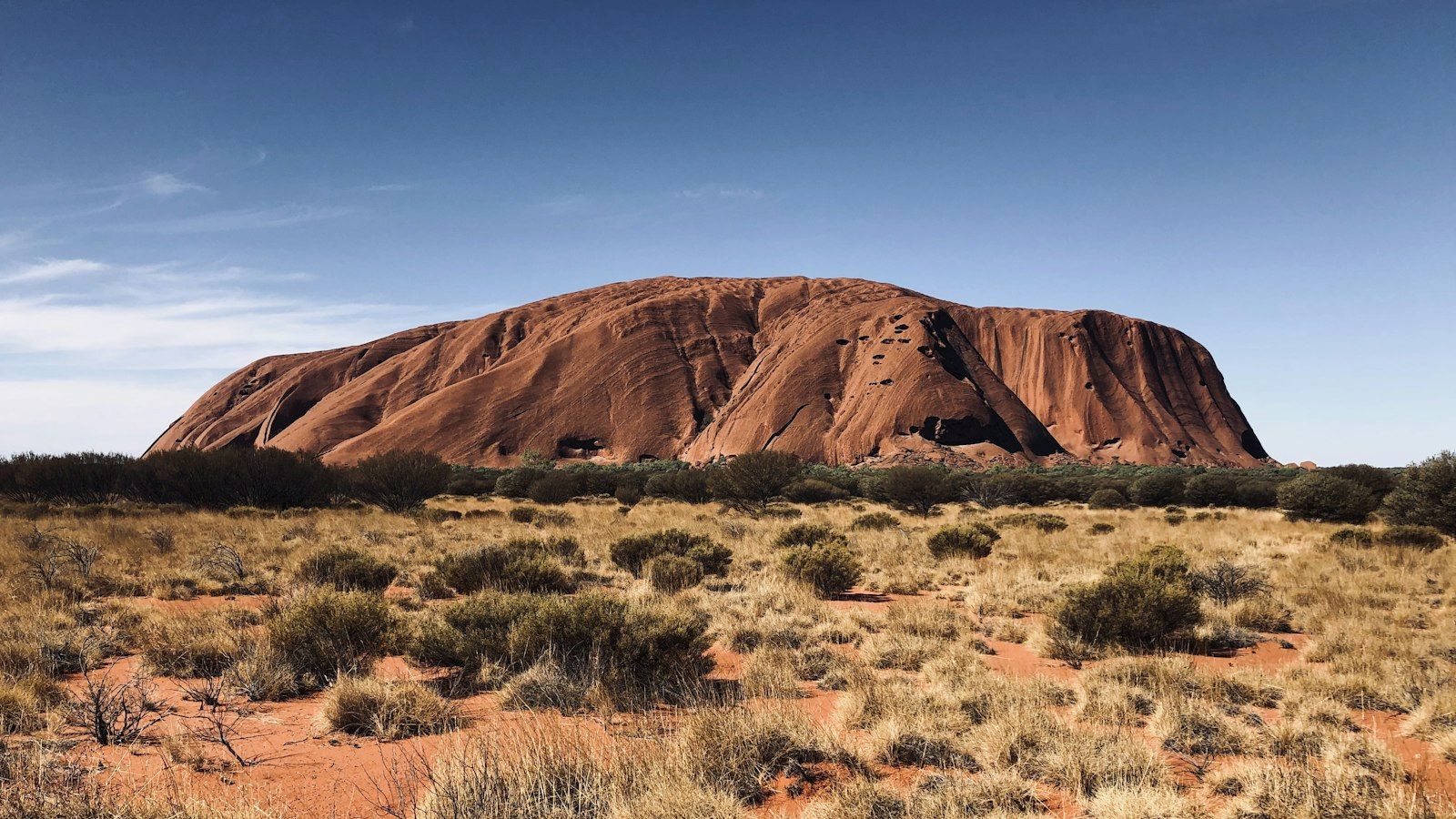
A 348-metre red monolith, the 36 domes of Kata Tjuta and a desert sky full of stars, in the Anangu homeland at the centre of Australia.
- Best time to visit: April to May and August to September
- Daily budget (budget traveller): $115 to $455 USD
- Ideal trip length: 4 to 7 days
Uluru rises out of flat red sand in the south of the Northern Territory, nearly 450 kilometres by road from Alice Springs and a long way from anywhere else. It sits inside Uluru-Kata Tjuta National Park, which is UNESCO World Heritage listed for both its landscape and its living culture. The Anangu traditional owners manage the park jointly with Parks Australia. Every visitor stays in Yulara, a purpose-built resort town 20 kilometres from the rock. It has one supermarket, a handful of restaurants and accommodation ranging from 20-bed dorms to five-star suites. The rock is only half the story. Kata Tjuta, 50 kilometres west, has some of the best walking in central Australia, and Kings Canyon is a long but rewarding drive away. Climbing Uluru has been banned since 2019. The base walk, ranger talks and Cultural Centre explain why far better than a summit ever could. Uluru is expensive and remote, and the heat can be extreme, but it is safe, easy to get around without a car, and very well set up for one person.
Uluru is 348 metres high, about 9.4 kilometres around, and older than almost anything you have ever stood next to. It is also completely tied to one town. Yulara, built in the 1980s to move tourism away from the rock, holds every hotel, restaurant and bed within 100 kilometres. Most of it belongs to Ayers Rock Resort, so prices are high and there is little competition: a 20-bed dorm costs from about A$42, a hotel room A$350 or more, and a pub burger A$30. A cheaper way to do Uluru still exists. It means an Outback Lodge dorm, a supermarket breakfast, a DIY barbecue dinner, the A$38 park pass, a shuttle pass and the free ranger walk. Most of what matters here costs nothing once you are inside the park.
For a solo traveller, the logic is simple. Fly into Ayers Rock Airport from Sydney or Melbourne, take the free shuttle into Yulara, and use the Uluru Hop On Hop Off bus for three days of sunrises, walks and sunsets on your three-day park pass. Day one is Uluru sunrise, the Mala ranger walk and the Cultural Centre. Day two is Kata Tjuta and the Valley of the Winds. Day three is the base walk or a bike ride around the rock, followed by sunset. If you have longer, rent a car for the drive east past Mount Conner to Kings Canyon, about 300 kilometres away. Its rim walk is one of the best in the country.
The weather runs everything. Between November and March, days regularly reach 35 to 40°C. On days forecast at 36°C or more, the Valley of the Winds closes beyond its first lookout at 11am, and you should plan to be back in the pool by lunchtime. June to August brings sunny 20°C days, nights below freezing and the biggest crowds and prices. The shoulder months are the sweet spot. Respect is the other rule. Uluru is a sacred site and a living cultural landscape, with signposted areas where photography is not allowed. The Anangu ask visitors to listen and learn rather than conquer it, and the trip is better for it.
Uluru itinerary
Land at Yulara, settle in
Morning: Fly into Ayers Rock Airport (AYQ) with Jetstar from Sydney or Melbourne, or Qantas from Sydney. The free resort shuttle meets flights and drops you at your hotel in about 10 minutes. Buy your A$38 park pass online for days 2 to 4 and confirm your Hop On Hop Off bus times.
Afternoon: Stock up at the IGA in Town Square on water, breakfast and barbecue supplies. Join the free 4pm garden walk on the Town Square lawn.
Evening: Watch the sky change colour from Imalung or Pioneer Lookout, with Uluru on the horizon. Grill your own dinner at the Outback BBQ & Bar.
Uluru sunrise, Mala Walk, Cultural Centre
Morning: Take the Hop On Hop Off sunrise bus (pickup is well before dawn) to Talinguru Nyakunytjaku. Then join the free ranger-guided Mala Walk from the Mala car park (8am October to April, 10am May to September, about 1.5 hours) to Kantju Gorge.
Afternoon: Spend a couple of hours at the Cultural Centre, then browse Walkatjara Art and Maruku Arts. Take the midday bus back to Yulara before the heat peaks.
Evening: Field of Light general admission (from about A$50). Walk among the spheres as the stars come out.
Kata Tjuta and the Valley of the Winds
Morning: Catch the Kata Tjuta sunrise bus (about A$110 return) and start the 7.4km Valley of the Winds circuit at first light, allowing 3 to 4 hours. If the forecast is 36°C or more, the track beyond Karu Lookout closes at 11am.
Afternoon: If your bus timetable allows, add the 2.6km Walpa Gorge return walk. Back at Yulara, ask at Town Square about the Maruku Arts dot painting session and its price on your dates.
Evening: Noodles from Ayers Wok, then a dark-sky walk to the nearest lookout. Look for the Milky Way and the Southern Cross.
Base walk or bike around the rock
Morning: Take the first bus to Uluru and walk the 10.6km base walk clockwise from Mala (about 3.5 hours), or hire a bike at the Cultural Centre. Detour to Mutitjulu Waterhole on the Kuniya Walk. Respect the no-photography signs at sensitive sites.
Afternoon: Escape the heat at the pool. Visit the free Wintjiri Arts & Museum or the Mulgara Gallery at Sails in the Desert.
Evening: Sunset bus to the Uluru sunset viewing area, then a picnic of supermarket cheese and crackers. Splurge on Sounds of Silence if the budget allows.
Mount Conner and Kings Canyon
Morning: Collect a pre-booked hire car at the airport and drive east on the Lasseter Highway. Stop at the Mount Conner lookout and refuel at Curtin Springs. Buy the NT Parks Pass online for Watarrka.
Afternoon: Turn north on Luritja Road to Kings Canyon, about 300km and 3.5 to 4 hours in total. Walk the easy Kings Creek Walk (about 2.6km return) late in the day.
Evening: Check in at Kings Canyon Resort or Kings Creek Station. Watch sunset from the resort's viewing platform and do not drive after dusk.
Kings Canyon Rim Walk, back to Yulara
Morning: Start the 6km Rim Walk at first light (3 to 4 hours, steep climb first) past the domes of the Lost City and the Garden of Eden waterhole. On days forecast at 36°C or more it closes early, so check the time the day before.
Afternoon: Drive back to Yulara with water and snacks, aiming to arrive well before dark.
Evening: Wintjiri Wiru drone and light show (from roughly A$200, so book ahead and check prices).
Slow morning, fly out
Morning: Coffee and a pastry at Kulata Academy Cafe, one last look from Imalung Lookout, then a free resort session such as the 9am garden walk.
Afternoon: Return the car at the airport and fly out. Most departures leave from late morning to mid-afternoon, so check yours.
Evening: Land in Sydney or Melbourne with red dust still in your shoes.
Best neighbourhoods
- Yulara Town Square: The heart of Ayers Rock Resort, with the IGA supermarket, Kulata Academy Cafe, Geckos Cafe, Ayers Wok, the tour desk, an ATM and the lawn used for the free garden walks and cultural sessions.
- Outback Hotel & Lodge: The budget end of Yulara, formerly called Outback Pioneer. It has dorms, a shared kitchen, a pool and the DIY Outback BBQ & Bar, the most social spot in town after dark. Pioneer Lookout is a short walk away.
- Sails in the Desert and Desert Gardens: The upmarket eastern side of the resort loop, with landscaped gardens, the Mulgara Gallery, pools and sit-down restaurants. It is a few minutes' walk or a free shuttle ride from Town Square.
- Ayers Rock Campground: Unpowered and powered sites, cabins, a pool and camp kitchens on the edge of Yulara. It is the cheapest bed in town if you carry a tent or rent a campervan. Dingoes visit, so lock food away.
- Kings Canyon (Watarrka): About 300 kilometres by road from Yulara, with a resort, a campground and the nearby Kings Creek Station. It is worth one or two nights for the Rim Walk at dawn.
Must-do experiences
- Watch sunrise at Talinguru Nyakunytjaku: Arrive in the dark at this dune-top viewing area southeast of the rock. Uluru and Kata Tjuta both turn from grey to deep orange as the sun comes up behind you.
- Walk the 10.6km Uluru base walk: Loop the full base of the rock on a flat track in about 3.5 hours, past waterholes, caves and sensitive sites where photography is not allowed. Start at first light to beat the heat and the flies.
- Join the free ranger-guided Mala Walk: Rangers lead a free 1.5-hour walk from the Mala car park to Kantju Gorge, explaining rock art, Tjukurpa stories and traditional tools. It starts at 8am from October to April and 10am from May to September.
- Hike the Valley of the Winds at Kata Tjuta: This 7.4km Grade 4 circuit runs between the domes to Karu and Karingana lookouts. On days forecast at 36°C or more, the track beyond Karu Lookout closes at 11am.
- Spend a morning at the Cultural Centre: Learn about Anangu law, the 1985 handback and joint management, then buy art directly from community-owned Walkatjara Art and Maruku Arts. Entry comes with your park pass.
- Walk through the Field of Light: Walk among more than 50,000 glowing glass spheres by artist Bruce Munro, which turns ten in 2026. General admission starts at about A$50.
- See Wintjiri Wiru after dark: A drone, light and sound show over the desert that tells part of the Mala story and was developed with Anangu. Prices start at roughly A$200, so check current fares and book ahead in winter.
- Cycle around the rock: Hire a bike at the Cultural Centre and ride the base track in a couple of hours. It is a good choice for solo travellers who want more stops and less walking in the sun.
Hidden gems
- Walpa Gorge at Kata Tjuta, a 2.6km return walk between two of the tallest domes that ends at a shady patch of desert plants and is often quieter than the Valley of the Winds
- The Kata Tjuta Dune Viewing Area, a boardwalk off the access road with a wide view of all the domes, empty in the middle of the day and lovely at sunset
- Mutitjulu Waterhole on the Kuniya Walk, a 1km return stroll to a permanent waterhole under the rock with rock art and shade
- Mount Conner (Atila), the flat-topped mesa often mistaken for Uluru, seen from a free lookout on the Lasseter Highway on the drive east
- The free garden walk at Yulara Town Square, run at 9am and 4pm, which shows how desert plants are used for food and medicine
Daily budget
- Accommodation: budget A$42-60 / night (Outback Lodge dorm bed), mid-range A$350-600 (Desert Gardens or The Lost Camel double), splurge A$2,500+ per person (Longitude 131°, all-inclusive). Ayers Rock Resort runs almost every bed in Yulara and prices swing with demand. Longer stays and flash sales can cut rates sharply, so compare the official site with booking platforms. Book June to September months ahead.
- Food: budget A$40-65 / day (IGA breakfast, Kulata lunch, DIY BBQ), mid-range A$100-160 (cafe lunch, sit-down dinner with a drink), splurge A$300+ (Sounds of Silence or Field of Light dinner). Everything is trucked or flown in, so the IGA costs more than city supermarkets. Buy water in bulk, pack a lunch for long park days and use the Outback Lodge kitchen.
- Transport: budget A$60-80 / day (Uluru Hop On Hop Off 3-day pass, about A$230), mid-range A$130-220 / day (hire car plus fuel), splurge A$200+ (helicopter scenic flight, private touring). The resort shuttle and airport transfer are free for resort guests. Hop On Hop Off: Uluru return A$54, Kata Tjuta sunrise return A$110, 1-day pass A$140, 2-day A$180. Check current fares.
- Activities: budget A$13-25 / day (A$38 three-day park pass, free ranger walk and resort sessions), mid-range A$50-250 (Field of Light, bike hire, Wintjiri Wiru), splurge A$360+ (Field of Light dinner, multi-day Kings Canyon tour). Field of Light general admission is from about A$50 and the Star Pass from A$137. Wintjiri Wiru starts at roughly A$200. The NT Parks Pass for Kings Canyon is extra, about A$10 a day, so check the current fee.
- Drinks & nightlife: budget A$15-30 (one beer at the Outback BBQ & Bar), mid-range A$60-120 (sunset drinks, wine with dinner), splurge A$200+ (Field of Light Star Pass bubbles, resort bars). Nightlife means a band at the Outback BBQ & Bar, a pool-bar drink and then stargazing. Expect A$12-16 for a beer. Most people sleep early because sunrise buses leave before 5am in summer.
Where to stay
- Social hostel in Outback Hotel & Lodge, Yulara (A$42-60 / bed): The only dorm beds in town at Outback Lodge, with 4-bed mixed and single-sex rooms and 20-bed single-sex dorms. It has a shared kitchen, a pool, the DIY Outback BBQ & Bar and free airport transfers.
- Boutique hotel in Town Square, Yulara (A$350-600 / night): Desert Gardens Hotel, set in native gardens with some rock-view rooms, or the design-led Lost Camel Hotel next to the shops. Both are steps from the cafes and the tour desk.
- Apartment in Emu Walk, Yulara (A$450-750 / night): Emu Walk Apartments have full kitchens and living space beside Town Square and the IGA. Cooking your own meals offsets the price over a longer stay.
- Splurge in Dunes near Yulara (A$550-900 / night (Sails); A$2,500+ per person (Longitude 131°)): Longitude 131° has luxury tents facing Uluru, with meals, drinks and guided touring included and usually a two-night minimum. Sails in the Desert is the five-star choice inside the resort.
What to eat
- DIY barbecue at the Outback BBQ & Bar: choose kangaroo skewers, barramundi or steak, grill it yourself and help yourself to the salad bar
- Barramundi: the Top End's best-known fish, battered at Geckos Cafe or grilled on the barbie
- Kangaroo: lean, rich red meat best cooked rare, on most Yulara menus as skewers, burgers or fillets
- Damper: simple bush bread baked in coals, served at outback dinners and sometimes at campfire sessions
- Bush flavours: quandong chutney, wattleseed, lemon myrtle and bush tomato appear in burgers, desserts and sauces around the resort
- Meat pie and a flat white: the classic Australian packed lunch, from Kulata Academy Cafe, staffed by Indigenous hospitality trainees
Day trips
- Kings Canyon (Watarrka National Park) (About 300km, 3.5 to 4 hours by road from Yulara): Sandstone walls about 100 metres high, the dome-shaped Lost City and the Garden of Eden waterhole, best seen on the 6km Rim Walk at dawn. It is possible as a very long day but much better with an overnight stay. Hire car via the Lasseter Highway and Luritja Road (sealed), or join a multi-day camping tour from Yulara or Alice Springs. You need an NT Parks Pass, about A$10 a day (check current fees). Do not drive the unsealed Mereenie Loop without the required permit and a suitable vehicle.
- Mount Conner (Atila) and Curtin Springs (Roughly 85 to 100km east of Yulara): A flat-topped mesa on a working cattle station, often mistaken for Uluru by first-timers on the highway. The free roadside lookout across a salt lake is worth the stop, and Curtin Springs roadhouse has fuel, coffee and outback character. Drive the Lasseter Highway east, or combine it with the Kings Canyon trip. Access to the mesa itself is on station land and only by booked tour, so ask at Curtin Springs.
- Alice Springs and the West MacDonnell Ranges (About 450km, 4.5 to 5 hours by road from Yulara): The Red Centre's main town, with the Alice Springs Desert Park, Aboriginal art galleries and gorges such as Simpsons Gap and Standley Chasm. It is best as the start or end of a trip rather than a day trip. Drive the Lasseter and Stuart Highways, take a coach transfer, or finish a camping tour there. Flights from Alice Springs connect to most Australian capitals.
When to visit
- Autumn (March - May): Highs of 25-35°C easing to the low 20s by May, cool nights, mostly dry. Crowds: Moderate, with an Easter peak. Excellent from mid-April. Heat closures become rare, the flies thin out and dawn walks are comfortable. Book Easter early.
- Winter (June - August): Sunny days of 18-22°C, nights around 0°C or below. Crowds: Peak, with Australian school holidays in July. Perfect walking weather and clear night skies, but the highest prices and full sunrise buses. Pack a down jacket for pre-dawn starts and book months ahead.
- Spring (September - November): 25-35°C, warming fast, hot by November. Crowds: Moderate to low. September is the local favourite, warm with wildflowers after rain. By November, the 11am heat closures and flies are back, so stick to dawn and dusk.
- Summer (December - February): 35-40°C+, occasional dramatic storms, warm nights. Crowds: Low, apart from Christmas and New Year. For heat-tolerant travellers only. Rates drop, a storm sending waterfalls down Uluru is unforgettable, but midday is spent indoors and walks may close.
Entry rules for your passport
Visa rules for Australia depend on the passport you travel on. Check the official source before you book: Australian Department of Home Affairs
Getting there
Ayers Rock Airport (AYQ), also called Connellan, is about 6km from Yulara. Jetstar flies direct from Sydney and Melbourne, and Qantas from Sydney, with about 3 to 3.5 hours in the air. Qantas has also scheduled Cairns flights at times. Virgin Australia appears to have dropped the route, so check current schedules. International travellers usually connect through Sydney or Melbourne. Resort guests, including dorm guests, get a free shuttle that meets every flight. Hire cars are at the terminal and need booking ahead. The other way in is by road from Alice Springs, about 450km and 4.5 to 5 hours via the Stuart and Lasseter Highways, all sealed. You can drive yourself, take a coach transfer with AAT Kings or Emu Run (check current fares), or join a camping tour that ends in either town. Most visitors need an ETA, eVisitor or visitor visa before flying to Australia, so apply well before departure. The Northern Territory is on ACST (UTC+9:30) and does not use daylight saving.
Getting around
Yulara has no public transport, but the free Ayers Rock Resort shuttle loops past every hotel, the campground and Town Square about every 20 minutes from mid-morning until around midnight. Resort guests also get a free airport transfer. To reach the national park without a car, Uluru Hop On Hop Off runs set departures timed to sunrise, midday and sunset. An Uluru return costs about A$54, a 1-day pass A$140 (with one Kata Tjuta transfer) and a 2-day pass A$180. The park pass is not included, and you must confirm your bus times with the operator in advance. Organised tours from AAT Kings, SEIT and others also run from the resort. Hire cars from Avis, Hertz and Thrifty are available at the airport. Book well ahead, and expect fuel well above city prices. Uluru is about 20km and Kata Tjuta about 50km from Yulara on sealed roads. Avoid driving at dusk or after dark, when kangaroos, cattle and camels wander onto the road. At the rock itself, walk or hire a bike.
Safety
Uluru is very safe for solo travellers and crime is rare. The real danger is the climate. From October to March, daytime temperatures regularly pass 35°C. Rangers close some walks in the heat, and heat stroke can come on fast. Walk at dawn, carry at least a litre of water per hour of walking, refill at every water tap, and turn back if you feel dizzy. Winter is the opposite, with nights near or below freezing, so pack warm layers for sunrise. Phone coverage is patchy beyond Yulara and the main viewing areas, so tell someone your plans, download offline maps and stay on marked tracks. Flies are relentless in warm months, so a head net is worth having. If you drive, never drive at night, carry extra water, and remember most rental agreements exclude unsealed roads. Respect closed and culturally sensitive areas, and do not enter the Mutitjulu community, which is off-limits to visitors. For emergencies call 000. Yulara has a small medical clinic.
Solo travel tips
- Base yourself at the Outback Lodge: The dorms, shared kitchen and Outback BBQ & Bar make this the easiest place in Yulara to meet people. Choose a 4-bed dorm for sleep or the 20-bed single-sex dorms for price. Guests must be 18 or over.
- Plan around your three-day pass: The A$38 park pass covers three consecutive days, so put all your Uluru and Kata Tjuta time in one block. Pair it with a multi-day Hop On Hop Off pass, and confirm each bus with the operator, because times change monthly with the sun.
- Share the car, or join a tour for Kings Canyon: A hire car for two or three days often costs about the same as tours, and the dorm kitchen noticeboard is a good place to find someone to split it. If you would rather not drive the outback alone, The Rock Tour and Mulga's Adventures run multi-day camping trips linking Uluru, Kata Tjuta and Kings Canyon, roughly A$600 to A$1,000. Check what is included.
- Walk at dawn, rest at noon: From October to March, be on the track by sunrise and back by 11am. Carry 2 to 3 litres, refill at every tap, and spend the middle of the day in the pool or the galleries. Afternoon closures are there for a reason.
- Safety for solo travellers: Yulara is safe at night and the shuttle runs late, so moving between bars and your room is easy. On the tracks, the risks are heat and getting lost. Tell someone your route, stay on marked paths, and never set off on a long walk in the afternoon heat.
- Use the free programme: The garden walks, gallery visits and cultural sessions in Yulara are free, and so is the ranger-guided Mala Walk. They are also the easiest way to start a conversation with fellow travellers. Pick up the weekly activity sheet at the Tour & Information Centre in Town Square.
Cultural etiquette
- Do not climb Uluru. It has been closed since 2019 at the traditional owners' request, and the Anangu ask visitors to learn from the rock rather than conquer it.
- Obey the signs at sensitive sites around the base and at Kata Tjuta, where photography and filming are not allowed for cultural reasons.
- Leave everything where you find it. Rocks, sand and plants stay in the park, and every year the park receives 'sorry rocks' posted back by guilty visitors.
- Drones are banned in the park without a permit, and commercial photography needs approval.
- Do not enter the Mutitjulu community near the rock. It is a private Aboriginal community and closed to visitors.
- Ask before photographing Anangu people or artists at work, and buy art from community-owned outlets such as Walkatjara Art and Maruku Arts so the money goes to the artists.
- Anangu use the word 'Palya' as a greeting. Rangers and guides appreciate visitors who listen first and ask questions second.
Frequently asked questions
How do I get from Ayers Rock Airport to my accommodation?
Ayers Rock Airport (AYQ) is about 6km from Yulara. If you are staying at Ayers Rock Resort, which includes the Outback Lodge dorms, a free shuttle meets flights and takes about 10 minutes. Hire car desks are in the terminal. There are no buses or ride-hailing services, so arrange transport in advance if you are staying anywhere unusual.
How many days do I need at Uluru?
Three days is the sweet spot. Spend one morning on Uluru sunrise and the base walk, one on Kata Tjuta, and keep a spare day for the Cultural Centre, the Field of Light and a second sunrise. The park pass covers three consecutive days, so a third day costs nothing extra. Add two nights at Kings Canyon for a five- to seven-day Red Centre trip.
When is the best time to visit Uluru?
April to May and August to September give warm days, cool nights and the fewest heat closures. June and July are peak season, with sunny days around 20°C and nights near freezing. From November to March, temperatures often pass 35°C, flies are intense and some walks close by 11am, but accommodation can be cheaper.
Can I still climb Uluru?
No. The climb closed permanently in October 2019 at the request of the Anangu traditional owners, for whom the rock is sacred. You can walk the full base, join the free ranger-guided Mala Walk, or take the shorter Kuniya and Liru walks instead.
Do I need a car to visit Uluru?
No. The free resort shuttle covers Yulara, and Uluru Hop On Hop Off runs sunrise, midday and sunset buses to Uluru and Kata Tjuta, plus multi-day passes. Tours cover everything else. A hire car gives more flexibility and can work out similar in price if you are visiting Kings Canyon, but book early because the fleet is small.
How much is the Uluru-Kata Tjuta National Park pass?
An adult pass is A$38 and covers three consecutive days at both Uluru and Kata Tjuta. Under-18s are free and an annual pass is A$50. Buy it online from Parks Australia or at the entry station, and keep it on your phone, because it is checked every time you enter. The park occasionally closes for cultural business, so check notices before you go.
Is Uluru safe for solo female travellers?
Yes. Yulara is a small, well-staffed resort town and solo women travel here all the time. The Outback Lodge has female-only dorms. The main risks are heat, getting lost and driving at night, not other people. Walk popular tracks at popular times, tell someone your plans, and use shuttles or tours rather than driving after dark.
What entry rules apply to travellers visiting Australia in 2026?
Every visitor except New Zealand citizens needs a visa or electronic authority before flying. Many passport holders, including those from the US, Canada, Japan and the UK, can apply for an Electronic Travel Authority (subclass 601) through the Australian ETA app for a A$20 service fee. The UK and many European passports can also use the free eVisitor (subclass 651) through ImmiAccount. Other nationalities usually need a Visitor visa (subclass 600). Stays are usually up to three months per entry, and biosecurity rules on food and plant products are strict. Rules and fees change, so confirm on the official Department of Home Affairs website (immi.homeaffairs.gov.au) before you book.
Tours and activities in Uluru | Uluru in 2 days | Uluru in 3 days | Uluru in 4 days | Uluru in 5 days | Uluru in 7 days
Joy Plus home | Destinations | Itineraries | Activities | Flights | Budget planner | Calendar | Map | Blog | Lifetime access