Destinations / Asia
Varanasi, India travel guide
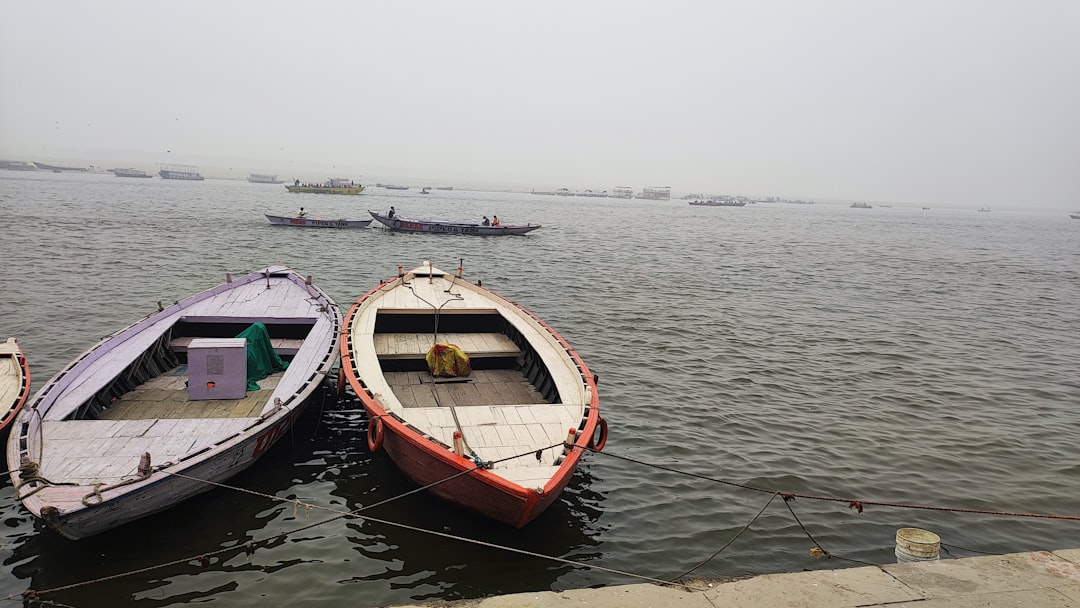
The eternal city on the Ganges: dawn boat rides, fire rituals and India at its most raw and radiant.
- Best time to visit: October-March
- Daily budget (budget traveller): $25 to $70 USD
- Ideal trip length: 2 to 3 days
Varanasi is one of the oldest continuously inhabited cities on earth and it feels it. Eighty-odd ghats step down to the Ganges, pilgrims bathe at sunrise, cremation fires burn around the clock, and the lanes behind are a labyrinth of temples, silk shops and cows. It overwhelms first-timers and hooks them for life. Joy Plus paces it so you get the dawn river, the evening aarti and enough quiet in between to breathe.
Varanasi does not ease you in. You step out of a car at Godowlia, a cow shoulders past, a bicycle bell goes off at your elbow, and somewhere above you a priest's loudspeaker clears its throat. Then you walk down a flight of stone steps and the whole thing opens up: the Ganges, wide and brown-gold, with five kilometres of ghats rising off it like a stage set. Pilgrims are bathing, wrestlers are stretching, a man is slapping laundry against a slab, and a hundred metres north a cremation fire is burning, as it has been for longer than anyone can prove. People come for a day and stay for a week, or leave on day two and think about it for a year.
The trick is to treat the city as a clock rather than a checklist. The river is at its best in the 90 minutes around sunrise, when the boats go out in blue half-light and the ghats fill with chanting. The Ganga aarti at Dashashwamedh is a fire ceremony you should watch from the water, not from a packed step. The old-city lanes (Vishwanath Gali, Kachori Gali, Thatheri Bazar) are for the hot, sleepy middle of the day, when you can duck in for a kachori, a lassi or a silk shop. Sarnath, where the Buddha gave his first sermon, is a calm, green half-day away. Base yourself at the Assi end and you get quieter mornings, better cafes and a much gentler landing.
Varanasi also asks for a little homework. Wear shoes that slip off easily, carry small notes (₹10, ₹20, ₹50), and settle every price before you sit in a boat or an auto. Never point a camera at Manikarnika or Harishchandra, however good the light, and say a flat 'no thanks' to anyone who wants a 'donation for wood'. Expect smoke, noise and the odd hustler, and treat all of it as part of the texture. January mornings are cold enough for a jacket on the water, and November brings Dev Deepawali, when a million lamps line the ghats. Whatever month you come, plan two or three days, start before dawn and keep the afternoons slow.
How many days in Varanasi?
For Varanasi, we recommend 2 to 3 days. With more time, add a day trip to Chunar Fort.
| Trip length | What you'll see | Itinerary |
|---|---|---|
| 2 days · Recommended | Assi, first aarti; Sunrise boat and the heart of the ghats | Varanasi in 2 days |
| 3 days · Recommended | Adds: Sarnath, where Buddhism began | Varanasi in 3 days |
| 4 days | Adds: Dawn music, BHU and temple day | Varanasi in 4 days |
| 5 days | Adds: Ramnagar Fort and the other bank | Varanasi in 5 days |
| 7 days | Adds: Silk, lanes and a long goodbye to the river | Varanasi in 7 days |
Varanasi itinerary
Arrive, settle at Assi, first aarti
Morning: Land at VNS (45 to 75 minutes to the city) or train into Varanasi Junction. Drop bags at your Assi-side stay. Breakfast at Open Hand Cafe, then chai in a clay cup at Pappu Tea Stall, the Assi morning institution.
Afternoon: Walk the southern ghats north: Assi, Tulsi, Bhadaini, Shivala. Keep it slow, 20 minutes of sitting on the steps is the real itinerary. Rest in the heat of the day.
Evening: Catch the smaller Assi Ghat aarti at dusk. Dinner at Vaatika Cafe on the ghat (wood-fired pizza or a veg thali). Early night, tomorrow starts at 5am.
Sunrise boat and the heart of the ghats
Morning: Board a rowboat from Assi at about 5:30am. Row north to Manikarnika and back (no photos at the cremation ghats). Afterwards, kachori sabzi and jalebi at Kachori Gali or Ram Bhandar in Thatheri Bazar.
Afternoon: Walk the lanes to Kashi Vishwanath Temple. Leave phones and bags in the free lockers. Then Man Mandir Ghat and its 18th-century observatory for a quiet view of the river.
Evening: Be at Dashashwamedh by 5pm in winter to get a spot, or hire a boat to watch the Ganga aarti from the water. Dinner at Brown Bread Bakery (proceeds fund a local NGO) or tamatar chaat at Kashi Chaat Bhandar.
Sarnath, where Buddhism began
Morning: Uber or auto to Sarnath (10 km, ₹250-400 each way). Reach Dhamek Stupa at opening, before the day-trippers. Walk the Deer Park ruins, then the Mulagandha Kuti Vihar temple with its Japanese murals.
Afternoon: Archaeological Museum for the Ashoka Lion Capital, the model for India's national emblem (closed Fridays). Late lunch at one of the Tibetan cafes near the stupa. Back in town by 3pm.
Evening: Slow dinner at Vaatika Cafe or a rooftop near Dashashwamedh. Walk the ghats by lamplight.
Dawn music, BHU and temple day
Morning: Subah-e-Banaras at Assi Ghat, free classical music and yoga at dawn (check the season's start time). Then Pehelwan Lassi near the BHU gate in Lanka for a thick, cooling breakfast.
Afternoon: Banaras Hindu University campus: Bharat Kala Bhavan museum (closed Sundays) and the white-marble New Vishwanath Temple. Sankat Mochan Hanuman Temple on the way back (no phones, no leather).
Evening: Sankat Mochan's evening aarti if you want something local, not touristic. Late dinner of baati chokha or thali in Bhelupur.
Ramnagar Fort and the other bank
Morning: Cross the river by boat (or auto over Malviya Bridge) to Ramnagar Fort. The museum holds vintage cars, ivory, howdah seats and a clock that tracks astrology. Allow 2 hours.
Afternoon: Walk the empty sand bank opposite the ghats, which is where locals picnic and fly kites. Boat back along the skyline, when the whole city is lit gold and quiet.
Evening: Dinner near Godowlia. Try malaiyo (winter only, from about November to February) at a street stall, then a Banarasi paan.
Silk, lanes and a long goodbye to the river
Morning: Madanpura and Lallapura for silk weaving. Visit a weaver's workshop, ask for the Silk Mark tag and don't buy from touts. Then brass and copper in Thatheri Bazar.
Afternoon: Blue Lassi in the lanes near Manikarnika for a clay-pot lassi with fruit and malai. Walk down to Panchganga Ghat and sit for an hour. Optional sitar or tabla lesson (around ₹800-1,500 for an hour).
Evening: Last aarti at Dashashwamedh from the steps, arriving early with a pashmina on your lap. Rooftop dinner with the lights across the water.
Slow morning, depart
Morning: Last sunrise boat, or just sit on the Assi steps with a chai. Pack, check out, pay your final boatman.
Afternoon: Pick up silk, spices or wooden toys from Vishwanath Gali for gifts if you haven't yet.
Evening: Uber to VNS (allow 90 minutes for traffic), or to Cantt for the evening Vande Bharat to Delhi. Don't cut it fine, Varanasi roads are famously unreliable.
Best neighbourhoods
- Dashashwamedh Ghat: The main ghat and the stage for the nightly Ganga aarti fire ceremony.
- Assi Ghat: The calmer southern end, popular with students, yoga classes and morning music.
- Manikarnika Ghat: The principal cremation ghat, sacred, constantly burning and photography-forbidden.
- Vishwanath Gali: The lane of silk, sweets and shrines leading to the golden Kashi Vishwanath Temple.
- Sarnath: Ten kilometres out, where the Buddha gave his first sermon among stupas and museums.
Must-do experiences
- Sunrise boat ride on the Ganges: Push off in the dark and watch the ghats turn gold as the city bathes and prays.
- Ganga aarti at Dashashwamedh: Brass lamps, bells and chanting priests every evening, best watched from a moored boat.
- Walk the ghats end to end: A five-kilometre riverside stroll past palaces, wrestlers, laundry and pilgrims.
- Day trip to Sarnath: The Dhamek Stupa and archaeological museum where Buddhism began.
Hidden gems
- Subah-e-Banaras, the free dawn classical music and yoga session at Assi Ghat.
- Ramnagar Fort across the river, a crumbling maharaja's palace with an eccentric museum.
- The akharas, open-air wrestling pits near Tulsi Ghat, busiest at sunrise.
- Blue Lassi, a tiny shop in the lanes serving clay-pot lassi since the 1920s.
Daily budget
- Accommodation: budget ₹500-900 / night (hostel dorm), mid-range ₹3,500-8,000 (ghat-side guesthouse or boutique haveli), splurge ₹20,000+ (Brij Rama Palace, Taj Nadesar Palace). Assi and Shivala have the best value. Rooms with a Ganges view jump 50% in November and January, book early.
- Food: budget ₹400-700 / day (kachori, chaat, thali, lassi), mid-range ₹1,500-2,500 (cafe meals plus one sit-down dinner), splurge ₹5,000+ (hotel terrace dinner at Brij Rama or Taj). Breakfast kachori sabzi with jalebi is ₹40-80. A big thali is ₹150-300. Much of the ghat-side is pure veg.
- Transport: budget ₹150-300 / day (walking, shared e-rickshaw), mid-range ₹600-1,200 (Uber/Ola autos plus a Sarnath run), splurge ₹3,000+ (car with driver for Sarnath and Ramnagar). Uber, Ola and Rapido all work. Airport to Godowlia is ₹800-1,200. In the old city your feet are the transport.
- Activities: budget ₹300-800 / day (shared sunrise boat, free ghats, free temples), mid-range ₹1,500-3,000 (private boat, Sarnath tickets, guide for a half-day), splurge ₹6,000+ (private guide, music lesson, silk weaver visit, private evening boat). Shared boats run ₹300-800 each, private boats ₹1,500-2,500 for 1-2 hours. Sarnath monuments cost about ₹300 for foreigners. Kashi Vishwanath general darshan is free.
- Drinks & nightlife: budget ₹100-250 (chai, clay-pot lassi, thandai), mid-range ₹600-1,200 (beer at a hotel bar, cafe evenings), splurge ₹3,000+ (cocktails at Taj Nadesar Palace, Brij Rama). Varanasi sleeps early. Alcohol is hard to find near the ghats, mainly at hotel bars and licensed shops in Cantt. Government-licensed bhang shops exist, but go easy.
Where to stay
- Social hostel in Assi Ghat / Bhadaini (₹500-900 / night): Zostel Varanasi or Moustache Varanasi, rooftops, mixed and female dorms, and the calmest end of the river. Walk to the dawn music and the cafes.
- Boutique hotel in Shivala / Assi riverfront (₹5,500-12,000 / night): Suryauday Haveli or Ganges View Hotel, restored riverside houses with Ganges-facing terraces. Walkable to the dawn boat and quiet at night.
- Apartment in Bhelupur or Assi back-lanes (₹2,000-4,500 / night): Airbnb flats and homestays with a kitchenette and a rooftop. A better value for 5+ nights and puts you among students, not tour buses.
- Splurge in Darbhanga Ghat / Nadesar (₹20,000-50,000 / night): Brij Rama Palace is a 19th-century palace on the water, with river views and its own jetty. Taj Nadesar Palace is the garden retreat, with vintage cars and a pool.
What to eat
- Kachori sabzi with jalebi, the classic Banarasi breakfast
- Malaiyo, a winter-only saffron milk foam whipped in the dew
- Tamatar chaat and chena dahi vada in the Godowlia lanes
- Banarasi paan, the city's ceremonial betel leaf finish
Day trips
- Sarnath (10 km, 30 minutes): The Buddha's first sermon happened here around 528 BCE. See the 33-metre Dhamek Stupa, the Mulagandha Kuti Vihar temple and the museum with the Ashoka Lion Capital. Go at opening for quiet. Uber/Ola or auto from Godowlia or Cantt, ₹250-400 each way. Shared e-rickshaws from Cantt are ₹20-40. Foreigners pay about ₹300 for monuments, museum is separate and closed Fridays.
- Ramnagar Fort (14 km by road, 15 minutes by boat): A crumbling 18th-century fort and the royal family's museum, with vintage cars, ivory, weapons and a astronomical clock. In Sept-Oct it hosts the month-long Ramlila, a UNESCO-listed performance. Boat across from Assi or Raj Ghat (₹200-400) plus an e-rickshaw to the fort, or auto over Malviya Bridge, ₹200-300 each way. Museum open about 10am to 5pm.
- Chunar Fort (35 km, about 1 hour): A sandstone fort above the Ganges, linked to Mughal, Afghan and British rule, with quiet ramparts and views over the river bend. Rarely visited by tourists, a good escape from the ghat crowds. Taxi for ₹1,800-2,500 round trip, or train from Varanasi Cantt to Chunar Junction (about 1 hour, under ₹60), then an e-rickshaw to the fort.
When to visit
- Autumn (October - November): 18-31°C, clear skies, cool mornings by late November. Crowds: Heavy around Dussehra, Diwali and Dev Deepawali. Festival season at its best. Dev Deepawali (late November, around 24 Nov in 2026) lights every ghat with lamps. Book hotels weeks ahead.
- Winter (December - February): 6-22°C, foggy dawns, dry, mornings can drop to 5°C. Crowds: Moderate to high, peaks around New Year and Maha Shivratri (mid Feb). The local favourite. Mist on the river, malaiyo on the streets, and sunrise boats are magical. Fog can delay trains and flights, so pad your schedule.
- Spring (March - April): 24-40°C, warming fast, dry. Crowds: Low to moderate, spikes at Holi (early March). Good for March, hot by mid April. Holi in the old city is wild, messy and not for everyone. Do dawn and dusk, hide indoors at noon.
- Summer & Monsoon (May - September): May-June 40-46°C; July-Sept 26-34°C, humid, heavy rain. Crowds: Low. Skip it. Heat is brutal, then the river floods the lower ghats and boat rides are restricted. Cheapest rooms, but you will spend the day indoors.
Entry rules for your passport
Visa rules for India depend on the passport you travel on. Check the official source before you book: Government of India e-Visa portal
Getting there
Lal Bahadur Shastri International Airport (VNS) is about 25 km from the old city. Flights run direct from Delhi (about 1h 30), Mumbai, Kolkata, Bengaluru, Hyderabad and a few Gulf cities. Uber or Ola to Godowlia is ₹800-1,200, a prepaid taxi counter is ₹1,000-1,400, and the drive is 60 to 90 minutes in traffic. Trains are easier than they sound. The Vande Bharat (22436) leaves New Delhi around 6am and reaches Varanasi Junction (Cantt) by about 2pm, with chair car around ₹1,800 and executive about ₹3,300. Overnight trains like the Shiv Ganga Express take 11 to 12 hours. Book on IRCTC or via ConfirmTkt/ixigo, and check fog delays in December and January. From Cantt, an auto to Godowlia is ₹150-250, 30 to 45 minutes. Vehicles can't enter the old lanes, so you'll walk the last stretch with your bag.
Getting around
Lal Bahadur Shastri Airport is 25 km out, about 45 to 60 minutes by taxi. Trains link Delhi (8 to 12 hours), Agra and Kolkata. In the old city, walking is the only option since the lanes are too narrow for cars; auto-rickshaws and cycle-rickshaws cover the wider city, and boats are the best way to move along the river. A cable-car line from the main railway station towards the old city was in testing in 2026 and due to open late in the year, so check whether it is running.
Safety
Varanasi is generally safe but relentlessly hustly: expect touts, unofficial 'guides' and inflated boat prices, so agree fares before setting off. Never photograph cremations at Manikarnika, and politely refuse anyone demanding 'donations for wood'. Solo women should dress modestly and avoid the unlit lanes late at night. Don't swim in the Ganges here, and stick to bottled water and hot, freshly cooked food.
Solo travel tips
- Base yourself at Assi, not Dashashwamedh: Assi is quieter, has more cafes, yoga and cheap hostels, and lets you wake up calm. Dashashwamedh is a 30-minute walk or a ₹10 boat hop north. Staying deep in the old city makes your first night much harder.
- Fix the boat price in your head first: A shared sunrise rowboat is ₹300-800 each, a private boat ₹1,500-2,500 for 1 to 2 hours. Agree price, route and duration at the steps before you board. Pay at the end, and tip ₹50-100 if the rower was good.
- Hostel pick: Zostel Varanasi or Moustache: Both are on the south side, run rooftop social nights and aren't pub-crawl hostels. Dorms are ₹500-900. Good for finding someone to split a private boat with, which brings the cost to ₹400-600 each.
- Say no once, firmly, and keep walking: Touts will offer a guide, a silk shop or 'free' help to a temple. A clear 'no thank you' and a steady pace works. Never follow anyone to a boat or a shop you didn't pick, and ignore anyone asking for wood donations at the cremation ghats.
- Solo female travellers: Dress modestly, cover shoulders and knees, and carry a scarf. Stay out of unlit lanes after 9pm, and use Uber or Ola at night. Choose a hotel near the main ghat road, and ask staff to walk you to your door the first night. Women-only dorms are common in Assi hostels.
- Find your tribe at Subah-e-Banaras and Open Hand Cafe: The free dawn music and yoga session at Assi is a gentle way to meet other travellers. Open Hand Cafe and Pappu Tea Stall are where solo travellers end up swapping boat tips. Sitar and tabla lessons, yoga classes and silk workshops are easy places to make a day plan with strangers.
Cultural etiquette
- Remove shoes before every temple and many ghat shrines. Wear slip-ons, and tip ₹10-20 to the shoe keeper.
- Never photograph or film the cremations at Manikarnika or Harishchandra. Locals enforce it, and it's about grieving families.
- Dress modestly, shoulders and knees covered. Carry a scarf for temples. Shorts and sleeveless tops draw stares in the old city.
- Use your right hand for giving, receiving and eating. Don't point your feet at shrines or people, and never touch a priest or sadhu without asking.
- Some temples, like Durga Kund and a few others, admit Hindus only. Respect the signs. Kashi Vishwanath admits everyone, but with no phones or bags inside.
- Ask before photographing sadhus, who may expect ₹50-100. Don't give 'wood donations' to strangers, and don't pay for prasad you didn't request.
- Don't swim or bathe in the Ganges here, and don't litter. Pilgrims drink and bathe in the river, and your sunscreen or soap is not welcome.
Frequently asked questions
Is Varanasi worth visiting?
Yes, if you want India undiluted. Nowhere else layers birth, death, faith and daily life so openly. It's intense and sometimes confronting, but the sunrise river and the evening aarti are among the most memorable hours in travel.
How many days do you need in Varanasi?
Two to three. One day for the sunrise boat, the ghat walk and the evening aarti, a second for the old-city lanes, temples and a Sarnath half-day, and a third if you want to slow down or add Ramnagar Fort.
Is Varanasi safe for tourists?
Broadly yes, with petty scams rather than violent crime the main risk. Agree prices in advance, ignore aggressive guides, keep valuables close in crowds and stay out of dark alleys late. Solo female travellers should dress conservatively and use pre-booked transport at night.
When is the best time to visit Varanasi?
October to March, when days are mild and clear. November brings Dev Deepawali, when the ghats are lit with a million lamps. Avoid April to June, when temperatures pass 40C, and the monsoon months when the river floods the lower ghats.
Can you photograph the cremation ghats?
No. Photography and video are forbidden at Manikarnika and Harishchandra ghats out of respect for grieving families, and locals enforce it firmly. You may watch quietly from a distance or from a boat, but put the camera away.
How much does a Ganges boat ride cost?
Expect around 300-800 rupees for a shared sunrise rowboat and 1,500-2,500 rupees to hire a private boat for an hour or two. Motorboats cost more but are less atmospheric. Always agree the price and the duration before boarding.
What should you wear in Varanasi?
Modest, loose cotton clothing that covers shoulders and knees, and shoes that slip off easily for temples. Women may want a scarf for temple visits. Avoid shorts and sleeveless tops in the old city, and expect to walk a lot on uneven stone steps.
Do I need a visa for India?
Yes, almost every foreign visitor needs one. Most nationalities can apply online for an e-Visa on the official portal, indianvisaonline.gov.in, at least four days before arrival. You must also complete the free e-Arrival Card on the same site within the 72 hours before you land. Use only the official portal: lookalike sites charge fees.
Tours and activities in Varanasi | Varanasi in 2 days | Varanasi in 3 days | Varanasi in 4 days | Varanasi in 5 days | Varanasi in 7 days
Can't decide? Compare Varanasi with...
Joy Plus home | Destinations | Itineraries | Activities | Flights | Budget planner | Calendar | Map | Blog | Lifetime access