Destinations / Europe
Venice, Italy travel guide
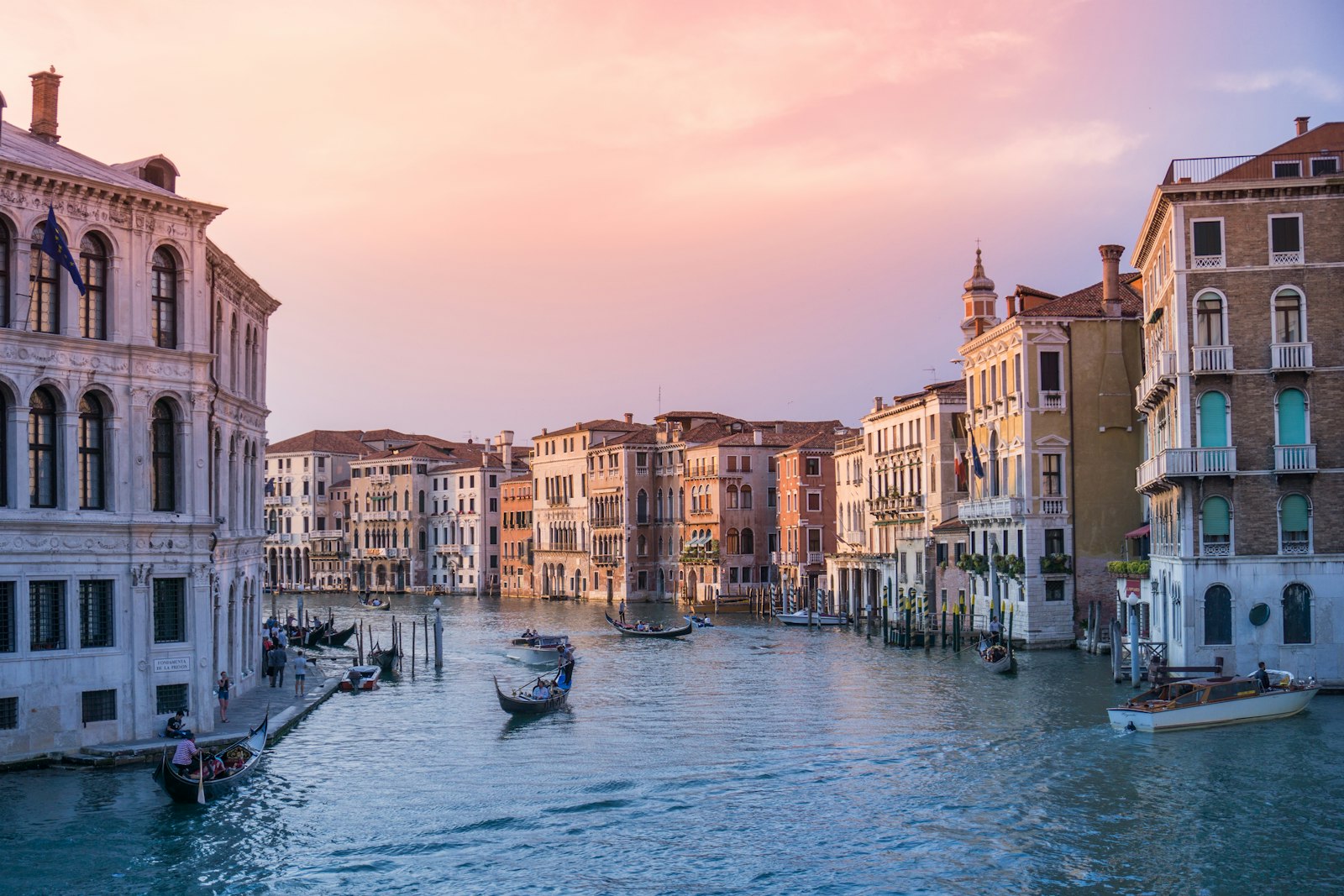
A city built on water: gondolas, Gothic palazzi and labyrinthine canals with no cars in sight.
- Best time to visit: April-June and September-October
- Daily budget (budget traveller): $130 to $220 USD
- Ideal trip length: 2 to 3 days
There is nowhere else on earth like Venice, a thousand-year-old maritime republic stitched together by 400 bridges and 150 canals, with not a single car to be found. Beyond the crowds on the Rialto and St Mark's, it rewards the traveller who gets lost on purpose, ducking into bacari for cicchetti and finding empty campos at dawn. Joy Plus sequences the sights, the islands and the back-canal wanders so you skip the worst queues and crowds.
Venice is 118 islets, roughly 400 bridges, six sestieri and not one car. The whole historic centre is a 40-minute walk end to end, and you will still lose an afternoon in it. The tourist version is a shuffle from the Rialto to St Mark's with a gelato in hand. The real version starts at 7am, when the campi belong to bakers and dog-walkers, and ends at a bacaro counter with an ombra (a small glass of wine, about €2) and a toothpick of baccalà on bread.
A few mechanics help. Addresses are numbered per sestiere, not per street, so 'Cannaregio 2540' means little without a map. Follow the yellow arrows painted on the walls (Per Rialto, Per San Marco, Per Ferrovia, Per Accademia) when your GPS drifts between the narrow calli. Vaporetto fares are steep, about €9.50 for a single 75-minute ticket, so a 48 or 72-hour pass (about €35 and €45) usually pays off. Cheap crossings use traghetti, the standing gondola ferries across the Grand Canal for €2. Dead-end alleys often finish at a canal with no railing, which matters at night.
How you structure the trip matters more than what you tick off. Day-trippers and cruise groups flood in around 10am and drain out by 5pm, so sleep in the city, do St Mark's and the Doge's Palace at opening, then spend midday in Dorsoduro, Castello or on the lagoon islands. Day-trippers now pay an access fee of about €5 to €10 on selected peak days, while overnight guests are exempt but must register. Check the city's official page before you go. This guide is built around beating the crowd clock: timed tickets booked early, bacari for lunch and cheap, and a sunset at the Punta della Dogana instead of a queue on the Rialto.
How many days in Venice?
For Venice, we recommend 2 to 3 days. With more time, add a day trip to Lido di Venezia.
| Trip length | What you'll see | Itinerary |
|---|---|---|
| 2 days · Recommended | Cannaregio and the Ghetto; San Marco at opening, Rialto after | Venice in 2 days |
| 3 days · Recommended | Adds: Dorsoduro, art and the Zattere | Venice in 3 days |
| 4 days | Adds: Burano, Torcello and Murano | Venice in 4 days |
| 5 days | Adds: Castello and the Biennale | Venice in 5 days |
| 7 days | Adds: Padua day trip; San Giorgio, Giudecca | Venice in 7 days |
Venice itinerary
Arrive, settle, Cannaregio and the Ghetto
Morning: Land at VCE, ATVO coach to Piazzale Roma (20 min, €10), then a vaporetto or a 15-minute walk into Cannaregio. Drop bags, espresso standing at Torrefazione Marchi.
Afternoon: Walk to the Jewish Ghetto, the world's first, and take the museum and synagogue tour (the museum has reopened after a long renovation, so check current prices). Then a slow walk along Strada Nova and the Ca' d'Oro canal front.
Evening: Bacari crawl on Fondamenta degli Ormesini and Fondamenta della Misericordia, with Al Timon for an ombra on the boat benches. Dinner at Anice Stellato (book ahead).
San Marco at opening, Rialto after
Morning: Doge's Palace at 9am with a pre-booked ticket (allow 1.5 to 2 hours), then St Mark's Basilica on a late-morning slot (about €8 booked online). The Campanile follows, about €12. Piazza before 9am is almost empty.
Afternoon: Cross the Rialto Bridge, then lunch at All'Arco near the Rialto market, cicchetti €2-4 each.
Evening: Vaporetto Line 1 along the whole Grand Canal at dusk, from San Zaccaria to Ferrovia, a floating tour for €9.50 or free on a pass. Dinner at Cantina Do Spade.
Dorsoduro, art and the Zattere
Morning: Gallerie dell'Accademia at 9am opening (Venetian masters, closed Mondays). Then the Frari for Titian and San Rocco for Tintoretto's ceilings (about €12).
Afternoon: Peggy Guggenheim Collection (closed Tuesdays). A gianduiotto at Gelateria Nico on the Zattere and a look at the Squero di San Trovaso.
Evening: Sunset at the Punta della Dogana. Spritz at Campo Santa Margherita, dinner at Enoteca Ai Artisti or cicchetti at Al Squero.
Burano, Torcello and Murano
Morning: Vaporetto Line 12 from Fondamente Nove to Burano (about 45 min) for 9am, before the day-tripper wave. Walk the dyed-house canals and try buranelli biscuits.
Afternoon: Hop to Torcello on Line 9 (5 min) for the cathedral mosaics (about €5). Return via Murano, with the Museo del Vetro and a free furnace demo at a showroom.
Evening: Back on the main island, dinner at Trattoria Corte Sconta in Castello (book ahead).
Castello and the Biennale
Morning: Walk Via Garibaldi to the Arsenale gate and its stone lions. Giardini della Biennale (open May to November, art in even years and architecture in odd years), or just the park if you skip the ticket.
Afternoon: Lunch at Trattoria da Remigio. Browse the neighbourhood's quiet campi and the Greek and Scuola di San Giorgio degli Schiavoni areas.
Evening: Vivaldi or baroque concert at Chiesa di San Vidal (about €35-45), then a late cicchetti stop.
Padua day trip
Morning: Regional train from Santa Lucia to Padova (about 30 to 50 min, €4.65). Scrovegni Chapel's Giotto frescoes in a booked 15-minute slot (about €15).
Afternoon: Basilica del Santo (free, cover knees), Prato della Valle, then coffee at Caffe Pedrocchi. Lunch at the Piazza delle Erbe market stalls.
Evening: Back in Venice, one last cicchetti counter at Cantina Do Mori (since 1462, closed Sundays).
San Giorgio, Giudecca, depart
Morning: Vaporetto Line 2 to San Giorgio Maggiore. Take the Campanile lift (about €7) for the best view back at St Mark's.
Afternoon: Hop to Giudecca for a long lunch at Trattoria Altanella. Walk the Zitelle waterfront.
Evening: Line 2 to Piazzale Roma, ATVO coach or train to your departure. Alilaguna is the slower, scenic option.
Best neighbourhoods
- San Marco: The monumental heart with St Mark's Basilica, the Doge's Palace and the Rialto. Spectacular but the busiest and priciest.
- Dorsoduro: Arty and student-flavoured, home to the Accademia, the Peggy Guggenheim and lively Campo Santa Margherita.
- Cannaregio: Quiet residential canals, the historic Jewish Ghetto and the city's best-value bacari away from the crowds.
- Castello: The largest, most local sestiere, with the Arsenale, leafy gardens and authentic neighbourhood life.
Must-do experiences
- St Mark's Basilica & Square: Byzantine gold mosaics and the city's grand piazza; book a timed entry to skip the long queue.
- Doge's Palace & Bridge of Sighs: The seat of Venetian power, its prison cells and the legendary covered bridge.
- Vaporetto down the Grand Canal: Ride Line 1 end to end for a floating tour past centuries of palazzi, far cheaper than a gondola.
- Murano & Burano day trip: Glass-blowing furnaces on Murano and rainbow fishermen's houses on Burano, reachable by vaporetto.
Hidden gems
- The spiral Scala Contarini del Bovolo staircase tucked down a quiet alley.
- Cicchetti and an ombra (small wine) crawl through Cannaregio's canal-side bacari.
- Sunset from the Punta della Dogana waterfront with the Salute church behind you.
- The quiet, art-filled island of San Giorgio Maggiore and its bell-tower view back at the city.
Daily budget
- Accommodation: budget €40-75 / night (hostel dorm, Combo or Generator), mid-range €170-300 (boutique double in Dorsoduro or Cannaregio), splurge €700+ (Gritti Palace, Aman Venice). Cannaregio and Castello run 20 to 30% cheaper than San Marco. Mestre hotels are €60-90, 10 minutes by train. City tax of €1.50-5 per person per night is paid on top.
- Food: budget €30-40 / day (cicchetti, takeaway pasta, bakery), mid-range €70-100 (bacari lunch, trattoria dinner), splurge €200+ (Quadri on Piazza San Marco, tasting menu). Cicchetti are €1.50-4 each and a house ombra is €2-3. Dal Moro's takeaway pasta is about €8. Skip any restaurant with photo menus or a tout.
- Transport: budget €2-10 / day (walk, traghetto €2, one vaporetto ride), mid-range €25-35 (24h pass €25 or 48h pass €35), splurge €120-150 (private water taxi from the airport). Validate the pass at the yellow pole before boarding or risk a €60+ fine. Walking is faster than most vaporetto hops in the centre.
- Activities: budget €10-20 / day (free churches, the Rialto market, one ticket), mid-range €45-75 (Doge's Palace €35, Basilica €8, Campanile €12, Accademia €20), splurge €150+ (gondola €90-110, La Fenice opera, private glass workshop). Book the Doge's Palace online to skip the queue.
- Drinks & nightlife: budget €8-12 (ombra €2, bacaro spritz €4), mid-range €25-40 (Misericordia and Ormesini crawl, live music), splurge €60+ (Harry's Bellini about €25, Terrazza Danieli). Venice sleeps early, with many bars closing around midnight. A spritz near St Mark's is €10-14 against €3.50-5 in a Cannaregio bacaro. Seated coffee at Florian adds music surcharges.
Where to stay
- Social hostel in Cannaregio (€40-75 / night (dorm)): Combo Venezia in a restored former convent, with dorms and privates, a courtyard bar and a short walk to Fondamente Nove and the Ghetto. Generator on Giudecca is the livelier alternative.
- Boutique hotel in Dorsoduro (€170-300 / night): Locanda Ca' Foscari or Hotel American-Dinesen, small canal-side rooms near the Accademia, quiet at night and walkable to the Zattere and Campo Santa Margherita.
- Apartment in Castello or Cannaregio (€110-190 / night): Residential streets, a kitchen for market shopping and the best value for 4+ nights. Check for the national CIN registration code, which legal rentals display.
- Splurge in San Marco and the Grand Canal (€700-1,800 / night): Gritti Palace or Aman Venice, with Grand Canal terraces, private water-taxi docks and no luggage hauling over bridges.
What to eat
- Cicchetti, the Venetian bar snacks eaten standing with a glass of wine
- Sarde in saor, sweet-and-sour sardines with onions and pine nuts
- Risotto al nero di seppia, squid-ink risotto
- Fritto misto, a paper cone of fried seafood from a canal-side window
Day trips
- Burano, Torcello and Murano (10 to 45 min by vaporetto): Murano for glassmaking and the Museo del Vetro, Burano for dyed fishermen's houses and lace, Torcello for the oldest mosaics in the lagoon. Go to Burano first, before 10am. Line 12 from Fondamente Nove, about 45 min to Burano. Line 9 shuttles to Torcello (5 min). A 24h pass (€25) covers it all.
- Padua (30 to 50 min by train): Giotto's Scrovegni Chapel, the Basilica del Santo, Prato della Valle and the Piazza delle Erbe food market. Book the chapel weeks ahead. Regional train from Venezia Santa Lucia, about €4.65 each way. Faster Frecce trains cost a bit more.
- Lido di Venezia (15 to 25 min by vaporetto): A thin barrier island with public beaches, Art Nouveau villas, and the Film Festival venue. Hire a bike and ride to the free beaches at the northern end. Line 5.1/5.2 or Line 1 from San Zaccaria. Bikes rent for about €10-15 a day near the Santa Maria Elisabetta stop.
When to visit
- Spring (April - June): 14-26°C, mostly sunny, short showers, bright light on the water. Crowds: Heavy from May, busiest around Easter (28 March in 2027) and the 25 April, 1 May and 2 June holidays. The best weather and the Biennale Arte opens in May. Book hotels and the Basilica and Doge's Palace slots 6 to 8 weeks out.
- Summer (July - August): 27-33°C, humid, mosquitoes by the canals, afternoon thunderstorms. Crowds: Peak, with day-trippers and cruise waves, plus Redentore fireworks (the night before the third Sunday in July). Skip if you can. If not, sightsee 7 to 10am, nap midday, and use the Lido for a swim.
- Autumn (September - October): Sept 20-27°C, Oct 13-20°C, warm lagoon, first acqua alta late October. Crowds: Moderate, dropping sharply after the Film Festival and Regata Storica (5 Sept in 2027). The locals' pick. Warm days, golden light, easier restaurant bookings. Pack overshoes for late October.
- Winter (November - March): 2-11°C, fog, damp cold, acqua alta peaks November to January. Crowds: Low, apart from Carnevale (23 January to 9 February in 2027) and New Year. Cheapest hotels and moody, empty alleys, but many bacari shut early. Carnevale doubles or triples prices.
Entry rules for your passport
Visa rules for Italy depend on the passport you travel on. Check the official source before you book: European Commission: Schengen visa policy
Getting there
Marco Polo airport (VCE) is on the mainland, 12km from the centre. The ATVO coach to Piazzale Roma is about €10 and takes 20 minutes. ACTV Bus 5 is similar but stops more. From Piazzale Roma, walk or take a vaporetto. Alilaguna water buses (about €18) go to San Marco in 75 to 90 minutes. A private water taxi costs about €120-150 for up to four. Treviso (TSF) is the Ryanair option, with an ATVO coach to Piazzale Roma for about €12. By train, Venezia Santa Lucia is the end of the line, 2h30 from Milan, 3h45 from Rome, 2h from Florence and 1h10 from Verona. Mestre is the stop before and much cheaper for hotels. Avoid unlicensed water-taxi touts, and carry soft-wheel luggage because there are stairs and bridges everywhere.
Border checks: non-EU visitors (other than Swiss, Norwegian, Icelandic, Liechtenstein, Andorran, Monegasque, San Marinese and Vatican citizens, and holders of an EU residence permit or long-stay visa) are registered in the EU's Entry/Exit System (EES) instead of getting a passport stamp. On your first crossing, officers take your photo and/or fingerprints, so allow extra time at passport control. ETIAS, the planned travel authorisation, is not in operation yet, so don't pay any website for one.
Getting around
Venice is entirely walkable and there are no cars, only your feet, bridges and boats. Vaporetto water buses run the Grand Canal and out to the islands; a multi-day ACTV pass quickly pays off. Water taxis are fast but very expensive, and a gondola is a romantic splurge rather than transport. Wear comfortable shoes and expect to get lost, that's part of it.
Safety
Venice is extremely safe with very little violent crime, and it's comfortable for solo travellers including women, even late at night. The main risks are pickpockets in packed spots like the Rialto and St Mark's, and overcharging at tourist-trap restaurants near the main sights. Watch your footing on slick bridges and check acqua alta (high-water) forecasts in autumn and winter.
Solo travel tips
- Eat at the bacaro counter: Order 'un'ombra e due cicchetti' and stand at the bar. Standing prices are the lowest in town, and the bartender will talk if you ask what's good. Seated tables add coperto of €2-3.
- Hostel pick: Combo or Generator: Combo Venezia in Cannaregio runs low-key events and has a canal-side courtyard. Generator on Giudecca has a bar terrace and a livelier crowd, a short vaporetto ride from the centre.
- Follow the yellow arrows: Wall signs for Rialto, San Marco, Ferrovia and Accademia beat Google Maps, which struggles in the narrow calli. Download an offline map anyway.
- Mind the dark edges: Venice is very safe for solo travellers and women at night, but many fondamente and dead-end alleys have no railings. Keep phones in pockets after a few drinks and avoid wandering unlit, unfamiliar canal edges.
- Move against the crowd clock: Day-trippers arrive around 10am and leave by 5pm. Do big sights at opening, linger in Cannaregio or Castello at midday, and go out again after 6pm for quiet piazzas.
- Row, don't just ride: Voga alla veneta lessons (for example Row Venice) are a great way to learn how the lagoon works, but they are private and priced per boat (€100 for two, €130 for three), so you won't row with strangers. Book through the operator's website.
Cultural etiquette
- Don't sit on bridge steps, church steps or monuments, and don't picnic on the Rialto. Fines can reach €100 to €500 and wardens do enforce them.
- Cover shoulders and knees in churches. St Mark's Basilica turns people away, and large bags go to the free cloakroom.
- Check for coperto (€2-3 per person) and servizio on the menu, especially around San Marco and the Rialto. Standing at a bar costs a fraction of sitting down.
- Let people off the vaporetto first, offer seats to the elderly and don't block the gates. Keep to the right on narrow calli and don't stop on bridges.
- Don't feed the pigeons. The ban in San Marco is enforced, and swimming in canals or walking around in swimwear is fined too.
- Greet with 'buongiorno' before you order. Cappuccino is a morning drink, and ordering one after dinner earns a polite smile.
- Venice is a lived-in city of about 50,000 residents. Keep voices low in campi at night and don't wheel hard-wheeled bags over stone after 10pm.
Frequently asked questions
How many days do you need in Venice?
Two full days cover St Mark's, the Doge's Palace, the Rialto, a Grand Canal ride and a wander through Dorsoduro and Cannaregio. A third day lets you visit Murano and Burano and enjoy the city at a slower pace.
Is Venice safe for solo travellers?
Yes, very. Venice is one of the safest cities in Europe with little violent crime, and it's comfortable for solo travellers including women even at night. The main thing to watch is pickpockets in crowded areas like the Rialto and St Mark's.
When is the best time to visit Venice?
April to June and September to October bring pleasant weather and slightly thinner crowds. Summer is hot, humid and packed, while winter is quiet and atmospheric but cold and prone to acqua alta flooding. Carnival in February is spectacular but very busy.
Is Venice worth visiting despite the crowds?
Yes. Venice is genuinely unique and well worth it if you stay overnight, start early and explore the back canals away from St Mark's and the Rialto. The crowds thin dramatically at dawn and after the day-trippers and cruise passengers leave in the evening.
How do I get from the airport to Venice?
From Marco Polo airport, the Alilaguna water bus glides directly to the city in about 75 to 90 minutes, or a land bus reaches Piazzale Roma in around 20 minutes where you switch to a vaporetto. A private water taxi is fast and scenic but expensive.
Is Venice expensive to visit?
Yes, it's one of Italy's pricier cities, especially for hotels and restaurants near St Mark's. You can keep costs down by eating cicchetti in bacari, drinking house wine, using vaporetto passes and staying in Cannaregio or Castello rather than San Marco.
Do I really need to take a gondola in Venice?
It's optional and pricey, with a standard daytime ride around €90 for up to five people. For a fraction of the cost, ride a vaporetto down the Grand Canal, or take the cheap traghetto gondola ferry across the canal to get the experience without the splurge.
Is there a fee to enter Venice?
On peak days, yes, for day visitors. In 2026 the access fee applied on 60 days between 3 April and 26 July, from 8:30am to 4pm, to visitors aged 14 and over entering the historic centre without staying overnight: €5 if booked at least four days ahead, €10 after that. Overnight guests are exempt but must register the exemption. Expect a similar calendar each year and check the city's official access-fee site for your dates.
More about Venice
Tours and activities in Venice | Venice in 2 days | Venice in 3 days | Venice in 4 days | Venice in 5 days | Venice in 7 days
Can't decide? Compare Venice with...
- Florence vs Venice
- Venice vs Milan
- Verona vs Venice
- Rome vs Venice
- Trieste vs Venice
- Bologna vs Venice
- Paris vs Venice
- Venice vs Como
- Venice vs Padua
Joy Plus home | Destinations | Itineraries | Activities | Flights | Budget planner | Calendar | Map | Blog | Lifetime access