Destinations / Europe
Verona, Italy travel guide
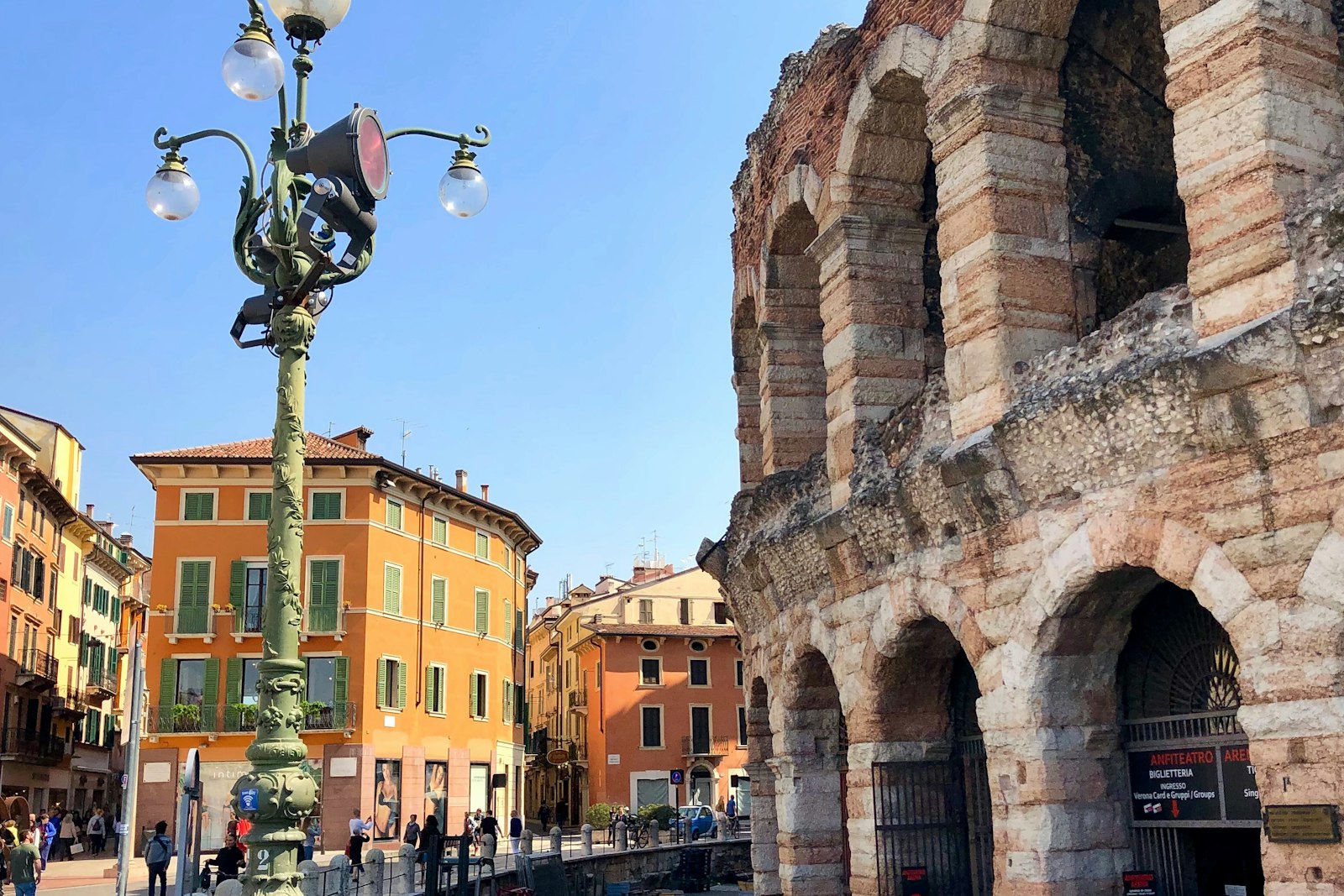
The city of Romeo and Juliet: a Roman arena, romantic squares, a river bend and gateway to Lake Garda.
- Best time to visit: April-June and September-October
- Daily budget (budget traveller): $95 to $160 USD
- Ideal trip length: 1 to 2 days
Verona is one of northern Italy's most romantic and beautifully preserved cities, immortalised by Shakespeare's Romeo and Juliet and built around a magnificent Roman arena that still hosts summer opera. Wrapped in a bend of the Adige river, its marble squares, frescoed houses and hilltop views make it a perfect short break and a gateway to Lake Garda. Joy Plus shapes the arena, the squares, the viewpoints and the lake into an easy day or two.
Verona is the rare Italian city where the postcard is also the real thing. A first-century Roman arena sits at the end of a marble-paved square, and the Adige loops around a compact old town so tightly that almost everything worth seeing is a 15 minute walk from everything else. The UNESCO-listed centre has Roman gates, Scaliger tombs, frescoed palazzi and a market square with a lion-topped column. Shakespeare never visited and set Romeo and Juliet here anyway, so the city has leaned into the story. The balcony is a 1930s addition, and it is still good theatre.
The rhythm matters more than the checklist. Between about 10am and 5pm the arena, Casa di Giulietta and Piazza delle Erbe fill with tour groups. Before 9am or after 7pm the same places feel like a small provincial city again. Use the middle of the day for Castelvecchio, San Zeno or a long lunch of bigoli and a glass of Valpolicella, and save the hill for sunset. Two days is the sweet spot. Three or four lets you add Lake Garda, Soave and Mantua without rushing.
Verona is also one of Italy's most useful bases. Fast trains reach Venice in about 70 minutes and Milan in about 80. Regional trains reach Peschiera on Lake Garda in 15 to 25 minutes, and the Soave and Valpolicella wine hills start right outside the city. It costs noticeably less than Venice, Florence or Lake Como, and the food is serious: risotto all'Amarone, pastissada de caval, bigoli with duck ragù, and a cellar-deep wine list. Be honest about what it is not. It is no all-night city, and most bars wind down around midnight. Come for beauty, wine and opera, not clubbing.
How many days in Verona?
For Verona, we recommend 1 to 2 days.
| Trip length | What you'll see | Itinerary |
|---|---|---|
| 2 days · Recommended | Piazza Bra and the old town squares; The Arena, Castelvecchio and the river | Verona in 2 days |
| 3 days | Adds: Veronetta, Ponte Pietra and Castel San Pietro | Verona in 3 days |
| 4 days | Adds: Lake Garda, Sirmione | Verona in 4 days |
| 5 days | Adds: Soave and the wine hills | Verona in 5 days |
| 7 days | Adds: Mantua, the Gonzaga city; San Zeno, slow morning | Verona in 7 days |
Verona itinerary
Arrive, Piazza Bra and the old town squares
Morning: Land at VRN and take the Aerobus 199 to Porta Nuova (15-20 min). Drop bags, then walk Corso Porta Nuova to Piazza Bra, 15 minutes. Stand-up espresso at Caffè Borsari on Corso Porta Borsari.
Afternoon: Walk past the Arena and up Via Mazzini to Casa di Giulietta. Skim the courtyard, skip the queue for the balcony. Continue to Piazza delle Erbe and Piazza dei Signori, with a look at the Scaliger tombs.
Evening: Dinner at Trattoria al Pompiere on Vicolo Regina d'Ungheria for a salumi and cheese board (book ahead, closed Sundays). A Spritz in Piazza delle Erbe, then an early night.
The Arena, Castelvecchio and the river
Morning: Arena at 8:30am opening (€12), before the tour groups. Climb to the top row for the view across the rooftops.
Afternoon: Lunch at Locanda 4 Cuochi near Piazza Bra. Walk to Castelvecchio (€9), Carlo Scarpa's museum in a red-brick fortress, then cross the Ponte Scaligero.
Evening: Opera season (late June to early September): bring a cushion for the unnumbered stone steps, arrive by 7pm, and expect a show start around 9pm. Otherwise dinner at Antica Bottega del Vino (risotto all'Amarone, deep wine list) and a late gelato.
Veronetta, Ponte Pietra and Castel San Pietro
Morning: Cross Ponte Pietra, the Roman bridge, and visit the Roman Theatre (about €5 entry). Walk through Giardino Giusti (about €10) for the cypress avenue and the grotesque mask.
Afternoon: Lunch at Osteria Sottoriva under the arcades on Via Sottoriva (pastissada de caval if you're brave). Climb the steps or take the funicular to Castel San Pietro.
Evening: Sunset on the viewpoint, then dinner back in Veronetta. Drinks around Piazza Isolo, where the students are.
Lake Garda, Sirmione
Morning: Train to Peschiera del Garda (15-25 min), then bus 26 to Sirmione. Walk the Scaligero Castle (about €8) before 11am, when the narrow centre jams.
Afternoon: Lunch of lake fish (lavarello or perch) on Via Vittorio Emanuele. Walk to the Grotte di Catullo ruins on the tip of the peninsula and swim off the rocks at Jamaica Beach.
Evening: Bus and train back to Verona. Pizza near Porta Nuova, easy night.
Soave and the wine hills
Morning: Regional train to Soave (about 20 min). Walk up through the walled medieval town to the Scaligero castle (about €8).
Afternoon: Tasting and lunch among the Soave vines at a cantina such as Pieropan (book ahead). Fit in an Amarone-themed Valpolicella tour if you want red wine too, about €60-90 half-day.
Evening: Back in Verona, a light aperitivo and a farewell dinner at Osteria Mondo d'Oro, or a pandoro-scented walk past the pasticcerie.
Mantua, the Gonzaga city
Morning: Regional train from Porta Nuova to Mantua (about 40 min, €5-6). Palazzo Ducale for Mantegna's Camera degli Sposi (closed Mondays, book ahead).
Afternoon: Lunch at a trattoria around Piazza delle Erbe, then Palazzo Te. Walk the lakeside promenade.
Evening: Train back, easy dinner near your hotel, pack.
San Zeno, slow morning, depart
Morning: Cappuccino and brioche, then the Basilica di San Zeno (about €4), with its bronze doors and Mantegna triptych. Walk through the quiet San Zeno neighbourhood.
Afternoon: Last lunch of bigoli con ragù d'anatra and a Valpolicella. Pick up pandoro or a bottle of Ripasso to take home.
Evening: Aerobus 199 from Porta Nuova to VRN, about 15-20 minutes, or a train onward to Venice or Milan.
Best neighbourhoods
- Città Antica (Old Town): The historic core within the river bend, home to the arena, Piazza Bra and the marble Piazza delle Erbe.
- Veronetta: The atmospheric, student-flavoured quarter across the river, with churches, bars and the Roman theatre.
- Borgo Trento: An elegant, leafy residential area along the river, quieter and away from the crowds.
- Castel San Pietro hill: The hillside above Veronetta with the city's best panoramic viewpoint.
Must-do experiences
- Verona Arena: Visit the remarkably intact 1st-century Roman amphitheatre, host to a famous summer opera festival.
- Piazza delle Erbe & Piazza dei Signori: Soak up the city's beautiful market and civic squares ringed by frescoed palaces.
- Juliet's House (Casa di Giulietta): See the famous balcony and courtyard of Shakespeare's heroine in the old town. The courtyard is often packed and access is sometimes ticketed, so check before you go.
- Castel San Pietro viewpoint: Climb or ride up for the classic panorama over the rooftops and the river bend.
Hidden gems
- The Romanesque Basilica of San Zeno, with its bronze doors and Mantegna altarpiece.
- Sunset over the city from the steps below Castel San Pietro.
- The Giardino Giusti, a serene Renaissance garden with a cypress avenue.
- Crossing the ancient Ponte Pietra Roman bridge to quieter Veronetta.
Daily budget
- Accommodation: budget €30-45 / night (hostel dorm), mid-range €110-190 (boutique double, Hotel Accademia or Giulietta e Romeo), splurge €350+ (Due Torri Hotel, Palazzo Victoria). Opera weekends and Vinitaly add 30-60%. The Porta Nuova station area or Borgo Trento saves €30-50 a night and is a 15 minute walk from the arena.
- Food: budget €25-35 / day (bakery, pizza slice, one pasta), mid-range €55-85 (lunch menu plus a proper dinner), splurge €170+ (Casa Perbellini 12 Apostoli, 2 Michelin stars). Expect a coperto (cover charge) of €2-3 a head. Lunch menus near the station run €12-18, and a pasta main in the old town is €12-16.
- Transport: budget €0-5 / day (walk, one bus ride), mid-range €10-25 (Garda or Soave day trip by train), splurge €40+ (airport taxi plus private Sirmione transfer). Don't rent a car. The centre is a ZTL (restricted traffic zone) with camera fines. A bus single is about €1.50 at a tabaccheria, more onboard.
- Activities: budget €15-30 / day (Arena €12 plus free squares and courtyard), mid-range €40-70 (Verona Card, Sirmione castle or Grotte di Catullo), splurge €150+ (numbered opera seats, private Valpolicella tour). The Verona Card (about €27 for 24h, €32 for 48h) covers the Arena, Castelvecchio, Torre dei Lamberti, Casa di Giulietta, Roman Theatre and city buses. It pays off at three sights. Unnumbered opera steps start around €35.
- Drinks & nightlife: budget €8-12 (Spritz €5-6 plus a glass at a wine bar), mid-range €20-35 (aperitivo with cicchetti, Amarone by the glass), splurge €60+ (flight of Amarone, hotel terrace drinks). Wine bars pour Valpolicella for €4-6 a glass. Verona is an aperitivo town, not a club town, and the Veronetta bars around Piazza Isolo stay open latest.
Where to stay
- Social hostel in Veronetta (€30-45 / night): The HI-affiliated Villa Francescatti on the hillside, or a private-room hostel just across the river from the old town. Quieter than Lisbon-style party hostels but solo-friendly. Check current availability.
- Boutique hotel in Città Antica, near Porta Borsari (€150-280 / night): Hotel Accademia or Hotel Gabbia d'Oro, both in historic buildings steps from Piazza delle Erbe and the Arena. Walk everywhere, no ZTL headaches.
- Apartment in San Zeno (€85-140 / night): A residential quarter beside the basilica with neighbourhood trattorie and no tour groups. Good for stays of 4+ nights and a 10 to 15 minute walk to Castelvecchio.
- Splurge in Piazza Sant'Anastasia / Ponte Pietra (€350-600 / night): Due Torri Hotel (a grand palazzo hotel) or Palazzo Victoria, with antiques, private bars and a Michelin-starred dinner within a short walk.
What to eat
- Risotto all'Amarone, made with the region's powerful red wine
- Pastissada de caval, a traditional horse-meat stew (a local classic)
- Bigoli, thick fresh pasta, often with duck ragù
- Amarone and Valpolicella wines from the surrounding hills
Day trips
- Sirmione and Lake Garda (about 1h door to door): A medieval castle at the end of a narrow peninsula, thermal spas, lake gelato and the Grotte di Catullo ruins. Go early, the centre is packed by 11am. Bring swimwear for Jamaica Beach. Train from Porta Nuova to Peschiera del Garda (15-25 min, around €3-4), then ATV bus 26 to Sirmione (about 25 min, €2.50-3).
- Soave (20 min by train): A perfectly walled medieval hill town surrounded by white-wine vineyards, with a Scaliger castle and cantina tastings. Pair it with a Valpolicella tour for Amarone. Regional train from Porta Nuova towards Venice, around €3.50 each way. The station is a 15-20 minute walk to the walls.
- Mantua (40 min by train): A Gonzaga city of lakes, palaces and Mantegna's painted bridal chamber. Quieter than Verona and just as good to eat in. The Palazzo Ducale is closed on Mondays. Regional train from Porta Nuova, about 40 minutes, €5-6 each way.
When to visit
- Spring (April - June): 13-27°C, mostly sunny, occasional showers. Crowds: Building, manageable until the opera starts. The best window. Gardens in bloom, café terraces open, arena opera starts in late June. Hotels spike during Vinitaly in mid April, so check dates.
- Summer (July - August): 28-35°C, humid, afternoon thunderstorms. Crowds: Heavy, opera season plus Lake Garda holidaymakers. Come for the opera or skip it. Midday heat on the marble is brutal, and many family trattorie close around Ferragosto (mid August). Do sights at 8:30am and siesta.
- Autumn (September - October): 14-26°C, warm early, foggy by late October. Crowds: Moderate, easing after the opera ends in early September. The locals' favourite. Grape harvest in Valpolicella and Soave, Amarone on every menu, shorter queues, and a terrace dinner that is still warm in September.
- Winter (November - March): 0-10°C, fog, occasional frost, rare snow. Crowds: Low, except Christmas markets and Valentine's weekend. Quiet, moody and cheap. The Christmas market in Piazza dei Signori and the giant star on the Arena are lovely. Dress warm, the river fog is real, and some Garda attractions shut.
Entry rules for your passport
Visa rules for Italy depend on the passport you travel on. Check the official source before you book: European Commission: Schengen visa policy
Getting there
Verona Villafranca airport (VRN) is about 12km southwest of the centre. The Aerobus line 199 runs to Porta Nuova station in 15 to 20 minutes, about €6 one way, buy onboard or via the ATV app. A taxi into the old town is around €30-35. From the station, buses 11, 12 and 13 reach Piazza Bra, or walk the 15 minutes along Corso Porta Nuova. Trains are the best way in: Venice in about 70 minutes on a Frecciarossa or Italo (€15-30, regional about 2h for around €10-14), Milan in about 80 minutes (€15-35), Bologna in about an hour, Florence in under 2 hours. Munich and Innsbruck link via the Brenner line. Milan Bergamo and Venice Marco Polo are also workable alternative airports, both linked by train. Don't drive into the centre, it is a ZTL with camera fines.
Border checks: non-EU visitors (other than Swiss, Norwegian, Icelandic, Liechtenstein, Andorran, Monegasque, San Marinese and Vatican citizens, and holders of an EU residence permit or long-stay visa) are registered in the EU's Entry/Exit System (EES) instead of getting a passport stamp. On your first crossing, officers take your photo and/or fingerprints, so allow extra time at passport control. ETIAS, the planned travel authorisation, is not in operation yet, so don't pay any website for one.
Getting around
Verona's old town is compact and best explored on foot, with the arena, squares and river all close together. Cheap city buses cover longer hops and reach the train station, and the airport links to the centre by shuttle bus in about 15 to 20 minutes. Fast trains make it easy to combine with Venice, Milan or Lake Garda, all close by.
Safety
Verona is very safe and comfortable for solo travellers including women, day and night. Violent crime is rare and the old town feels relaxed and welcoming. The main caution is minor pickpocketing in crowded tourist spots like Juliet's House and around the arena on opera nights, so use normal city sense.
Solo travel tips
- Do the opera on the cheap steps: The unnumbered stone steps (gradinata non numerata) start around €35 and are where the solo crowd sits. Arrive by 7pm, rent a cushion, bring a layer for after midnight, no glass bottles and no big bags. You'll swap programme notes with your neighbour before Act One.
- Stand at the wine bar counter: Antica Bottega del Vino and the Veronetta enotecas serve by the glass. Order a Valpolicella or Soave at the counter, nibble salumi, and the barman will talk wine whether you ask or not.
- Beat the Juliet crowd: The courtyard at Casa di Giulietta is free and gridlocked from about 10am to 5pm. Go at 8:30am or after 7pm. For a quieter romance, visit Juliet's Tomb (Tomba di Giulietta) near the Cappuccini.
- Stay across the river for a social base: Veronetta has the hostel and student scene and the best late bars, including around Piazza Isolo. It is a short walk over Ponte Pietra to the old town, and cheaper than staying inside the centre.
- Solo female travellers: Verona is one of northern Italy's safest cities, including at night in the centre. Standard rules apply: watch your drink, keep your bag zipped in the Arena crowd, and have your hotel call a taxi after late opera finishes rather than waiting on the street.
- Day trips are easy alone: Trains to Peschiera, Soave and Mantua run every 30 to 60 minutes, so you can go with no booking. Solo travellers do well on small wine tours, where you share a car and a tasting table with other travellers.
Cultural etiquette
- Cover shoulders and knees in churches, including the Duomo and San Zeno. Carry a light scarf and you're fine.
- Cappuccino is a morning drink. Ordering one after lunch or dinner gets a raised eyebrow, an espresso is the norm.
- Check the coperto. It is a legal cover charge of €2-3 a head, not a scam, and it appears on the menu.
- Standing at the bar for coffee costs about €1.30. Sitting on a Piazza Bra or Piazza delle Erbe terrace can be €5-8. Plan accordingly.
- Say buongiorno or buonasera when you walk into a shop or café, and arrivederci on leaving. It matters here.
- Don't scrawl on the Juliet courtyard walls or stick gum there. It is fined, and notes belong in the letterbox of the Juliet Club.
- Dinner starts around 8pm, lunch around 12:30 to 2:30pm. Many restaurants close Sunday evening or Monday, so book ahead.
Frequently asked questions
How many days do you need in Verona?
One full day covers the arena, the squares, Juliet's House and a viewpoint, but two days let you slow down, see San Zeno and the gardens, and take a half-day trip to Lake Garda, just 30 minutes away. It also pairs well with Venice or Milan.
Is Verona safe for solo travellers?
Yes, very. Verona is a safe, relaxed city and excellent for solo travellers including women at any hour. Violent crime is rare; the only minor caution is pickpocketing in crowded tourist spots like Juliet's House and the arena on busy opera nights.
When is the best time to visit Verona?
April to June and September to October bring pleasant weather and lighter crowds. The famous opera festival runs in the arena from June to early September, a magical but busy time. Summer is hot, while winter is quiet and atmospheric with Christmas markets.
Is Verona worth visiting?
Yes. Verona blends a magnificent Roman arena, romantic squares, the Romeo and Juliet legend, a scenic river setting and great food and wine into one of northern Italy's most charming cities. It's also an ideal base for Lake Garda and an easy stop between Venice and Milan.
How do I get from Verona Airport to the city?
An Aerobus shuttle links Verona Villafranca Airport to the central railway station in about 15 to 20 minutes and is cheap and frequent. Taxis and ride-hailing take around 15 minutes to the old town.
Can you see opera at the Verona Arena?
Yes. The Roman arena hosts one of the world's most spectacular open-air opera festivals each summer, roughly from June to early September. Tickets range from grand numbered seats to cheaper unreserved stone steps, and an evening under the stars is unforgettable.
Can you do a day trip to Lake Garda from Verona?
Yes, easily. Trains reach Peschiera or Desenzano, on the southern shore of Lake Garda, in 15 to 25 minutes, and a direct bus takes about an hour to the pretty resort town of Sirmione on its peninsula, making it a perfect half-day or full-day escape.
More about Verona
Tours and activities in Verona | Verona in 2 days | Verona in 3 days | Verona in 4 days | Verona in 5 days | Verona in 7 days
Can't decide? Compare Verona with...
Joy Plus home | Destinations | Itineraries | Activities | Flights | Budget planner | Calendar | Map | Blog | Lifetime access