Destinations / Caribbean
Viñales, Cuba travel guide
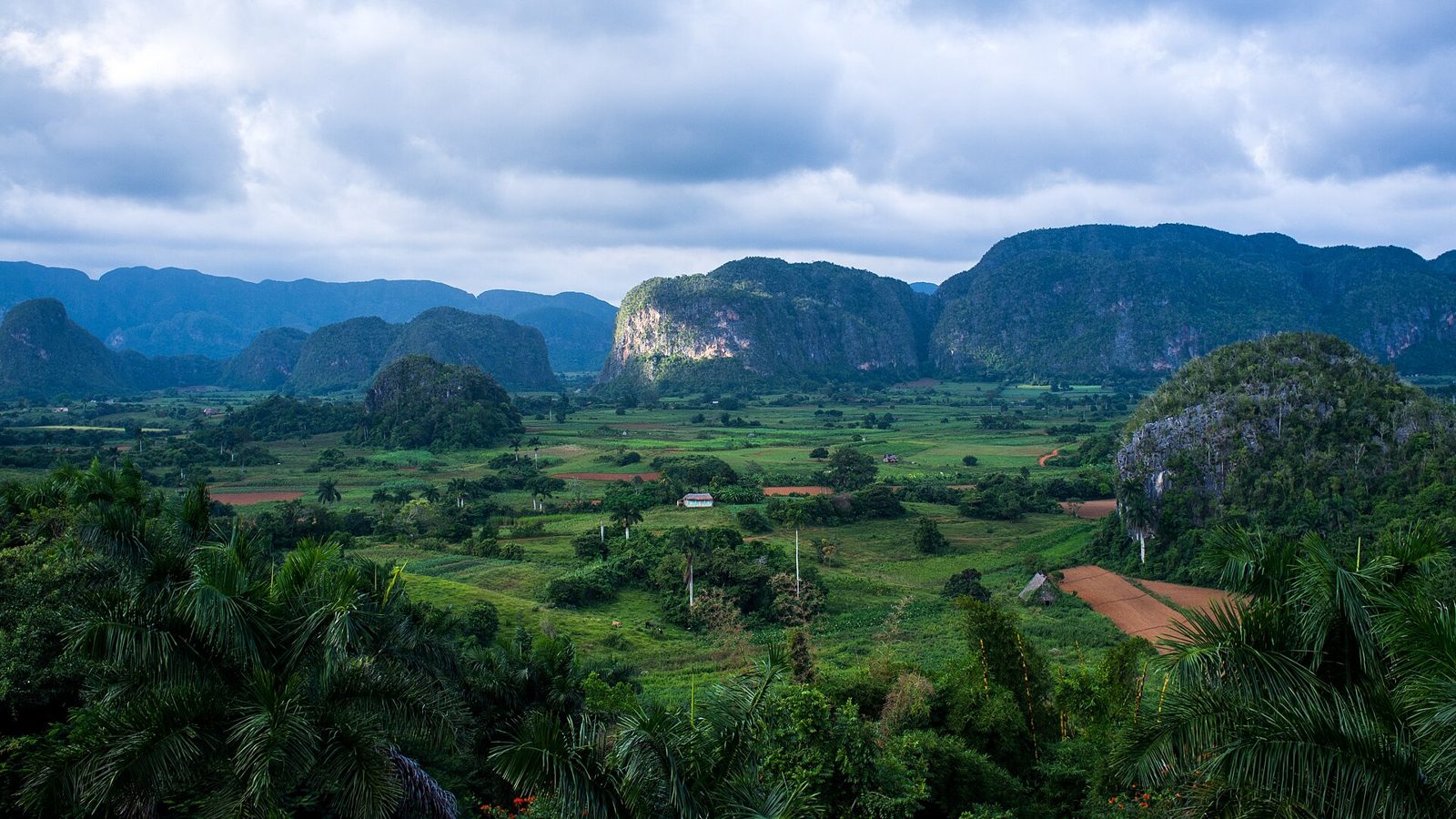
A one-street farming town in a green valley of limestone hills, three hours west of Havana. You ride a horse past tobacco fields, sit in a drying barn while a farmer rolls a cigar, and watch the sun set over the mogotes from a rocking chair on a casa porch.
- Best time to visit: November to April
- Daily budget (budget traveller): $40 to $150 USD
- Ideal trip length: 3 to 5 days
Viñales is a small town in Pinar del Río province, at the western end of Cuba, roughly 180km from Havana. It sits in a valley known for its mogotes, steep, round-topped limestone hills covered in forest that rise straight out of flat red fields. The valley is a UNESCO World Heritage cultural landscape because farming here has barely changed in two centuries. Oxen still plough the fields, tobacco hangs in palm-thatched barns and many families have grown the leaf for generations. The town itself is one main street, Salvador Cisneros, lined with single-storey houses with porches, and almost every other house is a casa particular, a family home that rents out rooms. People come to ride horses or walk through the valley, visit tobacco and coffee farms, take a boat through a cave on an underground river and spend slow evenings listening to live music on the square. Cuba is going through a severe fuel and power crisis in 2026, with long blackouts, fewer flights and some government advice against travel, so check the current situation before you book. If you do go, Viñales is one of the easiest and friendliest places in Cuba to travel alone. Your casa family looks after you, and a horse ride, a cigar and a home-cooked dinner cost very little.
Viñales is the best known countryside town in Cuba, a village of about 25,000 people spread through a valley of mogotes, the steep, forested limestone hills that make this part of Pinar del Río look nothing like the rest of the island. The valley has been a UNESCO cultural landscape since 1999 because of its traditional farming. Tobacco grows in the red soil, oxen pull wooden ploughs and farmers dry their leaves in tall barns roofed with palm thatch. Most visitors come on a day trip from Havana, see one viewpoint and one farm and leave. Stay a few nights and you get the better version: mist in the valley at dawn, a long horse ride to a farm where the coffee is roasted over a fire, a swim in a cave pool and dinner on your casa porch while the hills go pink. It is cheap by Caribbean standards, and your host family does much of the organising for you.
Getting here takes some patience in 2026. There is no airport and no train. Viazul runs one morning bus from Havana, about 3.5 to 4.5 hours for $12-16 USD, and shared colectivo taxis cover the same route in 2.5 to 3 hours for roughly $12-25 USD a seat. Fuel shortages mean delays and cancellations, so book through your Havana host and keep a spare day either side of a flight. Once you are here, walk. Base yourself on the back streets near Salvador Cisneros for restaurants and music, or at a farm casa on the valley edge for views and quiet. Use horses, bikes and the odd taxi for the caves, the Mural and the beaches.
Timing shapes the trip. November to April is dry and warm, and the tobacco harvest fills the barns from about January to March. It is also the busiest season, so book ahead. May to October is hot and wet, with storms most afternoons and hurricanes possible from June to November. The bigger issue right now is the national crisis. Blackouts, short menus and empty pharmacies are part of daily life, and the UK and Canada advise against non-essential travel. If you go, bring cash, medicines, a torch and patience. Locals are warm and welcoming, and most casa hosts speak some English. Evenings are about music on the square and rum on the porch, not clubs. If you want a slow few days in the Cuban countryside, this is the place.
Viñales itinerary
Arrive and find your feet
Morning: Take the morning Viazul bus or a shared colectivo from Havana. Have your casa host meet you at the bus office so the touts leave you alone.
Afternoon: Settle in, then walk the length of Salvador Cisneros to the square and the church. Look into the Jardín Botánico Caridad at the north end of town.
Evening: Take a bicitaxi up to Los Jazmines for sunset over the valley, then have dinner at your casa and some music at the Polo Montañez centre.
Horses and tobacco
Morning: Set off early with a local guide on a three to four hour horse ride through the Valle de Silencio (roughly $20-35). Stop at a tobacco farm to watch a cigar being rolled.
Afternoon: Carry on to a coffee farm and a cave with a swimming pool, or ask to include Los Acuáticos. Back in town, have a long lunch and a rest during the heat.
Evening: Dinner at a paladar on Salvador Cisneros, then a mojito on your casa rooftop.
Caves to the north
Morning: Cycle or take a taxi 5km north to the Cueva del Indio (about $5-8) and arrive at opening time for the boat trip before the Havana groups.
Afternoon: Stop at the Palenque de los Cimarrones, a cave once used by escaped slaves, on the way back. Lunch, then a nap or a book on the porch.
Evening: Walk through the Cueva de la Vaca to the far side of the hill for the late light, and take a torch for the return. Simple casa dinner.
Santo Tomás and the Mural
Morning: Take a taxi west to the Gran Caverna de Santo Tomás, one of the largest cave systems in Latin America, for a guided walk with a helmet and headlamp.
Afternoon: Stop at the Mural de la Prehistoria on the way back. Look from the road for free or pay a few dollars to get close. Lunch at the Finca Agroecológica El Paraíso if you can arrange it.
Evening: Back in town for live music and dancing on the square.
Beach day at Cayo Jutías
Morning: If fuel allows, share a taxi with other travellers to Cayo Jutías, about 1.5 hours away along a causeway. Ask your host to organise the seats the night before.
Afternoon: Swim in the shallow water, walk the long white beach and eat fish at the beach restaurant if it is open. Bring water, cash and sun protection.
Evening: Return in the late afternoon. A quiet dinner and an early night.
Pinar del Río
Morning: Take a colectivo or taxi 27km south to Pinar del Río. Visit the Francisco Donatien cigar factory if it is open to visitors.
Afternoon: Taste guayabita liqueur at the Casa Garay distillery, then walk the colonnaded main street and eat in pesos at a local café.
Evening: Return to Viñales for a farewell dinner with your casa family.
Slow morning and depart
Morning: Get up for sunrise from Los Jazmines or take one last walk into the Valle de Silencio while the mist lifts.
Afternoon: Take the morning Viazul or a booked colectivo back to Havana. Confirm the pickup time the night before, as schedules shift with fuel.
Evening: Arrive in Havana, or carry on to your next stop.
Best neighbourhoods
- Town centre and Salvador Cisneros: The main street and the square, Parque Martí, with the church, the Polo Montañez cultural centre, the Viazul office and most paladares (private restaurants). Everything is a few minutes' walk away. Music from the square and the bars carries late on weekends, so ask for a room at the back.
- The back streets: The parallel streets just off the main road, such as Rafael Trejo and Adela Azcuy, are full of casas with rooftop terraces and are noticeably quieter. You are still only two or three blocks from the square, and many rooftops look straight out to the mogotes.
- Valley edge and Valle de Silencio: Farm casas on the western edge of town, where the dirt tracks lead into the Valle de Silencio and its tobacco fields. You wake to roosters and a valley view, and horse guides start from the door. The walk back from town is unlit and muddy after rain, so bring a torch.
- San Vicente valley: A narrower valley about 5km north, near the Cueva del Indio and the Palenque de los Cimarrones. It has a few rural casas and an old state hotel at the San Vicente springs. It is peaceful and green, but you depend on taxis or a bike to reach the town's restaurants.
- Pinar del Río: The provincial capital, about 27km south, with a cigar factory, a guava liqueur distillery and real Cuban city life. It has few visitors and cheaper food in pesos. It suits a day trip rather than a base, though Viazul and shared taxis to Havana pass through it.
Must-do experiences
- Ride or walk through the valley: Almost every casa can book a local guide for a horse ride of three to four hours through the Valle de Silencio. Expect to pay roughly $20-35 USD, usually with stops at a tobacco farm, a coffee farm and a cave with a swimming pool. Agree the length, the route and the price before you set off. Guided walks follow the same tracks if you prefer your own feet.
- Visit a tobacco farm: Sit in a palm-roofed drying barn while a farmer explains how the leaf is grown, cured and fermented, then rolls a cigar for you to try, often dipped in honey. The visit itself is usually free or included in your ride. Farmers sell cigars by the bundle, but there is no pressure to buy.
- Take a boat through the Cueva del Indio: About 5km north of town, a short walk through the cave leads to an underground river, where a motorboat carries you through lit chambers and out into daylight. Entry is roughly $5-8 USD, including the boat. Go early in the morning, before tour groups arrive from Havana.
- See the Mural de la Prehistoria: A huge painting on the cliff of a mogote in the Dos Hermanas valley, about 4km west of town, showing evolution from snails to dinosaurs to people. It was commissioned in 1961 and is gloriously kitsch. Entry is a few dollars and sometimes includes a drink, but you can see it perfectly well for free from the road.
- Watch sunset from Los Jazmines: The terrace of Hotel Los Jazmines, about 4km south on the Pinar del Río road, has the classic view over the whole valley. Walk or take a bicitaxi up late in the afternoon and buy a drink if the bar is open. If the hotel is closed, the roadside lookout below gives almost the same view.
- Hear live music on the square: The Centro Cultural Polo Montañez, named after a local country singer, puts on son and salsa most nights, and there are dance classes in some casas. Entry is a dollar or two. Power cuts sometimes stop the show, so ask your host what is on that evening.
- Wander the Jardín Botánico Caridad: A private garden at the north end of town, started by two sisters many years ago and still looked after by their family. Fruit trees, orchids and odd collections of dolls' heads hang from the branches. There is no fixed fee, so leave a tip for whoever shows you round.
Hidden gems
- Los Acuáticos, a tiny community on a mogote slope founded by followers of a local water healer in the 1940s, which you reach on foot or by horse
- The Cueva de la Vaca, a short walk-through cave on the edge of town that comes out on the far side of the hill with a view over the Valle de Silencio
- The Los Jazmines lookout at sunrise, when mist fills the valley and the mogotes poke through it like islands
- The Casa Garay distillery in Pinar del Río, where they make Guayabita del Pinar, a liqueur flavoured with a small local guava
- Puerto Esperanza, a sleepy fishing village about 25km north with a long wooden pier and almost no visitors
Daily budget
- Accommodation: budget $20-35 / night (casa particular room), mid-range $35-60 (casa with valley view, private terrace or pool), splurge $80+ (Hotel Los Jazmines or a top casa with a generator). Breakfast is usually about $5 extra and worth it. Prices rise from December to April. Ask whether the casa has backup power before you book.
- Food: budget $12-20 / day (casa breakfast, street pizza, casa dinner), mid-range $25-40 (paladar lunch and dinner with drinks), splurge $50+ (lobster dinner, farm lunch, cocktails). A casa dinner is roughly $8-12 and a paladar main $7-15. Street snacks in pesos cost under $1-2. Prices change quickly with the exchange rate, so treat these as rough guides.
- Transport: budget $0-5 / day (walking, bike, bicitaxi), mid-range $10-30 (half-day taxi share), splurge $70-120 (private taxi to Havana). Viazul to Havana is about $12-16 and a colectivo seat roughly $12-25. Taxi prices rise when fuel is short. Agree every fare before you get in.
- Activities: budget $5-15 / day (walks, Cueva del Indio about $5-8, Mural a few dollars), mid-range $20-35 (half-day horse ride with guide), splurge $50+ (Cayo Jutías day trip, private guide). Horse rides usually include farm visits. Have small notes for tips and for cigars or coffee at the farms.
- Drinks & nightlife: budget $3-6 (a beer or mojito on the porch), mid-range $10-20 (cocktails and music on the square), splurge $30+ (a long night of rum and salsa). A mojito is about $2-4 and a local beer $1.50-3, when available. Live music at the Polo Montañez centre costs a dollar or two to get in.
Where to stay
- Casa particular in Back streets near Salvador Cisneros ($20-35 / night): A room in a family home, usually with a private bathroom, air-conditioning and a porch or rooftop. You are two minutes from the square and restaurants, and your host sorts out guides and transport.
- Farm casa in Valley edge and Valle de Silencio ($25-45 / night): Rooms on working farms or at the edge of the fields, with direct views of the mogotes and horse rides from the door. Expect a muddy, unlit walk into town and a very quiet night.
- Hotel in Los Jazmines, 4km south ($60-120 / night): Hotel Los Jazmines is an old state hotel with a pool and the best valley view in the area. Service and facilities vary, and some state hotels close to save power, so check it is open.
- Splurge in Town or valley edge ($60-100+ / night): The best casas have pools, big terraces, generators or solar power and excellent cooking. In 2026, steady electricity and water are the real luxury, so pay for them.
What to eat
- A casa dinner: roast pork or chicken with congrí (rice and black beans), salad, fried plantain and fruit, cooked by your host for roughly $8-12 USD
- A farm lunch at the Finca Agroecológica El Paraíso, an organic farm on a hill outside town with a long table of home-grown dishes and a view to match
- Ropa vieja (shredded beef) or lobster at paladares on Salvador Cisneros such as El Olivo. Menus are shorter than they used to be because of shortages, so ask what is available
- Pan con lechón (roast pork roll) or a cheese pizza from street windows, paid in Cuban pesos and among the cheapest meals in town
- Strong Cuban coffee at a farm on your horse ride, often with a shot of local rum or guayabita liqueur
- Piña colada served in a pineapple or a coconut at the valley stops, plus a mojito on a casa porch in the evening
Day trips
- Cayo Jutías (About 60km north-west, roughly 1.5 hours by road): A long white sand beach on a small key joined to the mainland by a causeway, with shallow, calm water and mangroves. It is quieter than the famous beaches further east. Share a taxi through your casa, usually leaving mid-morning and returning late afternoon. Trips depend on fuel in 2026, so confirm the night before and bring water and cash.
- Gran Caverna de Santo Tomás (About 16km west, near the village of El Moncada): One of the largest cave systems in Latin America, with many kilometres of passages. A guided walk of about 90 minutes takes you through galleries with helmets and headlamps. Go by taxi or as part of a horse and taxi tour arranged by your host. Combine it with the Mural de la Prehistoria on the way back.
- Pinar del Río (About 27km south, 30 to 40 minutes by road): The provincial capital, with the Francisco Donatien cigar factory, the Casa Garay guayabita distillery and colonnaded streets with few tourists. Take a colectivo or a taxi from Viñales, or stop off on the way to or from Havana, as Viazul passes through the city.
When to visit
- Dry season (December - February): 18-27°C, sunny and dry, cool nights. Crowds: Busy, very busy at Christmas and New Year. The classic time. Clear skies, firm tracks for riding and tobacco growing in the fields. Book Viazul and casas well ahead.
- Late dry season (March - April): 22-30°C, warm and mostly dry. Crowds: Moderate to busy, peaking at Easter. Arguably the best balance. Harvested leaves hang in the barns, days are long and the heat is still manageable.
- Wet season (May - August): 28-32°C, hot and humid, afternoon storms. Crowds: Low. Green and quiet, with cheap rooms. Ride and walk in the morning, and expect red mud and power cuts that make fans stop on hot nights.
- Hurricane peak (September - November): 26-31°C, humid, heavy rain until late October. Crowds: Very low, picking up in November. September and October are the riskiest months for storms, so keep plans flexible. November is drier and the farmers are planting new tobacco.
Entry rules for your passport
Visa rules for Cuba depend on the passport you travel on. Check the official source before you book: Cuba Ministry of Foreign Affairs
Getting there
There is no airport or train service in Viñales. The nearest international airport is José Martí in Havana, about 3 hours away by road. Flights to Cuba have been cut sharply in 2026 because of jet fuel shortages, so check your airline's schedule closely. From Havana, Viazul runs one bus a day from its terminal at Avenida 26 in Nuevo Vedado, leaving in the morning. It stops in Pinar del Río and takes about 3.5 to 4.5 hours for roughly $12-16 USD. Book online, especially from December to April, and expect occasional fuel delays. Shared colectivo taxis take 2.5 to 3 hours and cost roughly $12-25 USD a seat. Your Havana host can book one with a pickup from your door. A private taxi costs about $70-120 USD for the car, and a direct airport transfer around $80-150 USD. Viazul and colectivos also link Viñales with Cienfuegos and Trinidad, but these are long days on the road. Driving yourself is not recommended at the moment, as fuel is hard to find.
Getting around
The town is small and flat, so you will walk almost everywhere. It takes about 10 minutes to cross from one end of Salvador Cisneros to the other. For the valley, the classic options are horseback with a local guide, walking on the farm tracks, or a bike rented through your casa for a few dollars a day. Bicitaxis wait near the square and charge about $2 USD for short hops, for example from the bus office to your casa or up to Los Jazmines. For the Cueva del Indio, the Mural and the Gran Caverna de Santo Tomás, your host can arrange a taxi or an old American car for a half-day loop. Agree the price first and expect to pay more in 2026 because fuel is scarce and expensive. The hop-on hop-off valley bus has run in past years, but check whether it is operating. Hiring a car is not a good idea at the moment, as petrol stations often have no fuel. Colectivos (shared taxis) to Havana, Trinidad and the beaches leave from near the square and are best booked through your casa a day ahead.
Safety
Viñales is one of the safest places in Cuba, and violent crime against visitors is very rare. Petty theft does happen, so keep your phone and cash in a zipped pocket and lock valuables in your room. Touts meet the bus to steer you to a casa that pays them commission, so book ahead and have your host meet you. The bigger risks in 2026 come from the crisis. Blackouts can last many hours and cut water pumps, fans and wifi, so carry a torch and a power bank. Medicines are in very short supply, so bring everything you need, plus a small first aid kit. Do not drink tap water. Use bottled or filtered water from your casa. Mosquitoes spread dengue and other viruses, so use repellent, especially around dusk. Horses are generally calm but wear long trousers and closed shoes, and cave floors can be slippery. Hurricane season runs from June to November. Emergency numbers are 106 for police, 104 for an ambulance and 105 for fire. Medical travel insurance is compulsory for entry, and you should check that yours is valid against your government's current travel advice.
Solo travel tips
- Book your casa before you arrive: A good host meets you at the bus, books horse guides and taxis, cooks dinner and tells you where the power cuts are. It is the most useful thing you can do for a solo trip here.
- Ride early: The valley is cooler, the light is softer and the tracks are firmer before 10am. Day-trippers from Havana arrive late morning, so do the caves and the farms first.
- Bring all your cash: Work out your budget, add a buffer and bring it in clean euro or dollar notes, including small ones. Cards and ATMs are too unreliable to depend on in 2026.
- Plan for blackouts: Pack a torch, a power bank and offline maps. Ask hosts about generators or solar, and charge everything whenever the power comes back.
- Safety for solo travellers: The main risks are heat, slippery caves, unlit tracks at night and touts at the bus office. Use guides your host recommends, tell someone your plans and carry water and a torch.
- Meet people at the farms and on the square: Horse rides often group solo travellers together, and colectivos are shared by default. The square in the evening, the Polo Montañez centre and casa breakfast tables are easy places to start a conversation.
Cultural etiquette
- Greet people with 'buenas' or 'buenos días' and say 'gracias'. A little Spanish goes a long way, especially in the countryside.
- Ask before photographing farmers, oxen carts or people's homes, and offer a small tip if someone poses for you.
- Tip guides, musicians and the farmers who host you. A few dollars makes a real difference while wages are worth so little.
- Be patient with blackouts, missing menu items and late buses. Everyone is dealing with the same shortages, often far worse than you.
- Avoid talking politics loudly in public, and do not photograph police, soldiers or government buildings.
- Cover up a little when you go into the church, and keep swimwear for the cave pools and the beach.
- If you want to help, ask your host whether basic medicines or toiletries from home would be useful, and pass them on quietly rather than handing them out in the street.
Frequently asked questions
How do I get to Viñales from Havana?
Viazul runs one bus a day from its terminal in Nuevo Vedado, leaving in the morning. It takes about 3.5 to 4.5 hours via Pinar del Río and costs around $12-16 USD. Book online, especially from December to April, and allow for fuel delays. A shared colectivo taxi is faster at 2.5 to 3 hours and costs roughly $12-25 USD a seat, and your Havana host can book one. A private taxi costs about $70-120 USD for the car, or more straight from the airport.
How many days do I need in Viñales?
Two nights covers a horse ride, a tobacco farm and the Cueva del Indio. Three to five nights lets you add the Mural, the Santo Tomás caves, a beach day at Cayo Jutías and some proper rest on a rocking chair. A week works if you want to add Pinar del Río and slow right down.
When is the best time to visit Viñales?
November to April is the dry season, with warm days, cooler nights and the tobacco harvest from about January to March. It is also the busiest time, so book Viazul and casas ahead. May to October is hot, humid and wet, with afternoon storms that turn the tracks to red mud. August to October is the peak of hurricane season.
Do I need cash, and which currency?
Yes. Cuba is a cash economy for visitors. Bring euros or US dollars in clean, undamaged notes, including small ones. Casas, guides and many paladares quote in dollars or euros, and you can change some money into Cuban pesos for street food. The peso is falling fast, and in early November 2026 the informal rate was around 900 pesos to the dollar. US-issued cards do not work at all, and other cards are unreliable.
How do the blackouts affect a trip?
Power cuts can last many hours a day, and they stop fans, air-conditioning, water pumps and wifi. Many casas have a small generator, solar panels or rechargeable lights, so ask before you book. Carry a torch and a power bank, download offline maps and keep some drinking water in your room.
Is it ethical to buy cigars at the farms?
Farmers must sell most of their crop to the state, but they keep part of it, and selling cigars to visitors is an important income for them. Farm cigars come without the official seals, so check your home country's customs allowance before you buy a big bundle. Never buy branded boxes on the street, as they are usually fake.
Is Viñales safe for solo female travellers?
Yes, it is one of the most relaxed places in Cuba to travel alone. Expect compliments and offers of salsa lessons, which a firm no usually ends. Book horse guides through your casa rather than men on the street, tell your host where you are going and use a torch on unlit tracks after dark.
What entry rules apply to Cuba in 2026?
Since July 2025, most visitors need an electronic visa (e-Visa), which replaced the paper tourist card. You must also complete the online D'Viajeros form within the seven days before arrival and show its QR code. You need medical travel insurance, a passport valid for six months from entry and an onward ticket. The e-Visa gives 90 days, which can be extended. As of November 2026, the UK advises against all but essential travel and Canada against non-essential travel. US citizens cannot visit as tourists under US law. Check official sources and your own government's advice before booking.
Tours and activities in Viñales | Viñales in 2 days | Viñales in 3 days | Viñales in 4 days | Viñales in 5 days | Viñales in 7 days
Joy Plus home | Destinations | Itineraries | Activities | Flights | Budget planner | Calendar | Map | Blog | Lifetime access