Destinations / Middle East
Wahiba Sands, Oman travel guide
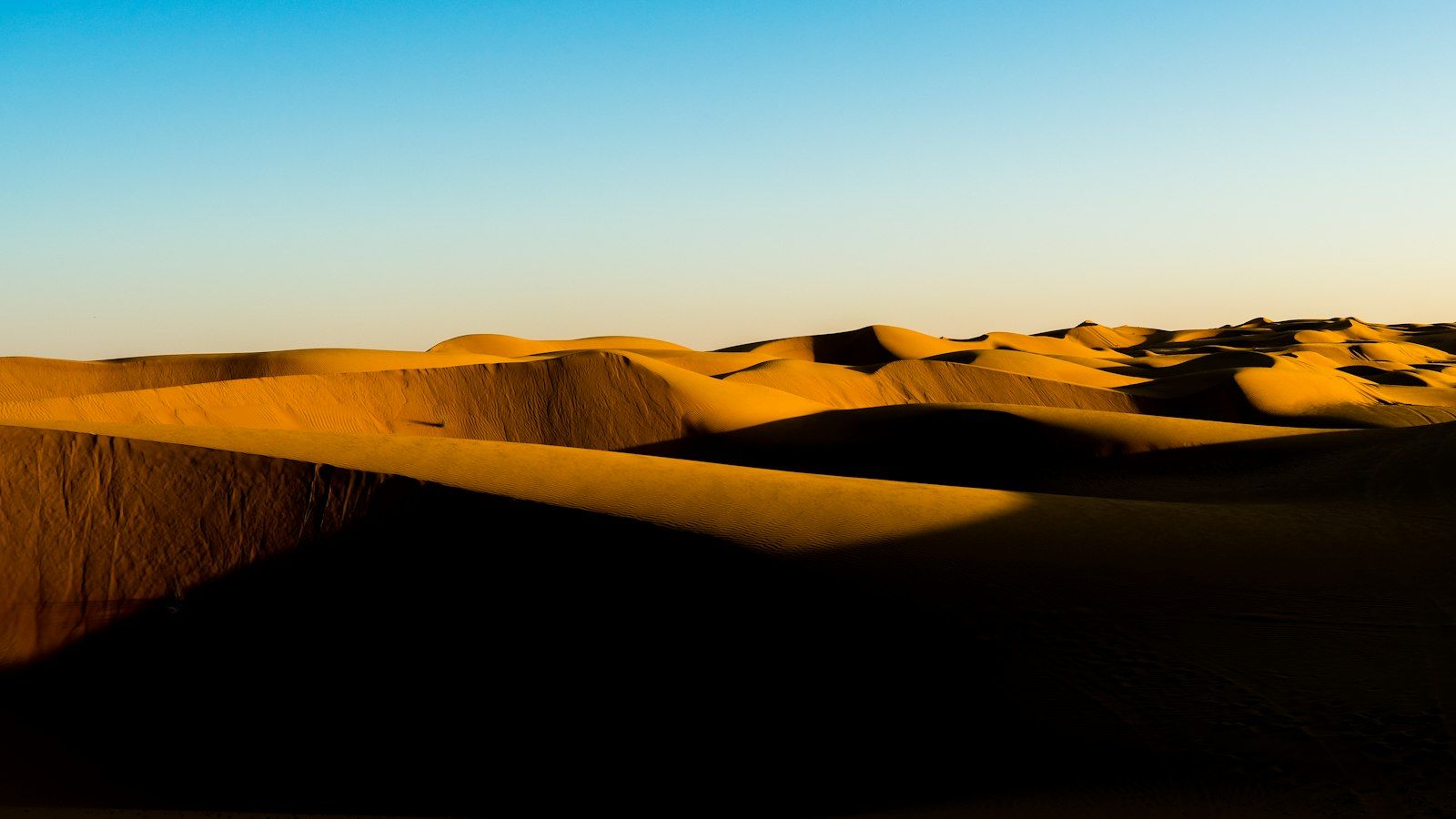
Oman's great orange sand sea, where you sleep in Bedouin-style camps among 100-metre dunes and spend the days swimming in palm-lined wadis and browsing desert-town markets.
- Best time to visit: November to February
- Daily budget (budget traveller): $90 to $310 USD
- Ideal trip length: 3 to 7 days
The Wahiba Sands, officially the Sharqiya Sands, is a sea of orange and honey-coloured dunes in eastern Oman. It covers roughly 12,500 square kilometres, running south from the foothills of the Hajar Mountains towards the Arabian Sea, and the ridges in the interior rise above 100 metres. Most visitors come in through two small towns on Route 23, Al Wasil and Bidiyah, about two to two and a half hours' drive from Muscat. The tarmac ends there and a line of permanent desert camps starts. You don't need off-road experience to sleep in the dunes. Leave your car at the petrol station, let the camp drive you in, and spend the evening watching the sand turn red. At night the sky is properly dark. The country around the sand is just as good. Wadi Bani Khalid has spring-fed pools, Ibra holds a women's market every Wednesday, Sur still has its dhow yards and green turtles nest at Ras al Jinz. Oman is one of the safest countries in the region for solo travellers. From October to March the desert is warm by day and cool after dark.
The Wahiba Sands is named after the Wahiba Bedouin, and it's a separate sand sea from the Empty Quarter far to the west. Its dunes run in long north-south ridges, low and rippled at the edges, rising beyond 100 metres in the interior. Almost everyone sees it from the same northern fringe. Route 23 runs between Al Wasil and Bidiyah, the tarmac stops, and a few kilometres of compacted track lead to the permanent camps. The camps range from simple Bedouin-style huts with shared bathrooms to air-conditioned tents with pools. Most quote a per-person price that includes dinner and breakfast, which is handy for a solo budget because you're not hunting for food in the dark. The catch is that solo travellers often pay a single supplement, and pickups are priced per car. So do the maths before you book.
The easiest solo route starts in Muscat with a hire car. Spend the first night in Ibra, catch the Wednesday women's souq if the day works, then drive 30 to 40 minutes to Al Wasil. Leave the car at the petrol station and let the camp collect you. Two nights in the sand leaves time for Wadi Bani Khalid, about 40km away, which is the best swim in the region. Then carry on east through Al Kamil to Sur for the dhow yards, the Ras al Jinz turtles and Wadi Shab on the coast road back to Muscat. If you don't drive, Mwasalat's once-daily route 55 bus stops at Ibra, Al Wasil and Bidiyah, and most camps will meet it. It's slower and needs planning, but it works.
Timing is everything. From November to February the days sit in the high 20s, nights can be genuinely cold in the dunes, and the camps are at their best. October and March are good but hotter. From May to September the sand can pass 45°C, and you're limited to dawn and dusk. Oman is conservative, calm and very safe. Dress modestly, ask before photographing anyone, and expect qahwa and dates almost everywhere you stop. This isn't a party desert. The evenings are a campfire, a buffet and a sky full of stars, and for most people that's why they come.
Wahiba Sands itinerary
Land in Muscat, drive to Ibra
Morning: Land at Muscat International Airport (MCT). Pick up a hire car, buy a local SIM at arrivals and withdraw rials.
Afternoon: Drive about 150km (around 1h45) on Route 15 and Route 23 to Ibra. Stop for karak and a shawarma at a roadside cafeteria.
Evening: Walk among the abandoned merchant houses of Al Minzifah at golden hour, then have a simple dinner in town and sleep at an Ibra guesthouse.
Ibra souq, then into the dunes
Morning: On a Wednesday, browse the women's souq from early morning (men keep to the edges). On other days, try the main souq and fish market. Stock up on water and snacks at Lulu.
Afternoon: Drive 30-40 minutes to Al Wasil, park at the petrol station and meet your camp pickup (agree the price when booking, about 15-35 OMR per car).
Evening: Climb the nearest ridge for sunset, then a buffet dinner, campfire and stargazing.
Sunrise, camels and Al Mintirib
Morning: Get up before dawn for a quiet walk up the dunes. After breakfast, take a short camel ride and have qahwa with a Bedouin family arranged by your camp.
Afternoon: Rest in the shade during the hottest hours, then ride out with the camp to Bidiyah to look at the old village and fort at Al Mintirib.
Evening: Join a sunset 4x4 run with a camp driver (often 10-15 OMR if not included). Dinner at camp.
Wadi Bani Khalid
Morning: Camp transfer back to your car, then drive about 40km (around 45 minutes) to Wadi Bani Khalid. Arrive by 9am, before the tour groups.
Afternoon: Swim in the main pools, then scramble upstream towards Muqal Cave. Wear water shoes and modest swimwear. Lunch at the café by the car park.
Evening: Return to the camp for a second desert night, or stay at a guesthouse in Bidiyah if you prefer a bed with walls.
Sur and Ras al Jinz turtles
Morning: Drive about 120km (around 1h30) via Al Kamil to Sur. Watch the craftsmen at the dhow yard and walk the waterfront at Al Ayjah.
Afternoon: Check into a Sur hotel or the Ras al Jinz guesthouse. Grilled kingfish for a late lunch.
Evening: Join the evening turtle tour at Ras al Jinz (about 45 minutes from Sur, roughly 7-15 OMR, booked in advance). No flash or white torches on the beach.
Dawn turtles and a slow day in Sur
Morning: If you stayed at the reserve, join the dawn tour, which is often quieter, for hatchlings and turtles heading back to sea. Otherwise, sleep in.
Afternoon: Explore Ras al Hadd's fishing harbour and headland, then drive back to Sur for halwa and a nap.
Evening: Mishkak skewers from an evening stall and an early night ahead of the wadi.
Wadi Shab and back to Muscat
Morning: Drive about 45 minutes up the coast to Wadi Shab. Take the short boat crossing (around 1 OMR) and hike about 45 minutes to the swimming pools. Start by 8am.
Afternoon: Drive about 1h45 along the coast road to Muscat. Return the car or drop your bags.
Evening: Walk the Muttrah Corniche at sunset, then fly out or sleep near the airport.
Best neighbourhoods
- Al Wasil: The northern gateway village on Route 23. Many camps collect guests from its petrol station, and this is where you deflate tyres if you're driving a 4WD yourself. It has a few small shops and an old mud-brick fort.
- Bidiyah and Al Mintirib: The main town at the edge of the sand, about 12km southeast of Al Wasil. Come here for fuel, ATMs, Omani and Indian canteens and the old village and fort at Al Mintirib. It's also the second big pickup point for camps.
- The camp belt: A string of permanent camps set among the dunes a few kilometres to around 12km south of the tarmac, joined by compacted sand tracks. Choose this for sunrise dune walks, camel rides and a properly dark sky.
- Ibra: A historic market town about 30 to 40 minutes north of the sands. It has a Wednesday women's souq, the crumbling merchant houses of Al Minzifah, a big Lulu hypermarket and cheaper guesthouses for your first or last night.
- Sur: A coastal dhow-building town about 1.5 hours east of Bidiyah. It works well as a base for Ras al Jinz turtles and Wadi Shab, and has more mid-range hotels and seafood than anywhere near the sand.
Must-do experiences
- Watch sunset from a dune ridge: Walk or ride up the highest ridge near your camp an hour before sunset. Watch the sand go from gold to deep red, then stay put for the first stars.
- Sleep in a desert camp: Book a half-board camp in the dunes for at least one night, ideally two. You get a buffet dinner, a campfire and a night sky with no town lights to spoil it.
- Swim at Wadi Bani Khalid: Drive about 40km from Bidiyah to this spring-fed wadi. Swim in green pools under the palms and scramble upstream towards Muqal Cave, and cover up out of respect for local families.
- Browse Ibra's Wednesday women's souq: Every Wednesday morning, women from the surrounding villages and the sands trade fabric, henna, perfume and honey. It's one of the most distinctive markets in Arabia.
- Ride a camel with a Bedouin family: Many camps work with local families who keep camels. A short sunrise or sunset ride, plus qahwa and dates in a family tent, is the most personal hour you'll spend in the sands.
- Go dune driving with a local driver: Leave dune bashing to an experienced camp driver rather than a rental car. Rental insurance doesn't cover it, and the local drivers know which faces are safe.
- See green turtles nest at Ras al Jinz: Combine the sands with Sur and join a guided night or dawn tour on the protected beach at the easternmost tip of the Arabian Peninsula.
Hidden gems
- Al Minzifah in Ibra, a quarter of abandoned carved-door merchant houses that you can wander quietly in the late afternoon light
- Muqal Cave and the upper pools of Wadi Bani Khalid, a short scramble past the busy main pool where most day-trippers turn back
- The Thursday market in Sinaw, where Bedouin families trade goats and camels at dawn, best before 9am
- A dawn walk from your camp to the nearest high ridge before the 4x4s start, when the only sounds are wind and the occasional camel
- The old village and fort at Al Mintirib, mud-brick lanes on the edge of Bidiyah that most travellers drive straight past
Daily budget
- Accommodation: budget 25-45 OMR / person (basic camp, half-board) or 20-35 OMR (Ibra guesthouse room), mid-range 55-90 OMR (mid-range camp tent, half-board), splurge 120-250+ OMR (Desert Nights Camp). Most camps price per person sharing, so ask about the single supplement. Book weekends and holidays ahead. Some camps, such as Desert Rose, take cash only.
- Food: budget 5-10 OMR / day (camp half-board covers dinner and breakfast, plus roadside shawarma and karak), mid-range 12-20 OMR (camp meals plus a sit-down lunch in Ibra or Sur), splurge 30+ OMR (seafood dinners in Sur, private camp dinner). Karak costs a few hundred baisa, and a biryani plate at a local canteen is roughly 1.5-3 OMR. Stock up on water and snacks at Lulu in Ibra before heading into the sand.
- Transport: budget 5-35 OMR / day (Mwasalat bus up to 4.200 OMR plus a camp pickup), mid-range 15-25 OMR (saloon hire, roughly 12-20 OMR a day, plus fuel), splurge 40-70 OMR (4WD hire at roughly 30-45 OMR a day, or a private driver). Camp pickups run about 15-35 OMR per car, so solos pay the lot. Fuel is cheap. Dune driving isn't covered by rental insurance. Check live prices before booking.
- Activities: budget 0-5 OMR / day (dune walks, Wadi Bani Khalid, markets), mid-range 10-25 OMR (camel ride, sunset 4x4, Ras al Jinz tour), splurge 40-100+ OMR (private dune safari, guided overnight trek). Wadi Bani Khalid has long been free, but some 2026 reports mention around 1 OMR including parking. Ras al Jinz tours cost roughly 7-15 OMR depending on the source, so book ahead and confirm the fee.
- Coffee, drinks & nightlife: budget 1-3 OMR (karak, juice, qahwa at camp), mid-range 5-10 OMR (fresh juices, café stops in Sur), splurge 20+ OMR (drinks at a licensed hotel bar in Sur or Muscat). Most desert camps are dry. Alcohol is only sold in licensed hotels and restaurants, and drinking in public is illegal. Nightlife here means a campfire and a stargazing session.
Where to stay
- Social hostel in Camp belt near Al Wasil (25-45 OMR / person, half-board): There are no true hostels in the sands. The nearest equivalent is a small family-run camp with a communal dinner and campfire, such as Al Badri Bedouin Camp or Sama Al Areesh Desert Camp, where solos end up chatting round the fire.
- Boutique hotel in Camp belt, Bidiyah side (55-90 OMR / person, half-board): Mid-range camps like Arabian Oryx Camp, 1000 Nights Camp or Sama Al Wasil Desert Camp give you an en-suite tent or chalet, good buffets and organised camel and sunset trips without luxury prices.
- Apartment in Sur (20-40 OMR / night): Holiday apartments in Sur, which you'll find on the usual booking platforms, give you a kitchen and parking near the waterfront. They make a practical base for Ras al Jinz and Wadi Shab after the camps.
- Splurge in Camp belt, about 11km into the sand (120-250+ OMR / night): Desert Nights Camp is the benchmark luxury option, with furnished tents, private bathrooms, a pool and a proper restaurant deep enough into the dunes to feel remote.
What to eat
- Shuwa: lamb or goat marinated in spices and slow-cooked for many hours in an underground pit, a festive dish that some camps and restaurants serve on special nights
- Qahwa and dates: cardamom-scented Omani coffee poured in small cups with fresh dates, offered as a welcome in camps and homes
- Mashuai: whole grilled kingfish served with lemony rice, a coastal favourite worth ordering in Sur
- Omani halwa: a sticky, glossy sweet of sugar, rosewater, saffron and nuts, sold by weight in Ibra and Sur
- Karak chai: strong, sweet spiced milk tea from roadside cafeterias, the cheapest fuel for a long drive
- Harees: wheat and meat slow-cooked to a smooth porridge, often served during Ramadan and celebrations
- Mishkak: charcoal-grilled meat skewers with tamarind sauce, sold from evening stalls in the towns
Day trips
- Wadi Bani Khalid (About 40km, 45 minutes from Bidiyah): Spring-fed green pools among palms and boulders, with a café and toilets by the car park and a scramble upstream to Muqal Cave. The water flows year-round. Self-drive on paved roads, no 4WD needed. Long free to enter, though some 2026 reports mention a fee of around 1 OMR including parking. Go before 9am or after 3pm to avoid tour groups.
- Sur and Ras al Jinz Turtle Reserve (About 120km to Sur, then 45 minutes to Ras al Jinz): Watch dhows being built in Sur, then join a ranger-led tour to see green turtles nesting on the beach at the easternmost point of Arabia. Self-drive via Al Kamil. Book turtle tours in advance through the reserve's official website. Fees run roughly 7-15 OMR, so confirm when booking, and stay overnight to add the dawn tour.
- Sinaw Thursday market (About 75km, around 1 hour west of Al Wasil): Bedouin families trade camels, goats, silver, dates and handicrafts at one of the region's most traditional markets. The livestock auction is best early on Thursday. Self-drive from Ibra or the camps, leaving by 6:30am. Bring cash and ask before photographing anyone.
- Wadi Shab (About 45 minutes north of Sur on the coast road): A deep canyon with turquoise pools. A short boat crossing and a roughly 45-minute hike lead to swimming holes and a cave with a waterfall inside. Self-drive on the Sur to Muscat coastal highway. The boat crossing is about 1 OMR. Start early, wear water shoes and keep your phone in a dry bag.
When to visit
- Cool season (November - February): 24-30°C by day, 5-15°C at night in the dunes, mostly dry. Crowds: Peak, especially Christmas, New Year and weekends. The best months. Book camps early for holidays and Thursday and Friday nights, and pack a fleece. Ramadan 2027 is expected to start in early February, so expect shorter hours and no eating in public by day.
- Spring shoulder (March - April): 30-38°C by day, warm nights, occasional dust. Crowds: Moderate, falling through April. Still good if you plan dune time for early morning and late afternoon. Wadi swims feel wonderful. Prices start to drop.
- Hot season (May - September): 40-48°C, hot winds and dust, humid on the coast. Crowds: Very quiet in the desert, busy at Ras al Jinz. Only for the heat-tolerant. Some camps close or cut services, and midday on the sand is dangerous. This is a good time for turtle nesting, but book ahead.
- Autumn shoulder (October): 32-37°C by day, cooling nights by late month. Crowds: Low to moderate. The locals' pick. Camps reopen fully, rates are fair, and turtle hatchlings are often still around at Ras al Jinz.
Entry rules for your passport
Visa rules for Oman depend on the passport you travel on. Check the official source before you book: Oman Ministry of Foreign Affairs
Getting there
Muscat International Airport (MCT) is the gateway, about 190km by road from Bidiyah, roughly 2 to 2.5 hours' drive. Oman Air and SalamAir fly from across the Gulf, Europe and Asia, and many travellers connect through Dubai, Doha, Abu Dhabi or Istanbul. Citizens of more than 100 countries can currently visit visa-free for up to 14 days, but carry a return ticket, hotel bookings and insurance, and confirm the rules on the Royal Oman Police eVisa portal before flying. From the airport, hire a car (international brands and local firms are at arrivals) and take Route 15 towards Ibra, then Route 23 to Al Wasil and Bidiyah. Without a car, Mwasalat's route 55 runs once a day each way between Muscat and Sur, calling at the airport, Ibra, Al Wasil, Mintirib, Bidiyah and the Wadi Bani Khalid turn-off. The full single fare to Sur is about 4.200 OMR. A private taxi from Muscat to Bidiyah costs far more, roughly 55-75 OMR, so agree the fare first. Overland from the UAE is possible, but border rules differ, so check before you go.
Getting around
Wahiba Sands has no public transport into the dunes. Mwasalat, the state bus company, runs route 55 between Muscat and Sur once a day each way via Ibra, Al Wasil, Mintirib, Bidiyah and the Wadi Bani Khalid turn-off. The full single fare to Sur is about 4.200 OMR, but check times on mwasalat.om. From the bus stop or your parked car, almost every camp will collect you from the Al Wasil or Bidiyah petrol stations, usually for somewhere between 15 and 35 OMR per car, so confirm the price when you book. Hiring a car in Muscat gives you the most freedom. A normal saloon is fine on the paved roads to the edge of the sand, to Wadi Bani Khalid and to Sur. Only hire a 4WD if you plan to drive the camp tracks yourself, and even then lower your tyre pressure at the petrol station first. Oman drives on the right. Roads are good, but watch for speed cameras, speed bumps in villages and camels wandering across the road after dark.
Safety
Oman is very safe for solo travellers, including women, and crime against visitors is rare. The real risks out here are heat, sand and water. Never drive into soft sand in a 2WD, and never head deep into the dunes alone without a second vehicle. Rental insurance usually excludes off-road damage. In the hotter months, carry at least three litres of water per person, cover your head and avoid walking the dunes around midday. Winter nights can drop close to 5-10°C, so bring a warm layer. In the wadis, slippery rocks and flash floods after rain are the main dangers, so check the forecast and don't enter narrow sections when storms threaten the mountains. Avoid night driving on rural roads because of camels and goats. Dress modestly in towns and wadis. Phone signal drops in parts of the sand, so tell your camp your plans and save its number.
Solo travel tips
- Book a camp with pickup included or quoted: Pickups are priced per car, so as a solo you pay the full fare. Ask for the price in writing, confirm whether they collect from the Al Wasil or Bidiyah petrol station, and send your arrival time the day before.
- Pick a social camp for one night: The smaller family-run camps with a shared dinner circle and campfire are where you'll meet other travellers. Bigger luxury camps are quieter and more couple-heavy. If you're staying two nights, try one of each.
- Hire a saloon, not a 4WD: A normal car handles every paved road on this route and costs much less. Leave sand driving to camp drivers. Rental insurance usually excludes dune damage, and getting stuck alone is miserable.
- Drive by daylight: Camels and goats wander onto rural roads, and many stretches are unlit. Plan your drives to arrive before sunset, which also means you'll always catch the dune light.
- Safety for solo travellers: Oman is very safe, and solo women are generally treated with courtesy. Dress modestly, turn down rides from roadside touts at the desert edge, keep your camp's number saved, and tell staff if you plan to walk off into the dunes.
- Use the weekly markets to meet people: Ibra on Wednesday and Sinaw on Thursday are where the region comes to trade. Go early with small notes, accept the coffee and ask before taking photos. You'll have more conversations in an hour than in a day at the camp.
Cultural etiquette
- Dress modestly. Cover shoulders and knees in towns, markets and wadis, and swim in a T-shirt with shorts or leggings at Wadi Bani Khalid and Wadi Shab.
- Ask before photographing anyone, especially women. At the Ibra Wednesday souq, men should stay at the edges.
- Accept qahwa and dates when offered. Take the cup with your right hand and give it a gentle shake when you've had enough.
- Use your right hand for eating, greeting and passing things.
- During Ramadan, don't eat, drink or smoke in public in daylight. Many cafés open only after sunset.
- Leave no trace in the dunes. Take all rubbish back to camp and never drive over vegetation or near Bedouin homes.
- Alcohol is only legal in licensed venues. Don't bring it to camps, wadis or public places.
Frequently asked questions
How do I get from Muscat airport to a Wahiba Sands camp?
The easiest way is to hire a car at Muscat International Airport and drive about 190km, roughly 2 to 2.5 hours, along Route 15 and Route 23 to Al Wasil or Bidiyah. Park at the petrol station and your camp will collect you, usually for 15 to 35 OMR per car. A private taxi all the way costs a lot more. On a budget, take Mwasalat bus route 55 towards Sur and get off at Al Wasil or Bidiyah, then arrange a camp pickup in advance.
How many days do I need in Wahiba Sands?
Two nights in a camp is ideal. That gives you a sunset, a sunrise and a full day for Wadi Bani Khalid or a camel ride. With five to seven days you can add Ibra, Sur, Ras al Jinz and Wadi Shab, and loop back to Muscat along the coast.
When is the best time to visit Wahiba Sands?
November to February is best, with warm days and cool or even cold nights. October and March are good but hotter. From May to September, daytime temperatures often pass 40°C, some camps cut back services and dune activities are best limited to early morning and evening. In 2027, Ramadan is expected to run from roughly early February to early March, which changes opening hours, so check dates.
Do I need a 4WD to visit the desert?
Not necessarily. Any car can reach the edge of the sand at Al Wasil and Bidiyah on paved roads, and most camps will pick you up there. You only need a 4WD if you want to drive the camp tracks yourself, and you'll need to lower the tyre pressure at the petrol station first. Leave proper dune driving to local drivers.
Can I visit Wahiba Sands by public transport?
Partly. Mwasalat route 55 runs once a day each way between Muscat and Sur and stops at Ibra, Al Wasil, Mintirib and Bidiyah. Book a camp that offers pickup from the bus stop or petrol station. Getting to Wadi Bani Khalid or Ras al Jinz without a car means local taxis or a tour, so check timetables on mwasalat.om before you commit.
Is Wahiba Sands safe for solo female travellers?
Yes. Oman is one of the safest countries in the Middle East for women travelling alone, and the camps are used to solo guests. Dress modestly in towns and wadis, book camps with good recent reviews, arrange pickups through the camp rather than accepting rides from roadside touts, and avoid driving rural roads at night.
What should I wear to swim at Wadi Bani Khalid?
Cover your shoulders and knees on the way in, and swim in a T-shirt with shorts or leggings rather than a bikini. Signs at the entrance ask visitors to dress respectfully, and many Omani families picnic here. Bring water shoes for the slippery rocks.
What entry rules apply to travellers visiting Oman in 2026?
Citizens of more than 100 countries, including the UK and much of Europe, can currently enter Oman without a visa for up to 14 days for tourism. You'll normally need a passport valid for at least six months, a return ticket, a hotel booking, health insurance and proof of funds. In August 2026 Oman also introduced a separate free 14-day tourist visa, and longer stays need an eVisa from the Royal Oman Police. Rules change, so always confirm on the official Royal Oman Police eVisa portal and Oman's Ministry of Foreign Affairs site before you book.
Tours and activities in Wahiba Sands | Wahiba Sands in 2 days | Wahiba Sands in 3 days | Wahiba Sands in 4 days | Wahiba Sands in 5 days | Wahiba Sands in 7 days
Joy Plus home | Destinations | Itineraries | Activities | Flights | Budget planner | Calendar | Map | Blog | Lifetime access