Destinations / Asia
Yangon, Myanmar travel guide
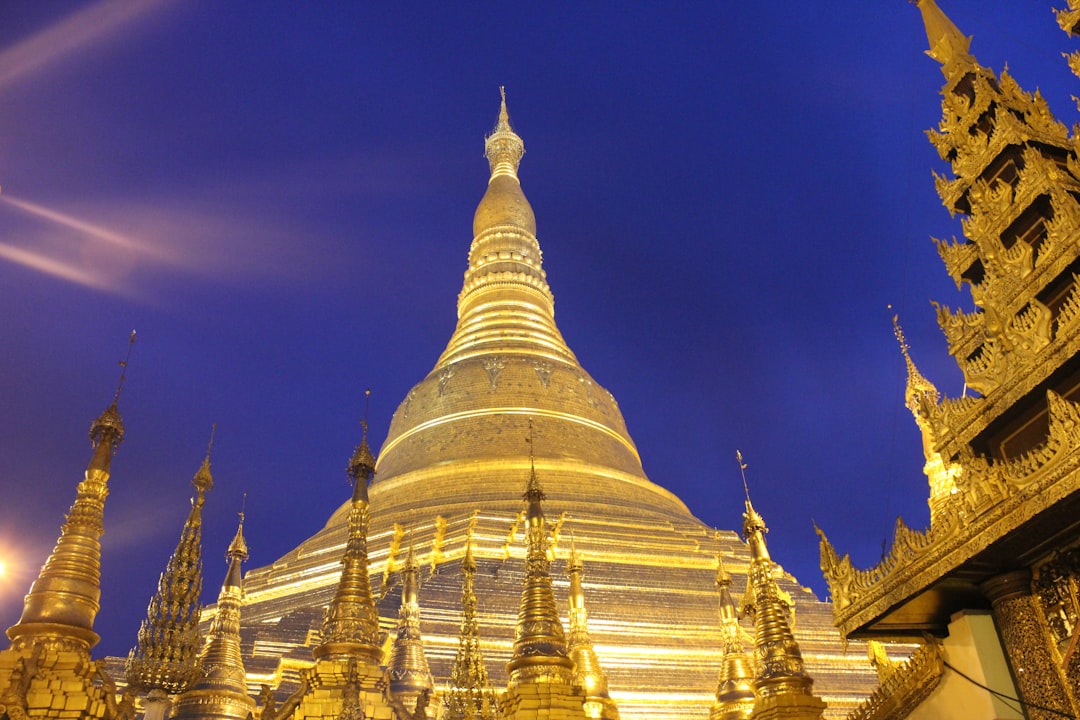
Golden Shwedagon rising over a crumbling colonial downtown, teahouses and Southeast Asia's most atmospheric city.
- Best time to visit: November-February
- Daily budget (budget traveller): $30 to $80 USD
- Ideal trip length: 2 to 3 days
Yangon is a city of gold and rust: the vast Shwedagon Pagoda glowing above a downtown of peeling colonial facades, betel-stained pavements, teahouses and street markets. It's one of Asia's most photogenic and least polished big cities. Note that the United States, Canada and Australia advise against all travel to Myanmar, so check your government's advice before planning. Joy Plus keeps days simple and centred on the pagoda, the grid and the lake.
Yangon is the city that never got its glossy makeover, and that is the whole point. The Shwedagon Pagoda sits on its hill like a gold rocket waiting for launch, while below it the British-era downtown peels, drips and grows ferns from its cornices. Pavements are red with betel spit, teahouse stools are knee-high, and the sound is a mix of chanting, generators and car horns. It does not hand you a checklist. It hands you a plastic stool and a glass of sweet tea and lets you work it out.
Be straight with yourself before you book. Myanmar's situation has been unstable since 2021. The United States advises against all travel to Myanmar (its highest level, reissued 8 May 2026), as do Canada and Australia, and the United Kingdom advises against travel to much of the country and warns of heightened risk in Yangon, where an overnight curfew applies. Some regions are closed to foreigners, insurance can be void, and consular help is thin. Yangon itself sees very little street crime against visitors, but power cuts, internet restrictions, a cash-only economy and shifting rules are daily reality. Read your foreign ministry's current advisory, check your insurer's position, and treat every plan below as a draft that conditions can overrule. Also think about where your money goes: favour family-run guesthouses, teahouses and independent guides over anything linked to the military or its cronies.
If you do go, Yangon rewards a slow, early rhythm. Tea and mohinga at 6:30am before the heat, the circular train while the cars are still cool, Shwedagon at 4:30pm so you catch the light change, and a beer on 19th Street once the skewer smoke starts. Three days covers the essentials. Seven, as below, adds the Dala ferry, Bago and the floating pagoda at Kyauktan, and leaves room for nothing to happen, which in Yangon is often the best part.
How many days in Yangon?
For Yangon, we recommend 2 to 3 days. With more time, add a day trip to Kyauktan Yay Le Paya.
| Trip length | What you'll see | Itinerary |
|---|---|---|
| 2 days · Recommended | Shwedagon at dusk; Colonial downtown and 19th Street | Yangon in 2 days |
| 3 days · Recommended | Adds: Circular train, big Buddhas, lakeside sunset | Yangon in 3 days |
| 4 days | Adds: Dala by ferry | Yangon in 4 days |
| 5 days | Adds: Bago day trip | Yangon in 5 days |
| 7 days | Adds: Museum, market, lake loop; Slow teahouse morning | Yangon in 7 days |
Yangon itinerary
Arrive, settle, Shwedagon at dusk
Morning: Land at YGN, change cash at the licensed airport counter and take a Grab or fixed-price taxi downtown (K15,000-25,000, about 45 minutes). Drop bags and sleep off the flight.
Afternoon: Walk to Sule Pagoda, the roundabout temple at the grid's centre. Tea and a samosa salad at a street teahouse, then a Grab to Shwedagon, leaving by 4pm.
Evening: Shwedagon from 4:30pm. Walk clockwise, find a spot on the marble and watch the gold turn orange as monks start chanting. Dinner at Rangoon Tea House or a noodle shop near the hotel.
Colonial downtown and 19th Street
Morning: Mohinga at a Pansodan teahouse. Walk Pansodan Street past the High Court and Pansodan Gallery, then the Secretariat (ask your hotel whether guided visits are running).
Afternoon: Strand Road, the old river jetties, Botahtaung Pagoda with its hollow stupa. Late lunch at Rangoon Tea House, then Bogyoke Aung San Market for lacquer and longyi cloth (closed Mondays).
Evening: Chinatown. 19th Street from 6pm: grilled skewers, cold draft beer and plastic tables. Grab home before 10pm.
Circular train, big Buddhas, lakeside sunset
Morning: Yangon Central Station for the circular train, around 3 hours on the 46 km loop. Buy at the ticket counter, sit by the open door and check the next departure with the station office.
Afternoon: Grab to Bahan for Chaukhtatgyi's 66-metre reclining Buddha and its neighbour Ngahtatgyi. Late lunch at Feel Myanmar Food or a quiet Bahan cafe.
Evening: Kandawgyi Lake boardwalk at sunset with the Karaweik barge lit up. Dinner at a lakeside restaurant, or a Sky Bistro drink on Sakura Tower for the view back to Shwedagon.
Dala by ferry
Morning: Pansodan Jetty at 8am. Take the ferry across the Yangon River to Dala (about 15 minutes). The foreigner fare is a few thousand kyat each way, usually bought on board.
Afternoon: Hire a trishaw or a motorised cart through Dala's villages, markets and monasteries. Tea and fried snacks at a village stall.
Evening: Ferry back, wash off the dust, then an early dinner at a Burmese restaurant such as Padonmar. Quiet night.
Bago day trip
Morning: Leave by 7am with a hired car (K150,000-220,000 for the day) or a highway bus, about 2 hours. See the 55-metre Shwethalyaung reclining Buddha and Shwemawdaw Pagoda.
Afternoon: Kyaikpun four-faced Buddha and Hinthagon Pagoda. Late lunch of Bago noodles in town.
Evening: Drive back by 5pm to beat the traffic. Dinner at 999 Shan Noodle House or a Shan restaurant near the hotel.
Museum, market, lake loop
Morning: National Museum on Pyay Road for the Lion Throne and the folk costume galleries (closed Mon and Tue, confirm first). Ask hotel staff to call a Grab back.
Afternoon: Walk the quiet north shore of Inya Lake, with its university and lakeside tea gardens. Then a massage or a long nap.
Evening: Dinner at Padonmar or Monsoon, then a last beer on a downtown rooftop.
Slow teahouse morning, depart
Morning: Tea and mohinga at Lucky Seven Tea Shop on 49th Street, with sweet laphet ye and fried bread. Last sweep of Bogyoke Market for any gifts.
Afternoon: Grab to YGN with at least three hours to spare, as check-in queues and power cuts can slow everything.
Evening: Fly out. Spend leftover kyat at the airport, as it is hard to convert abroad.
Best neighbourhoods
- Downtown (the colonial grid): Faded British-era buildings, Sule Pagoda, street markets and teahouses.
- Shwedagon & Dagon: The hilltop around the great pagoda, with leafy embassy streets below.
- Kandawgyi & Inya Lake: Lakeside parks, the Karaweik barge and the city's calmest walking.
- Chinatown (Latha): Nineteenth Street's grilled-skewer alley and the busiest night eating.
- Bahan: Residential streets of monasteries, cafes and quieter guesthouses.
Must-do experiences
- Shwedagon Pagoda at sunset: A 99-metre gilded stupa surrounded by shrines, best as the lights come on and monks chant.
- Colonial downtown heritage walk: The Secretariat, Strand Road and Pansodan Street's grand, decaying architecture.
- Ride the circular train: Three hours on a rattling loop through markets, paddy fields and suburban life.
- Eat on 19th Street, Chinatown: Grilled skewers, beer stations and the city's most sociable evening.
Hidden gems
- Chaukhtatgyi's 66-metre reclining Buddha with painted glass eyes.
- Bogyoke Aung San Market's back lanes for lacquerware, jade and longyi cloth.
- The Secretariat, where Aung San was assassinated, now open for guided visits.
- Sunrise tea and mohinga at a downtown teahouse with plastic stools and endless refills.
Daily budget
- Accommodation: budget K45,000-160,000 / night (dorm or guesthouse, roughly $10-35), mid-range K225,000-585,000 (boutique double, roughly $50-130), splurge K1,100,000+ (The Strand, Governor's Residence). Prices are quoted in dollars at most hotels and paid in cash. Downtown is cheapest, Bahan quietest, and many small places add no breakfast, so ask.
- Food: budget K15,000-30,000 / day (teahouses, street stalls, 19th Street), mid-range K50,000-90,000 (Rangoon Tea House, one proper dinner), splurge K150,000+ (hotel dining, Strand afternoon tea). A bowl of mohinga is K3,000-5,000. A tea leaf salad is K5,000-8,000. Teahouse tea is nearly free with any snack.
- Transport: budget K5,000-10,000 / day (YBS buses, walking, circular train), mid-range K25,000-45,000 (Grab cars, a few longer hops), splurge K150,000-250,000 (car and driver for a day). Motorbike taxis are banned in the city. Grab works for cars. Downtown rides are K3,000-8,000, a long ride to Bahan K8,000-15,000.
- Activities: budget K20,000-35,000 / day (Shwedagon plus the circular train), mid-range K60,000-100,000 (museum, Dala ferry, a guide), splurge K250,000+ (private guide, driver to Bago, Karaweik dinner show). Shwedagon is around $10 for foreigners (roughly K15,000-20,000). Most downtown sights are free to look at from the street.
- Drinks & nightlife: budget K5,000-10,000 (sweet tea plus a draft beer on 19th Street), mid-range K25,000-50,000 (Sky Bistro, rooftop beers, a craft cocktail), splurge K100,000+ (Strand Bar cocktails). Myanmar and Dagon beer run K2,000-4,000 on 19th Street. Most places stop serving around 10 to 11pm.
Where to stay
- Social hostel in Downtown (near Sule Pagoda) (K45,000-110,000 / night): Dorm beds and cheap twins in the grid, such as around Beautyland Hotel II. Walkable to teahouses, the market and Pansodan, and the guesthouse staff are the best source on what is open.
- Boutique hotel in Bahan / Dhammazedi Road (K360,000-585,000 / night): Converted villa hotels on quiet leafy streets near Shwedagon: generators, proper breakfast, and a calmer base than the downtown noise.
- Apartment in Bahan or Kamayut (K250,000-450,000 / night): Serviced apartments and small flats on residential streets near Inya Lake. Good for 5+ nights, with a kitchen and washing machine. Confirm backup power and registration paperwork.
- Splurge in Strand Road / Golden Valley (K1,100,000-2,200,000 / night): The Strand (1901, riverside, colonial-era polish) or the Governor's Residence in a teak villa. Pools, proper service and a safe, quiet retreat when the city overwhelms.
What to eat
- Mohinga, the catfish noodle soup Myanmar eats for breakfast
- Tea leaf salad (lahpet thoke), tangy, crunchy and unlike anything else
- Shan noodles with pickled greens
- Sweet milky laphet ye tea in a teahouse, the national ritual
Day trips
- Dala (15 minutes by ferry across the river): A rural village world with no big roads: trishaws, wooden houses, pagodas and local markets. Feels a century away, and is the easiest escape from downtown. Ferry from Pansodan Jetty, foreigner fare a few thousand kyat each way. Hire a trishaw or motorised cart on the far side for K10,000-25,000 for a few hours.
- Bago (80 km, about 2 hours by road): Former Mon capital with the 55-metre Shwethalyaung reclining Buddha, Shwemawdaw Pagoda and Kyaikpun's four giant seated Buddhas. Hire a car for the day (K150,000-220,000), or take a highway bus from Aung Mingalar. Foreigner access to buses and trains can change, so check with your hotel first.
- Kyauktan Yay Le Paya (45 km south, about 1h30 by car): A small pagoda on a rocky island in the Bago River, reached by a short boat ride, with carp-feeding and a calm riverside setting. Hire a car or Grab to Thanlyin and Kyauktan (K60,000-100,000 return with wait). Short boat to the island costs a few thousand kyat.
When to visit
- Cool season (November - February): Highs 30-32°C, lows 18-21°C, dry and low humidity. Crowds: Light by regional standards, busiest around full-moon festivals. The only comfortable window. Dry mornings for the circular train, marble at Shwedagon bearable by 4pm. Book ahead in December and January.
- Hot season (March - May): 35-40°C, heavy humidity, pre-monsoon storms in May. Crowds: Very low, Thingyan water festival (mid-April) shuts most businesses for 4 to 5 days. Brutal at midday. Go only if you can do dawn and dusk, with an air-conditioned lunch break. Thingyan is wild fun but nothing is open.
- Early monsoon (June - August): 26-31°C, daily downpours, flooded streets in the grid. Crowds: Very low. Green, cheap and wet. Hotels discount hard, but heavy rain stalls the circular train and day trips. Pack real rain gear.
- Late monsoon (September - October): 26-31°C, rain easing through October. Crowds: Low, picking up for Thadingyut and Tazaungmone festivals of lights. A good shoulder bet. Rain is patchier by October, the city is lush, and the lantern festivals light up Shwedagon.
Entry rules for your passport
Visa rules for Myanmar depend on the passport you travel on. Check the official source before you book: Myanmar Ministry of Immigration and Population
Getting there
Yangon International Airport (YGN, Mingaladon) is 15 km north of downtown, 30 to 60 minutes by car depending on traffic. Direct flights run from Bangkok, Singapore, Kuala Lumpur, Kunming and a few other regional hubs, but routes and schedules have changed often since 2021, so check before booking. Tourist e-visas (about US$50) are applied for online through the government portal, with processing around 3 days. Confirm that e-visas are currently being issued for your nationality. At arrivals, exchange a little cash at the licensed counter, then take a Grab (K15,000-25,000 to downtown) or a prepaid airport taxi. Avoid anyone offering a quiet side deal. Allow at least three hours before departing, as check-in and security queues can be slow. Overland borders are largely closed or restricted to foreigners, so flying is the realistic option.
Getting around
Yangon International Airport is 15 km north, 30 to 60 minutes by taxi depending on traffic. There are no motorbike taxis in the city, so use metered-ish taxis agreed in advance or ride-hailing apps where available. Downtown is walkable in the cooler hours, and the circular train is a sight in itself. Bring cash: card acceptance and ATMs are unreliable. You need a visa before you travel; an official e-visa is available.
Safety
The United States advises against all travel to Myanmar (its highest warning, reissued in May 2026), as do Canada and Australia; the United Kingdom advises against travel to much of the country and warns of heightened risk in Yangon, where township curfews can be imposed at short notice. Insurance is usually void and consular help limited. In Yangon itself, street crime against visitors is rare, but avoid political gatherings and don't photograph military or police. Bring clean US dollars in cash, dress modestly, and always remove shoes and socks at pagodas. Power cuts and internet restrictions are common.
Solo travel tips
- Check the advisory, then tell someone: Read your foreign ministry's current advice and confirm your insurance covers Myanmar. Send your hotel list and daily plan to someone at home. Consular help is limited, so no one else will notice if you go quiet.
- Sit at the teahouse, not alone at the hotel: Teahouses are the social heart of Yangon. Sit on a plastic stool, order tea and point at the snacks. Staff and neighbours are curious and kind, and you will end up in a conversation within ten minutes.
- Use Grab for any ride after dark: Grab works for cars in Yangon and shows the price upfront, which beats haggling with a street taxi at night. Keep the app, an offline map and your hotel's address in Burmese in your phone.
- Solo women and the dress code: Yangon is generally safe for women alone, with the usual rules: no late walks down dark side streets, drinks watched, shoulders and knees covered. Lightweight long sleeves also keep off sun and stares.
- Plan for power cuts and slow internet: Outages are common and wifi can disappear for hours. Download maps and translation offline, carry a power bank and a small torch, and pick a hotel with a generator.
- Avoid politics, photos of soldiers and gatherings: Don't photograph military, police or checkpoints, and avoid any political gathering or protest. If someone raises politics, let them, listen, and don't argue. Your guesthouse owner is the best source on what is open.
Cultural etiquette
- Shoes and socks off at every pagoda and monastery. Leave footwear at the gate, not on the steps, and expect hot stone at midday.
- Cover shoulders and knees for everyone. A longyi can be rented or bought at the entrance if you arrive underdressed.
- Walk clockwise around stupas, never point your feet at a Buddha image or a monk, and never sit with your back to a Buddha.
- Monks do not touch or accept things directly from women. Women should offer items to the side or via a man, and avoid sitting beside a monk on a bus.
- The head is sacred and the feet are lowest. Don't touch anyone's head, and don't step over people or their belongings.
- Greet with 'mingalaba' and thank with 'kyay zu tin ba deh'. Hand over money, food and gifts with the right hand, touching your right forearm with your left.
- Skip politics and the military. Don't photograph soldiers, police or checkpoints, and ask before photographing monks, especially close up.
Frequently asked questions
Is it safe to travel to Yangon right now?
Most governments say no. The United States, Canada and Australia advise against all travel to Myanmar, and the United Kingdom advises against travel to much of the country, warning of heightened risk in Yangon, where township curfews can be imposed at short notice and armed groups attack official buildings. Street crime against visitors is rare, but insurance is often void, so check your foreign ministry's current advice before you commit to anything.
Is Yangon worth visiting?
For travellers who can go safely, yes. Shwedagon is one of the great religious monuments of Asia, and the colonial downtown, teahouse culture and street food make it the region's most atmospheric big city. It's a slow, sensory city rather than a checklist one.
How many days do you need in Yangon?
Two to three. One day for Shwedagon and the downtown heritage walk, one for the circular train, Chaukhtatgyi and the lakes, and a third for markets, teahouses and Chinatown eating at a slower pace.
When is the best time to visit Yangon?
November to February, the cool dry season, with daytime highs around 30-32C and low humidity. March to May is brutally hot, often above 38C, and the monsoon from June to October brings heavy, sustained rain.
What should you wear at Shwedagon Pagoda?
Shoulders and knees must be covered for all genders, and shoes and socks must be removed before entering the platform, which gets very hot at midday. A longyi or sarong can be rented or bought at the entrance if you arrive underdressed.
Do you need cash in Yangon?
Yes. Card payments and functioning ATMs are unreliable, so bring crisp, unmarked US dollar bills to exchange, plus enough kyat for daily spending. Damaged or folded notes are frequently refused, and exchange rates vary widely between official and market channels.
How much does it cost to travel in Yangon?
Budget guesthouses run $20 to $35 a night, mid-range hotels $50 to $90, street meals $1 to $3 and restaurant dinners $8 to $15. The Shwedagon entrance fee for foreigners is around $10. Most travellers spend $30 to $80 a day.
Tours and activities in Yangon | Yangon in 2 days | Yangon in 3 days | Yangon in 4 days | Yangon in 5 days | Yangon in 7 days
Joy Plus home | Destinations | Itineraries | Activities | Flights | Budget planner | Calendar | Map | Blog | Lifetime access