Destinations / Asia
Yangshuo, China travel guide
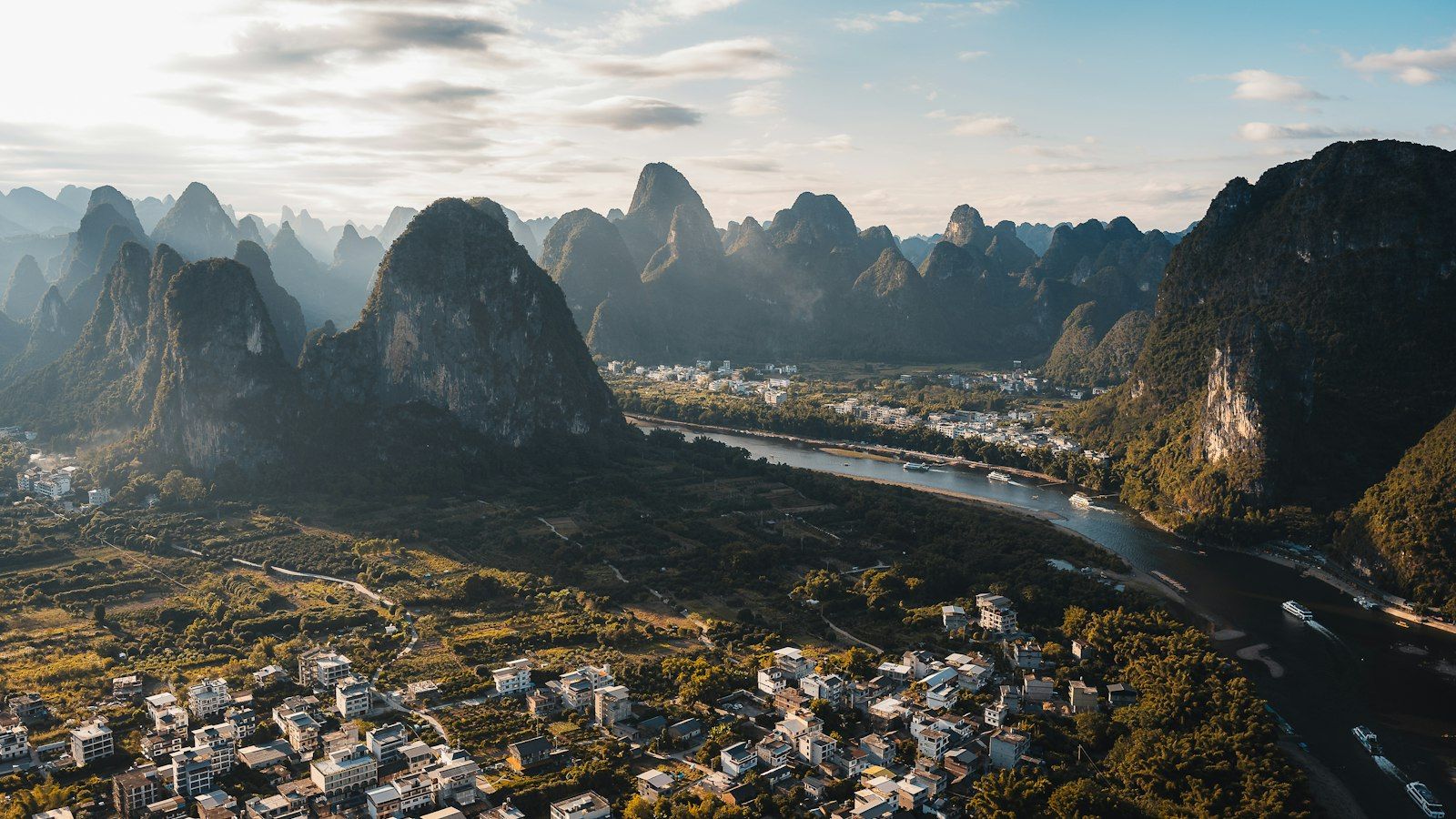
A small riverside town in Guangxi ringed by thousands of limestone peaks, where you get around by bike, bamboo raft and footpath, and beer fish is on every menu.
- Best time to visit: September to November and April to May
- Daily budget (budget traveller): $35 to $125 USD
- Ideal trip length: 4 to 7 days
Yangshuo sits on the Li River about 60km downstream from Guilin, in the Guangxi Zhuang Autonomous Region of southern China. The town is surrounded by steep limestone peaks, and some of them are printed on the back of the ¥20 note. Most visitors arrive the classic way, on a boat cruise from Guilin, and many end up staying longer than planned. The town centre is West Street, a roughly 500m lane of Qing-era houses that has been a backpacker hangout for decades. Today it is packed with beer fish restaurants, bars and souvenir shops. The real draw starts a few kilometres out. Cycle the Ten-Mile Gallery road to Moon Hill, drift down the Yulong River on a hand-poled bamboo raft, or walk the riverside path from Yangdi to Xingping, the old riverside town nearest the ¥20 note view. Yangshuo is also one of China's best-known sport climbing spots, with a cooking school scene to match. For a solo traveller it is one of the easiest places in mainland China. There are plenty of hostels, English is widely spoken in the guesthouses, and nearly everything is reachable by bike. Since many nationalities can now enter China without a visa, it is a far easier first stop than it used to be.
Yangshuo is a county town of a few hundred thousand people on the Li River, about 60km south of Guilin in Guangxi. It sits in one of the most famous landscapes in China, a sea of steep, forested limestone towers that inspired centuries of ink paintings and still appears on the back of the ¥20 note. Backpackers found it in the 1980s and West Street, an 800m lane of Qing-era houses, grew into a strip of cafés, bars and climbing shops. Today it is mostly a domestic tourist hotspot of beer fish halls, neon and loudspeakers. Do not judge Yangshuo by West Street, though. Ten minutes on a bike gets you to buffalo in rice paddies, bamboo rafts on the Yulong River and village lanes where the only noise is a cockerel.
The classic plan works well solo. Arrive by boat from Guilin on the Li River cruise, which runs from Mopanshan pier and lands at Longtoushan pier in Yangshuo. Spend three or four nights near West Street or in the Yulong valley for the cycling, rafting, cooking classes and the Impression Sanjie Liu show. Then move to Xingping for two nights. Xingping is quieter, it sits right by the ¥20 note view, and it puts you at the foot of Laozhai Hill and within reach of Xianggong Hill for sunrise. Yangshuo Railway Station is near Xingping, not Yangshuo town, so ending your trip there makes the onward high-speed train easy. Book cruises, rafts and the show a day or two ahead through your guesthouse, and carry your passport everywhere, because nearly every ticket is real-name.
Weather shapes everything here. Autumn is the safest bet, with clear skies, ripe pomelos and comfortable cycling temperatures. Spring gives you the misty, ink-painting look but plenty of drizzle. Summer is a hot, wet gamble, and rafting stops when the rivers rise. Winter is cool and grey, and low water can shorten the Li River cruise. Prices are low by global standards. Dorm beds cost a few dollars, a bowl of rice noodles costs less than a coffee at home, and most sights charge ¥15 to ¥60. China still takes some preparation, mainly the payment apps and the blocked websites, but Yangshuo is one of its gentlest places to start.
Yangshuo itinerary
Li River cruise into Yangshuo
Morning: From Guilin (arrive the night before), take the 3-star Li River cruise (¥215, about 9:30am from Mopanshan pier, booked ahead with your passport). Grab a window spot on the top deck for the stretch past Xingping.
Afternoon: Land at Longtoushan pier in the early afternoon and transfer to West Street. Check in, drop bags and wander the old street and the riverside before the evening crowds.
Evening: Beer fish at Dashifu or Xie Sanjie, the two big names at the West Street and Pantao Road junction. Agree the weight and price per jin first.
Ten-Mile Gallery, Moon Hill and the show
Morning: Hire a bike (¥20-40) and ride the flat Ten-Mile Gallery road south. Climb Moon Hill (¥15) early, 30 to 45 minutes of steps up to the arch.
Afternoon: Stop at the Big Banyan Tree (about ¥20) on the way back, then rest through the midday heat. Noodles for lunch in town.
Evening: Impression Sanjie Liu, about 1.5km from West Street (C seats from about ¥198, two shows nightly, around 70 minutes). Walk back or take the ¥10 electric cart.
Yulong River raft and village lanes
Morning: Ask your guesthouse to book the Jinlong Bridge to Jiuxian raft the day before (about ¥320 per two-seat raft, 80 to 90 minutes). Solos can ask to share or pay for the whole raft. Visit Yulong Bridge before 9am.
Afternoon: Lunch at a courtyard guesthouse in Jiuxian, then cycle the lanes between paddies and villages back towards town.
Evening: Sunset at Gongnong Bridge as the last rafts glide through. Back to West Street for stuffed snails and a cold Liquan beer.
Cooking class and a climbing taster
Morning: Half-day class at the Yangshuo Cooking School in Chaolong Village, starting with a market walk. Cook beer fish and stuffed vegetables, then eat them for lunch.
Afternoon: Book a guided climbing taster at the crags near Moon Hill (ask at Climbers Inn or your hostel, and check prices). Rainy-day swap: Silver Cave, about ¥65.
Evening: Hostel bar or a guesthouse rooftop. Pack light for two nights in Xingping.
Xingping and Laozhai Hill sunset
Morning: Take the local bus or a Didi to Xingping (about an hour; check the bus timetable). Check in near the old town.
Afternoon: Walk the old lanes and the riverside to the ¥20 note view near Xingping pier. Bring a ¥20 note for the classic photo.
Evening: Start up Laozhai Hill (free, 30 to 40 minutes of steep steps) about an hour before sunset. Start back down 30 minutes before the sun sets, with a head torch.
Yangdi to Xingping riverside walk
Morning: Early taxi or Didi to Yangdi, then walk the riverside path back towards Xingping past Nine Horses Fresco Hill. Carry about 2.5 litres of water and cash for the small ferry crossings.
Afternoon: Reach Yellow Cloth Shoal and finish in Xingping by mid-afternoon. In wet weather the clay path is unsafe, so take the Yangdi to Xingping raft instead (book with your passport).
Evening: Li River fish and rice noodles in the old town, then an early night before sunrise.
Xianggong Hill sunrise and onward train
Morning: Book a driver through your guesthouse the night before and leave around 5am for Xianggong Hill (entry about ¥60 to ¥90, 15 to 20 minute climb). Watch the mist lift over the river bend.
Afternoon: Breakfast back in Xingping, then the ¥5 shuttle bus to Yangshuo Railway Station for a high-speed train to Guangzhou, Shenzhen or Guilin.
Evening: On the train, or a final night in Guilin if you are flying out the next morning.
Best neighbourhoods
- West Street (Xi Jie): The pedestrianised old street in the town centre, lined with Qing-dynasty brick houses, beer fish restaurants, bars and bike hire shops. It is loud after dark but the most convenient base, with the bus to the high-speed station and the show theatre within easy reach.
- Jiuxian and the Yulong River valley: Quiet farming villages strung along the Yulong River, about 7km west of town, with restored courtyard guesthouses, rice paddies and the starting piers for the bamboo rafts. Base here if you want birdsong rather than bar music.
- Chaolong Village and the Moon Hill road: The countryside south-west of town, home to the Yangshuo Cooking School, small inns and the climbing crags around Moon Hill along the Ten-Mile Gallery road. An easy bike ride from West Street.
- Xingping Ancient Town: A small riverside town about an hour north-east of Yangshuo, near the ¥20 note view, the Laozhai Hill sunset climb and the end of the Yangdi riverside walk. Quiet after the day trippers leave, and close to Yangshuo Railway Station.
- Fuli: An old market town downstream on the Li River, known for its hand-painted fans and old stone lanes. A short ride east of Yangshuo and much calmer than West Street.
Must-do experiences
- Cruise the Li River from Guilin: Take the four-to-five-hour boat trip down the 60km stretch from Guilin to Yangshuo, past karst peaks, bamboo groves and cormorant fishermen. 3-star boats cost ¥215 at the official price.
- Drift down the Yulong River on a bamboo raft: Sit on a hand-poled two-seat raft as it slides over small weirs between paddies and peaks. The classic Jinlong Bridge to Jiuxian section takes 80 to 90 minutes.
- Cycle the Ten-Mile Gallery to Moon Hill: Hire a bike on West Street and ride the flat valley road south to Moon Hill (¥15), then climb the steps for 30 to 45 minutes to its crescent-shaped stone arch.
- Climb Laozhai Hill at sunset: Walk up the steep steps from Xingping old town for a free view over the Li River bend, the town and the peaks around the ¥20 note view.
- Walk from Yangdi to Xingping: Follow the riverside path through bamboo and mandarin orchards past Nine Horses Fresco Hill and Yellow Cloth Shoal, the famous banknote backdrop. Allow most of a day.
- Catch sunrise on Xianggong Hill: Leave before dawn for a 15 to 20 minute climb to the platform above the Li River's great bend, where morning mist sits between the peaks.
- Take a countryside cooking class: Shop at a morning market, then cook beer fish, stuffed vegetables and stir-fries at a school in Chaolong Village or near the Li River, and eat what you made.
- See Impression Sanjie Liu: Zhang Yimou's outdoor night show uses the Li River and floodlit peaks as its stage, with hundreds of performers retelling the legend of the Zhuang folk singer Liu Sanjie.
Hidden gems
- Yulong Bridge at 8am, a 600-year-old stone arch over the Yulong River that is free to visit and near-empty before the rafts and tour groups arrive
- Gongnong Bridge at sunset, where bamboo rafts glide past in golden light and local photographers gather on the bank
- The back lanes of Xingping old town early in the morning, before the day trippers arrive, when old houses and riverside steps belong to locals doing their washing
- Fuli, a sleepy riverside town east of Yangshuo where workshops still hand-paint silk fans and the stone lanes feel decades away from West Street
- The quieter Fuli Bridge raft section on the Yulong River, with four-person rafts and fewer boats than the main Jinlong and Jima routes
Daily budget
- Accommodation: budget ¥45-90 / night (dorm bed) or ¥150-250 (hostel private), mid-range ¥300-700 (courtyard guesthouse in the Yulong valley), splurge ¥1,800+ (Alila Yangshuo, Banyan Tree Yangshuo). Prices roughly double in Golden Week and at Chinese New Year. A few small homestays still cannot register foreign guests, so message ahead before booking anything unusually cheap.
- Food: budget ¥60-120 / day (rice noodles, canteen set meals, fruit), mid-range ¥150-300 (one beer fish dinner, café lunches), splurge ¥500+ (resort restaurants, private cooking class). A bowl of Guilin rice noodles costs about ¥6 to ¥15. Beer fish is priced by the jin (500g), so confirm the fish's weight and the price per jin before it goes into the pan.
- Transport: budget ¥20-60 / day (bike hire, ¥2 city bus), mid-range ¥100-200 (e-bike plus a few Didi rides), splurge ¥350+ (private driver for sunrise or raft transfers). The shuttle from Yangshuo Railway Station to the Fengming Tourist Centre is ¥20, or a taxi is about ¥100. The Xingping bus from the railway station is ¥5.
- Activities: budget ¥50-150 / day averaged (Moon Hill ¥15, free hikes, Laozhai Hill), mid-range ¥250-450 (Li River cruise ¥215, Yulong raft ¥200-320 per raft), splurge ¥600+ (4-star cruise ¥360-480, A-section show seats, guided climbing). Yulong rafts are priced per two-seat raft, so solos pay for the whole raft or share. Xianggong Hill is about ¥60 to ¥90 and Impression Sanjie Liu starts around ¥198 for C-section seats.
- Drinks & nightlife: budget ¥10-30 (shop Liquan beer, one bar drink), mid-range ¥80-200 (craft beer, cocktails on West Street), splurge ¥300+ (rooftop bars, bottle service in the clubs). West Street's clubs are loud, karaoke-heavy and domestic-tourist focused. Hostel bars and guesthouse terraces are better for meeting other travellers.
Where to stay
- Social hostel in West Street, Yangshuo town (¥45-90 dorm / ¥150-250 private): Yangshuo Sudder Street Guesthouse has a garden pool, a big lobby with games and film areas, and a party-hostel crowd. It is a short walk to bike hire, beer fish and the station bus.
- Boutique hotel in Jiuxian Village, Yulong River (¥300-700 / night): Yangshuo Secret Garden is a cluster of restored traditional village houses a few minutes' walk from the Yulong River and the rice fields. It has a good in-house restaurant and staff who are used to helping solo guests.
- Apartment in Pantao Road and the streets behind West Street (¥200-400 / night): Serviced apartments and family homestays on Trip.com or Booking.com give you a kitchen and a washing machine near the bus station, for less than a hotel. Message ahead to confirm they can register foreign guests.
- Splurge in Li River banks, outside town (¥1,800-4,000+ / night): Alila Yangshuo, built around a restored 1960s sugar mill, or Banyan Tree Yangshuo, both on the Li River with karst views from the pool.
What to eat
- Beer fish (pijiu yu): fresh river fish fried, then braised in local beer with tomato, chilli, garlic and green pepper. Yangshuo's signature dish, priced by the jin (500g)
- Guilin rice noodles (mifen): soft round rice noodles with braised pork, peanuts, pickled beans and chilli, eaten for breakfast at counters for roughly ¥6 to ¥15 a bowl
- Stuffed snails (tianluo niang): river snails stuffed with minced pork and herbs and braised in their shells, a dish every Yangshuo restaurant claims as its own
- Yangshuo stuffed vegetables (shiniang): tofu, chillies, aubergine, bitter melon and even flowers stuffed with seasoned pork and steamed or braised
- Oil tea (youcha): a bitter, gingery tea pounded and fried with oil, then poured over puffed rice and peanuts, a Guangxi minority breakfast tradition
- Lipu taro with pork belly: layers of taro from neighbouring Lipu county and slow-steamed fatty pork, a rich banquet favourite
- Osmanthus cake (guihua gao): a soft, lightly sweet rice cake scented with the osmanthus flowers Guilin is named after
Day trips
- Xingping and Laozhai Hill (About an hour by bus from Yangshuo town): An old riverside town near the ¥20 note view, with a free but steep climb up Laozhai Hill for the best panorama of the river bend. Better as an overnight so you can catch sunset and early morning mist. Local bus or Didi from Yangshuo, or the ¥5 bus from Yangshuo Railway Station. Return buses stop early in the evening, so check the last departure.
- Xianggong Hill sunrise (About 15 to 20 minutes' drive from Xingping, about an hour from the Yulong valley): A short, steep climb to a viewing platform above the Li River's great bend, famous for sunrise mist. It is popular with photographers, so arrive early for a spot. Book a driver through your guesthouse the night before. From the Yulong valley, expect around ¥350 return plus ¥60 to ¥90 entry. It is cheaper from Xingping, so check the price.
- Longji Rice Terraces (About 3 to 4 hours by road from Yangshuo, beyond Guilin): Mountain terraces farmed by Zhuang and Yao villagers around Ping'an and Dazhai. They are spectacular when flooded in spring or golden before the autumn harvest. Better as an overnight from Guilin than a day trip from Yangshuo. Join a tour from Guilin, or take a bus from Guilin to Longsheng and on to the terraces. The scenic area ticket is about ¥100, so check before you go.
When to visit
- Spring (March - May): 15-26°C, frequent drizzle and morning mist, rising humidity. Crowds: Moderate, with spikes at Qingming in early April and the May Day holiday. The most photogenic months, with mist on the peaks and fresh green paddies. Pack a rain jacket and avoid the 1 to 5 May holiday week.
- Summer (June - August): 26-34°C, very humid, heavy thunderstorms, about 200mm of rain a month. Crowds: Busy with Chinese school holidays in July and August. Hot and wet. Floods can suspend rafting and cruises, and trails turn to clay. Go early in the day, and keep a cave or cooking class for rainy afternoons.
- Autumn (September - November): 18-30°C, drier, clearer skies, cooler nights by November. Crowds: Huge in Golden Week (1 to 7 October), comfortable otherwise. The best all-round season, with clear views, good cycling and reliable rafting. Avoid the first week of October, when prices double and the river is gridlocked.
- Winter (December - February): 6-16°C, damp and grey, few heated rooms. Crowds: Quiet, except around Chinese New Year. Cheap and peaceful, but chilly indoors. Low water can shorten the Li River cruise, and Impression Sanjie Liu usually pauses in the month before Chinese New Year.
Entry rules for your passport
Visa rules for China depend on the passport you travel on. Check the official source before you book: China National Immigration Administration
Getting there
Most international travellers arrive via Guilin Liangjiang International Airport (KWL), about 80km from Yangshuo, or by high-speed train. A shuttle bus runs from the airport to Yangshuo for about ¥50 in roughly 70 to 90 minutes, but check the timetable, as services stop by early evening. Yangshuo Railway Station sits on the Guiyang to Guangzhou high-speed line in Xingping town, 34km from West Street, with trains from Guangzhou South, Shenzhen North and Guilin. From the station, a ¥20 shuttle bus runs to the Fengming Tourist Centre in about 50 to 60 minutes. Then take city bus 801 (¥2) or walk to West Street. A taxi is around ¥100. A ¥5 bus links the station with Xingping. From Guilin city, the scenic option is the Li River cruise, 3.5 to 5 hours from Mopanshan or Zhujiang pier, from ¥215 for a 3-star boat. Regular coaches also run from Guilin to Yangshuo in about 1.5 hours. Many nationalities can enter China visa-free for up to 30 days until 31 December 2026, but confirm your own entry rules on the official immigration site.
Getting around
Yangshuo town is compact and walkable, and the countryside is made for bikes. Ordinary bikes cost about ¥20 to ¥40 a day on West Street and e-bikes about ¥60 to ¥100. Ride carefully, because roads are shared with silent e-scooters, tour buses and tractors. City bus 801 links West Street with the Fengming Tourist Centre bus station for ¥2. Didi, the ride-hailing app, works well and is cheap for short countryside hops. Shuttle buses link Yangshuo Railway Station in Xingping town with the Fengming Tourist Centre for ¥20, taking about 50 to 60 minutes, and a taxi costs around ¥100. Local buses run from Yangshuo to Xingping, but the last departures are usually early in the evening, so check times. Guesthouses can arrange drivers for sunrise trips and raft transfers.
Safety
Yangshuo is very safe for solo travellers, including women, and violent crime against visitors is rare. The main risks are on the roads and the water. Wear a helmet if you can get one, keep your speed down on e-bikes, and check your travel insurance covers scooter riding. In summer, rafting and cruises can be suspended after heavy rain or when river levels rise, so follow staff instructions and wear the life jacket. Trails up Laozhai Hill and Xianggong Hill are steep, unlit and slippery after rain, and some sections have no railings. Carry a head torch for sunrise and sunset climbs, and start down before dark. Touts on West Street and at piers sell overpriced or unofficial raft and cruise tickets, so book through your guesthouse or official channels. Always carry your passport, as hotels, cruises, rafts and train tickets use real-name registration. The summer heat and humidity are intense, so drink plenty of water and carry mosquito repellent.
Solo travel tips
- Split your stay between town and Xingping: Three or four nights near West Street or in the Yulong valley, then two in Xingping, means no 5am taxis from town for sunrise. It also puts you near Yangshuo Railway Station for your onward train.
- Let your guesthouse book the rafts: Yulong rafts are sold per two-seat raft, and walking up to a pier is no longer reliable. Guesthouse staff can book the right section, arrange the transfer back and often pair you with another solo traveller to split the cost.
- Sort your phone before you land: Set up Alipay or WeChat Pay with a foreign card, and install Didi, Amap and a translation app. Use a roaming eSIM if you need Google or WhatsApp. Screenshot bookings and passport pages in case the signal drops in the countryside.
- Pick a social hostel for the first nights: Hostels around West Street run group dinners, pub nights and shared bike rides, and the staff know which climbing and cooking groups have space. It is the quickest way to find a rafting partner.
- Safety for solo travellers: Yangshuo is very safe. Ride slowly on e-bikes, never climb Laozhai or Xianggong in the dark without a torch, and stay off the river paths after heavy rain. Buy tickets through official channels, not West Street touts.
- Eat lunch big and early: Rice noodle counters open at dawn and family restaurants serve big set lunches. Ordering beer fish for one is fine, so ask for a small fish (xiao yu) and a bowl of rice.
Cultural etiquette
- Carry your passport at all times. Hotels, cruises, rafts, trains and shows all use real-name tickets, and you will be asked for it often.
- Yangshuo is home to Zhuang, Yao and Han communities. Ask before photographing people in villages, and expect cormorant fishermen to charge a small fee, often ¥5 to ¥10, for posed photos.
- A 'ni hao' (hello) and 'xie xie' (thank you) go a long way. Guesthouse staff often speak English, but restaurant and bus staff usually do not, so keep a translation app ready.
- Tipping is not customary in restaurants or taxis, and service charges are rare outside high-end hotels.
- Haggling is normal for raft touts, souvenirs and bike hire, but keep it friendly. Restaurant prices are fixed, though always check the per-jin price for fish.
- Dress is relaxed, but cover shoulders in temples and avoid walking through villages in swimwear after rafting.
- Meals are shared. Order a few dishes for the table, use the serving spoons, and do not stand chopsticks upright in your rice.
Frequently asked questions
How do I get from Guilin Airport to Yangshuo?
Guilin Liangjiang International Airport (KWL) is about 80km from Yangshuo. A direct shuttle bus runs to Yangshuo for around ¥50 and takes roughly 70 to 90 minutes. Services have historically run from mid-morning until early evening, so check times before you land. A Didi or pre-booked car is easier late at night or with heavy bags. If you are coming from Guangzhou or Shenzhen, the high-speed train to Yangshuo Railway Station is usually quicker.
How many days do I need in Yangshuo?
Four or five days covers the Li River cruise, a Yulong River raft, the Moon Hill bike ride and Xingping. A full week lets you add the Yangdi to Xingping walk, a cooking class and a sunrise on Xianggong Hill without rushing. Two nights in Xingping make the sunrise and sunset climbs much easier.
When is the best time to visit Yangshuo?
September to November is usually the most reliable, with drier, clearer days and comfortable temperatures. April and May are green and misty but often drizzly. June to August is hot, humid and wet, and high water can suspend rafting. Avoid the 1 to 7 October Golden Week and Chinese New Year if you can, when crowds and prices peak.
Is the Li River cruise or a bamboo raft better?
The full cruise from Guilin covers the whole 60km scenic corridor and doubles as transport to Yangshuo, from ¥215 for a 3-star boat. The Yangdi to Xingping motorised bamboo raft covers only the most dramatic section but sits closer to the water. In low-water winter months, the full cruise may be cut back to that shorter stretch. If you are fit, walking from Yangdi to Xingping beats both.
How do I pay for things in Yangshuo?
Mobile payment rules everyday life. Set up Alipay or WeChat Pay before you go and link a foreign Visa or Mastercard. Then you can pay for noodles, bike hire and bus tickets by scanning a QR code. Carry some cash in yuan too, especially for small raft crossings, rural stalls and photos with cormorant fishermen. International cards work at larger hotels but rarely elsewhere.
Will my phone and apps work in China?
Google, WhatsApp, Instagram and many Western news sites are blocked on Chinese networks. Foreign roaming plans and many travel eSIMs generally route data abroad and can still reach them, but services and rules change, so test before you rely on it. Download Amap or Apple Maps, Didi, Trip.com and an offline translation app before you fly.
Is Yangshuo safe for solo female travellers?
Yes, Yangshuo is one of the easiest and safest places in China for women travelling alone. Social hostels, English-speaking guesthouse staff and a steady stream of other travellers help. Normal precautions apply. Avoid walking unlit countryside roads late at night, watch your drink in West Street bars, and do steep sunrise climbs with a head torch and someone who knows the route.
What are the entry rules for visiting China in 2026?
Ordinary passport holders from around 50 countries can enter China visa-free for up to 30 days under a unilateral policy that currently runs until 31 December 2026. They include the UK, Canada, Australia, New Zealand, Japan, South Korea and most of the EU. US citizens are not on that list but can use the 240-hour visa-free transit if flying on to a third country, or apply for a visa. Policies change often and an extension beyond 2026 is not guaranteed, so always confirm on the official National Immigration Administration or Chinese embassy website before you book.
Tours and activities in Yangshuo | Yangshuo in 2 days | Yangshuo in 3 days | Yangshuo in 4 days | Yangshuo in 5 days | Yangshuo in 7 days
Can't decide? Compare Yangshuo with...
Joy Plus home | Destinations | Itineraries | Activities | Flights | Budget planner | Calendar | Map | Blog | Lifetime access