Iquitos in 4 days
The world's largest city unreachable by road, deep in the Peruvian Amazon where the river is the highway. Best time to visit: June-September. Daily budget (budget traveller): $35 to $60 USD.
Land, settle, walk the Malecón
Morning: Land at IQT. Motocar to Centro, S/10-15, bargain before you board. Drop bags and have a coffee at Dawn on the Amazon Café on Malecón Tarapacá.
Afternoon: Walk the Plaza de Armas and see the Casa de Fierro, the iron house attributed to Gustave Eiffel. Then pop into the Museo Amazónico on the Malecón for Amazonian art and sculpture.
Evening: Sunset on the Malecón, a cold Iqueña, then dinner in Centro. Try the juane or the fish plate.
Belén market and floating houses
Morning: Be at Mercado de Belén by 6:30am, before the heat. Walk the produce lanes, spot camu camu, aguaje and fresh surubi. A local guide for S/40-60 is worth it.
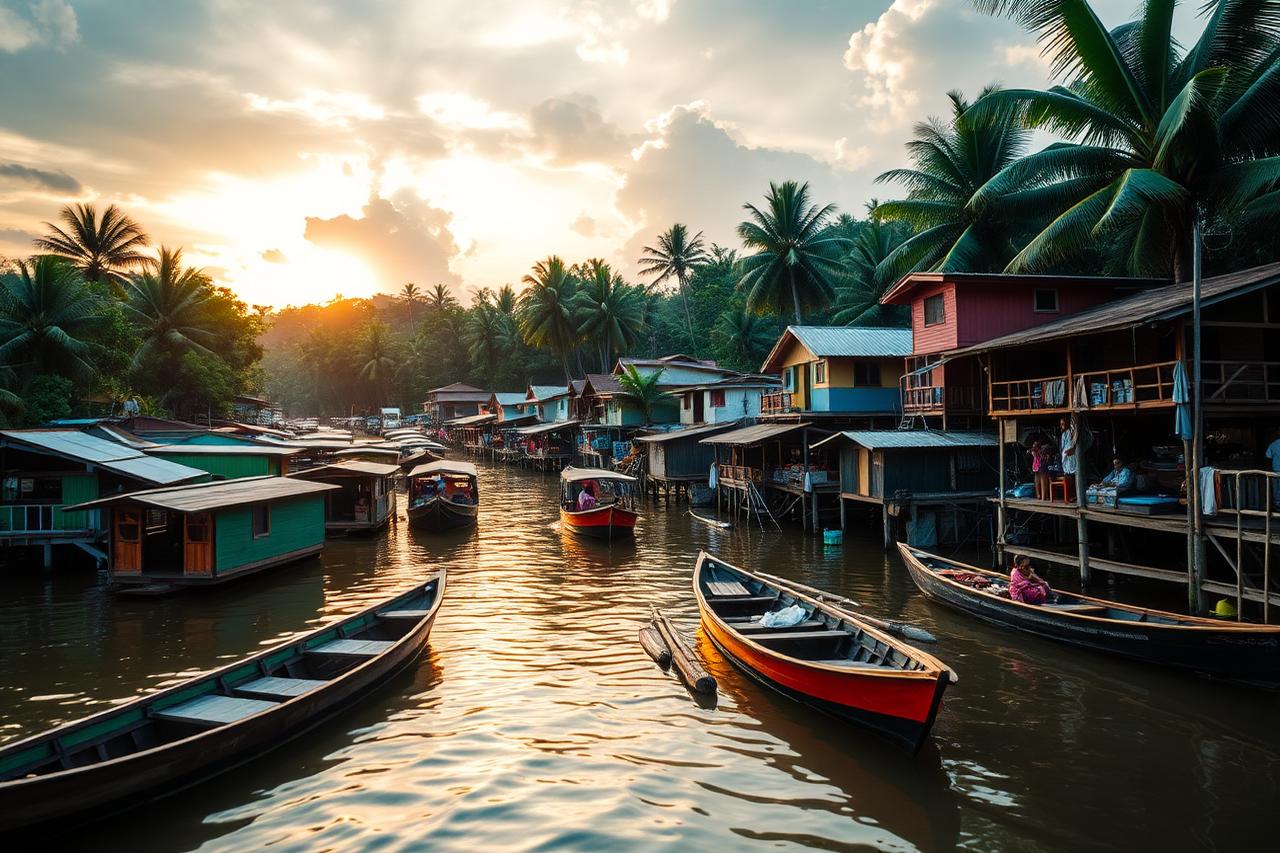
Afternoon: Hire a canoe (S/20-40 per person) to float past the stilt houses on the Itaya. Late lunch at Al Frio y Al Fuego, the floating restaurant on the river.
Evening: Siesta, then tacacho con cecina at Restaurante Fitzcarraldo on the Malecón and an early night.
Padre Cocha and Pilpintuwasi
Morning: Motocar to the port at Bellavista Nanay, then a shared boat across the Nanay river to Padre Cocha, S/3-5. Wander the village and watch the boat builders.
Afternoon: Walk to Pilpintuwasi Butterfly Farm (about S/35, closed Mondays, check hours) for butterflies, rescued monkeys and a tapir.
Evening: Back to Centro. Local ice cream on Calle Próspero (camu camu, copoazú, aguaje), then dinner and an early night before the lodge.
River to the lodge
Morning: Meet your lodge boat at the port (most pick up in town). Cruise 1.5 to 3 hours down the Amazon to a lodge on a tributary such as the Yanayacu.
Afternoon: Check in, hammock time, then a canoe trip at golden hour for birds, monkeys and sloths.
Evening: Dinner family-style, then a guided night walk for caimans, tarantulas, frogs and snakes.
Heading home: Motocar to IQT for the flight to Lima.
What to eat in Iquitos
- Juane, the Amazonian rice parcel wrapped in bijao leaves with chicken, olives and egg, eaten during festivals and daily
- Tacacho with cecina, mashed green plantain balls with dried pork, the classic Iquitos breakfast
- Patacones, twice-fried plantain discs served with sauce or as a side with every meal
- Aguajina and camu camu juice, made from Amazonian fruits
- Surubi grilled over charcoal, the Amazon catfish that is the river's finest eating fish
Hidden gems
- The small Shipibo art galleries in Centro where indigenous artists sell intricate geometric textiles and pottery.
- Sunset at the Itaya River waterfront with a cold local beer and views of the stilted houses reflected in the water.
- The artisan fishing village of Padre Cocha, where locals still build wooden boats by hand and sell fresh fish at dawn.
- The butterfly farm at Pilpintuwasi, a genuinely ethical rescue centre where butterflies breed in a natural enclosure.
- The local ice cream made with Amazonian fruits like camu camu, aguaje and copoazú, found at small shops on Próspero.
Getting around
Iquitos has almost no cars; the transport is moto-taxis, motorcycle taxis that swarm the streets and cost $1-2 for most rides. Walking is possible in the centre but the heat makes it exhausting. The only road runs to Nauta (about 2 hours). Beyond it, boats take over: cargo boats to Yurimaguas and Pucallpa take several days. The airport has daily flights to Lima (about 2 hours).
Safety
Iquitos is generally safe but requires jungle-specific caution. Do not swim in the river due to parasites, piranhas and caimans. Use insect repellent with DEET constantly to avoid mosquito-borne illnesses. Drink only bottled or purified water. At night, stick to the main streets of Centro and use registered moto-taxis. The jungle lodges are generally safe but always follow your guide's instructions. A yellow fever vaccination is recommended for the Amazon. Ayahuasca ceremonies are widely sold here: deaths and assaults have been reported at unregulated retreats, and several governments advise caution.
Frequently asked questions
What does this 4-day Iquitos itinerary cover?
Day 1: Land, settle, walk the Malecón. Day 2: Belén market and floating houses. Day 3: Padre Cocha and Pilpintuwasi. Day 4: River to the lodge.
Is 4 days enough for Iquitos?
Our recommended trip length for Iquitos is 4 to 7 days. This 4-day plan focuses on the highlights and groups sights by area so you spend less time travelling between them.
How much does 4 days in Iquitos cost?
A budget traveller spends about $35 to $60 USD a day in Iquitos, so roughly $140 to $240 USD for 4 days, not counting flights.
Where should I stay for 4 days in Iquitos?
Centro: The main grid with Plaza de Armas, the iron house attributed to Gustave Eiffel, restaurants and the main port. Belén: The floating and stilted district on the Itaya River, with houses that rise and fall with the water level, a chaotic market and the most atmospheric part of the city.
When is the best time to visit Iquitos?
The best time to visit Iquitos is June-September.
How do I get around Iquitos?
Iquitos has almost no cars; the transport is moto-taxis, motorcycle taxis that swarm the streets and cost $1-2 for most rides. Walking is possible in the centre but the heat makes it exhausting.
Is Iquitos safe for solo travellers?
Iquitos is generally safe but requires jungle-specific caution. Do not swim in the river due to parasites, piranhas and caimans.
More 4-day guides
- Puno in 4 days
- Máncora in 4 days
- Paracas in 4 days
- Huacachina in 4 days
- Ollantaytambo in 4 days
- Colca Canyon in 4 days
- Huaraz in 4 days
- Lima in 4 days
Iquitos in 2 days | Iquitos in 3 days | Iquitos in 5 days | Iquitos in 7 days | Full Iquitos guide
Joy Plus home | Destinations | Itineraries | Activities | Flights | Budget planner | Calendar | Map | Blog | Lifetime access