Saint-Malo in 2 days
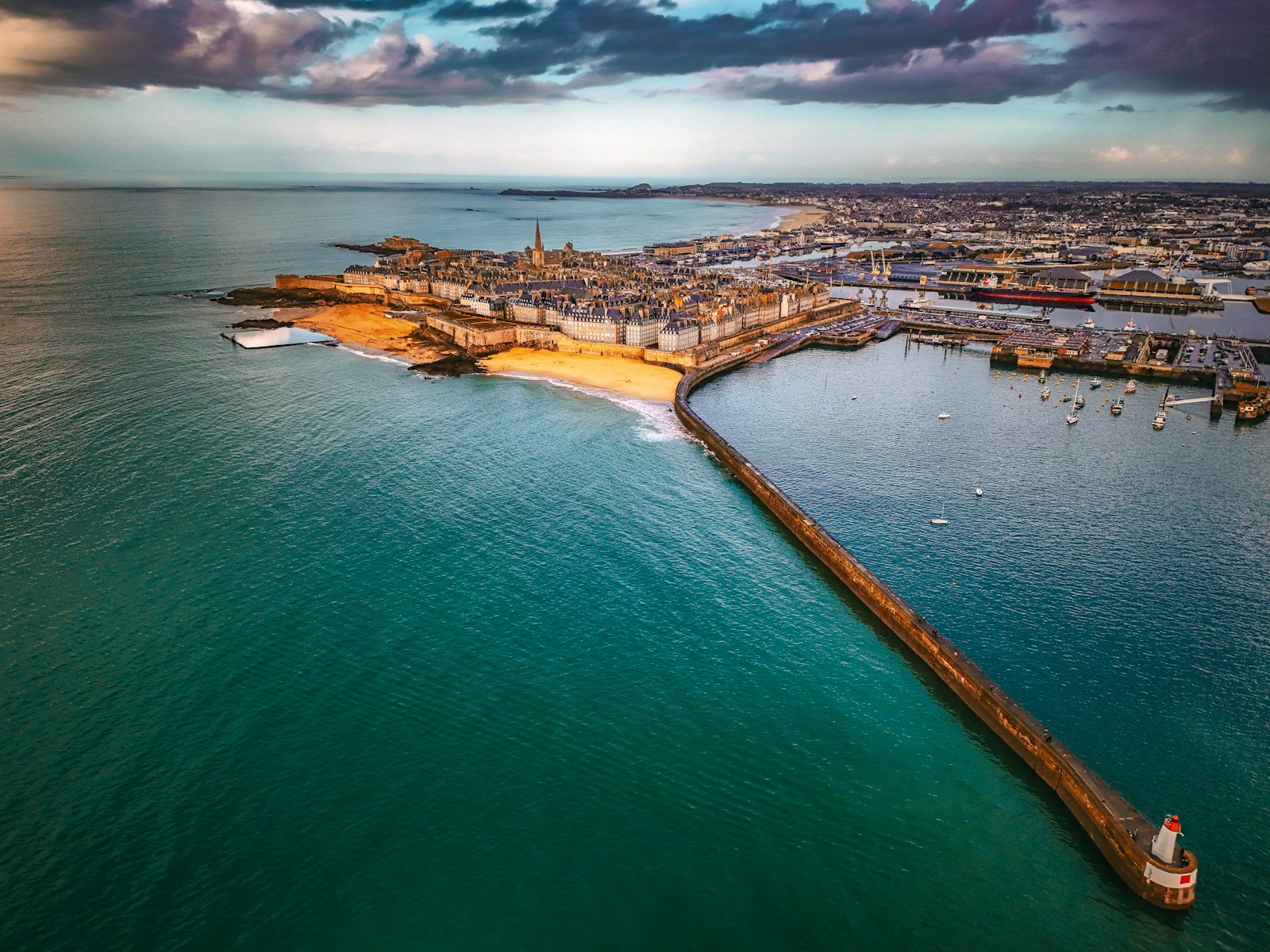
A rebuilt walled port on Brittany's north coast, where you walk the ramparts, cross to island forts at low tide and eat galettes and Cancale oysters between huge swings of the sea. Best time to visit: May to September. Daily budget (budget traveller): $85 to $430 USD.
Arrive and walk the walls
Morning: Arrive by TGV or the morning ferry. Drop your bags and walk into Intra-Muros through the Porte Saint-Vincent.
Afternoon: Visit Saint-Vincent cathedral, then wander the rebuilt streets. Look up the day's tide times and plan tomorrow's crossings.
Evening: Walk the full loop of the ramparts at sunset. Galettes and cider at a crêperie inside the walls.
Low tide: Fort National and the Grand Bé
Morning: At low tide, cross the sand from Plage de l'Éventail to Fort National. Bring €5 in cash for the guided visit, which runs when the flag is flying.
Afternoon: Walk the causeway from Plage de Bon-Secours to the Grand Bé and Chateaubriand's tomb. Follow the posted tide times and leave early. Swim in the Piscine de Bon-Secours.
Evening: Drinks at a bar in Intra-Muros, then dinner. Try moules-frites or a fish set menu.
Heading home: For the airport or station, see Getting there in the full Saint-Malo guide.
What to eat in Saint-Malo
- Galette complète: a buckwheat galette with ham, cheese and egg, the standard Breton lunch, with a bowl of cider on the side
- Cancale oysters: bought by the dozen from the harbour stalls in Cancale and eaten on the sea wall, among the cheapest good oysters in France
- Kouign-amann: a dense, buttery, caramelised Breton cake, best warm from a bakery
- Beurre Bordier: the famous hand-churned butter, sold at La Maison du Beurre Bordier in Intra-Muros, worth buying with fresh bread for a picnic
- Moules marinières: mussels cooked with white wine and shallots, served with chips at brasseries along the Sillon and in town
- Crêpes on the ramparts: Crêperie Le Corps de Garde sits right on the walls, with sea views and sweet crêpes with salted butter caramel
Hidden gems
- Plage du Môle, a small sheltered beach tucked under the walls by the harbour jetty, calmer and less crowded than the big beaches
- The Rochers Sculptés in Rothéneuf, hundreds of figures carved into the seaside rocks by a local priest in the late 1800s, with a small entry fee
- The Cité d'Aleth headland in Saint-Servan, with WWII bunkers, a free loop walk and views over the Rance and Tour Solidor
- The Malouinière de la Chipaudière, one of the grand country houses built by Saint-Malo's shipowners, open for guided visits in summer
- Pointe de la Varde between the Sillon and Rothéneuf, a wild headland with old German bunkers and wide views over the bay
Getting around
Intra-Muros is small and best explored on foot. The train station is about 15-20 minutes' walk from the walls, and the Brittany Ferries terminal is a short walk or taxi ride away. The Sillon promenade gives a flat seafront walk from the walls east to Paramé. The town's MAT bus network links the station, Intra-Muros, Saint-Servan, Paramé and Rothéneuf, and lines run along the coast to Cancale, so check the current timetable and fares. Compagnie Corsaire's sea bus to Dinard runs daily from late March to early November, with a short extra service in mid-November in 2026. It leaves from the Cale de Dinan, below the walls. For Mont-Saint-Michel, Keolis Armor runs one direct return trip a day from Esplanade Saint-Vincent, which must be booked online, and FlixBus also serves the route. Bikes are a good option for the coast, though roads can be busy in summer. You do not need a car unless you want to explore inland, and parking near the walls is expensive in season.
Safety
Saint-Malo is a safe town, and violent crime against visitors is rare. The real risk is the tide. The tidal range is among the biggest in Europe, and people get cut off every year on the Grand Bé, the Fort National crossing and sandbanks along the coast. Check the tide times before you cross, read the signs at the start of the causeways and leave early rather than late. Waves break over the Sillon sea wall during high tides and storms, so stay back when the sea is rough. Watch for pickpockets in Intra-Muros in July and August, and keep bags closed on busy streets and at markets. Bars in Intra-Muros can get loud late on summer weekends, but the town is generally fine to walk at night. Lifeguards only cover certain beaches in summer, so swim where flags are up. For emergencies, call 112.
Frequently asked questions
What does this 2-day Saint-Malo itinerary cover?
Day 1: Arrive and walk the walls. Day 2: Low tide: Fort National and the Grand Bé.
Is 2 days enough for Saint-Malo?
Our recommended trip length for Saint-Malo is 3 to 7 days. This 2-day plan focuses on the highlights and groups sights by area so you spend less time travelling between them.
How much does 2 days in Saint-Malo cost?
A budget traveller spends about $85 to $430 USD a day in Saint-Malo, so roughly $170 to $860 USD for 2 days, not counting flights.
Where should I stay for 2 days in Saint-Malo?
Intra-Muros: The walled old town. Saint-Servan: A quieter district south of the walls, with the 14th-century Tour Solidor, the Cité d'Aleth headland and Plage des Bas-Sablons.
When is the best time to visit Saint-Malo?
The best time to visit Saint-Malo is May to September.
How do I get around Saint-Malo?
Intra-Muros is small and best explored on foot. The train station is about 15-20 minutes' walk from the walls, and the Brittany Ferries terminal is a short walk or taxi ride away.
Is Saint-Malo safe for solo travellers?
Saint-Malo is a safe town, and violent crime against visitors is rare. The real risk is the tide.
More 2-day guides
- Riquewihr in 2 days
- Arles in 2 days
- Sarlat-la-Canéda in 2 days
- Amboise in 2 days
- Antibes in 2 days
- Bonifacio in 2 days
- Reims in 2 days
- Réunion in 2 days
Saint-Malo in 3 days | Saint-Malo in 4 days | Saint-Malo in 5 days | Saint-Malo in 7 days | Full Saint-Malo guide
Joy Plus home | Destinations | Itineraries | Activities | Flights | Budget planner | Calendar | Map | Blog | Lifetime access