Destinations / North America
Acapulco, Mexico travel guide
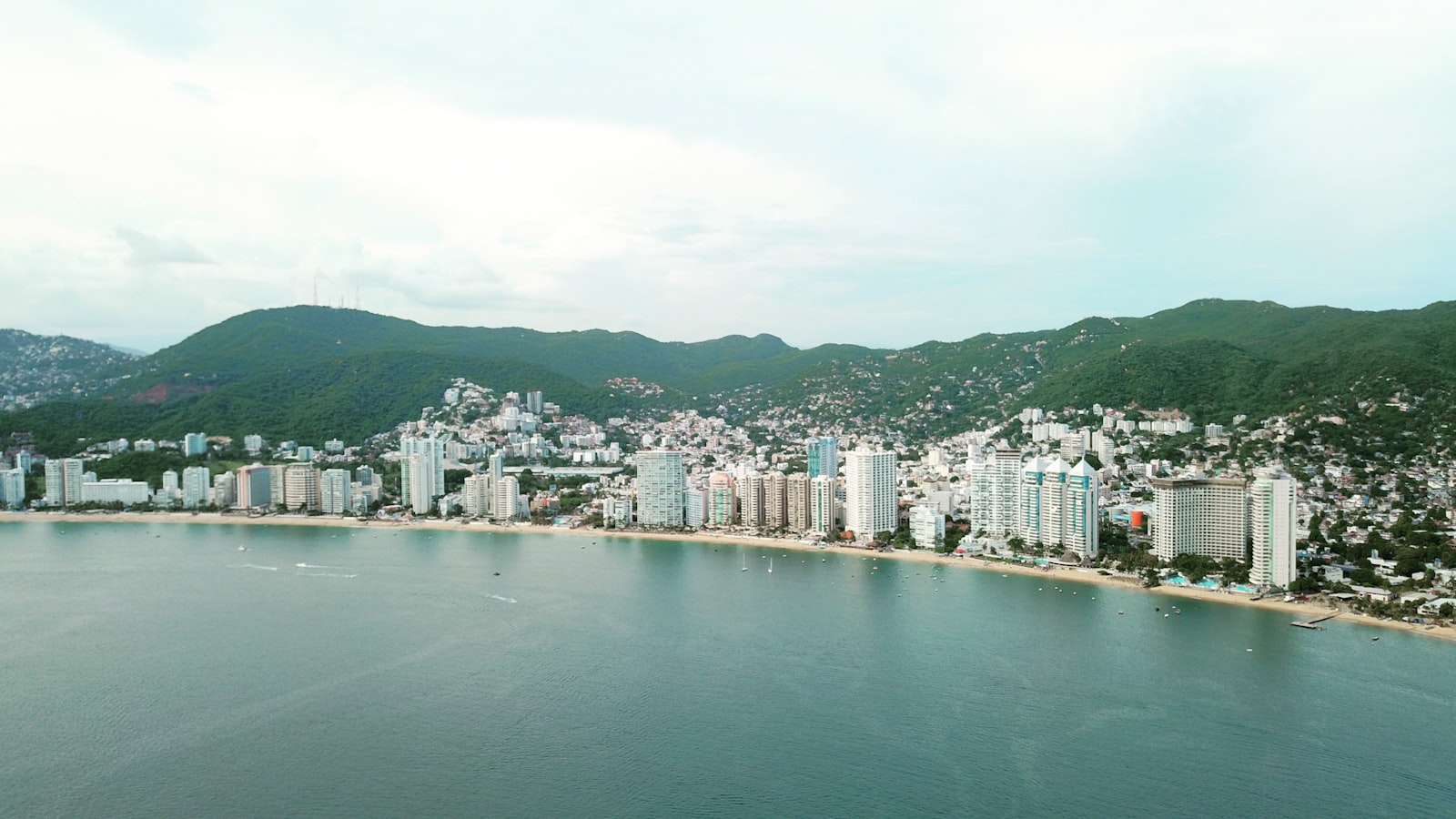
Pacific bay of cliff divers, mid-century glamour and Mexico's loudest beach nightlife.
- Best time to visit: November-April
- Daily budget (budget traveller): $70 to $180 USD
- Ideal trip length: 3 to 4 days
Acapulco was Mexico's original jet-set resort, the bay where Hollywood came to swim in the 1950s, and its horseshoe of high-rises still makes one of the most dramatic city-and-sea skylines in the Americas. The La Quebrada divers have been throwing themselves off a 35m cliff since 1934, the old town keeps a fort and a scruffy, likeable zócalo, and Zona Diamante at the southern end holds the newer resorts and calmer sand. It has had hard years, including Hurricane Otis in 2023, and much of the bay has been rebuilt since.
Acapulco is a horseshoe of high-rises wrapped around a deep Pacific bay, and the first thing to understand is that it is three cities stitched together by one long road. The Costera Miguel Aleman runs the length of the bay: Zona Dorada in the middle with its beach clubs and 1970s towers, Acapulco Tradicional at the western end with the zocalo, the star-shaped San Diego fort and the La Quebrada cliff, and Zona Diamante curling away to the south where the big resorts face open surf. Each zone has its own price level, its own kind of beach and its own pace. A good trip is mostly about choosing the right one for each part of the day and not crossing the bay more often than you have to.
What you actually do here is simple and good. You eat pescado a la talla under a palapa, drink coco frio from the shell, ride a MX$12 bus along the water with the windows open, and watch a diver in a white speedo leave a ledge 35m above a rock inlet at 7:30pm with a torch in each hand. You swim at calm Caleta in the morning, take a glass-bottom boat to the Virgin statue on Isla La Roqueta, and go out to Pie de la Cuesta for a sunset over the Pacific on a surf beach where nobody is selling you a timeshare. Nights are loud in the best Mexican beach-city way: clifftop clubs like Palladium open at 11pm and run until the sun comes up, and Mexico City weekenders fill the Costera on Friday evening.
It is also a city with real context, and you should travel it with your eyes open. Hurricane Otis hit as a category 5 in October 2023, most of the bay has since reopened, but recovery is uneven, so confirm your hotel is fully operating before you book. The US advises against all travel to Guerrero, with no exception for Acapulco, and bars its own staff from the city; crime has reached tourist areas too. The practical answer is dull and effective: stay on the Costera, in Diamante or in the old town, use Uber, DiDi or hotel-booked taxis after dark, skip isolated beaches and don't drive between cities at night. Do that and Acapulco is a warm, cheap, theatrical beach city with some of the best seafood in Mexico.
How many days in Acapulco?
For Acapulco, we recommend 3 to 4 days.
| Trip length | What you'll see | Itinerary |
|---|---|---|
| 2 days | The Costera; Old town, fort and La Quebrada | Acapulco in 2 days |
| 3 days · Recommended | Adds: Caleta, Caletilla and Roqueta | Acapulco in 3 days |
| 4 days · Recommended | Adds: Pie de la Cuesta | Acapulco in 4 days |
| 5 days | Adds: Puerto Marques and Diamante | Acapulco in 5 days |
| 7 days | Adds: Barra Vieja for pescado a la talla | Acapulco in 7 days |
Acapulco itinerary
Arrive, settle on the Costera
Morning: Land at ACA, take the authorised airport taxi (MX$600 to 900) or an Uber or DiDi to your hotel, about 30 to 45 minutes. Drop bags and walk to the beach.
Afternoon: Late seafood lunch at Mariscos Pipo on the Costera, then a slow loop of Parque Papagayo for shade and a free swim at Playa Condesa.
Evening: Dinner at Beto's on Playa Condesa, a few drinks on the sand, then an Uber home. First night, stay easy.
Old town, fort and La Quebrada
Morning: Fuerte de San Diego at 9am when it opens (about MX$90, closed Mondays) before the heat. Cross to the zocalo and cathedral for coffee under the trees.
Afternoon: Cheap comida corrida at the Mercado Central before 2pm, then a five-minute look at the Diego Rivera mosaic on Casa Dolores Olmedo.
Evening: Get to the La Quebrada platform by 7pm, torch dive at about 7:30pm, tip the divers on the way out. Dinner in the old town and an Uber back.
Caleta, Caletilla and Roqueta
Morning: Bus to Caleta, swim in the calm shallows before the families arrive. Coco frio from a beach vendor.
Afternoon: Glass-bottom boat to Isla La Roqueta and the submerged Virgin statue, snorkel on the island, lunch at a palapa on the sand.
Evening: Return to Caleta for sunset, then an Uber to Zona Dorada for tacos and a quiet bar.
Pie de la Cuesta
Morning: Bus from the Costera to Pie de la Cuesta (30 to 40 minutes, MX$15 to 20). Walk the surf beach and rent a horse for MX$300 to 500.
Afternoon: Lunch at a lagoon-side palapa, then a boat tour on Laguna de Coyuca (MX$300 to 400 each).
Evening: Watch the sunset with a drink at a beach palapa, then take a taxi back to your hotel before 8pm. Do not walk the road after dark.
Puerto Marques and Diamante
Morning: Bus to Puerto Marques, the calm bay in Diamante. Beach chair, ceviche, a banana boat if you want.
Afternoon: Look at Revolcadero from the sand but don't swim, the rip currents are serious. Back to the hotel for a siesta.
Evening: Dinner, then Palladium on the Carretera Escenica. Doors open late, the bay view is the point, so arrive after 11pm and book an Uber for the return.
Barra Vieja for pescado a la talla
Morning: Sleep in. Arrange a round-trip taxi (about MX$1,000 to 1,400) or a tour with a return time.
Afternoon: Barra Vieja palapas, pescado a la talla, beer and a lagoon walk. Be on the road home by 5pm.
Evening: Quiet dinner near the hotel, then a night walk along the Costera in lit areas only.
Slow morning, depart
Morning: Last coco frio, last swim, pack. Breakfast of chilaquiles or fruit at the Mercado Central if you are in the old town.
Afternoon: Check out, allow 45 minutes for airport traffic and arrive two hours before your flight.
Evening: Fly out of ACA or take a first-class bus back to Mexico City, about five hours.
Best neighbourhoods
- Zona Dorada (Costera): The classic strip along the bay: 1970s hotels, beach clubs, restaurants and nightlife.
- Zona Diamante: Newer resorts, golf and the calmer open-ocean beaches at the southern end of the bay.
- Acapulco Tradicional: The old town with the zócalo, cathedral, San Diego fort and La Quebrada cliff.
- Pie de la Cuesta: Long surf beach and lagoon 20 minutes northwest, famous for sunsets and horse rides.
Must-do experiences
- La Quebrada cliff divers: Divers plunge 35m into a narrow inlet, timed to the swell; the evening torch dive is the one to see.
- Swim Playa Caleta and Caletilla: The bay's calmest, shallowest beaches, popular with Mexican families and good for kids.
- Fuerte de San Diego: A star-shaped 18th-century fort, rebuilt on the site of the 1616 original, holding the city's Manila galleon trade history.
- Sunset at Pie de la Cuesta: Wide surf beach and lagoon boat trips 20 minutes out, with the best sunsets on the coast.
- Boat trip across the bay: Glass-bottom or catamaran cruises to Roqueta Island and the submerged Virgin statue.
Hidden gems
- Casa Dolores Olmedo in the old town, with a Diego Rivera mosaic mural on its facade.
- Sinfonía del Mar, a small clifftop amphitheatre for sunsets without the diver crowds.
- Barra Vieja beach, 30km southeast, for pescado a la talla under palapas.
- The mercado central for tropical fruit and cheap comida corrida away from the Costera.
Daily budget
- Accommodation: budget MX$450-800 / night (dorm or basic fan room in the old town), mid-range MX$1,500-2,800 (3-star or boutique double on the Costera or Caleta), splurge MX$6,000+ (Mundo Imperial resorts, Banyan Tree Cabo Marques). Prices spike 50 to 100 percent between Christmas and January 3 and in Semana Santa. Confirm post-Otis reopening status and recent reviews before paying any deposit.
- Food: budget MX$250-400 / day (market comida corrida MX$90-130, tacos, tortas), mid-range MX$700-1,200 (beach seafood lunch plus a sit-down dinner), splurge MX$2,500+ (clifftop dinner on the Carretera Escenica). Comida corrida at the Mercado Central is soup, main, rice and agua fresca for about MX$100 and is the local hack. A big pescado a la talla for two on the beach runs MX$450 to 800.
- Transport: budget MX$60-100 / day (5 to 8 Costera bus rides at MX$12-15), mid-range MX$250-450 (mix of Uber or DiDi and buses), splurge MX$1,500+ (private driver for the day with a vehicle). Buses run all day along the Costera and are marked on the windshield (Caleta, Zocalo, Puerto Marques). Taxis have no meter, so settle the fare first or use an app.
- Activities: budget MX$200-350 / day (La Quebrada, a fort ticket, free beaches), mid-range MX$600-1,200 (Roqueta boat, Pie de la Cuesta lagoon tour, a catamaran cruise), splurge MX$2,500+ (half-day private yacht from MX$6,000 split among a group). La Quebrada from the public platform is roughly MX$100, Fuerte de San Diego about MX$90 (closed Mondays) and glass-bottom boats to La Roqueta around MX$150 to 250 return.
- Drinks & nightlife: budget MX$150-250 (beer in a tienda MX$25-35, bar beers MX$50-70), mid-range MX$500-900 (cocktails at MX$120-180 plus a club cover), splurge MX$2,000+ (VIP table at Palladium or Baby'O). Covers at big clubs run MX$300 to 900, often with open-bar packages. Check Instagram for guest-list and ladies-free nights. Drinking on public streets is a fine risk, so keep it to beaches and venues.
Where to stay
- Social hostel in Costera near Playa Condesa (MX$450-900 / night): Dorm-led guesthouses within a 10 minute walk of the beach, with buses and bars close by. Filter Hostelworld for recent post-Otis reviews, and Hotel Mision in the old town is a reliable cheap private-room fallback.
- Boutique hotel in Caleta and Caletilla (MX$1,800-3,500 / night): Hotel Boca Chica or similar small mid-century properties on the quiet western bay, close to the calm beaches and a short bus to the old town. Confirm current opening and room condition after Otis.
- Apartment in Zona Dorada (MX$1,200-2,600 / night): A one-bedroom condo in a Costera tower with a pool and a kitchen, usually with a bay or ocean view. Best value for 4+ nights and you get a real morning coffee at your own balcony.
- Splurge in Zona Diamante (MX$6,000-14,000 / night): Banyan Tree Cabo Marques, Princess Mundo Imperial or Pierre Mundo Imperial for pools, private beach access and a resort bubble. Verify reopening status and renovation work before you book.
What to eat
- Pescado a la talla, butterflied grilled fish with chilli adobo
- Ceviche acapulqueño served with saltine crackers
- Pozole verde, the Guerrero version, traditionally eaten on Thursdays
- Coco frio straight from the shell on the beach
Day trips
- Pie de la Cuesta (30 to 40 min by bus, 12km northwest): A long surf beach separated from Laguna de Coyuca by a thin strip of sand. Horse rides, palapa lunches and the bay's best sunset. Swimming is rough, so wade only. Bus from the Costera marked Pie de la Cuesta, MX$15 to 20, or an Uber or taxi for MX$250 to 350 each way. Return before dark.
- Isla La Roqueta (15 min by boat from Caleta): A small island with calm snorkelling, a lighthouse trail and the submerged Virgin of Guadalupe statue. Glass-bottom boats drift over the statue on the way. Boats leave from Caleta pier all day, MX$150 to 250 return depending on the operator and whether you want a snorkel stop.
- Barra Vieja (30km southeast, about 45 min by road): Wide beach and lagoon palapas for pescado a la talla and cold beer. A local weekend favourite, it is quiet outside December and Easter. Round-trip taxi MX$1,000 to 1,400 with a return time, or a combi from Avenida Ejido for about MX$40 each way. Go by day and be back by 5pm.
When to visit
- Winter (December - February): 29-32°C days, 21-23°C nights, dry and sunny, sea around 27°C. Crowds: Heavy over Christmas and New Year, moderate in January and February. The best weather of the year. Book ahead for the last week of December, when hotel prices double and the Costera is packed with Mexico City families.
- Spring (March - May): 30-34°C, increasingly humid, still mostly dry until late May. Crowds: Very heavy in Semana Santa, light to moderate otherwise. Good value outside Easter week. March and April are hot but reliable, and May starts to feel sticky as the Pacific hurricane season approaches.
- Summer (June - August): 30-33°C, humid, afternoon thunderstorms, rain most days. Crowds: Busy in July with domestic school holidays, quieter in June and August. Green, cheap and sweaty. Mornings are usually clear and storms roll in around 4pm, so plan beaches early and museums late. Expect the odd tropical storm warning.
- Autumn (September - November): 29-32°C, September and October wettest, November dry again. Crowds: Lowest in September and October, recovering through November. September and October are peak hurricane risk, so only go with flexible bookings. Mid-November is the locals' sweet spot: dry again, sea still warm and hotels still at low-season rates.
Entry rules for your passport
Visa rules for Mexico depend on the passport you travel on. Check the official source before you book: Mexico National Migration Institute
Getting there
Acapulco International Airport (ACA, General Juan N. Alvarez) is about 22km southeast of the Costera, 30 to 45 minutes depending on traffic. There are direct flights from Mexico City (Volaris, Viva, Aeromexico, roughly 1 hour, MX$1,000 to 2,500) and several US and Canadian cities in high season. Take the airport's authorised taxi counter, MX$600 to 900 to the Costera, or an Uber or DiDi at MX$350 to 500 (they may meet you outside the terminal fence). The first-class bus from Mexico City's Terminal Sur (Taxqueña) or Terminal Norte takes about five hours on the Autopista del Sol and costs MX$700 to 1,100, with Estrella de Oro as another premium option. Leave early so you arrive before dark. By car, tolls on the Mexico City route are roughly MX$700 each way, and you should not drive between cities at night.
Getting around
The Costera bus lines run the length of the bay constantly for about $0.60 and are the local way to move; taxis are plentiful but agree the fare before getting in, as most have no meter. Zones are far apart, so expect 30 to 40 minutes from the old town to Diamante. The airport is 30 minutes southeast of the bay, and Mexico City is about five hours by first-class bus on the toll road, the route most Mexicans use.
Safety
Acapulco has significant cartel-related violence, and the US advises against all travel to Guerrero state, Acapulco included, and bars its own staff from the city. The violence is mostly targeted and concentrated in outer neighbourhoods, and the tourist zones along the Costera, Diamante and the old town centre see a heavy police presence, but crime has reached tourist areas too. If you go, read your government's advice first, stay in the main tourist corridors, do not travel outside the city by road at night, use hotel-booked or app-based taxis, and skip isolated beaches. Also note strong rip currents on open-ocean beaches, and that recovery from Hurricane Otis is uneven, so confirm your hotel is fully operational.
Solo travel tips
- Pick your zone and stay in it: Zona Dorada and the Costera near Playa Condesa are the best solo base: lit, busy and walkable, with taxis and buses at every corner. Diamante is isolated and only good with a car or a plan.
- Use apps after dark, even for 1km: Uber and DiDi work along the bay and cost MX$50 to 90 for a short hop. Send your driver's plate number to a friend and walk a block from your hotel if the taxi union is hovering at the lobby.
- Time the divers properly: The 7:30pm torch dive is the best one. Arrive 30 minutes early for a rail spot on the public platform, bring small notes to tip the divers and expect the sea to dictate the exact timing.
- Solo female travellers: Stay in the tourist zones, watch your drink at clubs, don't walk empty stretches of the Costera past 1am and skip isolated beaches. Daytime in Caleta, Condesa and the old town is relaxed and friendly.
- Swim where the lifeguards are: Caleta, Caletilla and Puerto Marques are calm. Revolcadero, Playa Icacos at the open end and Barra Vieja have strong rip currents. Look for the flag colours and never swim alone at open-ocean beaches.
- Find your tribe on a boat or at a palapa: Catamaran cruises, the Roqueta glass-bottom boats and beach-club day passes are the easiest ways to meet other travellers. At Pie de la Cuesta, horse rides and lagoon tours pull groups together fast.
Cultural etiquette
- Say buenos dias or buenas tardes when you walk into a shop, taxi or restaurant. It is expected and gets you a warmer reception.
- Tip 10 to 15 percent at restaurants (check the bill for propina sugerida), round up for hotel staff, and tip the La Quebrada divers MX$20 to 50 as they come around.
- A firm, smiling 'no, gracias' is enough for beach vendors. Don't ask the price of something you don't want, and haggle for souvenirs but never in restaurants.
- Agree the taxi fare before you get in, since most cabs have no meter. Or use Uber and DiDi and skip the conversation.
- Cover up away from the beach. Swimwear in restaurants, the cathedral and the market is seen as rude.
- Lunch (la comida) is the main meal, 2pm to 5pm. Dinner starts at 8:30 or 9pm, and Thursday is traditional pozole verde day.
- Don't drink on the street. Keep drinks to beaches, clubs and restaurants, and keep your passport copy on you.
Frequently asked questions
How many days do you need in Acapulco?
Three to four. One for the old town, the fort and La Quebrada divers, one or two on the bay's beaches and a boat trip, and one for Pie de la Cuesta or Barra Vieja. Many Mexican visitors come for a long weekend from Mexico City.
When is the best time to visit Acapulco?
November to April is dry with 30-32C days and warm sea temperatures. December, Easter and July are packed with domestic holidaymakers and prices spike. June to October is the rainy season and the Pacific hurricane window, with September the highest risk.
Is Acapulco safe for tourists?
It requires real care. The US rates Guerrero state 'do not travel' because of cartel violence, with no exception for Acapulco. Incidents are concentrated in outer neighbourhoods, though not confined to them. If you go, stay along the Costera, Diamante or the old town, avoid road travel at night, use hotel or app taxis, skip isolated beaches and check your government's advice before booking.
Is Acapulco expensive?
It is one of Mexico's better-value beach cities at $70 to $180 a day. Hotels run $50 to $150, a seafood lunch on the beach $10 to $18, Costera buses under a dollar and the cliff-diver show around $6. Diamante resorts push costs considerably higher.
Has Acapulco recovered from Hurricane Otis?
Largely, but unevenly. The category 5 hurricane hit in October 2023 and most major hotels, restaurants and attractions have reopened since, while some properties remain closed or partly rebuilt. Confirm directly with your hotel that it is fully operational before booking.
What are the best beaches in Acapulco?
Caleta and Caletilla are the calmest and best for families, Icacos and Condesa line the busy Costera with beach clubs, Revolcadero in Diamante is wide with big surf and strong currents, and Pie de la Cuesta northwest is the sunset and lagoon beach.
What is Acapulco known for?
The La Quebrada cliff divers, its dramatic horseshoe bay skyline, mid-century Hollywood glamour, all-night beachfront clubs, pescado a la talla, and being Mexico City's traditional weekend beach escape.
More about Acapulco
- The 7-Day Mexico City Itinerary for 2026, with Real Prices
- Mexico City vs Medellín for Digital Nomads: Which Base Suits You in 2026?
Tours and activities in Acapulco | Acapulco in 2 days | Acapulco in 3 days | Acapulco in 4 days | Acapulco in 5 days | Acapulco in 7 days
Joy Plus home | Destinations | Itineraries | Activities | Flights | Budget planner | Calendar | Map | Blog | Lifetime access