Destinations / Europe
Akureyri, Iceland travel guide
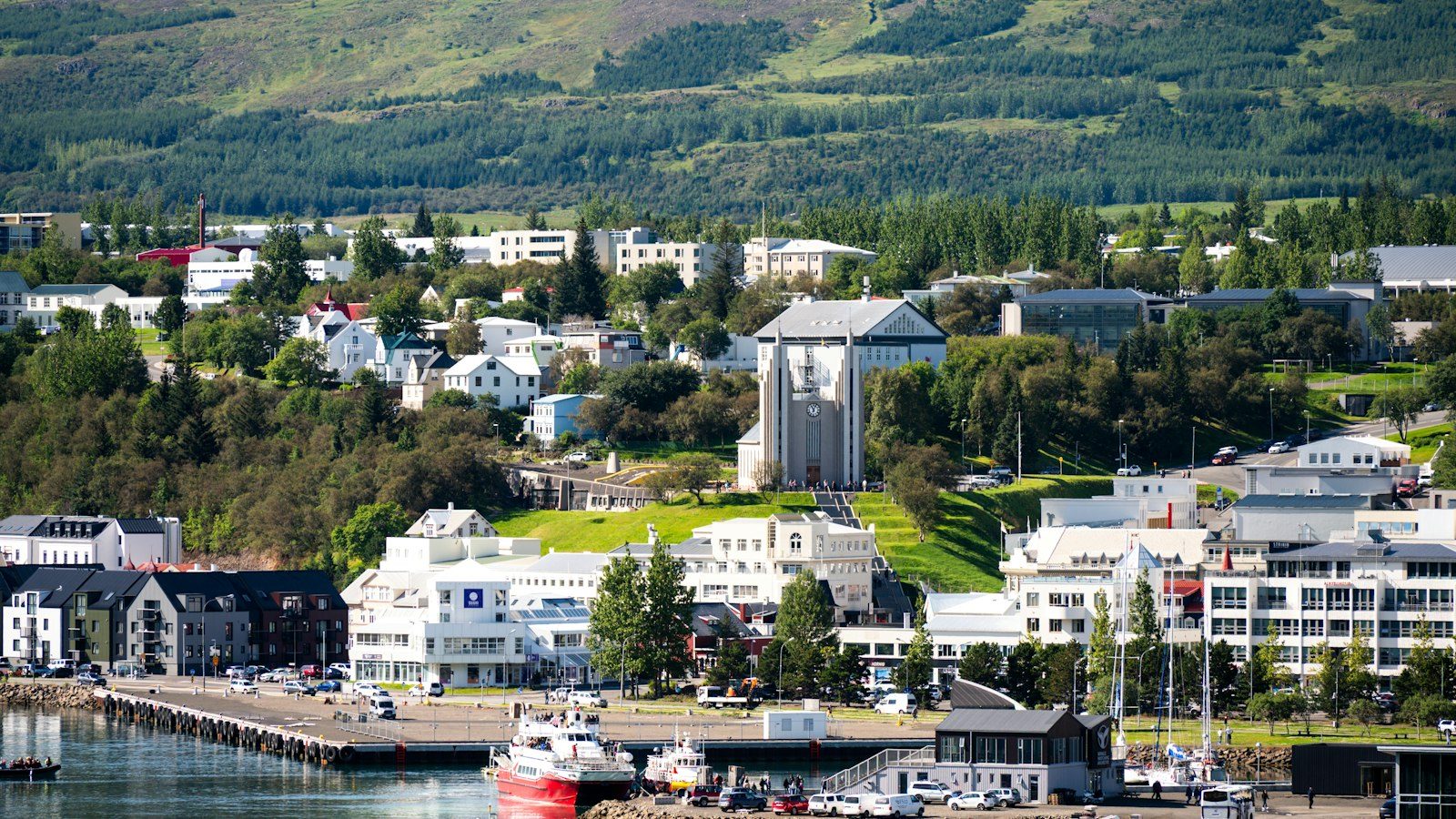
A small, friendly town at the head of Iceland's longest fjord, about 100km below the Arctic Circle. You soak in hot pools under snowy mountains, walk an old town of wooden houses and use the place as a base for waterfalls, whales and the lakes at Mývatn.
- Best time to visit: June to August and February to March
- Daily budget (budget traveller): $110 to $380 USD
- Ideal trip length: 3 to 6 days
Akureyri sits at the inner end of Eyjafjörður in North Iceland. It is about 390km from Reykjavík by road, which is a 45-minute flight or a long day on the bus. Around 20,000 people live here, so it counts as Iceland's second urban area, but it feels more like a large, tidy town. The centre is a few streets below the steps of the church, with cafés, bookshops, the Hof cultural centre and the harbour where whale-watching boats leave. Above it are the botanical garden and one of the best public pools in the country. South of the centre, the old Innbær quarter keeps a row of painted wooden houses from the 19th century. The real draw is what surrounds the town. The Forest Lagoon is a few minutes across the fjord, Goðafoss waterfall is under an hour away, and Lake Mývatn, Húsavík and the island of Hrísey all make good day trips. Iceland is expensive, and Akureyri is no exception. Even so, free town buses, cheap pool entry, supermarket picnics and free walks in the forest and the old town make it a manageable base for a solo traveller.
Akureyri is the capital of the north in all but name. It is a neat, colourful town of about 20,000 people at the head of Eyjafjörður, Iceland's longest fjord, with snowy peaks on both sides and the Hlíðarfjall ski slopes above. It grew up as a trading post and later a centre for fishing and cooperative industry, and you can still see that history in the wooden merchants' houses of Innbær and the port at Oddeyri. Most visitors pass through for one night on a Ring Road trip. Stay longer and you get to know it properly: morning laps at the town pool, coffee on Hafnarstræti, the walk up the church steps and long evenings in the Forest Lagoon. It is not cheap, but free town buses, low pool prices and good supermarkets help a lot.
Getting here takes some planning. Icelandair flies from Reykjavík's domestic airport in about 45 minutes, and Strætó bus 57 takes around 6.5 hours once a day for 13,200 ISK (about $108). In some seasons, easyJet and other airlines fly in directly from Europe. Once you are here, walk and use the free yellow buses. Stay in the centre or on the church hill if you have no car, as the bus stop at Hof, the harbour and the pool are all within easy reach. For Goðafoss, Mývatn and the Diamond Circle, rent a car or join a day tour. For Hrísey, Dalvík and Siglufjörður, use bus 78 and the small ferry from Árskógssandur.
The season changes everything here. From June to August, it never really gets dark, whales feed in the fjord and every road and tour is open, but rooms are at their most expensive. September and October bring autumn colours, quieter streets and the first northern lights. From November to March, the town is snowy and dark, the ski area opens and the aurora becomes the main show. Short days and storms mean plans need slack. Akureyri is very safe, and almost everyone speaks good English. Nightlife is a handful of friendly bars rather than clubs. Come for hot water, fresh air and day trips, and give yourself time for the weather.
Akureyri itinerary
Arrive and find your feet
Morning: Fly up from Reykjavík (about 45 minutes) or take the long bus ride. Drop your bag and walk along Hafnarstræti for coffee.
Afternoon: Climb the steps to Akureyrarkirkja, then wander Listagilið and look into the Akureyri Art Museum.
Evening: Your first soak at the town pool (1,400 ISK), then a hot dog or soup in the centre.
Old town, garden and the Forest Lagoon
Morning: Walk south through Innbær, visiting Nonnahús and the Akureyri Museum, and finish with an ice cream from Brynja.
Afternoon: Stroll back through the botanical garden, then catch a free town bus to Kjarnaskógur for a forest walk.
Evening: Head across the fjord to the Forest Lagoon (from 7,490 ISK). Book a late slot in winter in case the aurora shows.
Goðafoss and Lake Mývatn
Morning: Pick up a rental car or join a day tour. Stop first at Goðafoss and walk along both sides of the falls.
Afternoon: Carry on to Mývatn for the pseudocraters at Skútustaðir, the lava formations at Dimmuborgir and the steaming vents at Hverir.
Evening: Soak at a Mývatn lagoon if you have time, then drive back carefully. In winter, plan to be back before dark.
Hrísey island
Morning: Take bus 78 north to Árskógssandur, then the 15-minute Sævar ferry to Hrísey (about 2,000 ISK return).
Afternoon: Walk the island's loop trails among the birds, see the little village and swim in its pool.
Evening: Ferry and bus back to town. A drink in the centre, or a local beer from the Kaldi brewery in Árskógssandur if the times allow.
Whales and Glerárgil
Morning: Whale watching from the harbour (about 12,000 to 16,000 ISK). Wear every warm layer you have.
Afternoon: Take a free bus north and walk the Glerárgil gorge path, then have a slow coffee back in town.
Evening: A proper sit-down dinner of arctic char or lamb in the centre.
Dalvík and Siglufjörður
Morning: Take bus 78 along the fjord to Dalvík, a small fishing town, then on through the tunnels to Siglufjörður.
Afternoon: Visit the Herring Era Museum in Siglufjörður and walk the harbour, with mountains on all sides.
Evening: Bus back to Akureyri. Check the return time before you go, as departures are few.
Slow morning and depart
Morning: A final swim at the pool or a walk up the church steps for a last view down the fjord.
Afternoon: Pick up skyr and Icelandic sweets for home, then take a taxi to the airport or the bus from Hof.
Evening: Arrive in Reykjavík, or carry on round the Ring Road.
Best neighbourhoods
- City centre and Hafnarstræti: The compact heart of town, set around the pedestrian stretch of Hafnarstræti and the small square at Ráðhústorg. You have the Hof cultural centre, the long-distance bus stop, the harbour, cafés, bars and most restaurants. It is the most practical base without a car, though rooms here cost the most.
- Brekkan and the church hill: The residential slope above the centre, reached by the steps beside Akureyrarkirkja. The swimming pool, the botanical garden and the college are all up here. It is quiet, with guesthouses and apartments in family homes, and the centre is five minutes downhill on foot.
- Innbær (the old town): The oldest part of Akureyri, a strip of wooden houses along Aðalstræti south of the centre. Here you find Nonnahús, the Akureyri Museum and the old church. It is peaceful and pretty, with a few guesthouses, and the town centre is a 15 to 20-minute walk along the fjord.
- Oddeyri: The flat spit of land north of the centre, with the port, the cruise terminal and a grid of older corrugated-iron houses. It has some cheaper apartments and guesthouses and a working, local feel. In summer it gets busy when cruise ships are in.
- East shore and Vaðlaskógur: The other side of the fjord, with farm guesthouses, cabins and the Forest Lagoon. The views back over the town lights are wonderful, especially in winter. You really need a car here, as there is little public transport across the fjord.
Must-do experiences
- Soak at the Akureyri swimming pool: The town pool on the hill is one of the best in Iceland, with two 25m outdoor pools, hot tubs, a steam bath, a cold tub and long water slides. Adult entry is 1,400 ISK (about $11). Bring your own towel, as renting one costs extra. Showering without a swimsuit beforehand is compulsory.
- Bathe at the Forest Lagoon: This geothermal spa sits in birch and pine woods on the slope across the fjord, about 4km from the centre. Basic entry is 7,490 ISK (about $61), and a ticket with a towel and a drink is about 10,150 ISK. It is open daily from 9am to midnight. Book a slot in advance, especially on winter evenings when the aurora might appear.
- Climb the steps to Akureyrarkirkja: The town's church stands at the top of a long flight of steps above the centre. It was designed by Guðjón Samúelsson, who also designed Hallgrímskirkja in Reykjavík. Entry is free when it is open. The view down the fjord from the top step is free whatever the time.
- Walk the botanical garden: Lystigarðurinn has been growing plants this far north for more than a century, with Icelandic species next to many from other countries. Entry is free. It is at its best from June to August, when the beds are full and the café is open. In winter it is a quiet, snowy walk.
- Wander Innbær and the old town: Walk south along Aðalstræti past the oldest wooden houses in town. Stop at Nonnahús, the childhood home of the children's author Jón Sveinsson, and at the Akureyri Museum for the town's story. Finish with an ice cream at Brynja, a local institution.
- See Goðafoss: The 'waterfall of the gods' is a wide horseshoe of falls on the Skjálfandafljót river, about 35 to 45 minutes east by road through the Vaðlaheiði tunnel. Entry is free, with paths on both banks. Go by rental car, on a Mývatn day tour, or on the long-distance bus towards Egilsstaðir if the times work.
- Go whale watching in Eyjafjörður: Boats leave from the harbour by the centre, and humpbacks often feed in the fjord. Expect to pay around 12,000 to 16,000 ISK ($100 to $130). Summer is the main season, with fewer trips in winter. Wrap up warmly even in July, as it is cold on deck.
Hidden gems
- The heart-shaped red traffic lights in the town centre, a small piece of local whimsy that most visitors only notice by chance
- Kjarnaskógur, the big forest on the southern edge of town, with walking trails, picnic spots and groomed cross-country ski tracks in winter
- Glerárgil, the gorge of the Glerá river running through the north side of town, with a short path and little waterfalls
- Listagilið, the arts street of Kaupvangsstræti, with the Akureyri Art Museum and small galleries between the centre and the church
- The island of Hrísey, a car-free village and bird sanctuary in the middle of the fjord, where you can walk among nesting birds in summer
Daily budget
- Accommodation: budget $50 to $80 USD / night (hostel dorm or pod), mid-range $170 to $280 USD (guesthouse or 3-star hotel), splurge $300 USD+ (Hótel Kea or a fjord-view lodge). Summer prices are much higher, and single rooms are scarce. Book June to August months ahead. Many guesthouses have shared bathrooms and kitchens, which helps you save money.
- Food: budget $40 to $60 USD / day (supermarket breakfast, hot dog, soup lunch, self-catering), mid-range $80 to $120 USD (café lunch and a sit-down dinner), splurge $150 USD+ (tasting menu, fish and wine). Shop at Bónus or Krónan for breakfast and picnics. A hot dog costs about $5 to $7 and restaurant mains often $35 to $50. Prices are rough guides.
- Transport: budget $0 to $15 USD / day (walking, free town buses, bus 78), mid-range $70 to $150 USD (rental car, fuel and tunnel toll), splurge $200 USD+ (private tours or a flight to Grímsey). The bus to Reykjavík is 13,200 ISK (about $108). Domestic flights often cost around $80 to $150 one way. Winter rentals should be 4x4 with proper tyres.
- Activities: budget $0 to $15 USD / day (pool at about $11, church, botanical garden, forest walks), mid-range $60 to $130 USD (Forest Lagoon at about $61, whale watching), splurge $170 USD+ (Mývatn or Diamond Circle tour, aurora tours). Pool entry is 1,400 ISK. Forest Lagoon basic entry is 7,490 ISK. Whale watching costs about 12,000 to 16,000 ISK. Book tours early in summer.
- Drinks & nightlife: budget $10 to $15 USD (a beer at happy hour), mid-range $30 to $50 USD (a few drinks in town), splurge $70 USD+ (cocktails or a swim-up drink at the lagoon). Alcohol is heavily taxed. Look for happy hours in the centre's bars. Takeaway alcohol is sold only in state Vínbúðin shops, which have limited hours.
Where to stay
- Social hostel in City centre, Hafnarstræti ($50 to $80 USD / night (dorm)): Akureyri Backpackers is a long-running hostel on the main street, with a bar, a shared kitchen and a sauna. You are steps from the bus stop at Hof and the harbour, and it is the easiest place in town to meet other travellers.
- Boutique hotel in City centre ($170 to $280 USD / night): Hotel Akureyri and similar small hotels in the centre give you a private room within a few minutes of the pool, restaurants and tour pickups. Expect compact rooms and Scandinavian design.
- Apartment in Brekkan and Oddeyri ($140 to $230 USD / night): Self-catering apartments and guesthouse rooms with a shared kitchen save a lot on food. Many are in quiet residential streets within a 10-minute walk of the centre.
- Splurge in City centre, below the church ($300 to $450 USD+ / night): Hótel Kea is the town's classic hotel, at the foot of the church steps, with fjord views from the upper floors. Everything in town is on your doorstep.
What to eat
- Ice cream from Brynja: an old Akureyri favourite on Aðalstræti, eaten outdoors in any weather, as the locals do
- Icelandic hot dogs (pylsur): with crispy and raw onion, ketchup, sweet mustard and remoulade, one of the cheapest hot meals in town
- Lamb soup (kjötsúpa) or fish stew (plokkfiskur): hearty, filling and often the most affordable lunch on a café menu
- Arctic char and local fish: on most restaurant menus, often caught or farmed nearby in the north
- Skyr and supermarket picnics: Bónus and Krónan sell skyr, rye bread, smoked fish and cheese, the best way to save money
- Local beer: try Kaldi from Árskógssandur, the brewery near the Hrísey ferry, or something on tap in the centre's bars
Day trips
- Goðafoss and Lake Mývatn (Goðafoss about 35km east, Mývatn about 90km east): A wide horseshoe waterfall, then a volcanic lake with lava formations, pseudocraters, steaming vents and its own geothermal baths. It is the classic day out from Akureyri. Rent a car and drive east through the Vaðlaheiðargöng tunnel, paying the toll online, or book a day tour from Akureyri. Public buses are infrequent. In winter, a tour is often the safer choice.
- Hrísey (About 35km north to Árskógssandur, then 15 minutes by ferry): Iceland's second-largest offshore island, with a small village, a geothermal pool, walking trails and plenty of birdlife. It is car-free and very peaceful. Take Strætó bus 78 to Árskógssandur, then the Sævar ferry (about 2,000 ISK return). It runs regularly in summer, and some late sailings must be booked by phone in winter.
- Dalvík and Siglufjörður (About 45km and 75km north): Dalvík is a fishing town with whale-watching trips close to shore. Siglufjörður is a former herring boom town with a fine museum, hemmed in by mountains. Strætó bus 78 runs from Hof via Dalvík to Siglufjörður a few times on most days. Check the timetable, as there is no service on some days. The Grímsey ferry Sæfari leaves from Dalvík on certain days.
When to visit
- Spring (April - May): 0-10°C, snow melting, lengthening days. Crowds: Low, busier around Easter. Good value, with skiing into April and the first whales returning in May. Expect slushy paths and some closed highland roads.
- Summer (June - August): 10-17°C, sometimes above 20°C, near 24-hour daylight in June. Crowds: Busy, especially on cruise-ship days. The best time for whales, hiking, Hrísey and the botanical garden. Book flights, beds and tours early, as prices peak.
- Autumn (September - October): 2-10°C, crisp, with the first snow on the peaks. Crowds: Moderate in September, quiet in October. The local pick. Autumn colours in the forests, fewer people and a real chance of northern lights. Some tours start winding down.
- Winter (November - March): -6 to 2°C, snowy, about four hours of daylight in December. Crowds: Quiet, apart from Christmas and ski weekends. Great for snow, the aurora, skiing at Hlíðarfjall and lagoon evenings. Storms can close roads and cancel buses, so leave spare days.
Entry rules for your passport
Visa rules for Iceland depend on the passport you travel on. Check the official source before you book: European Commission: Schengen visa policy
Getting there
Most visitors arrive from Reykjavík. Icelandair flies from Reykjavík's domestic airport in the city, not from Keflavík, several times a day. The flight takes about 45 minutes, and one-way fares often cost around $80 to $150 when booked ahead. Akureyri Airport is about 3km south of the centre, which is a short taxi ride. From Keflavík, allow time to get into Reykjavík first. Strætó bus 57 leaves Mjódd in Reykjavík once a day in the afternoon and reaches Hof in central Akureyri after about 6.5 hours. It costs 13,200 ISK (about $108) one way and includes a rest stop, but snow on the mountain passes can cancel it. Driving the Ring Road takes around five hours in summer and longer in winter, so check road conditions first. In some seasons, easyJet flies direct from London Gatwick and Manchester, and other European airlines run seasonal routes, so check what is flying when you travel. Since early 2026, some countryside buses have also been timed to meet flights at the airport.
Border checks: non-EU visitors (other than Swiss, Norwegian, Icelandic, Liechtenstein, Andorran, Monegasque, San Marinese and Vatican citizens, and holders of an EU residence permit or long-stay visa) are registered in the EU's Entry/Exit System (EES) instead of getting a passport stamp. On your first crossing, officers take your photo and/or fingerprints, so allow extra time at passport control. ETIAS, the planned travel authorisation, is not in operation yet, so don't pay any website for one.
Getting around
Central Akureyri is small, and you will walk most of the time. It takes about five minutes from Hof to the church steps and about 20 minutes from the centre to the end of Innbær. Expect steep slopes and, from roughly November to April, ice and snow on pavements. The yellow town buses are free for everyone. There are no tickets and no passes, and they run three routes on weekdays with shorter hours at weekends. They are handy for the pool, Kjarnaskógur, Glerárgil and the shopping centre. Strætó route 78 runs from Hof to Dalvík and Siglufjörður, and also stops near Árskógssandur for the Hrísey ferry, but it has only a few departures a day and none on some days, so check the timetable. The airport is about 3km south of the centre, which is a short taxi ride. Taxis are reliable but expensive. For Goðafoss, Mývatn and the Diamond Circle, either rent a car or book a day tour. Driving east from town uses the Vaðlaheiðargöng tunnel, which has a toll you pay online. In winter, check road conditions before every drive.
Safety
Akureyri is one of the safest towns in Europe, and crime against visitors is very rare. Weather and nature are the real risks. From late autumn to spring, pavements and steps are often icy, so wear shoes with grip or slip-on spikes. Mountain passes, including the road to Reykjavík, can close at short notice in storms. Check road and weather updates before driving, avoid driving on unfamiliar winter roads if you lack experience, and register longer hikes with the national travel safety service. In summer, the sea and rivers stay very cold, and the weather on mountains like Súlur can change quickly. At the pools and lagoon, follow the hygiene rules and drink water, as the heat is easy to underestimate. Tap water is excellent. The emergency number is 112. EU travellers should carry an EHIC, other visitors should check what their health card covers, and everyone needs travel insurance with medical cover.
Solo travel tips
- Stay near Hof or the church: You can walk to the pool, the harbour and the long-distance bus stop in minutes. That matters when it is dark at 4pm or you have an early tour pickup.
- Build in weather days: Storms can cancel buses, flights and boat trips at short notice, especially in winter. Keep one day free and book flexible tickets where you can.
- Use the free buses and supermarkets: The yellow town buses cost nothing, and a Bónus picnic costs a fraction of a café lunch. Save your money for one or two good tours.
- Join tours for the big sights: If you do not drive in snow, a Mývatn or Diamond Circle tour is safer and often cheaper than renting a car alone. It is also an easy way to meet people.
- Safety for solo travellers: The town is very safe, but the outdoors is not forgiving. Check the forecast, tell someone your hiking plans, wear grips on icy days and keep your phone charged.
- Meet people at the pool: The hot tubs are where Icelanders chat, and locals often talk to visitors there. Hostel kitchens, tour buses and the bars on Hafnarstræti are also easy places to start a conversation.
Cultural etiquette
- Greet people with 'góðan daginn' (good day) and say 'takk' (thank you). Almost everyone speaks good English.
- Shower thoroughly without a swimsuit before entering any pool or lagoon. It is the law in practice, and attendants will remind you.
- Take your shoes off at the entrance to pool changing rooms, homes and many guesthouses.
- Keep to marked paths and never drive off-road. Moss and soil take decades to recover, and off-road driving is illegal.
- Do not tip. Service is included, and nobody expects extra, though rounding up for great service is fine.
- Respect quiet hours in guesthouses and residential streets, where many people live in the same buildings as visitors.
- Give nesting birds space on Hrísey and other islands in summer, and do not park or stop on narrow roads to take photos.
Frequently asked questions
How do I get to Akureyri from Reykjavík?
The quickest way is the Icelandair flight from Reykjavík's domestic airport, which takes about 45 minutes. One-way fares often cost around $80 to $150 when booked ahead. The cheapest and slowest way is Strætó bus 57, which leaves Mjódd once a day in the afternoon and takes about 6.5 hours for 13,200 ISK (about $108) one way. Winter storms can cancel it. Driving the Ring Road takes around five hours in good conditions. The flight and the bus both end close to town. The bus stops at Hof in the centre, and the airport is a short taxi ride away.
How many days do I need in Akureyri?
Two nights covers the centre, the church, the pool and the Forest Lagoon. Three to five nights lets you add Goðafoss and Mývatn, whale watching and a trip to Hrísey. A week gives you room for bad-weather days, plus Siglufjörður, Húsavík or a long day out to Grímsey on the Arctic Circle.
When is the best time to visit Akureyri?
June to August brings long, bright nights, the best whale watching, open highland roads and the botanical garden in bloom. It is also the busiest and most expensive time. September is quieter, with autumn colours and the first chance of northern lights. From November to March, you get snow, skiing at Hlíðarfjall and dark skies for the aurora, but in December there are only about four hours of daylight and travel can be disrupted by storms. February and March balance snow with longer days.
Can I fly directly to Akureyri from abroad?
Sometimes. easyJet flies seasonally from London Gatwick and Manchester, and Edelweiss and Transavia have run seasonal routes from Zurich and Amsterdam. Since early 2026, some countryside buses have also connected with flights at Akureyri Airport. Outside those seasons, most people fly into Keflavík, then get to Reykjavík and take a domestic flight or the bus north. Check current schedules, as routes and seasons change each year.
Do I need a car in Akureyri?
Not for the town itself. It is walkable, and the town buses are free for everyone. A car does help a lot with Goðafoss, Mývatn and the Diamond Circle, as public transport to these places is limited. Day tours from Akureyri are the main alternative. In winter, think carefully before renting. Roads can be icy and dark, so a tour is often safer if you are not used to snow.
Can I see the northern lights from Akureyri?
Yes, roughly from September to early April on clear, dark nights. Akureyri is far enough north for good chances, but the town's lights get in the way. Walk or drive a few kilometres out, to the east shore of the fjord or towards Kjarnaskógur, or book a northern lights tour. The Forest Lagoon is a lovely place to watch from if the sky cooperates. Check the aurora and cloud forecasts on the Icelandic Met Office website.
Is Akureyri safe for solo female travellers?
Yes. It is a calm, friendly town where many people walk alone at night without a second thought. Take normal care with drinks in bars on weekend nights. The bigger risks are the weather, icy pavements and hiking alone, so tell someone your plans, check the forecast and carry a charged phone.
What entry rules apply to Iceland in 2026?
Iceland is not in the EU, but it is in the Schengen area. Many non-EU visitors, including those from the UK, US, Canada and Australia, can stay visa-free for up to 90 days in any 180-day period across Schengen. The EU's Entry/Exit System has been fully running since 10 April 2026 and records non-EU travellers' fingerprints and photos at the border, including at Keflavík. As of late October 2026, the ETIAS travel authorisation had no confirmed start date, so check before you travel and ignore unofficial sites asking for fees. Confirm the rules on official Icelandic and EU websites and check your own government's travel advice.
More about Akureyri
Tours and activities in Akureyri | Akureyri in 2 days | Akureyri in 3 days | Akureyri in 4 days | Akureyri in 5 days | Akureyri in 7 days
Can't decide? Compare Akureyri with...
Joy Plus home | Destinations | Itineraries | Activities | Flights | Budget planner | Calendar | Map | Blog | Lifetime access