Where and When to See the Northern Lights in the 2026 to 2027 Season
Oct 30, 2026, 15 min read
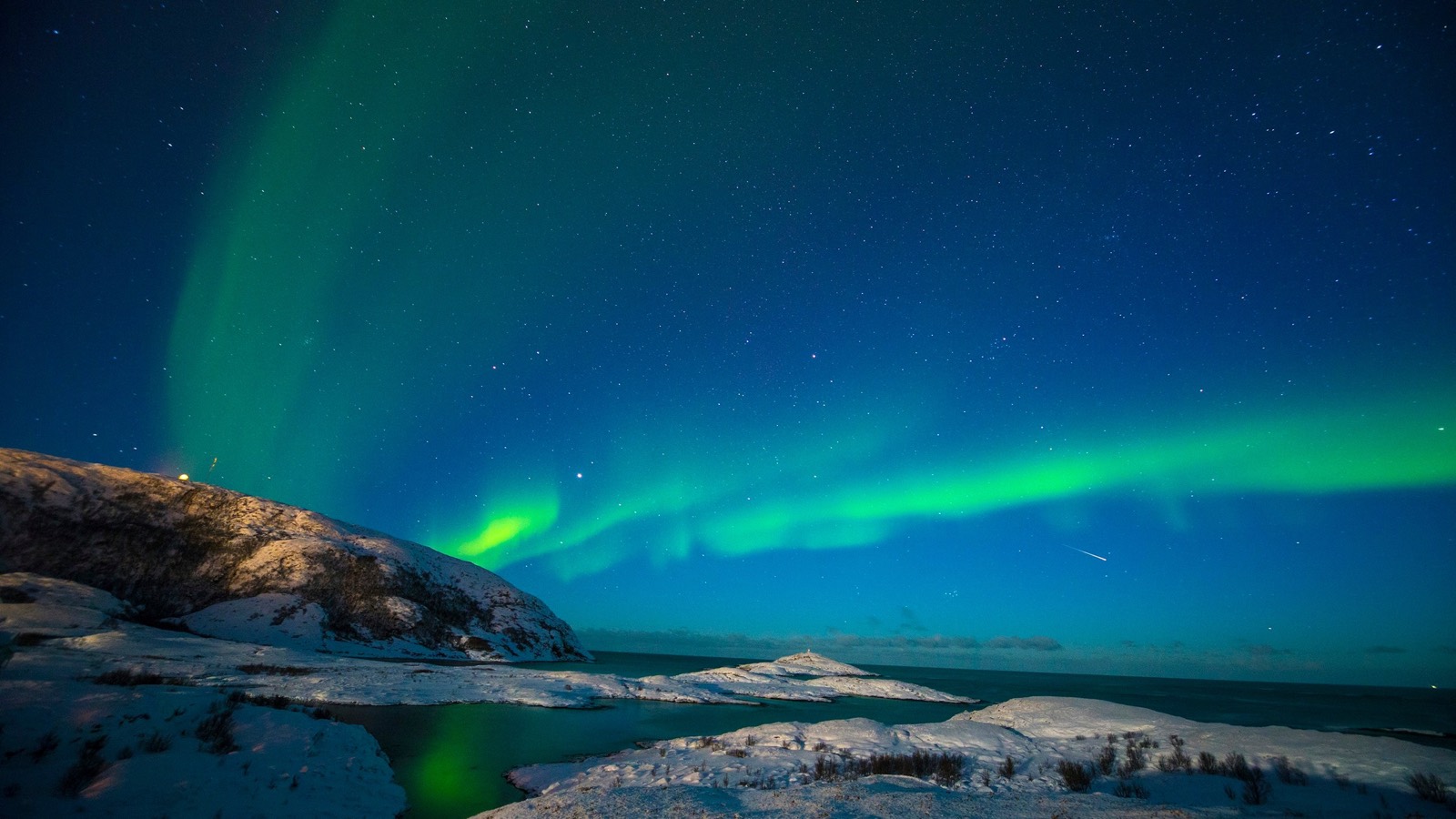
The solar maximum has passed, but the northern lights have not gone anywhere: clear skies, darkness and enough nights still decide your odds. Here is when to go in 2026 to 2027, the new moon dates, and an honest comparison of Tromsø, Abisko, Rovaniemi, Iceland and Lofoten with current prices.
The northern lights had a big couple of years. In October 2024 NASA and NOAA announced that the Sun had reached the maximum period of its 11-year cycle, and strong storms put the aurora on phone screens far south of its usual range. Now everyone is asking whether 2026 is too late. It is not. The basics have not changed: go far enough north, find a clear and dark sky, and give yourself enough nights.
This guide covers the 2026 to 2027 season: when to go, what the declining solar cycle means, new moon dates for darker weeks, and an honest comparison of Tromsø, Abisko, Rovaniemi, Iceland, Lofoten and Fairbanks with current prices. Then the practical part: forecasts, phone photos, dressing for -15 to -30 °C and staying safe alone.
The season runs roughly from September to March
Tourism boards in Tromsø, Rovaniemi and Lofoten quote late August to early or mid April. Outside that window the Arctic sky is too light, and the aurora is only visible when it is dark. NOAA says the best displays usually come within an hour or two of midnight, between about 22:00 and 02:00 local time, so plan to be outside then.
Why September, October and March punch above their weight
NOAA calls the weeks around the spring and autumn equinoxes the best seasons for aurora watching, and the University of Alaska Fairbanks says this equinox effect roughly doubles the odds over interior Alaska compared with the solstices. Kiruna's tourism board says September, October and March usually bring the strongest displays in Swedish Lapland. Midwinter has a different advantage: hours of darkness. Rovaniemi gets about 2.5 hours of daylight in December, but January averages about -10 to -12 °C there, and cold snaps below -30 °C do happen.
Is 2026 still a good year? Yes, with honest caveats
Solar Cycle 25 peaked in October 2024: the Royal Observatory of Belgium, which keeps the international sunspot record, has confirmed a smoothed sunspot number of 161 that month. So 2026 to 2027 is the declining phase, with fewer sunspots. That does not switch the lights off. The UK Met Office wrote in September 2026 that impactful events still occur in this phase, and that coronal holes, which grow towards solar minimum, send out fast solar wind that still produces aurora. Storms will come less often as sunspots fall, but the Met Office notes that many of the most significant events in past cycles came in this declining phase, so a big display far to the south is still possible. Under the auroral oval, ordinary nights still deliver.
Clear skies and darkness matter more than the Kp number
Kp is a global 0 to 9 index of geomagnetic activity. A higher number pushes the aurora further from the pole, but NOAA says its link to latitude is only approximate. Every base here sits between about 64 and 70 degrees north, inside the 60 to 75 degree band NOAA names as the best place to watch, so even a modest Kp can put lights overhead. No Kp number fixes cloud or streetlights. Give your eyes about 20 minutes to adjust, and expect the naked eye to see a pale green, grey or white arc that a camera turns into colour.
Plan three to four nights, or more
The University of Alaska Fairbanks says staying at least three nights, with clear weather, gives a high likelihood of seeing the aurora. Cloud is the weak link in Europe, so four nights or more with a flexible first evening is safer. Once you are out, stay out: Kiruna's tourism board notes that the most intense phase often lasts less than ten minutes.
New and full moon dates for the 2026 to 2027 season
NOAA says the full moon reduces how bright the aurora looks. From NASA's moon phase tables, in Nordic time: new moons, the darkest skies, fall on 9 December 2026, then 7 January, 6 February and 8 March 2027. After the 26 October full moon, full moons fall on 24 November and 24 December 2026, then 22 January, 21 February and 22 March 2027. In Iceland the February full moon is late on 20 February; in Alaska several dates fall a day earlier.
How to use the moon dates
Centre your trip on a new moon, roughly the week either side, when the moon is thin or below the horizon for much of the night. A full-moon trip is not wasted: strong displays still show, and moonlight picks out mountains and snow in photos. The Joy Plus calendar shows average temperatures, rainfall and public holidays by month, so you can weigh them against these dates.
Tromsø: the easiest base, with the priciest tours
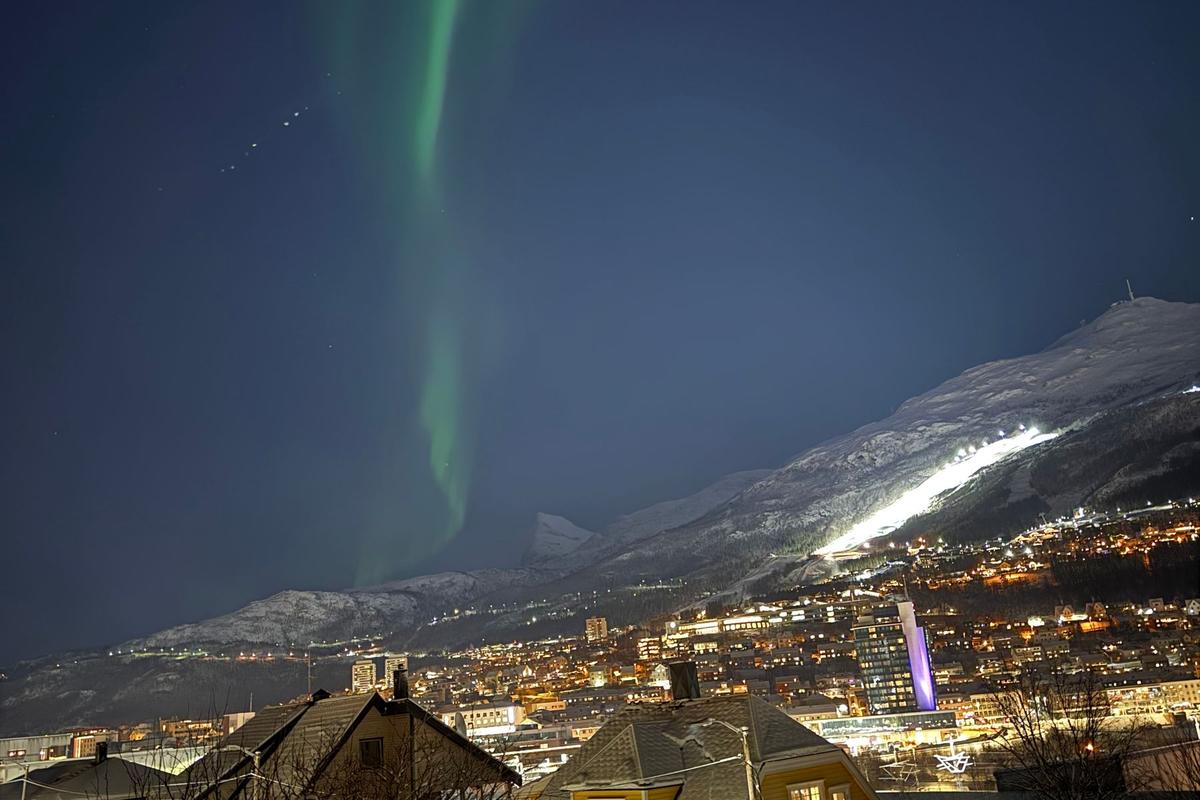
Tromsø is a real city inside the auroral zone, with an airport about 5 km from the centre, flights from Oslo of about 1 hour 50 minutes and direct routes from several European cities. The catch is coastal weather: cloud comes in off the sea, so chase tours drive for hours to find gaps. Polar Adventures' minibus chase costs NOK 1,759 (about 170 euros) in the 2026 to 2027 season, lasts about 7 hours, meets at 18:10 from October to mid-March and lends you a thermal suit. The 3-day Tromsø plan fills the short days.
Abisko: the clear-sky reputation
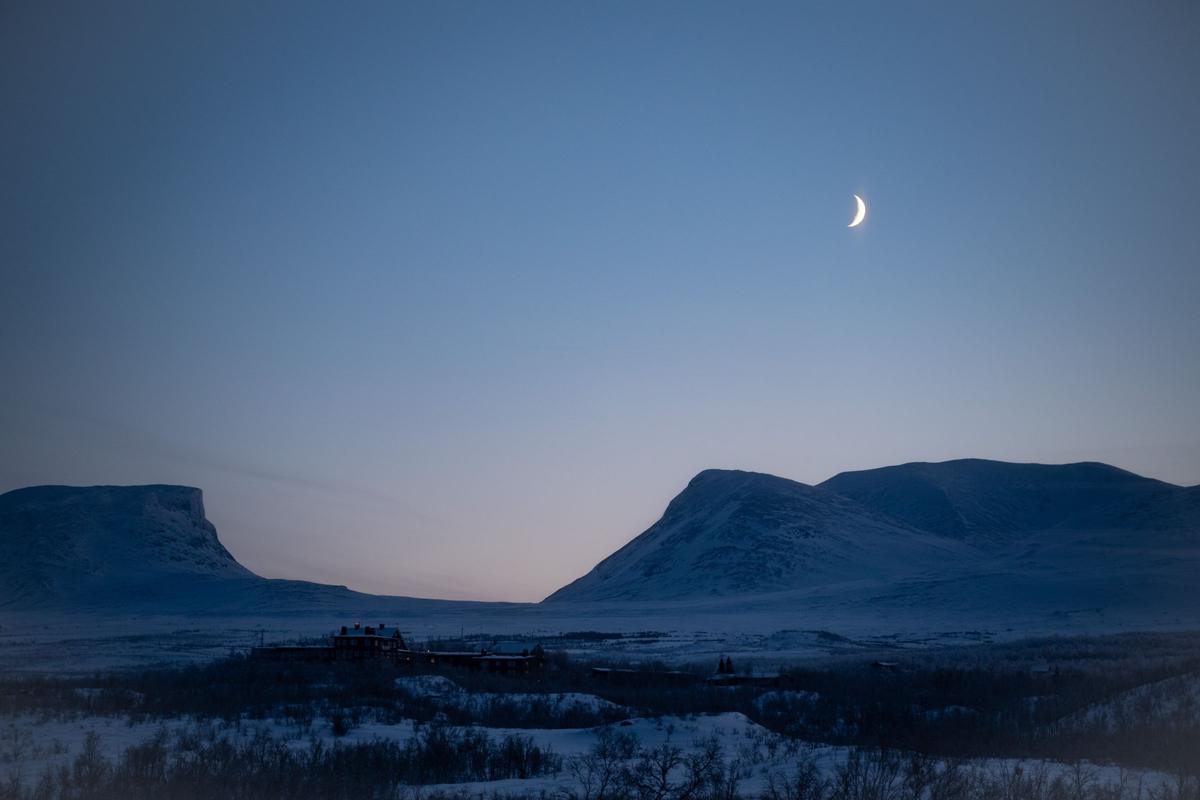
This tiny village beside a national park in Swedish Lapland is 93 km from Kiruna along the E10, a little over an hour by road, with daily trains and buses. Its fame rests on the 'blue hole': mountains to the west wring moisture out of Atlantic weather, leaving a rain shadow that Kiruna's tourism board says often has clear weather. The rain shadow is real, and Abisko is one of the driest places in Sweden, but no published cloud statistics show it gets more clear nights than nearby bases. Treat the blue hole as a possible edge, not a promise; even STF says it cannot guarantee sightings. STF's Aurora Sky Station night visit costs from SEK 1,295 (about 115 euros) from 19 October 2026 to 27 March 2027, starts at 20:30, with the last chairlift down at 01:00, and includes overalls and boots.
Getting to Abisko by night train in 2026
Since April 2026, sleeper passengers to Kiruna, Abisko and Narvik have had to change in Boden. SJ's new state contract from December 2026 restores a through sleeper from Stockholm to Narvik via Kiruna, and tickets for 13 December 2026 to 10 January 2027 went on sale on 19 October. On 21 October SJ released tickets for 11 January to 4 April 2027 without saying whether the northern night trains are included, so check before you plan a February or March trip around this train. Check on SJ's site that your train stops at Abisko. Snälltåget also runs a one-off aurora sleeper from Malmö on 23 November 2026, calling at Stockholm and Abisko and returning from Narvik on 27 November; Interrail holders can reserve a private compartment from SEK 2,499 (about 225 euros for the whole compartment), though those nights fall around the 24 November full moon.
Rovaniemi and Finnish Lapland: the best value
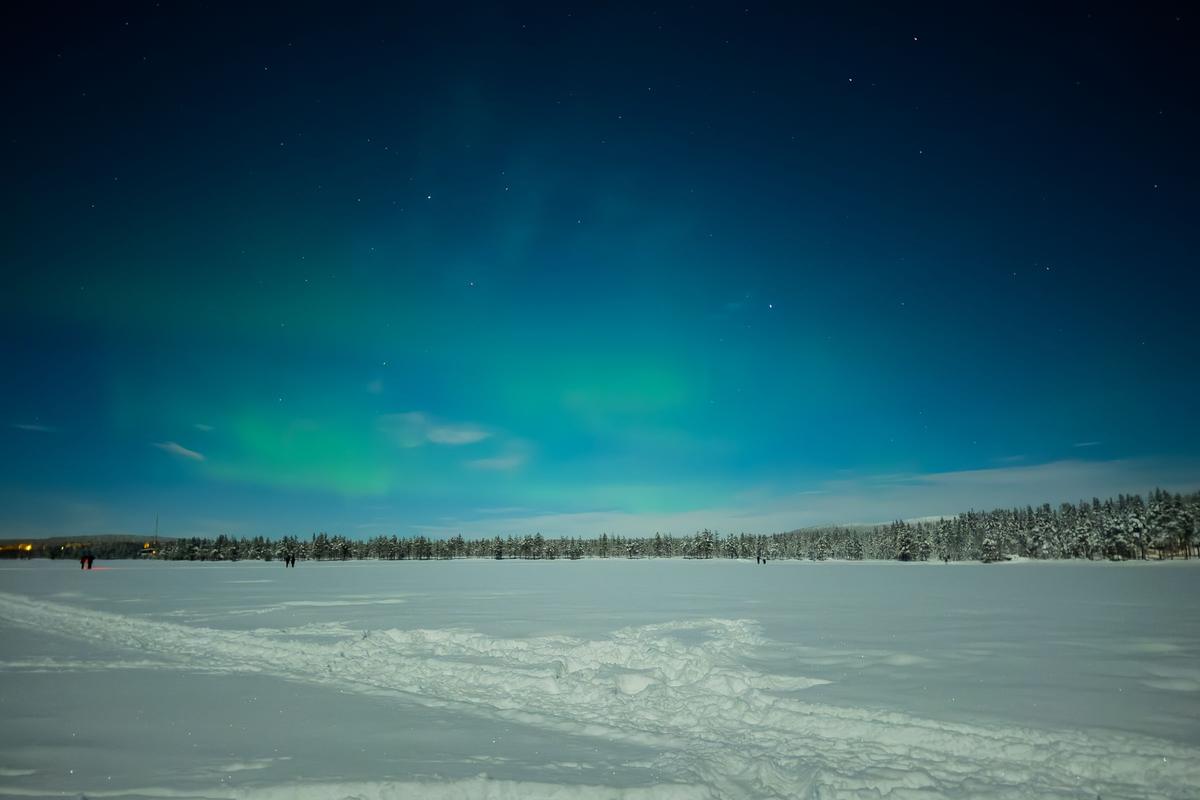
Rovaniemi sits on the Arctic Circle and has the cheapest way north in this guide: VR's night train from Helsinki, where a private cabin starts at 59 euros and that price covers the whole cabin. Visit Rovaniemi says the lights are most often seen between 22:00 and 02:00, and you do not need to go far from the centre to escape the streetlights. A small-group tour with Nordic Unique Travels is listed at 98 euros for 3.5 hours on booking sites, with overalls and boots included. The trade-off is cold.
Iceland: Reykjavik as a base, darkness an hour away
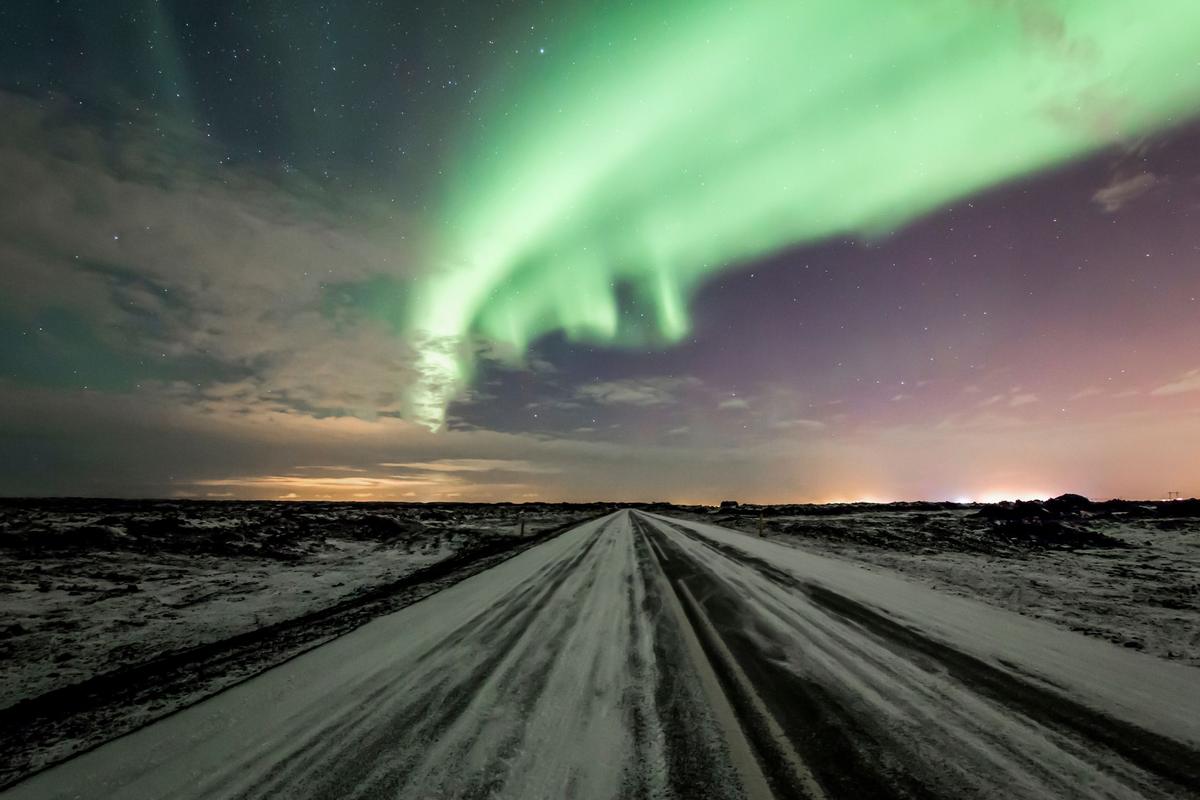
Reykjavik is too bright for good viewing, so sleep in the city and ride or drive out. Gray Line's standard Northern Lights Tour lasts about 3.5 hours, usually reaches its first stop within an hour, and is listed at ISK 9,999 (about 75 euros) before discounts. If it runs and you see nothing, you can rejoin at no extra cost for up to two years. Iceland's Atlantic weather changes fast, but the Icelandic Met Office cloud map shows where it is clear. A 5-day Reykjavik plan leaves room for several attempts.
Lofoten: the photographer's pick, if you can drive
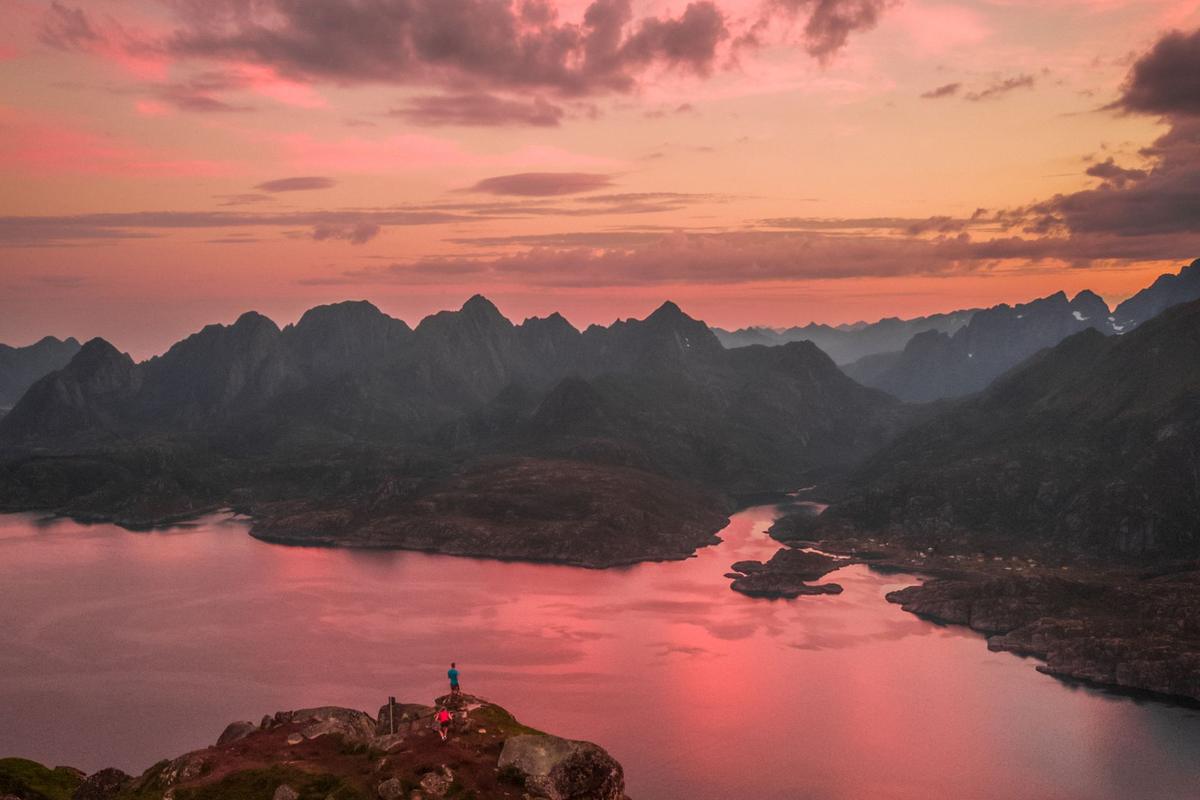
Visit Lofoten says the islands lie within the aurora oval and have a coastal climate that is mild compared with inland destinations. Most of the roughly 25,000 residents live in the central and southern parts, so the northern side is darker. Mountains dropping into beaches and fjords give the best foregrounds in this guide. The downsides are fast-changing coastal weather and logistics: the nearest large airport by road is Evenes, about 2.5 hours' drive from Svolvær and longer in winter, while Svolvær and Leknes have small airports with flights from Bodø. Without a driving licence, pick another base.
Fairbanks, if you are starting from North America
The University of Alaska Fairbanks gives a season of roughly 21 August to 21 April, says 21:00 to 03:00 has the best odds in winter, and recommends at least three nights and a hill away from city lights with a clear northern horizon, and it warns visitors to be properly prepared for extreme cold.
Which base suits you
First trip, no car, short on time: Tromsø, with one paid chase. Tight budget and happy on trains: Rovaniemi or Abisko, where you can walk away from the lights yourself. Best reputation for clear skies: Abisko. Best photos and confident driving on snow: Lofoten or Iceland. Cheapest single tour with a retry: Reykjavik.
DIY or tour?
Tours earn their price when you have no car, and when the local weather is cloudy and a guide knows which valley is clear. DIY works where darkness is walkable: Abisko and the edges of Rovaniemi. A sensible split is one tour early in the trip to learn what to look for, then DIY nights after. Visit Rovaniemi notes that some operators offer a 'northern lights guarantee', which usually means a rebooking, discount or refund; read the terms before you pay.
The forecast tools worth bookmarking
Check cloud first, then activity. The NOAA 30-minute aurora forecast uses solar wind data to predict the oval's position and strength 30 to 90 minutes ahead. The Icelandic Met Office aurora page combines a cloud cover map with a 0 to 9 activity forecast several days out, and is the best single tool in Iceland. In Finland, the Finnish Meteorological Institute shows live magnetometer readings that turn yellow, then red, as auroras become likely.
Photographing the aurora on your phone
On recent iPhones, Night mode switches on by itself in low light; tap its control to choose a longer exposure, and Apple recommends a tripod. Android phones have similar night or pro modes. Prop the phone on a mini tripod or your bag, use the timer and turn the flash off. With manual control, Visit Lofoten suggests starting at ISO 3200, f/2.8 and 8 seconds, focused at infinity, then going under 4 seconds when the aurora moves fast. Cold drains batteries, so keep the phone and a power bank in an inside pocket.
What to wear at -15 to -30 °C
Layer up: merino or synthetic base layers top and bottom, a fleece or wool mid layer, an insulated parka and trousers, thick wool socks in boots roomy enough to wiggle your toes, mittens over liner gloves, a hat over your ears and a neck gaiter. Skip cotton, which holds sweat. Polar Adventures, STF and Nordic Unique Travels all lend thermal suits or overalls, so you can travel light. Bring a foam seat pad, since snow is too cold to sit on. Flying hand luggage only? Wear the bulk on the plane and follow the carry-on packing list.
Solo safety in the cold and on winter roads
Tell someone where you are going each night and when you will be back; in Iceland you can file a travel plan on Safetravel, run by the national search and rescue association. 112 reaches the emergency services in Norway, Sweden, Finland and Iceland, though in Norway the direct number for an ambulance is 113. If you drive, check the weather and roads (in Iceland on vedur.is and umferdin.is), never stop on or beside the road to look up but pull into a proper parking area, and allow longer than the map says. Stay off frozen lakes in the dark, carry a head torch with a red light, and go indoors if fingers or face turn numb and white. More in our solo travel safety tips.
What it costs in 2026 to 2027
On current prices, one guided night costs about 170 euros in Tromsø, about 115 euros at the Aurora Sky Station, 98 euros in Rovaniemi and about 75 euros in Reykjavik, the last with a retry if you see nothing. A private night-train cabin from Helsinki to Rovaniemi starts at 59 euros. From 1 January 2027, Tromsø and Vågan (Svolvær, in Lofoten) are due to add a 3% visitor contribution to paid overnight stays, approved by Norway's government on 28 October 2026. Put your dates and total budget into the budget planner to see which destinations fit, with stay and spending estimates and the best months to go.
Plan it with Joy Plus
Pick a new-moon week, choose a base that fits your budget and driving plans, and book at least four nights. Joy Plus builds a day-by-day itinerary with a map and timed stops that leaves your evenings free for chasing, keeps your bookings, flight alerts and budget in one trip hub, and adds a packing list, a Safety tab with emergency numbers and an offline PDF for when signal drops. Start planning your trip
Frequently asked questions
Is 2026 a good year to see the northern lights?
Yes. Solar Cycle 25 peaked in October 2024, so 2026 and 2027 fall in the declining phase, with fewer sunspots and less frequent storms. But the UK Met Office says many of the most significant events in past cycles came in this phase, and fast solar wind from coronal holes keeps producing aurora. In Arctic bases such as Tromsø, Abisko and Rovaniemi, clear and dark nights still regularly bring the lights.
When is the best time to see the northern lights in 2026 to 2027?
Between September and March. NOAA calls the weeks around the equinoxes the best seasons, which for the rest of this season means March 2027. Pick a week near a new moon for darker skies: 9 December 2026, or 7 January, 6 February and 8 March 2027 in Nordic time. Within a night, the best displays usually come between about 22:00 and 02:00 local time, so plan to be outside then.
Where is the best place to see the northern lights in Europe?
There is no single best place. Tromsø is the easiest, with many tours and flights. Abisko in Swedish Lapland sits in a rain shadow with a reputation for clearer skies. Rovaniemi is the best value and reachable by night train from Helsinki. Iceland has affordable tours from Reykjavik with a retry if you see nothing, and Lofoten gives the best photos if you can drive. All sit inside the latitude band where aurora is most common.
How many nights do you need to see the northern lights?
Plan at least three to four nights, and more if you can. The University of Alaska Fairbanks says staying at least three nights with clear weather gives a high likelihood of seeing the aurora. In coastal Norway and Iceland, cloud is the main risk, so extra nights matter more than a high Kp forecast. Keep your first evening flexible and book any tour early in the trip so you can try again.
What Kp index do you need to see the northern lights?
Less than most people think if you are far enough north. Kp is a global 0 to 9 measure of geomagnetic activity, and a higher value pushes the aurora further from the pole and makes it brighter. NOAA says the link between Kp and latitude is only approximate. In places inside the auroral zone, such as Tromsø and Lofoten, lights can appear even when activity is low, so clear skies matter more than the number.
Can you see the northern lights from Reykjavik?
Strong displays can show over the city, but streetlights wash out fainter ones, so most visitors sleep in Reykjavik and travel out. Gray Line's standard tour lasts about 3.5 hours, its first stop is usually within an hour of the city, and if the tour runs and you see nothing you can rejoin at no extra cost for up to two years. Check the Icelandic Met Office cloud map to see which areas are clear.
How much does a northern lights tour cost in 2026?
Prices for the 2026 to 2027 season vary by country. In Tromsø, Polar Adventures' minibus chase costs NOK 1,759, about 170 euros. The STF Aurora Sky Station night visit in Abisko starts at SEK 1,295, about 115 euros. A small-group tour in Rovaniemi with Nordic Unique Travels is listed at 98 euros. Gray Line's Reykjavik bus tour is listed at ISK 9,999, about 75 euros, with a retry if you see nothing.
Can you photograph the northern lights with a phone?
Yes. Recent iPhones switch to Night mode automatically in low light, and many Android phones have night or pro modes. Keep the phone completely still on a small tripod, use the timer, turn off the flash and choose the longest exposure offered. With manual control, start around ISO 3200 and 8 seconds, focused at infinity, then shorten the exposure for fast-moving lights. Keep batteries warm, because cold drains them fast.