Destinations / Europe
Ålesund, Norway travel guide
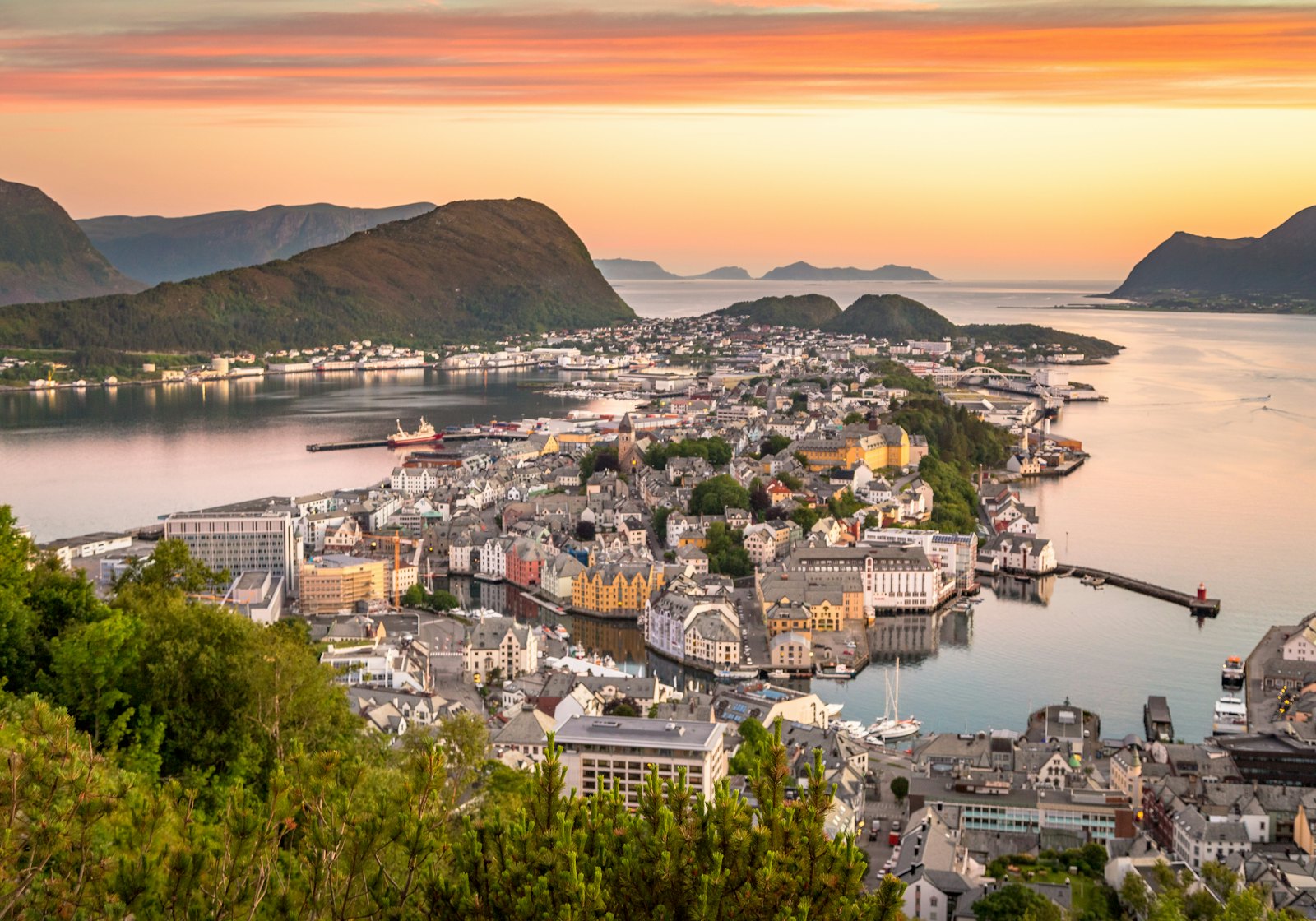
A compact harbour town on a chain of islands, rebuilt in Art Nouveau style after a fire in 1904, with 418 steps to a viewpoint, puffins down the coast and the Geirangerfjord within a day's reach.
- Best time to visit: May to September
- Daily budget (budget traveller): $100 to $320 USD
- Ideal trip length: 4 to 7 days
Ålesund is on Norway's west coast, about halfway between Bergen and Trondheim. The town is spread across several islands joined by bridges. Its centre sits around Brosundet, a narrow channel lined with old fishing warehouses. In January 1904 a fire destroyed most of the town and left about 10,000 people homeless. It was rebuilt within a few years, mostly in the Art Nouveau style of the day, so the centre is unusually uniform, with turrets, carved stone and painted facades on almost every street. Most visitors climb 418 steps up Aksla for the view over the islands and out to the Sunnmøre Alps. The town also works well as a base for a solo traveller. The centre is small and walkable, buses and express boats reach the islands and the bird cliffs at Runde, and the Geirangerfjord is a long but doable day trip. Ålesund is expensive, like the rest of Norway. A hostel bed, supermarket lunches, free hikes and public transport keep the costs manageable. It is quiet, safe and easy to find your way around, and in early summer it barely gets dark.
Ålesund is a fishing and shipping town of about 67,000 people, spread over islands at the mouth of the Storfjorden. On 23 January 1904 a fire swept through the wooden centre in one night. The town was rebuilt in stone within about three years, mostly in Art Nouveau style, with money and help from across Europe, including Kaiser Wilhelm II. That is why the centre looks so consistent today. Most visitors arrive on a cruise ship, climb Aksla, walk the streets and leave the same afternoon. Stay a few nights and you get more: the town at quiet evening light, the bird cliffs on Runde, the beaches on Giske and a long day on the Geirangerfjord. Ålesund is expensive. A dorm bed, supermarket food, free walks and the bus keep it affordable, though, and the centre is small enough that you rarely need a ticket.
Getting here is easy. Ålesund Airport Vigra has frequent flights from Oslo and Bergen, plus some direct flights from elsewhere in Europe, and the Flybussen gets you to the centre in about 20 minutes. Hurtigruten and Havila coastal ships call every day. There is no railway in town. The nearest station is Åndalsnes on the Rauma Line, and from there a bus takes a couple of hours. Stay around Brosundet or Kongens gate so that the Aksla steps, the express boat quays and the Korsegata bus stop are all close by. Plan your fjord day and your Runde trip around the timetables first, then fit the town sights around them.
Timing matters here. May to September brings long days, full ferry and bus schedules and puffins on Runde until early August. June has almost no real darkness. Summer is also cruise season, so on big ship days the centre and Aksla fill up between mid-morning and late afternoon. Go up early or in the evening. Winters are mild for Norway but wet, windy and dark, with fewer connections. Rain is common in any season, so pack for it and keep a flexible day in your plan. Everyone speaks English, the town is very safe and things move at an easy pace.
Ålesund itinerary
Arrive and climb Aksla
Morning: Fly into Vigra and take the Flybussen to the centre, about 20 minutes. Drop your bags and get your bearings around Brosundet.
Afternoon: Lunch from a bakery or supermarket, then a slow first walk along the harbour and Kongens gate. Pick up regional timetables or check them in the FRAM app.
Evening: Walk through Byparken past the Kaiser Wilhelm and Rollo statues and climb the 418 steps to Fjellstua for the evening light over the islands. Early night.
Art Nouveau Ålesund
Morning: Visit Jugendstilsenteret when it opens. The ticket also covers KUBE next door. Allow 90 minutes, including the film about the 1904 fire.
Afternoon: Walk Apotekergata, Løvenvoldgata and the streets of Aspøya, then step inside Ålesund church to see the frescoes. If it is a weekend, look in at the Fiskerimuseet.
Evening: Walk out along the breakwater to the Molja lighthouse to watch the boats, then have bacalao at XL Diner or cook a cheap dinner at your hostel.
Geirangerfjord by bus and ferry
Morning: Take an early bus 110 or 250 from Korsegata towards Hellesylt, about 2.5 to 3 hours via Sykkylven and Stranda. Sit on the right for views of the fjord.
Afternoon: Catch the ferry from Hellesylt to Geiranger, about an hour, past the Seven Sisters and the Suitor waterfalls. Have a short wander in Geiranger village.
Evening: Return to Ålesund by the connecting bus or the summer route. Check the last departure before you leave in the morning. Simple dinner and rest.
Aquarium and Sukkertoppen
Morning: Bus or walk out to Atlanterhavsparken at Tueneset, about 3km. Time your visit for the dive show in the big tank.
Afternoon: Walk the shore paths around Tueneset, then climb Sukkertoppen above Hessa. It is short but steep and gives wide views of the coast and islands.
Evening: Back to the centre for a fish soup supper and a drink by Brosundet.
Puffins on Runde
Morning: Slow morning. Book a guided evening puffin trip, which has left Ålesund in mid-afternoon, or check the express boat and bus times to do it on your own.
Afternoon: Take the express boat to Hareid, then the bus to Runde. On a guided trip you visit Runde Environmental Centre before the walk.
Evening: Hike up the bird mountain, about 45 minutes, to watch puffins return to the cliffs. This works from roughly April to early August only. Return by bus and boat late in the evening.
Giske and Godøy
Morning: Take a local bus through the undersea tunnels to Giske. See the small marble church and walk the beach.
Afternoon: Continue to Godøy and Alnes lighthouse for coffee and waffles at the café and a walk along the shore. Check bus return times, as they are not frequent.
Evening: Back in town for a farewell dinner around Apotekertorget, or a final sunset from Aksla.
Sunnmøre Museum and fly out
Morning: Take the bus east to Sunnmøre Museum at Borgund. See the old farm buildings and the boat halls with their Viking ship replicas. Adult entry has been about NOK 120.
Afternoon: Return to the centre, collect your bags and take the Flybussen to Vigra. Allow plenty of time, because buses are not every few minutes.
Evening: Fly to Oslo or Bergen to connect onwards, or stay a night if you have an early international flight.
Best neighbourhoods
- Brosundet and Apotekertorget: The heart of town, on both sides of the narrow channel. Old warehouses converted into hotels and restaurants, Jugendstilsenteret, cafés and the express boat quays are all a few minutes' walk apart. It is the most convenient place to stay if you don't have a car.
- Aspøya: The western island of the centre. It has Ålesund church, the Fiskerimuseet in an old warehouse, the Molja lighthouse at the end of the breakwater and quiet residential streets of Art Nouveau houses. It is calm in the evening but still only a short walk from everything.
- Kongens gate and Byparken: The eastern side of the centre, with the main pedestrian street, shops, Byparken and the start of the steps up Aksla. Hotels here put you at the foot of the viewpoint, which helps if you want to climb at sunset or early in the morning.
- Hessa and Tueneset: The residential western end of town, about 3km from the centre. It has Atlanterhavsparken, the shoreline at Tueneset and the hike up Sukkertoppen. It is mainly a place to visit, though rental flats here can cost less than in the centre.
- Moa: The commercial area east of town, with the Moa bus terminal and big shopping centres. It is not a place to stay as a tourist, but many regional buses start or connect here, and Sunnmøre Museum lies along the way at Borgund.
Must-do experiences
- Climb the 418 steps up Aksla: The steps start in Byparken and climb to Fjellstua, the viewpoint over the islands, the harbour and the mountains beyond. Go at sunset or early morning. There is also a road to the top if your legs are not up to it.
- Walk the Art Nouveau streets: Follow Apotekergata, Kongens gate, Løvenvoldgata and the Brosundet waterfront to see turrets, dragon carvings and stone faces. It is free, flat and takes a couple of hours at a slow pace.
- Visit Jugendstilsenteret and KUBE: The Art Nouveau Centre is in the old Swan Pharmacy from 1907, and the ticket also covers KUBE, the art museum next door. The section on the 1904 fire explains why the town looks the way it does. Adult entry has been around NOK 120 to 150.
- Spend a morning at Atlanterhavsparken: One of northern Europe's largest saltwater aquariums, on the headland at Tueneset, about 3km from the centre. The main tank is filled with unfiltered seawater, and the dive show is the highlight. Adult tickets have been about NOK 250 to 300.
- Take a day trip to the Geirangerfjord: Ride the bus from Korsegata to Hellesylt, then take the hour-long ferry through the Geirangerfjord past the Seven Sisters waterfall. It is a long day, but it is the most famous fjord in Norway, and you can do it without a car.
- See the puffins on Runde: Runde is a bird island south-west of Ålesund, with hundreds of thousands of seabirds in season. Puffins are usually there from about April to early August. Go by express boat and bus, or book a guided evening trip from Ålesund.
- Ride out to Giske and Alnes lighthouse: Undersea tunnels link Ålesund to the flat islands of Giske and Godøy. Giske has a small marble church and long sandy beaches. Alnes lighthouse on Godøy has a café and sea views, and the local bus gets you there.
Hidden gems
- The breakwater walk out to the small Molja lighthouse on Aspøya, the best spot to watch boats come and go through Brosundet
- Sukkertoppen, the steep hill above Hessa, a short hike with wider views than Aksla and far fewer people
- Ålesund church on Aspøya, rebuilt after the fire, with large painted frescoes that most visitors never step inside to see
- Byparken at the foot of the Aksla steps, with statues of Kaiser Wilhelm II, who helped fund the rebuilding, and the Viking Rollo
- Fiskerimuseet in an old warehouse near Molja, a small museum on salting and drying cod for klippfisk, open on limited days
Daily budget
- Accommodation: budget NOK 450-650 / night (hostel dorm), mid-range NOK 1,300-2,200 (central chain hotel), splurge NOK 2,800+ (Hotel Brosundet, fjord hotels). Hostel and budget options are few, so book early for June to August. Clarion Collection hotels usually include an evening meal, which can save more than it seems.
- Food: budget NOK 300-450 / day (supermarket breakfasts, bakery lunch, self-catering), mid-range NOK 600-900 (café lunch and a restaurant dinner), splurge NOK 1,200+ (seafood tasting menus, wine). Restaurant mains often cost NOK 300 to 450. Supermarkets such as Rema 1000, Kiwi and Coop are the biggest saving. Lunch is cheaper than dinner almost everywhere.
- Transport: budget NOK 0-100 / day (walking and local buses), mid-range NOK 300-600 (regional bus, ferry or express boat days), splurge NOK 1,000+ (car hire plus tolls and ferries). The Flybussen is roughly NOK 120 to 150 each way. A full Geiranger day by bus and ferry costs roughly NOK 900 to 1,400 return, depending on the route. Taxis are very expensive.
- Activities: budget NOK 0-150 / day (Aksla, hikes, Art Nouveau walk, one museum), mid-range NOK 250-500 (Atlanterhavsparken, museums), splurge NOK 2,000+ (guided Runde puffin trip, fjord cruise tours). Jugendstilsenteret and Sunnmøre Museum have both cost about NOK 120 to 150 for adults, and Atlanterhavsparken about NOK 250 to 300. The guided puffin trip from Ålesund has been listed at about NOK 1,995.
- Drinks & nightlife: budget NOK 50-150 (supermarket beer, coffee), mid-range NOK 250-450 (a couple of pints in a bar), splurge NOK 700+ (cocktails and wine with dinner). A pint in a bar usually costs NOK 110 to 150. Supermarkets sell beer only until 8pm on weekdays and 6pm on Saturdays, and not at all on Sundays. Wine and spirits are sold only at Vinmonopolet.
Where to stay
- Social hostel in Sentrum (NOK 450-650 / night (dorm)): Ålesund Vandrerhjem, the town's Hostelling International hostel, has offered dorms and simple private rooms within walking distance of Brosundet and the Aksla steps. It has a kitchen, which makes a big difference to your food budget. Check it is open for your dates.
- Boutique hotel in Brosundet (NOK 2,200-3,500 / night): Hotel Brosundet is in a converted warehouse right on the channel, with a famous single room inside the Molja lighthouse. It is central, characterful and quiet.
- Apartment in Aspøya or Hessa (NOK 1,000-1,800 / night): Private rentals with a kitchen are the best way to cut food costs on a longer stay. Aspøya keeps you central. Hessa is cheaper and close to the aquarium and Sukkertoppen, with buses into town.
- Splurge in Hjørundfjord (Øye) (NOK 3,500+ / night): Hotel Union Øye is a historic wooden hotel at the head of the Hjørundfjord, surrounded by the Sunnmøre Alps. You will need a car or a transfer, but it makes a memorable final night or two.
What to eat
- Bacalao: klippfisk (salted, dried cod) stewed with tomato, potatoes and peppers, a dish tied to Ålesund's long trade with Spain and Portugal
- Fiskesuppe: creamy fish soup, served in cafés and harbour restaurants all over town and good value for a filling lunch
- Svele: a thick, soft pancake from this region, folded with butter and sugar or brown cheese, sold in cafés and on ferries
- Fiskekaker: fish cakes from supermarket counters or fishmongers, a cheap lunch with bread and a bit of salad
- Brunost: sweet brown cheese sliced thin on bread or waffles, a staple of Norwegian breakfasts and hostel kitchens
- Fresh seafood at XL Diner, a long-standing bacalao and klippfisk restaurant overlooking the harbour
Day trips
- Geirangerfjord via Hellesylt (About 3 to 4 hours each way by bus and ferry): The UNESCO-listed fjord with the Seven Sisters and Suitor waterfalls and steep farms clinging to the cliffs. The ferry from Hellesylt is the best part of the trip. Take bus 110 or 250 from Korsegata towards Hellesylt, then the Hellesylt to Geiranger ferry, which takes about an hour. Buy bus and ferry tickets separately. In summer there have also been passenger boats from Ålesund and Hurtigruten sailings. Check all timetables before you go.
- Runde bird island (About 2 to 2.5 hours by express boat and bus): Hundreds of thousands of seabirds nest here in season, including puffins from about April to early August. The 45-minute hike up the bird mountain ends at a puffin colony above the sea. Take the express boat from Ålesund to Hareid, then a bus to Runde. Only a few buses run each day, so check the FRAM app. Guided evening trips from Ålesund, including transport, a guide and fish soup, have been listed at about NOK 1,995.
- Giske and Godøy (About 20 to 40 minutes by bus through undersea tunnels): Flat islands with sandy beaches, Giske's small medieval marble church and Alnes lighthouse on Godøy, which has a café and gallery. It is an easy half day or a relaxed full day. Take a local bus from the centre. Services can be infrequent, especially at weekends, so plan your return before you set off. In summer you can also cycle part of the way if you are comfortable in tunnels.
When to visit
- Spring (April - May): 5-13°C, changeable, lengthening days. Crowds: Low, with cruise ships starting to arrive. Quiet and good value. Puffins return to Runde from about April. Some seasonal routes and the Geiranger ferry schedules are still thin, so check before planning a fjord day.
- Summer (June - August): 13-19°C, long light evenings, rain still common. Crowds: High, especially on cruise ship days. The best time for fjord trips, ferries and puffins, which leave by early August. Book accommodation early and climb Aksla before 9am or after 6pm to avoid the cruise crowds.
- Autumn (September - October): 8-14°C, wetter and windier, shorter days. Crowds: Moderate, falling off in October. Good light and calmer streets, but no puffins and fewer seasonal buses and boats. September is still a good month for a fjord day.
- Winter (November - March): 0-5°C, wet, windy, short days. Crowds: Very low, apart from Christmas. Mild for Norway and cheap on hotels, but dark and stormy. Museums keep shorter hours and many tourist services stop. Northern lights are possible but not reliable this far south.
Entry rules for your passport
Visa rules for Norway depend on the passport you travel on. Check the official source before you book: European Commission: Schengen visa policy
Getting there
Ålesund Airport Vigra (AES) has frequent domestic flights from Oslo, Bergen and Trondheim with SAS, Norwegian and Widerøe. It also has some direct flights to other European cities, including seasonal and low-cost routes, so check current schedules. The Flybussen takes about 20 to 25 minutes to the centre and has cost roughly NOK 120 to 150. There is no railway in Ålesund. The nearest station is Åndalsnes on the Rauma Line from Dombås, with connections from Oslo and Trondheim, and buses link Åndalsnes and Ålesund in a little over two hours. Long-distance buses also run from Oslo and Bergen, but they take most of a day. Hurtigruten and Havila coastal ships call every day on the Bergen to Kirkenes route, which is a slow, scenic way to arrive from Bergen. By car, expect tunnels, tolls and at least one ferry on most routes. Norway is in the Schengen Area, so check entry rules for your nationality before you book.
Border checks: non-EU visitors (other than Swiss, Norwegian, Icelandic, Liechtenstein, Andorran, Monegasque, San Marinese and Vatican citizens, and holders of an EU residence permit or long-stay visa) are registered in the EU's Entry/Exit System (EES) instead of getting a passport stamp. On your first crossing, officers take your photo and/or fingerprints, so allow extra time at passport control. ETIAS, the planned travel authorisation, is not in operation yet, so don't pay any website for one.
Getting around
Central Ålesund is small, and you can walk between Aspøya, Brosundet, Kongens gate and the Aksla steps in 10 to 15 minutes. The streets are hilly in places, so bring comfortable shoes. Local and regional buses cover Hessa, Moa, Giske, Godøy and the routes towards Hellesylt. Buy tickets in the FRAM app or the Entur app, or pay by card on board. A local single has cost roughly NOK 45 to 60, and longer regional trips cost more. Many buses leave from Korsegata in the centre. Express passenger boats leave from the quays near the tourist office for Hareid, which is the way to Runde, and other coastal stops. The Flybussen runs between Vigra airport and the centre in about 20 to 25 minutes. Taxis are expensive, around NOK 500 to 700 to the airport. You don't need a car in town. Hire one only if you want to drive Trollstigen or explore the Sunnmøre Alps on your own schedule, and expect tolls and ferry fares on top of the hire.
Safety
Ålesund is one of the safest towns in Europe for solo travellers, and violent crime against visitors is very rare. The real risks come from nature. The weather on the coast changes fast, with wind, rain and fog arriving within an hour, so carry a waterproof layer even for short hikes like Sukkertoppen. Paths on Runde run near steep cliff edges. Stay on the marked trail and keep well back from the drop, especially in wind. Wet rock and the steps on Aksla can be slippery in rain. If you hike further into the mountains, check the forecast on yr.no, tell someone your route and turn back early if the weather closes in. Sea water stays cold even in summer, so take care if you swim. In winter, pavements can be icy and daylight is short. Norway's emergency numbers are 112 for police, 113 for ambulance and 110 for fire.
Solo travel tips
- Stay near Brosundet: From here you can walk to the Aksla steps, the express boat quays and the Korsegata bus stop in minutes. That matters when you have early buses to Hellesylt or late boats back from Runde.
- Plan around the cruise ships: On big ship days, Aksla and the main streets fill up from mid-morning to late afternoon. Climb early or in the evening, and save museums or a day trip for the busy hours.
- Check every connection the night before: Regional buses, ferries and express boats often run only a few times a day, and timetables change with the season. Use the FRAM or Entur app and screenshot your connections in case signal drops.
- Eat a big lunch, not a big dinner: Lunch menus and café specials are much cheaper than dinner. Hotels with a free evening meal and a hostel kitchen also help a lot in a country this expensive.
- Safety for solo travellers: Crime is not the issue. Weather and terrain are. Carry a waterproof layer, keep back from cliff edges on Runde, and check yr.no before any hike.
- Join a guided trip to meet people: A guided puffin evening or a small-group fjord tour is the easiest way to meet other travellers here. The hostel lounge is the other good spot, since Ålesund's nightlife is low-key.
Cultural etiquette
- Norwegians are polite but reserved. A simple 'hei' (hello) and 'takk' (thank you) are enough, and small talk with strangers is not expected.
- Be on time. Punctuality matters for tours, dinners and transport, and buses leave on the minute.
- Take your shoes off when you enter someone's home, and in some guesthouses.
- Respect allemannsretten, the right to roam. You can walk on most uncultivated land, but close gates, leave no litter and keep away from houses and gardens.
- Queue properly and wait your turn. At bakeries and pharmacies, take a number from the ticket machine.
- Alcohol is tightly regulated. Supermarkets sell beer only until 8pm on weekdays and 6pm on Saturdays, and wine and spirits are sold only at Vinmonopolet.
- On cruise days, stay off private steps and doorways when you photograph the Art Nouveau buildings. People live and work in them.
Frequently asked questions
How do I get from Ålesund airport to the town centre?
Ålesund Airport Vigra is on an island north-west of town, linked by undersea tunnels. The Flybussen leaves just outside arrivals and takes about 20 to 25 minutes to the centre. A single has cost roughly NOK 120 to 150, and you can pay by card or in the app. A taxi costs about NOK 500 to 700.
How many days do I need in Ålesund?
Two days covers the town itself: Aksla, the Art Nouveau streets, Jugendstilsenteret and the aquarium. Four to five days lets you add Geiranger, Runde and the islands at an easy pace. A week gives you spare days for bad weather, which is common on this coast.
Can I visit the Geirangerfjord from Ålesund without a car?
Yes. Take bus 110 or 250 from Korsegata towards Hellesylt, then the car ferry from Hellesylt to Geiranger, which takes about an hour. Bus and ferry tickets are sold separately. In summer there have also been passenger boats from Ålesund and seasonal buses back from Geiranger, so check the current timetables before you go. Start early, because it is a full day.
When can I see puffins on Runde?
Puffins usually nest on Runde from about April to early August. After that you still see other seabirds, but not puffins. Evenings are often the best time, because the birds return to the cliffs. Guided trips from Ålesund include the express boat, a bus and a nature guide. You can also go on your own by boat to Hareid and a bus, but only a few buses a day reach the island.
When is the best time to visit Ålesund?
May to September is the best period, with the longest days, the most transport connections and full museum hours. June and July are the busiest months, especially on cruise ship days. Winter is mild for Norway but wet, windy and dark, and some routes and attractions run less often or not at all.
Do I need cash in Ålesund?
Hardly ever. Norway is close to cashless, and cards are accepted almost everywhere, including on buses and at market stalls. A few places only take cards. Contactless and phone payments work fine, so a small amount of cash is plenty.
Is Ålesund safe for solo female travellers?
Yes, it is very safe, including at night in the centre. The usual city precautions are enough. The bigger risks are outdoors: changing weather, slippery paths and cliff edges on hikes. Tell someone your route if you go into the mountains alone.
What are the entry rules for Norway in 2026?
Norway is in the Schengen Area. Many non-EU visitors can stay up to 90 days in any 180-day period without a visa. The EU Entry/Exit System, which registers fingerprints and a photo at the border, now applies, and ETIAS travel authorisation is expected to start around late 2026. Rules depend on your nationality and can change, so check the Norwegian Directorate of Immigration (UDI) website and your own government's travel advice before you book.
More about Ålesund
Tours and activities in Ålesund | Ålesund in 2 days | Ålesund in 3 days | Ålesund in 4 days | Ålesund in 5 days | Ålesund in 7 days
Joy Plus home | Destinations | Itineraries | Activities | Flights | Budget planner | Calendar | Map | Blog | Lifetime access