Destinations / Africa
Alexandria, Egypt travel guide
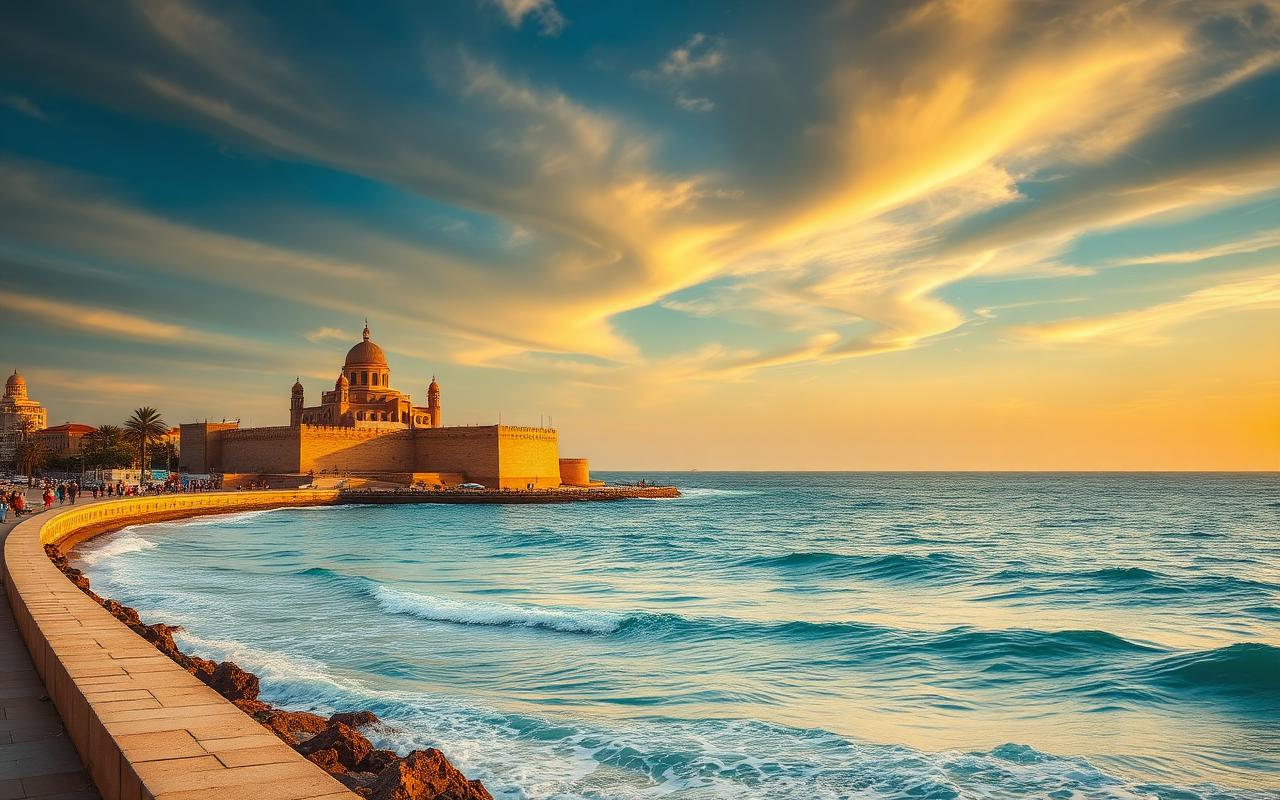
The Pearl of the Mediterranean. Ancient libraries, seafront citadels, and Greek-Egyptian soul by the water.
- Best time to visit: March-May & September-November
- Daily budget (budget traveller): $40 to $100 USD
- Ideal trip length: 2 to 3 days
Alexandria is Egypt's most atmospheric city: a Mediterranean port where Greco-Roman columns meet faded Belle Époque cafés and the sea breeze carries the scent of grilled fish. Founded by Alexander the Great and once home to the legendary Library, it still feels like a city of ideas, with a corniche made for long walks, a mighty citadel on the harbour, and backstreets of Art Deco architecture. Joy Plus paces the museums, the souq and the seafood lunches so you catch the city at its breezy, bookish best.
Alexandria is the Egyptian city that most people rush through on the way to somewhere else, and that's the mistake. It sits on a 20km curve of Mediterranean coast, with a Corniche lined with Belle Époque apartment blocks, where the air smells of grilled mullet and diesel. Founded in 331 BC, it still feels like a city that argues about books. The Bibliotheca Alexandrina is a tilted granite disc on the waterfront, Fort Qaitbay sits on the site of the lost Pharos lighthouse, and Greek-run cafés like Délices on Saad Zaghloul Square have been pouring coffee since the 1920s. Cairo is loud. Alexandria is loud with a sea breeze.
The city is easier than its reputation. Downtown is walkable, Uber is cheap (EGP 60-150 across town), and the main sights sit in three clusters: the Library and Corniche, the Citadel and Anfushi harbour, and the Roman sites around Kom El Dikka and Pompey's Pillar. Foreign tickets for the big sites run roughly EGP 150-250 each, and a student card (ISIC) halves most of them. The real pleasure is the unscheduled stuff: foul and ta'amiya breakfast at Mohamed Ahmed, a City Line tram ride through the old centre, a fish lunch where you point at the catch and agree a price per kilo before it hits the grill.
Timing matters more than money here. Alexandria is Egypt's summer escape, so July and August fill with Cairene families, Fridays and Saturdays are packed on the seafront, and winter storms (December to February) can shut the beaches and soak the Corniche. Spring and autumn are the sweet spot. Note that Ramadan runs about 8 February to 9 March in 2027, when daytime restaurants thin out but iftar evenings on the Corniche are unforgettable. Plan 3 days for the city, 5 to 7 if you add El Alamein, Rosetta and Abu Qir, and come ready to eat a lot of fish.
How many days in Alexandria?
For Alexandria, we recommend 2 to 3 days. With more time, add a day trip to Abu Qir.
| Trip length | What you'll see | Itinerary |
|---|---|---|
| 2 days · Recommended | Corniche and Raml; Library, museums, Roman theatre | Alexandria in 2 days |
| 3 days · Recommended | Adds: Catacombs, Pompey's Pillar, Attarine | Alexandria in 3 days |
| 4 days | Adds: Fort Qaitbay and Anfushi | Alexandria in 4 days |
| 5 days | Adds: Montaza and the east coast | Alexandria in 5 days |
| 7 days | Adds: Day trip: El Alamein or Rosetta | Alexandria in 7 days |
Alexandria itinerary
Arrive, settle, Corniche and Raml
Morning: Train from Cairo Ramses to Misr Station (about 2h30, book on the ENR site), or Uber from Borg El Arab airport (HBE, EGP 450-700). Drop bags near Raml Station.
Afternoon: Coffee and konafa at Délices on Saad Zaghloul Square. Walk the Corniche toward Stanley Bridge.
Evening: Dinner at Elite on Safiya Zaghloul for old-school Greek-Egyptian plates.
Library, museums, Roman theatre
Morning: Foul breakfast at Mohamed Ahmed in Shallalat. Bibliotheca Alexandrina at opening, including the manuscript museum.
Afternoon: Greco-Roman Museum, then the Roman Amphitheatre at Kom El Dikka. Lunch at a koshary spot in Mansheya.
Evening: Walk the Corniche at sunset. Drinks at Cap d'Or or tea at Trianon.
Catacombs, Pompey's Pillar, Attarine
Morning: Uber to Catacombs of Kom El Shoqafa at 9am. Walk to Pompey's Pillar next door.
Afternoon: Wander Attarine souq for antiques, brass lamps and faded Art Deco balconies. Late lunch near Mansheya.
Evening: Shisha at a seafront ahwa. Early night.
Fort Qaitbay and Anfushi
Morning: Uber to Fort Qaitbay at 9am before school groups. Walk the breakwater.
Afternoon: Mosque of Abu al-Abbas al-Mursi (modest dress), then fish lunch at Kadoura or Abou Ashraf.
Evening: Sunset along the harbour. Grilled sayadiya dinner, or lighter mezze.
Montaza and the east coast
Morning: Taxi or Uber to Montaza Palace gardens. Walk the pine groves and cliffs.
Afternoon: Beach afternoon at Mamoura or Gleem, or just café time with a sea view.
Evening: Seafood at Balbaa Village on the Corniche, or fish at a local spot in Sidi Bishr.
Day trip: El Alamein or Rosetta
Morning: El Alamein: private driver or microbus from Moharam Bek station (about 2 hours). Rosetta: microbus from Moharam Bek (about 90 minutes).
Afternoon: El Alamein War Museum and the Commonwealth cemetery, or Rosetta's Ottoman houses and Nile riverfront.
Evening: Return to Alexandria. Light dinner and an early night.
Slow morning and depart
Morning: Breakfast at Délices or Trianon. Last souvenir run in Attarine.
Afternoon: Final Corniche walk, then Uber or train to Misr Station (or HBE for flights).
Evening: Train to Cairo (last ones leave late evening) or onward flight.
Best neighbourhoods
- Corniche & El Raml: The grand seafront promenade, historic hotels and the heart of downtown; the old Raml tram line has been fully closed for rebuilding since 1 April 2026, with reopening targeted for 2028.
- Anfushi & Fort Qaitbay: The old harbour quarter around the citadel, with seafood restaurants and fishing boats.
- Mansheya & Attarine: Bustling market streets, the Attarine souq and faded European architecture.
- Sidi Gaber & Gleem: Leafy, relaxed neighbourhoods with cafés, beaches and a younger crowd.
- Montaza: The royal gardens and palace to the east, with pine forests and a quieter shoreline.
Must-do experiences
- Fort Qaitbay at sunset: The 15th-century citadel on the harbour, built from the ruins of the ancient lighthouse.
- Bibliotheca Alexandrina: The stunning modern library and cultural centre, a tribute to the city's ancient legacy.
- Catacombs of Kom El Shoqafa: A remarkable blend of Egyptian, Greek and Roman burial art underground.
- Seafood lunch by the harbour: Grilled fish, calamari and sayadiya at a waterfront restaurant in Anfushi.
- Montaza Palace gardens: Stroll the royal gardens and pine forest on the eastern shore.
- Walk the Corniche from El Raml to the fort: The classic Alexandria promenade, with cafés on one side and the sea on the other.
Hidden gems
- The little-known Roman theatre and Pompey's Pillar ruins downtown.
- Café Delices and other old European-style cafés for a morning coffee and konafa.
- The backstreets of Attarine for antique shops and the city's faded Art Deco balconies.
- A ride on the City Line trams through the old centre, while the famous blue Raml trams are away for a rebuild (fully closed since 1 April 2026, reopening targeted for 2028).
Daily budget
- Accommodation: budget EGP 350-700 / night (dorm or basic guesthouse bed), mid-range EGP 3,500-6,500 (boutique or 4-star double), splurge EGP 12,000+ (Four Seasons San Stefano, Steigenberger Cecil). Corniche rooms with a sea view cost more, but old hotels like Hotel Union give a balcony view for EGP 1,200-2,000 private.
- Food: budget EGP 300-500 / day (foul, ta'amiya, koshary, tea), mid-range EGP 1,000-1,800 (one seafood dinner, café stops), splurge EGP 2,500+ (Anfushi seafood banquet or hotel dining). Fish is sold by the kilo. Pick it, agree the price and cooking fee first. Mohamed Ahmed foul breakfast is under EGP 100.
- Transport: budget EGP 100-200 / day (tram EGP 5-10, microbus, a few Ubers), mid-range EGP 300-500 (mostly Uber and inDrive), splurge EGP 3,000+ (private driver to El Alamein). Uber across town is EGP 60-150. Never ride a taxi without a meter or agreed price.
- Activities: budget EGP 200-400 / day (one site, student card, free Corniche), mid-range EGP 600-1,000 (Library, Fort Qaitbay, Catacombs), splurge EGP 2,000+ (private Egyptologist guide, boat trip). Foreigner tickets are roughly EGP 150-250 per major site. An ISIC card halves them.
- Drinks & nightlife: budget EGP 100-200 (tea, juice, ahwa), mid-range EGP 400-800 (Cap d'Or beers, shisha, café dessert), splurge EGP 1,500+ (hotel bar, rooftop dinner). Alcohol is limited. Stella is EGP 100-150 at licensed bars. Shisha is EGP 60-100 at a seafront ahwa.
Where to stay
- Social hostel in Raml Station / Mansheya (EGP 350-700 dorm, EGP 1,200-2,000 private): Hostel dorms are limited, so check Hostelworld and Booking for guesthouses near Raml Station. Hotel Union on the Corniche is a budget classic with sea-view balconies.
- Boutique hotel in Corniche, Raml (EGP 4,500-7,000 / night): Paradise Inn Windsor Palace (1907, Corniche) has old-world charm and sea views, within walking distance of Délices and the tram.
- Apartment in Gleem or Sidi Bishr (EGP 2,000-4,000 / night): Sea-view flats with kitchens and local cafés nearby. The Raml tram here is closed for a rebuild until 2028. Good value for 4+ nights.
- Splurge in San Stefano / Saad Zaghloul (EGP 12,000-20,000 / night): Four Seasons Alexandria at San Stefano for pool-and-sea luxury, or the Steigenberger Cecil on Saad Zaghloul Square for historic atmosphere and the best address downtown.
What to eat
- Fresh grilled fish and seafood at Anfushi harbour restaurants
- Koshary, Egypt's iconic street food, at a local Alexandria branch
- Konafa and basbousa from a downtown sweet shop
- Strong Arabic coffee and shisha at a seafront ahwa
Day trips
- El Alamein (About 100km west, 1h45 by road): WWII Commonwealth, German and Italian cemeteries, the El Alamein War Museum, and white-sand beaches on the North Coast. Microbus or bus from Moharam Bek station (about EGP 100-200), or private driver round trip EGP 2,500-3,500. War museum entry is around EGP 100-200.
- Rosetta (Rashid) (About 65km east, 1h30): Ottoman merchant houses, a Nile-side market and the area where the Rosetta Stone was found. Quiet, small-town Egypt. Microbus from Moharam Bek station (EGP 50-80), or driver round trip EGP 1,500-2,000.
- Abu Qir (About 25km east, 40 min): A fishing town known for seafood, with the famous Zephyrion restaurant and simple grills on the bay. Uber (EGP 250-350 each way), or a microbus from Victoria. The Raml tram to Victoria is closed for a rebuild until 2028. Go for lunch, back by sunset.
When to visit
- Spring (March - May): 18-27°C, sunny, breezy, occasional khamsin dust days in April. Crowds: Moderate, busy on Fridays and around Eid al-Adha (about 16 or 17 May in 2027). The best window. Warm enough for the Corniche and Montaza, sea still too cool for most. Ramadan (about 8 February to 9 March in 2027) overlaps early March, so expect shorter daytime hours.
- Summer (June - August): 28-33°C, very humid, hazy. Crowds: Heavy, Egyptian families flood in, beaches packed. Hot and sticky, but the sea is warm and nights are lively. Book hotels early and sightsee before 11am. Avoid Friday and Saturday on the seafront.
- Autumn (September - November): 22-30°C falling to 20°C, warm sea. Crowds: Moderate, drops sharply after October. The locals' favourite. Swimmable water until early November, softer light, and hotel prices dip. Great for long Corniche walks.
- Winter (December - February): 10-19°C, windy, heaviest rain in Egypt, storms possible. Crowds: Low. Grey, wet and atmospheric. Cheapest rooms and empty sites, but bring a proper jacket and have an indoor plan (museums, cafés).
Entry rules for your passport
Visa rules for Egypt depend on the passport you travel on. Check the official source before you book: Egypt e-Visa portal (Ministry of Interior)
Getting there
Borg El Arab airport (HBE) is about 55km southwest of the centre (50-60 min). Uber to downtown is EGP 450-700, and airport taxis ask more, so agree the price first. Most visitors arrive from Cairo by train: Ramses Station to Alexandria Misr Station takes about 2h30 on Talgo or VIP services, EGP 400-700 for foreigners, bookable on the ENR website or app. Go Bus runs air-conditioned coaches from Cairo (Almaza, Tahrir and Cairo Airport) for around EGP 250-400. Egyptian visa on arrival is USD 30 (cash only), or apply for an e-visa (also USD 30) in advance. Sidi Gaber is the second main station, handy for the east side.
Getting around
Alexandria is very walkable along the Corniche and through downtown, though the historic Raml tram along the coast has been fully closed since 1 April 2026 for a rebuild, with reopening targeted for 2028 and replacement buses in the meantime. Taxis and Uber are cheap and easy. The train from Cairo takes about 2.5 hours and is a popular way to arrive. For Montaza and further east, a taxi works best.
Safety
Alexandria is one of Egypt's safest cities, with a relaxed, open atmosphere. The main caution is traffic and crowded buses, so watch your belongings in busy markets. Dress modestly at religious sites. The sea can be rough in winter; swim at patrolled beaches. Solo women travellers report a generally welcoming vibe, though evening walks along quieter parts of the Corniche are best in pairs. The regional war that began in February 2026 has not changed official advice for Egypt's main tourist areas: the US keeps the country at 'Exercise increased caution' and the UK does not advise against travel to Cairo, Luxor, Aswan or the Red Sea resorts. Flights have seen delays and cancellations, and energy-saving measures have at times shortened opening hours, so check before you go.
Solo travel tips
- Eat at the fish counter: In Anfushi, walk the display, pick a fish, ask the price per kilo and cooking fee before they weigh it. Solo diners are welcome, and you'll get advice from staff and neighbours.
- Use Uber, not street haggling: Uber and inDrive show the price up front, so you skip the tourist-fare conversation. Screenshot the driver details and always share the ride when travelling alone after dark.
- Ride the tram at off-peak: The blue Raml trams are closed for a rebuild until 2028, but the City Line trams still run through the old centre for EGP 5-10. They get packed at rush hour and on Fridays, so go mid-morning or late evening for open windows.
- Solo female travellers: Alexandria is one of Egypt's more relaxed cities for women alone, but stares and comments happen. Dress modestly (covered shoulders and knees), sit near other women on trams, and take Uber after dark rather than walking the quiet Corniche stretches.
- Meet people at cafés and the Library: Délices, Trianon and the Bibliotheca Alexandrina's cafés attract students and families. A quiet table plus a book gets you conversation faster than a bar will in this city.
- Pick a guesthouse with a host: Hostels are few. Look at old guesthouses near Raml Station or Hotel Union on the Corniche, where owners will book trains, flag good fish spots and recommend drivers.
Cultural etiquette
- Dress modestly: cover shoulders and knees, especially for mosques like Abu al-Abbas al-Mursi. Women should carry a light scarf. Remove shoes before entering.
- During Ramadan (in February and March), avoid eating, drinking or smoking in public during daylight. Iftar at sunset is the social highlight, so join it.
- Greet people with 'salam alaykum' and try 'shukran' (thanks). Use your right hand for eating, giving and receiving.
- Bargain softly in Attarine and the souqs. Start at about half, smile, and walk away if it isn't right. In restaurants and cafés, prices are fixed.
- Tipping (baksheesh) is expected: 10% at sit-down meals on top of service charge, EGP 5-10 for bathroom attendants, EGP 20-50 for porters and guides.
- Ask before photographing people, military and police. Fort Qaitbay has a military presence, so avoid photographing personnel or restricted areas.
- Men and women should wait for the other to offer a handshake. Public displays of affection are frowned upon.
Frequently asked questions
How many days do you need in Alexandria?
Two to three days is ideal. One day covers the Bibliotheca Alexandrina, the Corniche, Fort Qaitbay and a seafood lunch. A second day adds the Catacombs of Kom El Shoqafa, Pompey's Pillar, the Roman theatre, the Attarine souq and Montaza Palace. Three days lets you slow down, enjoy the café culture and add a beach afternoon. Many visitors combine Alexandria with Cairo, either as a day trip or a longer coastal break.
Is Alexandria safe for solo travellers?
Yes, Alexandria is considered one of Egypt's safest and most relaxed cities. The Corniche is lively well into the evening and the atmosphere is open and welcoming. Solo women travellers report feeling comfortable, though as anywhere in Egypt, modest dress helps and it's wise to avoid very quiet streets late at night. Use Uber or registered taxis after dark and keep belongings secure in crowded markets and buses.
When is the best time to visit Alexandria?
Spring (March-May) and autumn (September-November) are perfect, with warm, sunny days and a fresh sea breeze. Summer (June-August) is humid and crowded with Egyptian holidaymakers, though the sea is warm. Winter (December-February) is mild and can be rainy and windy, but the city feels quieter and more local, and hotel prices drop.
How do you get from Cairo to Alexandria?
The easiest way is the train, with frequent services from Cairo's Ramses Station taking about 2.5 hours in comfortable air-conditioned carriages, and first-class seats are very affordable. There are also buses and private car hires. The new high-speed rail link, when fully operational, will cut the journey to around an hour. Many travellers do Alexandria as a weekend escape from Cairo.
Is Alexandria expensive?
No, it's one of Egypt's best-value destinations. Budget travellers can find affordable hotels, eat street food and koshary cheaply, and use buses and Uber for pennies. Mid-range travellers get excellent value on seafood restaurants and boutique hotels. Even the top-end stays and dining cost far less than in European coastal cities. The main expenses are entrance fees to museums and sites, which are modest.
What is Alexandria famous for?
Founded by Alexander the Great in 331 BCE, it was home to the legendary ancient Library and the Pharos lighthouse, one of the Seven Wonders. Today it's famous for the modern Bibliotheca Alexandrina, the harbour Citadel of Qaitbay, its Greco-Roman catacombs, a long seafront Corniche, and a unique blend of Mediterranean and Egyptian culture. It's also known for seafood, old European cafés and a literary heritage that includes Cavafy and Durrell.
Can you swim in the sea in Alexandria?
Yes, though the beaches are more local and rustic than resort-style. The best swimming is east of the centre at beaches like Miami, Maamoura and Montaza, where the water is cleaner and calmer. In summer, the sea is warm and pleasant. In winter it can be rough and cold. Most hotels have private beach access or pools. Stick to patrolled areas and avoid swimming near the harbour or after heavy rains.
Do I need a visa for Egypt?
Most visitors, including EU, UK and US citizens, need a visa: an e-visa bought online before travel, or a visa on arrival at the airport. A single-entry visa on arrival costs US$30 since 1 March 2026 (the e-visa price can differ; check visa2egypt.gov.eg); bring US dollars in cash for the arrival option. A free stamp of about two weeks covers only the South Sinai resorts such as Sharm el-Sheikh and Dahab, and does not allow travel to Cairo, Luxor or Hurghada.
More about Alexandria
- Where to Travel in 2027: 15 Places Worth Planning a Trip Around
- Total Solar Eclipse 2 August 2027: Where to Watch It and How to Plan Now
Tours and activities in Alexandria | Alexandria in 2 days | Alexandria in 3 days | Alexandria in 4 days | Alexandria in 5 days | Alexandria in 7 days
Can't decide? Compare Alexandria with...
Joy Plus home | Destinations | Itineraries | Activities | Flights | Budget planner | Calendar | Map | Blog | Lifetime access