Destinations / Europe
Amboise, France travel guide
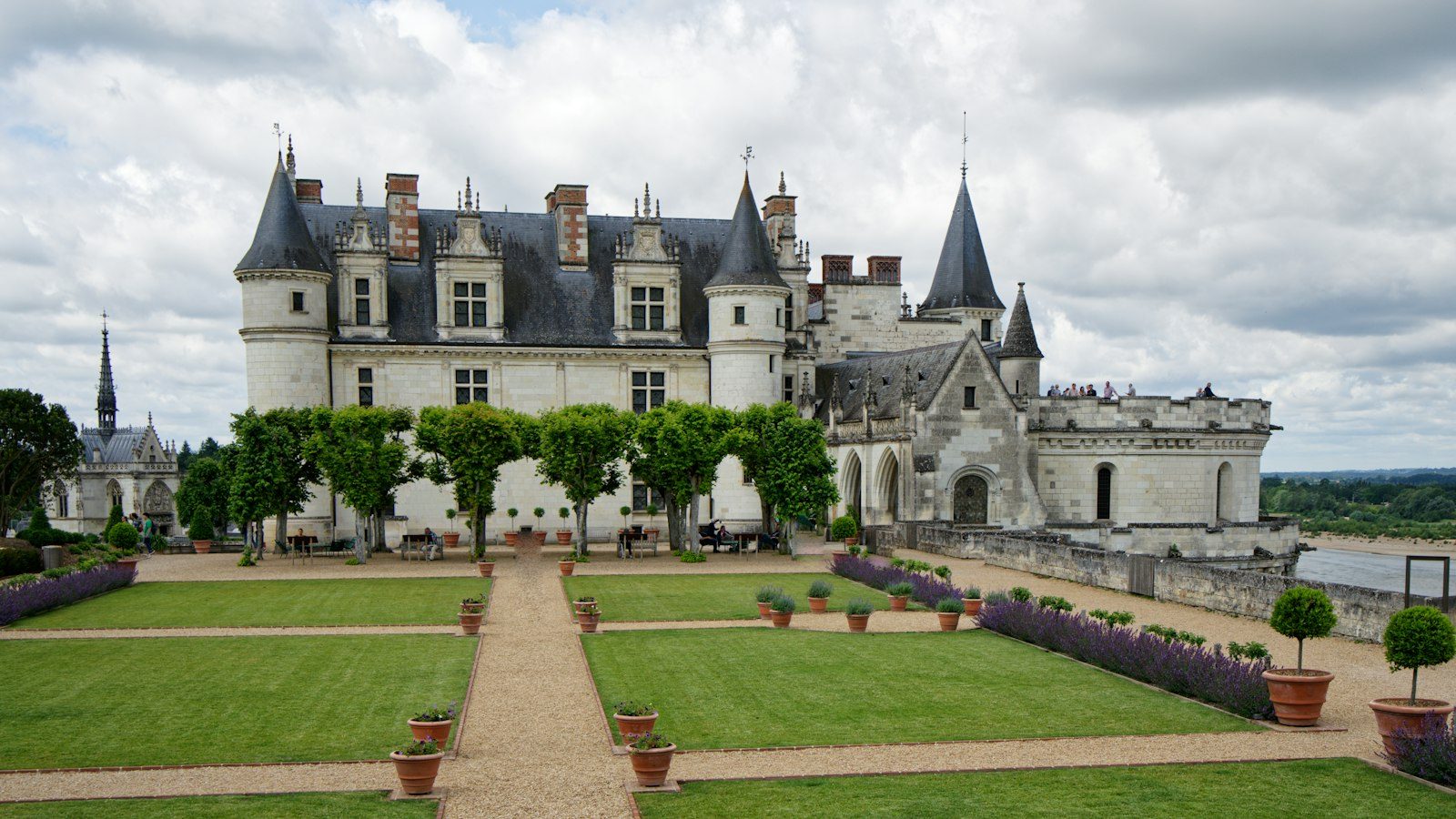
A small royal town on the Loire, with a château on the rock above the river and Leonardo da Vinci's last home just up the lane. You cycle along the river to other châteaux, taste chenin blanc in old cellars and shop at the Sunday market on the quay.
- Best time to visit: May to June and September
- Daily budget (budget traveller): $90 to $270 USD
- Ideal trip length: 3 to 5 days
Amboise is a market town of about 13,000 people on the south bank of the Loire, between Tours and Blois. From Paris it is under two hours by train. French kings lived here in the late 15th and early 16th centuries, and the Château Royal still stands on its rock above the river. Leonardo da Vinci spent his last three years in the Clos Lucé manor a short walk away, and his tomb is in the château's chapel. The old town below is small and easy to walk, with half-timbered houses, a clock tower over the main street and plenty of cafés and wine bars. It is also one of the best bases in the Loire Valley if you are travelling without a car. The Loire à Vélo cycle route runs along the river, Chenonceau is about 12km away, and trains reach Tours and Blois in around 20 minutes. Amboise has no backpacker hostel, and summer coach groups crowd the street below the château. Even so, a cheap hotel, a hired bike, market picnics and a château or two a day make it an easy place for a solo traveller to spend a few slow days.
Amboise is a compact royal town on the Loire, about halfway between Tours and Blois. Its château sits on a rock above the river, and the half-timbered old town spreads out below it. Charles VIII was born and died here, François I grew up here, and Leonardo da Vinci came at the king's invitation and spent his last years at the Clos Lucé. He is buried in the château chapel. Most visitors come for a few hours on a coach tour. Stay a few nights and you get the better version: Rue Nationale before the shops open, a bike ride along the river, a picnic from the Sunday market and the château lit up across the water at night. The Loire Valley is not cheap, but market food, a hired bike and train day trips keep a solo trip reasonable.
Getting here is simple. Direct TER trains from Paris Austerlitz take around 1 hour 45 minutes, and faster TGV journeys from Montparnasse change at Saint-Pierre-des-Corps. Tours is about 20 minutes away by train, and so is Blois. Once you are here, walk. The château, the Clos Lucé and the old town are all within 10 minutes of each other. Stay in the old town for restaurants and atmosphere, on the Clos Lucé side for quiet, or on the Île d'Or for the campsite and river views. Hire a bike for Chenonceau and the Loire à Vélo, and take the train for Tours, Blois and Chaumont.
Timing shapes the trip. May, June and September bring warm days, green gardens and fewer crowds. July and August are hot and busy, with coach groups at the château and higher room prices, though the long evenings suit cycling and river walks. From November to March, Amboise is quiet and cheap. The château and the Clos Lucé stay open almost every day, but hours are shorter, and the Pagode de Chanteloup closes until spring. The town is very safe, and people in hotels, shops and the main sites usually speak some English, though a few words of French go a long way. Evenings are about dinner and a glass of chenin rather than nightlife. If you want bars and a student crowd, Tours is 20 minutes away by train.
Amboise itinerary
Arrive and find your feet
Morning: Take a morning train from Paris Austerlitz (about 1 hour 45 minutes). Leave your bag at your hotel and walk over the bridges into town.
Afternoon: Wander Rue Nationale, pass under the clock tower and walk along the quay past the Max Ernst fountain. Coffee and a macaron on Place Michel Debré.
Evening: Cross to the Île d'Or for sunset opposite the château, then dinner at a bistro in the old town.
Kings and Leonardo
Morning: Be at the Château Royal for opening (€17.30, Histopad included). See the royal rooms, the terraces and Leonardo's tomb in the Chapelle Saint-Hubert.
Afternoon: Walk up Rue Victor Hugo past the troglodyte houses to the Clos Lucé (€20). Allow time for the park and the full-size models of his machines.
Evening: A tasting at the Caveau des Vignerons below the château, then a simple dinner with a glass of Montlouis.
Cycle to Chenonceau
Morning: Hire a bike or e-bike in town and ride about 12km south to Chenonceau, ideally arriving soon after opening.
Afternoon: Tour the château that spans the River Cher (€19, or €24 with an audioguide) and its gardens. Picnic in the grounds, then ride back the same way.
Evening: Rest your legs on a terrace in town. Rillettes, goat's cheese and a cold glass of chenin.
Pagoda and forest
Morning: In season, walk or cycle 3km south to the Pagode de Chanteloup (€12). Climb it for the view over the Loire and the forest.
Afternoon: Rent a rowing boat on the canal (€6 an hour), or follow the shady paths into the Forêt d'Amboise. In winter, swap this day for Tours.
Evening: Look for a restaurant serving fouées, the puffed breads baked in a wood oven.
Tours by train
Morning: Take the train to Tours (about 20 minutes). Walk around the cathedral and the old houses of Place Plumereau.
Afternoon: Visit the Musée des Beaux-Arts, then browse Les Halles for cheese and charcuterie to take back.
Evening: Stay for a drink in the student bars of the old town, then take an evening train back to Amboise.
Blois and Chaumont
Morning: Take the train east to Blois (about 20 minutes) and visit the Château Royal de Blois with its famous spiral staircase.
Afternoon: On the way back, stop at Onzain for Chaumont-sur-Loire, which has a château and an international garden festival in season. Check train times first.
Evening: Back in Amboise for dinner. Walk the quay to see the château lit up.
Market morning and depart
Morning: If it is Sunday, shop at the market on the quay. Otherwise, have a slow breakfast and a last walk along the river.
Afternoon: Buy wine or rillettes to take home, then catch an afternoon train to Paris or on to Tours. Check times the day before.
Evening: Arrive in Paris, or carry on to your next stop.
Best neighbourhoods
- Old town and Rue Nationale: The heart of Amboise, running from the clock tower along the pedestrian Rue Nationale to the foot of the château. You have the bakeries, wine bars, restaurants and souvenir shops, plus the quay where the Sunday market sets up. It is lively by day and calm at night, though the château end gets crowded in summer.
- Place Michel Debré and the château quarter: The little square below the château ramp, with Pâtisserie Bigot, the wine cellar and a row of café terraces. It is the most photographed corner of town and the busiest, so stay on a side street behind it if you want quiet. You are two minutes from the château and five from the Clos Lucé.
- Clos Lucé and Rue Victor Hugo: The lane that climbs from the château to Leonardo's manor, lined with troglodyte houses cut into the soft tufa rock. It is quieter and more residential, with guesthouses and some of the town's smarter hotels. Expect a gentle uphill walk back from dinner.
- Île d'Or: The long island in the Loire, crossed by the bridge into town. It has the campsite, a swimming pool, sports grounds and the best view of the château from across the water. It is green and peaceful, and the old town is a five-minute walk over the bridge, but there is little else here after dark.
- North bank and the station: The quieter residential side of the river, where the train station is. Rooms here are often a little cheaper and you are close to your train, but the old town is a 15 to 20-minute walk across both bridges. It suits an early departure or a cheap night better than a long stay.
Must-do experiences
- Tour the Château Royal: Adult entry is €17.30 in 2026, and a Histopad tablet tour comes free with the ticket. Do not miss the Chapelle Saint-Hubert, where Leonardo is buried, or the view from the terraces over the Loire. Bring an SNCF train ticket from the last three days for a reduced price.
- Visit Leonardo's last home at the Clos Lucé: Leonardo lived in this brick manor from 1516 until his death in 1519. Adult entry is €20 for the house, the gardens and the park, where full-size models of his machines stand among the trees. Allow at least two to three hours, and go early in summer.
- Shop at the Sunday market: On Sunday mornings the market takes over the quay along the Loire, with stalls of cheese, charcuterie, fruit, wine and clothes. It is one of the biggest markets in Touraine. Buy goat's cheese, bread and strawberries for a picnic by the river.
- Cycle the Loire à Vélo: The signed route follows the river on quiet lanes and paths. Hire a bike in town for about €15-25 a day, or an e-bike for more, and ride west towards Tours or east towards Chaumont. Mostly flat, so it suits occasional cyclists.
- Climb the Pagode de Chanteloup: This 18th-century Chinese-style pagoda is all that is left of a vanished palace, about 3km south of town. Adult entry is €12, and you can rent a rowing boat on the canal for €6 an hour. It is open from mid-March to 11 November, so check before you go.
- Taste local wine below the château: The Caveau des Vignerons, in a rock cellar by Place Michel Debré, pours wines from the Touraine-Amboise appellation and nearby Vouvray and Montlouis. A short tasting costs only a few euros. Try the dry and sparkling chenin blanc.
- Watch sunset from the Île d'Or: Cross the bridge to the island in the early evening and walk to the riverbank opposite the château. The walls glow gold as the sun drops, and the view is free. Come back after dark, when the château is lit up over the water.
Hidden gems
- The troglodyte houses along Rue Victor Hugo, homes and cellars dug into the tufa cliff on the way up to the Clos Lucé
- The Tour de l'Horloge, the 15th-century clock tower that arches over Rue Nationale and is easy to walk under without looking up
- Max Ernst's fountain on the quay, a quirky bronze the surrealist painter gave the town in 1968
- The Église Saint-Denis on its small hill west of the centre, a quiet Romanesque church that most château visitors never see
- The forest paths of the Forêt d'Amboise south of town, shady and almost empty even in August
Daily budget
- Accommodation: budget €60-85 / night (simple hotel or guesthouse room), mid-range €110-170 (3-star hotel or chambre d'hôte), splurge €250+ (Le Clos d'Amboise or a château hotel). There is no backpacker hostel, so budget means a basic private room. Prices jump from May to September and on weekends. A small tourist tax is added per night.
- Food: budget €25-35 / day (bakery breakfast, market picnic, crêpe or galette), mid-range €45-70 (menu du jour lunch and a bistro dinner), splurge €100+ (gastronomic menu with wine pairing). A lunchtime menu du jour costs about €16-22 and bistro mains roughly €18-28. Sunday market picnics are the best value in town.
- Transport: budget €0-8 / day (walking, a short train hop), mid-range €15-40 (bike or e-bike hire), splurge €80-150 (small-group château tour or hire car). Paris trains cost about €20-45 one way, depending on how early you book. Tours and Blois are a few euros each way. Bike hire is about €15-25 a day.
- Activities: budget €0-20 / day (one château, river walks, free views), mid-range €20-40 (Château Royal at €17.30 plus Clos Lucé at €20), splurge €60+ (guided tours, Chenonceau with audioguide, tastings). Chenonceau is €19 with a brochure or €24 with an audioguide. The Pagode is €12 and open mid-March to 11 November 2026. A recent SNCF ticket gets you a reduction at the Château Royal.
- Drinks & nightlife: budget €5-10 (a glass of local wine or a beer on a terrace), mid-range €15-30 (a tasting and a few glasses in a wine bar), splurge €50+ (a good bottle with dinner). A coffee costs about €2-3 and a glass of local wine €4-6. Evenings are quiet, and Tours has the bars and late nights.
Where to stay
- Budget stay in North bank or Île d'Or (€60-85 / night (private room)): There is no backpacker hostel in Amboise, so budget means a simple hotel room near the station or a cabin at the campsite on the Île d'Or. Both are a short walk over the bridge from the old town.
- Boutique hotel in The quay below the château (€150-280 / night): Le Manoir Les Minimes is an elegant 18th-century house on the riverfront, just below the château walls. Many rooms look over the Loire, and the old town is on the doorstep.
- Guesthouse in Clos Lucé and Rue Victor Hugo (€90-150 / night): Chambres d'hôtes in old stone and troglodyte houses come with a good breakfast and a local host. They are quieter than the centre and five minutes from both main sights.
- Splurge in Old town (€250-450+ / night): Le Clos d'Amboise is a 17th-century mansion with a garden and a heated outdoor pool in season, a short walk from the château. It is a calm retreat after a day of cycling.
What to eat
- Rillettes and rillons: Tours-style potted pork and slow-cooked pork belly, sold at every charcuterie and market stall and best on fresh bread
- Sainte-Maure-de-Touraine: the log-shaped goat's cheese with a straw through the middle, cheapest at the Sunday market
- Fouées: small puffed breads baked in a wood oven and filled with rillettes, goat's cheese or beans, served in some troglodyte restaurants
- Tarte Tatin: the caramelised upside-down apple tart from the Centre-Val de Loire region, on most dessert menus
- Chenin blanc from Vouvray, Montlouis and Touraine-Amboise, still or sparkling, from about €4-6 a glass
- A menu du jour at lunchtime for about €16-22, then a macaron or chocolate from Pâtisserie Bigot in the afternoon
Day trips
- Château de Chenonceau (About 12km south of Amboise, an hour by bike or 20 minutes by road): The château that spans the River Cher on graceful arches, with formal gardens, a maze and kitchens built into the bridge piers. It is one of the most visited châteaux in France, so go early. Cycle on country roads, take a Rémi coach (infrequent, so check times) or a taxi. Adult entry is €19 with a brochure or €24 with an audioguide, and it is open every day of the year.
- Tours (About 25km west, 20 minutes by train): The lively regional capital, with a Gothic cathedral, a fine arts museum, a covered food market and the medieval Place Plumereau full of bars. It is a good contrast to quiet Amboise. Take a TER train from Amboise, which runs several times a day and costs a few euros. You can also cycle the Loire à Vélo along the river in about two hours.
- Blois and Chambord (About 35km east, 20 minutes by train to Blois): Blois has a royal château with a famous open spiral staircase and an old town on the hill. Chambord, the biggest of the Loire châteaux, is about 16km beyond in a walled forest park. Take the train to Blois, then check for the seasonal shuttle bus or a tour to Chambord. Chambord is free for EU residents under 26.
When to visit
- Spring (March - May): 12-21°C, mild with showers, gardens in flower by May. Crowds: Low to moderate, busier at Easter and on May bank holidays. Good for cycling and cheaper rooms. The Pagode reopens in mid-March, and the Clos Lucé gardens are at their best by May.
- Early summer (June): 20-26°C, mostly sunny with long evenings. Crowds: Moderate, rising towards the end of the month. Arguably the best month. Warm enough for picnics by the river, light until late and the château still manageable in the morning.
- High summer (July - August): 25-32°C, hot and dry, with occasional heatwaves. Crowds: Busy, very busy around the château and Chenonceau. Great for long bike rides and late evenings, but rooms cost the most and coach groups fill the sites. Book well ahead and visit châteaux at opening time.
- Autumn and winter (September - February): September 18-24°C, then cooling to 3-9°C in winter, often grey and damp. Crowds: Moderate in September and at grape harvest, quiet from November. September is the locals' pick, with harvest and calm streets. Winter is cheap and peaceful, but hours are shorter and some sites close until spring.
Entry rules for your passport
Visa rules for France depend on the passport you travel on. Check the official source before you book: European Commission: Schengen visa policy
Getting there
Amboise has no airport. The nearest are Tours Val de Loire, with a few seasonal flights, and the Paris airports, about 2.5 hours away. From Paris, a few direct TER trains a day leave Austerlitz and reach Amboise in about 1 hour 45 minutes. Faster journeys take the TGV from Montparnasse to Saint-Pierre-des-Corps, then a short regional train, about 1.5 hours in total. Fares run from around €20 to €45 one way, and booking ahead on SNCF Connect helps. Some TGVs from Charles de Gaulle airport also stop at Saint-Pierre-des-Corps. Tours and Blois are each about 20 minutes away by TER and cost a few euros. Amboise station is on the north bank, a 15 to 20-minute walk from the old town. If you drive, the A10 motorway passes nearby and there are paid car parks along the quay and near the château, but you will not need a car in town.
Border checks: non-EU visitors (other than Swiss, Norwegian, Icelandic, Liechtenstein, Andorran, Monegasque, San Marinese and Vatican citizens, and holders of an EU residence permit or long-stay visa) are registered in the EU's Entry/Exit System (EES) instead of getting a passport stamp. On your first crossing, officers take your photo and/or fingerprints, so allow extra time at passport control. ETIAS, the planned travel authorisation, is not in operation yet, so don't pay any website for one.
Getting around
The old town is small and you will walk almost everywhere. The château, the Clos Lucé and Rue Nationale are within 10 minutes of each other, though the lane up to the Clos Lucé climbs a little. The train station is on the north bank, a 15 to 20-minute walk over the bridges, or a short taxi ride. A bike is the best way to explore further. Several shops in town hire bikes and e-bikes, and the Loire à Vélo route takes you along the river to Tours, Chaumont and Blois. Chenonceau is about 12km south on country roads, a ride of roughly an hour each way. Rémi regional coaches link Amboise with Chenonceaux and other towns, but services are infrequent, especially out of season, so check the timetable first. TER trains reach Tours in about 20 minutes and Blois in about the same, both for a few euros. Taxis are few, so book through your hotel. For Chambord and the more remote châteaux, a small-group minibus tour or a hire car is easiest.
Safety
Amboise is very safe, and crime against visitors is rare. Watch your bag in the crowds on Rue Nationale and at the Sunday market, and lock hired bikes properly. The real risks are on the road and by the river. Some stretches of the cycle route share country lanes with cars, so wear a helmet and use lights in poor visibility. Do not swim in the Loire. Its currents and shifting sandbanks are dangerous, and bathing is banned in most places. Summer heat can be strong on open roads, so carry water when cycling. The cobbles and château ramps are slippery when wet. Tap water is safe to drink. The EU emergency number is 112, and 15 calls the medical emergency service. EU travellers should carry an EHIC and UK travellers a GHIC, and everyone else needs travel insurance with medical cover.
Solo travel tips
- Book a room early: Amboise has no hostel and only a few cheap hotels, and single rooms go first. From May to September, book weeks ahead or look at the north bank near the station.
- Be first through the gate: Coach groups arrive mid-morning. Visit the Château Royal, the Clos Lucé and Chenonceau at opening time, or in the last two hours before closing, and they feel far calmer.
- Let a bike set the pace: Hiring a bike makes you independent. Chenonceau, the Pagode and long stretches of the Loire à Vélo are all within an easy ride, and you can stop wherever you like.
- Eat at lunchtime: The menu du jour is the best-value meal in France. Have your big meal at noon, then make dinner a market picnic or a light plate of cheese and wine.
- Safety for solo travellers: The main risks are traffic on country lanes and the river itself. Wear a helmet, carry lights and water, never swim in the Loire, and take the lit main streets back from the station at night.
- Meet people at a tasting or on a tour: Wine tastings, small-group château tours and bike tours are easy ways to meet other travellers. Guesthouse breakfasts and market mornings are good for chatting with locals too.
Cultural etiquette
- Always say 'bonjour, madame' or 'bonjour, monsieur' when you walk into a shop, café or bakery, and 'merci, au revoir' when you leave.
- Learn a few French words. Most people in tourism speak some English, but they will warm to you if you try French first.
- Keep to lunch hours. Many restaurants serve only from about 12 to 2pm and from 7pm, and some small shops close at lunchtime.
- Dress modestly and keep your voice down in churches and in the Chapelle Saint-Hubert, where Leonardo is buried.
- Taste wine, do not just drink it. At a cellar it is fine to spit, and buying a bottle is a nice gesture after a free tasting.
- Service is included in French bills, so tipping is optional. Rounding up or leaving a few euros for good service is appreciated.
- Ride on the right, give way on shared paths and slow down when passing walkers on the Loire à Vélo.
Frequently asked questions
How do I get to Amboise from Paris?
By train. A few direct TER trains a day run from Paris Austerlitz to Amboise in about 1 hour 45 minutes. The other option is a TGV from Paris Montparnasse to Saint-Pierre-des-Corps, then a short regional train, which can take about 1.5 hours in total. Fares vary with how early you book, from around €20 to €45 one way. Amboise station is on the north bank, so it is a 15 to 20-minute walk over the bridges into the old town.
How many days do I need in Amboise?
Two nights covers the Château Royal, the Clos Lucé and the old town. Three to five nights lets you add Chenonceau by bike, the Pagode de Chanteloup in season and a wine tasting. A week works if you want day trips to Tours, Blois and Chambord, or a few days cycling the Loire à Vélo.
When is the best time to visit Amboise?
May, June and September are best. The weather is good for cycling, the gardens look their best and the crowds are lighter than in high summer. July and August are hot and busy, and rooms cost the most. From November to March the town is quiet and cheaper, but some sites shorten their hours or close for the season, and the Pagode de Chanteloup shuts from mid-November until mid-March.
Can I visit the châteaux without a car?
Yes, more easily than from most Loire towns. The Château Royal and the Clos Lucé are in town. Chenonceau is about 12km away by bike, or a short Rémi coach or taxi ride. Tours, Blois and Chaumont-sur-Loire are on the railway line. For Chambord, Cheverny or Villandry, a small-group minibus tour from Amboise or Tours is the simplest choice.
How much do the châteaux cost?
In 2026 the Château Royal costs €17.30 for adults, the Clos Lucé €20 and Chenonceau €19 with a brochure, or €24 with an audioguide. The Pagode de Chanteloup is €12. Combined tickets and the tourist office's online shop can save a few euros, and the Château Royal gives a reduction if you show a recent SNCF train ticket.
Is there a hostel in Amboise?
Not a proper backpacker hostel. The cheapest options are simple one and two-star hotels, small guesthouses, and the cabins and pitches at the campsite on the Île d'Or. Single travellers should book early from May to September, when budget rooms go fast. Tours, 20 minutes away by train, has more choice if Amboise is full.
Is Amboise safe for solo female travellers?
Yes. It is a calm, friendly town that sees a lot of visitors. The centre is busy in the evenings and well lit along the main streets and the quay. Take normal care with drinks, keep to lit routes when walking back from the station at night, and let someone know your route if you are cycling alone on quiet country lanes.
What entry rules apply to France in 2026?
France is in the EU and the Schengen area. Many non-EU visitors, including those from the UK, US, Canada and Australia, can stay visa-free for up to 90 days in any 180-day period across Schengen. The EU's Entry/Exit System now records non-EU travellers' fingerprints and photos at the border. ETIAS was not yet running as of late 2026 and no start date had been announced, so check whether it has started before you travel. Confirm the rules on official EU and French government websites and check your own government's travel advice.
Tours and activities in Amboise | Amboise in 2 days | Amboise in 3 days | Amboise in 4 days | Amboise in 5 days | Amboise in 7 days
Joy Plus home | Destinations | Itineraries | Activities | Flights | Budget planner | Calendar | Map | Blog | Lifetime access