Amboise in 7 days
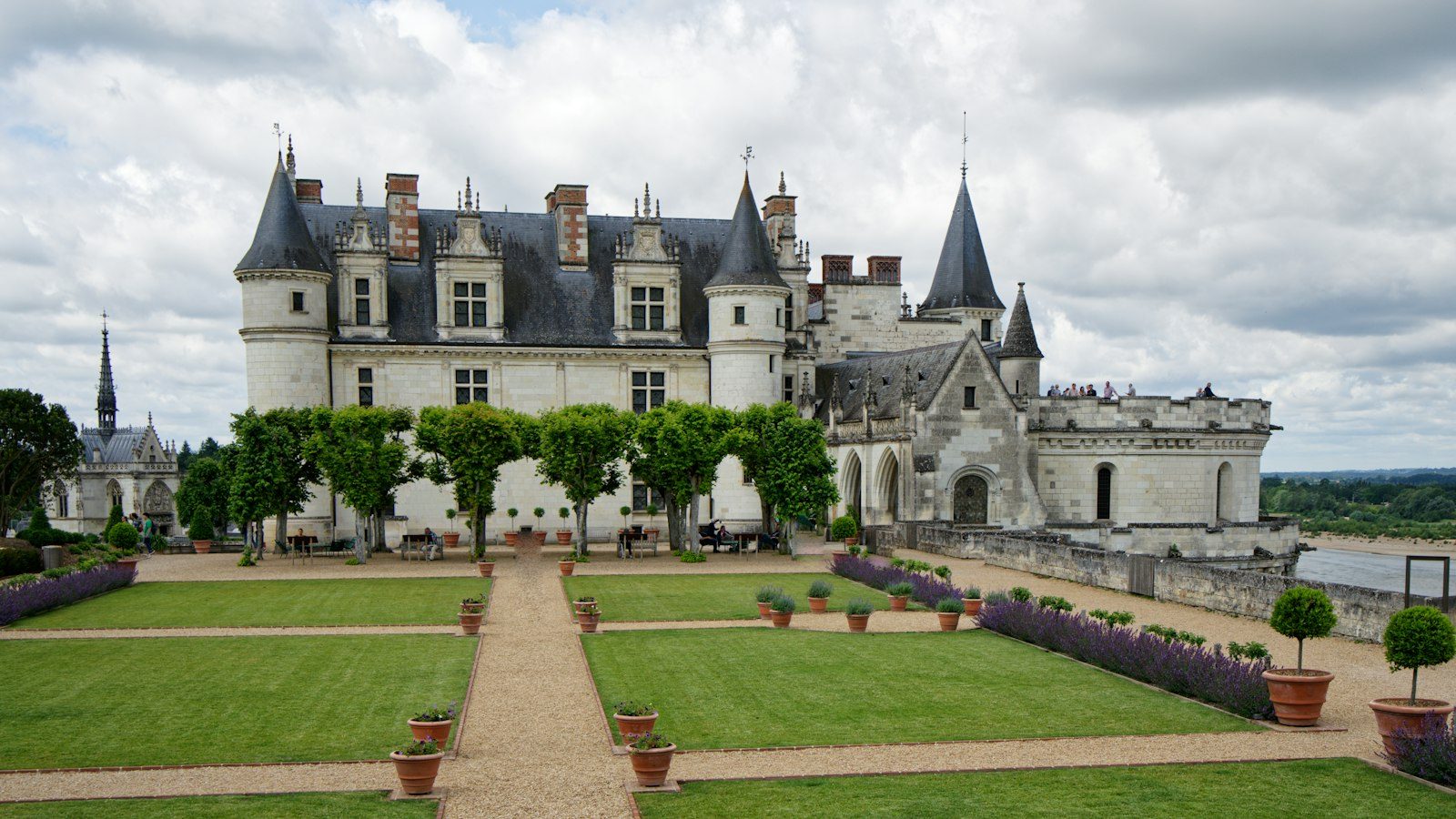
A small royal town on the Loire, with a château on the rock above the river and Leonardo da Vinci's last home just up the lane. You cycle along the river to other châteaux, taste chenin blanc in old cellars and shop at the Sunday market on the quay. Best time to visit: May to June and September. Daily budget (budget traveller): $90 to $270 USD.
Arrive and find your feet
Morning: Take a morning train from Paris Austerlitz (about 1 hour 45 minutes). Leave your bag at your hotel and walk over the bridges into town.
Afternoon: Wander Rue Nationale, pass under the clock tower and walk along the quay past the Max Ernst fountain. Coffee and a macaron on Place Michel Debré.
Evening: Cross to the Île d'Or for sunset opposite the château, then dinner at a bistro in the old town.
Kings and Leonardo
Morning: Be at the Château Royal for opening (€17.30, Histopad included). See the royal rooms, the terraces and Leonardo's tomb in the Chapelle Saint-Hubert.
Afternoon: Walk up Rue Victor Hugo past the troglodyte houses to the Clos Lucé (€20). Allow time for the park and the full-size models of his machines.
Evening: A tasting at the Caveau des Vignerons below the château, then a simple dinner with a glass of Montlouis.
Cycle to Chenonceau
Morning: Hire a bike or e-bike in town and ride about 12km south to Chenonceau, ideally arriving soon after opening.
Afternoon: Tour the château that spans the River Cher (€19, or €24 with an audioguide) and its gardens. Picnic in the grounds, then ride back the same way.
Evening: Rest your legs on a terrace in town. Rillettes, goat's cheese and a cold glass of chenin.
Pagoda and forest
Morning: In season, walk or cycle 3km south to the Pagode de Chanteloup (€12). Climb it for the view over the Loire and the forest.
Afternoon: Rent a rowing boat on the canal (€6 an hour), or follow the shady paths into the Forêt d'Amboise. In winter, swap this day for Tours.
Evening: Look for a restaurant serving fouées, the puffed breads baked in a wood oven.
Tours by train
Morning: Take the train to Tours (about 20 minutes). Walk around the cathedral and the old houses of Place Plumereau.
Afternoon: Visit the Musée des Beaux-Arts, then browse Les Halles for cheese and charcuterie to take back.
Evening: Stay for a drink in the student bars of the old town, then take an evening train back to Amboise.
Blois and Chaumont
Morning: Take the train east to Blois (about 20 minutes) and visit the Château Royal de Blois with its famous spiral staircase.
Afternoon: On the way back, stop at Onzain for Chaumont-sur-Loire, which has a château and an international garden festival in season. Check train times first.
Evening: Back in Amboise for dinner. Walk the quay to see the château lit up.
Market morning and depart
Morning: If it is Sunday, shop at the market on the quay. Otherwise, have a slow breakfast and a last walk along the river.
Afternoon: Buy wine or rillettes to take home, then catch an afternoon train to Paris or on to Tours. Check times the day before.
Evening: Arrive in Paris, or carry on to your next stop.
What to eat in Amboise
- Rillettes and rillons: Tours-style potted pork and slow-cooked pork belly, sold at every charcuterie and market stall and best on fresh bread
- Sainte-Maure-de-Touraine: the log-shaped goat's cheese with a straw through the middle, cheapest at the Sunday market
- Fouées: small puffed breads baked in a wood oven and filled with rillettes, goat's cheese or beans, served in some troglodyte restaurants
- Tarte Tatin: the caramelised upside-down apple tart from the Centre-Val de Loire region, on most dessert menus
- Chenin blanc from Vouvray, Montlouis and Touraine-Amboise, still or sparkling, from about €4-6 a glass
- A menu du jour at lunchtime for about €16-22, then a macaron or chocolate from Pâtisserie Bigot in the afternoon
Hidden gems
- The troglodyte houses along Rue Victor Hugo, homes and cellars dug into the tufa cliff on the way up to the Clos Lucé
- The Tour de l'Horloge, the 15th-century clock tower that arches over Rue Nationale and is easy to walk under without looking up
- Max Ernst's fountain on the quay, a quirky bronze the surrealist painter gave the town in 1968
- The Église Saint-Denis on its small hill west of the centre, a quiet Romanesque church that most château visitors never see
- The forest paths of the Forêt d'Amboise south of town, shady and almost empty even in August
Getting around
The old town is small and you will walk almost everywhere. The château, the Clos Lucé and Rue Nationale are within 10 minutes of each other, though the lane up to the Clos Lucé climbs a little. The train station is on the north bank, a 15 to 20-minute walk over the bridges, or a short taxi ride. A bike is the best way to explore further. Several shops in town hire bikes and e-bikes, and the Loire à Vélo route takes you along the river to Tours, Chaumont and Blois. Chenonceau is about 12km south on country roads, a ride of roughly an hour each way. Rémi regional coaches link Amboise with Chenonceaux and other towns, but services are infrequent, especially out of season, so check the timetable first. TER trains reach Tours in about 20 minutes and Blois in about the same, both for a few euros. Taxis are few, so book through your hotel. For Chambord and the more remote châteaux, a small-group minibus tour or a hire car is easiest.
Safety
Amboise is very safe, and crime against visitors is rare. Watch your bag in the crowds on Rue Nationale and at the Sunday market, and lock hired bikes properly. The real risks are on the road and by the river. Some stretches of the cycle route share country lanes with cars, so wear a helmet and use lights in poor visibility. Do not swim in the Loire. Its currents and shifting sandbanks are dangerous, and bathing is banned in most places. Summer heat can be strong on open roads, so carry water when cycling. The cobbles and château ramps are slippery when wet. Tap water is safe to drink. The EU emergency number is 112, and 15 calls the medical emergency service. EU travellers should carry an EHIC and UK travellers a GHIC, and everyone else needs travel insurance with medical cover.
Frequently asked questions
What does this 7-day Amboise itinerary cover?
Day 1: Arrive and find your feet. Day 2: Kings and Leonardo. Day 3: Cycle to Chenonceau. Day 4: Pagoda and forest. Day 5: Tours by train. Day 6: Blois and Chaumont. Day 7: Market morning and depart.
Is 7 days enough for Amboise?
Our recommended trip length for Amboise is 3 to 5 days. This 7-day plan focuses on the highlights and groups sights by area so you spend less time travelling between them.
How much does 7 days in Amboise cost?
A budget traveller spends about $90 to $270 USD a day in Amboise, so roughly $630 to $1,890 USD for 7 days, not counting flights.
Where should I stay for 7 days in Amboise?
Old town and Rue Nationale: The heart of Amboise, running from the clock tower along the pedestrian Rue Nationale to the foot of the château. Place Michel Debré and the château quarter: The little square below the château ramp, with Pâtisserie Bigot, the wine cellar and a row of café terraces.
When is the best time to visit Amboise?
The best time to visit Amboise is May to June and September.
How do I get around Amboise?
The old town is small and you will walk almost everywhere. The château, the Clos Lucé and Rue Nationale are within 10 minutes of each other, though the lane up to the Clos Lucé climbs a little.
Is Amboise safe for solo travellers?
Amboise is very safe, and crime against visitors is rare. Watch your bag in the crowds on Rue Nationale and at the Sunday market, and lock hired bikes properly.
More 7-day guides
- Antibes in 7 days
- Bonifacio in 7 days
- Reims in 7 days
- Réunion in 7 days
- Montpellier in 7 days
- Cannes in 7 days
- Lille in 7 days
- Paris in 7 days
Amboise in 2 days | Amboise in 3 days | Amboise in 4 days | Amboise in 5 days | Full Amboise guide
Joy Plus home | Destinations | Itineraries | Activities | Flights | Budget planner | Calendar | Map | Blog | Lifetime access