Destinations / Europe
Appenzell, Switzerland travel guide
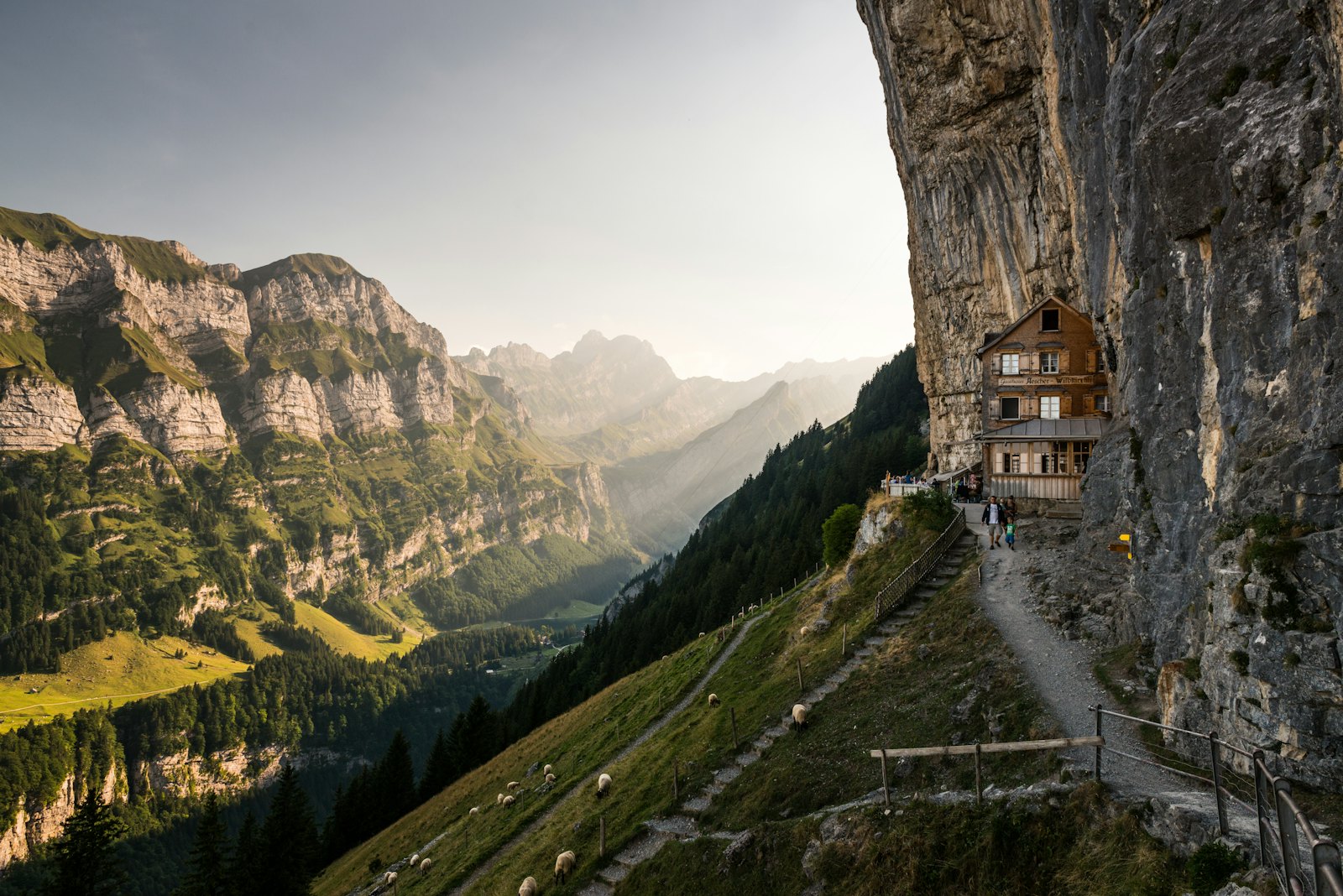
A small, painted Swiss village at the foot of the Alpstein, where you ride cable cars to cliffside inns, walk down to a green mountain lake and finish the day with spiced cheese and a local beer.
- Best time to visit: June to October
- Daily budget (budget traveller): CHF 130 to CHF 400
- Ideal trip length: 3 to 7 days
Appenzell is the main village of Appenzell Innerrhoden, Switzerland's smallest canton by population. It sits at about 780m in rolling green farmland, roughly 35 minutes by narrow-gauge train from St. Gallen. Around 6,000 people live here. The village centre is short and walkable. Hauptgasse is lined with painted wooden façades, and the Landsgemeindeplatz is the square where citizens still vote by show of hands each April. Behind the village rises the Alpstein, a compact limestone range with Ebenalp, the cliff inn at Aescher, the Seealpsee lake, Hoher Kasten and Säntis, the highest peak in eastern Switzerland. Most of these are a short train or bus ride and a cable car away. Appenzell is not cheap, because this is Switzerland. Still, stay three nights and most hotels, B&Bs and holiday flats give you the free Appenzeller Holiday Card, which covers local trains and buses, cable car rides and museum entry. Add supermarket picnics and mountain-hut dorms and it works well for a solo traveller on a budget. It is quiet, safe, very traditional and built for walking.
Appenzell feels like a postcard, but it is also a working market village and the capital of a canton that does things its own way. Appenzell Innerrhoden still votes at an open-air Landsgemeinde on the last Sunday of April. Women only got the vote here at cantonal level in 1990, and only after a federal court ruling. The painted houses on Hauptgasse are real homes and shops, and dairy farming still shapes the landscape and the menus. For a visitor, the village is the comfortable base, and the Alpstein is the reason to come. Within half an hour by train, bus and cable car you can be on Ebenalp, at the Aescher inn under its cliff, beside the Seealpsee lake or on top of Hoher Kasten looking across to Austria and Liechtenstein.
Logistics are easy. The Appenzeller Bahnen narrow-gauge trains link St. Gallen to Appenzell in about 35 minutes, roughly every half hour, and a branch carries on to Wasserauen for the Ebenalp cable car. Stay three or more consecutive nights at a participating hotel, B&B, mountain inn or holiday flat and you get the free Appenzeller Holiday Card. It covers free 2nd-class travel in 21 OSTWIND fare zones, free rides on the Ebenalp, Hoher Kasten and Kronberg cable cars and free museum entry. Most hosts will also cover your public transport there and back from anywhere in Switzerland. This changes the budget completely. Without the card, Ebenalp costs CHF 36 return and Hoher Kasten CHF 40, and those add up fast.
Timing matters more than you might expect. The main hiking season runs from late May to October, when the mountain inns open, the paths are mostly clear of snow and the cable cars run full timetables. July and August weekends are busy at Aescher and Seealpsee, so go on weekdays and start early. Hoher Kasten closes for maintenance in late winter, and in 2026 that was from early February to early April. The Säntis cable car closed on 1 May 2026 for a complete rebuild and is due to reopen in mid-December 2026. Appenzell is very safe, prices are Swiss, and Sundays are quiet, with most shops shut. People speak a strong local Swiss German dialect, but English is widely understood in hotels, cable car stations and the tourist office.
Appenzell itinerary
Arrive and walk the village
Morning: Take the train from St. Gallen to Appenzell, about 35 minutes. Drop your bags and ask your host for your Appenzeller Holiday Card if you are staying three nights or more.
Afternoon: Walk Hauptgasse and look up at the painted façades, then visit St. Mauritius church and the Landsgemeindeplatz. Spend an hour in Museum Appenzell to get the background on local customs and dress.
Evening: Pick up cheese, Biberli and picnic supplies at a supermarket for tomorrow. Have dinner in a village restaurant with Chäshörnli and a Quöllfrisch, then get an early night.
Ebenalp, Aescher and Seealpsee
Morning: Take an early train to Wasserauen, then the Ebenalp cable car (CHF 36 return, free with the card, every 15 minutes in season). Walk down through the Wildkirchli caves to the Aescher inn and arrive before the crowds.
Afternoon: Take the steep path down to Seealpsee, about an hour or more. Picnic or eat at one of the lakeside inns, then walk the easy track down to Wasserauen.
Evening: Train back to Appenzell. Rest your legs and have a simple supper. Check tomorrow's forecast for Hoher Kasten.
Hoher Kasten and Brülisau
Morning: Take the bus to Brülisau and the cable car up Hoher Kasten (CHF 40 return, free with the card). Walk the summit loop and the geology trail panels while the air is clear.
Afternoon: Lunch in the revolving restaurant, or ride down and walk towards Sämtisersee if you have the energy. Bus back to Appenzell.
Evening: If tours are running, join a tasting at the Appenzeller Alpenbitter distillery in the village, then have dinner nearby.
Barefoot trail and Kronberg
Morning: Take the train west to Jakobsbad and walk the barefoot trail to Gontenbad, about 5km through meadows and mud. Carry a small towel.
Afternoon: Back in Jakobsbad, ride the Kronberg cable car (free with the card) for views over the Appenzell hills, or have a slow lunch and a nap instead.
Evening: Train to Appenzell. Treat yourself to dinner with a cold plate of Mostbröckli, Pantli and cheese.
Cheese in Stein and art in Appenzell
Morning: Book the PubliCar to Stein and visit the Appenzeller Schaukäserei. Cheesemaking runs until 3pm, and entry is about CHF 12 or free with the card. Pop into the Volkskunde-Museum next door.
Afternoon: Lunch at the dairy's Höckli restaurant, then head back to Appenzell for the Kunstmuseum and Kunsthalle, both free with the card.
Evening: An easy evening stroll along the Sitter river, then dinner and an early night.
St. Gallen day out, or Säntis
Morning: Take the train to St. Gallen, about 35 minutes, and visit the Abbey District and its Abbey Library, a UNESCO World Heritage site. If the new Säntis cable car is running, which is planned from mid-December 2026, you could head to Schwägalp for the summit instead.
Afternoon: Wander St. Gallen's old town with its bay windows, then have coffee and cake before the train back.
Evening: Farewell dinner in Appenzell. Pack, and confirm your train times for tomorrow.
Slow morning and depart
Morning: Visit Brauquöll, the Locher brewery's visitor centre, or take one last walk up the hill behind the village for the view of the Alpstein.
Afternoon: Buy cheese and Biberli to take home, then take the train to St. Gallen and onwards. Your Holiday Card host may cover the fare within Switzerland.
Evening: Connect onwards from Zurich, or stay a night in St. Gallen if you have an early flight.
Best neighbourhoods
- Appenzell village (Dorf): The obvious base. Hauptgasse, the Landsgemeindeplatz, St. Mauritius church, museums, bakeries, supermarkets and the train station are all a few minutes apart on foot. Most hotels and holiday flats are here, and trains to Wasserauen and St. Gallen leave every half hour or so.
- Weissbad: A small spa hamlet one stop up the line towards the mountains. It is home to the Hof Weissbad resort and a few guesthouses. It is quieter than the village and closer to the trailheads, with easy rail links both ways.
- Wasserauen and the Alpstein huts: The end of the railway line and the base of the Ebenalp cable car. Stay down here, or up in a mountain inn such as Berggasthaus Ebenalp, if your trip is all about hiking. Evenings are very quiet, and most huts only open in summer.
- Brülisau: A farming village south-east of Appenzell, where the Hoher Kasten cable car starts. It is a good base for walks to the Sämtisersee and Fälensee lakes. You will rely on local buses or the on-demand PubliCar.
- Gonten and Jakobsbad: Villages west of Appenzell on the railway towards Urnäsch. The barefoot trail and the Kronberg cable car are here, along with rolling farmland. They are cheaper and calmer than the village but have fewer places to eat.
Must-do experiences
- Walk Ebenalp, Aescher and Seealpsee: Ride the cable car from Wasserauen to Ebenalp, walk down through the Wildkirchli caves to the Aescher inn under its cliff, then descend to the Seealpsee lake and on to Wasserauen. It is the classic Appenzell day. The paths are steep in places, so wear proper shoes.
- Ride up Hoher Kasten: The cable car from Brülisau climbs to about 1,794m in eight minutes. At the top you get a 360-degree view over the Rhine valley, Lake Constance and the Alpstein, plus a revolving restaurant. A return ticket costs about CHF 40, with no half-fare discount, and it is free with the Holiday Card.
- Wander Hauptgasse and the Landsgemeindeplatz: Walk the painted main street early in the morning before the day-trippers arrive. Look in at St. Mauritius church, then stand on the square where the Landsgemeinde open-air vote is held on the last Sunday of April.
- Watch cheese being made in Stein: The Appenzeller Schaukäserei in Stein lets you watch cheesemaking every day until 3pm through big windows, then taste the result. Entry is around CHF 12 and free with the Holiday Card. Reach it by PubliCar from Appenzell.
- Walk the barefoot trail: The Barfussweg runs through meadows, mud and streams between Jakobsbad and Gontenbad. It is roughly 5km, gentle and oddly fun on a warm day. Both ends have train stations.
- Visit the Kunstmuseum and Kunsthalle: Appenzell's two art spaces show modern and contemporary art, much of it with a regional link. The Kunstmuseum's zigzag-roofed building near the station is worth seeing in itself. Entry is free with the Holiday Card.
- Catch a cattle descent or show: In late spring and early autumn, herders in traditional dress walk their cows up to or down from the alpine pastures, with bells ringing. In autumn there are village cattle shows too. Dates depend on the weather, so ask the tourist office on Hauptgasse.
Hidden gems
- The Alp Sigel gondola from Pfannenstiel near Brülisau, a small self-service lift that runs on a ticket machine, around CHF 27 return
- Sämtisersee, a quiet lake in a high valley above Brülisau, much less busy than Seealpsee
- Fälensee, a long, narrow lake under steep cliffs, reached on a longer hike from Brülisau or Hoher Kasten
- The Appenzeller Brauchtumsmuseum in Urnäsch, a small museum of local customs that explains the Silvesterchlausen tradition you will see there on 31 December and 13 January
- Gais, a village one valley over with a square of curved-gable houses, reached on the train towards St. Gallen
Daily budget
- Accommodation: budget CHF 60-130 / night (mountain inn dorm or simple B&B), mid-range CHF 160-260 (village hotel single room), splurge CHF 350+ (Hof Weissbad or similar). There is no classic backpacker hostel in the village. Mountain inns with dorms are seasonal. Book three or more nights to get the free Holiday Card and free arrival by public transport. A local tourist tax is usually added.
- Food: budget CHF 35-55 / day (supermarket picnics, bakery breakfasts), mid-range CHF 70-110 (inn lunch and a sit-down dinner), splurge CHF 150+ (revolving restaurant, hotel dinners with wine). Mountain inn mains such as Chäshörnli cost roughly CHF 20-30, and a cheese fondue about CHF 30. Bakeries and supermarkets keep costs down. Prices are rough guides, so check.
- Transport: budget CHF 0 / day (with the Holiday Card), mid-range CHF 15-30 (single fares or a day pass without the card), splurge CHF 60+ (taxis, Säntis trips from outside the card zones). St. Gallen to Appenzell is roughly CHF 11-14 one way at full fare. A Swiss Half Fare Card halves most fares. PubliCar charges Holiday Card holders a CHF 5 surcharge.
- Activities: budget CHF 0-20 / day (free cable cars and museums with the card, hiking), mid-range CHF 40-60 (one cable car return plus a museum), splurge CHF 100+ (Säntis plus Hoher Kasten with breakfast, guided outings). Without the card, Ebenalp is CHF 36 return (CHF 18 with a Half Fare Card), Hoher Kasten is CHF 40 with no discount, Kronberg is around CHF 40-45, and the Stein cheese dairy is about CHF 12.
- Drinks & nightlife: budget CHF 5-15 (a supermarket beer or a coffee), mid-range CHF 25-50 (beers at an inn terrace), splurge CHF 80+ (wine with dinner, Alpenbitter tastings). Nightlife means a beer in a village restaurant and an early night before a hike. A Quöllfrisch in a restaurant costs roughly CHF 5-7. Places close early, and Sunday is quiet.
Where to stay
- Social hostel in Ebenalp (Alpstein) (CHF 60-110 / night): Appenzell has no classic hostel. The closest thing is Berggasthaus Ebenalp at the top of the cable car, which has dorms with bunks as well as private rooms. You get sunsets and sunrises on the mountain and an early start to Aescher. It is seasonal and basic, so book ahead.
- Boutique hotel in Appenzell village (CHF 180-320 / night): Romantik Hotel Säntis sits on the Landsgemeindeplatz, a short walk from the station and Hauptgasse. It is a traditional, well-run hotel and offers the Holiday Card for stays of three nights or more.
- Apartment in Appenzell village (CHF 115-220 / night): Holiday flats listed through Appenzellerland Tourismus, some right by the Landsgemeindeplatz, let you self-cater and save on Swiss restaurant prices. Many include the Holiday Card and free arrival, and weekly rates often fall around CHF 950-1,550.
- Splurge in Weissbad (CHF 350-600+ / night): Hof Weissbad is a large spa resort one stop towards the mountains. It has wellness facilities and good food, it gives the Holiday Card for stays of three nights or more, and it is close to the Wasserauen trailheads.
What to eat
- Appenzeller cheese: a firm, spicy cheese washed in a secret herbal brine, sold mild, medium or extra-aged in every shop
- Chäshörnli: macaroni-style pasta baked with cheese and crispy onions, often served with apple purée, the mountain inn staple
- Siedwurst and Pantli: a pale boiled sausage and a smoked, flat dry sausage, both eaten with bread and mustard or on a cold plate
- Appenzeller Biberli: small honey and spice gingerbread cakes filled with almond paste, good for the hiking bag
- Mostbröckli: air-dried, lightly smoked beef sliced thin, a classic part of a Plättli (cold platter) at mountain inns
- A glass of Quöllfrisch beer from the Locher brewery, or a small Appenzeller Alpenbitter after dinner, both made in the village
Day trips
- Säntis (About 45-60 minutes from Appenzell to Schwägalp by train and bus): At 2,502m, Säntis is the highest peak in eastern Switzerland, with views across six countries. The cable car closed on 1 May 2026 for a full rebuild, and the new one is planned to open around 17-18 December 2026. Travel via Urnäsch and take the bus to Schwägalp, then the cable car (CHF 50 return for adults once it reopens). Check saentisbahn.ch for the opening date and timetable.
- Stein and the Appenzeller Schaukäserei (About 20-25 minutes by PubliCar): A working show dairy where you can watch Appenzeller cheese being made until 3pm and taste it, with the Volkskunde-Museum of rural life next door. It opens daily, 9am-6.30pm from May to October and 9am-5.30pm from November to April. Book the PubliCar Appenzell through its app or by phone to the Stein Dorf stop. Entry is about CHF 12, or free with the Holiday Card.
- St. Gallen (About 35 minutes by train): Eastern Switzerland's main town. Its Abbey District and Abbey Library are on the UNESCO World Heritage list, and the old town has painted bay windows, cafés and shops. Take the direct Appenzeller Bahnen train via Teufen, which runs roughly every 30 minutes. It is free within the Holiday Card zones.
When to visit
- Spring (April - May): 8-17°C in the valley, changeable, snow lingering on higher paths. Crowds: Low, with a local crowd for the Landsgemeinde in late April. Good for the village, green meadows and culture. Hoher Kasten reopens after its maintenance break, but many mountain inns and high paths only open from mid or late May.
- Summer (June - August): 18-25°C valley highs, cooler on the peaks, afternoon thunderstorms. Crowds: Busy at weekends and in Swiss school holidays, especially Aescher and Seealpsee. Peak hiking season, when every inn and path is open. Start hikes early to beat both crowds and storms, and do the busiest routes on weekdays.
- Autumn (September - October): 10-20°C, often clear and settled, cold mornings. Crowds: Moderate, quieter on weekdays. The locals' pick. Long views, cattle descents and village cattle shows. Mountain inns start closing during October, so check dates.
- Winter (November - March): -3 to 5°C, snow likely, short days. Crowds: Quiet, apart from Christmas and the Urnäsch Silvesterchlausen. Peaceful and snowy, with sledging, winter walks and old customs. Many huts close, some lifts pause for maintenance, and the new Säntis cable car is due from mid-December 2026.
Entry rules for your passport
Visa rules for Switzerland depend on the passport you travel on. Check the official source before you book: European Commission: Schengen visa policy
Getting there
The nearest big airport is Zurich. From Zurich Airport or Zurich HB, take a train to St. Gallen (about an hour), then change to the Appenzeller Bahnen narrow-gauge line to Appenzell. That leg takes about 32-40 minutes and runs roughly every half hour from early morning to late evening. Allow about two hours door to door from the airport. A second route runs from Gossau via Herisau and Urnäsch. Full fares from Zurich are roughly CHF 40-50 one way, and St. Gallen to Appenzell is roughly CHF 11-14. A Swiss Half Fare Card halves these, and the Swiss Travel Pass covers them. Stay three or more consecutive nights at most hotels, B&Bs and holiday flats in the area and your 2nd-class public transport arrival and departure within Switzerland is free, so mention it when you book. From Germany or Austria, cross the border by train to St. Margrethen or St. Gallen and connect from there. Driving is possible, but you do not need a car, and parking at the trailheads fills up quickly on sunny weekends.
Border checks: non-EU visitors (other than Swiss, Norwegian, Icelandic, Liechtenstein, Andorran, Monegasque, San Marinese and Vatican citizens, and holders of an EU residence permit or long-stay visa) are registered in the EU's Entry/Exit System (EES) instead of getting a passport stamp. On your first crossing, officers take your photo and/or fingerprints, so allow extra time at passport control. ETIAS, the planned travel authorisation, is not in operation yet, so don't pay any website for one.
Getting around
Appenzell is small enough to walk everywhere in the village. For the mountains, the narrow-gauge Appenzeller Bahnen trains do most of the work. One line runs to Weissbad and Wasserauen for the Ebenalp cable car, in about 10-15 minutes. Another heads west to Gontenbad, Gonten, Jakobsbad and Urnäsch, and a third runs north via Teufen to St. Gallen roughly every 30 minutes. Local buses reach Brülisau for Hoher Kasten. In quieter areas, such as the route to the Stein cheese dairy, the on-demand PubliCar Appenzell takes over. Book it through the PubliCar app or by phone. Stay three or more nights in a participating hotel, B&B or holiday flat and the Appenzeller Holiday Card gives you free 2nd-class travel across 21 OSTWIND fare zones. It also covers free rides on the Ebenalp, Hoher Kasten and Kronberg cable cars and free entry to local museums. With the card, PubliCar only charges a CHF 5 surcharge. Without the card, a Swiss Half Fare Card halves most fares, including Ebenalp (CHF 18 instead of CHF 36 return), but not Hoher Kasten. Bikes and e-bikes can be hired, and with the card hire is free in summer. You do not need a car. Roads are narrow, and car parks at Wasserauen fill up on sunny weekends.
Safety
Appenzell is extremely safe, and crime against visitors is very rare. The real risks are in the mountains. Paths such as the descent from Ebenalp to Seealpsee are steep and get slippery after rain, and some ridge routes are exposed. Wear hiking shoes with a good grip, carry water and a layer, and check the forecast, because summer afternoons often bring thunderstorms. Start early and stay on marked paths. White-red-white waymarks mean mountain trails that need sure footing. Give cows space, especially mothers with calves, and never walk between a cow and its calf. Snow can linger on higher paths into June. Medical care is excellent but expensive. EU travellers' EHIC and the UK GHIC cover necessary state treatment, but not mountain rescue, so get travel insurance that includes helicopter rescue. Rega, the air rescue service, is on 1414, and general emergencies are on 112. Tell your accommodation where you are hiking if you go alone.
Solo travel tips
- Stay three nights or more: The free Appenzeller Holiday Card and free public transport arrival only start at three consecutive nights. For a solo traveller paying single rates, the savings on cable cars and transport often cover a night's accommodation.
- Base yourself near the station: Everything in Appenzell runs from the station. A room in the village centre means you can walk to dinner, catch the first train to Wasserauen and get home without a car.
- Go early and on weekdays: Aescher and Seealpsee get very busy on sunny weekends. Take a cable car before 9am, or swap your days around so the big hike falls midweek.
- Use mountain inns to meet people: Shared tables at mountain inns and dorm nights at places such as Berggasthaus Ebenalp are the easiest way to talk to other walkers. Locals are reserved at first but friendly over a beer.
- Safety for solo travellers: The risks are slippery paths, storms and cows, not crime. Tell your host your route, wear proper shoes, carry water and a layer, and save Rega's 1414 in your phone.
- Keep a spare day for weather: Cloud can hide every view in the Alpstein. Keep one flexible day and swap in museums, the cheese dairy or St. Gallen if the peaks are in fog. Check the cable car webcams before you set off.
Cultural etiquette
- Greet people with 'Grüezi' (hello) and say 'merci' or 'danke' (thank you). On mountain paths, a quick 'Grüezi' to everyone you pass is normal.
- Sunday is a rest day. Most shops are closed, so stock up on Saturday and keep noise down in the village.
- Appenzell Innerrhoden is strongly Catholic. Dress modestly in St. Mauritius church and stay quiet during services.
- Respect farmland. Close gates behind you, stay on the paths through meadows, and never feed or touch the cows.
- Traditional dress, cattle processions and the Landsgemeinde are living customs, not shows. Watch quietly and ask before photographing people up close.
- Be on time. Trains and cable cars leave to the minute, and restaurants may stop serving hot food in the afternoon.
- Take your rubbish home from the mountains, and do not pick alpine flowers.
Frequently asked questions
How do I get to Appenzell?
Take a train to St. Gallen, about an hour from Zurich, then change to the Appenzeller Bahnen narrow-gauge line to Appenzell. That leg takes about 32-40 minutes and runs roughly every half hour. From Zurich Airport, allow about two hours in total. Book three or more nights at most hotels, B&Bs and holiday flats and your public transport arrival and departure within Switzerland is free, so mention it when you book.
How many days do I need in Appenzell?
Three days covers the village, the Ebenalp, Aescher and Seealpsee hike, and Hoher Kasten or the cheese dairy in Stein. Five days lets you add the barefoot trail, a spare day for bad weather and some museums. A week gives you time for St. Gallen, longer hikes to quieter lakes and a couple of slow mornings. Three nights is also the minimum for the free Holiday Card.
What is the Appenzeller Holiday Card and is it worth it?
It is free, so yes. Guests aged six and over who stay at least three consecutive nights in a participating hotel, mountain inn, B&B or holiday flat get it from their host. It includes free 2nd-class travel in 21 OSTWIND fare zones, free rides on the Ebenalp, Hoher Kasten and Kronberg cable cars, free museum entry and other extras such as bike hire. Ask about it when you book, because it can save you well over CHF 100.
Is the Säntis cable car open?
Not in summer and autumn 2026. The Säntis cable car closed on 1 May 2026 so the whole system could be rebuilt. The new cable car is planned to open around 17 or 18 December 2026, with a return ticket for adults listed at CHF 50. The hotel and restaurants at Schwägalp stayed open during the works. Check saentisbahn.ch before you plan a summit day.
When is the best time to visit Appenzell?
June to October is best for hiking, because the cable cars, mountain inns and paths are all open. September and early October often bring clear, settled weather, and you might catch a cattle descent. July and August are the busiest months, especially at weekends. Winter is quiet and snowy, with sledging and the Silvesterchlausen in Urnäsch, but many mountain inns close.
Is the Aescher inn open all year?
No. Berggasthaus Aescher, under the cliff below Ebenalp, is a summer operation that generally opens from around May to October. Opening dates depend on the weather and on whoever is running it that season. The Ebenalp cable car runs longer, with its main hiking season from May to early November and a shorter winter timetable. Check both websites before you go.
Is Appenzell good for solo female travellers?
Yes. It is one of the safest places in Europe to travel alone. People are reserved but helpful, and trains are frequent and reliable. The precautions are about mountains, not people: hike in daylight, avoid exposed ridges in storms, tell your host your route and carry a charged phone. Busy trails such as Ebenalp to Seealpsee always have other walkers around.
What are the entry rules for Switzerland in 2026?
Switzerland is in the Schengen Area but not the EU. Many nationalities, including UK, US, Canadian and Australian citizens, can visit visa-free for up to 90 days in any 180-day period. The EU's Entry/Exit System, which registers fingerprints and photos at the Schengen border, now applies, and the ETIAS travel authorisation is due to follow. Rules and start dates change, so check the Swiss State Secretariat for Migration website and your own government's advice before you travel.
More about Appenzell
Tours and activities in Appenzell | Appenzell in 3 days | Appenzell in 5 days | Appenzell in 7 days
Joy Plus home | Destinations | Itineraries | Activities | Flights | Budget planner | Calendar | Map | Blog | Lifetime access