Destinations / Europe
Ascona, Switzerland travel guide
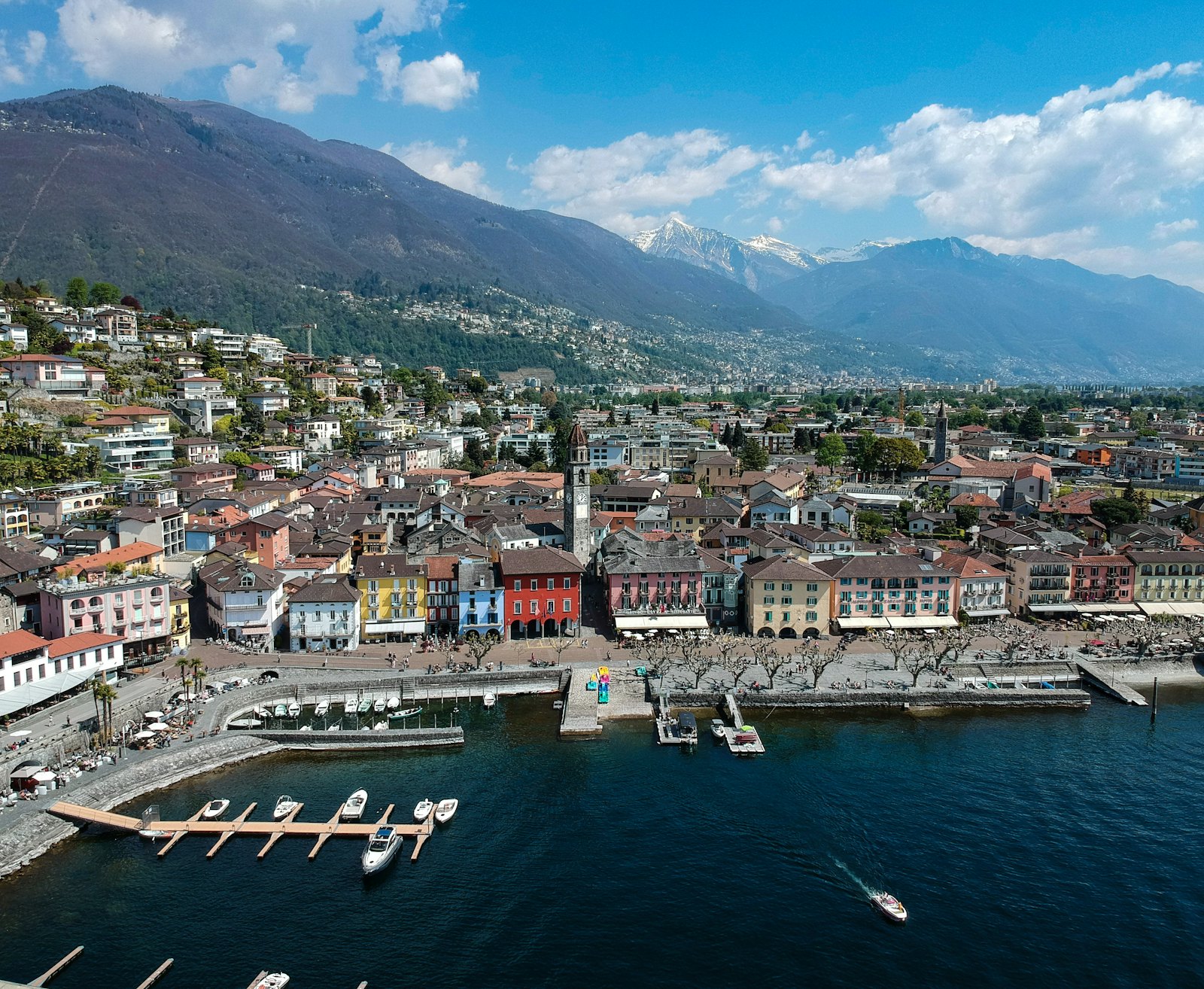
A small lakeside town on Lake Maggiore with a pastel waterfront, cobbled lanes and palm trees. Take a boat to a botanical garden on an island, walk up to a hilltop where utopians once lived, and catch a bus into wild green valleys.
- Best time to visit: April to June and September to October
- Daily budget (budget traveller): CHF 120 to CHF 450
- Ideal trip length: 3 to 7 days
Ascona sits on the northern shore of Lake Maggiore in Ticino, the Italian-speaking canton of Switzerland. It is a 15-minute bus ride from Locarno. The town is small, with about 5,500 residents. Its old centre, the Borgo, is a tangle of narrow lanes behind a lakefront promenade lined with pastel houses, café tables and palm trees. The lake surface here is about 193m above sea level, the lowest point in Switzerland, and the climate feels close to Mediterranean. Camellias flower in March and people swim from April or May. In the early 1900s, artists, vegetarians and free thinkers set up a colony on Monte Verità, the hill above town, and that history still shapes Ascona's art museums and its slightly bohemian reputation. From here you can take a boat to the Brissago Islands, ride the bus into the Verzasca valley or catch the Centovalli train west. Ascona is not cheap, and many hotels close in winter. But the free regional transport pass for overnight guests, plenty of lakeside benches for picnics and a well-connected hostel in Locarno make it workable for a solo traveller.
Ascona is a small lakeside town with an outsized history. Fishing families lived here for centuries. Then, around 1900, a group of northern Europeans arrived looking for a simpler life. They built a vegetarian, sun-worshipping colony on Monte Verità, the hill above the town, and dancers, writers, anarchists and painters followed. That history explains the art museums, the slightly eccentric villas and the reputation Ascona still has for culture. Today it is a smart resort with a long lakefront promenade, a car-free old town and excellent transport links. It is expensive, but a solo traveller can make it work. Stay in Locarno's hostel or a simple guesthouse, use the free Ticino Ticket for regional trains and buses, picnic on lakeside benches and spend your money on one boat trip and a few good grotto meals.
Getting here is easy. Trains from Zurich reach Locarno in about 2 hours 10 minutes via the Gotthard Base Tunnel, with a change in Bellinzona. The slower direct Treno Gottardo takes the old mountain line and is worth it for the views if you are not in a hurry. From Milan, regional trains run hourly to Locarno. Bus line 1 then brings you into Ascona in about 15 minutes. Once here, you walk. The Borgo, the Lungolago and Monte Verità are all within 20 minutes of each other on foot. Lake boats leave from the landing on the promenade for the Brissago Islands and Locarno. Buses and trains from Locarno station reach the Verzasca and Maggia valleys, the Centovalli and Bellinzona in under an hour.
Timing matters more than you might expect. Ascona's main attractions are seasonal. The Brissago Islands and the Casa Anatta museum ran from mid-March to early November in 2026, the town art museum keeps winter hours and shuts on Mondays, and many hotels close from November to March. Spring brings camellias and magnolias, and early summer is warm without the August heat. JazzAscona takes over the lakefront from late June to early July with free concerts, and the Locarno Film Festival fills the region in August. Autumn is chestnut and grape harvest season, with clear light and fewer people. Ascona is very safe and relaxed, and evenings mean dinner and a walk by the lake rather than nightlife.
Ascona itinerary
Arrive and find your feet on the lakefront
Morning: Take the train to Locarno, then bus line 1 to Ascona. Check in and make sure your accommodation has issued your Ticino Ticket.
Afternoon: Wander the Borgo lanes, look into the church of Santi Pietro e Paolo and peek at the Collegio Papio courtyard if it is open.
Evening: Walk the Lungolago at sunset with a gelato, then have dinner at a grotto in the old town, such as Grotto Baldoria.
Monte Verità and the town art museum
Morning: Visit the Museo Comunale d'Arte Moderna on Via Borgo (CHF 10, Tuesday to Saturday from 10am). Then picnic by the lake.
Afternoon: Walk up to Monte Verità, about 20 minutes uphill. Casa Anatta opens at 2pm from Wednesday to Saturday (CHF 12). Add the Elisarion for a CHF 15 combined ticket, then wander the grounds and the tea garden.
Evening: Walk back down through the woods. Aperitivo on Piazza Giuseppe Motta, then an early night.
Boat to the Brissago Islands
Morning: Catch a morning boat from the Ascona landing to Isola Grande. Pay the CHF 10 entry and walk the loop through the botanical garden, which takes about 90 minutes.
Afternoon: Lunch at the Villa Emden restaurant or bring a picnic. Take a boat back, then swim at Lido Ascona or a free beach near Moscia.
Evening: Dinner on the lakefront. If it is late June or early July, follow the music to the JazzAscona stages.
Locarno and Madonna del Sasso
Morning: Take bus 1 to Locarno. Walk across Piazza Grande and through the old town, then climb the old pilgrims' path to the Madonna del Sasso sanctuary, or take the funicular.
Afternoon: If the weather is clear, continue by cable car to Cardada for views over the lake and the Maggia delta. Check operating times and fares before you go.
Evening: Head back to Ascona for dinner, or eat in Locarno and take a late bus 1.
Verzasca valley and Ponte dei Salti
Morning: Take bus 1 to Locarno station and change to bus 321 for Lavertezzo, about 45 minutes. Go early to beat the crowds and the heat.
Afternoon: Photograph the Ponte dei Salti, walk part of the riverside Sentierone path and picnic on the rocks. Stay out of the water unless it is clearly calm. The current and the cold are serious.
Evening: Back to Ascona. Self-cater or have a pizza to give your budget a rest.
Centovalli train and Intragna
Morning: Ride the Centovalli railway from Locarno to Intragna, about 30 minutes. It is covered by the Ticino Ticket as far as the Italian border. Sit on the left for gorge views.
Afternoon: Explore Intragna's stone lanes and church tower, then take a short walk or ride further west towards Camedo and the border before heading back.
Evening: Farewell dinner of risotto and a glass of Merlot del Ticino at a lakefront trattoria in Ascona.
Slow morning and departure
Morning: Walk the lake road towards Moscia for an early swim or coffee with a view of the islands. On Thursday to Sunday, Museo Castello San Materno is another option.
Afternoon: Collect your bags and take bus 1 to Locarno station. If you have time, stop in Bellinzona to see the castles.
Evening: Continue north through the Gotthard Base Tunnel, or south to Milan for flights.
Best neighbourhoods
- Borgo (old town): The car-free heart of Ascona, with narrow cobbled lanes, the church of Santi Pietro e Paolo, the municipal art museum on Via Borgo and small grottos and wine bars. It is quiet at night and you can walk to the lake in two minutes.
- Lungolago and Piazza Giuseppe Motta: The lakefront promenade, with café terraces, the boat landing and the main JazzAscona stages. Rooms with lake views cost more here, and summer evenings are lively. This is the place to be if you want everything on your doorstep.
- Monte Verità: The wooded hill just above town, a 15 to 20 minute walk uphill. It has the Monte Verità hotel, the Casa Anatta museum, a tea garden and walking paths. Stay here for peace and views, but expect a steep walk back after dinner.
- Moscia and the Ronco road: The lakeshore road heading southwest towards Ronco sopra Ascona and Brissago. Here you get small pebble beaches, villas and steep hillsides. A bus runs along the road, but places to stay are spread out and quieter.
- Locarno: The bigger neighbouring town, about 15 minutes away on bus line 1. It has the main railway station, Piazza Grande, the youth hostel and more mid-range hotels. It is the best budget base, and you can get to Ascona easily.
Must-do experiences
- Visit the Brissago Islands: Isola Grande holds a botanical garden with well over 1,700 subtropical species, plus Villa Emden and its restaurant. Entry is CHF 10, with a short guided tour at weekends, and boats leave from the Ascona landing. The 2026 season ran from 18 March to 8 November.
- Walk up to Monte Verità: Climb the hill where the reformers' colony began in 1900. Casa Anatta holds Harald Szeemann's exhibition on the colony's history, and admission is CHF 12, or free with a Swiss Travel Pass. Walk the grounds and the tea garden afterwards.
- Stroll the Lungolago at sunset: The lakefront promenade is the centre of town life. Buy a gelato, find a bench and watch the boats and the hills on the Gambarogno shore across the water as the light fades.
- See the art at the Museo Comunale d'Arte Moderna: A late 16th-century palazzo on Via Borgo houses the town collection, including works by Marianne Werefkin and other artists linked to Ascona. It reopened in June 2026 after renovation, and adult entry is CHF 10.
- Swim at Lido Ascona or Moscia: Lido Ascona has lawns, pools and lake access near the Maggia delta, with a summer entry fee. For a free dip, take the bus or walk along the lake road to the small pebble beaches around Moscia.
- Spend a day in the Verzasca valley: Take buses via Locarno to Lavertezzo and the double-arched Ponte dei Salti over green, clear water. It is beautiful but the river is cold and dangerous, so admire it from the rocks unless conditions are calm.
- Ride the Centovalli railway: The narrow-gauge line leaves Locarno and runs west over bridges and gorges towards Domodossola in Italy. Get off at Intragna for a stone village and a church tower, then walk or ride back.
Hidden gems
- Collegio Papio, a Renaissance courtyard with arcades next to the church of Santa Maria della Misericordia and its late Gothic frescoes. It is a working school, so look in respectfully when it is open
- Museo Castello San Materno, a small restored castle and villa just west of the old town. It opens Thursday to Sunday, with a combined ticket for it and the town art museum
- The Padiglione Elisarion at Monte Verità, a round building housing a huge circular painting. Entry is CHF 5, or CHF 15 combined with Casa Anatta
- The Casa del Tè on Monte Verità, a tea house set in a small tea garden, a calm place for a cup after the museum
- The quiet lake road towards Ronco sopra Ascona early in the morning, before the traffic picks up, with views back over the Brissago Islands
Daily budget
- Accommodation: budget CHF 45-80 / night (dorm bed at the Locarno youth hostel), mid-range CHF 150-260 (3-star hotel or guesthouse in Ascona), splurge CHF 500+ (Castello del Sole, Eden Roc). Single rooms often cost nearly as much as doubles. Every overnight stay should come with the Ticino Ticket. Prices peak during JazzAscona and the film festival, and many hotels close in winter.
- Food: budget CHF 30-50 / day (supermarket breakfast and picnic, one simple meal), mid-range CHF 70-110 (café lunch and a grotto or trattoria dinner), splurge CHF 150+ (lakefront restaurant tasting menus). Coop and Migros are your friends. A pizza or risotto costs roughly CHF 20-30, a coffee about CHF 4-5 and a glass of Merlot about CHF 6-9. Prices are rough guides.
- Transport: budget CHF 0 / day (Ticino Ticket covers regional trains and buses), mid-range CHF 15-40 (boat trips on the lake), splurge CHF 80+ (taxis, private boat hire). The biggest cost is getting to Ticino. Zurich to Locarno costs roughly CHF 70-80 one way at full fare, much less with Supersaver tickets or a half-fare card. A return boat from Locarno to the Brissago Islands costs about CHF 37.60.
- Activities: budget CHF 0-15 / day (lakefront, old town, free hikes, one museum), mid-range CHF 20-45 (islands entry plus boat, Casa Anatta), splurge CHF 100+ (guided tours, spa days). Brissago Islands entry is CHF 10, Casa Anatta CHF 12, the town art museum CHF 10 and the Elisarion CHF 5. A Swiss Travel Pass or Swiss Museum Pass gives free entry to Casa Anatta, and the Ticino Ticket gives discounts.
- Drinks & nightlife: budget CHF 5-15 (supermarket wine on a lakeside bench), mid-range CHF 25-50 (aperitivo on the Lungolago), splurge CHF 80+ (cocktails at a lakefront hotel bar). Nightlife means aperitivo and late dinners. The big exception is JazzAscona, when free concerts on several stages run late into the night. A beer at a bar costs roughly CHF 6-9.
Where to stay
- Social hostel in Locarno (CHF 45-80 / night): Ascona has no real hostel. The Swiss Youth Hostels property in Locarno is the closest dorm option, with a short bus ride to Ascona and walking distance to the station. Check opening dates, because hostels in Ticino can close for part of the winter.
- Boutique hotel in Lungolago (CHF 160-280 / night): Albergo Carcani is a family-run hotel on the lakefront promenade, steps from the boat landing and the JazzAscona stages. Lake-view rooms cost more but are worth it.
- Apartment in Borgo or Moscia road (CHF 120-220 / night): Holiday flats in and around Ascona come with kitchens, which saves a lot on food in Switzerland. Weekly stays are often cheaper per night. Confirm that the Ticino Ticket is included.
- Splurge in Lakefront east of the centre (CHF 500-1,200+ / night): Castello del Sole sits in large grounds by the Maggia delta, and Eden Roc is on the lakefront with spa and pools. Both are classic Ascona luxury, with beach access.
What to eat
- Risotto: Ticino's comfort dish, often made with saffron or local mushrooms and served at grottos and lakefront trattorias
- Polenta with braised meat or cheese: slow-cooked cornmeal, a staple of the valleys, especially good in autumn
- Luganighetta: a thin, spiced Ticino pork sausage, often grilled and served with polenta or risotto
- Merlot del Ticino: the canton's signature red wine, sold by the glass in grottos and wine bars for a few francs more than a coffee
- Vermicelles and chestnut dishes: sweet chestnut purée desserts and roasted chestnuts appear from autumn, when the valleys celebrate the harvest
- A meal at a grotto, a rustic stone tavern with granite tables. Grotto Baldoria in the old town is a well-known option for simple set dishes
Day trips
- Brissago Islands (About 15-20 minutes by boat from the Ascona landing): Two small islands in the lake. Isola Grande holds Switzerland's subtropical botanical garden, with more than 1,700 species on a loop path of about 1.5km, plus the historic Villa Emden and its restaurant. Lake boats from Ascona, Locarno, Brissago or Porto Ronco. Entry is CHF 10, with CHF 2 off with local guest cards, and the boat is extra. The 2026 season ran from 18 March to 8 November, with some winter weekend openings in recent years.
- Verzasca valley and Ponte dei Salti (About 20km by road, roughly 1 hour by bus from Ascona): A narrow valley of clear green water, granite boulders and stone villages. The double-arched Ponte dei Salti at Lavertezzo is the classic photo, and the riverside path continues up the valley. The Verzasca dam is near the valley mouth. Bus 1 to Locarno station, then bus 321 towards Sonogno, getting off at Lavertezzo. It is covered by the Ticino Ticket. Go early in summer, as buses and the riverbanks get crowded.
- Centovalli and Intragna (About 30 minutes by train from Locarno): The Centovalli railway winds west through a valley of gorges, viaducts and chestnut woods. Intragna is a stone village with one of the tallest church towers in Ticino, and a good starting point for short walks. Take the Centovalli train from Locarno station. The Ticino Ticket covers it as far as Camedo at the Italian border. For the full ride to Domodossola, buy an extra ticket, or book a panoramic seat, which carries a supplement.
When to visit
- Spring (March - May): 12-22°C, mild days, camellias and magnolias in bloom, occasional rainy spells. Crowds: Moderate, busy over Easter and Ascension weekends. A lovely time to come. The islands and museums reopen in mid-March, the gardens are at their best and prices are lower than in summer. Pack a light rain jacket.
- Summer (June - August): 24-30°C, warm lake water, hot afternoons with thunderstorms. Crowds: High, especially during JazzAscona and the Locarno Film Festival. Perfect for swimming and evenings by the lake. Book accommodation well ahead for late June to early July and for August, and plan valley hikes for early mornings.
- Autumn (September - October): 15-24°C, settled and clear, cooler nights. Crowds: Moderate, falling through October. The locals' pick. The water is still warm in September, chestnuts and new wine appear and the valley walks are glorious. Many places start closing in early November.
- Winter (November - February): 2-10°C, often sunny, damp and grey at times. Crowds: Very low. Quiet and cheaper, but many hotels, the Brissago Islands and the Monte Verità museum close. Locarno stays more active, with Christmas markets. Come for calm walks rather than sights.
Entry rules for your passport
Visa rules for Switzerland depend on the passport you travel on. Check the official source before you book: European Commission: Schengen visa policy
Getting there
The nearest big airports are Zurich and Milan Malpensa. From Zurich Airport or Zurich HB, trains run through the Gotthard Base Tunnel to Bellinzona, where you change for Locarno. The fastest journeys take about 2 hours 10 minutes from Zurich HB. The direct Treno Gottardo over the old mountain line takes about 3 hours 20 minutes and is the scenic choice. Full fares are roughly CHF 70-80 one way in second class, with much cheaper Supersaver tickets if you book early on the SBB app. From Milan, the RE80 regional train runs hourly from Milano Centrale to Locarno in about 1 hour 50 minutes, and Malpensa connects into Milan or via Gallarate. The Centovalli railway also links Locarno with Domodossola in Italy, where you can join trains towards Milan and Geneva. From Locarno station, FART bus line 1 reaches Ascona in about 15 minutes, every 15 to 20 minutes. In season, lake boats from Locarno also stop at Ascona. Switzerland is in the Schengen Area, so check the current entry requirements for your passport.
Border checks: non-EU visitors (other than Swiss, Norwegian, Icelandic, Liechtenstein, Andorran, Monegasque, San Marinese and Vatican citizens, and holders of an EU residence permit or long-stay visa) are registered in the EU's Entry/Exit System (EES) instead of getting a passport stamp. On your first crossing, officers take your photo and/or fingerprints, so allow extra time at passport control. ETIAS, the planned travel authorisation, is not in operation yet, so don't pay any website for one.
Getting around
Ascona is compact and you can walk everywhere in the centre. FART bus line 1 links Ascona with Locarno station every 15 to 20 minutes and takes roughly 10 to 15 minutes. A single costs roughly CHF 2.50-4.50 depending on zones. Bus line 316 follows the lake road from Locarno through Ascona towards Brissago, passing Moscia. If you stay overnight in a hotel, hostel or campsite in Ticino, ask for the Ticino Ticket. It gives free travel on regional trains and buses across the canton and discounts on boats, the Brissago Islands and several museums. Lake boats stop at the Ascona landing for Locarno, the Brissago Islands and Brissago. Timetables are much thinner outside the main season, and boat fares are not included in the Ticino Ticket on most routes. Regional trains from Locarno station reach Bellinzona in about 25 minutes and Lugano in under an hour. Taxis are expensive, so use buses after dark. Cycling on the flat Maggia delta paths is pleasant, and bike hire is available in Locarno.
Safety
Ascona is very safe, and crime against visitors is rare. Watch your bag in crowds during JazzAscona and the Locarno Film Festival. The real risks are outdoors. Mountain rivers such as the Verzasca and Maggia look calm, but they are icy and fast, and water levels can rise suddenly after rain or releases from dams upstream. People drown there most summers, so swim only where locals do and when it is clearly calm. Keep away from boat lanes when swimming in the lake. Summer afternoons can bring sudden, violent thunderstorms, so start hikes early and check MeteoSwiss. Wear proper shoes on steep valley paths, and check for ticks after walking in long grass. Emergency numbers are 112 (general), 144 (ambulance) and 117 (police). Healthcare is excellent but expensive, so get travel insurance, and EU travellers should bring an EHIC.
Solo travel tips
- Always claim your Ticino Ticket: It is the single best money-saver here. Regional trains and buses become free, and you get discounts on the islands and museums. Ask for it at check-in if it has not arrived by email.
- Base yourself in Locarno if money is tight: The youth hostel and cheaper hotels are in Locarno, and bus 1 gets you to Ascona's lakefront in about 15 minutes. Spend your evenings in Ascona and sleep in Locarno.
- Check what day it is: The town art museum shuts on Mondays, Casa Anatta opens only Wednesday to Sunday, and San Materno only Thursday to Sunday. Plan museum days around these times and use Mondays and Tuesdays for valleys and boats.
- Picnic like a local: Coop and Migros sell good bread, cheese and salami. The Lungolago benches, the Brissago Islands and the Verzasca rocks make perfect free lunch spots.
- Safety for solo travellers: The main dangers are rivers, storms and steep paths, not people. Never swim alone in mountain rivers, start hikes early, tell someone your route and save 112 and 144 in your phone.
- Join something social: Free concerts at JazzAscona, guided weekend tours on the Brissago Islands and the hostel common room in Locarno are easy ways to meet people. Grottos often have shared tables too.
Cultural etiquette
- Ticino is Italian-speaking. Greet people in shops and restaurants with 'buongiorno' or 'buonasera' and say 'grazie' when you leave.
- Sunday is quiet. Most shops close, though cafés, restaurants and museums mostly open. Stock up on Saturday.
- Respect quiet hours, usually from around 10pm and over lunchtime in residential areas, and keep noise down in the old town lanes at night.
- Dress modestly in churches, with covered shoulders, and do not walk around town in swimwear away from the lido and beaches.
- Recycle properly. Swiss towns take waste sorting seriously, and bins on the promenade are divided by type.
- Be on time. Buses, boats and trains leave to the minute, and tour start times are firm.
- Grottos are simple and informal. Expect a short menu, shared tables and sometimes cash only. Ask before you sit at a table that is already partly taken.
Frequently asked questions
How do I get to Ascona?
Take a train to Locarno, then bus line 1, which takes about 15 minutes. From Zurich, the fastest trains take roughly 2 hours 10 minutes with a change in Bellinzona. The direct scenic Treno Gottardo over the old Gotthard line takes about 3 hours 20 minutes. From Milan, an hourly regional train reaches Locarno in about 1 hour 50 minutes.
How many days do I need in Ascona?
Three days covers the old town, Monte Verità and the Brissago Islands. Five days adds Locarno and the Verzasca valley. With a week you can take the Centovalli railway, visit Bellinzona's castles and have a slow beach day without rushing.
When is the best time to visit Ascona?
April to June and September to October bring mild weather, open attractions and fewer crowds. July and August are hot and busy, with JazzAscona from late June and the Locarno Film Festival in August. From November to mid-March many hotels close and the Brissago Islands and Monte Verità museum shut, though the town stays pleasant for walks.
What is the Ticino Ticket and how do I get one?
It is a free pass for overnight guests at hotels, hostels and campsites in Ticino. It covers regional trains and buses across the canton for your stay and gives discounts on the Brissago Islands, lake boats, lidos and some museums. Your accommodation issues it, usually by email or on arrival, so ask if you do not receive it.
How much does it cost to visit the Brissago Islands?
Garden entry is CHF 10 for adults, or CHF 8 with a local guest card, and free for under-16s. The boat is extra. A return trip from Locarno costs about CHF 37.60, and from Ascona it is shorter and cheaper. The 2026 season ran from 18 March to 8 November, so check the 2027 dates before you plan.
Is Ascona expensive for a solo traveller?
Yes, it is Switzerland. Budget travellers can manage on around CHF 120-160 a day by staying at the Locarno youth hostel, using the free Ticino Ticket, picnicking from Coop or Migros and eating one simple grotto meal a day. A lakefront hotel and restaurant dinners push costs past CHF 300 a day.
Do people speak English in Ascona?
Italian is the local language, and German is widely spoken because so many visitors come from German-speaking Switzerland. English is common in hotels, museums and tourist businesses. A few Italian words, such as buongiorno and grazie, go down well in shops and grottos.
What entry rules apply to Switzerland in 2026?
Switzerland is in the Schengen Area. Many nationalities, including UK, US, Canadian and Australian citizens, can visit visa-free for up to 90 days in any 180-day period. The EU Entry/Exit System now registers non-EU travellers at Schengen borders, and ETIAS pre-travel authorisation is expected to follow. Rules change, so check the Swiss State Secretariat for Migration website and your own government's travel advice before you book.
More about Ascona
Tours and activities in Ascona | Ascona in 3 days | Ascona in 5 days | Ascona in 7 days
Joy Plus home | Destinations | Itineraries | Activities | Flights | Budget planner | Calendar | Map | Blog | Lifetime access