Destinations / Europe
Assisi, Italy travel guide
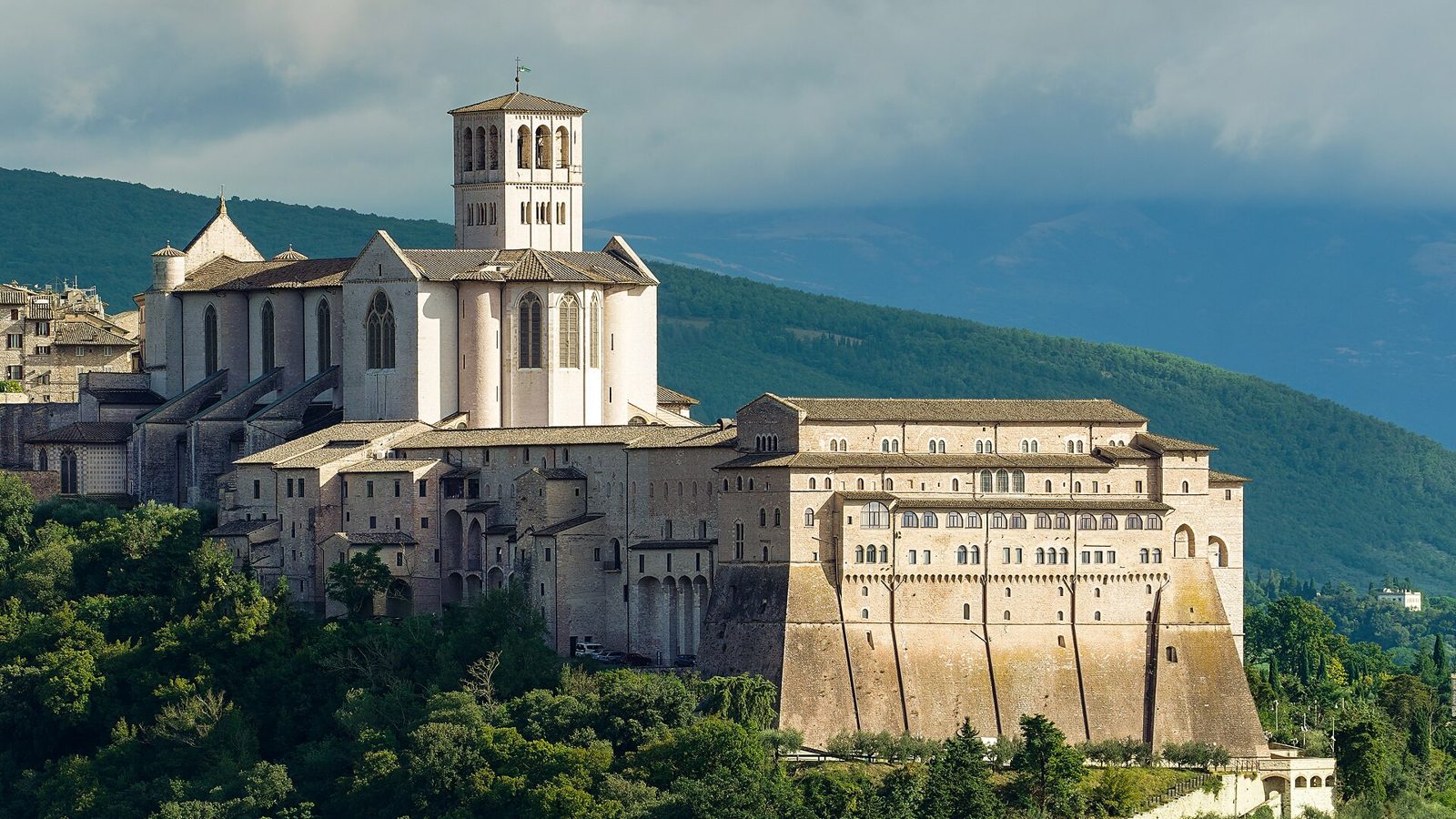
A pale pink stone town on the slopes of Monte Subasio, built around the life of St Francis. You see Giotto's frescoes in the great basilica, walk up to a hermitage in the oak woods and watch the Umbrian valley turn gold from the castle walls.
- Best time to visit: April to June and September to October
- Daily budget (budget traveller): $70 to $215 USD
- Ideal trip length: 3 to 5 days
Assisi sits on the western flank of Monte Subasio in Umbria, looking out over the flat green valley between Perugia and Spoleto. It is a short train ride from Perugia and about two hours from Rome. This is where St Francis was born, lived and died, and the town is still shaped by him. The huge Basilica of St Francis stands at one end of the ridge, the Basilica of Santa Chiara at the other, and between them run steep lanes of pink and cream Subasio stone, full of flower boxes, small churches and Roman remains. The main square is built over the old Roman forum, and a Roman temple front still faces it. Day trippers and pilgrim groups fill the streets from mid-morning to late afternoon. Early and late in the day it goes quiet again, and that is the main reason to stay. You can walk up to the Eremo delle Carceri in the woods, climb to the Rocca Maggiore for the view and eat truffle pasta in a stone-vaulted trattoria. 2026 marks 800 years since Francis died, so expect more visitors and events than usual. Even so, cheap convent guesthouses, free churches and cheap regional trains make Assisi an easy and affordable base for a solo traveller in Umbria.
Assisi is a medieval hill town of about 28,000 people across the whole commune, though only a few thousand live inside the old walls. It runs along a ridge of Monte Subasio, and its pale stone, quarried from the mountain, glows pink at sunset. Francis was born here in 1181 or 1182, and Clare a few years later. Both are buried here, and the two great basilicas named after them stand at either end of town, with the Roman temple, the cathedral and the castle in between. Most visitors arrive by coach, spend a few hours at the Basilica of St Francis and leave. If you stay a few nights, you get the better version: the upper church at opening time, the lanes empty after dinner, a morning walk through the woods to the Carceri and the valley lights from the Rocca. Accommodation is good value, and convent guesthouses and small hotels keep costs down.
Getting here is easy by train. Regional services stop at Assisi station in Santa Maria degli Angeli, about 20 to 25 minutes from Perugia, around 2 hours from Rome and 2.5 to 3 hours from Florence. Line C buses run from the station up to the old town roughly every 30 minutes, for about €1.30 if you buy your ticket at the station or €1.50 on board. The nearest airport is Perugia's, around 15km away, and Rome Fiumicino is about 2.5 to 3 hours by train. Once you are in the old town, walk, but expect hills and steps. Base yourself near Via San Francesco for the basilica, around Piazza del Comune for cafés and food, or near Santa Chiara for the bus and the walk to San Damiano.
Timing shapes the trip. Spring and autumn are the best for walking, with green or golden hills and comfortable days. Calendimaggio in early May and the Feast of St Francis on 3 and 4 October fill every bed. July and August are hot and busy with groups, and winter is cold, quiet and cheap. 2026 is the 800th anniversary of Francis's death, so there have been far more pilgrims than usual, and the centenary programme continues into January 2027. A tourist tax of a few euros a person per night is charged, rising by €1 in 2026, and it only applies to the first nights of a stay. Assisi is safe and calm, and English is widely spoken in hotels. Nights are quiet. If you want nightlife, go to Perugia. If you want frescoes, footpaths and a glass of Sagrantino under stone arches, stay here.
Assisi itinerary
Arrive and get your bearings
Morning: Take the train to Assisi station and the Line C bus up the hill. Drop your bag and get a coffee near Piazza del Comune.
Afternoon: Walk the length of Via San Francesco and look into the main square, the Temple of Minerva and the Santuario della Spogliazione.
Evening: Watch the sunset from the terrace in front of Santa Chiara, then have strangozzi with truffle at a trattoria such as Pallotta.
The Basilica of St Francis
Morning: Be at the Basilica of St Francis when it opens. See the upper church frescoes, the lower church and the crypt before the groups arrive.
Afternoon: Walk down through the Bosco di San Francesco to the river and back, or rest in the shade. Later, climb to the Rocca Maggiore (€8) for the view.
Evening: An early aperitivo with a glass of Grechetto, then an evening walk through the empty lanes of the upper town.
Santa Chiara, San Rufino and San Damiano
Morning: Visit the Basilica of Santa Chiara and the San Damiano crucifix, then climb to the cathedral of San Rufino and its crypt.
Afternoon: Walk about 20 minutes downhill through olive groves to San Damiano. Stay for the quiet, then walk back up slowly.
Evening: Torta al testo and a plate of cured meats in a simple osteria. Look in on the Roman Forum museum if you bought the combined ticket.
Eremo delle Carceri and Monte Subasio
Morning: Set off early from Porta Cappuccini and walk about an hour uphill to the Eremo delle Carceri. Visit the caves and woodland paths in silence.
Afternoon: Fit walkers can carry on to the open meadows near the top of Monte Subasio. Pack a picnic and plenty of water, as there is little up there.
Evening: Walk or take a taxi back down. Treat yourself to a proper dinner with a glass of Sagrantino.
Porziuncola and Spello
Morning: Take the bus down to Santa Maria degli Angeli and visit the basilica with the Porziuncola chapel inside.
Afternoon: Take the train one stop to Spello (about 10 minutes). Walk its flower-filled lanes and see the Pinturicchio frescoes in Santa Maria Maggiore.
Evening: Dinner in Spello, or take the train back for a last evening walk in Assisi.
A day in Perugia
Morning: Take the train to Perugia (about 20 to 25 minutes) and ride the minimetro up to the old town.
Afternoon: Walk Corso Vannucci, see the Fontana Maggiore and the National Gallery of Umbria, and explore the underground Rocca Paolina.
Evening: Stay for an aperitivo in Perugia's livelier student bars, then take a regional train back. Check the last bus up from Assisi station.
Slow morning and depart
Morning: Have a last early walk to Piazza del Comune and the basilica while the town is still quiet. Buy rocciata from a bakery.
Afternoon: Take the Line C bus down to the station and catch a train to Rome, Florence or Perugia airport. Check times the day before.
Evening: Arrive at your next stop, or fly home.
Best neighbourhoods
- Piazza del Comune and the centre: The middle of town, set around the long main square with the Temple of Minerva, the medieval Torre del Popolo and the entrance to the Roman Forum below. Most cafés, trattorias and shops are within a few minutes of here, and you are halfway between the two basilicas. It is busy by day but calm at night.
- Via San Francesco and the basilica end: The long, gently sloping street that runs west from the centre to the Basilica of St Francis, lined with old palazzi, guesthouses and souvenir shops. It is the best base if the basilica is your main reason for coming. The Line C bus stops at Piazza Unità d'Italia, just below the basilica.
- Santa Chiara and Porta Nuova: The eastern end of town around the striped Basilica of Santa Chiara and its wide terrace over the valley. There are several small hotels and religious guesthouses here, and the Porta Nuova bus stop and car park are close. From here it is an easy walk downhill to San Damiano.
- San Rufino and the upper town: The steep lanes above the main square around the cathedral of San Rufino, Piazza Matteotti and the climb to the Rocca Maggiore. It is quieter and more residential, with good views and a few apartments. Expect stairs. The road to the Eremo delle Carceri starts at Porta Cappuccini nearby.
- Santa Maria degli Angeli: The modern town on the plain below, built around the huge basilica that holds the Porziuncola chapel. The train station is here, along with cheaper hotels, supermarkets and the main hostel options. It is practical for early trains, but you will need the bus or a taxi up to the old town.
Must-do experiences
- See the Basilica of St Francis: Two churches stacked on top of each other, plus the crypt with Francis's tomb. The upper church has the famous fresco cycle of his life, and the lower church has work by Cimabue, Simone Martini and Pietro Lorenzetti. Entry is free, but shoulders and knees must be covered. Go at opening time.
- Walk up to the Eremo delle Carceri: Francis and his followers came to pray in the caves of this hermitage in the holm oak woods, about 4km above town. It is free. The walk up from Porta Cappuccini takes about an hour on a steep road, with a path through the woods for part of it. Bring water and go early in summer.
- Climb to the Rocca Maggiore: The 14th-century fortress at the top of town has the best views over Assisi and the valley. A full ticket is €8, or €14 for a combined ticket that also covers the Roman Forum, the Pinacoteca and the Torre del Popolo, with an audioguide. In winter it closes at 5pm, so time it for the late afternoon light.
- Linger in Piazza del Comune: The main square sits on top of the Roman forum. Look at the six Corinthian columns of the Temple of Minerva, now a church, then go down into the Roman Forum museum underneath the square. Coffee on the square costs a little more than in the side lanes.
- Visit Santa Chiara and San Damiano: The Basilica of Santa Chiara holds the tomb of St Clare and the painted crucifix that Francis is said to have heard speak at San Damiano. Both are free. Then walk 20 minutes downhill through olive groves to San Damiano itself, a small, plain convent that feels much as it must have done in Francis's day.
- Find the Porziuncola: Inside the giant domed Basilica of Santa Maria degli Angeli, near the station, is the tiny stone chapel where Francis founded his order and where he died. It is free and takes an hour, so it fits well with arriving or leaving by train. The rose garden and the chapel where Francis died are also inside.
- Pay respects at the Santuario della Spogliazione: This small church just below the main square is where the young Francis is said to have stripped off his fine clothes and given up his inheritance. It now also holds the tomb of Carlo Acutis, canonised in 2025, so it can be crowded. Entry is free, and silence is expected.
Hidden gems
- The Bosco di San Francesco, a FAI-run stretch of woods and fields below the basilica with a small medieval church, an old mill and a land art piece, with a quiet trail down to the river
- The Rocca Minore, the smaller ruined fortress above the eastern end of town, reached by a steep lane and usually empty
- The crypt and cistern under the cathedral of San Rufino, where you can see Roman walls and the font where Francis and Clare were baptised
- Via Santa Maria delle Rose and the lanes around it in the upper town, where people still fill every step and balcony with geraniums
- Piazza del Comune at 7am, before the shops open and the groups come up from the car parks, when you mostly have the Temple of Minerva to yourself
Daily budget
- Accommodation: budget €25-45 / night (hostel dorm or convent single), mid-range €80-140 (3-star hotel or old town B&B), splurge €220+ (Nun Assisi Relais & Spa or a historic residence). Prices rise at Easter, Calendimaggio, around 4 October and on summer weekends. A tourist tax of about €2-6 per person per night is added, for the first nights of a stay only. Some religious guesthouses have curfews.
- Food: budget €20-30 / day (bar breakfast, torta al testo, supermarket picnic), mid-range €40-60 (trattoria lunch and dinner with wine), splurge €80+ (truffle tasting menu and Sagrantino). A cappuccino and pastry costs about €2.50-3.50. Pasta in a trattoria is around €10-16, and truffle dishes cost more. Prices are rough guides.
- Transport: budget €0-5 / day (walking, Line C bus), mid-range €5-15 (bus plus a regional train to Spello or Perugia), splurge €30-60 (taxis, a car for Montefalco or a driver). Line C is about €1.30 bought in advance or €1.50 on board. The train to Perugia costs around €3 and to Rome around €12-15. A taxi from the station is roughly €15-20.
- Activities: budget €0-8 / day (free basilicas and Carceri, Rocca at €8), mid-range €14-25 (combined museum ticket, San Rufino museum, Bosco di San Francesco), splurge €40+ (private guided tours, truffle or wine tours). The main churches, the Carceri, San Damiano and the Porziuncola are free. The €14 combined ticket covers the Rocca, the Roman Forum, the Pinacoteca and the Torre del Popolo.
- Drinks & nightlife: budget €4-8 (a glass of local wine or a beer), mid-range €15-25 (a few glasses in a wine bar), splurge €40+ (a wine tasting in Montefalco). A glass of house wine is about €4-6 and an espresso around €1.20-1.50 at the bar. Assisi goes quiet early, so nightlife means a wine bar or a late passeggiata.
Where to stay
- Social hostel in Santa Maria degli Angeli and the edge of town (€25-40 / night (dorm)): Assisi's few hostels sit on the edge of town or down near the station, so they are good for trains and meeting other walkers and pilgrims. Check how far you are from the Line C bus stop.
- Boutique hotel in Via San Francesco (€90-170 / night): Small hotels along Via San Francesco, such as Hotel Giotto, put you minutes from the basilica, and many rooms look over the valley. You can be first in line at opening time.
- Apartment in San Rufino and the upper town (€70-130 / night): Apartments in old stone houses give you a kitchen and a quiet, local street. Expect steep lanes and stairs, and check where the nearest car park or bus stop is if you have luggage.
- Splurge in Near Piazza Matteotti (€220-450+ / night): Nun Assisi Relais & Spa is set in a former convent, with a spa in Roman ruins underneath. It is quiet and close to the cathedral, and the Carceri road starts nearby.
What to eat
- Strangozzi with black truffle: thick hand-rolled Umbrian pasta with local truffle shavings, on almost every menu in town
- Torta al testo: a flat griddle bread split and filled with ham, cheese or sautéed greens, cheap and filling for lunch
- Rocciata: Assisi's rolled pastry with apple, walnuts, raisins and cinnamon, sold in bakeries, especially in autumn and winter
- Porchetta: slow-roasted pork with fennel and garlic, sold in sandwiches from vans and delis around the region
- Sagrantino di Montefalco and Grechetto: the big local red and the crisp white, at a few euros a glass in wine bars
- A plate of Umbrian cured meats and pecorino with a glass of Rosso di Assisi, at simple trattorias such as Trattoria Pallotta just off the main square
Day trips
- Spello (About 12km south-east, 10 minutes by train): A small, steep hill town of pink stone and flower-filled lanes, with Roman gates and Pinturicchio's frescoes in Santa Maria Maggiore. It is famous for the Infiorata flower carpets at Corpus Domini. Take a regional train one stop from Assisi station for about €2. Fit walkers can also hike there over the shoulder of Monte Subasio in about 4 to 5 hours.
- Perugia (About 25km west, 20 to 25 minutes by train): Umbria's lively capital, with a grand main street, the Fontana Maggiore, the National Gallery of Umbria and a busy student scene. It is a good contrast to quiet Assisi. Take a regional train to Perugia Fontivegge for around €3, then the minimetro up to the old town. Check the last train back and the last Line C bus from Assisi station.
- Spoleto (About 45km south, 40 minutes to 1 hour by train): A handsome hill town with a fine cathedral, a Roman theatre, the Rocca Albornoziana and the medieval Ponte delle Torri aqueduct over a wooded gorge. Take a regional train, usually changing at Foligno, for around €4-5. Escalators and moving walkways help you up into the old town from the station area.
When to visit
- Spring (April - May): 14-23°C, fresh mornings, some showers. Crowds: Moderate, very busy at Easter and during Calendimaggio in early May. Lovely for walking to the Carceri and on Subasio, with wildflowers and green hills. Book early for Easter and Calendimaggio.
- Early summer (June): 22-29°C, sunny, long evenings. Crowds: Moderate to busy, with lots of school and pilgrim groups. Long, light evenings and outdoor dinners. Walk early, do the churches at midday and save the Rocca for late afternoon.
- High summer (July - August): 27-34°C, hot and dry on the exposed streets. Crowds: Busy by day, calmer in the evenings. Good for evening concerts and films at the Rocca, but the heat is hard work on the hills. Start early, rest in the afternoon and carry water.
- Autumn and winter (September - March): September and October 15-25°C, then 2-12°C in winter, with frost and the odd snowfall. Crowds: Busy in September and around 4 October, quiet from November. September and October are the locals' pick, with harvest food and soft light. Winter is cold and peaceful, with nativity scenes at Christmas and the lowest prices.
Entry rules for your passport
Visa rules for Italy depend on the passport you travel on. Check the official source before you book: European Commission: Schengen visa policy
Getting there
There is no airport in Assisi itself. The nearest is Perugia's Umbria International Airport, about 15km away, with flights from a handful of European cities. A taxi from there takes around 20 minutes. Rome Fiumicino and Ciampino are the main gateways, about 2.5 to 3 hours away including the train from Rome. Florence airport is a similar distance. By rail, regional trains reach Assisi station in Santa Maria degli Angeli in about 2 hours from Rome Termini for around €12-15, with some direct trains and others changing at Foligno. From Florence it takes 2.5 to 3 hours, usually changing at Terontola, and Perugia is only 20 to 25 minutes away. From the station, take the Line C bus up to the old town, which costs about €1.30 at the newsagent or €1.50 on board, or book through to 'Assisi Centro' with Trenitalia so the bus is included. If you drive, the old town is a limited traffic zone with camera enforcement, so leave the car in a car park outside the walls. Mojano, Porta Nuova and Matteotti are the most useful.
Border checks: non-EU visitors (other than Swiss, Norwegian, Icelandic, Liechtenstein, Andorran, Monegasque, San Marinese and Vatican citizens, and holders of an EU residence permit or long-stay visa) are registered in the EU's Entry/Exit System (EES) instead of getting a passport stamp. On your first crossing, officers take your photo and/or fingerprints, so allow extra time at passport control. ETIAS, the planned travel authorisation, is not in operation yet, so don't pay any website for one.
Getting around
The historic centre is small enough to walk, but it is long and steep. Walking from the Basilica of St Francis to Santa Chiara takes about 20 minutes, and the climb to the Rocca or the cathedral involves plenty of steps. Most of the old town is a limited traffic zone, so do not drive in. Park at the Mojano, Porta Nuova, Matteotti or Giovanni Paolo II car parks, and check which ones have lifts or escalators up to town. The train station is 5km away in Santa Maria degli Angeli. Busitalia's Line C runs from outside the station up to the old town roughly every 30 minutes, stopping below the basilica, near Porta Nuova and at Piazza Matteotti. A ticket costs about €1.30 from the station newsagent or €1.50 from the driver, and you need exact change. Validate it on board. If you book a Trenitalia ticket to 'Assisi Centro', the bus is included. A taxi from the station costs roughly €15-20. To reach the Eremo delle Carceri and Monte Subasio, walk or take a taxi. Regional trains link Assisi with Perugia, Spello, Foligno and Spoleto cheaply.
Safety
Assisi is very safe, and serious crime against visitors is rare. Watch your bag in crowds at the basilica, on the Line C bus and on big feast days. The main risks are physical. The stone lanes are steep and get very slippery in rain, and the steps down from the Rocca have uneven edges. In July and August the heat on exposed streets is strong, so carry water and rest in the cool churches. On the Carceri road and Monte Subasio paths, take water, tell someone where you are going and start back well before dark. Phone signal can be patchy in the woods. Earthquakes happen in Umbria, so look at your accommodation's emergency information. Tap water is safe, and there are drinking fountains around town. The EU emergency number is 112. EU travellers should carry an EHIC and UK travellers a GHIC, and everyone else needs travel insurance with medical cover.
Solo travel tips
- Sleep in a convent guesthouse: Many religious houses in Assisi rent clean single rooms at good prices, often with gardens and valley views. Some have curfews, so check the closing time before you book.
- Beat the coach groups: Tour groups arrive mid-morning and leave by late afternoon. See the basilica at opening time and the main square after 5pm, and you will have more of the town to yourself.
- Buy the bus ticket before you board: Get Line C tickets from the station newsagent or a tabacchi, as drivers only sell with exact change. Validate on board, or book a train ticket to 'Assisi Centro' so the bus is included.
- Eat well at lunch: Trattorias offer good value at midday, and a pasta course plus a glass of wine makes an easy solo meal. Keep dinner light with torta al testo or a picnic.
- Safety for solo travellers: The main risks are slippery stone lanes, the summer heat and walking alone on Subasio. Wear shoes with grip, carry water and keep woodland paths for daylight. Tell your host where you are going.
- Meet people on the trail: Join a guided walking tour of town, or walk part of the Via di Francesco, where pilgrims are friendly and often travel alone. Guesthouse breakfasts and the Santa Chiara terrace at sunset are easy places to start a chat.
Cultural etiquette
- Greet people with 'buongiorno' or 'buonasera' when you walk into a shop, bar or church office, and say 'grazie'.
- Cover your shoulders and knees in every church, and carry a scarf in summer.
- Keep silent in the basilicas, the Carceri and San Damiano. They are working places of prayer, so do not walk around during Mass.
- Follow the photography rules in each church. Never use flash, and do not photograph people while they are praying.
- Do not sit on church steps or eat on them, and keep noise down in the lanes at night, as sound carries off the stone.
- In bars, pay at the till first, then order at the counter with your receipt if that is the local system. Sitting at a table costs more.
- Tipping is not expected, as a cover charge (coperto) is often included, but leaving a few euros for good service is appreciated.
Frequently asked questions
How do I get to Assisi and up to the old town?
Take a regional train to Assisi station in Santa Maria degli Angeli. It is about 20 to 25 minutes from Perugia, around 2 hours from Rome and 2.5 to 3 hours from Florence, often with a change at Terontola or Foligno. From outside the station, Line C buses go up the hill about every 30 minutes and take 15 to 20 minutes. A ticket is around €1.30 at the station newsagent or €1.50 on board with exact change. If you book a Trenitalia ticket to 'Assisi Centro', the bus is included. A taxi costs roughly €15-20.
How many days do I need in Assisi?
One full day covers the Basilica of St Francis, the main square and Santa Chiara, but you see the town at its busiest. Two or three nights lets you add the Rocca, San Damiano, the walk to the Eremo delle Carceri and quiet early mornings. Four or five days works well if you want day trips to Spello, Perugia or Spoleto by train.
When is the best time to visit Assisi?
April to June and September to October bring mild weather for walking and long days. Calendimaggio, the medieval festival in early May, and the Feast of St Francis on 3 and 4 October are both very busy, so book early. From 2026, 4 October is a national holiday in Italy again. July and August are hot in the middle of the day. Winter is cold and quiet, with Christmas nativity scenes and cheaper rooms.
What should I wear in the basilicas?
Cover your shoulders and knees in all the churches. At the Basilica of St Francis, staff turn people away in vests, short shorts and short skirts. A light scarf or shawl in your bag solves the problem in summer. Hats come off, phones go on silent and talking is kept to a whisper. Follow the signs on photography, which is restricted in parts of the basilica.
How do I visit the Eremo delle Carceri?
Walk out of Porta Cappuccini at the top of town and follow the road and signed paths uphill for about 4km, which takes around an hour each way. It is steep, with little shade on parts of the road, so go early and bring water. Entry is free. A taxi is an option if you only want to walk back down. Keep quiet in the hermitage, as it is still a place of prayer.
Is the 800th anniversary still affecting visits?
Yes, though less than earlier in the year. 2026 marks 800 years since Francis died in 1226, and the centenary year runs until 10 January 2027. The public display of his remains ran from February to March, and the main celebrations were on 3 and 4 October. There are still more pilgrim groups and special events than usual, so check the basilica's calendar and book rooms ahead.
Is Assisi safe for solo female travellers?
Yes. It is one of the calmest towns in Italy to visit alone, and plenty of women come on their own, many staying in convent guesthouses. The streets are quiet but well lit at night. Take normal care in bars, watch your bag in crowds and avoid walking the woodland paths to the Carceri or on Subasio alone after dark.
What entry rules apply to Italy in 2026?
Italy is in the EU and the Schengen area. Many non-EU visitors, including those from the UK, US, Canada and Australia, can stay visa-free for up to 90 days in any 180-day period across Schengen. The EU's Entry/Exit System is now fully running and records non-EU travellers' fingerprints and photos at the external border. ETIAS is not running yet and has no confirmed start date, so do not pay any website for it. Check official EU and Italian government sources and your own government's travel advice before you go.
More about Assisi
Tours and activities in Assisi | Assisi in 2 days | Assisi in 3 days | Assisi in 4 days | Assisi in 5 days | Assisi in 7 days
Can't decide? Compare Assisi with...
Joy Plus home | Destinations | Itineraries | Activities | Flights | Budget planner | Calendar | Map | Blog | Lifetime access