Assisi in 5 days
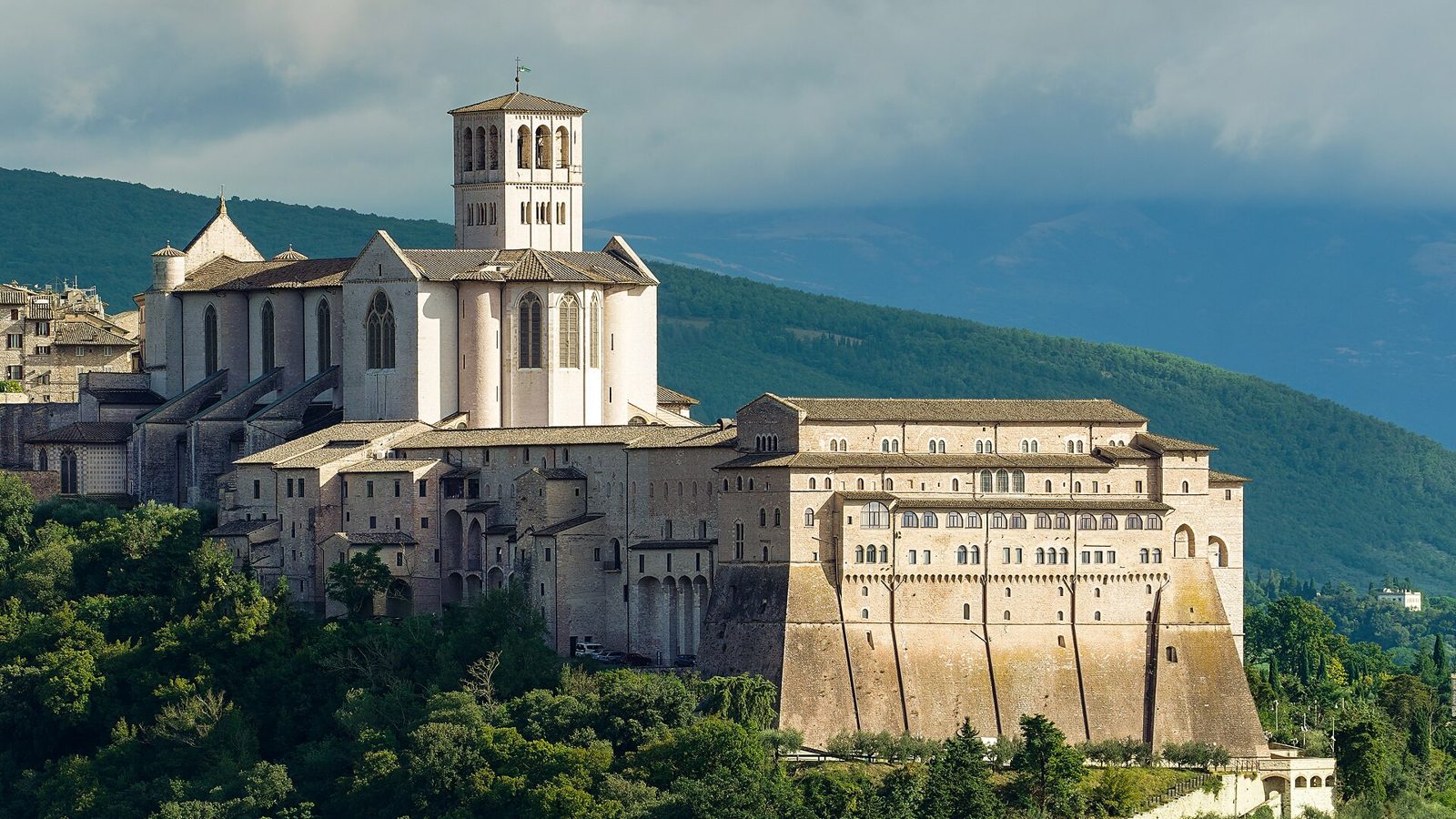
A pale pink stone town on the slopes of Monte Subasio, built around the life of St Francis. You see Giotto's frescoes in the great basilica, walk up to a hermitage in the oak woods and watch the Umbrian valley turn gold from the castle walls. Best time to visit: April to June and September to October. Daily budget (budget traveller): $70 to $215 USD.
Arrive and get your bearings
Morning: Take the train to Assisi station and the Line C bus up the hill. Drop your bag and get a coffee near Piazza del Comune.
Afternoon: Walk the length of Via San Francesco and look into the main square, the Temple of Minerva and the Santuario della Spogliazione.
Evening: Watch the sunset from the terrace in front of Santa Chiara, then have strangozzi with truffle at a trattoria such as Pallotta.
The Basilica of St Francis
Morning: Be at the Basilica of St Francis when it opens. See the upper church frescoes, the lower church and the crypt before the groups arrive.
Afternoon: Walk down through the Bosco di San Francesco to the river and back, or rest in the shade. Later, climb to the Rocca Maggiore (€8) for the view.
Evening: An early aperitivo with a glass of Grechetto, then an evening walk through the empty lanes of the upper town.
Santa Chiara, San Rufino and San Damiano
Morning: Visit the Basilica of Santa Chiara and the San Damiano crucifix, then climb to the cathedral of San Rufino and its crypt.
Afternoon: Walk about 20 minutes downhill through olive groves to San Damiano. Stay for the quiet, then walk back up slowly.
Evening: Torta al testo and a plate of cured meats in a simple osteria. Look in on the Roman Forum museum if you bought the combined ticket.
Eremo delle Carceri and Monte Subasio
Morning: Set off early from Porta Cappuccini and walk about an hour uphill to the Eremo delle Carceri. Visit the caves and woodland paths in silence.
Afternoon: Fit walkers can carry on to the open meadows near the top of Monte Subasio. Pack a picnic and plenty of water, as there is little up there.
Evening: Walk or take a taxi back down. Treat yourself to a proper dinner with a glass of Sagrantino.
Porziuncola and Spello
Morning: Take the bus down to Santa Maria degli Angeli and visit the basilica with the Porziuncola chapel inside.
Afternoon: Take the train one stop to Spello (about 10 minutes). Walk its flower-filled lanes and see the Pinturicchio frescoes in Santa Maria Maggiore.
Evening: Dinner in Spello, or take the train back for a last evening walk in Assisi.
Heading home: Take the Line C bus down to the station and catch a train to Rome, Florence or Perugia airport. Arrive at your next stop, or fly home.
What to eat in Assisi
- Strangozzi with black truffle: thick hand-rolled Umbrian pasta with local truffle shavings, on almost every menu in town
- Torta al testo: a flat griddle bread split and filled with ham, cheese or sautéed greens, cheap and filling for lunch
- Rocciata: Assisi's rolled pastry with apple, walnuts, raisins and cinnamon, sold in bakeries, especially in autumn and winter
- Porchetta: slow-roasted pork with fennel and garlic, sold in sandwiches from vans and delis around the region
- Sagrantino di Montefalco and Grechetto: the big local red and the crisp white, at a few euros a glass in wine bars
- A plate of Umbrian cured meats and pecorino with a glass of Rosso di Assisi, at simple trattorias such as Trattoria Pallotta just off the main square
Hidden gems
- The Bosco di San Francesco, a FAI-run stretch of woods and fields below the basilica with a small medieval church, an old mill and a land art piece, with a quiet trail down to the river
- The Rocca Minore, the smaller ruined fortress above the eastern end of town, reached by a steep lane and usually empty
- The crypt and cistern under the cathedral of San Rufino, where you can see Roman walls and the font where Francis and Clare were baptised
- Via Santa Maria delle Rose and the lanes around it in the upper town, where people still fill every step and balcony with geraniums
- Piazza del Comune at 7am, before the shops open and the groups come up from the car parks, when you mostly have the Temple of Minerva to yourself
Getting around
The historic centre is small enough to walk, but it is long and steep. Walking from the Basilica of St Francis to Santa Chiara takes about 20 minutes, and the climb to the Rocca or the cathedral involves plenty of steps. Most of the old town is a limited traffic zone, so do not drive in. Park at the Mojano, Porta Nuova, Matteotti or Giovanni Paolo II car parks, and check which ones have lifts or escalators up to town. The train station is 5km away in Santa Maria degli Angeli. Busitalia's Line C runs from outside the station up to the old town roughly every 30 minutes, stopping below the basilica, near Porta Nuova and at Piazza Matteotti. A ticket costs about €1.30 from the station newsagent or €1.50 from the driver, and you need exact change. Validate it on board. If you book a Trenitalia ticket to 'Assisi Centro', the bus is included. A taxi from the station costs roughly €15-20. To reach the Eremo delle Carceri and Monte Subasio, walk or take a taxi. Regional trains link Assisi with Perugia, Spello, Foligno and Spoleto cheaply.
Safety
Assisi is very safe, and serious crime against visitors is rare. Watch your bag in crowds at the basilica, on the Line C bus and on big feast days. The main risks are physical. The stone lanes are steep and get very slippery in rain, and the steps down from the Rocca have uneven edges. In July and August the heat on exposed streets is strong, so carry water and rest in the cool churches. On the Carceri road and Monte Subasio paths, take water, tell someone where you are going and start back well before dark. Phone signal can be patchy in the woods. Earthquakes happen in Umbria, so look at your accommodation's emergency information. Tap water is safe, and there are drinking fountains around town. The EU emergency number is 112. EU travellers should carry an EHIC and UK travellers a GHIC, and everyone else needs travel insurance with medical cover.
Frequently asked questions
What does this 5-day Assisi itinerary cover?
Day 1: Arrive and get your bearings. Day 2: The Basilica of St Francis. Day 3: Santa Chiara, San Rufino and San Damiano. Day 4: Eremo delle Carceri and Monte Subasio. Day 5: Porziuncola and Spello.
Is 5 days enough for Assisi?
Our recommended trip length for Assisi is 3 to 5 days. This 5-day plan focuses on the highlights and groups sights by area so you spend less time travelling between them.
How much does 5 days in Assisi cost?
A budget traveller spends about $70 to $215 USD a day in Assisi, so roughly $350 to $1,075 USD for 5 days, not counting flights.
Where should I stay for 5 days in Assisi?
Piazza del Comune and the centre: The middle of town, set around the long main square with the Temple of Minerva, the medieval Torre del Popolo and the entrance to the Roman Forum below. Via San Francesco and the basilica end: The long, gently sloping street that runs west from the centre to the Basilica of St Francis, lined with old palazzi, guesthouses and souvenir shops.
When is the best time to visit Assisi?
The best time to visit Assisi is April to June and September to October.
How do I get around Assisi?
The historic centre is small enough to walk, but it is long and steep. Walking from the Basilica of St Francis to Santa Chiara takes about 20 minutes, and the climb to the Rocca or the cathedral involves plenty of steps.
Is Assisi safe for solo travellers?
Assisi is very safe, and serious crime against visitors is rare. Watch your bag in crowds at the basilica, on the Line C bus and on big feast days.
Read more about Assisi
More 5-day guides
- Bolzano in 5 days
- Montepulciano in 5 days
- Orvieto in 5 days
- Stresa in 5 days
- Syracuse in 5 days
- Bergamo in 5 days
- Sorrento in 5 days
- Capri in 5 days
Assisi in 2 days | Assisi in 3 days | Assisi in 4 days | Assisi in 7 days | Full Assisi guide
Joy Plus home | Destinations | Itineraries | Activities | Flights | Budget planner | Calendar | Map | Blog | Lifetime access