Destinations / North America
Bacalar, Mexico travel guide
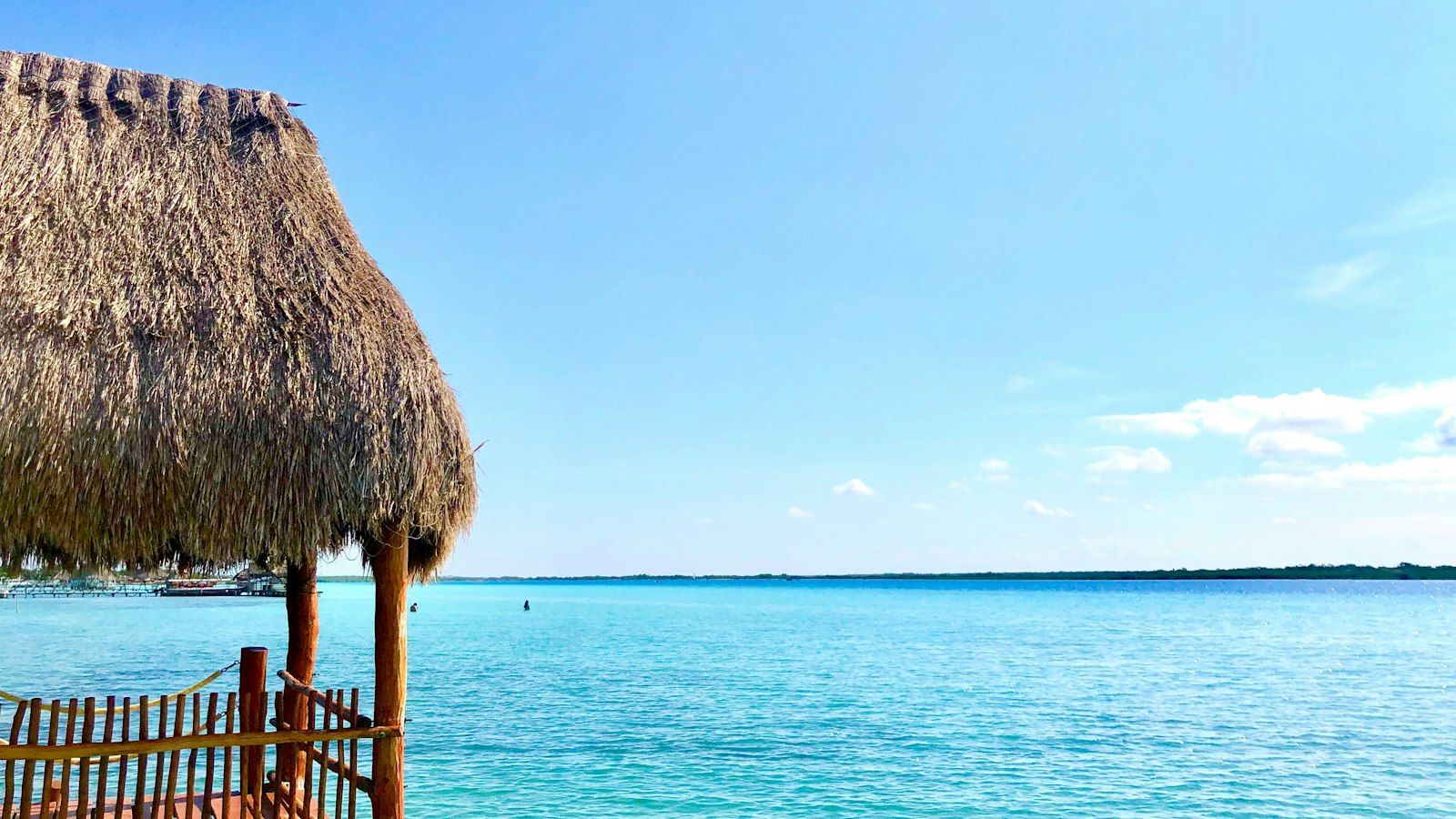
A small Pueblo Mágico on a freshwater lagoon that shifts through seven shades of blue, with cenotes to swim in, a pirate-era fort, Mayan ruins in the jungle and cheap tacos after dark.
- Best time to visit: December to April
- Daily budget (budget traveller): $55 to $245 USD
- Ideal trip length: 4 to 7 days
Bacalar sits on the western shore of Laguna de Bacalar in southern Quintana Roo, about 40 minutes north of Chetumal and the Belize border. The lagoon is freshwater and runs for more than 40 kilometres. Its famous colours, from pale turquoise over white sand to deep navy above the sinkholes, are why people come. The town is small and easy to like: a square, a hilltop fort built to keep out pirates, a grid of low streets running down to private docks, and a growing mix of hostels, taco stands and lagoon-view restaurants. It is quieter and cheaper than Tulum, and the water is calm, so it suits swimmers, paddlers and anyone who wants a slow week. You spend mornings on a paddleboard before the wind gets up and afternoons floating in a cenote. Shared boat tours make it easy to meet people. The ancient stromatolites lining the shallows are some of the oldest life forms on Earth, and the rules protecting them are strict. The Tren Maya now stops just outside town, so it is easier than ever to add the Mayan sites of Chacchoben and Kohunlich, or a Caribbean beach day in Mahahual.
Bacalar is a town of about 12,000 people on a freshwater lagoon close to the Belize border, and it is the slow, cheaper alternative to the Riviera Maya. You come for the water. The lagoon runs for more than 40 kilometres, its sandy shallows turn almost white-turquoise, and its sinkholes drop to inky blue. Days here are simple. You paddle at dawn, take a boat to the Pirates' Canal, have tacos for lunch and swim in a cenote in the afternoon. A shared boat tour costs roughly 450-650 MXN, a dorm bed starts at around 350 MXN, and Cenote Azul costs less than a coffee in Tulum. It is not a party town. Nights mean dinner overlooking the lagoon, a mezcal in the square and an early start the next day.
Getting here is easier than it used to be. The Tren Maya runs from Cancún Aeropuerto to Bacalar's station in roughly four and a half to five hours, and a 25 MXN shuttle takes you into town. ADO buses run more often and take about five hours from Cancún or two and a half to three from Tulum. Base yourself in Centro if you are alone and without a car. You can walk to the piers, the fort, the taco stands and most hostels. Hire a car for a day or two, or join a tour, for Chacchoben's jungle pyramids, Kohunlich's stucco masks and the lazy float at Los Rápidos. Mahahual's Caribbean beach is an easy bus ride east.
Timing affects the colours. The dry months, December to April, bring sun and clear water, which is when the lagoon looks its best. They also bring the crowds, especially at Christmas and Semana Santa. From June the rains arrive in short, heavy afternoon bursts, and hurricane season peaks from roughly August to October. Lagoon life follows the wind. It is calmest early, choppier after lunch and often still again at sunset. The rules exist for good reason. The stromatolites are among the oldest life forms on the planet, so keep your feet off them and leave the sunscreen behind. Do that, and Bacalar is one of the easiest places in Mexico to travel slowly on your own.
Bacalar itinerary
Arrive and take a first swim in the lagoon
Morning: Take the morning Tren Maya from Cancún Aeropuerto (around 9am in late 2026, so check trenmaya.gob.mx) or an ADO bus. Snack on the way, because the journey takes about five hours.
Afternoon: Take the official shuttle from Bacalar station into the centre (25 MXN) and check in. Then swim from your hostel's dock or a public balneario in town.
Evening: Watch the sunset from the square by the fort, then go to Mr. Taco for cheap shrimp and pastor tacos.
Pirates' Canal by boat and the San Felipe fort
Morning: Book a shared boat tour (roughly 450-650 MXN, 3-4 hours) for a 9am start. It stops at Canal de los Piratas, Isla de los Pájaros (seen from the boat), the stromatolites, Cenote Negro and Cenote Esmeralda. Skip sunscreen in the water and wear a rash vest.
Afternoon: Lunch in Centro, then the Fuerte de San Felipe museum (110 MXN for foreigners, Tuesday to Sunday, 9am-7pm). Allow about an hour.
Evening: Dinner on the terrace at Mango y Chile, a vegan spot next to the fort. It has been closed on Tuesdays, so check.
Sunrise paddle, Cenote Azul and Cocalitos
Morning: Rent a kayak or paddleboard (roughly 150-250 MXN an hour) and get on the water by 7am for the calmest, clearest lagoon. Then cycle or take a taxi 3 km south to Cenote Azul, paying cash and renting a life jacket.
Afternoon: Lunch at the restaurant overlooking Cenote Azul, then on to Cenote Cocalitos (around 100-150 MXN cash) for the hammocks, swings and stromatolite sanctuary.
Evening: Book a table at Nixtamal for its seafood and the Salmon Xocolatl. It opens from the afternoon.
Chacchoben's jungle pyramids
Morning: Pick up a hire car (roughly 800-1,500 MXN a day, so share it if you can) or join a tour. Drive north on Highway 307, then along Highway 293 to Chacchoben, about an hour. Arrive at the 9am opening for the spider monkeys. The INAH fee is 155 MXN, and visitors report local charges on top.
Afternoon: Return to Bacalar for a late lunch and a lazy swim at the Balneario Ecológico on the lagoon edge.
Evening: Dinner at Noru Bacalar for sushi and seafood, or a cheap taco crawl around the square.
Kohunlich masks and the Los Rápidos float
Morning: Drive south past Chetumal and west on Highway 186 to Kohunlich, about 1 hour 15 to 1 hour 30. Walk to the Temple of the Masks early, before the heat. Check the current INAH fee, which is likely 100-250 MXN.
Afternoon: Stop at Los Rápidos on the way back (roughly 150-250 MXN with a life jacket) and let the current carry you past the stromatolites. Eat at the restaurant on the channel.
Evening: Return the car. Then al pastor tacos and a mezcal near the square.
Caribbean beach day in Mahahual
Morning: Take an early ADO bus to Mahahual (about 1 hour 20, a few departures a day) and buy your return ticket when you arrive. Stroll the sandy malecón.
Afternoon: Snorkel the reef with a local operator (agree the price on the beach, roughly 300-600 MXN) or settle into a beach bar. Sargassum varies by season, so check before you go.
Evening: Catch the last bus back to Bacalar, or stay overnight in Mahahual for a quiet beach evening.
Final sail and departure
Morning: Join a morning sailing tour on the lagoon (often 700-1,000 MXN shared) or take one last sunrise paddle from the dock.
Afternoon: Pack up and take the afternoon Tren Maya north (around 5pm in late 2026, arriving at Cancún Aeropuerto near 10pm), or head south to Chetumal for Belize.
Evening: Stay near Cancún airport and keep your flight for the next day, as train and bus delays happen.
Best neighbourhoods
- Centro: The grid of streets around the main square and the Fuerte de San Felipe. You can walk to the lagoon piers, the boat-tour kiosks, Mr. Taco and most hostels, and the ADO terminal and the Tren Maya shuttle stop are close by. It is the best base if you are on your own and don't have a car.
- Avenida Costera: The lagoon road running south from town towards Cenote Azul and Cocalitos. It has lakefront hotels with private docks, quieter nights and lovely sunrise views. It is fine by bike, but after dark you will want taxis.
- Xul-Ha and Los Rápidos: The rural southern stretch of the lagoon system, about 30 minutes' drive from town. It has Los Rápidos, where a gentle current carries you past stromatolites, and a handful of eco-cabins for real silence. You need a car or a tour.
- Mahahual: A laid-back Caribbean fishing village on the Costa Maya, about an hour and 20 minutes from Bacalar by ADO. It has a sandy malecón, reef snorkelling and cheap beach bars. It works as a day trip or a one-night add-on.
- Chetumal: The state capital on the bay, 40 minutes south. It is not pretty, but it is useful, with an airport, big supermarkets, plenty of ATMs, the bayside boulevard and the Museo de la Cultura Maya. It is also your exit point if you are heading on to Belize.
Must-do experiences
- Take a shared boat tour to the Pirates' Canal: A three to four-hour loop by pontoon or sailboat to the Canal de los Piratas sandbar, Isla de los Pájaros, the stromatolites and swim stops at Cenote Negro and Cenote Esmeralda, which you can only reach by water. Shared tours cost roughly 450-650 MXN per person.
- Paddle the lagoon at sunrise: Rent a kayak or paddleboard from a dock in town and get on the water by 7am, when the lagoon is glassy and the colours are at their clearest. By late morning the wind usually ruffles the surface.
- Swim in Cenote Azul: A deep, dark-blue open cenote about 3 km south of the centre, separate from the lagoon and free of boat traffic. Entry is cash only and a life jacket is strongly advised, as the drop-off is immediate.
- See the stromatolites at Cenote Cocalitos: A lagoon-side swimming spot with hammocks and swings over shallow, clear water and a protected stromatolite sanctuary. Expect to pay around 100-150 MXN in cash. Keep off the rock-like formations.
- Climb the Fuerte de San Felipe: This 18th-century fort was built against pirate raids and overlooks the lagoon from the edge of the main square. Its small museum covers pirates, the Caste War and Maya history. It is open Tuesday to Sunday and foreign visitors pay 110 MXN.
- Float down Los Rápidos: Strap on a life jacket and let the current carry you along a channel at the lagoon's southern end, past stromatolites. It is a slow, lazy ride. Entry with a life jacket is roughly 150-250 MXN, so check on arrival.
- Walk the jungle pyramids of Chacchoben: The largest Maya site in the southern lakes region, with stepped pyramids under tall trees and spider monkeys overhead. Go at the 9am opening for the best wildlife and the least heat.
Hidden gems
- The Balneario Ecológico on the lagoon edge, a small swimming spot lined with mangroves where locals cool off for a token fee and there is almost nothing built
- Paddling to the Canal de los Piratas yourself on a still morning, a 6-8 km round trip that is only sensible when there is no wind
- Kohunlich's Temple of the Masks, a jungle Maya site west of Chetumal with giant stucco faces and far fewer visitors than the northern ruins
- Chetumal's Museo de la Cultura Maya, a well-designed museum and an air-conditioned rainy-day escape 40 minutes south
- The malecón at Mahahual after the cruise passengers leave, when the beach bars go quiet and the fishing boats come in
Daily budget
- Accommodation: budget 350-600 MXN / night (hostel dorm) or 800-1,200 MXN (basic private room), mid-range 1,800-3,500 MXN (boutique room or lakefront guesthouse), splurge 6,000-15,000+ MXN (Habitas Bacalar, Rancho Encantado). Lakefront places with a private dock cost more than streets a few blocks back. Prices jump at Christmas, New Year and Semana Santa, so book ahead. Many budget rooms only run the air conditioning at night.
- Food: budget 300-500 MXN / day (tacos, market fruit, comida corrida), mid-range 700-1,200 MXN (café breakfast, lagoon-view dinner), splurge 1,500+ MXN (Nixtamal or Los Hechizos with cocktails). Street tacos cost roughly 25-50 MXN each. Lagoon-view restaurants charge tourist prices, so eat lunch a few blocks inland. Bring snacks on tours that don't include food.
- Transport: budget 0-250 MXN / day (walking, bike hire around 150-250 MXN, colectivos), mid-range 800-1,500 MXN (hire car for ruins days, plus fuel), splurge 2,500+ MXN (private driver or guided ruins tour). The Tren Maya to Cancún Aeropuerto was about 1,160 MXN in international tourist class in 2026. The station shuttle is 25 MXN. Taxis are unmetered, so agree the fare first. Check ADO fares online.
- Activities: budget 150-500 MXN / day (fort 110 MXN, Cenote Azul, Cocalitos), mid-range 500-1,000 MXN (shared boat or sailing tour, Los Rápidos), splurge 2,000-3,500+ MXN (private boat charter). Shared boat tours run roughly 450-650 MXN. Chacchoben's INAH fee is 155 MXN for foreigners, and visitors report extra local and parking charges on top. Most cenotes are cash only.
- Drinks & nightlife: budget 60-150 MXN (shop beer plus one bar drink), mid-range 300-600 MXN (cocktails, mezcal), splurge 1,000+ MXN (sunset cocktails at a lakefront hotel). Nightlife is low-key, with live music at a few bars, hostel events and the square at weekends. Many places close by around 11pm. Buy beer at an OXXO for the dock.
Where to stay
- Social hostel in Centro, lagoon front (350-600 MXN / night (dorm), from about 800 MXN (private)): The Yak Lake House has its own dock and lagoon bar, dorms and private rooms, breakfast, and a weekly line-up of tours and events. It is the easiest place in town to meet other solo travellers.
- Boutique hotel in Avenida Costera (1,800-3,500 MXN / night): Hotel Laguna Bacalar is a retro hillside hotel overlooking the lagoon with its own dock, close to Cenote Azul and Cocalitos. It is quiet and has character, but you will need a bike or taxi into town.
- Apartment in Centro, a few blocks back from the lagoon (900-1,800 MXN / night): Self-catering studios and casitas inland from the waterfront cost far less than lakefront rooms. A kitchen and a fridge for market fruit and cold drinks make longer stays cheaper.
- Splurge in Lagoon shore south of town (6,000-15,000+ MXN / night): Habitas Bacalar for design-led lakefront cabins and wellness, or Rancho Encantado for palm-shaded grounds, a private dock and Los Hechizos restaurant on site.
What to eat
- Tacos al pastor: spit-roasted pork with pineapple, sold at street stands and taquerías such as Mr. Taco, where a few tacos and a drink make a cheap dinner
- Cochinita pibil: Yucatecan pulled pork marinated in achiote and sour orange, served in tortas or tacos with pickled red onion, best at breakfast or lunch
- Ceviche and shrimp tacos: fresh coastal seafood with lime, chilli and coriander, a staple of the lagoon-side restaurants
- Sopa de lima: a light chicken broth sharpened with local lime and crispy tortilla strips, the Yucatán's classic comfort soup
- Chilaquiles: fried tortilla chips simmered in red or green salsa with cream, cheese and egg, the standard Bacalar breakfast at cafés like Ixchel
- Salmon Xocolatl at Nixtamal: the signature dish at Bacalar's best-known upscale restaurant, and worth one blowout dinner
Day trips
- Mahahual (About 1 hour 20 minutes by ADO bus east of Bacalar): A small Caribbean village on the Costa Maya with a sandy malecón, reef snorkelling just offshore and cheap seafood. It gets busy when cruise ships call, then empties out in the late afternoon. Sargassum can affect the beach in warmer months. Take an ADO bus from Bacalar's terminal. There are only a few departures a day, so buy the return when you arrive. Colectivos via Limones are an alternative. Staying a night is worth it.
- Chacchoben (About an hour's drive north via Highways 307 and 293): The largest Maya site in the southern lakes region, with stepped pyramids rising out of tall forest and spider monkeys and toucans in the canopy. The INAH fee is 155 MXN for foreigners, and visitors report extra local and parking charges. Hire a car or join a guided tour from Bacalar. Arrive at the 9am opening and confirm closing times with INAH, as published hours vary.
- Kohunlich and Los Rápidos (About 1 hour 15 to 1 hour 30 to Kohunlich, Los Rápidos 30 minutes south of town): Kohunlich is famous for the giant stucco faces of its Temple of the Masks, in shady jungle with few visitors. On the way back, Los Rápidos lets you float down a gentle current past stromatolites. Best by hire car, or with a tour that combines both. Check the current Kohunlich entry fee on the INAH site and bring cash for Los Rápidos.
When to visit
- Dry season (December - March): 24-30°C, sunny, low humidity, cool evenings in January. Crowds: High at Christmas, New Year and on Mexican long weekends, steady otherwise. The classic window. The lagoon colours are at their strongest and the boat tours are reliable. Book hostels and trains early for the holidays.
- Hot season (April - May): 30-35°C, very hot afternoons, mostly dry. Crowds: Very busy at Semana Santa, then quiet. Still bright and clear, and May is cheaper. Swim and paddle early, and save the ruins for the cooler first hours.
- Early rains (June - August): 28-34°C, humid, short heavy afternoon storms. Crowds: Busy with Mexican families in July and August. Mornings are often clear, so plan water time before lunch. Mosquitoes are worse, so pack repellent, and sargassum seaweed can affect Mahahual's beach.
- Hurricane peak and recovery (September - November): 26-32°C, wettest in September and October, drying out in November. Crowds: Low. Cheapest and quietest. Watch the forecasts in September and October. By November the weather is usually settling, and it is a smart shoulder month.
Entry rules for your passport
Visa rules for Mexico depend on the passport you travel on. Check the official source before you book: Mexico National Migration Institute
Getting there
Most travellers fly into Cancún International Airport (CUN), which has direct flights from the UK, Europe, the US and Canada. From there, the Tren Maya runs from Cancún Aeropuerto station to Bacalar in roughly 4.5 to 5 hours, with a couple of departures a day. An international tourist-class ticket was around 1,160 MXN in 2026, and an official 25 MXN shuttle covers the 10 minutes from Bacalar station into town. ADO buses leave more often, take about 5 hours and arrive at the terminal on the highway above town. Check fares on the ADO website. From Tulum, it is about 2.5 to 3 hours by bus. Chetumal International Airport (CTM), with mainly domestic flights, is 30 to 40 minutes south by taxi. Most visitors from the UK, EU, US and Canada need no visa for tourism, and air arrivals usually get a digital entry permit stamped in the passport. Quintana Roo also charges foreign visitors a one-off state fee called Visitax, roughly 285-295 MXN, which you should pay only at visitax.gob.mx and keep the QR code until you fly home. Rules change, so confirm on the official Mexican government site before you travel. Heading on to Belize? Go via Chetumal, 40 minutes south.
Getting around
Centro is compact and walkable, and the lagoon piers, fort and most restaurants are within a 10-minute stroll of the main square. There is no real local bus network. Use taxis for short hops, such as down the Costera to Cenote Azul, and agree the fare before you get in, as taxis are not metered. Many hostels and shops rent bicycles, which are ideal for the flat lagoon road. For the region, ADO buses run from the terminal on the highway above town to Chetumal (about 45 minutes), Mahahual (about 1 hour 20), Tulum (about 2.5 to 3 hours) and Cancún (about 5 hours). Colectivo minivans are cheaper but less frequent. The Tren Maya stops at Bacalar station outside town, and an official shuttle runs to the centre in about 10 minutes for 25 MXN. For Chacchoben, Kohunlich and Los Rápidos, either hire a car for a day or two or join a tour. Quintana Roo runs on Southeast time, one hour ahead of Campeche and Yucatán, which matters for trains heading west.
Safety
Bacalar is generally relaxed and safe for solo travellers, and crime against visitors is mostly opportunistic: bags left on docks, phones on café tables, things taken from parked cars. Quintana Roo does have organised crime that rarely touches tourists, so read your government's current advice, avoid buying drugs and keep nights low-key. Use bank ATMs inside branches or shops in daylight. The water is the bigger risk. Cenote Azul drops off immediately and is very deep, and the lagoon has soft-bottomed channels, so wear a life jacket if you are not a strong swimmer and never swim alone at dawn or dusk. Afternoon winds can make paddling back hard work, so set off early and stay near the shore. Protect the stromatolites: never stand on them, and skip sunscreen in the water or use a biodegradable one if your operator allows it. Mosquitoes carry dengue in the region, so use strong repellent, especially in the rainy season. Agree taxi fares before you set off and take a taxi rather than walking the unlit Costera at night.
Solo travel tips
- Base yourself in Centro: On your own without a car, Centro means walking to the piers, tour kiosks, taco stands and the ADO terminal. Lakefront hotels further down the Costera are lovely but leave you relying on taxis, especially at night.
- Pick a social hostel with a dock: The Yak Lake House sits right on the lagoon with a dock, dorms and private rooms, and runs a weekly programme of activities and tours. It is the fastest way to find people to share boat tours, taxis and a hire car.
- Get on the water early: Wind usually builds by late morning and makes paddling back to town hard work. Rent a kayak or board for a 7am start, stay near the shore, and save the cenotes for the afternoon.
- Share the car for the ruins: Chacchoben, Kohunlich and Los Rápidos are awkward by public transport. Post in your hostel group, split a hire car for two days and do the north and the south on separate days.
- Watch the clocks and the timetables: Quintana Roo runs one hour ahead of Campeche and Yucatán, so check which time zone a train time is in if you are heading west to Xpujil or Calakmul. Trains and buses are infrequent, so book the day before.
- Safety for solo travellers: Bacalar feels relaxed, including for women alone. Use taxis rather than walking the unlit lagoon road after dark, keep phones and bags off the docks when you swim, and never swim alone in Cenote Azul's deep water.
Cultural etiquette
- Greet people properly. A 'buenos días' or 'buenas tardes' before you ask anything goes a long way, and a few words of Spanish are appreciated in a town where English is patchier than in Cancún.
- Keep off the stromatolites. These rock-like microbial mats grow incredibly slowly and are protected, so don't stand, sit or climb on them, even if other people do.
- Skip regular sunscreen in the lagoon and cenotes. Wear a rash vest and hat instead, and follow your boat operator's rules.
- Respect private docks. Much of the shoreline is private property, so swim from public balnearios or your own accommodation rather than climbing onto someone else's pier.
- Tip as Mexicans do. Leave 10-15% in sit-down restaurants, tip boat crews and guides if they were good, and round up for small services.
- Ask before photographing people, especially in Maya villages and at markets. A smile and '¿puedo?' usually does it.
- Keep the noise down at night. Bacalar is a residential town, and lakefront neighbours don't appreciate speakers on docks after dark.
Frequently asked questions
How do I get from Cancún airport to Bacalar?
You have two main options. The Tren Maya runs from Cancún Aeropuerto station to Bacalar in roughly 4.5 to 5 hours, with only a couple of departures a day. An international tourist-class ticket was around 1,160 MXN in 2026, and an official shuttle links Bacalar station to the centre for 25 MXN. ADO buses take about 5 hours and leave more often. Check live timetables and fares on the official Tren Maya and ADO sites before you travel.
Is there a closer airport to Bacalar?
Yes. Chetumal International Airport is about 30 to 40 minutes south by car. Flights mostly come from Mexico City and other domestic hubs. A taxi to Bacalar costs a few hundred pesos, so agree the fare before you leave, or take a taxi into Chetumal and an ADO bus or colectivo north.
How many days do I need in Bacalar?
Three days covers the essentials: a boat tour, Cenote Azul, Cocalitos, the fort and a sunrise paddle. With five to seven days you can add Chacchoben, Kohunlich, Los Rápidos and a beach day in Mahahual without rushing. Many travellers find it easy to stay longer than planned.
When is the best time to visit Bacalar?
December to April is dry, sunny and warm, which gives the lagoon its strongest colours. It is busiest around Christmas, New Year and Semana Santa. April and May are very hot. June to November is the rainy season, with afternoon storms and hurricane risk peaking from roughly August to October, but prices drop and November often brings settled weather back.
Do I need cash in Bacalar?
Yes. Cenotes, many boat operators, taxis, taco stands and colectivos are cash only. Hostels and sit-down restaurants often take cards. Bacalar has only a handful of ATMs and they can run low at busy weekends, so withdraw pesos in Cancún or Chetumal and carry small notes.
Can I swim in the lagoon and use sunscreen?
You can swim from public balnearios, from hotel and hostel docks, and on boat tours. The lagoon's stromatolites are fragile and protected, so never stand on them. Many operators ask you not to wear sunscreen in the water at all. Cover up with a rash vest and hat, and if you use sunscreen, choose a biodegradable one.
Is Bacalar safe for solo female travellers?
Generally yes. Bacalar is a small, relaxed town popular with solo women, and social hostels make it easy to find company for tours. Take the usual precautions: use taxis rather than walking the unlit lagoon road at night, watch your drink, keep valuables off the docks and don't swim alone in deep cenotes.
What entry rules apply to travellers visiting Mexico in 2026?
Many nationalities, including UK, EU, US and Canadian passport holders, can visit Mexico for tourism without a visa. At most airports your entry permit (FMM) is now issued digitally with a passport stamp, and the officer decides how many days you get, up to 180. You may be asked for a return ticket, accommodation details and proof of funds. Quintana Roo also charges foreign visitors a state tourism fee, Visitax, of roughly 285-295 MXN, payable only at visitax.gob.mx. Rules change, so confirm on the official Mexican government (INM) website and your own government's travel advice before you book.
More about Bacalar
- The 7-Day Mexico City Itinerary for 2026, with Real Prices
- Mexico City vs Medellín for Digital Nomads: Which Base Suits You in 2026?
Tours and activities in Bacalar | Bacalar in 2 days | Bacalar in 3 days | Bacalar in 4 days | Bacalar in 5 days | Bacalar in 7 days
Joy Plus home | Destinations | Itineraries | Activities | Flights | Budget planner | Calendar | Map | Blog | Lifetime access