Destinations / Europe
Bamberg, Germany travel guide
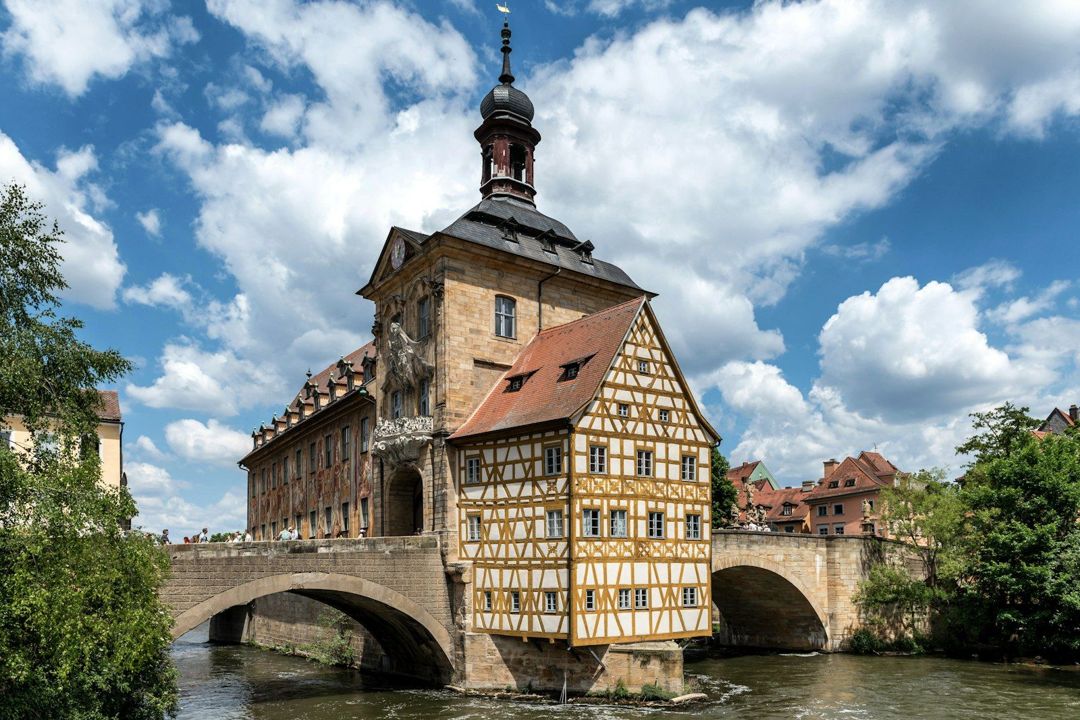
Franconia's hilltop medieval marvel: half-timbered town halls, smoked beer taverns and winding river canals.
- Best time to visit: May to October
- Daily budget (budget traveller): $105 to $175 USD
- Ideal trip length: 2 to 4 days
Spanning seven hills and woven through by the Regnitz River, Bamberg is Franconia's most atmospheric medieval city. As one of Germany's few urban centres to escape World War II unscathed, it blends grandiose baroque architecture and soaring cathedral spires with traditional half-timbered fishermen's quarters. Solo travellers will find a remarkably accessible city where cobbled alleys wind between centuries-old smoked beer taverns, a frescoed town hall perched on a river bridge, and one of the country's most enchanting old towns.
Often proudly referred to as the Franconian Rome because it was built on seven hills, Bamberg occupies a distinctive location where the Regnitz and Main rivers converge. Long before modern Germany formed, Bamberg was a powerful imperial bishopric. It was here that medieval prince-bishops and merchants erected grand palaces, soaring cathedrals, and intricate half-timbered townhouses against the backdrop of dense green hills. Because it survived the conflicts of the 20th century largely untouched, wandering its streets today feels like stepping directly into a remarkably preserved history book.
Today, the city possesses an easy-going Franconian rhythm that makes it one of the most welcoming solo destinations in Bavaria. The scent of roasted malt and pork crackling drifts through the Sandstraße, bicycles hum along the river pathways, and wide pedestrian bridges connect the historic island districts. Unlike the dizzying scale of Munich or Berlin, Bamberg can be embraced at human speed, allowing solo explorers to spend unhurried mornings admiring baroque frescoes and afternoons leafing through books in renovated riverside cafes.
Beyond the city limits, northern Bavaria opens into dramatic natural beauty. Deep forests and limestone caves dot the nearby Franconian Switzerland region, while romantic hiking trails wind straight out of the city towards Altenburg Castle. Whether you arrive via the scenic regional railways or cycle in along the Main river paths, Bamberg offers an intoxicating blend of imperial history, culinary indulgence, and serene regional panoramas.
Bamberg itinerary
Arrival and the Island City
Morning: Arrive at Bamberg Station via regional train. Check in or drop bags in lockers, and walk 15 minutes west to the historic Inselstadt.
Afternoon: Stroll through the pedestrianised Maximilianplatz. Browse the local market stalls, taste a fresh pretzel, and walk out to the Obere Brücke to view the incredible Altes Rathaus.
Evening: Head into the Sandstraße for dinner. Order your first dark Rauchbier at a traditional tavern, then stroll along the illuminated riverside paths.
Smoked Beer and the Cathedral Hill
Morning: Wake early and head up to the Bergstadt. Marvel at the soaring spires of the Bamberg Cathedral and seek out the famous medieval Bamberg Horseman statue inside.
Afternoon: Walk across the cobbled square to the Neue Residenz. Tour the opulent baroque state rooms, then wander the peaceful paths of the Rose Garden with sweeping views over the city roofs.
Evening: Walk down to the historic Schlenkerla tavern. Find a spot at a communal wooden table and enjoy a hearty Bamberger Zwiebel stuffed onion with a fresh wooden-keg smoked beer.
Hillside Heritage and Michaelsberg
Morning: Take a morning hike up the gentle slopes to Michaelsberg Abbey. Explore the terraced vineyards and enjoy the tranquil panoramic views over the Franconian landscape.
Afternoon: Walk back down to the Altstadt for a leisurely coffee and a buttery Bamberger Hörnla pastry. Explore the quiet lanes around the Böttingerhaus mansion.
Evening: Stroll along the riverbank path facing Little Venice (Klein Venedig). Watch the evening light reflect off the charming fishermen's cottages before grabbing a casual bratwurst dinner.
Castle Views and Market Gardens
Morning: Take the local bus or hike up to Altenburg Castle, sitting proudly on Bamberg's highest hill. Wander the historic courtyards and take in the unmatched views of the surrounding forests.
Afternoon: Descend back into the city and cross over to the Gärtnerstadt. Explore this unique UNESCO-listed urban farming district, picking up fresh local produce and artisan treats from farm shops.
Evening: Visit the Mahrs Bräu tavern in the eastern part of town. Enjoy a relaxed evening sampling their famous ungespundet (unbunged) lagers paired with grilled Franconian sausages.
Castles and Cobblestones at Coburg
Morning: Board the regional train from Bamberg Station heading north to Coburg (roughly 45 minutes).
Afternoon: Walk or catch the bus up to Veste Coburg, the massive fortress known as the Crown of Franconia. Explore the impressive armoury and art collections, then try a famous pine-cone roasted Coburger bratwurst.
Evening: Return by train to Bamberg. Enjoy a relaxed dinner at a quiet riverside cafe, sipping local white wine from the nearby Main river valley.
Imperial History at Nuremberg
Morning: Take an early regional express train south to Nuremberg (45 minutes), the historic powerhouse of Franconia.
Afternoon: Tour the imposing Nuremberg Castle, walk the medieval city walls, and explore Albrecht Dürer's House. Treat yourself to a plate of traditional Nürnberger Rostbratwurst.
Evening: Travel back to Bamberg. Spend your final evening in the snug, lively corridors of the Sandstraße, chatting with locals over a final round of smoked beer.
Riverside Goodbyes
Morning: Enjoy a leisurely morning along the Regnitz River, picking up some vacuum-packed smoked malt or local mustard for cooking back home.
Afternoon: Take one last expansive view of the Altes Rathaus from the lower bridge, then collect your luggage from your hotel.
Evening: Board the regional train to Nuremberg for connections to the ICE high-speed network, or take the direct bus back to your departure airport.
Best neighbourhoods
- Inselstadt: The lively island district centred around pedestrian shopping streets, historic university buildings, lively cafes, and the iconic painted Altes Rathaus.
- Bergstadt: The monumental hill quarter crowned by the four-spired Bamberg Cathedral, quiet cobbled lanes, and sweeping views from the Rose Garden.
- Sandstraße & Klein Venedig: The raucous riverside hub bordered by traditional smoked beer breweries, half-timbered fishermen's houses, and bustling evening tavern crowds.
Must-do experiences
- Marvel at the Altes Rathaus on the river: Stand on the Untere Brücke to witness this extraordinary half-timbered town hall, famously built on an artificial island in the Regnitz River.
- Wander the fragrant paths of the Rose Garden: Stroll through the verdant inner courtyard of the Neue Residenz, then admire a bird's-eye view of the city's red-tiled roofs and Michaelsberg Abbey.
- Drink authentic smoked beer at Schlenkerla: Visit the historic Schlenkerla tavern to order dark, smoky Rauchbier tapped straight from wooden barrels, a true taste of Franconian heritage.
- Walk the riverside path of Little Venice: Stroll down the Regnitz riverbank for an unbroken, picturesque vista of the charming centuries-old fishermen's cottages known as Klein Venedig.
- Tuck into a roasted Bamberger Zwiebel: Experience Bamberg's beloved, quirky traditional dish, a large onion stuffed with spiced minced meat and smothered in rich smoked beer gravy.
- Explore the medieval Bamberg Cathedral: Unwind in the quiet grandeur of this 11th-century imperial cathedral, home to the mysterious Bamberg Horseman statue and the tomb of Pope Clement II.
Hidden gems
- The wind-swept tower views and wild forest paths of Altenburg Castle
- The quiet historic viewing terraces tucked away at the Michaelsberg Abbey vineyards
- The tranquil market garden plots of the Gärtnerstadt with its centuries-old urban farming heritage
- The intricate baroque facade and terraced courtyard charm of the Böttingerhaus mansion
Daily budget
- Accommodation: budget €35-55 / night (hostel dorm bed or simple guesthouse), mid-range €80-140 (comfortable Altstadt hotel with breakfast), splurge €180+ per person (luxury boutique hotel in the Inselstadt). Hotels near the Bergstadt often feature historic architecture, offering immense value for solo guests.
- Food: budget €15-25 / day (bakery pastry, street bratwurst, convenience store snacks), mid-range €35-60 (Rauchbier lunch, traditional Schäuferla dinner in a tavern), splurge €90+ (multi-course fine dining or seasonal tasting menus). Hearty lunch portions at local breweries offer generous plates of roast meats for around €15 to €20.
- Transport: budget €6-10 / day (day bus ticket and extensive walking), mid-range €35-45 (bus ticket plus a Bayern Ticket for regional day trips), splurge €60+ (private taxi runs to Altenburg Castle and surrounding villages). The historic core is entirely walkable, meaning transport costs remain incredibly low for most visitors.
- Activities: budget €0-10 (walking Little Venice, viewing the Cathedral, free gardens), mid-range €15-25 (Neue Residenz state rooms entry, Historical Museum tickets), splurge €50+ (private historic walking guide or local beer tasting tour). Many of Bamberg's best historic sights, churches, and park gardens are free to admire from outside.
- Drinks & nightlife: budget €5-10 (supermarket local lagers and casual bakery coffees), mid-range €15-30 (several pints of Rauchbier at Schlenkerla or Mahrs Bräu), splurge €40+ (premium local fruit schnapps and cocktails in the Sandstraße). Bamberg's traditional taverns are inexpensive, with half-litres of world-class beer costing roughly €3.50 to €4.50.
Where to stay
- Social hostel in Inselstadt / Bergstadt (€35-55 / night): Jugendherberge Bamberg, offering excellent dorms, shared spaces, and a sociable base for independent travellers right near the historic action.
- Boutique hotel in Altstadt / Riverside (€110-160 / night): Hotel Nepomuk, famed for fantastic timber-framed aesthetics, incredible breakfast spreads, and direct views over the winding Regnitz.
- Apartment in Gärtnerstadt / Inselstadt (€90-140 / night): Modern serviced apartments and converted historic storehouses with full kitchen facilities, laundry, and easy walking access to the central squares.
- Splurge in City Centre / Riverside (€180-250 / night): Welcome Hotel Residenzschloss Bamberg, presenting luxurious rooms built into a grand historic hospital complex on the banks of the river.
What to eat
- Bamberger Zwiebel: a sweet, tender roasted onion filled with seasoned pork and beef mince, served in a pool of savoury Rauchbier sauce
- Schäuferla: a towering plate of slow-roasted pork shoulder with incredibly crispy crackling, typically accompanied by potato dumplings
- Schlenkerla Rauchbier Märzen: dark amber lager boasting a bold, savoury flavour achieved by drying malt over crackling beechwood fires
- Bamberger Hörnla: a crescent-shaped, buttery pastry rich in local heritage, often enjoyed alongside a strong cup of morning coffee
Day trips
- Nuremberg Old Town (45 min by train): A historic powerhouse composed of picturesque medieval walls, framed by the jagged red sandstone of Nuremberg Castle. Perfect for exploring underground beer cellars and eating famous Nürnberger bratwurst. Take the RE regional train from Bamberg Station directly to Nürnberg Hauptbahnhof (45 min, covered by the Bayern Ticket).
- Veste Coburg (45 min by train): One of Germany's largest and most beautifully preserved fortress complexes, often called the Crown of Franconia, housing impressive art collections and historic armoury displays. Take the regional train from Bamberg to Coburg Station (45 min), then walk or take the local bus up to the fortress grounds.
- Forchheim and the Kellerwald (25 min by train): A charming half-timbered town famous for its Kellerwald, a sprawling hillside forest dotted with traditional beer cellars where locals enjoy fresh lagers under a canopy of ancient trees. Catch the regional train (RE or S-Bahn) from Bamberg Station south to Forchheim (roughly 20 to 25 minutes).
When to visit
- Spring (April - June): 10-21°C, crisp bright days warming up into comfortable afternoons. Crowds: Moderate, peaking around Easter and the early Rose Garden blooms in June. Spectacular for historic walks. The Neue Residenz gardens turn into an enormous canvas of colourful petals. Pack a warm jumper and light windbreaker for evenings.
- Summer (July - August): 20-28°C, pleasantly warm, perfect for outdoor beer cellars. Crowds: High, very popular with river cruise passengers and domestic tourists. The most comfortable time for outdoor walking, cycling along the Regnitz, and enjoying shaded beer gardens under the ancient chestnut trees.
- Autumn (September - November): 8-18°C in October, dropping to 2-10°C by late November. Crowds: Moderate, with a lively spike during the autumn Bock beer tapping events. Superb conditions. Crisp autumn air ensures pristine visibility from Altenburg Castle, while hearty Franconian roasts reach peak culinary appeal.
- Winter (December - March): -2 to 5°C, cold with occasional snowfall and frosty mornings. Crowds: Low to moderate, rising significantly during the festive Christmas market weeks. Atmospheric and peaceful. Snow transforms the cathedral squares and riverside cottages into a magical landscape. Requires insulated boots and thermal layers.
Entry rules for your passport
Visa rules for Germany depend on the passport you travel on. Check the official source before you book: European Commission: Schengen visa policy
Getting there
Bamberg is well connected across northern Bavaria. From Munich, the ICE high-speed train runs directly to Bamberg or via Nuremberg in roughly 1 hour and 45 minutes. The connecting regional express (RE) trains take 45 minutes to reach central Bamberg Station from Nuremberg. Nuremberg Airport (NUE) sits just 60 kilometres south, handling frequent European flights, with subway and train links reaching Bamberg in about one hour. Long-distance buses operated by FlixBus link major German cities directly to Bamberg's central bus station.
Border checks: non-EU visitors (other than Swiss, Norwegian, Icelandic, Liechtenstein, Andorran, Monegasque, San Marinese and Vatican citizens, and holders of an EU residence permit or long-stay visa) are registered in the EU's Entry/Exit System (EES) instead of getting a passport stamp. On your first crossing, officers take your photo and/or fingerprints, so allow extra time at passport control. ETIAS, the planned travel authorisation, is not in operation yet, so don't pay any website for one.
Getting around
Bamberg is exceptionally easy to navigate using its extensive municipal bus network (Stadtwerke Bamberg). Multiple bus lines run from Bamberg Station toward the central bus station (ZOB) and the cathedral hill for just under €3 per journey, with a day ticket available for around €6. Regional trains connect directly from the station to Nuremberg and Würzburg. The historic Inselstadt and Bergstadt districts are compact and best explored on foot.
Safety
Bamberg is among the safest urban destinations in Germany, with negligible crime. For solo travellers, the main hazards are physical. The steep cobbled streets of the Bergstadt freeze into slick ice sheets between December and March, requiring boots with good rubber tread. Bicycles often speed along the pedestrianised island zones, so remain aware of your surroundings. Mind your step when navigating the narrow medieval tavern corridors, which frequently have low door frames and uneven floors.
Solo travel tips
- Embrace the communal brewery tables: The traditional taverns in the Sandstraße consist almost entirely of long wooden tables. Sitting solo to eat a plate of Schäuferla feels completely natural and is a fantastic way to meet locals.
- Get the Bayern Ticket early: Buy the Bayern Ticket digitally on the DB Navigator app. At around €32 to €34 for one person, it makes hopping between Nuremberg, Coburg, and Würzburg on regional trains incredibly cost-effective.
- Hostel pick: Jugendherberge Bamberg: It offers pristine dormitory rooms, warm English-speaking staff, communal lounges, and a great location near the old town that makes meeting fellow travellers effortless.
- Time your Altes Rathaus trip carefully: Check the local foot traffic before setting off. Reach the Obere Brücke 45 minutes before breakfast to claim a front-row photography spot without jostling past daytime tour groups.
- Solo female safety: Bamberg is exceptionally safe and welcoming for solo female travellers. Streets are peaceful even late at night. In winter, walking alone after 9pm is tranquil, though sticking to main illuminated streets ensures clear, gritted pavements.
- Send large luggage ahead on regional hops: If you are touring onward to Munich or Berlin, use the DB luggage forwarding service to send heavy bags ahead, leaving you free to explore train stops like Forchheim unencumbered.
Cultural etiquette
- Always say 'Prost' and make eye contact when clinking beer glasses in a tavern; it is considered bad luck otherwise.
- Do not sit at a table reserved for 'Stammtisch' (regulars) unless invited by the local patrons.
- Cash is king; always carry Euros, as many traditional bakeries and small taverns do not accept credit cards.
- Greeting shopkeepers with a polite 'Hallo' or 'Guten Tag' when entering and 'Tschüss' when leaving is widely expected.
- Tipping is customary but modest; round up the bill or add 5 to 10 percent by telling the server the total amount you wish to pay.
- Keep noise levels down on public transport and respect the quiet Sundays (Ruhetag) when most retail shops and supermarkets close.
- When ordering food, ask if you can join an occupied table by saying 'Ist hier noch frei?' if the tavern is busy, as communal seating is normal.
Frequently asked questions
How do I reach Bamberg from Munich or Frankfurt?
Take a direct ICE high-speed train from Munich in under 2 hours, or transfer via Nuremberg on a regional express (RE) train to Bamberg, which takes roughly 45 minutes. From Frankfurt, the journey via Würzburg takes just over 2 hours.
How many days should I spend in Bamberg?
Two to three days are ideal to explore the historic old town, cathedral squares, Little Venice, Altenburg Castle, and traditional breweries at a relaxing solo pace. Add a fourth day if you plan to take regional trains to Nuremberg or Coburg.
When is the best time to visit Bamberg?
June and July bring spectacular summer blooms to the Rose Garden of the Neue Residenz. Summer from June to August provides warm temperatures ideal for beer gardens, while autumn in October offers crisp sunny skies and the annual Bock beer season. Winter turns the city into a festive wonderland.
Can I use credit cards in Bamberg's traditional taverns?
While major hotels and shops accept cards, standard German cash culture persists in traditional breweries like Schlenkerla and smaller bakeries. Always keep a supply of Euro notes for grabbing a quick smoked beer or a pastry.
Why does the local beer taste like smoke?
In Franconia, malt was historically dried over open beechwood fires. The famous local brewery Schlenkerla still prepares its malt this traditional way, resulting in a dark, savoury brew universally loved by locals as Aecht Schlenkerla Rauchbier.
Is Bamberg suitable for solo dining?
Bamberg is a paradise for solo eaters. The traditional beer halls have long communal wooden tables where solo diners are actively encouraged to sit next to locals. Ordering a plate of Schäuferla and striking up a conversation is effortless.
What is the best way to see the Altes Rathaus without crowds?
Walk to the Untere Brücke roughly 45 minutes before breakfast to secure an unobstructed view along the river. Alternatively, wait until after 8:30pm when day-tripper tour groups have departed, leaving the illuminated bridge far more peaceful.
What entry rules apply to travellers visiting Germany in 2026?
Germany is part of the EU and Schengen Area, meaning European Union citizens enjoy freedom of movement. For non-EU travellers, including British, US, Canadian, and Australian passport holders, Germany provides visa-free short stays for tourism up to 90 days. Note that the ETIAS pre-travel authorisation has not started yet (check the official EU site before you travel), while the biometric Entry/Exit System (EES) is fully operational at Schengen borders, meaning fingerprints and facial scans are recorded upon arrival for non-EU visitors.
More about Bamberg
Tours and activities in Bamberg | Bamberg in 2 days | Bamberg in 3 days | Bamberg in 4 days | Bamberg in 5 days | Bamberg in 7 days
Can't decide? Compare Bamberg with...
Joy Plus home | Destinations | Itineraries | Activities | Flights | Budget planner | Calendar | Map | Blog | Lifetime access