Destinations / Europe
Barcelona, Spain travel guide
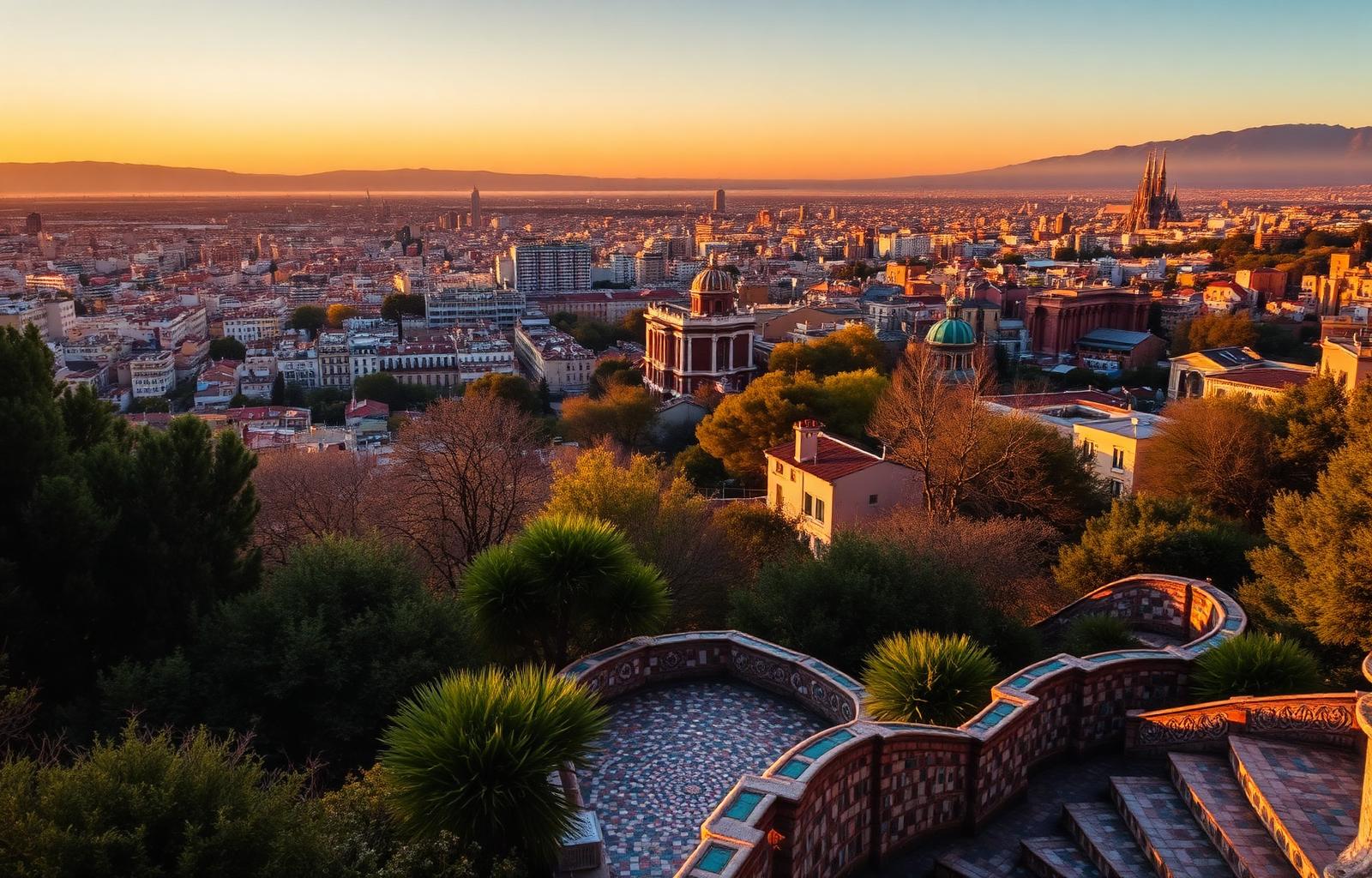
Gaudí, tapas and beach - without the cruise-ship version of the city.
- Best time to visit: May-June and September-October
- Daily budget (budget traveller): $90 to $140 USD
- Ideal trip length: 4 to 5 days
Barcelona on a 3-day trip is a logistics puzzle: Sagrada Família needs a slot, Park Güell sells out, and the best tapas bars don't open until 8pm. Joy Plus solves the order, the timing and the neighbourhood routing in one shot.
Barcelona runs on two timetables. The visitor one says breakfast at 9, Sagrada Família at 10, paella at 1, back to the hotel by 6. The local one says vermut at 1pm, lunch at 2:30, a long gap, then dinner at 9:45pm and a drink on a square until the metro stops. Pick the local timetable and everything gets cheaper, quieter and better tasting. Pick the visitor one and you will spend €22 on a mediocre paella on the Rambla.
Sagrada Família's tallest tower, the Tower of Jesus Christ, was topped with its cross in February 2026, and the basilica draws big crowds. Book the timed entry two to three weeks ahead for May and June, and a week ahead for the rest of the year. The city is also pushing back on mass tourism, with a higher tourist tax (add roughly €6 to €12 per person per night to your hotel bill) and a crackdown on unlicensed holiday flats. Choose licensed places and you avoid a nasty surprise.
The solo format here is almost unfairly good. Standing bars, €2 pintxos on Carrer Blai, vermut on tap for €3 and a beach 15 minutes from the Gothic Quarter by metro mean you can fill a day alone without once feeling like the odd one out. This guide is the seven-day version: icons booked at off-peak hours, the neighbourhoods locals actually use, one beach day, one mountain day, and the bar-by-bar order that stops you zigzagging across the city. Cut it to four days by dropping days 5 to 7, or keep the lot if you want to travel at Barcelona's pace.
How many days in Barcelona?
For Barcelona, we recommend 4 to 5 days. With more time, add a day trip to Girona or Sitges.
| Trip length | What you'll see | Itinerary |
|---|---|---|
| 2 days | El Born and the Gothic Quarter; Gaudí and Domènech i Montaner | Barcelona in 2 days |
| 3 days | Adds: Park Güell, Gràcia and the Bunkers | Barcelona in 3 days |
| 4 days · Recommended | Adds: Beach day in Poblenou | Barcelona in 4 days |
| 5 days · Recommended | Adds: Montjuïc and Poble Sec | Barcelona in 5 days |
| 7 days | Adds: Montserrat day trip; Sant Antoni, Raval | Barcelona in 7 days |
Barcelona itinerary
Arrive, El Born and the Gothic Quarter
Morning: Land at BCN, take the R2 Nord train from T2 to Passeig de Gràcia (about 25 min, one T-casual trip). Drop bags, then flat white at Nomad Coffee Lab in Passatge Sert (Monday to Friday only).
Afternoon: Walk the Gothic Quarter to the Cathedral, then Santa Maria del Mar. Picasso Museum if it is Thursday 4 to 7pm or the first Sunday of the month (free, book ahead), otherwise €12 online.
Evening: Tapas crawl in El Born: Bormuth, Bar del Pla, Cal Pep (closed Sunday), then vermut at El Xampanyet. Nightcap at Paradiso behind the pastrami counter on Carrer de Rera Palau.
Gaudí and Domènech i Montaner
Morning: Sagrada Família at 9am (L2 or L5 to Sagrada Família). Basic entry €26, tower about €36. Allow 90 minutes and cover your shoulders.
Afternoon: Menú del día on Carrer de Sant Antoni Maria Claret, then walk down Avinguda de Gaudí to Hospital de Sant Pau (€17-18, two hours).
Evening: Stroll Passeig de Gràcia past Casa Batlló and La Pedrera, then dinner at Cervecería Catalana on Carrer de Mallorca (go at 7pm to skip the queue).
Park Güell, Gràcia and the Bunkers
Morning: First timed slot at Park Güell (9:30am, book online, €18). Metro L3 to Lesseps, then a 15 minute uphill walk. The whole park is ticketed for visitors: the hours before 9:30am are for residents only.
Afternoon: Walk down into Gràcia. Vermut at Bar Canigó on Carrer Verdi, then wander Plaça de la Virreina and Plaça del Sol.
Evening: Walk up to Bunkers del Carmel for the late-afternoon view (L5 to Alfons X, or bus 119), as the gates close at 7:30pm in summer and 5:30pm in winter. Bring a layer. Dinner at Taverna El Glop in Gràcia.
Beach day in Poblenou
Morning: Metro L4 to Llacuna, then 10 minutes on foot to Bogatell Beach. It is calmer and cleaner than Barceloneta.
Afternoon: Swim, then walk to Mar Bella. Lunch bombas at La Cova Fumada in Barceloneta (lunch only, closed Sunday).
Evening: Dinner at 7 Portes on Passeig d'Isabel II. It is historic, open until midnight, and locals still eat paella there on Sundays.
Montjuïc and Poble Sec
Morning: Metro L3 to Paral·lel, funicular (T-casual covers it) then the cable car to Montjuïc Castle. Fundació Joan Miró if you want art.
Afternoon: Walk down to Poble Sec. Refugi 307 civil-war shelter tour (check days, book ahead), then vermut at Quimet & Quimet (standing room, closed Sunday and in August, check Saturday hours).
Evening: Carrer Blai pintxo crawl, €1-2 each, point and pay by toothpick count. Sala Apolo for a late gig or club night.
Montserrat day trip
Morning: R5 from Plaça Espanya around 9am to Monistrol de Montserrat, then the rack railway up to the monastery.
Afternoon: Walk the Sant Joan funicular path for views, see the Black Madonna and, on most weekdays, the Escolania boys' choir at 1pm (check the calendar).
Evening: Train back, easy dinner and a drink at Casa Bonay's rooftop on Gran Via.
Sant Antoni, Raval and depart
Morning: Brunch at Federal Café in Sant Antoni. On Sunday the Mercat de Sant Antoni runs a book and collectibles market outside.
Afternoon: Hot chocolate at Granja Viader, wander El Raval, buy toasted nuts at Casa Gispert on Carrer dels Sombrerers. Absinthe at Bar Marsella if your flight is late.
Evening: Aerobús A1 or A2 from Plaça Catalunya (35 min, about €7), or R2 Nord for under €3.
Best neighbourhoods
- Gothic Quarter (Barri Gòtic): Medieval alleys, Roman walls, the original Barcelona. Atmospheric and central, but loud and touristy. Stay only if you want to walk everywhere.
- El Born: Boutiques, the Picasso Museum, the city's best vermouth bars. Best base for first-time solo travellers.
- Gràcia: Local plazas, indie cafés, no tourists after 10pm. Where Barcelona's creatives live.
- Eixample: Gaudí's masterpieces and the grid that defines modern Barcelona. Calm at night, perfect blocks for walking.
- Barceloneta: The beach and the seafood - eat paella inland, not here. Avoid as a base unless you must be steps from sand.
- Sant Antoni / Poble Sec: The locals' favourite. Carrer Blai pintxos, Sunday market, no Instagram crowds.
Must-do experiences
- Sagrada Família at 9am: Pre-book the tower ticket, go before tour groups arrive. Allow 90 minutes.
- Park Güell at opening time: Book the first timed slot of the day online (9:30am, €18). The hours before that are reserved for residents, so tourists can no longer walk in free at sunrise.
- Tapas crawl in El Born: Bormuth, Bar del Pla, Cal Pep. Three stops, share everything, end at El Xampanyet.
- Late afternoon at Bunkers del Carmel: Best free view in the city, but the gates close at 7:30pm in summer and 5:30pm in winter. Bring a layer, it gets windy.
- Hospital de Sant Pau: Domènech i Montaner's UNESCO masterpiece. More beautiful than the Sagrada Família and half the crowd. €17-18, allow 2 hours.
- Tibidabo for the city panorama: Funicular up the mountain. Old amusement park + temple + the widest view of Barcelona.
Hidden gems
- Hospital de Sant Pau - more impressive than Sagrada Família, half the crowd.
- Carrer Blai for euro-pintxos, every bar charges €1-2 per pintxo.
- Tibidabo at sunset.
- Mercat de Sant Antoni on Sundays, the Sant Antoni book and coin market.
- Bar Marsella in El Raval, Hemingway's absinthe bar, unchanged since 1820.
- Búnkers del Carmel for the late-afternoon view (free but popular, gates close 7:30pm in summer, 5:30pm in winter).
- Refugi 307, Civil War bomb shelter under Montjuïc, a sobering 60-minute tour.
Daily budget
- Accommodation: budget €30-55 / night (hostel dorm, higher in July and August), mid-range €120-200 (boutique double), splurge €380+ (Mandarin Oriental, Hotel Arts). Eixample and Gràcia offer the best mid-range value. Add €6-12 per person per night in tourist tax at most places.
- Food: budget €25-35 / day (bakery breakfast, menú del día, €2 pintxos), mid-range €55-85 (menú lunch plus a proper tapas dinner), splurge €150+ (Disfrutar and Lasarte tasting menus run €300+). The weekday menú del día is €14-18 with starter, main, drink and coffee. It is the best deal in the city.
- Transport: budget €6 / day (T-casual 10 trips, €13, one person only), mid-range €12-20 (metro plus the odd Cabify or Free Now), splurge €60+ (private transfer to Montserrat). The Gothic Quarter and El Born are walking-only. Skip the Hola Barcelona card unless you ride 6+ times a day.
- Activities: budget €15-25 / day (Bunkers del Carmel, the beaches, one paid sight), mid-range €45-70 (Sagrada Família with tower €36, Sant Pau €17-18, flamenco), splurge €120+ (Casa Batlló premium ticket, private Gaudí guide, sailing). Picasso Museum is free on Thursdays 4 to 7pm and the first Sunday of the month (book ahead). Bunkers del Carmel and the beaches cost nothing.
- Drinks & nightlife: budget €10-15 (vermut €3-4, caña €2.50-3.50), mid-range €30-45 (cocktails at Paradiso, Sala Apolo cover), splurge €90+ (rooftop bar plus a Poblenou club night). Drink standing at the bar and it is cheaper than the terrace. Public street drinking can be fined.
Where to stay
- Social hostel in Eixample / Gràcia border (€30-60 / night): Generator Barcelona on Carrer de Còrsega or Casa Gràcia on Passeig de Gràcia, with terraces, mixed dorms and low-key social nights near metro L3 and L5.
- Boutique hotel in El Born (€130-220 / night): Hotel Banys Orientals or Chic & Basic Born, small design-led rooms steps from Santa Maria del Mar and the tapas bars. Best base for a first solo trip.
- Apartment in Sant Antoni or Gràcia (€90-150 / night): Real residential streets, market lunches and plazas. Only book places with a HUTB licence number, as unlicensed rentals are being shut down.
- Splurge in Passeig de Gràcia, Eixample (€450-900 / night): Mandarin Oriental or Hotel Casa Fuster, Gaudí on the doorstep, rooftop pools, and the city's best taxi rank at the door.
What to eat
- Pa amb tomàquet, everywhere, the base of every Catalan meal.
- Patatas bravas at Bar Tomás (Sarrià), purists argue it's the best in the city.
- Vermouth at Quimet & Quimet, a family bodega in Poble Sec since 1914.
- Paella inland at 7 Portes, not on the beach, historic, locals still come on Sundays.
- Bombas at La Cova Fumada (Barceloneta), the original, since 1944.
- Pintxos crawl on Carrer Blai (Poble Sec), €2 each, point at what you want.
- Crema catalana anywhere, the Catalan crème brûlée, served year-round.
Day trips
- Montserrat (1h15 by train plus rack railway): Serrated mountain, a Benedictine monastery and the Black Madonna. Hike the Sant Joan path for the best views, and catch the Escolania boys' choir on most weekdays at 1pm. R5 from Plaça Espanya to Monistrol de Montserrat, then the Cremallera rack railway. Combo tickets run from €50 return.
- Girona (40 min by high-speed train): Medieval walls, the colourful Onyar river houses and a superb Jewish quarter. Walk the city walls and eat at Rocambolesc, Jordi Roca's gelato shop. Avant from Sants about 38 min, roughly €15-20. Rodalies R11 takes 1h15 and costs about €10.
- Sitges (35 min by train): A relaxed beach town with whitewashed lanes, a seafront church and good swimming. Quieter than Barceloneta and an easy half day. R2 Sud from Sants or Passeig de Gràcia, about €4.50 each way.
When to visit
- Spring (April to June): 16-25°C, mostly sunny, the odd shower in April, sea still chilly (16-19°C). Crowds: Building fast. The best window, especially May. Terraces open, beaches usable by late May, and prices have not yet hit peak. Book Gaudí sites early.
- Summer (July to August): 27-32°C, humid, sea 24-26°C, hot nights. Crowds: Heaviest of the year, cruise ships plus beach crowds. Skip if you can. Some local restaurants close in August and the sticky heat makes the Eixample grid a slog. The Festa Major de Gràcia in mid August is the one real upside.
- Autumn (September to October): 20-27°C in September, 17-23°C in October, sea still 22-24°C early on. Crowds: Moderate, easing from mid October. The locals' pick. Warm swims, shorter queues, and the La Mercè festival around 24 September with free concerts, human towers and fire runs.
- Winter (November to March): 8-15°C, dry and often bright, occasional cold wind. Crowds: Low, except around Mobile World Congress (1 to 4 March in 2027) when hotel prices triple. Cheapest hotels, short queues, calçot season from January. Pack a jacket, skip the beach, and avoid the MWC week.
Entry rules for your passport
Visa rules for Spain depend on the passport you travel on. Check the official source before you book: European Commission: Schengen visa policy
Getting there
Barcelona El Prat (BCN) is 13km south-west of the centre. The cheapest option is the R2 Nord train from T2 to Sants or Passeig de Gràcia (20 to 30 min, every 30 min, about €2.90, or one T-casual trip). From T1, take the free shuttle bus to T2 first. The Aerobús A1 (T1) and A2 (T2) runs to Plaça Catalunya every 5 to 10 minutes, 35 min, about €7 single. The L9 Sud metro costs a €5.90 airport ticket and is slow. Taxis and Cabify to the centre run €35-40. Arriving by train, Sants connects to Madrid in about 2h30 on AVE, Ouigo or Iryo, from roughly €30.
Border checks: non-EU visitors (other than Swiss, Norwegian, Icelandic, Liechtenstein, Andorran, Monegasque, San Marinese and Vatican citizens, and holders of an EU residence permit or long-stay visa) are registered in the EU's Entry/Exit System (EES) instead of getting a passport stamp. On your first crossing, officers take your photo and/or fingerprints, so allow extra time at passport control. ETIAS, the planned travel authorisation, is not in operation yet, so don't pay any website for one.
Getting around
Get a T-casual 10-trip transit card (€13, for one person only; the shareable card is the T-familiar). Metro is fast and clean, but the Gothic Quarter and El Born are walking-only. The Hola Barcelona Travel Card (€18.70 for 48h, €27.30 for 72h) includes airport metro, only worth it if you'll do 6+ rides per day. Bicing rentals are locals-only; tourists should rent from Donkey Republic or Cooltra scooters.
Safety
Barcelona has the worst pickpocket reputation in Europe - but it's almost always non-violent. Front pockets only on La Rambla and the metro (especially L3). Don't put your phone on outdoor restaurant tables. Solo female travellers are very safe in El Born, Gràcia and Eixample at night. Avoid empty Raval streets after 1am.
Solo travel tips
- Eat at the bar: Standing counters are the most social seat in Barcelona. At Quimet & Quimet or El Xampanyet, order one thing, ask 'Què recomanes?' and the bartender will steer you. You will be chatting to the person next to you within ten minutes.
- Book Sagrada Família early: The newly completed central tower is pulling big crowds. Book timed entry two to three weeks ahead for May and June, take the 9am slot and cover shoulders and knees.
- Hostel pick: Generator or Casa Gràcia: Generator Barcelona sits on the Eixample and Gràcia border with a roof terrace and easy social nights. Casa Gràcia on Passeig de Gràcia is quieter and more design-led. Both are good for solos without forcing a pub crawl.
- Pickpockets are the real risk, not violence: The hot spots are La Rambla, Barceloneta and metro L3 at Drassanes and Liceu. Carry a zipped crossbody, keep phones off terrace tables and never leave a beach bag while you swim. Use a waterproof pouch if you go in alone.
- Solo female travellers: El Born, Gràcia and Eixample feel safe at night. Avoid empty Raval side streets after 1am, share a Cabify or Free Now taxi home, and know the metro runs until 2am on Friday and all night on Saturday.
- Find your tribe at Sala Apolo and Bogatell: A club night at Sala Apolo (Wednesday to Sunday) is a reliable solo-friendly night out. By day, beach volleyball and chiringuitos at Bogatell and Mar Bella are easy places to start a conversation. Language exchange nights on Meetup fill most evenings.
Cultural etiquette
- Catalan is the first language here. Start with 'Bon dia' and 'Gràcies', then switch to Spanish or English. Locals notice the effort.
- Lunch is 2 to 4pm and dinner is 9 to 11pm. Turning up at 6pm gets you a tourist menu or a closed kitchen.
- Tipping is not expected. Round up at bars and leave 5 to 10% only for a really good sit-down dinner.
- Don't walk through the city in swimwear or shirtless. Away from the beach it can bring a fine, and it marks you as a visitor.
- Public drinking can be fined, so keep it low-key at the Bunkers and take your bottles down with you.
- Dress modestly at Sagrada Família and other churches, shoulders and knees covered.
- Sundays and August: many local shops and restaurants close, so check opening hours before you walk across town.
Frequently asked questions
How many days do you need in Barcelona?
Four to five full days. That's enough for the Gaudí icons, two beach afternoons, proper tapas crawls in El Born and Gràcia, and a Montserrat or Sitges day trip. Three days is doable but skips local neighbourhoods.
Is Barcelona safe for solo travellers?
Yes, violent crime is rare. Pickpocketing is the main issue, especially on La Rambla, metro L3 and around Sagrada Família. Wear a crossbody bag, keep your phone off the table at outdoor restaurants, and you'll be fine.
Do I need to book Sagrada Família in advance?
Yes, always. Tickets often sell out 5 to 7 days ahead in high season. The tower add-on sells out first. Book online via the official Sagrada Família site, not third-party resellers.
Is Barcelona safe for solo female travellers?
Yes, central neighbourhoods (El Born, Gràcia, Eixample) are very safe at night. Standard rules apply: avoid empty Raval streets after 1am, share rides on Cabify, and stay aware on packed metros.
How much does a 4-day trip to Barcelona cost in 2026?
Solo budget: €380-520 / 4 days including hostel, tapas and metro. Mid-range: €750-1,100 with a boutique hotel and one nice dinner. Splurge: €2,200+ with 5-star hotel and Michelin meals.
What's the best time to visit Barcelona?
May-June and September-October. Beach is warm enough to swim, terraces are open, crowds are manageable. Avoid August (heat + locals on holiday) and Christmas (closed restaurants).
Where should solo travellers stay in Barcelona?
First-timers: El Born or Eixample for walking convenience. Social travellers: Gràcia or Sant Antoni for local vibe. Beach lovers: Poblenou (calmer than Barceloneta). Avoid La Rambla, overpriced, loud, pickpockets.
Is Barcelona walkable?
Yes, central Barcelona is one of the most walkable cities in Europe. Plan for 15-20k steps a day. Use the metro only for Park Güell, Tibidabo, beaches and the airport.
Can you do Barcelona in 3 days?
Yes, but it's tight. You'll cover Sagrada Família, Park Güell, the Gothic Quarter and one beach afternoon, but you'll skip Gràcia, Bunkers, day trips and most of the local nightlife.
Is Barcelona safe from pickpockets?
Violent crime is rare but pickpocketing is among Europe's worst, especially on La Rambla, the metro and the beach. Use a zipped crossbody, never leave a phone on a café table, and you'll be fine.
What's the best area to stay in Barcelona for first-timers?
El Born and the Gothic Quarter for atmosphere and walkability, Eixample for wider streets, modernist architecture and quieter nights. Avoid basing yourself right on La Rambla, it's loud and overpriced.
More about Barcelona
- Barcelona in 3 Days: Gaudí, Tapas, the Beach and 2026 Prices
- Where to Travel in 2027: 15 Places Worth Planning a Trip Around
- Total Solar Eclipse 2 August 2027: Where to Watch It and How to Plan Now
Tours and activities in Barcelona | Barcelona in 2 days | Barcelona in 3 days | Barcelona in 4 days | Barcelona in 5 days | Barcelona in 7 days
Can't decide? Compare Barcelona with...
- Barcelona vs Lisbon
- Barcelona vs Madrid
- Barcelona vs Valencia
- Paris vs Barcelona
- Barcelona vs Seville
- Amsterdam vs Barcelona
- Ibiza vs Barcelona
- London vs Barcelona
- Palma de Mallorca vs Barcelona
- Porto vs Barcelona
- Rome vs Barcelona
- Barcelona vs Athens
- Barcelona vs Berlin
- Barcelona vs Bilbao
- Barcelona vs Florence
- Barcelona vs Malaga
- Barcelona vs Milan
- Barcelona vs Nice
- Barcelona vs Tenerife
- Girona vs Barcelona
- Sitges vs Barcelona
Joy Plus home | Destinations | Itineraries | Activities | Flights | Budget planner | Calendar | Map | Blog | Lifetime access