Destinations / South America
Barichara, Colombia travel guide
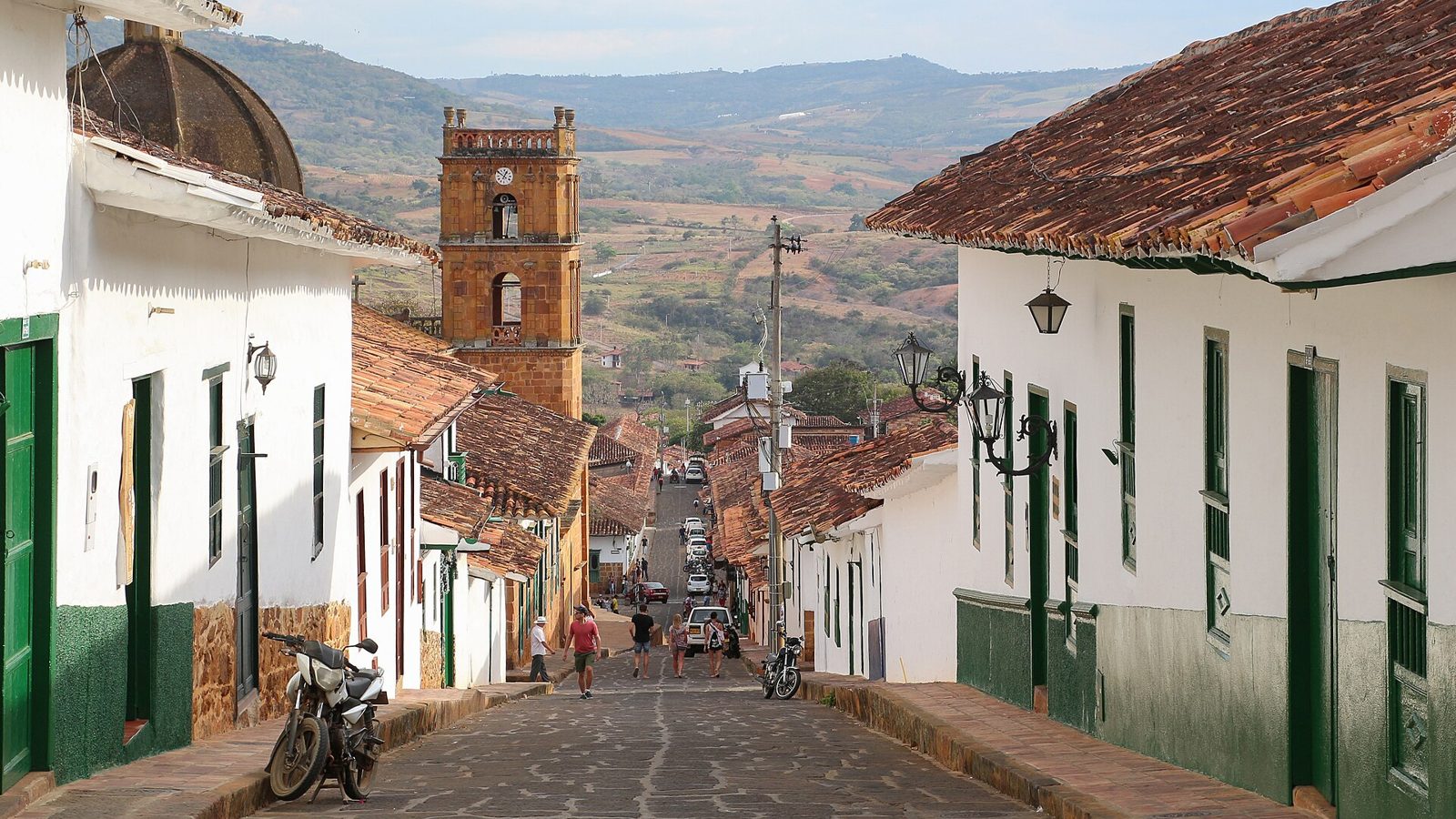
A small colonial town of whitewashed houses and sandstone streets, set on a plateau above the Suárez canyon in Santander. You walk the old stone Camino Real down to Guane, watch the sunset from the mirador and eat roast goat in slow, quiet evenings.
- Best time to visit: December to March and June to August
- Daily budget (budget traveller): $35 to $120 USD
- Ideal trip length: 3 to 5 days
Barichara sits on a mesa at around 1,300m in Santander, in north-east Colombia, about 45 minutes by bus from the adventure town of San Gil. It was founded in the early 1700s and declared a national monument in 1978. Many Colombians call it the prettiest town in the country, and it is easy to see why. The houses are built of rammed earth and whitewashed, with green or blue doors and clay-tiled roofs. The streets are paved with big slabs of local sandstone, and the cathedral glows orange in the late afternoon. There is very little to do here in the busy sense. You walk the steep grid of streets, sit in the main square under the trees, watch the canyon change colour from the mirador and hike the old stone road to the tiny village of Guane. When you want more action, San Gil has rafting, paragliding and waterfalls close by. Barichara fills up with visitors from Bogotá on long weekends, at Easter and over Christmas, and prices rise with them. Midweek it is calm, cheap and very safe. With a hostel bed, set lunches and free hikes, it works well for a solo traveller who wants to slow down for a few days.
Barichara is a town of about 10,000 people, including the surrounding countryside, on a plateau in the Santander department of north-east Colombia. Spanish settlers founded it in the early 18th century, and much of the old grid survives almost unchanged. The houses are built of tapia pisada (rammed earth), whitewashed and roofed with clay tiles, and the streets, churches and even the gravestones are made from the yellow-orange sandstone of the hills. It is often called the prettiest town in Colombia, and it is regularly used as a film set. Most Colombian visitors come for a weekend from Bogotá or Bucaramanga. Stay midweek and you get the better version, with the main square almost empty in the morning, the Camino Real to yourself and sunset at the mirador with just a few locals. It is not the cheapest place in Colombia, but hostel beds, set lunches and free trails keep costs low.
Getting here takes a little time. There is no airport, so most people take a bus to San Gil, either overnight from Bogotá in about 7 hours or from Bucaramanga in around 2.5 to 3 hours. From San Gil, Cotrasangil buses climb up to Barichara about every 30 minutes in daylight, taking around 45 minutes. Once you are here, walk. The town is compact but steep. Stay near the main square for convenience, or up by Santa Bárbara for views and quiet. Use San Gil as your gateway to rafting, paragliding, the Chicamocha canyon and the waterfalls.
Timing shapes the trip. The drier months, roughly December to March and June to August, bring clear skies and good hiking, though Christmas, New Year and Easter are busy. The rainier months turn the canyon green, and the showers usually come in the afternoon. Colombian long weekends, called puentes, fill the town with visitors from Bogotá and push up room prices, so check the holiday calendar before you book. Barichara is very safe and relaxed. Few people speak much English, so some basic Spanish goes a long way. Evenings are quiet, with dinner, a beer in the square and an early night. If you want nightlife or adventure, head to San Gil. If you want a long walk, a good lunch and a sunset over the canyon, stay here.
Barichara itinerary
Arrive and find your feet
Morning: Arrive in San Gil on the overnight bus from Bogotá. Have breakfast near the terminal, then take a Cotrasangil bus up to Barichara (about 45 minutes).
Afternoon: Drop your bag and wander the streets around the Parque Principal and the cathedral. Have a set lunch in a local restaurant.
Evening: Walk up to the mirador for sunset over the Suárez canyon, then have a simple dinner near the square.
The Camino Real to Guane
Morning: Start the Camino Real early from the edge of town and walk down to Guane in about two to two and a half hours. Look for fossils in the stones.
Afternoon: Visit Guane's small museum and church, and have lunch on the square. Take the bus back to Barichara, checking the time first.
Evening: Rest your legs, then eat goat and pepitoria at a traditional restaurant.
Churches, crafts and the cemetery
Morning: Climb to the Santa Bárbara chapel and the Parque para las Artes while it is cool, then see the paper workshop at the Fundación San Lorenzo.
Afternoon: Visit the stone-carved cemetery and the Capilla de Jesús Resucitado, then walk down to the quiet San Antonio chapel. Join a rammed-earth or earth-painting workshop if you want to try a craft.
Evening: Try dishes made with hormigas culonas at Color de Hormiga, then join the locals in the lit main square.
Adventure day in San Gil
Morning: Take an early bus to San Gil and go rafting on the Río Fonce (about COP 80,000 to 150,000, with transport and gear).
Afternoon: Walk among the moss-draped trees of Parque El Gallineral by the river, then look around San Gil's main square and market.
Evening: Take a bus back to Barichara before the last departures, or stay in San Gil if you are paragliding the next morning.
Chicamocha canyon
Morning: Go paragliding over the Chicamocha canyon with a San Gil operator, as flights usually go in the morning. Or take a bus towards Bucaramanga to Panachi.
Afternoon: At Panachi, ride the 6.3km cable car across the canyon (about COP 105,000 including park entry) and take in the views from the lookouts.
Evening: Bus back to San Gil and on to Barichara. Have an easy dinner and an early night.
Waterfalls or a quiet trail
Morning: Take a tour or a taxi from San Gil to the Juan Curí waterfall for a swim, or walk the quieter Camino Real to Cabrera from Barichara.
Afternoon: If you are near Curití, cool off in the natural river pools at Pescaderito. Otherwise, take the bus from Cabrera back to Barichara via San Gil.
Evening: Watch a last sunset from the mirador and have a farewell dinner in the old centre.
Slow morning and depart
Morning: Have arepa santandereana and coffee in the square, and buy paper goods, ants or bocadillo to take home.
Afternoon: Take the bus down to San Gil and connect to Bogotá, Bucaramanga or Villa de Leyva. Check bus times the day before.
Evening: Travel on overnight, or stop in Bucaramanga for a flight the next day.
Best neighbourhoods
- Parque Principal and the old centre: The heart of town, set around the leafy main square and the sandstone cathedral. The Cotrasangil bus office is just off the square, so you can walk to most rooms with a backpack. You have the most restaurants, cafés and shops here, but it gets noisy on holiday weekends.
- Santa Bárbara and the mirador: The upper, western edge of town around the Santa Bárbara chapel, the Parque para las Artes and the canyon viewpoint. The streets are quieter and the views are the best in Barichara. The Camino Real to Guane starts close by, so it suits early-morning hikers. Expect a steep walk back from the square.
- San Antonio and the south side: The lower, more residential end of town around the small San Antonio chapel. It is quieter and a little cheaper, with guesthouses in old family houses and a local feel. The square is about 10 minutes uphill on foot, which is fine by day but tiring in the heat.
- Guane: A tiny village about two hours below Barichara on foot along the Camino Real. It has a whitewashed church, a small fossil museum and a couple of simple places to stay. Nights are very quiet, and buses back to Barichara run only a few times a day, so it suits a slow overnight rather than a base.
- San Gil: The busy regional town 45 minutes away by bus, where most long-distance buses arrive. It is less pretty, but it has many hostels, adventure tour operators and better transport links. It makes sense if you plan to raft, paraglide or visit Chicamocha and want to see Barichara as a day trip or a short stay.
Must-do experiences
- Walk the Camino Real to Guane: This old stone road runs from the edge of town down to Guane in about two to two and a half hours, mostly downhill. Look out for fossils in the paving stones and the wide views over the Suárez canyon. It is free and easy to follow alone, and you can catch a bus back from Guane's square.
- Watch the sunset from the mirador: The viewpoint on the western edge of town looks straight over the Suárez canyon and the mountains beyond. It is free, and locals and visitors gather on the stone walls in the late afternoon. Bring a drink and arrive half an hour before the sun goes down.
- Sit in the Parque Principal: The main square, shaded by big trees, is where the town meets. The sandstone Catedral de la Inmaculada Concepción stands on one side and turns deep orange in the evening light. Come early for coffee, or after dark when families come out and the cathedral is lit up.
- See the stone-carved cemetery: Barichara's small cemetery sits beside the Capilla de Jesús Resucitado and is full of tombs carved from local stone by local craftspeople. It is free to wander in daylight. Be respectful, as it is still in use.
- Visit the paper workshop: The Fundación San Lorenzo makes paper by hand from fique and other plant fibres. You can see the process and buy notebooks, cards and lampshades. It costs little or nothing to look around, and it makes a good stop between the churches.
- Climb to Santa Bárbara and the Parque para las Artes: Walk uphill to the simple Santa Bárbara chapel, then into the stone amphitheatre and gardens of the Parque para las Artes next door. It is free, quiet in the mornings and close to the mirador, so you can combine all three.
- Spend a day in San Gil: San Gil is Colombia's adventure-sports hub. A Fonce river rafting trip costs about COP 80,000 to 150,000 ($20 to $38 USD), and tandem paragliding over the Chicamocha canyon is around COP 150,000 to 250,000 ($38 to $65 USD). Buses from Barichara run about every 30 minutes in daylight.
Hidden gems
- The Capilla de San Antonio at the bottom of town, a small, plain chapel on a quiet square that few day visitors reach
- The Taller de Oficios, a craft school where young locals learn stone carving and traditional building, on the more rural northern edge of town
- Guane's small fossil and archaeology museum by the church, with marine fossils and Guane pottery, usually free or very cheap
- The Camino Real from Barichara to Cabrera, a longer and much quieter old stone path of about 8.5km than the popular Guane route
- The main square after dark on a weekday, when the cathedral is lit and only locals are out
Daily budget
- Accommodation: budget $12-20 / night (hostel dorm), mid-range $45-90 (guesthouse or small hotel, private room), splurge $150+ (boutique hotel with pool and canyon views). Prices rise sharply at Christmas, Easter and on long weekends, and some places want a minimum of two nights. Midweek is often cheaper and easier to book.
- Food: budget $10-15 / day (bakery breakfast, menú del día, street snacks), mid-range $20-35 (café breakfast, set lunch and a restaurant dinner), splurge $50+ (tasting menu or goat dinner with wine). A set lunch costs about COP 15,000 to 25,000 ($4 to $6 USD). Restaurant mains for visitors cost roughly COP 35,000 to 60,000. A voluntary 10% service charge is often added to the bill.
- Transport: budget $0-4 / day (walking, local buses), mid-range $5-20 (buses to San Gil and Chicamocha, a taxi), splurge $40+ (private driver for the day). Barichara to San Gil costs about $2 USD each way. Bogotá to San Gil is about $15 to $18 USD. A taxi to San Gil costs roughly $10 to $15 USD.
- Activities: budget $0-5 / day (Camino Real, mirador, churches, cemetery), mid-range $20-40 (Fonce rafting, a craft workshop, Chicamocha park), splurge $60+ (Chicamocha paragliding, Suárez rafting, guided tours). Fonce rafting costs about COP 80,000 to 150,000. Panachi costs about COP 58,000, or COP 105,000 with the cable car. Chicamocha paragliding costs roughly COP 150,000 to 250,000.
- Drinks & nightlife: budget $2-5 (a beer or guarapo in the square), mid-range $10-20 (a few drinks at a bar), splurge $30+ (cocktails and wine at a boutique hotel). A coffee costs about COP 3,000 to 6,000 and a local beer about COP 5,000 to 8,000. Nightlife is low-key, and San Gil has more bars.
Where to stay
- Social hostel in Old centre, near the Parque Principal ($12-20 / night (dorm)): Barichara has a handful of small hostels a few blocks from the square and the bus stop, often with hammocks, kitchens and patios. They are the cheapest beds in town and good places to find hiking partners.
- Boutique hotel in Santa Bárbara and the mirador ($70-140 / night): Restored colonial houses with courtyards and views over the canyon sit near the top of town. You are close to the mirador and the Camino Real trailhead, and it stays quiet at night.
- Apartment in San Antonio and the south side ($35-70 / night): Rooms and small apartments in family houses give you a kitchen and a local feel at lower prices. Expect a steep walk up to the square and check whether there is a fan or air conditioning.
- Splurge in Edge of town and the countryside ($150-300+ / night): Boutique hotels and fincas just outside the centre have pools, gardens and wide canyon views. They are a short walk or taxi ride from the square and very peaceful.
What to eat
- Cabro or cabrito: roast or stewed goat, the classic Santander dish, served with pepitoria (rice cooked with goat offal and blood), yuca and arepa
- Hormigas culonas: big-bottomed ants, toasted and salted, sold in small bags. They are harvested around April and May, and Color de Hormiga restaurant puts them in its sauces
- Arepa santandereana: a thick, crunchy corn arepa made with ground maize and pork crackling, good for breakfast with hot chocolate
- Mute santandereano: a filling soup of corn, tripe, beans and vegetables, often served at weekends in local restaurants
- Menú del día: the set lunch of soup, a main, rice, salad and a juice for around COP 15,000 to 25,000 ($4 to $6 USD), the cheapest way to eat well
- Guarapo and chicha: traditional fermented drinks made from sugar cane and corn, plus bocadillo (guava paste) and cheese as a snack
Day trips
- Guane and the Camino Real (About 2 to 2.5 hours on foot, or around 15 to 20 minutes by road): An old stone road with canyon views leads down to a tiny whitewashed village with a colonial church and a small fossil and Guane pottery museum. It is the classic Barichara half-day. Walk the Camino Real from the edge of town, then take a bus back from Guane's square for about COP 4,000. Buses run only a few times a day, so check times at the Cotrasangil office first.
- San Gil and the Río Fonce (About 22km, 45 minutes by bus): Colombia's adventure-sports town, with gentle rafting on the Fonce, harder runs on the Suárez, canyoning, caving and the riverside Parque El Gallineral. Nearby, the Juan Curí waterfall and the Pescaderito river pools near Curití are good for a swim. Take a Cotrasangil bus, which runs about every 30 minutes in daylight for around $2 USD. Most tour operators include pickup in San Gil.
- Chicamocha canyon (About 1.5 to 2 hours via San Gil): One of the biggest canyons in South America. At Panachi, a 6.3km cable car crosses the canyon, and the area is known for tandem paragliding flights. Take a bus to San Gil, then a bus towards Bucaramanga that stops at the park. In 2026, entry costs about COP 58,000, or COP 105,000 with the cable car. The park usually closes on some weekdays, so check before you go.
When to visit
- Dry season (December - March): 20-30°C, sunny and dry, with cool nights. Crowds: Very busy over Christmas, New Year and some January weekends, calmer from February. The best time for hiking and clear canyon views. Book well ahead for the holidays, or come in February and March for good weather and fewer people.
- First rains (April - May): 20-28°C, warm with afternoon showers. Crowds: Busy at Easter, otherwise quiet. Greener hills, cheaper rooms and the ant harvest. Hike in the mornings, as the stone paths get slippery when wet.
- Mid-year dry spell (June - August): 21-30°C, mostly dry and breezy. Crowds: Moderate, busier during Colombian school holidays from late June to July. A good all-round time, with reliable hiking weather and good paragliding conditions. Watch out for the long weekends.
- Second rains (September - November): 20-27°C, more frequent showers and storms. Crowds: Low, apart from long weekends. The quietest and cheapest time. Expect some wet afternoons and muddier trails. Rafting in San Gil is usually livelier when the rivers are higher.
Entry rules for your passport
Visa rules for Colombia depend on the passport you travel on. Check the official source before you book: Migración Colombia
Getting there
There is no airport in Barichara. The nearest is Palonegro in Bucaramanga, about 3 to 3.5 hours away by road, with domestic flights from Bogotá, Medellín and other cities. Most travellers arrive by bus via San Gil. From Bogotá, buses run roughly every hour and take about 7 hours for around COP 60,000 to 70,000 ($15 to $18 USD). From Bucaramanga, buses to San Gil take around 2.5 to 3 hours for about COP 32,000 to 40,000. Cotrasangil also runs a direct Bucaramanga to Barichara bus, but only about once a day at early or odd hours. From San Gil, Cotrasangil buses go to Barichara about every 30 minutes from early morning until early evening, taking around 45 minutes for roughly $2 USD. They leave from the small Terminalito in central San Gil, not always from the main terminal, so ask locally. Villa de Leyva is a popular next stop, about 4 to 5 hours away by bus with a change. If you drive, expect steep, narrow stone streets and limited parking in the centre.
Getting around
Barichara is small and you will walk everywhere. The centre is a grid of steep sandstone streets, and crossing town from the San Antonio chapel to the mirador takes about 15 minutes, uphill in one direction. The stones are uneven and polished, so wear shoes with grip. Cotrasangil runs buses between Barichara and San Gil about every 30 minutes from early morning until early evening. The trip takes about 45 minutes and costs roughly COP 7,000 to 8,000 ($2 USD), paid to the driver or at the office just off the main square. Buses to Guane leave from near the square only a few times a day, for about COP 4,000, so check times at the office before you hike. A taxi to San Gil costs roughly $10 to $15 USD. For Chicamocha, Curití and the waterfalls, go to San Gil first and take a local bus or join a tour. Some guesthouses can arrange taxis or drivers for early starts and late returns.
Safety
Barichara is one of the safest towns in Colombia to visit, and crime against visitors is rare. The real risks are the sun, the heat and the stone streets. The paving is steep and uneven and turns slippery after rain, so take care, especially in sandals. On the Camino Real, start early, carry plenty of water and wear a hat, as there is little shade. It is usually fine to hike alone, but tell your host which route you are taking. In San Gil, choose established adventure operators with good reviews and proper equipment, and ask about the river level before rafting. Many people drink filtered or bottled water, so ask your host about the tap water. Watch your phone and bag in San Gil's bus terminal and on long-distance buses. The national emergency number is 123. Take out travel insurance that covers medical care and adventure sports.
Solo travel tips
- Come midweek: Barichara changes completely at weekends and on public holidays, when visitors from Bogotá arrive and prices rise. From Monday to Thursday, rooms are cheaper and the trails and square are calm.
- Hike early: The sun is strong and the Camino Real has little shade. Start by 7 or 8am, carry plenty of water and plan to reach Guane before the midday heat.
- Bring cash from San Gil: The ATMs in Barichara can run dry on busy weekends, and many small places take cash only. Take out enough pesos in San Gil before you come up.
- Eat the set lunch: The menú del día is the cheapest good meal in town and comes with soup, a main and a juice. Save restaurant dinners for one or two nights.
- Safety for solo travellers: The main risks are heat, slippery stone streets and adventure sports. Tell your host your hiking route, use well-reviewed operators in San Gil and get back before dark.
- Meet people on a tour or workshop: Join a guided walking tour, a rafting trip or a craft workshop. Hostel common areas and the mirador at sunset are also easy places to start a conversation.
Cultural etiquette
- Greet people with 'buenos días' or 'buenas tardes' when you enter a shop or restaurant, and say 'gracias'. Little English is spoken, so a few Spanish words help.
- Dress modestly in the cathedral and chapels, with covered shoulders, and keep quiet if a mass is on.
- The cemetery is still in use, so behave respectfully, do not climb on tombs and ask before photographing mourners.
- Ask before taking photos of people, especially older locals and craftspeople at work.
- Keep noise down in the streets at night. Sound carries between the houses, and the town goes to bed early.
- Check the bill for 'propina voluntaria', the voluntary 10% service charge. You can pay it or ask for it to be removed.
- Stay on the paths on the Camino Real, take your rubbish with you and do not prise fossils out of the stones.
Frequently asked questions
How do I get to Barichara and from the bus to my room?
Most people go via San Gil. Buses from Bogotá take about 7 hours and cost roughly COP 60,000 to 70,000 ($15 to $18 USD), and many travellers take an overnight one. From Bucaramanga, San Gil is about 2.5 to 3 hours. In San Gil, Cotrasangil buses leave for Barichara about every 30 minutes in daylight, take around 45 minutes and cost about $2 USD. They stop just off the main square, and most rooms are within a 10-minute walk, though the streets are steep.
How many days do I need in Barichara?
Two nights covers the town, the mirador and the Camino Real to Guane. Three to five nights lets you add a rafting or paragliding day from San Gil, the Chicamocha canyon and a craft workshop or two. A week works if you want to slow right down and add the Cabrera trail or the Juan Curí waterfall.
When is the best time to visit Barichara?
The drier months, roughly December to March and June to August, are best for hiking and clear canyon views. April, May and September to November bring more rain, usually in the afternoons, which greens up the hills but makes the stone paths slippery. Easter week, Christmas, New Year and Colombian long weekends are busy and more expensive, so aim for midweek if you can.
Is the Camino Real to Guane hard?
No. It is an easy to moderate walk of about two to two and a half hours, mostly downhill from Barichara to Guane. The path is old stone paving with some loose sections. It is well trodden and free, so you do not need a guide. Go early to avoid the heat, bring at least 1.5 litres of water and check the bus times back from Guane before you set off.
Is there an ATM in Barichara?
There are a couple of ATMs near the main square, but they can run out of cash on busy weekends and holidays. Bring enough pesos from San Gil or a bigger city. Many small restaurants, shops and buses take cash only, although hotels and some restaurants accept cards.
Can I visit the Chicamocha canyon from Barichara?
Yes, as a day trip via San Gil. Buses heading for Bucaramanga stop at the Parque Nacional del Chicamocha (Panachi) about an hour from San Gil. In 2026, entry to the park alone costs about COP 58,000 for adults, or about COP 105,000 with the 6.3km cable car. The park usually closes on some weekdays, so check before you go. Paragliding flights over the canyon are booked through San Gil operators.
Is Barichara safe for solo female travellers?
Yes. It is a small, calm town where locals are used to visitors, and the centre feels safe after dark. Take normal care with drinks in bars, tell someone your hiking plans and avoid walking the trails at dusk. In San Gil and on long-distance buses, keep your valuables close.
What entry rules apply to Colombia in 2026?
Visitors from the UK, the US, Canada, Australia and the EU can usually enter visa-free for up to 90 days, and the stay can be extended for up to 90 more days in a calendar year. All travellers must fill in the free Check-MIG form online with Migración Colombia before flying in or out, and airlines often ask for an onward ticket. The departure tax is usually included in your air fare. Check the rules on official Colombian government websites and read your own government's travel advice before you go.
More about Barichara
Tours and activities in Barichara | Barichara in 2 days | Barichara in 3 days | Barichara in 4 days | Barichara in 5 days | Barichara in 7 days
Joy Plus home | Destinations | Itineraries | Activities | Flights | Budget planner | Calendar | Map | Blog | Lifetime access