Destinations / Asia
Batumi, Georgia travel guide
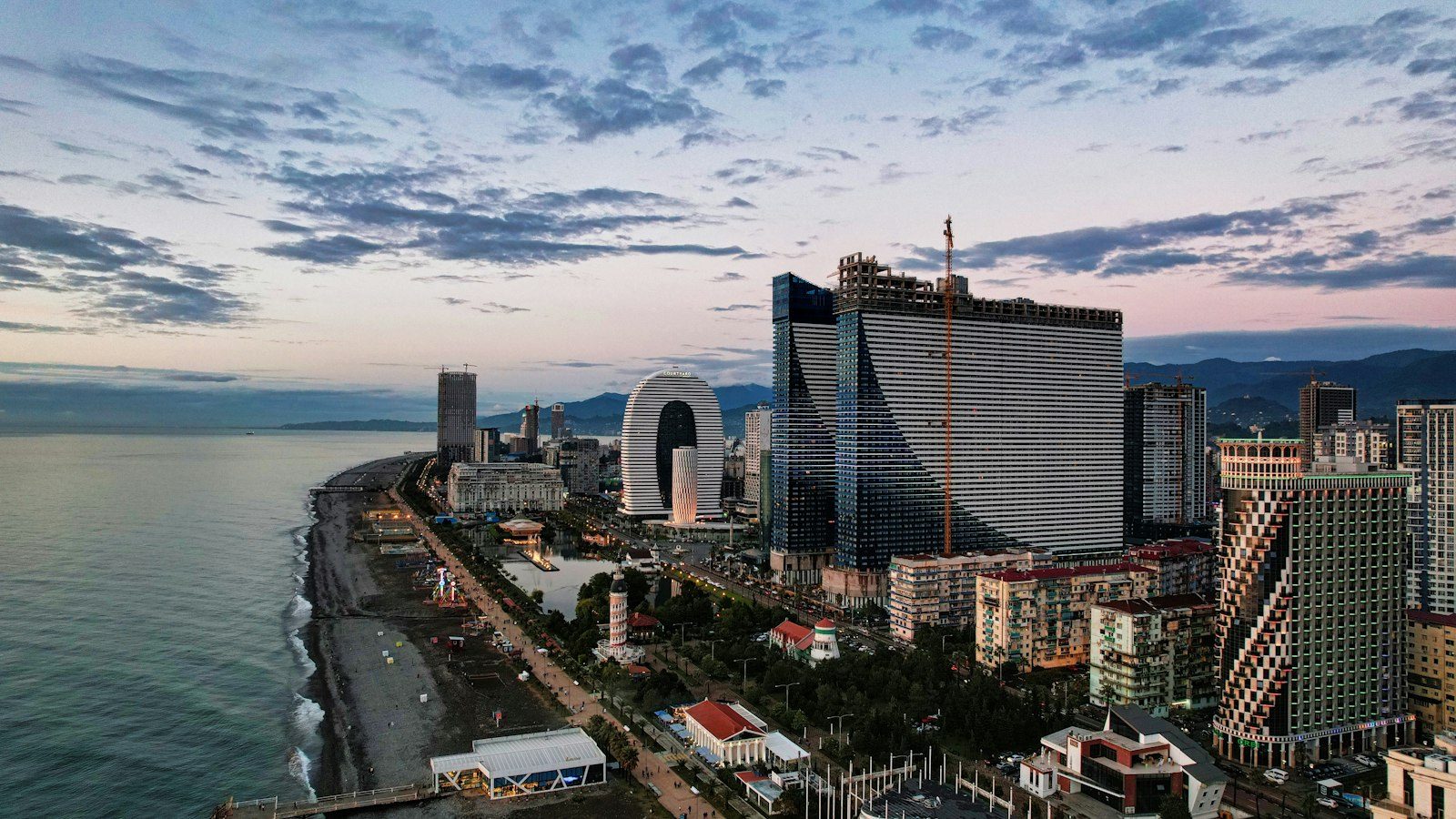
Georgia's subtropical port on the Black Sea, where an old town of balconied houses sits beside a strip of odd modern towers. You cycle the long seafront boulevard, eat khachapuri dripping with butter and take cheap buses to Roman forts, waterfalls and rainforest hills.
- Best time to visit: Late May to June and September
- Daily budget (budget traveller): $35 to $150 USD
- Ideal trip length: 3 to 5 days
Batumi is the capital of Adjara, the autonomous region in Georgia's south-west corner, about 20km from the Turkish border. Tbilisi is roughly four to five and a half hours away by train. The town looks like two cities stuck together. One is a 19th-century port with tiled roofs, wooden balconies, a mosque and old churches. The other is a run of casinos, glass hotels and strange towers that went up over the past twenty years. Between them and the sea is the Boulevard, a seafront promenade about 7km long with palms, cycle lanes and cafés. It is the best thing in town. The beaches are grey pebble rather than sand, and the sea is warm from June to September. The climate is subtropical and wet, so the hills behind town stay green all year. That makes the Botanical Garden, Mtirala National Park and the Makhuntseti waterfall easy, cheap half-day trips. Batumi can feel brash in high summer, when Georgian, Turkish and other visitors fill the beaches and room prices jump. Even so, cheap hostels, city buses that cost under 1 GEL, big plates of Adjarian food and a lively seafront at night make it an easy, good-value place to spend a few days on your own.
Batumi is Georgia's main seaside city and the capital of Adjara, a region with its own history of Ottoman rule, a Muslim minority and a climate wetter and warmer than the rest of the country. Around 170,000 people live here, and the population swells in summer. The old port town was a busy oil terminal in the late 19th century, which explains the European-style houses around the Piazza and Europe Square. Since the 2000s, money from tourism and casinos has added a skyline of unusual towers along the coast. Many visitors come for a beach week. Stay a few nights as a solo traveller and you get more: early bike rides on an empty Boulevard, khachapuri for lunch, rainforest walks half an hour inland and long summer evenings by the sea. Costs are low by European standards, especially outside July and August.
Getting here is straightforward. The Stadler train from Tbilisi takes about four to five and a half hours and costs from roughly 35 GEL ($13) in second class, with a stop at Kutaisi Airport for budget flights. Coaches and marshrutkas from Tbilisi's Didube station take longer but run often. Batumi's own airport is just south of town and close to the Turkish border, and bus 10 runs into the centre. Once you are here, walk, cycle or take the buses, which cost under 1 GEL. Base yourself in the old town for character and food, on the Old Boulevard for beaches and transport, or on the New Boulevard for cheap sea-view studios.
Timing matters more than most people expect. Late May, June and September bring warm sea and fewer crowds. July and August are hot, humid, busy and pricier, with every beach and bar full. From October, Batumi gets a lot of rain. The hills are lush, but beach days are rare and some seasonal cafés close. Georgian is the main language, Russian is widely spoken and younger people often speak some English. Remember that insurance has been compulsory for tourists since January 2026. If you want a lively seafront, cheap food and easy nature trips from one base, Batumi delivers.
Batumi itinerary
Arrive and find your feet
Morning: Take the morning train from Tbilisi or land at the airport. Ride bus 10 into town and drop your bag at your hostel or guesthouse.
Afternoon: Walk the old town: Europe Square, the Piazza, the Orta Jame mosque and the cathedral. Have a late lunch of khachapuri.
Evening: Walk the Boulevard to the Ali and Nino statue and the Alphabetic Tower for sunset, then sit on the beach as the lights come on.
Botanical Garden and the cable car
Morning: Take bus 10 or 10a to the Botanical Garden (about 25 GEL) when it opens. Walk the upper paths before the heat.
Afternoon: Go down through the garden to the little beach below the Green Cape for a swim, then bus back to town.
Evening: Ride the Argo cable car (39 GEL return) at dusk for the view over the city. Dinner in the old town.
Gonio and Kvariati
Morning: Take a minibus south to Gonio-Apsaros Fortress (about 15 GEL). Walk the walls and see the small museum.
Afternoon: Carry on to Kvariati for a swim in the clearest water on this coast. Bring water shoes and a picnic or eat at a beach café.
Evening: Minibus back to Batumi. Choose a fish at the fish market and have it fried next door.
Mtirala National Park
Morning: Set off early by taxi or arranged transport for the Mtirala visitor centre, about 25km inland. Walk the forest trail towards the waterfall.
Afternoon: Picnic by the stream or eat at a guesthouse in the village, then head back to town. Check the forecast first, as rain makes the trails muddy.
Evening: A slow evening on the Boulevard and an early night.
Makhuntseti waterfall and the hills
Morning: Take a minibus inland from the bus station towards Keda and get off at Makhuntseti. See the waterfall and Queen Tamar's arched bridge.
Afternoon: Buy honey or churchkhela from the roadside stalls. Ask about a wine tasting at a family cellar in the area before heading back.
Evening: Bike the New Boulevard to Ardagani Lake and see whether the dancing fountains are running.
Beach day and museums
Morning: Have a swim and a lazy breakfast on the Old Boulevard before the beaches fill.
Afternoon: Escape the heat or rain in the Batumi Archaeological Museum, then wander the backstreets of the old town.
Evening: A farewell Adjarian dinner with borano and a glass of Saperavi, then a last walk along the seafront.
Slow morning and depart
Morning: Watch the fishermen on the breakwater by the port at sunrise and have coffee in the old town.
Afternoon: Take bus 10 or a Bolt to Batumi Central for the train back to Tbilisi, or to the airport. Check your ticket time the day before.
Evening: Arrive in Tbilisi, or carry on to your next stop.
Best neighbourhoods
- Old Town: The historic core between the port and Gogebashvili Street, with Europe Square, the Piazza, the Orta Jame mosque and the cathedral. Restaurants, bars and many guesthouses are here, and the Boulevard is a few minutes' walk away. Some lanes get noisy at night in summer, so ask for a room at the back.
- Old Boulevard and Rustaveli Avenue: The stretch of seafront park running south-west from the Ali and Nino statue, with Rustaveli Avenue just inland. The big hotels, casinos and the main beaches are here, and buses 10 and 10a run along it to the airport and the Botanical Garden. It is the most convenient base for a first visit.
- New Boulevard: The newer southern end of the seafront, near Ardagani Lake and the dancing fountains. Mostly high-rise apartment blocks, which means plenty of cheap studio rentals with sea views. It is calmer and the beach is less crowded, but you will need a bus or a Bolt to reach the old town at night.
- Gonio and Kvariati: Two seaside villages about 12 to 15km south, on the road to the Turkish border at Sarpi. The water is clearer, the pebble coves smaller and the Roman fortress is in Gonio. Guesthouses here are cheap, and minibuses go to and from Batumi all day, but evenings are quiet.
- Green Cape and Makhinjauri: The wooded headland north of town around the Botanical Garden, with small beaches and family guesthouses. It is green and peaceful, with the train station close by. Buses 10 and 10a take about 25 minutes to reach the centre, so it suits you more if you want nature than nightlife.
Must-do experiences
- Cycle the Boulevard at sunset: Hire a bike or use the city's bike-share and ride the seafront from the New Boulevard up to the port. End at the Ali and Nino statue, two steel figures that slowly move towards each other, with the Alphabetic Tower beside them. It is free to walk and busiest after dark.
- Spend half a day in the Botanical Garden: The garden covers a steep, forested headland 9km north of town, with plants laid out by region, from the Himalayas to Mexico. Foreign adults pay about 25 GEL ($9), and it is open roughly 09:00 to 19:00. Take bus 10 or 10a and wear shoes with grip.
- Ride the Argo cable car: The cable car climbs about 2.5km from near the old town to a viewpoint on a hill above the city. A return ticket costs 39 GEL ($14), and cars run until late. Go at dusk to see the towers light up below you.
- Wander the Old Town: Start at Europe Square with its Medea statue, then walk to the Piazza, a little Italian-style square with a clock tower and mosaics. Look into the Orta Jame mosque and the Cathedral of the Mother of God nearby. Most of the old town can be seen in a slow morning.
- See Gonio Fortress and swim at Kvariati: Gonio-Apsaros is a Roman fort 12km south with walls you can walk along and a small museum. Foreign visitors pay about 15 GEL ($6). Afterwards, take a minibus a few minutes further to Kvariati, where the water is the clearest on this coast.
- Walk in Mtirala National Park: The name means 'crying mountain', and it is one of the wettest places in Georgia, with thick Colchic forest, streams and a small waterfall. An easy trail from the visitor centre takes a few hours. Go after a dry spell and set off early, as the paths get muddy.
- Choose your dinner at the fish market: At Batumi's fish market you buy fresh Black Sea fish by weight from the stalls, then pay a small fee for a nearby kitchen to fry or grill it. It is cheaper than a seafront restaurant. Ask the price per kilo before they weigh anything.
Hidden gems
- The quiet backstreets west of Gogebashvili Street, where old wooden balconies and courtyard vines survive between the newer blocks
- Batumi Archaeological Museum, a small, rarely crowded collection of Colchian gold and Greek finds that fills a rainy hour cheaply
- The far northern end of the Botanical Garden, where paths drop through the trees to a little-used pebble beach below the cliffs
- Queen Tamar's Bridge, a stone arched bridge over the Acharistskali river just past the Makhuntseti waterfall, with honey and churchkhela stalls nearby
- The breakwater by the port at sunrise, when fishermen line up their rods and the boulevard is almost empty
Daily budget
- Accommodation: budget $8-15 / night (hostel dorm), mid-range $40-80 (guesthouse, studio or 3-star hotel), splurge $150+ (sea-view room at a big international hotel). Prices can double in July and August and on summer weekends. Studios on the New Boulevard are good value for longer stays.
- Food: budget $10-15 / day (bakery pastries, khachapuri, market fruit), mid-range $20-35 (sit-down lunch and dinner with wine), splurge $50+ (seafront restaurant, fish and good wine). An Adjarian khachapuri costs about 15-25 GEL ($6-9). Many restaurants add a service charge of around 10-18%, so check the bill.
- Transport: budget $0-3 / day (walking, city buses, minibuses), mid-range $5-10 (Bolt rides and bike hire), splurge $40-60 (driver for a day in the mountains). City buses are under 1 GEL. The Tbilisi train starts at about 35 GEL ($13) in second class, and Bolt rides in town are usually 5-10 GEL.
- Activities: budget $0-10 / day (Boulevard, beaches, old town, Gonio at 15 GEL), mid-range $10-25 (Botanical Garden at 25 GEL, Argo cable car at 39 GEL), splurge $40+ (guided hikes, boat trips, tours). The Botanical Garden charges foreign adults about 25 GEL ($9). Argo is 39 GEL ($14) return, and Gonio Fortress about 15 GEL ($6).
- Drinks & nightlife: budget $3-8 (a beer or glass of wine), mid-range $15-25 (a few drinks at a seafront bar), splurge $40+ (cocktails in a hotel bar or club). A coffee costs about 5-8 GEL and a local beer 5-8 GEL. Clubs are mostly seasonal and the busiest from July to August.
Where to stay
- Social hostel in Old Town ($8-15 / night (dorm)): Batumi has plenty of small hostels in the old town, such as the well-reviewed Hostel 47, within walking distance of the beach and the Piazza. Dorms are cheap and kitchens are common.
- Boutique hotel in Old Town and Rustaveli Avenue ($50-100 / night): Small hotels in restored old town houses or on the streets behind the Boulevard put you near cafés, the mosque and the seafront. Many include breakfast.
- Apartment in New Boulevard ($30-70 / night): High-rise studios with balconies and sea views are the cheapest way to get a kitchen and space. Check the floor, lift and how far you are from the bus stop.
- Splurge in Old Boulevard ($150-300+ / night): International hotels such as the Sheraton or Hilton face the sea, with pools, spas and rooftop bars. The old town and Ali and Nino are a short walk away.
What to eat
- Adjaruli khachapuri: a boat-shaped bread filled with molten cheese, a raw egg and a slab of butter, about 15-25 GEL ($6-9) depending on size
- Borano: a rich Adjarian dish of local cheese melted in butter, eaten by dipping bread into it
- Fried Black Sea fish: red mullet (barabulka) or anchovy-like hamsi from the fish market, fried and served with lemon and bread
- Khinkali: the soup-filled dumplings found all over Georgia, sold by the piece and cheap at simple local places
- Sinori: a local pasta-like dish of thin rolled dough baked with cheese and butter, found in Adjarian restaurants
- Churchkhela and a Georgian wine: walnuts dipped in grape juice and dried, plus a glass of Saperavi red or Rkatsiteli white for a few lari
Day trips
- Batumi Botanical Garden and Green Cape (About 9km north of the centre, 25 minutes by bus): A huge hillside garden above the sea, founded in 1912, with plants laid out by region, bamboo groves and views down the coast. Allow at least half a day, as the paths are steep. Take bus 10 or 10a along Gogebashvili Street or Rustaveli Avenue to the lower entrance, or a Bolt for around 10-15 GEL. Foreign adults pay about 25 GEL, and the garden opens roughly 09:00 to 19:00.
- Gonio, Kvariati and Sarpi (About 12-20km south of Batumi, 20 to 40 minutes by minibus): A Roman fortress with intact walls, the clearest swimming water on the Georgian coast at Kvariati and the Turkish border at Sarpi. It makes an easy half-day or a full beach day. Take bus 16 or any minibus marked Gonio or Sarpi from the centre for a lari or two. Gonio Fortress costs about 15 GEL for foreigners. Hop off and on along the coast road.
- Mtirala National Park and Makhuntseti (About 25-30km inland, 45 minutes to 1 hour by road): Thick, rain-soaked Colchic forest with walking trails and streams, plus the Makhuntseti waterfall and the medieval Queen Tamar's Bridge in the Acharistskali valley. Minibuses towards Keda leave the bus station and stop near Makhuntseti. Mtirala is easier by taxi or with a driver for the day, around $40-60. Check trail conditions at the visitor centre.
When to visit
- Spring (April - May): 14-21°C, mild with showers, sea cool until late May. Crowds: Low, busier on May holidays. Good for the Botanical Garden in bloom, hikes and cheap rooms. Swimming is only for the brave before late May.
- Early summer (June): 21-26°C, warm and humid, sea around 21-24°C. Crowds: Moderate, rising towards July. Arguably the best month. Long evenings, warm water and the Boulevard lively without being packed.
- High summer (July - August): 26-30°C, hot and sticky, sea up to about 26°C. Crowds: Very busy, especially at weekends. Great for swimming and nightlife, but rooms cost the most and trains sell out. Book ahead and do sightseeing early.
- Autumn and winter (September - March): September 20-25°C, then 7-15°C with heavy rain. Crowds: Moderate in September, quiet from October. September is the local favourite, with warm sea and calmer streets. Later months are cheap and green but often wet.
Entry rules for your passport
Visa rules for Georgia depend on the passport you travel on. Check the official source before you book: Georgia Ministry of Foreign Affairs
Getting there
Batumi International Airport is about 6km south of the centre, near the Turkish border. Bus 10 runs from in front of the terminal to the centre in about 20 to 30 minutes for under 1 GEL, though evening service can be patchy. Bolt costs roughly 8-15 GEL. Many budget flights land at Kutaisi instead, and the Tbilisi to Batumi train stops at Kutaisi Airport station. From Tbilisi, the double-decker Stadler train takes about four to five and a half hours depending on the service. Second class starts at around 35 GEL ($13), with first and business costing more. There are usually two or three trains a day in summer and fewer in winter. Book on the Georgian Railway website or tkt.ge, as July and August trains sell out. Coaches and marshrutkas from Tbilisi's Didube station take up to six hours for around 35-50 GEL. From Turkey, cross on foot at Sarpi, then take bus 16 or a minibus into Batumi. All foreign tourists need valid health and accident insurance to enter Georgia.
Getting around
Most of what you want in Batumi lies along the seafront, and the old town is compact enough to walk. The Boulevard is about 7km long, so a bike is the easiest way to cover it, using the bike-share scheme or a rental stand. City buses are cheap, usually under 1 GEL a ride, and you pay with a contactless bank card or a Batumi Card as you board. Buses 10 and 10a are the ones most visitors use. They run between the airport, Rustaveli Avenue, the centre, the train station and the Botanical Garden. Minibuses (marshrutkas) for Gonio, Kvariati and Sarpi leave from the centre and cost a lari or two, and others head inland towards Makhuntseti and Keda. Bolt is widely used and cheap, with most rides across town costing roughly 5-10 GEL. It saves you from haggling with street taxis, which have no meters. The train station, Batumi Central, is about 4km north of the Boulevard. Traffic is chaotic, so take care at crossings even on green.
Safety
Batumi is generally safe for visitors, and violent crime against tourists is rare. Watch your phone and bag on the crowded Boulevard on summer nights, and use Bolt rather than street taxis to avoid inflated fares. Be wary of strangers who invite you to a particular bar or club, as inflated bills happen. The bigger risks are the sea and the roads. The pebble beaches shelve steeply and waves can be strong, so obey red flags and do not swim after drinking. Drivers often ignore crossings. Stray dogs are common, mostly tagged and calm, but keep your distance. Mountain trails get slippery after rain. Locals often drink the tap water, but many visitors prefer bottled or filtered. Since 1 January 2026, health and accident insurance is a legal entry requirement for tourists. Avoid political demonstrations and check your government's advice on Abkhazia and South Ossetia. The emergency number is 112.
Solo travel tips
- Book the train early: Summer trains between Tbilisi and Batumi sell out days ahead. Buy as soon as your date opens, and if it is full, try the marshrutka from Didube or a flight into Kutaisi.
- Sort your insurance before you fly: Since January 2026, you need health and accident insurance with at least 30,000 GEL of cover to enter Georgia. Keep the policy on your phone and on paper.
- Use Bolt, not street taxis: Street taxis have no meters and often overcharge visitors. Bolt shows the price upfront and short rides cost only a few lari.
- Plan around the rain: Batumi is very wet, especially in autumn. Keep the Botanical Garden and Mtirala for dry mornings, and save museums and food for rainy afternoons.
- Safety for solo travellers: The main risks are strong waves, traffic and over-friendly strangers steering you to bars. Swim near lifeguards, cross carefully and pick your own places to drink.
- Meet people on the Boulevard: Hostel common rooms, walking tours and bike rides along the seafront are easy ways to meet other travellers. Georgians are famously hospitable, and a supra dinner can turn into a long night.
Cultural etiquette
- Say 'gamarjoba' (hello) and 'madloba' (thank you). Many people also speak Russian, and some speak Turkish, but a few Georgian words go a long way.
- Cover your shoulders and knees in churches. Women are often expected to cover their hair, and scarves are sometimes provided at the door.
- Take your shoes off and dress modestly if you visit the Orta Jame mosque, and avoid prayer times.
- Keep swimwear for the beach. Walking through the old town or into shops in a bikini or bare-chested is frowned upon.
- If you are invited to a supra (feast), let the tamada (toastmaster) lead the toasts and do not drink wine between them.
- Check your bill for a service charge before tipping. If none is added, around 10% for good table service is appreciated.
- Avoid calling Georgia part of Russia or treating Russian as the local language. Relations with Russia are a sensitive subject.
Frequently asked questions
How do I get to Batumi and from the station to my room?
Most people take the double-decker Stadler train from Tbilisi. It takes roughly four to five and a half hours depending on the service, and second class starts at about 35 GEL ($13). Book on the Georgian Railway site or tkt.ge, as summer trains sell out days ahead. Trains stop at Kutaisi Airport station on the way, which helps if you fly in there. Batumi Central station is about 4km north of the Boulevard. Bus 10 or 10a, or a Bolt for a few lari, gets you into town. From Batumi airport, bus 10 reaches the centre in about 20 to 30 minutes.
How many days do I need in Batumi?
Two nights covers the old town, the Boulevard, the cable car and the Botanical Garden. Three to five nights lets you add Gonio and Kvariati, a hike in Mtirala National Park and the Makhuntseti waterfall. A week suits you if you want beach days or slow time in the Adjara hills.
When is the best time to visit Batumi?
Late May, June and September are the best months. The sea is warm, the beaches are calmer and rooms cost less than in peak season. July and August are hot and humid, and the town is packed, especially at weekends. Batumi is one of the wettest cities in the region, and from October heavy rain becomes common. Winter is mild but grey, quiet and cheap.
Do I need travel insurance to enter Georgia?
Yes. Since 1 January 2026, all foreign tourists must hold health and accident insurance for their whole stay, including arrival and departure days. Cover must be at least 30,000 GEL, and the policy must be in English or Georgian, on paper or on your phone. It can come from a Georgian or foreign insurer. Without it, you risk a fine or being refused entry, so carry proof when you arrive.
Are the beaches in Batumi any good?
They are pebbly and grey rather than sandy, and the city beaches get crowded in summer. The water is warm from June to September. For clearer water and smaller crowds, take a minibus south to Gonio or Kvariati. Bring water shoes, as the pebbles are hard on bare feet and the shore drops off quickly.
Can I get to Turkey from Batumi?
Yes. The Sarpi border crossing is about 20km south, and bus 16 or a minibus runs there from town for a lari or two. You walk across, then pick up transport on the Turkish side towards Hopa, Rize or Trabzon. Check whether you need a Turkish e-visa for your passport and make sure your Georgian insurance covers your full stay if you come back.
Is Batumi safe for solo female travellers?
Yes, generally. The Boulevard and old town are busy and well lit until late, and many women travel here alone. Expect some staring and the odd unwanted comment. Use Bolt at night rather than street taxis, take normal care with drinks, and be cautious with men who press you to come to a particular bar. Dress more modestly away from the beach, especially in churches.
What entry rules apply to Georgia in 2026?
Georgia is not in the EU or Schengen. Citizens of many countries, including the UK, EU states, the US, Canada and Australia, can stay visa-free for up to one year. Your passport should be valid for your whole stay. Mandatory health and accident insurance has applied to all tourists since 1 January 2026, with at least 30,000 GEL of cover. Do not enter Abkhazia or South Ossetia from Russia, as Georgia treats this as illegal. Check the Georgian foreign ministry's geoconsul.gov.ge site and your own government's travel advice before you go.
Tours and activities in Batumi | Batumi in 2 days | Batumi in 3 days | Batumi in 4 days | Batumi in 5 days | Batumi in 7 days
Can't decide? Compare Batumi with...
Joy Plus home | Destinations | Itineraries | Activities | Flights | Budget planner | Calendar | Map | Blog | Lifetime access