Batumi in 4 days
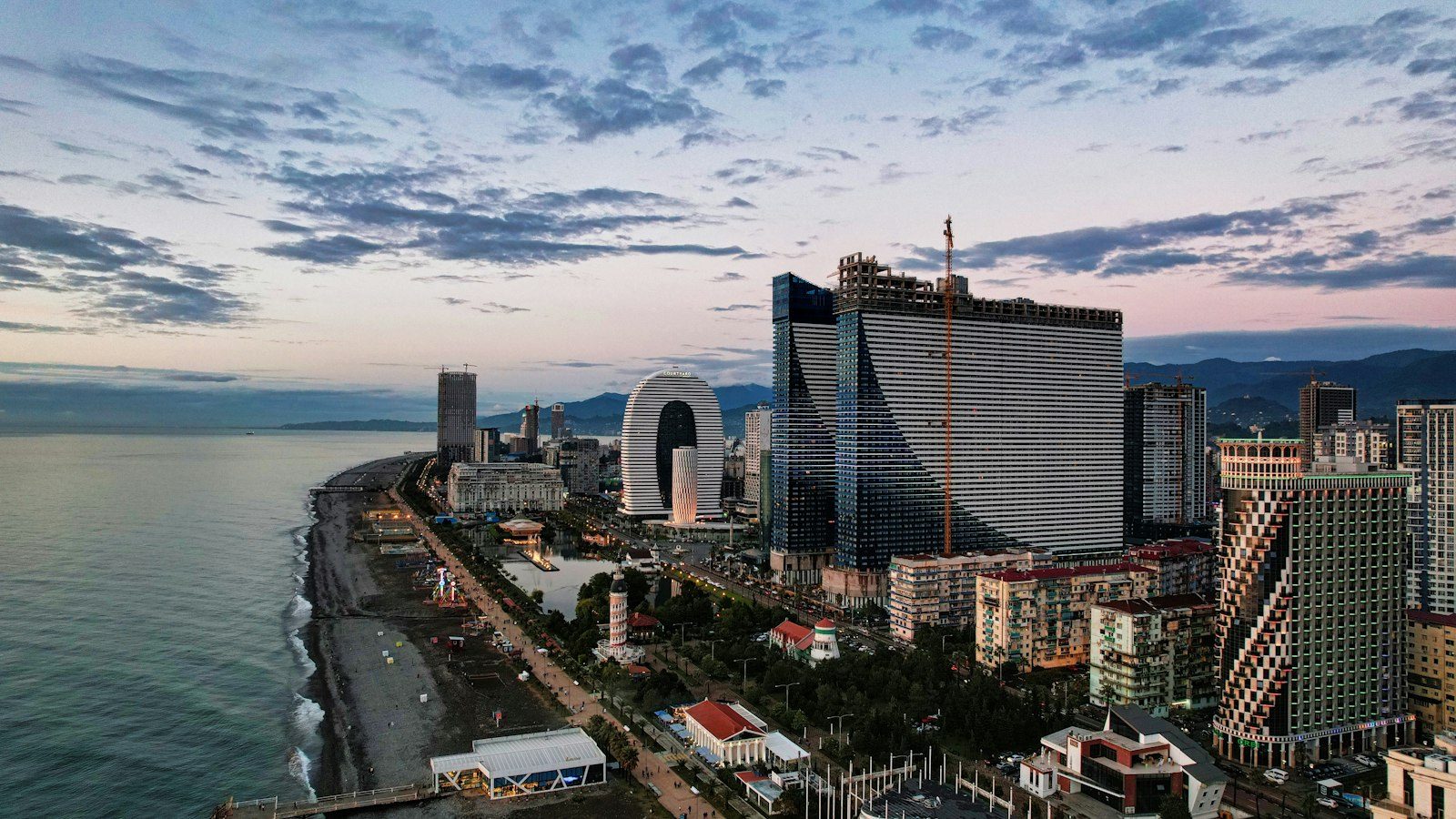
Georgia's subtropical port on the Black Sea, where an old town of balconied houses sits beside a strip of odd modern towers. You cycle the long seafront boulevard, eat khachapuri dripping with butter and take cheap buses to Roman forts, waterfalls and rainforest hills. Best time to visit: Late May to June and September. Daily budget (budget traveller): $35 to $150 USD.
Arrive and find your feet
Morning: Take the morning train from Tbilisi or land at the airport. Ride bus 10 into town and drop your bag at your hostel or guesthouse.
Afternoon: Walk the old town: Europe Square, the Piazza, the Orta Jame mosque and the cathedral. Have a late lunch of khachapuri.
Evening: Walk the Boulevard to the Ali and Nino statue and the Alphabetic Tower for sunset, then sit on the beach as the lights come on.
Botanical Garden and the cable car
Morning: Take bus 10 or 10a to the Botanical Garden (about 25 GEL) when it opens. Walk the upper paths before the heat.
Afternoon: Go down through the garden to the little beach below the Green Cape for a swim, then bus back to town.
Evening: Ride the Argo cable car (39 GEL return) at dusk for the view over the city. Dinner in the old town.
Gonio and Kvariati
Morning: Take a minibus south to Gonio-Apsaros Fortress (about 15 GEL). Walk the walls and see the small museum.
Afternoon: Carry on to Kvariati for a swim in the clearest water on this coast. Bring water shoes and a picnic or eat at a beach café.
Evening: Minibus back to Batumi. Choose a fish at the fish market and have it fried next door.
Mtirala National Park
Morning: Set off early by taxi or arranged transport for the Mtirala visitor centre, about 25km inland. Walk the forest trail towards the waterfall.
Afternoon: Picnic by the stream or eat at a guesthouse in the village, then head back to town. Check the forecast first, as rain makes the trails muddy.
Evening: A slow evening on the Boulevard and an early night.
Heading home: Take bus 10 or a Bolt to Batumi Central for the train back to Tbilisi, or to the airport.
What to eat in Batumi
- Adjaruli khachapuri: a boat-shaped bread filled with molten cheese, a raw egg and a slab of butter, about 15-25 GEL ($6-9) depending on size
- Borano: a rich Adjarian dish of local cheese melted in butter, eaten by dipping bread into it
- Fried Black Sea fish: red mullet (barabulka) or anchovy-like hamsi from the fish market, fried and served with lemon and bread
- Khinkali: the soup-filled dumplings found all over Georgia, sold by the piece and cheap at simple local places
- Sinori: a local pasta-like dish of thin rolled dough baked with cheese and butter, found in Adjarian restaurants
- Churchkhela and a Georgian wine: walnuts dipped in grape juice and dried, plus a glass of Saperavi red or Rkatsiteli white for a few lari
Hidden gems
- The quiet backstreets west of Gogebashvili Street, where old wooden balconies and courtyard vines survive between the newer blocks
- Batumi Archaeological Museum, a small, rarely crowded collection of Colchian gold and Greek finds that fills a rainy hour cheaply
- The far northern end of the Botanical Garden, where paths drop through the trees to a little-used pebble beach below the cliffs
- Queen Tamar's Bridge, a stone arched bridge over the Acharistskali river just past the Makhuntseti waterfall, with honey and churchkhela stalls nearby
- The breakwater by the port at sunrise, when fishermen line up their rods and the boulevard is almost empty
Getting around
Most of what you want in Batumi lies along the seafront, and the old town is compact enough to walk. The Boulevard is about 7km long, so a bike is the easiest way to cover it, using the bike-share scheme or a rental stand. City buses are cheap, usually under 1 GEL a ride, and you pay with a contactless bank card or a Batumi Card as you board. Buses 10 and 10a are the ones most visitors use. They run between the airport, Rustaveli Avenue, the centre, the train station and the Botanical Garden. Minibuses (marshrutkas) for Gonio, Kvariati and Sarpi leave from the centre and cost a lari or two, and others head inland towards Makhuntseti and Keda. Bolt is widely used and cheap, with most rides across town costing roughly 5-10 GEL. It saves you from haggling with street taxis, which have no meters. The train station, Batumi Central, is about 4km north of the Boulevard. Traffic is chaotic, so take care at crossings even on green.
Safety
Batumi is generally safe for visitors, and violent crime against tourists is rare. Watch your phone and bag on the crowded Boulevard on summer nights, and use Bolt rather than street taxis to avoid inflated fares. Be wary of strangers who invite you to a particular bar or club, as inflated bills happen. The bigger risks are the sea and the roads. The pebble beaches shelve steeply and waves can be strong, so obey red flags and do not swim after drinking. Drivers often ignore crossings. Stray dogs are common, mostly tagged and calm, but keep your distance. Mountain trails get slippery after rain. Locals often drink the tap water, but many visitors prefer bottled or filtered. Since 1 January 2026, health and accident insurance is a legal entry requirement for tourists. Avoid political demonstrations and check your government's advice on Abkhazia and South Ossetia. The emergency number is 112.
Frequently asked questions
What does this 4-day Batumi itinerary cover?
Day 1: Arrive and find your feet. Day 2: Botanical Garden and the cable car. Day 3: Gonio and Kvariati. Day 4: Mtirala National Park.
Is 4 days enough for Batumi?
Our recommended trip length for Batumi is 3 to 5 days. This 4-day plan focuses on the highlights and groups sights by area so you spend less time travelling between them.
How much does 4 days in Batumi cost?
A budget traveller spends about $35 to $150 USD a day in Batumi, so roughly $140 to $600 USD for 4 days, not counting flights.
Where should I stay for 4 days in Batumi?
Old Town: The historic core between the port and Gogebashvili Street, with Europe Square, the Piazza, the Orta Jame mosque and the cathedral. Old Boulevard and Rustaveli Avenue: The stretch of seafront park running south-west from the Ali and Nino statue, with Rustaveli Avenue just inland.
When is the best time to visit Batumi?
The best time to visit Batumi is Late May to June and September.
How do I get around Batumi?
Most of what you want in Batumi lies along the seafront, and the old town is compact enough to walk. The Boulevard is about 7km long, so a bike is the easiest way to cover it, using the bike-share scheme or a rental stand.
Is Batumi safe for solo travellers?
Batumi is generally safe for visitors, and violent crime against tourists is rare. Watch your phone and bag on the crowded Boulevard on summer nights, and use Bolt rather than street taxis to avoid inflated fares.
More 4-day guides
- Kazbegi (Stepantsminda) in 4 days
- Tbilisi in 4 days
- Beppu in 4 days
- Cameron Highlands in 4 days
- Gangneung in 4 days
- Gokarna in 4 days
- Huangshan in 4 days
- Ishigaki in 4 days
Batumi in 2 days | Batumi in 3 days | Batumi in 5 days | Batumi in 7 days | Full Batumi guide
Joy Plus home | Destinations | Itineraries | Activities | Flights | Budget planner | Calendar | Map | Blog | Lifetime access