Destinations / Europe
Berchtesgaden, Germany travel guide
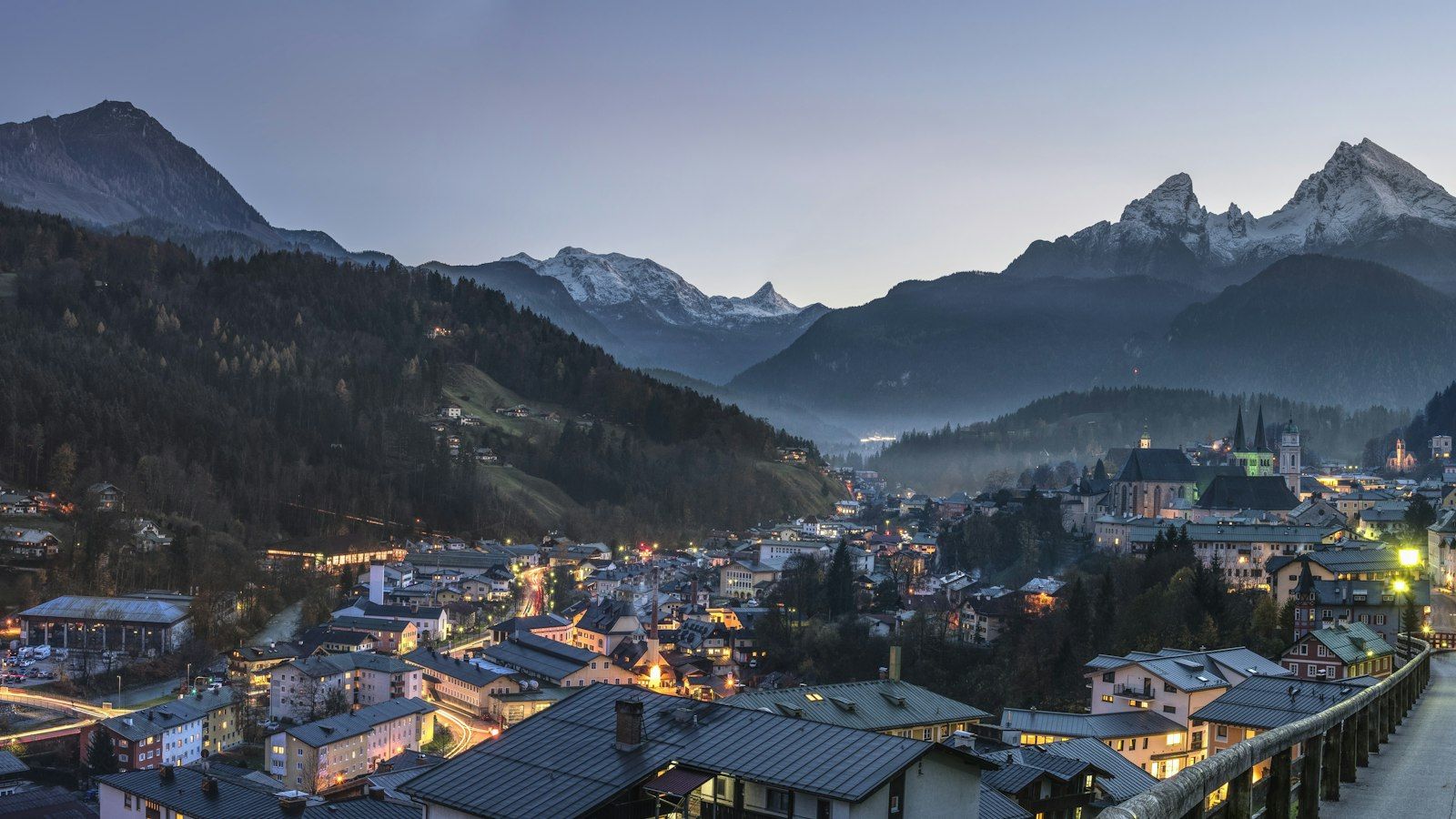
A Bavarian market town in a bowl of limestone peaks, with silent electric boats on the Königssee, a salt mine you ride into by train, and Germany's only alpine national park on the doorstep.
- Best time to visit: June to early October, plus December for Advent
- Daily budget (budget traveller): $90 to $270 USD
- Ideal trip length: 4 to 7 days
Berchtesgaden sits in Germany's far southeast, a thumb of Bavaria pushed into Austria about 25 kilometres south of Salzburg. The market town is small, painted and easy to walk. The bigger draw is the country around it: Germany's only alpine national park, the 2,713-metre Watzmann, and the Königssee, a long, narrow lake crossed by silent electric boats. Add a working salt mine you enter on a miners' train, the Kehlsteinhaus at 1,834 metres, and the Dokumentation Obersalzberg, a serious museum on the Nazi history of the mountain above town, and you get a week where no two days feel alike. For solo travellers the best trick is the Gästekarte, the guest card your accommodation gives you. It makes most local buses and regional trains free, even the train to Salzburg. Hikers get marked trails from almost every bus stop. History readers get a site that deals with its past honestly. And everyone gets a beer hall and a plate of Kaiserschmarrn at the end of the day.
Berchtesgaden is a town of about 7,500 people in a valley almost surrounded by Austria, and the mountains feel close. The Watzmann rises to 2,713 metres right behind the rooftops, the Königssee is a ten-minute bus ride away, and the Berchtesgaden National Park covers most of the high ground to the south. This was a salt town long before it was a tourist town. Salt from the mine, still working since 1517, paid for the monastery, the palace and the painted houses on the Marktplatz. In the 1930s Hitler made the Obersalzberg above town into his second seat of power, and that history is now told with care at the Dokumentation Obersalzberg. You can spend a week here on lakes, cable cars and gorges, and still get serious history on the same trip.
Solo travel here is easy because the valley works as one connected system. Base yourself in the old town near the station or in the youth hostel at Strub, collect your Gästekarte, and almost every bus and regional train becomes free, including the train to Salzburg. Spend the first full day at the Königssee and get there early, because the first boats are calm and the late-morning ones are full. Give the Kehlsteinhaus its own day with the Dokumentation, in season, and save the salt mine and the Watzmann Therme for rain. One important 2026 change: the official boat operator lists the Salet landing at the far end of the lake as no longer served, so the walk to the Obersee is not on the standard boat route. Check the Bayerische Seenschifffahrt website in case that changes.
The season shapes everything. From roughly May to October the high trails, the Kehlstein road and the gorges are open, with long days and the risk of afternoon thunderstorms. September and early October are the sweet spot, with crisp air, settled weather and cattle coming down from the high pastures. From November the Kehlsteinhaus and the gorges close, the cable car takes a maintenance break, and the valley gets quiet until the Advent market and the snow arrive. Berchtesgaden is not a nightlife town. Evenings mean a beer hall, a Halbe of house beer and an early night. If you want to start a hike at 7am with a clear head, you are in exactly the right place.
Berchtesgaden itinerary
Arrive and find your feet in the old town
Morning: Arrive by train at Berchtesgaden Hauptbahnhof via Freilassing. Drop your bags and collect your Gästekarte from your host, because it is your free bus and train pass from now on.
Afternoon: Walk up to the Marktplatz and Schlossplatz, look inside the Stiftskirche, then head back down to the Haus der Berge national park centre by the station for its exhibition on alpine wildlife and geology.
Evening: Dinner at the Bräustübl of the Hofbräuhaus Berchtesgaden: Schweinsbraten and a Halbe of house beer for about €25 all in.
Königssee and St. Bartholomä
Morning: Free bus to Schönau am Königssee for one of the first boats. Download your ticket beforehand, because there is no reliable signal at the lake. The trip takes 35 minutes, costs €23.40 return, and the boatman stops to play the trumpet echo on the way.
Afternoon: Explore the chapel at St. Bartholomä and have smoked char for lunch at the Historische Gaststätte. In summer and autumn, walk about an hour each way towards the Eiskapelle under the Watzmann east face. Look from a distance and never go under the ice.
Evening: Check the last return sailing. Back in Schönau, walk ten minutes to the Malerwinkel for evening light over the lake, then take the bus to town.
Salt mine, thermal baths and the Lockstein
Morning: Salzbergwerk Berchtesgaden (€26.50, about 1.5 hours). Book a time slot online. You get miners' overalls, the mine train, two wooden slides and a raft across the salt lake.
Afternoon: Walk down to the Watzmann Therme for the pools and saunas, roughly €15-25 depending on how long you stay. If it is dry, walk a section of the Soleleitungsweg balcony path instead.
Evening: Climb to the Lockstein viewpoint for sunset over the valley, then eat a Brotzeit or Kaiserschmarrn at Gasthof Bier-Adam on the Marktplatz.
Obersalzberg and the Kehlsteinhaus
Morning: Bus 838 to Obersalzberg (free with the card), then the Kehlstein bus 849 (€31.80 with the card, includes the lift). Buses leave about every 25 minutes from 8:30am in season, roughly May to late October. Your return seat is booked automatically for two hours later.
Afternoon: Dokumentation Obersalzberg (daily 9am to 5pm, last entry 4pm). Allow two to three hours for the exhibition and the bunker tunnels. On Wednesdays and Saturdays a public guided tour runs at 11am for €5 extra.
Evening: Bus back down to town. Keep the evening quiet with a walk along the Berchtesgadener Ache and an early dinner.
Ramsau, Wimbachklamm and the Hintersee
Morning: Free bus to Ramsau. Walk the Wimbachklamm gorge (small fee, open roughly May to October), about 20 minutes of boardwalk through spray and waterfalls.
Afternoon: Get the painters' view of St. Sebastian church from the river bridge, then walk through the boulders of the Zauberwald to the Hintersee, about 1 to 1.5 hours. Have a long lunch by the lake.
Evening: Bus back from the Hintersee. Pack a day bag and get an early night before the mountain.
Up the Jenner
Morning: Bus to Schönau and take the Jennerbahn to 1,874 metres (about €43-45 return, cheaper online, or €56 with the boat in See-Gipfel periods). Walk the short path to the summit cross for the view down onto the Königssee.
Afternoon: Hike gently around the middle station area and ride down from there. On a tight budget, skip the cable car and hike up to the Grünstein from Schönau instead, about two hours up.
Evening: Dinner in Schönau after the day-trippers have gone, then take the bus back to your base.
Almbachklamm and on to Salzburg
Morning: Bus towards Marktschellenberg to the Kugelmühle and walk the Almbachklamm (small fee, open roughly May to October). Wear proper shoes, because the steps are wet.
Afternoon: Back in Berchtesgaden, take the regional train to Salzburg via Bad Reichenhall and Freilassing. The guest card covers it on your departure day too. Spend the afternoon in the old town before your flight or onward train.
Evening: Dinner in Salzburg's old town, or an evening train onwards from Salzburg Hauptbahnhof.
Best neighbourhoods
- Berchtesgaden Markt (old town): The compact centre around the Marktplatz and Schlossplatz, with painted facades, the Stiftskirche, the royal palace museum and the Hofbräuhaus beer hall. The train and bus station sit just below the town, so it is the most practical base if you are not driving.
- Schönau am Königssee: The lakeside village with the boat landing and the Jennerbahn valley station. It is crowded by day and very quiet once the coaches leave, with lots of family-run holiday flats and the first boats a short walk away.
- Ramsau: A quieter village west of town, known for the St. Sebastian church framed by the Reiteralpe, the Wimbachklamm gorge and the clear Hintersee lake. A good pick if you came to hike and want early starts close to the trailheads.
- Strub and Bischofswiesen: A green strip along the road west of town, home to the youth hostel, cheaper guesthouses and a station on the line to Bad Reichenhall. You get Watzmann views and a short bus ride into the centre.
- Marktschellenberg: A small village on the Austrian border on the road to Salzburg, with the Almbachklamm gorge and the old Kugelmühle marble mill. Rooms are often cheaper and the guest card still covers the buses.
Must-do experiences
- Cross the Königssee to St. Bartholomä: Take an electric boat from Schönau to the onion-domed chapel under the Watzmann's east face, about 35 minutes each way. On the way the boatman stops to play the trumpet against the cliffs so you can hear the echo. A return costs €23.40 in 2026, and the guest card gives no discount.
- Ride up to the Kehlsteinhaus: Special buses climb a private mountain road to the Eagle's Nest at 1,834 metres, then a brass-lined lift takes you up through the rock. It is open roughly May to late October. The return ticket is €34.70, or €31.80 with the guest card.
- Go underground at the Salzbergwerk: Put on miners' overalls and ride the train into Germany's oldest active salt mine, then go down wooden slides and cross a lit underground salt lake by raft. Adults pay €26.50 and the tour lasts about 1.5 hours.
- Spend a morning at the Dokumentation Obersalzberg: The museum on the site of Hitler's mountain retreat covers how the Nazi regime used the Obersalzberg and the crimes planned there, and you can walk into the old bunker tunnels. It is open daily from 9am to 5pm, last entry 4pm. Check for maintenance closures, including part of November 2026.
- Take the Jennerbahn above the lake: The cable car rises from Schönau to 1,874 metres, with views straight down onto the Königssee and across to the Watzmann. Adult returns are about €43 to €45, a bit less online. The See-Gipfel combo ticket with the boat costs €56 in set periods.
- Walk Ramsau to the Hintersee: Start at the St. Sebastian church for the classic painters' view, then follow the river through the boulder-strewn Zauberwald to the clear water of the Hintersee, about 1 to 1.5 hours on easy paths.
- Walk the Wimbachklamm: A short boardwalk gorge just outside Ramsau, with spray, waterfalls and mossy rock. It takes about 20 minutes and costs a small entry fee. It is open roughly May to October, so check before you go.
- Soak at the Watzmann Therme: The thermal pools and sauna halls in town are the best rainy-day plan in the valley. Expect roughly €15 to €25 depending on how many hours you book, and check current prices on the official site.
Hidden gems
- The Soleleitungsweg, a level balcony path that follows the line of the old brine pipeline above the valley towards Ramsau, with Watzmann views and very few people
- The Lockstein viewpoint, a short, steep climb from the town centre that gives you the whole Berchtesgaden basin at sunset for free
- The Almbachklamm near Marktschellenberg, a narrow gorge with bridges and ladders that starts at the Kugelmühle, a working mill that grinds marble into balls
- The Malerwinkel at the Königssee, a ten-minute walk from the boat landing to a quiet viewpoint over the lake that most boat passengers never find
- The Grünstein hike from Schönau, about two hours up forest trails to a small summit and hut with a bird's-eye view over the Königssee, and no cable car fare to pay
Daily budget
- Accommodation: budget €28-55 / night (hostel dorm or single), mid-range €110-180 (family-run hotel or guesthouse double), splurge €300+ (Hotel Edelweiss, Kempinski on the Obersalzberg). Add the Kurbeitrag of €3.10 per adult per night. It gets you the Gästekarte and free local transport. Breakfast is usually included. Non-members pay extra at German youth hostels. Book August and the Christmas period early.
- Food: budget €25-40 / day (bakery breakfast, Leberkässemmel, one Wirtshaus main), mid-range €50-80 (hut lunch, two-course beer-hall dinner), splurge €100+ (hotel restaurants, tasting menus). A beer-hall main is about €15-24, and a Brotzeit board is often cheaper. Mountain huts charge more because supplies come up by cable car. Bakeries open early and are the best-value breakfast if yours is not included.
- Transport: budget €0 / day (RVO buses and regional trains with the Gästekarte), mid-range €10-35 (Kehlstein bus, occasional taxi), splurge €80+ (hire car, taxis, private transfers). The guest card covers almost all local buses and the regional train to Salzburg, but not the Kehlstein line, the bus lines to Salzburg or the Rossfeld toll road. The Königssee car park is about €9 a day if you drive.
- Activities: budget €15-35 / day (one paid entry, free hiking), mid-range €40-70 (boat plus cable car, or Kehlstein plus Dokumentation), splurge €150+ (guided via ferrata, tandem paraglide). In 2026: Königssee boat €23.40 return, salt mine €26.50, Kehlstein €34.70 (€31.80 with the card), Jennerbahn about €43-45 return. The See-Gipfel combo is €56 from 1 Jan to 30 Jun and 15 Sep to 31 Dec, sold only at the boat ticket counters.
- Drinks & nightlife: budget €5-10 (one Halbe in a beer hall), mid-range €15-30 (a few beers, a schnapps), splurge €50+ (hotel cocktail bars, wine dinners). A half litre in a beer hall costs about €4.50-5.50. The Hofbräuhaus Berchtesgaden brews its own beer. Nightlife means a Stube with locals and live folk music on some evenings, and most places are quiet by 11pm.
Where to stay
- Social hostel in Strub, Bischofswiesen (€28-55 / night): Jugendherberge Berchtesgaden has 4 to 6 bed dorms, twin rooms, Watzmann views and a dining hall. It is about 2 km from the station and the bus stops outside. It is popular with school groups, so book a private room if you want quiet, and remember non-members pay extra.
- Boutique hotel in Berchtesgaden, near the Hauptbahnhof (€110-180 / night): Family-run places such as Hotel Grünberger, by the river below the old town, put you a few minutes' walk from the trains and buses and a short climb from the Marktplatz, with a big Bavarian breakfast included.
- Apartment in Schönau am Königssee (€80-150 / night): Family-run holiday flats (Ferienwohnungen) near the lake let you catch the first boat and cook your own dinners. Many ask for three nights minimum in summer, and your host issues the guest card.
- Splurge in Berchtesgaden centre or the Obersalzberg (€300-600+ / night): Hotel Edelweiss on the edge of the old town has a rooftop pool with Watzmann views, and the Kempinski on the Obersalzberg offers spa calm high above the valley.
What to eat
- Schweinsbraten: roast pork with crackling, dark beer gravy and a bread or potato dumpling, the classic beer-hall main at around €16 to €22
- Smoked Königssee char (Saibling): local fish smoked on the shore at St. Bartholomä and served with bread and horseradish
- Kaiserschmarrn: torn, caramelised pancake with raisins and apple sauce, the standard reward at a mountain hut for about €12 to €16
- Weißwurst with sweet mustard and a Brezn: veal sausages traditionally eaten before noon, ideally with a wheat beer
- Brotzeit: a wooden board of cured meats, Obatzda cheese spread, radish and dark bread, the cheapest way to eat well in a Wirtshaus
- Enzian: a sharp gentian-root schnapps that has been distilled in the Berchtesgaden valley for centuries, served as a small shot after dinner
Day trips
- Salzburg (About 25 km north, roughly 1 to 1.5 hours by regional train): Mozart's city has a baroque old town, the Hohensalzburg fortress above the river and the Mirabell gardens. It is a good contrast after the mountains, with coffee houses, markets and plenty of concerts. Regional train from Berchtesgaden via Bad Reichenhall and Freilassing, free with the Gästekarte. The direct bus is faster but not covered by the card. Check the last train back.
- Bad Reichenhall (About 20 km northwest, around 30 minutes by train): An old salt and spa town with the Alte Saline salt works, an elegant spa garden, and the historic Predigtstuhlbahn cable car up to a balcony of views over the Saalach valley. Regional train from Berchtesgaden, free with the guest card. A combined salt mine and Alte Saline ticket costs €33 for adults if you want to do both.
- Almbachklamm and the Kugelmühle (About 8 km north towards Marktschellenberg): A narrow limestone gorge with bridges, steps and waterfalls, starting at a mill that grinds marble into balls. Walk as far as you like, then eat at the inn by the entrance. RVO bus from Berchtesgaden towards Marktschellenberg, free with the guest card. Small entry fee, open roughly May to October, and closed after heavy rain.
When to visit
- Spring (April - May): 8-18°C, fresh and changeable, snow still on the high trails. Crowds: Low, with bumps at Easter and Whitsun. Valley walks, waterfalls in full flow and the Königssee without queues. The Kehlstein road opens in May, but high trails stay snowy, so stick to low routes and check hut opening dates.
- Summer (June - August): 18-26°C by day, warm and green, frequent afternoon thunderstorms. Crowds: Heavy, especially in August during the Bavarian school holidays. Everything is open, from huts to gorges and the Eagle's Nest. Hike early, be down by mid-afternoon, book Kehlstein tickets online and catch the first boat on the lake.
- Autumn (September - October): 10-20°C, clear and stable, cold mornings, first snow on the peaks. Crowds: Moderate, quieter after early October. The best time to hike. Golden larches, long views, the cattle drive down from the pastures and lower prices. The Kehlsteinhaus usually closes in late October, so do it first.
- Winter (November - March): -5 to 5°C, snow likely from December, short days. Crowds: Quiet in November, busy over Christmas and New Year. Advent market, Buttnmandl processions in early December, sledging and skiing on the Jenner, and steamy afternoons at the Therme. The Eagle's Nest and the gorges are closed, and the cable car shuts for maintenance in late autumn.
Entry rules for your passport
Visa rules for Germany depend on the passport you travel on. Check the official source before you book: European Commission: Schengen visa policy
Getting there
The nearest airport is Salzburg (SZG), about 30 km from Berchtesgaden. Munich Airport (MUC) has far more long-haul flights but is about 200 km away. By train, Berchtesgaden Hauptbahnhof is the end of a branch line with roughly hourly regional trains to Bad Reichenhall and Freilassing. There you connect for Salzburg, about 10 minutes away, or Munich, around 2.5 to 3 hours in total. A direct bus also runs between Salzburg Hauptbahnhof and Berchtesgaden in about 45 minutes, but bus lines to Salzburg are not covered by the guest card. The regional train via Freilassing is, including on your arrival and departure days. If you hold a Deutschlandticket, it covers the regional trains and RVO buses. By car, leave the A8 at Bad Reichenhall and follow the B20 south. Non-EU visitors flying into the Schengen Area go through the Entry/Exit System on arrival, with fingerprints and a facial photo. ETIAS was not yet operating at the time of writing. Germany has also run checks at its Austrian border, so keep your passport to hand even on the train from Salzburg.
Border checks: non-EU visitors (other than Swiss, Norwegian, Icelandic, Liechtenstein, Andorran, Monegasque, San Marinese and Vatican citizens, and holders of an EU residence permit or long-stay visa) are registered in the EU's Entry/Exit System (EES) instead of getting a passport stamp. On your first crossing, officers take your photo and/or fingerprints, so allow extra time at passport control. ETIAS, the planned travel authorisation, is not in operation yet, so don't pay any website for one.
Getting around
Your guest card (Gästekarte) is your transport pass. Once you have paid the Kurbeitrag of €3.10 per adult per night, the card lets you ride almost all RVO buses in the Berchtesgaden valley for free, and regional trains from Berchtesgaden and Bischofswiesen via Bad Reichenhall to Salzburg too. Many hosts send it digitally, so it works on your arrival and departure days. It does not cover the Kehlstein bus, the ALM-Erlebnisbus, the bus lines to Salzburg or the Rossfeld toll road, so check before you board. Buses fan out from the bus station at Berchtesgaden Hauptbahnhof to Schönau am Königssee, Ramsau, the Hintersee and Marktschellenberg. Line 838 climbs to Obersalzberg, where the Kehlstein line 849 takes over. Regional trains run roughly hourly from Berchtesgaden to Bad Reichenhall and Freilassing, where you change for Salzburg and Munich. A Deutschlandticket also covers regional trains and RVO buses. You do not need a car. If you drive, the Königssee car park costs about €9 a day, and the guest card gives 25% off at municipal car parks. Taxis are available at the station but expensive for long rides.
Safety
Berchtesgaden is very safe, and crime against visitors is rare. The real risks are in the mountains. Summer afternoons often bring thunderstorms, so start hikes early and be off exposed ridges by early afternoon. Snow can linger above about 1,500 metres into June and arrive again in October, and some trails that look easy turn icy in the shoulder seasons. The Watzmann traverse and the via ferratas are serious alpine routes, not day walks. Below the Watzmann east face, never go into or under the Eiskapelle ice field, because the ice collapses without warning. Carry water, a rain shell and a charged phone, and remember there is no reliable signal at the Königssee or in the gorges. The emergency number is 112 for mountain rescue, ambulance and fire. In summer, check for ticks after walking through long grass. Gorges and boardwalks get slippery after rain. At the Obersalzberg, behave respectfully. Nazi symbols and salutes are criminal offences in Germany.
Solo travel tips
- Make the guest card work for you: Your Gästekarte turns the valley into a free transport network, and the train to Salzburg is free too. Ask your host for the digital version before you arrive so it works from the platform. Keep a screenshot in case you lose signal.
- Beat the boats: Königssee queues build quickly in summer and on weekends. Get one of the first boats and see St. Bartholomä before the coach groups arrive. Buy and download your ticket at the hotel, because the lake has almost no signal.
- Respect the afternoon storms: In summer the sky often turns between 2pm and 4pm. Start walks at 7 or 8am, have lunch at a hut, and be heading down by early afternoon. The national park website and the huts post daily conditions.
- Eat at the long tables: Beer halls and Wirtshäuser seat solo diners at shared tables, which is a quick way to meet people. Just ask 'Ist hier noch frei?' before you sit down. Avoid tables marked Stammtisch, because those are reserved for regulars.
- Safety for solo travellers: The town is very safe at any hour. In the mountains, tell your host your route, stick to marked trails, carry a rain shell and a warm layer even in August, and save 112 for emergencies. Never walk under the Eiskapelle ice.
- Find company on the trail: The youth hostel, guided national park walks from the Haus der Berge, and huts on popular routes put you next to other hikers. A 'Servus' or 'Grüß Gott' on the trail is expected and often starts a conversation.
Cultural etiquette
- Say 'Grüß Gott' or 'Servus' when you walk into a shop, a hut or a guesthouse, and greet people you pass on mountain trails. It is expected, not just friendly.
- Shops close on Sundays and public holidays, and Bavarians take quiet hours seriously. Keep noise down in guesthouses after 10pm.
- When paying, tell the server the total including the tip, for example 'Make it 25', rather than leaving coins on the table. They will ask 'zusammen oder getrennt?' (together or separate).
- Do not sit at a table marked Stammtisch, which is reserved for regulars. Otherwise, sharing long tables in beer halls is normal.
- At the Obersalzberg and the Kehlsteinhaus, behave as you would at a memorial. Nazi symbols, salutes and joking poses are criminal offences in Germany.
- In the national park, stay on marked paths, take all your litter home, do not fly drones and do not camp wild. Dogs must be on a lead.
- German saunas, including those at the Therme, are usually nude areas. Sit on a towel, shower first and keep your voice low.
Frequently asked questions
How do I get to Berchtesgaden from the airport?
The closest airport is Salzburg (SZG), about 30 kilometres away. From Salzburg you can take a regional train via Freilassing and Bad Reichenhall to Berchtesgaden Hauptbahnhof, or a direct bus into town. From Munich Airport, allow about three to four hours by train, changing in Munich and Freilassing. Taxis from Salzburg are quick but expensive, so agree the fare first or pre-book.
How many days do I need in Berchtesgaden?
Four days covers the essentials: the Königssee, the salt mine, the Obersalzberg with the Kehlsteinhaus, and Ramsau. Seven days gives you time for the Jenner, a gorge or two, a full hike and a day in Salzburg or Bad Reichenhall, with spare days if the weather turns.
When is the best time to visit Berchtesgaden?
June to early October is best for hiking. The Kehlsteinhaus runs from roughly May to late October, and September and early October usually bring clear, stable weather and fewer crowds. Summer is busiest, especially in August, and afternoon thunderstorms are common. December is a good second option for the Advent market and snow, but many trails and the Kehlsteinhaus are closed.
What is the Gästekarte and is it worth it?
The Gästekarte (guest card) comes with any overnight stay in Berchtesgaden, Schönau am Königssee, Ramsau, Bischofswiesen or Marktschellenberg, in return for the Kurbeitrag of €3.10 per adult per night. It is not optional, and it is very good value. You get free rides on almost all RVO buses and regional trains in the area, including the train to Salzburg, plus discounts on parking, the Kehlsteinhaus and some attractions. There is no discount on the Königssee boats.
Can I visit the Eagle's Nest (Kehlsteinhaus) in winter?
No. The Kehlstein road and its buses close outside the season, which runs from roughly early May to late October depending on snow. In the off-season you can still visit the Dokumentation Obersalzberg lower down the mountain. Book Kehlstein bus tickets online in summer, because they sell out.
Can I pay by card everywhere?
Contactless cards work in most hotels, shops, ticket offices and sit-down restaurants. But Bavaria still likes cash. Many mountain huts, bakeries, small inns and gorge ticket booths take only euros in cash, so carry €50 to €100. Use bank ATMs and always choose to be charged in euros.
Is Berchtesgaden safe for solo female travellers?
Yes. Berchtesgaden is a very safe, family-friendly place, and walking around the town or catching buses alone, including in the evening, is normal. The main risks are in the mountains, so tell someone your route, start early, stay on marked trails, and keep the 112 emergency number in mind.
What entry rules apply to travellers visiting Germany in 2026?
Germany is in the Schengen Area. Many nationalities, including UK, US, Canadian and Australian passport holders, can stay up to 90 days in any 180 days without a visa. The EU Entry/Exit System became fully operational on 10 April 2026, so non-EU visitors have their fingerprints and a facial image recorded at their first Schengen external border. ETIAS travel authorisation was not yet in operation at the time of writing and had no confirmed start date. Germany has also carried out checks at its land borders, including with Austria, so carry your passport. Rules change, so always confirm on the German Federal Foreign Office website and the official EU travel site before you book.
More about Berchtesgaden
Tours and activities in Berchtesgaden | Berchtesgaden in 2 days | Berchtesgaden in 3 days | Berchtesgaden in 4 days | Berchtesgaden in 5 days | Berchtesgaden in 7 days
Can't decide? Compare Berchtesgaden with...
Joy Plus home | Destinations | Itineraries | Activities | Flights | Budget planner | Calendar | Map | Blog | Lifetime access