Destinations / Caribbean
Bonaire, Caribbean Netherlands travel guide
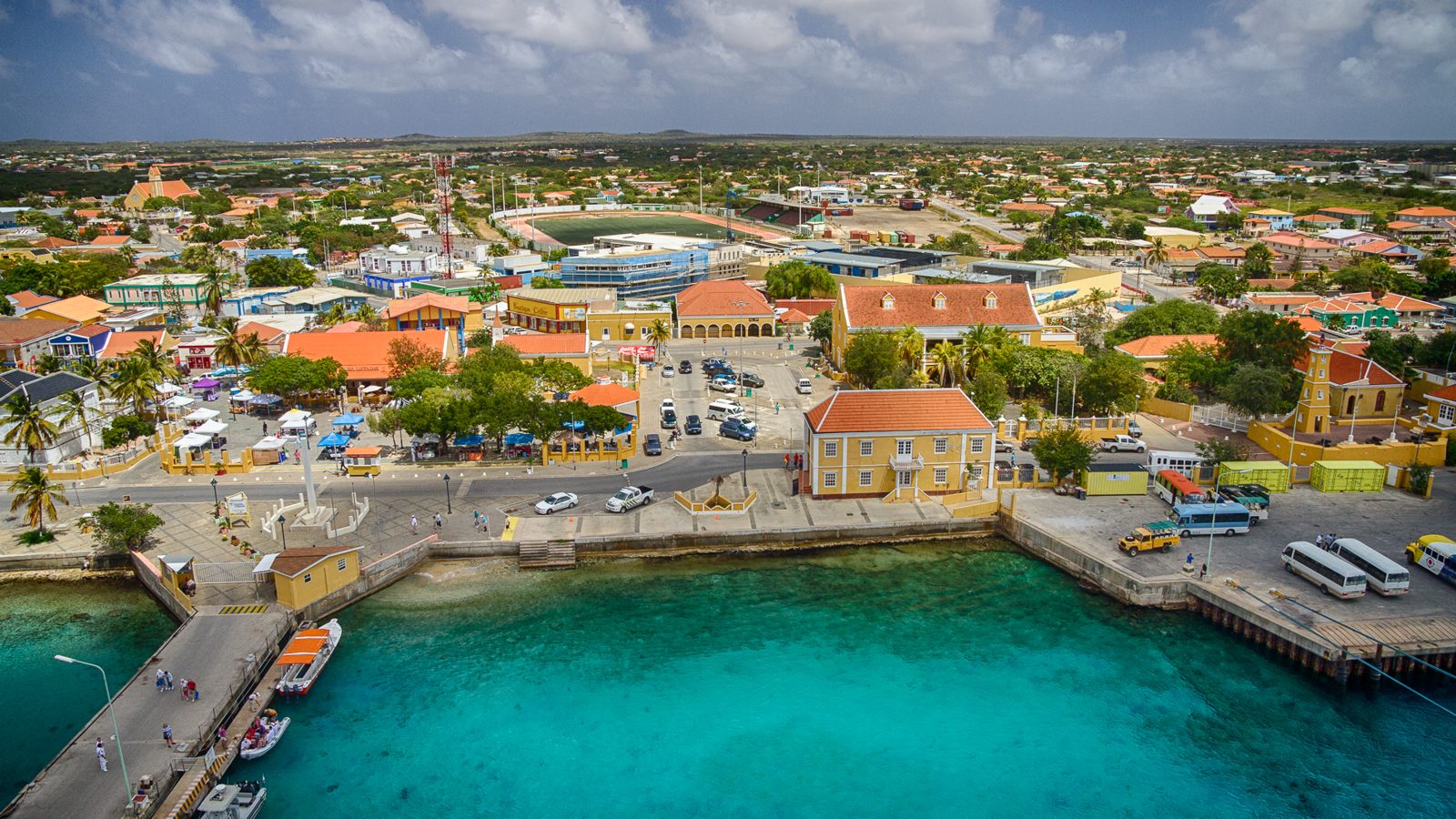
A dry, quiet Dutch Caribbean island known for its reefs. You can walk into the sea from almost anywhere on the west coast, drive past cactus and flamingos to old salt pans, and end the day with a cold beer on the Kralendijk waterfront.
- Best time to visit: April to June and September to October
- Daily budget (budget traveller): $110 to $300 USD
- Ideal trip length: 5 to 7 days
Bonaire is the B of the ABC islands. It lies about 80km off the coast of Venezuela, just east of Curaçao, and since 2010 it has been a special municipality of the Netherlands. It is flat in the south, hilly in the north and dry all over, with cactus scrub, wild donkeys and pink salt lakes instead of rainforest. Most people come for the sea. The whole coastline is a protected marine park, and the reef starts only a few metres from the shore, so you can park by a yellow roadside stone, put on a mask and swim straight out over coral. The only town is Kralendijk, a small, low-rise capital with a seafront boulevard, a little fort and most of the restaurants. There are no buses, and nobody hassles you on the beach. Days here revolve around water, wind and sunsets. You can take the water taxi to uninhabited Klein Bonaire, drive the dirt tracks of Washington Slagbaai National Park, paddle through the mangroves at Lac Bay and visit the salt flats and slave huts in the south. Bonaire is not cheap. Almost everything is imported, and you will need a car. Even so, the snorkelling is free once you have paid the nature fee, the island is safe and calm, and travelling alone here is easy.
Bonaire is about 38km long, has roughly 25,000 people and feels more like a big nature reserve with a small town than a typical Caribbean resort island. Its coastline has been a marine park since 1979, and divers have been coming for decades because the reef is so close to the shore and so easy to reach. Kralendijk has no high-rise hotels and no big casino strip. Instead you get a Dutch-tidy waterfront, Papiamentu on the radio and cars with dive tanks in the back. The best version of the island is slow. You snorkel at 8am before the wind picks up, eat a pastechi from a snack bar, drive down to the salt pans in the late light and watch the sun set from the boulevard. It is expensive, mainly because food and fuel are imported and you will almost certainly need a car, but the reef itself costs nothing beyond the annual nature fee.
Getting here means flying. There are nonstop flights from Miami, Atlanta and Houston, seasonal routes from Newark and Toronto, and flights from Amsterdam with KLM and TUI. Small regional planes connect the island with Curaçao and Aruba. Before you fly, pay the $75 visitor entry tax online and buy the $40 nature fee if you plan to go in the sea. Once you land, collect a car. A small one handles the paved roads and most snorkel sites, while a pickup lets you drive the national park. Base yourself in Kralendijk for restaurants and walking, at the dive resorts in Hato for daily reef time, or at Sorobon if you are here for the wind.
Timing matters less than on many islands, as the weather is hot and dry for most of the year. December to April brings high prices, full flights and more cruise days, which crowd the town. April to August is windy, which is ideal at Lac Bay. September and October are often calmest, with glassy water on the west coast. Washington Slagbaai is closed on Mondays and on public holidays, and it can close after heavy rain, so plan around that. Bonaire is very safe, English is widely spoken alongside Papiamentu, Dutch and Spanish, and nights are quiet. If you want clubs, go elsewhere. If you want to float over coral every morning and fall asleep early, you will like it here.
Bonaire itinerary
Arrive and find your feet
Morning: Land at Flamingo Airport, collect your hire car and stock up at a Kralendijk supermarket. Check that your entry tax and nature fee are sorted.
Afternoon: Check in, then walk the boulevard past Fort Oranje. Have a first easy snorkel at Bari Reef or another entry close to town.
Evening: Watch the sunset from a waterfront bar, then get dinner from a snack truck or a simple local restaurant.
North coast reefs
Morning: Drive the coast road north early, while the sea is flat. Snorkel or dive at 1000 Steps and stop at the Seru Largu lookout on the way back.
Afternoon: Rest through the heat, then try another yellow-stone site such as Andrea I or II.
Evening: Join a sunset happy hour at a dive resort bar in Hato, a good place to meet other divers.
Klein Bonaire
Morning: Take the morning water taxi from the boulevard (about $25 return) and join the free drift snorkel if it is offered.
Afternoon: Swim and snorkel off No Name Beach. Bring lunch, plenty of water and shade, as there is nothing on the island.
Evening: Return to Kralendijk, rinse off and try grilled lionfish for dinner.
Washington Slagbaai National Park
Morning: Avoid Mondays. Be at the gate near 8am in a pickup or 4x4 and choose the short or long route past salt lakes, blowholes and empty bays.
Afternoon: Swim at Playa Funchi or Boka Slagbaai. There are no restaurants in the park, so pack lunch and leave well before the 5pm closing time.
Evening: Stop in Rincón on the way back for a local dinner or a taste of Cadushy, then drive home slowly, watching for donkeys.
Salt flats and Lac Bay
Morning: Drive south past the salt pyramids, the slave huts, Pink Beach and the Willemstoren lighthouse. Look for flamingos in the salt lakes.
Afternoon: Cross to Lac Bay. Swim in the shallow lagoon at Sorobon, watch the windsurfers or take a lesson.
Evening: Head to Lac Cai for the conch shell mounds, then go back to town for dinner.
Mangroves and donkeys
Morning: Book the two-hour mangrove kayak and snorkel trip at the Mangrove Center ($60). Bring proof of your nature fee.
Afternoon: Drive slowly through the Donkey Sanctuary (about $9) before last entry, then cool off at Bachelor's Beach.
Evening: Get dinner from the food trucks at Te Amo Beach and watch the planes land at sunset.
Slow morning and depart
Morning: Have a last early snorkel at your favourite site. Rinse your gear and leave it to dry.
Afternoon: Buy Bonaire salt or Cadushy, return the car and allow time at the small airport.
Evening: Fly home, or hop over to Curaçao or Aruba on a short regional flight.
Best neighbourhoods
- Kralendijk centre and the boulevard: The island's only real town, strung along a seafront promenade with the cruise pier, Fort Oranje, the Klein Bonaire water taxis and most of the bars and restaurants. You can walk to dinner and the supermarkets here, and there are snorkel spots at the town edges. Expect more noise on cruise days, and choose a side street if you want quiet nights.
- Hato and the northern coast road: The stretch north of town where the big dive resorts sit along the reef, with on-site dive shops, house reefs and sunset bars. It is the most practical base if you plan to dive or snorkel every day. Town is a five to ten minute drive or a long, hot walk away.
- Belnem and Bachelor's Beach: A quiet residential area south of the centre, near the airport, with holiday villas, apartments and small beach entries like Bachelor's Beach. It is calm, close to the shore and handy for the drive south to the salt pans. You will need a car for almost everything.
- Sorobon and Lac Bay: The windy east coast, set around a shallow turquoise lagoon edged by mangroves. Windsurfers and kitesurfers stay here for the steady trade winds, and there are a couple of beach resorts and bars on the sand. It feels remote and relaxed, and it is about 20 minutes' drive from Kralendijk.
- Rincón: Bonaire's oldest village, set in a green valley in the hilly north, with brightly painted houses, a distillery and a few local eateries. Few visitors stay here, but it puts you close to Washington Slagbaai and the Gotomeer flamingos. Evenings are very quiet, and the sea is a drive away.
Must-do experiences
- Snorkel the reef from the shore: Look out for the yellow painted stones by the coast road. Each one marks a dive site with an easy entry. Popular spots include Bari Reef in town, 1000 Steps to the north and Andrea I and II. You need the $40 STINAPA nature fee, which is valid for the calendar year, to enter the water anywhere.
- Take the water taxi to Klein Bonaire: The uninhabited island facing Kralendijk is a short boat ride away, and a return ticket costs about $25. Boats drop you at No Name Beach, which has white sand and good snorkelling. There is nothing on the island, so bring water, food, shade and reef-safe sunscreen.
- Drive Washington Slagbaai National Park: The park covers the wild north-west, with dirt tracks, salt lakes with flamingos, empty bays and Brandaris, the island's highest hill. Entry is covered by the nature fee. It is open Tuesday to Sunday from 8am to 5pm, the last entry is at 2.30pm, and a high-clearance car is needed.
- Kayak through the mangroves at Lac Bay: The Mangrove Center on Kaminda Lac runs guided kayak trips through narrow tunnels of roots. A one-hour trip costs about $45, the two-hour trip with snorkelling is $60 and night tours cost more. Bring proof that you have paid the nature fee.
- Drive the southern salt loop: Head south past the white salt pyramids, the small stone huts once used by enslaved salt workers, Pink Beach and the Willemstoren lighthouse at the southern tip. Flamingos feed in the salt lakes along the road. It is free, and best early or late in the day.
- Spend a morning in Rincón: Drive up to the island's oldest village for a look at its painted houses and a coffee or a local lunch. Taste the cactus liqueur at the Cadushy distillery, then carry on to the Gotomeer lake and the viewpoints on the road north.
- Visit the Donkey Sanctuary: Hundreds of rescued donkeys live in a large park south of the airport that you drive through slowly with the windows down. Adult entry is about $9, it opens daily from 10am and last entry is mid-afternoon. Go early, as there is little shade.
Hidden gems
- Lac Cai, at the far end of Lac Bay, where huge piles of discarded conch shells line the shore near a simple beach bar
- Seru Largu, a hilltop lookout just north of Kralendijk with wide views over the town, the sea and Klein Bonaire
- The Onima rock inscriptions on the north-east coast, centuries-old red drawings left by the island's Indigenous people
- Mangazina di Rei near Rincón, a small cultural park in an old storehouse that explains the island's slavery and farming history
- Te Amo Beach at sunset, a thin strip of sand by the airport runway where food trucks park and planes come in low over the water
Daily budget
- Accommodation: budget $70 to $110 USD / night (simple studio or guesthouse room), mid-range $150-250 (dive resort room or sea-view apartment), splurge $400+ (luxury beach resort suite). There are hardly any hostels, so studios with a kitchen are the solo budget choice. Prices peak from December to April. Self-catering saves a lot on food.
- Food: budget $35-50 / day (supermarket breakfast, snack trucks, pastechi), mid-range $70-110 (café lunch and a sit-down dinner), splurge $150+ (waterfront fine dining with wine). Groceries cost more than in the US or Europe because almost everything is imported. Restaurant mains are roughly $25-40. Check whether a service charge is already on the bill.
- Transport: budget $40-50 / day (small manual car), mid-range $60-75 + fuel (pickup truck), splurge $100+ (4x4, automatic or taxi tours at $45 an hour). There is no public transport. The airport taxi to town costs about $15-20. You need a pickup or 4x4 for Washington Slagbaai.
- Activities: budget $0-25 / day (shore snorkelling with your own gear, $25 water taxi), mid-range $50-120 (guided shore dive, $60 mangrove kayak, Donkey Sanctuary at $9), splurge $150+ (boat dives, catamaran trips, courses). The $40 nature fee covers the marine park and Washington Slagbaai for the calendar year. The $75 entry tax is paid once per visit.
- Drinks & nightlife: budget $5-10 (a beer from a snack bar or supermarket), mid-range $20-40 (a few drinks at a boulevard bar), splurge $60+ (cocktails at resort bars). Happy hours at waterfront bars around sunset are the cheapest way to drink out. Nightlife means bars and the odd live band, not clubs.
Where to stay
- Budget studio in Kralendijk and the edge of town ($70-110 / night): Simple studios and guesthouse rooms with a small kitchen are the closest thing Bonaire has to hostels. You can walk to the boulevard and the supermarkets, and the reefs in town are close by.
- Dive resort in Hato, north of the centre ($150-250 / night): Resorts such as Buddy Dive and Captain Don's Habitat sit right on the reef, with dive shops, house reefs and sociable bars. They are ideal if you plan to be in the water every day.
- Apartment in Belnem or Sorobon ($110-200 / night): Holiday apartments give you more space, a full kitchen and a quiet street near a beach entry or the Lac Bay wind. You will need a car to get around.
- Splurge in North of Kralendijk ($400-700+ / night): Harbour Village Beach Club is a small luxury resort with its own beach, marina and spa, and you can still drive into town in minutes.
What to eat
- Lionfish: an invasive reef species that tastes like a delicate white fish. Eating it helps the reef, and many restaurants serve it grilled or as fish and chips
- Stoba di kabritu: slow-cooked goat stew, served with funchi (cornmeal) or rice at local snack spots and on Rincón lunch menus
- Pastechi: fried pastries filled with cheese, chicken or tuna, sold at bakeries and snack trucks for a cheap breakfast
- Keshi yena: a round of Gouda baked with a spiced meat filling, a dish that mixes Dutch and Caribbean food
- Cadushy: a cactus liqueur made in Rincón, plus local sea salt from the southern pans to take home
- Snack truck dinners: burgers, satay and fresh fish from the trucks at Te Amo Beach and around town, often the best-value meal on the island
Day trips
- Klein Bonaire (About 800m off Kralendijk, up to around 30 minutes by water taxi): An uninhabited, flat island ringed by reef, with the white sand of No Name Beach and some of the best easy snorkelling in the marine park. Sea turtles nest on its beaches. Take a water taxi from the Kralendijk boulevard or a resort pier for about $25 return. Bring food, water and shade, as there are no facilities. The nature fee is needed to snorkel.
- Washington Slagbaai National Park (About 30 to 40 minutes' drive north of Kralendijk via Rincón): The island's wild north-west, with cactus hills, salt lakes with flamingos, blowholes and empty swimming bays. You can climb Brandaris, the island's highest point, for views across Bonaire. Drive yourself in a pickup or 4x4. The park is open Tuesday to Sunday from 8am to 5pm, the last entry is at 2.30pm and you cannot pay in cash. Entry is covered by the $40 nature fee.
- Curaçao (Under an hour by regional flight): Bonaire's bigger, busier neighbour, with Willemstad's colourful Dutch waterfront, the Queen Emma floating bridge and plenty of restaurants. It makes a lively contrast to quiet Bonaire. Fly with a regional airline such as Divi Divi Air or EZAir from Flamingo Airport. Curaçao has its own online immigration card. Your Bonaire entry tax QR code covers re-entry within 30 days.
When to visit
- High season (December - April): 27-30°C, dry and breezy, sea around 26-27°C. Crowds: Busy, especially at Christmas, Easter and on cruise days. Reliable weather and lively evenings, but rooms and cars cost the most. Book early and snorkel on days when no ship is in port.
- Late spring and early summer (May - June): 28-31°C, sunny with strong, steady trade winds. Crowds: Low to moderate. Good value and great for windsurfing at Lac Bay. The wind can stir up the surface, so snorkel early in the day.
- Summer (July - August): 29-32°C, hot and windy, sea around 28°C. Crowds: Moderate, with Dutch and European school holidays. Hot but rarely rainy. Fine for diving and wind sports, though the midday heat makes park drives and walks tiring.
- Autumn (September - November): 29-32°C, lighter winds, short showers from October. Crowds: Quiet. Often the calmest seas and clearest water of the year, with lower prices. It is the best time for snorkelling, despite the occasional downpour.
Getting there
Bonaire is reached by air, and there are no regular passenger ferries. Flamingo Airport is about 5 to 10 minutes' drive south of Kralendijk. From the US, American flies nonstop from Miami, Delta from Atlanta and United from Houston, with seasonal flights from Newark. WestJet flies from Toronto in winter. KLM and TUI fly from Amsterdam, and fares are lower outside the Dutch school holidays. Regional airlines such as Divi Divi Air, EZAir and Winair link Bonaire with Curaçao, Aruba and Sint Maarten, and the hop to Curaçao takes well under an hour. Before you travel, pay the $75 visitor entry tax on the official government site and keep the QR code on your phone. It is valid for 30 days, so it covers a quick trip to a nearby island and back. Immigration may ask to see your return ticket and accommodation address. There is no bus from the airport. Collect a hire car, or take a taxi to town for about $15-20, agreeing the fare first. Cruise ships dock at the Kralendijk pier, but there is no practical way to arrive on the island by sea.
Getting around
Bonaire has no public transport, so most visitors hire a car. Expect around $40-50 a day for a small car and $60-75 for a pickup truck, which divers like for carrying gear and which you need for Washington Slagbaai. Most hire cars are manual, and automatics cost extra. Many local firms offer free pick-up at the airport. Driving is on the right, roads are quiet, and the main loop around the south takes only a couple of hours. Watch for donkeys and goats on the road, especially at dusk. Taxis wait at the airport but have no meters. The ride to Kralendijk costs about $15-20, so agree the fare before you get in, and an hourly hire costs around $45. Scooters, e-bikes and small electric cars can be rented for short hops, but they are not allowed in the national park. Kralendijk itself is easy to walk, though the heat makes long walks hard work. Water taxis to Klein Bonaire leave from the boulevard and from some resort piers.
Safety
Bonaire is one of the safest islands in the Caribbean, and violent crime against visitors is rare. The main problem is theft from cars at dive sites. Leave nothing in the car, and many people leave the windows down so they are not smashed. The sun is fierce all year, so drink lots of water and cover up. In the sea, stay on the calm west coast, as the east coast has strong currents and rough surf. Avoid touching fire coral and watch for sea urchins and the venomous spines of lionfish. Do not snorkel alone in deep water or far from shore. Drive slowly at night because of the donkeys and goats. Mosquitoes can carry dengue, so use repellent. Tap water is desalinated and safe to drink. For police and ambulance call 911, and for the coast guard call 913. The hospital in Kralendijk has a recompression chamber for divers. Bring travel insurance with medical and diving cover.
Solo travel tips
- Snorkel early: The water is usually calmest and clearest before 10am, and dive sites are quieter. Save your drives and museum visits for the windy, hot middle of the day.
- Find a buddy: Shore diving and snorkelling are easy here, but going alone in deep water is a real risk. Join a guided shore dive, the free drift snorkel on the water taxi or a resort group.
- Pick a studio with a kitchen: Restaurant prices add up fast on an imported-food island. Breakfast and lunch from the supermarket, plus snack trucks, leave room for a few good dinners.
- Plan the park day first: Washington Slagbaai is closed on Mondays and on holidays, and it stops letting cars in at 2.30pm. Put it in your week first, then fit everything else around it.
- Safety for solo travellers: Leave nothing in your car at dive sites, stay on the calm west coast and drive slowly after dark because of the donkeys. Keep your phone and a little cash on you in a dry bag.
- Meet people at sunset: Dive resort bars, boulevard happy hours and the Te Amo food trucks are where people gather. Divers love to swap site tips, so it is easy to start a conversation.
Cultural etiquette
- Greet people with 'bon dia' (good morning), 'bon tardi' (good afternoon) or 'bon nochi' (good evening), and say 'danki' (thank you) in Papiamentu. English and Dutch are widely understood.
- Cover up when you leave the beach. Walking around town or into shops in swimwear is frowned upon.
- Never touch, stand on or kick the coral, and do not feed fish. Rangers enforce marine park rules, and fines are possible.
- Use reef-safe sunscreen without oxybenzone, and wear a rash vest to cut down on how much you need.
- Drive slowly and give way to donkeys and goats. They have lived here longer than the tourists.
- Check the bill for a service charge before you tip. If none is included, around 10-15% for good table service is normal.
- Take all your rubbish away from beaches and dive sites. The island's landfill is small and space is precious.
Frequently asked questions
How do I get to Bonaire and from the airport to my room?
You fly into Flamingo Airport, just south of Kralendijk. There are nonstop flights from the US, with American from Miami, Delta from Atlanta and United from Houston and, in season, Newark. KLM and TUI fly from Amsterdam, and WestJet flies from Toronto in winter. Small regional airlines link the island with Curaçao and Aruba. There is no bus. Most people collect a hire car at or near the airport, and many firms include free pick-up. A taxi to Kralendijk takes 5 to 10 minutes and costs about $15-20. Agree the fare first, as there are no meters.
How many days do I need in Bonaire?
Three days covers some shore snorkelling, Klein Bonaire and the southern salt loop. Five days lets you add Washington Slagbaai, the Lac Bay mangroves and a day of diving. A week suits divers, windsurfers and anyone who wants slow days on the reef with time for Rincón and the quieter corners of the island.
When is the best time to visit Bonaire?
Bonaire is warm and dry all year, at around 27-32°C, and it lies south of the main hurricane belt. December to April is high season, with the highest prices and the most cruise ships. April to June brings steady trade winds, good for windsurfing, and lower prices. September and October usually have the calmest seas and the best visibility for snorkelling. Short showers are most likely from October to December.
Do I really need a car in Bonaire?
For most trips, yes. There is no public transport, and the best snorkel sites, beaches and the national park are spread along the coast. A small car costs around $40-50 a day, and a pickup around $60-75. You need a pickup or 4x4 for Washington Slagbaai. If you stay at a dive resort on the reef and only want a couple of trips, taxis at about $45 an hour and tours with pick-up can work.
What is the nature fee and do I need it?
The STINAPA nature fee costs $40 and is valid for the calendar year. You need it to enter the sea anywhere around Bonaire, whether you are diving, snorkelling, swimming or kayaking, and it also covers entry to Washington Slagbaai National Park. Children under 13 are exempt. It is separate from the $75 visitor entry tax. Buy it online from STINAPA or at dive shops, and carry proof with you.
How do I get to Klein Bonaire?
Water taxis run from the Kralendijk boulevard and from some resort piers several times a day. A return trip costs about $25, and the crossing takes up to around 30 minutes. They drop you at No Name Beach, and you choose a return boat. Some operators include a free guided drift snorkel on the morning run. The island has no shops, toilets or shade, so bring everything you need.
Is Bonaire safe for solo female travellers?
Yes. It is calm and friendly, and most visitors are divers and nature lovers. Kralendijk is quiet at night, and harassment is uncommon. The bigger risks are practical: snorkelling alone, car break-ins at dive sites and driving dark roads with animals on them. Snorkel with a buddy or a guided group, keep valuables out of the car and use taxis if you have been drinking.
What entry rules apply to Bonaire in 2026?
Bonaire is part of the Netherlands but outside the EU's Schengen area, so Schengen rules, the EES and ETIAS do not apply. You need a passport valid for your whole stay, a return or onward ticket, your accommodation address and enough money for the trip. Dutch nationals must use a passport, not an ID card. US and Dutch citizens can stay up to 180 days in a year, and many other nationalities, including UK and Canadian citizens, up to 90 days in 180. Every visitor aged 13 and over pays a $75 visitor entry tax, and its QR code is valid for 30 days. Pay only on the official government site. Check official Caribbean Netherlands and Dutch government websites and your own government's travel advice before you go.
Tours and activities in Bonaire | Bonaire in 2 days | Bonaire in 3 days | Bonaire in 4 days | Bonaire in 5 days | Bonaire in 7 days
Joy Plus home | Destinations | Itineraries | Activities | Flights | Budget planner | Calendar | Map | Blog | Lifetime access