Destinations / Europe
Budva, Montenegro travel guide
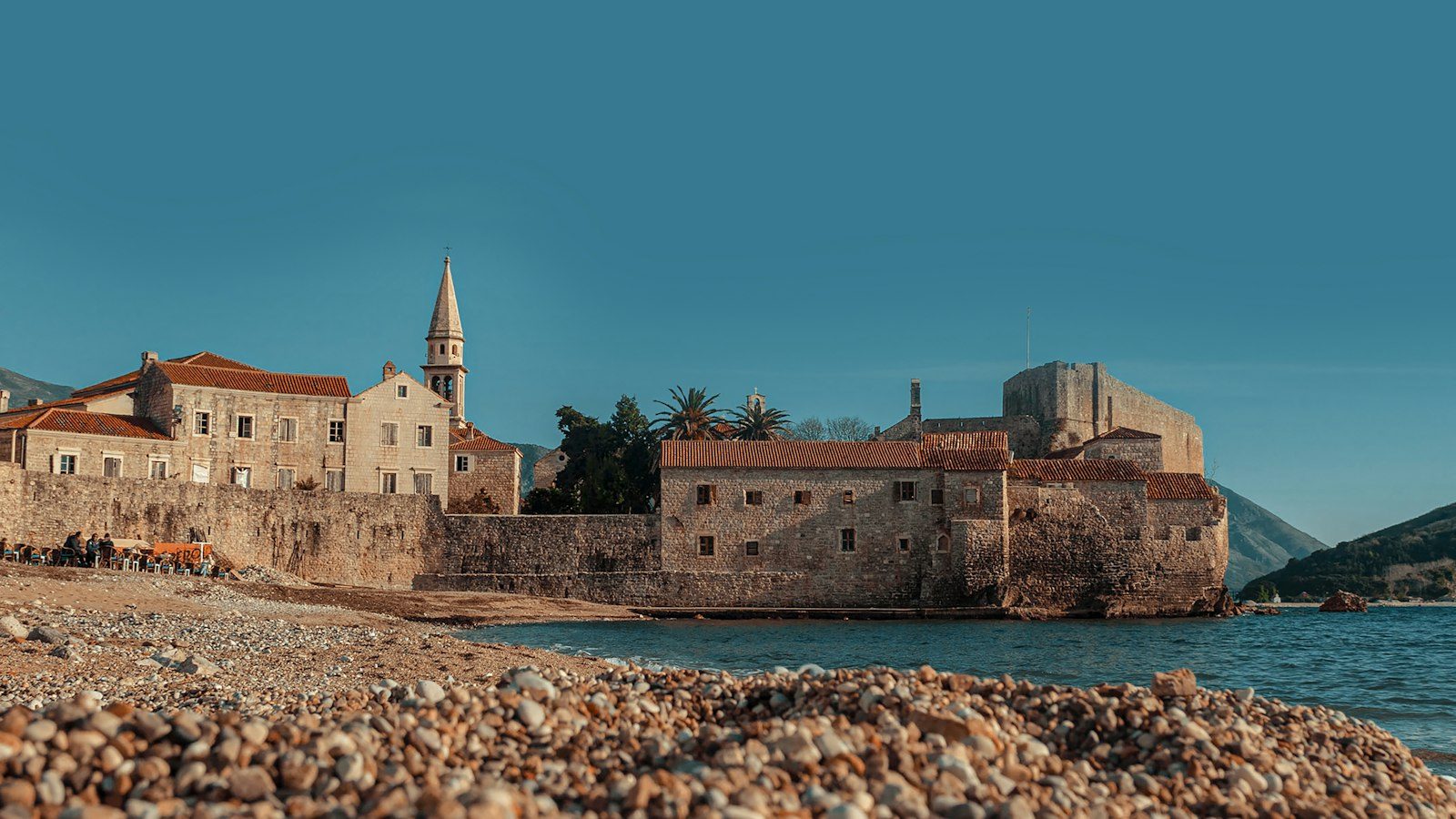
A walled Venetian old town on Montenegro's busiest stretch of coast, with mountains rising straight up behind it. You swim in pebbly coves, climb the citadel for the view over red roofs and walk the coast path to Sveti Stefan.
- Best time to visit: June and September
- Daily budget (budget traveller): $65 to $215 USD
- Ideal trip length: 3 to 5 days
Budva sits in the middle of Montenegro's Adriatic coast, about 20km from Tivat airport and 40 minutes by bus from Kotor. It is the country's biggest resort, and in summer it is loud, busy and full of beach bars. Inside the old walls, though, it is a different place. The small walled old town, Stari Grad, sits on a rocky point. Venice ruled it for centuries, and inside the walls you find marble lanes, little churches and a citadel looking out to sea. Outside the walls, a long promenade runs past Slovenska Plaža, the main town beach, to a string of coves and villages to the south. Entry to every beach is free, but most of the sand is covered in rented loungers, so the best swimming is in the coves just beyond town. Walk the cliff path to Mogren, take the boat out to Sveti Nikola island or follow the coast to Sveti Stefan, where the famous island hotel reopened in 2026. July and August are crowded and pricey, and the nightlife carries on until dawn. Even so, cheap buses, bakery burek, free beaches and easy day trips to Kotor and Lovćen make it a good, flexible base for a solo traveller.
Budva is the oldest town on the Montenegrin coast and also its biggest resort. The walled old town on its rocky point is small enough to cross in five minutes. Inside are stone lanes, three churches next to each other, a citadel facing the sea and the remains of the town's Greek and Roman past. Around it is a much bigger modern town of hotels, apartments and beach bars that fills up completely in summer. Most visitors come for the beaches and the nightlife. If you stay a few nights, you get both sides: the old town empty at 8am, a swim at Mogren before the loungers fill up, a walk along the coast to Sveti Stefan and a cheap plate of grilled fish in Rafailovići. Budva costs more than inland Montenegro, but bakery breakfasts, free beaches and short bus rides keep spending under control.
Getting here is easy if you plan the last stretch. Tivat airport is about 25 minutes away by taxi, and Podgorica airport is about 1.5 hours by road. Dubrovnik is a longer option, with a border crossing. Buses from Kotor, Tivat, Cetinje and Podgorica run all day to the bus station, which is 1.5km from the old town. Once you are here, walk the seafront and use the cheap local Blue Line buses for the villages to the south. Stay in or near the old town if you want atmosphere, in the upper town if you want lower prices, or in Bečići and Pržno for quieter beaches. Remember that your stay must be registered within 24 hours. Most hosts do this for you.
Timing makes a big difference. June and September bring warm sea, long evenings and fair prices. July and August are hot and crowded, with full beaches, late nights and the highest room rates. That is also when every boat, beach bar and club is open. From November to March, Budva is quiet and much cheaper, but it is often wet and many seasonal places close. English is widely spoken in tourist areas. Budva suits you if you want beaches and a social scene with easy day trips. Kotor, Lovćen, Cetinje and the bay are all within an hour or so, so it also works as a base for seeing more of Montenegro.
Budva itinerary
Arrive and find your feet
Morning: Fly into Tivat and take a taxi or the coastal bus to Budva. Drop your bag and walk down to the seafront for a coffee.
Afternoon: Wander into the old town through the Sea Gate, and get your bearings around the churches and the small squares. Have a first swim at Ričardova Glava under the walls.
Evening: Walk the promenade at sunset, then eat grilled fish at Jadran kod Krsta or ćevapi from a grill counter.
Old town, citadel and Mogren
Morning: Walk the empty old town lanes before 9am, then climb the citadel (about €5-6) for the view over the roofs.
Afternoon: Follow the cliff path past the Dancing Girl statue to Mogren I and through the tunnel to Mogren II. Swim, and rent a lounger only if you want shade.
Evening: Have a drink on the citadel terrace or in a quiet old town square, then dinner in the back lanes.
Coast walk to Sveti Stefan
Morning: Set off early along the coast path to Bečići and Rafailovići, with a swim stop on the way.
Afternoon: Carry on through the tunnels to Kamenovo and Pržno, then up to the viewpoint above Sveti Stefan. Swim at the public Sveti Stefan Beach.
Evening: Eat seafood in Pržno or Rafailovići, then take a Blue Line bus back to Budva for about €1.50-2.
A day in Kotor
Morning: Take an early bus to Kotor (about €4, 40 minutes). Climb the walls to the San Giovanni fortress (around €15 in season) before the heat and the cruise crowds.
Afternoon: Wander Kotor's old town squares, churches and cat-filled lanes. Have lunch away from the main square.
Evening: Bus back to Budva for a late swim and a relaxed dinner.
Lovćen and Cetinje
Morning: Join a small-group tour or take a bus to Cetinje and a taxi up to Lovćen National Park. Climb the steps to the Njegoš Mausoleum for views over half the country.
Afternoon: Stop in Njeguši for smoked ham and cheese, then walk around Cetinje, the old royal capital, with its monastery and museums.
Evening: Head back down the mountain to Budva and have a simple dinner by the sea.
Sveti Nikola and Petrovac
Morning: Take a taxi boat to Sveti Nikola island (roughly €5-10 return) and swim off the rocks facing the town.
Afternoon: Take a bus south to Petrovac, a calmer small town with a pine-backed beach and a little Venetian fort.
Evening: Watch the sunset from Petrovac's seafront, then take the bus back for a farewell drink in the old town.
Slow morning and depart
Morning: Have a last early swim at Mogren and burek from a bakery for breakfast.
Afternoon: Buy wine or ham for home, then take a taxi or bus to Tivat airport. Check bus times the day before.
Evening: Fly home, or carry on along the coast to Kotor, Herceg Novi or Dubrovnik.
Best neighbourhoods
- Old Town (Stari Grad): The walled historic centre on the rocky point, with the citadel, the churches, small squares and plenty of bars and restaurants. Rooms are in old stone houses and small boutique hotels. It is beautiful and walkable, but bars stay open late in summer, so ask for a room away from the main lanes if you sleep lightly.
- Slovenska Plaža and the seafront: The modern centre running east from the old town along the main beach and the promenade. You have hotels, apartments, supermarkets and the busiest bars, and the old town is a short walk away. It is very convenient but noisy in July and August, when the promenade is packed until late.
- Rozino and the upper town: The residential streets inland, around the bus station and up the hill. Apartments and guesthouses here are cheaper than on the seafront, and the area feels more local. The old town is a 15 to 20-minute walk downhill, which is easy on the way down but less so coming back on a hot afternoon.
- Bečići and Rafailovići: A long sandy beach about 3km south of the old town, with big hotels at Bečići and a small fishing village feel at Rafailovići. Loungers are cheaper than in town and the water is clear. The coast path and local buses link it to Budva, so it suits you if you want beach time first and nightlife second.
- Pržno and Sveti Stefan: Two small villages about 7 to 8km south, with pretty coves, seafood restaurants and the famous island view. They are much calmer than Budva and rooms cost more for what you get. Buses run to Budva often in summer, but less often in the evening and in winter.
Must-do experiences
- Walk the old town lanes early: Go in before 9am, before the shops open and the crowds arrive. Walk through the Sea Gate, past the Church of St John and the Holy Trinity Church with its striped stone front, to the little square by Santa Maria in Punta. Entry to the old town is free and it is open all day.
- Climb the citadel: The fortress at the seaward end of the old town has the best view over the roofs, Sveti Nikola island and the coast. Entry is about €5-6 and includes a small ship museum and an old library. It takes 20 minutes, so time it for late afternoon when the light is softer.
- Take the cliff path to Mogren: From the old town walls, follow the path cut into the rock past the Dancing Girl statue. It takes about 10 minutes to reach Mogren I, then walk through the rock tunnel to the smaller Mogren II. Swimming is free, and two loungers and an umbrella cost around €10-25, more in August.
- Walk the coast to Sveti Stefan: A mostly paved path links Budva with Bečići, Rafailovići, Kamenovo and Pržno, through short tunnels and over headlands. Allow two to three hours with swim stops, and take a local bus back for a couple of euros. The view of the island from the hill above Sveti Stefan is the reward.
- Take a boat to Sveti Nikola island: Small taxi boats leave from the marina and the main beach in summer for the wooded island locals call Hawaii. Expect to pay roughly €5-10 return. Swim off the rocky beaches facing Budva, and bring water shoes and something to drink.
- See Sveti Stefan and King's Beach: The island itself is the Aman resort, which reopened on 1 July 2026 and is mainly for hotel guests. Under the 2026 settlement, Sveti Stefan Beach and King's Beach are open to the public, while Queen's Beach stays private. Swim from the public stretches and expect high prices for loungers near the island.
- Spend a day in Kotor: The old town of Kotor sits at the inner end of the bay, about 40 minutes away by one of the frequent buses, which cost around €4. Walk the lanes, then climb the walls to the fortress of San Giovanni early in the morning. Expect a ticket of around €15 in season.
Hidden gems
- Ričardova Glava, the small beach right under the old town walls, which is best early in the morning before the loungers fill up
- Pizana, a tiny free cove tucked between the old town walls and the marina, where locals swim off the rocks
- The citadel terrace bar, reached through the fortress, for a cold drink with a view over the old town and the sea
- Rafailovići's seafront path in the evening, when the fishing boats come in and the grill restaurants light up
- Drobni Pijesak, a quieter cove south of Sveti Stefan with clear water, reached by car or taxi down a steep road
Daily budget
- Accommodation: budget €20-40 / night (hostel dorm), mid-range €80-150 (apartment or 3 to 4-star hotel), splurge €300+ (Dukley Hotel or a sea-view suite). Prices roughly double in July and August. A tourist tax of about €1 a night is added. Single rooms in summer go early, so book June to September well ahead.
- Food: budget €18-28 / day (bakery breakfast, grill counter lunch, supermarket snacks), mid-range €35-60 (café lunch and a seafront dinner), splurge €80+ (whole fish by the kilo, wine, dessert). Burek costs a few euros and restaurant mains roughly €12-25. Old town and seafront terraces charge the most. Whole fish is priced per kilo, so ask first.
- Transport: budget €0-6 / day (walking, local buses), mid-range €10-25 (intercity buses and a taxi or boat), splurge €40-70 (private transfer or a day with a driver). Local buses cost about €1.50-2 and Kotor is around €4. A taxi from Tivat airport costs roughly €25-45. Agree taxi fares before you set off.
- Activities: budget €0-10 / day (beaches, old town, citadel at about €5-6), mid-range €15-35 (loungers, a Sveti Nikola boat, Kotor fortress), splurge €50+ (Lovćen tour, boat trips, diving). Beach entry is free everywhere. Two loungers and an umbrella cost €10-25, and €50 or more for front rows near Sveti Stefan. The Kotor fortress costs around €15 in season.
- Drinks & nightlife: budget €5-10 (a beer or glass of Vranac), mid-range €15-35 (drinks at old town and seafront bars), splurge €60+ (club entry and cocktails). A coffee costs about €1.50-2.50 and a local beer €3-5. Summer clubs charge entry on big nights. Prices on the promenade are higher than in the back streets.
Where to stay
- Social hostel in Just outside the old town walls (€20-40 / night (dorm)): A handful of long-running hostels sit within a few minutes' walk of the old town and the beaches. They are the cheapest beds in central Budva and easy places to find company for day trips and nights out.
- Boutique hotel in Old Town (€150-300 / night): Hotel Astoria is a small hotel inside the old town walls by the sea, with stone rooms and a terrace. You step out into the lanes, the citadel and Ričardova Glava beach.
- Apartment in Rozino and the upper town (€50-110 / night): Private apartments here give you a kitchen, a balcony and lower prices than the seafront. Expect a 15 to 20-minute walk to the old town and check whether there is air conditioning.
- Splurge in Zavala peninsula, near Mogren (€300-700+ / night): Dukley Hotel & Resort sits on the headland across the bay from the old town, with sea-view rooms, pools and its own beach. The old town is a short walk or taxi ride away.
What to eat
- Burek: flaky pastry filled with cheese or meat from a bakery, eaten with drinking yoghurt. It makes the cheapest breakfast on the coast
- Grilled fish and black risotto: crni rižot made with cuttlefish ink, plus whole fish sold by weight at seafront places such as Jadran kod Krsta. Ask the price per kilo first
- Njeguški pršut and cheese: smoked ham and hard cheese from the village of Njeguši under Lovćen, served as a starter almost everywhere
- Ćevapi and pljeskavica: grilled minced meat with flatbread and onions from a grill counter, filling and cheap
- Vranac and Krstač: the local red and white wines, sold by the glass for a few euros, plus a shot of rakija if a host offers one
- Priganice: small fried dough balls with honey, cheese or jam, often served at breakfast or with coffee
Day trips
- Kotor (About 20km, 30 to 50 minutes by bus): A walled medieval town at the inner end of the Bay of Kotor, with lanes, churches and a steep climb to the San Giovanni fortress. The view over the bay from the top is one of the best in the Balkans. Frequent buses run from Budva bus station for around €4 each way. Go early to beat the heat and cruise-ship crowds, and expect a fortress ticket of around €15 in season.
- Lovćen National Park and Cetinje (About 30km inland, 45 minutes to 1 hour by road): A winding mountain road leads up to the Njegoš Mausoleum on Lovćen, with views over the bay and the mountains. Cetinje, the old royal capital, has a monastery, museums and a slow pace. Stop in Njeguši for ham and cheese. Take a bus to Cetinje and a taxi up to Lovćen, or join a small-group tour from Budva, which is easier as buses do not go up the mountain. The national park and the mausoleum charge separate entry fees.
- Sveti Stefan and Petrovac (About 7km and 17km south of Budva): Sveti Stefan has the famous island view and public beaches that reopened in 2026. Petrovac is a calmer small resort with a long beach under pine-covered hills and a small Venetian fort. Walk the coast path to Sveti Stefan or take a Blue Line bus for about €1.50-2. Intercity buses towards Bar stop in Petrovac in around 30 minutes.
When to visit
- Spring (April - May): 16-23°C, mild with some rain, sea cool until late May. Crowds: Low to moderate, busier at Easter and on May weekends. Good for walking, Kotor and Lovćen before the heat, and cheap rooms. Some beach bars are still shut and swimming is chilly until late May.
- Early summer (June): 24-28°C, sunny, sea around 22-24°C. Crowds: Moderate, rising towards the end of the month. One of the best months. Warm water, long evenings and loungers cheaper than in high summer. Book ahead for late June weekends.
- High summer (July - August): 29-33°C, hot and humid, sea up to about 26°C. Crowds: Very busy, especially mid-July to mid-August. Peak beach life and nightlife, but rooms and loungers cost the most and the coast road jams. Swim early, do sights late and book well ahead.
- Autumn and winter (September - March): September 22-27°C, then 8-15°C in winter, often wet. Crowds: Moderate in September, very quiet from November. September is the locals' favourite, with warm sea and calmer streets. Winter is cheap and peaceful but rainy, and many seasonal places close.
Entry rules for your passport
Visa rules for Montenegro depend on the passport you travel on. Check the official source before you book: Montenegro Ministry of Foreign Affairs
Getting there
The nearest airport is Tivat, about 20km away, with flights from across Europe, especially in summer. A taxi to Budva takes around 25 minutes and costs roughly €25-45, more in high season, and pre-booked transfers cost a little more. There is no bus from the terminal. Walk about 1.5km to the main road, or take a €5-7 taxi to Tivat bus station, then a coastal bus for a few euros. Podgorica airport is about 65km away, roughly 1.5 hours by road, with buses from Podgorica bus station to Budva throughout the day. Dubrovnik airport is about 2.5 to 3 hours away with a border crossing, and the EU's Entry/Exit System now applies on the Croatian side, so expect queues in summer. Buses link Budva with Kotor, Tivat, Herceg Novi, Cetinje, Podgorica and Bar, and international routes run to Dubrovnik and Serbia. There is no railway in Budva. The nearest station is Bar, on the line to Podgorica and Belgrade. If you drive, expect heavy summer traffic on the coast road and paid parking that is hard to find near the old town.
Getting around
Budva's old town and seafront are flat and easy to walk. From the Sea Gate to the far end of Slovenska Plaža takes about 20 minutes. The intercity bus station is about 1.5km inland, a 15 to 20-minute walk downhill to the old town, or €3-5 by taxi. Local Blue Line buses run along the coast to Bečići, Rafailovići, Pržno and Sveti Stefan for about €1.50-2, often in summer and less so in winter. Pay the driver in cash. Intercity buses to Kotor, Tivat, Petrovac, Cetinje and Podgorica leave the bus station all day. Small companies share the routes, so check times at the station or on busticket4.me. Kotor costs around €4. Taxis are plentiful. Use a taxi app or a firm your host recommends, and agree the fare first if there is no meter. Driving in summer means traffic jams on the coast road and expensive, hard-to-find parking. The coast path south towards Sveti Stefan is the nicest way to get around on foot, and taxi boats run to Sveti Nikola and nearby coves in season.
Safety
Budva is generally safe for visitors, and violent crime against tourists is rare. The main problems are pickpockets in the crowded old town and on the promenade on summer nights, bag theft from beaches and drink spiking in busy clubs. Watch your drink, keep valuables out of sight and leave nothing on your towel while you swim. Some taxis overcharge new arrivals, so use an app or agree a price first. The roads are the biggest risk. Drivers overtake fast on the coast road, and many streets have no pavement, so take care walking at night. At sea, watch for jet skis and boats near the swimming areas, and wear water shoes on rocky entries because of sea urchins. Summer heat is intense, so carry water on the coast path. Tap water is treated and generally safe, though many people buy bottled water in high summer. Call 112 in an emergency, 122 for the police or 124 for an ambulance. Montenegro is not in the EU, so EU health cards do not apply, and you need travel insurance with medical cover.
Solo travel tips
- Stay close but not too close: A room in the upper town or just outside the walls gives you easy access to the old town and beaches without the bar noise under your window. In summer, that difference matters at 3am.
- Swim early, sightsee late: Beaches fill by mid-morning and the old town is busiest at midday. Swim before 10am, rest in the heat and save the citadel and Kotor's walls for early morning or late afternoon.
- Keep your registration slip: Your host should register you with the police within 24 hours and charge the small tourist tax. Ask for the confirmation and keep it, as border officers can ask for it when you leave.
- Use the free beach stretches: Loungers add up fast if you rent them every day. Bring a towel and a cheap parasol and use the free sections marked on each beach. Save paid loungers for one lazy afternoon.
- Safety for solo travellers: Watch your drink in clubs, leave nothing on the beach while you swim and use an app taxi at night. On the coast path, carry water and avoid the tunnels and road stretches after dark.
- Meet people on tours and in hostels: Hostel common rooms, group trips to Lovćen and Kotor, and boat tours are the easiest places to meet other travellers. Pub crawls run in summer if you want a sociable night out.
Cultural etiquette
- Greet people with 'dobar dan' (good day) and say 'hvala' (thank you). People appreciate a few local words, even though English is widely spoken.
- Cover up when you leave the beach. Walking through the old town in swimwear is banned and can lead to fines.
- Dress modestly in churches and monasteries, with covered shoulders and knees. Some monasteries provide wraps at the door.
- Keep noise down in residential streets late at night, even in summer. Many locals live in the old town and the upper town.
- Ask the price of whole fish per kilo before you order, so the bill does not come as a shock.
- If you are offered rakija or coffee in someone's home, accept at least a little. Turning it down flatly can seem rude.
- Rounding up or leaving about 10% for good table service is appreciated, though not compulsory.
Frequently asked questions
How do I get to Budva and from the bus station to my room?
Most people fly into Tivat, about 20km away. A taxi takes around 25 minutes and costs roughly €25-45, more in summer. There is no bus from the terminal. Walk about 1.5km to the main road or take a €5-7 taxi to Tivat bus station, then take a coastal bus for a few euros. Buses arrive at Budva bus station, about 1.5km from the old town. It is a 15 to 20-minute walk downhill, or €3-5 by taxi. If you have heavy luggage, ask your host for the nearest drop-off point, as cars cannot enter the old town.
How many days do I need in Budva?
Two nights covers the old town, the citadel and a swim at Mogren. Three to five nights lets you add the coast walk to Sveti Stefan, a boat to Sveti Nikola and a day in Kotor. A week works if you also want Lovćen and Cetinje, Petrovac or a slow beach day or two.
When is the best time to visit Budva?
June and September are the best months. The sea is warm, at roughly 22-24°C, the evenings are long and the crowds are lighter than in high summer. July and August are hot, packed and the most expensive, especially from mid-July to mid-August. From November to March the town is quiet and cheap, but it rains a lot and many beach bars and seasonal restaurants close.
Is Budva just a party town?
Only in parts. In July and August, the promenade, the beach clubs and the summer clubs above town keep going until dawn. But the old town is calm in the early morning, and Rafailovići, Pržno and Sveti Stefan are quiet all year. Stay in the upper town or further south if you want sleep, and come into the centre for the evening.
Where can I swim in Budva for free?
Entry to every beach is free. You only pay for loungers, which usually cost €10-25 for two plus an umbrella. Most beaches have free stretches where you can put down a towel, marked on the boards at each section. Mogren, Ričardova Glava and Pizana are closest to the old town. Bečići is bigger and cheaper, and Sveti Stefan Beach and King's Beach have been open to the public again since July 2026.
Can I visit Sveti Stefan island?
The island is the Aman Sveti Stefan resort, which reopened on 1 July 2026 and is mainly reserved for overnight guests. You can still swim at the public Sveti Stefan Beach and King's Beach, and the walk through the pines of Miločer Park is free. Queen's Beach is for hotel guests only. If you want to go inside, ask locally whether paid guided visits are running.
Is Budva safe for solo female travellers?
Yes, with normal care. The old town and promenade are busy and well lit until late in summer. Watch your drink in clubs, use registered taxis or an app at night and avoid walking alone along the unlit coast road. Outside the party strip, the villages to the south feel very relaxed.
What entry rules apply to Montenegro in 2026?
Montenegro is not in the EU or the Schengen area, though it uses the euro. Citizens of the EU, UK, US, Canada, Australia and many other countries can stay visa-free for up to 90 days in any 180 days. ETIAS does not apply here. You must be registered with the police within 24 hours, which hotels and hosts usually do for you along with the tourist tax of about €1 a night, so keep the confirmation. The EU's Entry/Exit System applies if you cross into Croatia. Check official Montenegrin government sources and your own government's travel advice.
Tours and activities in Budva | Budva in 2 days | Budva in 3 days | Budva in 4 days | Budva in 5 days | Budva in 7 days
Can't decide? Compare Budva with...
Joy Plus home | Destinations | Itineraries | Activities | Flights | Budget planner | Calendar | Map | Blog | Lifetime access