Budva in 5 days
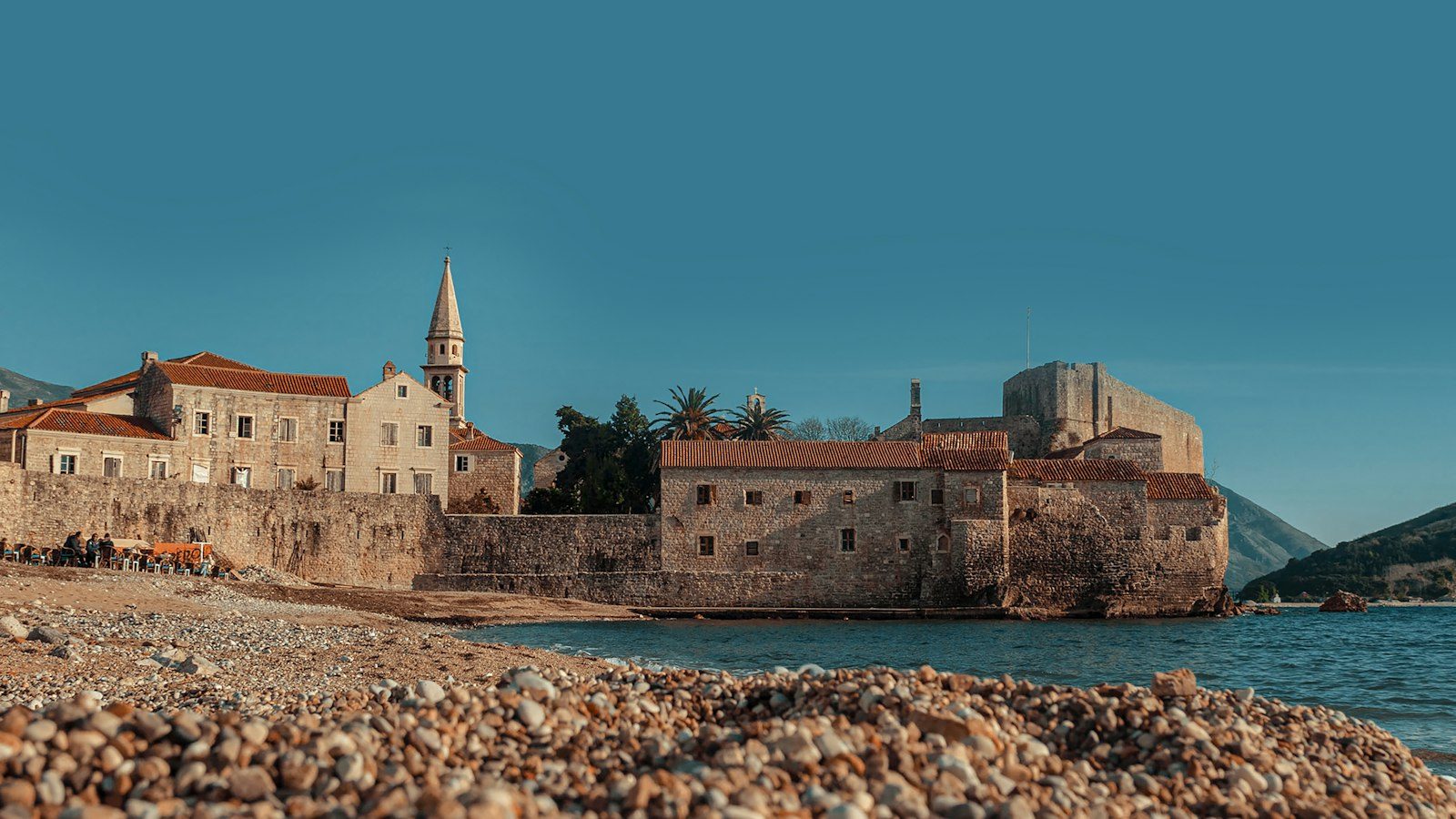
A walled Venetian old town on Montenegro's busiest stretch of coast, with mountains rising straight up behind it. You swim in pebbly coves, climb the citadel for the view over red roofs and walk the coast path to Sveti Stefan. Best time to visit: June and September. Daily budget (budget traveller): $65 to $215 USD.
Arrive and find your feet
Morning: Fly into Tivat and take a taxi or the coastal bus to Budva. Drop your bag and walk down to the seafront for a coffee.
Afternoon: Wander into the old town through the Sea Gate, and get your bearings around the churches and the small squares. Have a first swim at Ričardova Glava under the walls.
Evening: Walk the promenade at sunset, then eat grilled fish at Jadran kod Krsta or ćevapi from a grill counter.
Old town, citadel and Mogren
Morning: Walk the empty old town lanes before 9am, then climb the citadel (about €5-6) for the view over the roofs.
Afternoon: Follow the cliff path past the Dancing Girl statue to Mogren I and through the tunnel to Mogren II. Swim, and rent a lounger only if you want shade.
Evening: Have a drink on the citadel terrace or in a quiet old town square, then dinner in the back lanes.
Coast walk to Sveti Stefan
Morning: Set off early along the coast path to Bečići and Rafailovići, with a swim stop on the way.
Afternoon: Carry on through the tunnels to Kamenovo and Pržno, then up to the viewpoint above Sveti Stefan. Swim at the public Sveti Stefan Beach.
Evening: Eat seafood in Pržno or Rafailovići, then take a Blue Line bus back to Budva for about €1.50-2.
A day in Kotor
Morning: Take an early bus to Kotor (about €4, 40 minutes). Climb the walls to the San Giovanni fortress (around €15 in season) before the heat and the cruise crowds.
Afternoon: Wander Kotor's old town squares, churches and cat-filled lanes. Have lunch away from the main square.
Evening: Bus back to Budva for a late swim and a relaxed dinner.
Lovćen and Cetinje
Morning: Join a small-group tour or take a bus to Cetinje and a taxi up to Lovćen National Park. Climb the steps to the Njegoš Mausoleum for views over half the country.
Afternoon: Stop in Njeguši for smoked ham and cheese, then walk around Cetinje, the old royal capital, with its monastery and museums.
Evening: Head back down the mountain to Budva and have a simple dinner by the sea.
Heading home: Buy wine or ham for home, then take a taxi or bus to Tivat airport. Fly home, or carry on along the coast to Kotor, Herceg Novi or Dubrovnik.
What to eat in Budva
- Burek: flaky pastry filled with cheese or meat from a bakery, eaten with drinking yoghurt. It makes the cheapest breakfast on the coast
- Grilled fish and black risotto: crni rižot made with cuttlefish ink, plus whole fish sold by weight at seafront places such as Jadran kod Krsta. Ask the price per kilo first
- Njeguški pršut and cheese: smoked ham and hard cheese from the village of Njeguši under Lovćen, served as a starter almost everywhere
- Ćevapi and pljeskavica: grilled minced meat with flatbread and onions from a grill counter, filling and cheap
- Vranac and Krstač: the local red and white wines, sold by the glass for a few euros, plus a shot of rakija if a host offers one
- Priganice: small fried dough balls with honey, cheese or jam, often served at breakfast or with coffee
Hidden gems
- Ričardova Glava, the small beach right under the old town walls, which is best early in the morning before the loungers fill up
- Pizana, a tiny free cove tucked between the old town walls and the marina, where locals swim off the rocks
- The citadel terrace bar, reached through the fortress, for a cold drink with a view over the old town and the sea
- Rafailovići's seafront path in the evening, when the fishing boats come in and the grill restaurants light up
- Drobni Pijesak, a quieter cove south of Sveti Stefan with clear water, reached by car or taxi down a steep road
Getting around
Budva's old town and seafront are flat and easy to walk. From the Sea Gate to the far end of Slovenska Plaža takes about 20 minutes. The intercity bus station is about 1.5km inland, a 15 to 20-minute walk downhill to the old town, or €3-5 by taxi. Local Blue Line buses run along the coast to Bečići, Rafailovići, Pržno and Sveti Stefan for about €1.50-2, often in summer and less so in winter. Pay the driver in cash. Intercity buses to Kotor, Tivat, Petrovac, Cetinje and Podgorica leave the bus station all day. Small companies share the routes, so check times at the station or on busticket4.me. Kotor costs around €4. Taxis are plentiful. Use a taxi app or a firm your host recommends, and agree the fare first if there is no meter. Driving in summer means traffic jams on the coast road and expensive, hard-to-find parking. The coast path south towards Sveti Stefan is the nicest way to get around on foot, and taxi boats run to Sveti Nikola and nearby coves in season.
Safety
Budva is generally safe for visitors, and violent crime against tourists is rare. The main problems are pickpockets in the crowded old town and on the promenade on summer nights, bag theft from beaches and drink spiking in busy clubs. Watch your drink, keep valuables out of sight and leave nothing on your towel while you swim. Some taxis overcharge new arrivals, so use an app or agree a price first. The roads are the biggest risk. Drivers overtake fast on the coast road, and many streets have no pavement, so take care walking at night. At sea, watch for jet skis and boats near the swimming areas, and wear water shoes on rocky entries because of sea urchins. Summer heat is intense, so carry water on the coast path. Tap water is treated and generally safe, though many people buy bottled water in high summer. Call 112 in an emergency, 122 for the police or 124 for an ambulance. Montenegro is not in the EU, so EU health cards do not apply, and you need travel insurance with medical cover.
Frequently asked questions
What does this 5-day Budva itinerary cover?
Day 1: Arrive and find your feet. Day 2: Old town, citadel and Mogren. Day 3: Coast walk to Sveti Stefan. Day 4: A day in Kotor. Day 5: Lovćen and Cetinje.
Is 5 days enough for Budva?
Our recommended trip length for Budva is 3 to 5 days. This 5-day plan focuses on the highlights and groups sights by area so you spend less time travelling between them.
How much does 5 days in Budva cost?
A budget traveller spends about $65 to $215 USD a day in Budva, so roughly $325 to $1,075 USD for 5 days, not counting flights.
Where should I stay for 5 days in Budva?
Old Town (Stari Grad): The walled historic centre on the rocky point, with the citadel, the churches, small squares and plenty of bars and restaurants. Slovenska Plaža and the seafront: The modern centre running east from the old town along the main beach and the promenade.
When is the best time to visit Budva?
The best time to visit Budva is June and September.
How do I get around Budva?
Budva's old town and seafront are flat and easy to walk. From the Sea Gate to the far end of Slovenska Plaža takes about 20 minutes.
Is Budva safe for solo travellers?
Budva is generally safe for visitors, and violent crime against tourists is rare. The main problems are pickpockets in the crowded old town and on the promenade on summer nights, bag theft from beaches and drink spiking in busy clubs.
More 5-day guides
- Kotor in 5 days
- Delft in 5 days
- Folegandros in 5 days
- Füssen in 5 days
- Geiranger in 5 days
- Gozo in 5 days
- Hydra in 5 days
- Kaş in 5 days
Budva in 2 days | Budva in 3 days | Budva in 4 days | Budva in 7 days | Full Budva guide
Joy Plus home | Destinations | Itineraries | Activities | Flights | Budget planner | Calendar | Map | Blog | Lifetime access