Destinations / North America
Campeche, Mexico travel guide
A walled colonial port on the Gulf of Mexico, painted in pastel colours and still ringed by bastions built against pirates. You walk the old walls, watch the sun set from the seafront malecón and take day trips to quiet Maya cities in the forest.
- Best time to visit: November to March
- Daily budget (budget traveller): $45 to $150 USD
- Ideal trip length: 3 to 5 days
Campeche, officially San Francisco de Campeche, is the capital of the state of the same name, on the Gulf coast of the Yucatán Peninsula. It is about two and a half hours south-west of Mérida by bus. In the 1600s pirates attacked it again and again, so the Spanish built a ring of walls and bastions around the town and two hilltop forts above it. Much of that defence system survives, and the old centre is a UNESCO World Heritage Site. Its grid of low, brightly painted houses is one of the best kept in Mexico. It feels like a working city rather than a resort. Families stroll the malecón in the evening, Calle 59 fills with outdoor tables after dark and the markets sell pan de cazón and fresh shrimp. There are no great beaches in town, and the sea is shallow and calm rather than Caribbean blue. What you get instead is history, good food and the Maya site of Edzná an hour away, often with few other visitors. Prices are lower than in Cancún or Tulum, crowds are thin and the old town is easy to walk, so it is a relaxed and affordable place for a solo traveller to spend a few slow days.
Campeche is the quiet one among the Yucatán's colonial cities. Mérida is bigger and Valladolid is busier with day trippers. Campeche has the walls, and it has a calm, slightly old-fashioned rhythm. The town was a major Spanish port, and after repeated pirate raids in the 1600s it was enclosed by a hexagon of walls with eight bastions. Two forts were later added on the hills above. Today about 300,000 people live in the wider city, but the walled centre feels small, and its rows of pink, yellow and blue houses have been carefully restored. Most visitors pass through in a day on the way between Mérida and Palenque. Stay a few nights and you get the better version: the Parque Principal at 7am, a museum before the heat, a slow lunch of pan de cazón, the malecón at sunset and dinner on Calle 59. Prices stay well below the Caribbean coast.
Getting here is simple. ADO buses from Mérida leave around the clock, take about 2.5 hours and cost roughly $18 to $25 USD. The Tren Maya also links Campeche with Mérida, Cancún and Palenque, and in April 2026 it dropped fares and scrapped its separate foreigners' rate. Campeche to Cancún is about six hours. The small airport has domestic flights, mainly from Mexico City. Once you are here, walk. Stay inside the walls for easy access to everything, or in Guadalupe or San Román for quieter nights. Use cheap taxis for the forts and the malecón, colectivos or a tour for Edzná, and the train or bus for Calakmul.
Timing shapes the trip. November to March brings dry, warm days, and the evenings are pleasant enough to sit out late. Early November has Hanal Pixán altars and pibipollo, and February brings Carnival. April and May are fiercely hot, so you need early starts and long siestas. June to October is the rainy and hurricane season, with sudden downpours, humidity and mosquitoes, but rooms are cheap and you will often have the ruins to yourself. Campeche is calm and friendly, but less English is spoken here than in Cancún or Tulum, so a few phrases of Spanish help a lot. Nights are about dinner and a stroll rather than clubs. If you want parties, go to Playa del Carmen. If you want old stones, good seafood and quiet ruins, stay here.
Campeche itinerary
Arrive and find your feet
Morning: Take a morning ADO bus or the Tren Maya from Mérida. Drop your bag inside the walls and get a coffee near the Parque Principal.
Afternoon: Rest through the hottest hours, then visit Casa 6 and the cathedral. Wander the grid of pastel streets towards the Puerta de Mar.
Evening: Walk the malecón for sunset, then have dinner at an outdoor table on Calle 59.
Walls, bastions and the light show
Morning: Start at the Baluarte de la Soledad and its Maya architecture museum (around 145 pesos). Walk the stretch of wall and continue to the Baluarte de San Carlos.
Afternoon: Cool off in the Jardín Botánico Xmuch Haltún, then have a long lunch of pan de cazón at Marganzo or a market fonda.
Evening: Walk to the Puerta de Tierra for the light and sound show if it is on tonight, then have a champola on the way back.
Edzná
Morning: Leave early by colectivo, shuttle or taxi for Edzná (210 pesos, opens at 8am). Climb around the Gran Acrópolis before the heat builds.
Afternoon: Return to the city for a late lunch and a siesta. Check the time of your return colectivo before you leave the site.
Evening: Take a taxi to Barrio de San Francisco for panuchos and salbutes at a cenaduría such as Los Portales.
Fuerte de San Miguel and the coast
Morning: Take a taxi up to Fuerte de San Miguel for the jade masks of Calakmul (145 pesos). Walk round the moat and the cannons for the views.
Afternoon: Carry on south to Playa Bonita near Lerma for a swim in calm water, or go back to your hotel pool.
Evening: Have coconut shrimp at La Pigua, then walk part of the malecón as the city comes out in the cool.
Barrios and the market
Morning: Have breakfast tacos of cochinita pibil at the Mercado Principal, just outside the Puerta de Tierra, then explore its stalls.
Afternoon: Take a taxi to Fuerte de San José el Alto and its ships and weapons museum. Then walk back through Barrio de Guadalupe.
Evening: Visit the Church of San Román and stroll back to the centre for a simple dinner away from Calle 59.
Becal and Hecelchakán
Morning: Take an early bus north along the Mérida road to Becal, where jipi palm hats are woven in damp underground caves. Ask at a workshop to see one.
Afternoon: Stop at Hecelchakán on the way back for the INAH Camino Real museum and its Jaina figurines (around 145 pesos), plus lunch in the plaza.
Evening: Back in Campeche, have a final drink on Calle 59 or catch the light show if you missed it.
Slow morning and depart
Morning: Have breakfast on the Parque Principal and take a last walk along the walls before the heat.
Afternoon: Take the bus or Tren Maya to Mérida, or head south towards Xpujil and Calakmul. Check train times the day before.
Evening: Arrive at your next stop, or settle in at Xpujil for an early Calakmul start.
Best neighbourhoods
- Centro Histórico: The walled old town, laid out in a grid between the Puerta de Mar and the Puerta de Tierra. You have the cathedral, the Parque Principal, the bastion museums and Calle 59 with its restaurants. Most guesthouses and hostels are here, and it is safe and lively in the evening. Rooms facing Calle 59 can be noisy until late.
- Barrio de Guadalupe: A quiet residential barrio just north-east of the walls, with colourful houses, its own old church and a few small guesthouses. It is a five- to ten-minute walk into the centre. It suits you if you want local life and calm nights, but there are fewer places to eat after dark.
- Barrio de San Román: The old barrio south of the walls, built around the church that holds the Black Christ (Cristo Negro) of San Román. It is low-key and residential, with cheap eateries and a few apartments. It is handy for the malecón and the road to Fuerte de San Miguel, and the walk to the centre takes about 10 minutes.
- Barrio de San Francisco: A historic barrio further north along the coast, where the city was first settled. It is known for its convent church and its evening cenadurías serving panuchos and salbutes. It feels far from tourist Campeche, and you will need a taxi or bus into the centre.
- Malecón and Avenida Ruiz Cortines: The modern strip along the sea west of the walls, with the bigger chain hotels, shopping centres and the long seafront promenade. Rooms are often more modern and have pools. It is good for sunset walks, but you lose the old-town atmosphere, and crossing the busy avenue needs care.
Must-do experiences
- Walk the walls and bastions: Seven of the old bastions survive around the centre. Start at the Puerta de Mar and the Baluarte de la Soledad, which holds the INAH Museum of Maya Architecture (around 145 pesos for foreign visitors). Then walk on to the Baluarte de San Carlos and the city museum. The stretch of wall you can walk along gives good views over the rooftops.
- See the Maya masks at Fuerte de San Miguel: This 18th-century fort sits on a hill about 4km south-west of the centre. It holds the city's best museum, with jade masks from the royal tombs of Calakmul and figurines from Isla de Jaina. Foreign visitors pay 145 pesos (about $8 USD). Take a taxi up and walk round the moat and the cannons for the view over the Gulf.
- Watch the sunset on the malecón: The seafront promenade runs for several kilometres along the Gulf and fills with joggers, cyclists and families in the early evening. It is free. Walk south towards San Román or north towards San Francisco, and stay for the sunset over the flat, calm sea.
- Spend an evening on Calle 59: After dark, this pedestrian street between the two old gates fills with tables and the façades are lit up. Have dinner outside, then walk to the Puerta de Tierra. The light and sound show about the city's pirate history usually runs from Thursday to Sunday evenings for around 60 to 100 pesos, so check the current schedule.
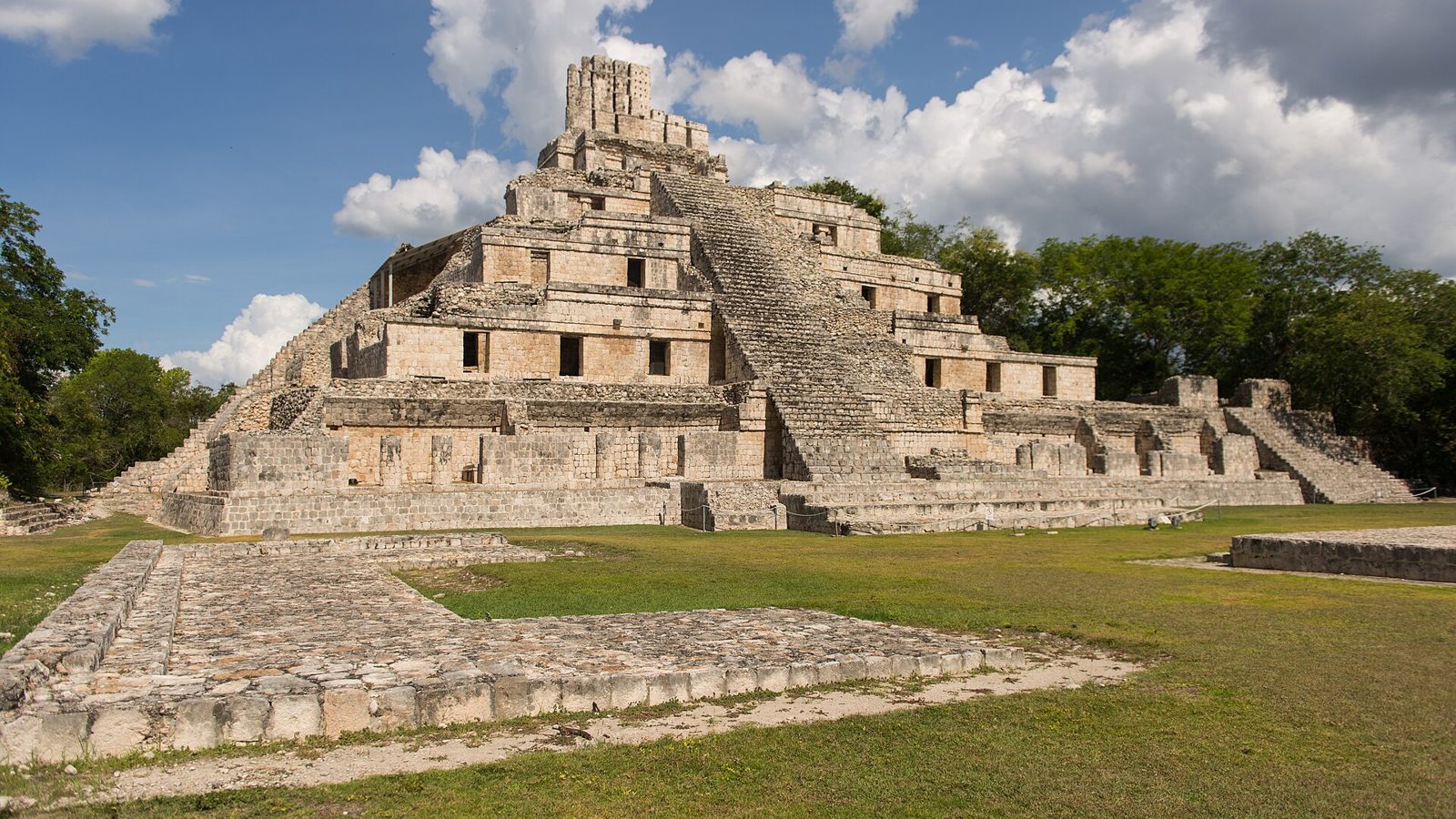
- Climb Edzná's Five-Storey Building: Edzná, about 55km south-east of the city, was a regional Maya capital between roughly 400 and 1000 AD. The Gran Acrópolis and its five-storey pyramid rise over a wide plaza, and there are often few other visitors. Entry is 210 pesos (about $11 USD), and it is open daily from 8am to 5pm. Go early, before the heat builds.
- Stroll the Parque Principal and cathedral: The main square is shaded, friendly and free. Look into the cathedral, then visit Casa 6, a restored colonial mansion on the square that shows how wealthy families lived. Tourist trams also leave from here for a city tour with a stop at one of the forts.
- Visit Fuerte de San José el Alto: The second hilltop fort stands north of the centre and now holds an INAH museum of underwater archaeology, ships and weapons. Entry is around 145 pesos. It is quieter than San Miguel, and the view back over the city and the sea is just as good.
Hidden gems
- The Jardín Botánico Xmuch Haltún inside the Baluarte de Santiago, a small walled garden of tropical plants that is cool and quiet in the middle of the day
- The Church of San Román and its Black Christ, which brings the barrio to life during the September festival
- Mansión Carvajal, an ornate early 20th-century mansion with Moorish-style arches and a grand staircase, now used as offices and easy to walk past
- The streets of Barrio de Guadalupe at dusk, when neighbours sit outside their pastel houses and the tourists are all on Calle 59
- Playa Bonita near Lerma on a weekday morning, a simple local beach south of the city where you can swim in calm, shallow water
Daily budget
- Accommodation: budget $12 to $22 USD / night (hostel dorm), mid-range $50 to $90 USD (colonial guesthouse or 3-star hotel), splurge $180+ USD (Hacienda Puerta Campeche or a restored hacienda). Prices rise at Christmas, Easter and Carnival. A state lodging tax may be added to your bill. Private rooms in hostels are good value for solo travellers.
- Food: budget $10 to $18 USD / day (market breakfast, fonda lunch, cenaduría snacks), mid-range $25 to $45 USD (sit-down lunch and a seafood dinner on Calle 59), splurge $60+ USD (seafood feast, cocktails, dessert). A market breakfast or set lunch (comida corrida) costs about $4 to $7 USD, and a seafood main around $10 to $20 USD. Tourist-facing Calle 59 is pricier than the barrios.
- Transport: budget $1 to $5 USD / day (walking, local buses, a colectivo), mid-range $10 to $25 USD (taxis plus an Edzná shuttle), splurge $80+ USD (private driver to Edzná or onward to Calakmul). Taxis in town are about 60 to 90 pesos. ADO to Mérida costs around $18 to $25 USD, and the Tren Maya around 339 pesos (about $18 USD).
- Activities: budget $0 to $12 USD / day (walls, malecón, Parque Principal, one museum), mid-range $15 to $35 USD (Edzná at 210 pesos, two INAH museums, the light show), splurge $100+ USD (guided Calakmul tour with transport). Foreign visitors pay full INAH prices every day, including Sundays. Museums are about 145 pesos, and Calakmul's three fees total roughly 525 pesos, all in cash.
- Drinks & nightlife: budget $3 to $8 USD (a beer or two from a shop or cantina), mid-range $15 to $30 USD (cocktails on Calle 59), splurge $40+ USD (rooftop or hotel bar). A local beer costs about $2 to $4 USD in a bar, and a coffee $2 to $3 USD. Nightlife is low-key and mostly found on Calle 59 and along the malecón.
Where to stay
- Social hostel in Centro Histórico ($12 to $22 USD / night (dorm)): Small hostels inside the walls, such as Hostal La Parroquia on Calle 55, offer dorms and good-value private rooms a few minutes from the Parque Principal. They are useful for sharing Edzná shuttles and getting tips from other travellers.
- Boutique hotel in Centro Histórico ($60 to $110 USD / night): Hotel Castelmar is a restored colonial building in the centre, with high ceilings, tiled floors and a small pool. Calle 59, the bastions and the malecón are all a short walk away.
- Apartment in Barrio de Guadalupe or San Román ($35 to $70 USD / night): Rooms and apartments in old barrio houses give you a kitchen, quiet nights and a local feel, 5 to 10 minutes on foot from the walls. Check for air conditioning, as it matters for most of the year.
- Splurge in Calle 59, near the Puerta de Tierra ($180 to $350+ USD / night): Hacienda Puerta Campeche is a row of restored 17th-century houses turned into a luxury hotel, with a pool among old stone walls. You are right on the best street in town.
What to eat
- Pan de cazón: layers of tortilla, small shark (cazón), black beans and tomato sauce, the dish Campeche is proudest of. Try it for lunch at a market fonda or at Marganzo
- Coconut shrimp and seafood cocktails: camarones al coco and shrimp or octopus cócteles at La Pigua or the simpler seafood places near the malecón
- Panuchos, salbutes and tamales colados: cheap evening snacks at the cenadurías of Barrio de San Francisco, such as Los Portales
- Cochinita pibil: slow-cooked pork in achiote, served in tacos or tortas for breakfast at the Mercado Principal for a few dollars
- Champola: a Campeche milkshake made with fruit and ice cream, good in the afternoon heat
- Pibipollo: the large tamal baked underground for Hanal Pixán (Day of the Dead) around late October and early November, sold in bakeries and markets
Day trips
- Edzná (About 55km south-east of Campeche, 1 hour by road): A major Maya city whose Gran Acrópolis and five-storey pyramid tower over a wide plaza. It is impressive and usually quiet, and the site is shaded in places, with marked paths. Allow two hours. Take a colectivo from near the main market, a shuttle or tour from an agency on Calle 59, or a taxi for the morning. Entry is 210 pesos for foreign visitors, daily from 8am to 5pm. Check the last colectivo back before you set off.
- Calakmul (Around 4 to 5 hours away, via Xpujil in the south of the state): One of the most powerful Maya cities, with huge pyramids rising above the forest of the Calakmul Biosphere Reserve. You may see howler monkeys, toucans and wild turkeys. It needs an overnight stay rather than a day trip. Take the Tren Maya or an ADO bus to Xpujil, stay overnight and join an early tour. There are three cash-only checkpoints, totalling roughly 525 pesos for foreign visitors in 2026. There are no ATMs after Xpujil.
- Becal and Hecelchakán (About 60 to 90km north-east, 1 to 1.5 hours by bus): Becal is the home of the jipi palm 'Panama' hat, woven in damp underground caves to keep the fibres supple. Hecelchakán has a small INAH museum with the famous clay figurines from Isla de Jaina. Take a second-class bus or colectivo along the Mérida road from Campeche. Buses are frequent, but check return times, and carry cash for hats and museum entry.
When to visit
- Dry season (November - February): 27-30°C by day, 18-21°C at night, mostly dry and sunny. Crowds: Moderate, busiest at Christmas, New Year and Carnival. The best time to visit. Comfortable for walking the walls and visiting Edzná. Hanal Pixán in early November and Carnival in February add colour. Book festival dates ahead.
- Hot season (March - May): 32-38°C, dry, with intense sun and little breeze. Crowds: Low, apart from Easter week (Semana Santa). Fine if you handle heat well. Do the ruins at opening time, rest at midday and save the malecón for the evening. Book Semana Santa early, as Mexican families travel then.
- Early rainy season (June - August): 30-34°C, humid, with heavy afternoon storms. Crowds: Low, a little busier in the July school holidays. Green and cheap, with quiet ruins. Mornings are usually dry. Bring repellent, as mosquitoes and dengue peak in the wet months.
- Late rainy season (September - October): 29-32°C, humid, with the highest risk of tropical storms. Crowds: Very low, except for the San Román festival in September. The quietest and cheapest time, but storms can disrupt travel. Keep plans flexible, check forecasts and get insurance that covers weather delays.
Entry rules for your passport
Visa rules for Mexico depend on the passport you travel on. Check the official source before you book: Mexico National Migration Institute
Getting there
Campeche has a small airport (CPE) a few kilometres east of the centre, with domestic flights mainly from Mexico City. Many visitors fly to Mérida, which has more international links, and come on by bus or train. ADO buses run between Mérida and Campeche throughout the day and night. The trip takes about 2.5 hours and costs roughly $18 to $25 USD, and some services leave from Mérida airport. The Tren Maya links Campeche with Mérida, Cancún, Palenque and Calakmul. In April 2026 it cut fares by up to 30% and scrapped its higher foreigners' rate. Mérida to Campeche is around 339 pesos (about $18 USD), and Campeche to Cancún is about 798 pesos and nearly six hours, with two trains a day. Buy tickets on the official site or app. The Campeche station is outside the centre, so use the Tren Ligero if it is running or take a taxi. ADO also serves Palenque, Villahermosa, Chetumal and Xpujil. If you drive, Highway 180 from Mérida is good, but parking inside the walls is tight.
Getting around
The walled centre is small and flat, so you will walk almost everywhere. It takes about 10 minutes to cross from the Puerta de Mar to the Puerta de Tierra. Pavements are narrow and kerbs are high, so watch your step after dark. Taxis are cheap and plentiful. Most rides in town cost around 60 to 90 pesos (about $3 to $5 USD), including up to Fuerte de San Miguel. Agree the fare before you get in or use a ride-hailing app if one works when you visit. Local buses run along the malecón and out to Lerma and the barrios for a few pesos. Ask locals which route you need, as signs are limited. The new Tren Ligero light rail links the Tren Maya station, the airport and the city, so check that it is running and what it costs, or take a taxi. Colectivos to the Edzná area leave from near the main market in the morning. For Calakmul and more distant sites, use the Tren Maya, ADO buses or a tour, as there is no easy local transport.
Safety
Campeche is one of the calmer cities in Mexico, and the old centre and malecón are busy and well lit in the evening. Take normal care with your phone and bag in crowds and on buses, and use taxis rather than walking through empty streets late at night. Check your own government's current travel advice for Campeche state before you go. The main risks are the heat, the sun and mosquitoes. From April to June temperatures can pass 35°C, so carry water and visit ruins early. Dengue occurs in the rainy season, so use repellent. Hurricane season runs from June to November, so watch the forecast. Tap water is not safe to drink, so buy bottled or use the refill jugs in hostels. Pavements are uneven, with high kerbs and open drains. The emergency number is 911. Travel insurance with medical cover is essential, as private hospitals expect payment up front.
Solo travel tips
- Stay inside the walls: You can walk to every museum, restaurant and the malecón, and get home quickly after dinner. Pick a room off Calle 59 if you sleep lightly.
- Start early, rest at midday: Edzná and the forts open at 8am, and the heat is brutal by noon for much of the year. Go sightseeing early, take a siesta and come back out at sunset with everyone else.
- Carry cash and small notes: Colectivos, market stalls, cenadurías and all three Calakmul checkpoints want cash. Withdraw pesos from bank ATMs in the centre and keep small notes for taxis.
- Eat where the locals eat: The market, set lunches in the barrios and the evening cenadurías cost a fraction of Calle 59. Save the terrace restaurants for one or two dinners.
- Safety for solo travellers: The main risks are heat, uneven pavements and empty streets late at night. Carry water, watch your step and take a taxi back if you have strayed far from the centre after dark.
- Meet people on a tour: Shared Edzná shuttles, walking tours and the tourist trams are easy ways to meet other travellers. Hostel common rooms and the malecón at sunset are good for a chat too.
Cultural etiquette
- Greet people with 'buenos días' or 'buenas tardes' when you enter a shop, a taxi or a small restaurant. It is expected, and it changes how people treat you.
- Learn a few words of Spanish. English is less widely spoken here than on the Caribbean coast, and an effort goes a long way.
- Cover your shoulders and knees in the cathedral and barrio churches, and keep quiet if a mass is on.
- Keep beachwear for the beach or pool. Walking around town in swimwear is frowned upon, even in the heat.
- Ask before photographing people, especially at markets and at Hanal Pixán altars in homes.
- Tip about 10 to 15% in sit-down restaurants, and leave small change for market cooks and the people who pack your shopping in supermarkets.
- Do not climb on fragile parts of the ruins, the walls or the bastions, and stick to marked paths at Edzná and Calakmul.
Frequently asked questions
How do I get to Campeche and from the station to my room?
Most solo travellers come from Mérida. ADO buses run very often, take about 2.5 hours and cost roughly $18 to $25 USD. They arrive at the ADO terminal on Avenida Patricio Trueba, a short taxi ride from the centre. The Tren Maya also runs from Mérida, and since April 2026 the tourist fare is around 339 pesos (about $18 USD), with no separate foreigners' rate. The Campeche station is outside town, so take the Tren Ligero if it is running or a taxi. Almost everywhere in the walled centre is a short walk from the Parque Principal.
How many days do I need in Campeche?
Two nights covers the walls, the bastions, Calle 59 and the malecón. Three to five nights lets you add Edzná, both forts, the market and the barrios at an easy pace. A week works if you want to slow right down, add a day trip to Becal or carry on to Calakmul.
When is the best time to visit Campeche?
November to March is the sweet spot, with warm, dry days and cooler evenings. Early November brings Hanal Pixán, the regional Day of the Dead, and February brings Carnival, one of the oldest in Mexico. April and May are very hot, often over 35°C. June to October is the rainy and hurricane season, with heavy showers, humidity and mosquitoes, though prices are low and the city is quiet.
Can I visit Edzná without a car?
Yes. Colectivos to the Edzná area leave from near the main market in the morning, but services are limited, and the last ride back can be early in the afternoon, so ask the driver before you set off. Many agencies on Calle 59 run shuttles or tours, which are simpler. A taxi for the morning is the most flexible option. Entry for foreign visitors is 210 pesos, and the site opens daily from 8am to 5pm.
Can I swim in Campeche?
Not really in the city itself. The sea along the malecón is shallow and not used for swimming. Locals go to Playa Bonita and other small beaches near Lerma, a short bus or taxi ride south. The water is calm and warm, but the Gulf here is greener and murkier than the Caribbean. Many mid-range hotels and some guesthouses have a pool, which is the easiest way to cool off.
Is Calakmul doable from Campeche?
Yes, but not as an easy day trip. Calakmul is deep in the forest near the Guatemalan border, several hours away. Most people take the Tren Maya or a bus to Xpujil, stay overnight and join an early tour. You pass three separate cash-only checkpoints, and in 2026 foreign visitors pay roughly 525 pesos in total. There are no ATMs after Xpujil, and the reserve gate stops letting people in mid-afternoon.
Is Campeche safe for solo female travellers?
Generally yes. It is one of the most relaxed cities on the peninsula, and the centre stays busy with families in the evening. Expect some stares and occasional comments. Dress a little more modestly than you would at the beach, take normal care with drinks and use taxis rather than walking through empty streets late at night. Check your own government's current advice before you travel.
What entry rules apply to Mexico in 2026?
Citizens of the UK, EU, US, Canada, Australia and many other countries do not need a visa for a tourist visit. You need a valid passport and the FMM visitor permit. In 2026 the FMM fee is 983 pesos, and it is included in your airfare if you fly in. At many airports it is now recorded digitally with your entry stamp. The immigration officer decides how many days you get, up to 180, so check your stamp. Confirm the details with Mexico's INM and your own government's travel advice before you go.
More about Campeche
- The 7-Day Mexico City Itinerary for 2026, with Real Prices
- Mexico City vs Medellín for Digital Nomads: Which Base Suits You in 2026?
Tours and activities in Campeche | Campeche in 2 days | Campeche in 3 days | Campeche in 4 days | Campeche in 5 days | Campeche in 7 days
Joy Plus home | Destinations | Itineraries | Activities | Flights | Budget planner | Calendar | Map | Blog | Lifetime access