Destinations / Europe
Capri, Italy travel guide
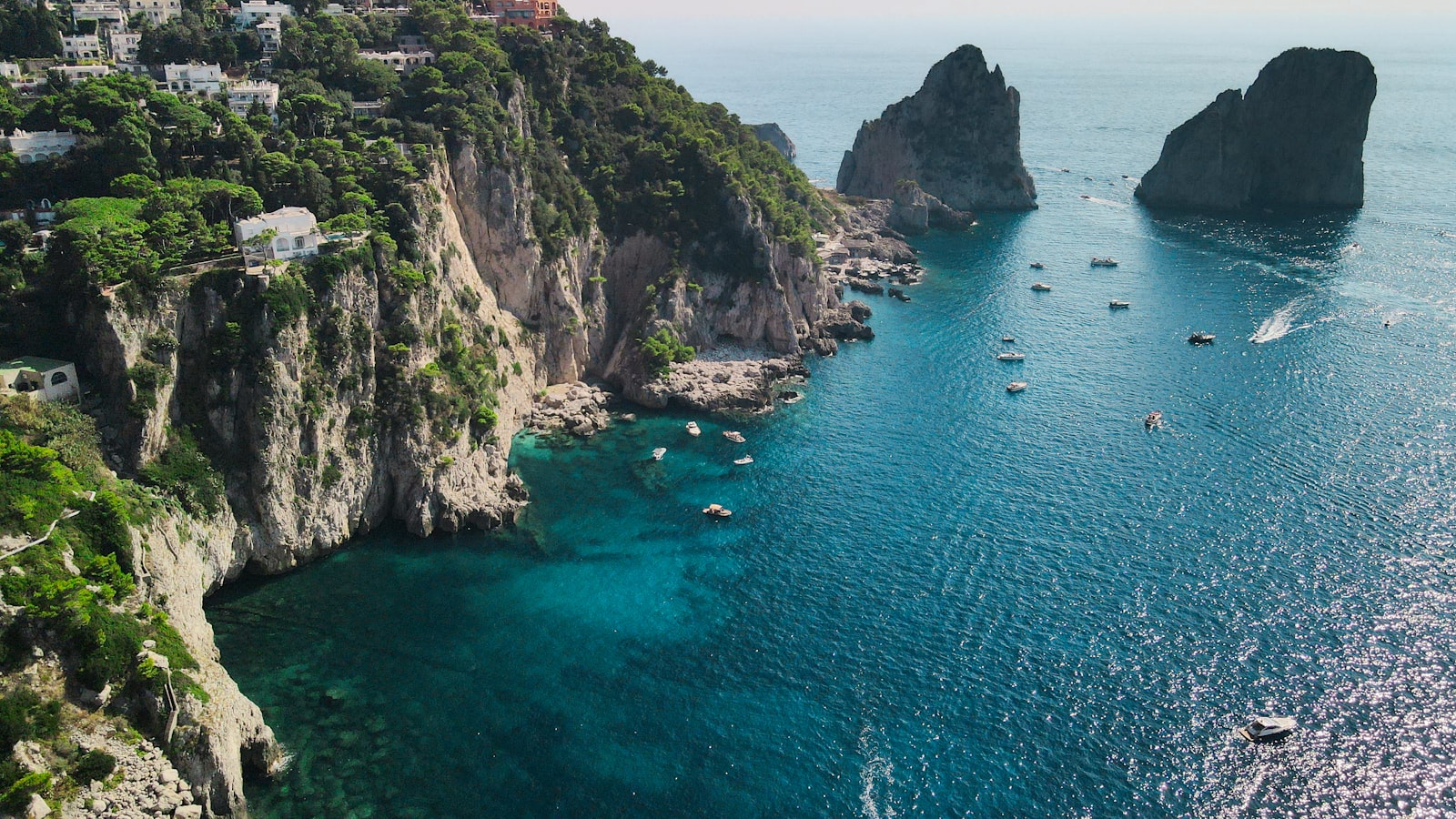
A glamorous limestone island of sea caves, cliff walks and piazzetta people-watching in the Bay of Naples.
- Best time to visit: May-June and September
- Daily budget (budget traveller): $160 to $300 USD
- Ideal trip length: 2 to 3 days
Capri is a slab of white limestone dropped in blue water, where designer boutiques sit five minutes from goat paths that end at 300-metre cliffs. Day-trippers flood the piazzetta from 10am to 5pm; stay the night and the island belongs to you. Joy Plus builds around that rhythm, putting boats and viewpoints in the quiet hours and the shopping streets when the sun is brutal anyway.
Capri works on two clocks. From roughly 10am to 5pm, thousands of day-trippers pour off the hydrofoils at Marina Grande, the funicular queue snakes past the ticket booth, and the Piazzetta becomes the most expensive standing-room-only space in Italy. Outside those hours, the island is a different place. Lizards on the Gardens of Augustus walls, shutters opening on Via Camerelle, the last light turning the Faraglioni orange, and a bar counter where a coffee costs €1.50 and nobody is performing. Sleep one night and you get the second island. This guide is built around that.
The geography is simple once you stop reading it as a postcard. Capri Town sits in the saddle between two hills and has the glamour, the shops and the steepest prices. Anacapri is higher, calmer and cheaper, and holds the Monte Solaro chairlift, Villa San Michele and the best sunset at Punta Carena. Marina Grande is the port, Marina Piccola is the swim cove, and everything else is a path. The good walks (Via Tragara to the Arco Naturale, the Sentiero dei Fortini, the climb to Villa Jovis) are free, take 60 to 90 minutes each (about 3 hours for the full Sentiero dei Fortini) and are empty before 10am.
Capri is genuinely expensive, and pretending otherwise helps nobody. A seated spritz on the Piazzetta is €18 to 20, a sunbed at a Marina Piccola lido is €25 to 40, and a hydrofoil from Naples is around €25 each way. The hacks are boring but effective. Stand at the bar, base yourself in Anacapri, buy lunch from a pizza al taglio window, ride the €2.40 local bus instead of an open-top taxi, and swim from the free rocks at Punta Carena. Spend the money you save on a boat, because seeing the island from the water is the one thing nothing else replaces.
How many days in Capri?
For Capri, we recommend 2 to 3 days. With more time, add a day trip to Sorrento or Positano.
| Trip length | What you'll see | Itinerary |
|---|---|---|
| 2 days · Recommended | Hydrofoil across, Capri Town at golden hour; Gardens, Via Tragara and the Arco Naturale | Capri in 2 days |
| 3 days · Recommended | Adds: Anacapri, Monte Solaro and Villa San Michele | Capri in 3 days |
| 4 days | Adds: Boat around the island and the Blue Grotto | Capri in 4 days |
| 5 days | Adds: Punta Carena and the Sentiero dei Fortini | Capri in 5 days |
| 7 days | Adds: Villa Jovis, Matermania and Marina Piccola | Capri in 7 days |
Capri itinerary
Arrive, hydrofoil across, Capri Town at golden hour
Morning: Land at Naples Capodichino, take the Alibus (about €5, 20 min) to Molo Beverello. Catch an early hydrofoil (SNAV, NLG or Alilauro, 45 to 50 min, about €24 to 28).
Afternoon: Funicular from Marina Grande to Capri Town (€2.40, 3 min). Drop bags, then walk Via Camerelle and Via Vittorio Emanuele with no agenda. Waffle cone at Buonocore.
Evening: Stand at the bar of the Gran Caffè for an espresso, then walk to the Gardens of Augustus for light on the Faraglioni. Dinner at Da Tonino.
Gardens, Via Tragara and the Arco Naturale
Morning: Gardens of Augustus at opening (about €2.50) for the Via Krupp hairpins below. Then the Certosa di San Giacomo, quiet, about €10 and closed Mondays.
Afternoon: Walk Via Tragara to the Belvedere di Tragara and the Faraglioni, then the Via Pizzolungo path and the Arco Naturale (about 60 min). Late lunch at Le Grottelle, a restaurant built into a cave.
Evening: Walk back, shower, aperitivo at Pulalli wine bar on Piazzetta Cerio, dinner at Da Paolino under the lemon trees (book ahead).
Anacapri, Monte Solaro and Villa San Michele
Morning: Bus from Capri Town to Anacapri (about €2.40, 15 min). Chairlift to Monte Solaro at the 9:15am opening (9:30am in winter), about 12 minutes up, with a layer for the wind at the top.
Afternoon: Villa San Michele (about €12) for gardens and a sphinx-guarded Faraglioni view. Lunch at Il Solitario, a garden trattoria off Via Orlandi.
Evening: Anacapri evening passeggiata, gelato, then dinner away from Piazza Vittoria. Quiet streets after 9pm.
Boat around the island and the Blue Grotto
Morning: Be at Marina Grande by 9am. Shared boat tour around the island (80 to 100 min, about €25 to 30) with the Faraglioni arch and sea caves. Ask your boatman about the Blue Grotto status before you pay for it.
Afternoon: If the sea is calm, transfer to the Blue Grotto rowboats (queue time 30 to 90 min, about €19 for the rowboat and entry, plus a tip). Swim stop and lunch of spaghetti alle vongole at a Marina Grande waterfront trattoria.
Evening: Funicular up, early dinner, early bed. Tomorrow is a walking day.
Punta Carena and the Sentiero dei Fortini
Morning: Bus from Anacapri to Punta Carena lighthouse (about €2.40, 15 min). Walk the Sentiero dei Fortini along the western cliffs past old Bourbon forts. The full path to the Grotta Azzurra takes about 3 hours with little shade and no refreshment points, so carry water, or walk part of it and come back for lunch.
Afternoon: Swim from the rocks by the lighthouse for free or rent a sunbed at Lido del Faro. Seafood lunch at the lido.
Evening: Stay for the best sunset on the island, then bus back. Check last bus times with the driver on the way out.
Villa Jovis, Matermania and Marina Piccola
Morning: Walk from the Piazzetta to Villa Jovis (about 40 min uphill, ticket about €6, open 10am to 5pm (4pm from mid-October), closed Mondays and in January and February). Quiet, huge and windy.
Afternoon: Descend via Via Matermania to Marina Piccola. Swim at the free public beach by the Scoglio delle Sirene or book a lido sunbed (about €25 to 40) with a view of the Faraglioni.
Evening: Bus back up. Last big dinner, then a late drink at Anema e Core if you have energy.
Slow morning, last coffee, depart
Morning: Stand-up espresso and a sfogliatella in Capri Town. Last walk through the quiet lanes before the first day boats arrive.
Afternoon: Funicular down to Marina Grande (€2.40). Hydrofoil to Naples (or Sorrento if you are heading to the Amalfi Coast).
Evening: Airport, train or onward. Allow at least 90 minutes between ferry arrival and a flight, the Alibus can be slow.
Best neighbourhoods
- Capri Town: The main hub around the famous Piazzetta, lined with designer shops, cafes and whitewashed lanes.
- Anacapri: The quieter, higher village with the Monte Solaro chairlift, Villa San Michele and lower prices.
- Marina Grande: The main port where ferries arrive, with a pebble beach and casual seafood spots.
- Marina Piccola: The southern swimming cove looking straight at the Faraglioni sea stacks.
Must-do experiences
- Chairlift to Monte Solaro: Ride the single-seat chairlift from Anacapri to the island's summit for 360-degree bay views.
- Boat around the island: Circle Capri by boat to see the Faraglioni arch, sea caves and swimming stops from the water.
- Via Krupp & Gardens of Augustus: Look down on the hairpin cliff path and the Faraglioni from the terraced public gardens.
- Blue Grotto: Row into the sea cave where the water glows electric blue, weather and sea state permitting.
Hidden gems
- Villa Jovis, Emperor Tiberius's clifftop ruin at the island's quiet eastern end.
- The Sentiero dei Fortini coast path along Anacapri's wild western shore.
- Punta Carena lighthouse for the island's best sunset and a rocky swim.
- Early morning in the Piazzetta before the first ferries dock.
Daily budget
- Accommodation: budget €30-45 / night (Naples hostel dorm) or €110-160 (basic Anacapri double), mid-range €220-380 (boutique double, Capri Town or Anacapri), splurge €700+ (Capri Palace Jumeirah, Grand Hotel Quisisana). Capri has no real hostels. Anacapri is 20 to 30% cheaper than Capri Town for the same standard. Shoulder season rates can be half of August.
- Food: budget €30-40 / day (pizza al taglio, panini, supermarket fruit), mid-range €60-90 (casual lunch plus one proper dinner), splurge €250+ (tasting menu at L'Olivo or Quisi). Coperto (cover charge) is €2-5 per head. Lunch pasta away from the Piazzetta is €16-22. Anacapri trattorie are cheaper than Capri Town.
- Transport: budget €8-12 / day on island (funicular €2.40 + two bus rides ~€2.40 each), mid-range €25-40 (adds a taxi or two), splurge €150+ (private boat transfer or driver). Ferry from Naples or Sorrento is separate: about €24 to 28 one way by hydrofoil, €15 to 17 on the slow Caremar ferry from Naples. Check the last sailing back.
- Activities: budget €15-25 / day (Gardens of Augustus, Villa Jovis, free walks, chairlift), mid-range €60-95 (shared boat tour, Blue Grotto, Villa San Michele, chairlift), splurge €300-600+ (private boat charter, lido day with lunch). Monte Solaro chairlift is about €15 return. Blue Grotto all in (boat, entry, rowboat) is about €44, plus a tip for the boatman.
- Drinks & nightlife: budget €8-12 (bar-counter espresso, a beer from a shop), mid-range €30-50 (aperitivo plus a cocktail or two), splurge €100+ (Anema e Core night, table at the Piazzetta). Seated Piazzetta spritz is €18 to 20, the same drink at the bar inside is far cheaper. Capri nights are late and slow, not a crawl.
Where to stay
- Social hostel in Naples, near Molo Beverello (€25-45 / night): Capri has no real hostels. Hostel of the Sun in Naples is five minutes from the ferry port, social and cheap. Use it for a night before or after, and do Capri as a long day or one overnight in Anacapri.
- Boutique hotel in Capri Town or Anacapri (€220-380 / night): Villa Krupp (Capri Town, quiet, near the Gardens) or Hotel Villa Eva (Anacapri, garden and pool). Small, personal and well located for early walks.
- Apartment in Anacapri (€130-220 / night): A one-bedroom with a terrace and kitchen. Cheaper per night, and you can shop at the Conad and cook one or two meals to offset the restaurant prices.
- Splurge in Capri Town or Anacapri (€700-1,500+ / night): Capri Palace Jumeirah (Anacapri, art-filled, pools) or Grand Hotel Quisisana (Capri Town, the grande dame). Both are an easy walk to the sights you want at dawn.
What to eat
- Insalata caprese with island tomatoes and mozzarella
- Ravioli capresi filled with caciotta cheese and marjoram
- Torta caprese, the flourless chocolate and almond cake
- Granita al limone from a street kiosk on a hot afternoon
Day trips
- Sorrento (20 to 25 min by ferry): A lively town on the cliffs with lemon groves, limoncello shops and a much lower price tag than Capri. A good base for Pompeii and the Amalfi Coast. Ferry from Marina Grande (NLG, Caremar, Alilauro) about €22 each way. Check the last return, usually 18:00 to 19:30 in shoulder season.
- Positano (40 to 55 min by ferry (seasonal)): Vertical pastel village on the Amalfi Coast with a pebble beach, boutiques and steep lanes. Longer and pricier than Sorrento but very photogenic. Seasonal fast boats April to October, about €27 to 35 each way. Book the last return before you commit.
- Pompeii and Naples (1h30 to 2h, ferry plus train): The Roman ruins of Pompeii are a long but rewarding day. Naples itself has the best pizza in Italy and the National Archaeological Museum, which holds the best Pompeii finds. Ferry to Naples, then Circumvesuviana from Garibaldi to Pompei Scavi, about €3.50 and 35 min. Pompeii entry is €20 for the ancient city only or €25 with the suburban villas, book online in summer.
When to visit
- Spring (April - June): 17-27°C, mostly sunny, sea still cool (16-21°C). Crowds: Building from Easter, peak by mid June. The best window. Wildflowers on the cliff paths, full ferry timetables, and the island opens up by early May. Water is swimmable from late May.
- Summer (July - August): 28-34°C, humid, sea 24-26°C. Crowds: Extreme, mid August is wall to wall. Gorgeous sea, miserable queues. Prices double. Go only if you stay overnight and do your walking at 7am.
- Autumn (September - October): 22-29°C in September, 17-23°C by late October. Crowds: Moderate, drops fast after the first week of October. The locals' pick. Warmest sea of the year, hotel rates soften and the light is softer. Some places start closing mid October.
- Winter (November - March): 8-15°C, windy and wet. Crowds: Almost none. Most hotels and restaurants shut, ferries are reduced and the Blue Grotto rarely opens. Atmospheric if you want empty lanes, not much else.
Entry rules for your passport
Visa rules for Italy depend on the passport you travel on. Check the official source before you book: European Commission: Schengen visa policy
Getting there
Capri is reached only by sea. From Naples, hydrofoils leave Molo Beverello (SNAV, NLG, Alilauro, Caremar) every 30 to 60 minutes in season, take 45 to 50 minutes and cost about €24 to 28 one way. The slower Caremar ferry from Calata Porta di Massa takes 80 minutes and costs about €15 to 17. From Sorrento, boats take 20 to 25 minutes and cost about €22. Positano and Amalfi run seasonally from April to October, about €27 to 35 each way. From Naples Capodichino airport, the Alibus to the port is about €5 and takes 20 minutes. A taxi to Molo Beverello is a fixed fare of around €23. From Napoli Centrale, the R2 bus runs to the port, about €1.50. Everything lands at Marina Grande, where the funicular to Capri Town is €2.40. Last sailings back are usually 18:30 to 20:30 in season and earlier in shoulder months, so confirm before you go. Visitors cannot bring cars.
Border checks: non-EU visitors (other than Swiss, Norwegian, Icelandic, Liechtenstein, Andorran, Monegasque, San Marinese and Vatican citizens, and holders of an EU residence permit or long-stay visa) are registered in the EU's Entry/Exit System (EES) instead of getting a passport stamp. On your first crossing, officers take your photo and/or fingerprints, so allow extra time at passport control. ETIAS, the planned travel authorisation, is not in operation yet, so don't pay any website for one.
Getting around
Capri is car-free for visitors. The funicular links Marina Grande to Capri Town in three minutes, small orange buses connect Capri Town, Anacapri and the marinas, and open taxis run fixed routes. Beyond that you walk, often on steps. Ferries and hydrofoils reach Naples in 45 to 80 minutes and Sorrento in 20-25. Naples airport, the usual gateway, is closed from 1 to 30 November 2026 for runway works, with some flights moved to Salerno.
Safety
Capri is extremely safe with almost no street crime; the main risks are physical. Cliff paths are exposed and often unrailed, steps are steep and slippery when wet, and summer sun on white rock is fierce. Bring proper shoes and water, and check sea conditions before booking the Blue Grotto.
Solo travel tips
- Sleep over, it changes everything: Day-trippers leave from about 4pm and the island empties out. One night turns Capri from a crowded postcard into a quiet village. Solo, it is also the safest and most sociable time to be out walking.
- Eat at the bar, not the Piazzetta tables: Anywhere with a counter will serve you an espresso for €1.50 standing up. Seated service on the Piazzetta can cost four times that. Order at the bar, nod at the barista and you will be talking to a local within five minutes.
- Base in Anacapri, visit Capri Town: Anacapri has quieter streets, cheaper rooms and better dinners. You are 15 minutes by bus from the Piazzetta. Solo travellers get more out of the slower pace and the lower price.
- Join a shared boat, don't charter: A private boat is €250 to 500 and pointless solo. Shared boats from Marina Grande (about €25 to 30) fit 10 to 20 people, are good for conversation and still stop for a swim.
- Solo female travellers: Capri is very safe, with almost no street crime and well-lit lanes. The real risk is a bad ankle on wet steps after dark. Wear flat shoes, carry a phone torch on cliff paths, and book return ferries in advance.
- Pack light, then pack lighter: You will carry your bag up steps at least once. A soft backpack beats a roller case. Porters at Marina Grande charge about €15 to 25 per bag if you want to skip it.
Cultural etiquette
- Say buongiorno or buonasera when you enter any shop, bar or café. It is basic politeness and changes the whole interaction.
- Cover shoulders and knees in churches such as Santo Stefano in Capri Town, and never walk through town in swimwear or bare-chested. Capri enforces this with fines.
- Coperto (a €2 to 5 per head cover charge) is normal at restaurants and legitimate. Service is often included, so leave €1 to 2 per person or round up.
- Espresso at the bar is €1.50, seated on the Piazzetta it is €5 to 8. Standing at the bar is local, not rude.
- No cappuccino after about 11am, and no extra cheese on seafood pasta. Italians notice, and so will your waiter.
- Tip the Blue Grotto boatman €2 to 5 per person. Entry and the rowboat are charged separately, and singing is part of the show.
- Lunch runs 12:30 to 3pm and dinner starts around 8pm. Showing up at 6pm gets you tourist menus or a closed kitchen.
Frequently asked questions
Is one day enough for Capri?
One day covers the Piazzetta, the Gardens of Augustus and a boat tour, but it's rushed and shared with thousands of day-trippers. Staying one or two nights gives you the island at dawn and dusk, which is when Capri is genuinely magical.
How do you get to Capri?
Only by sea. Ferries and hydrofoils run from Naples (45 to 80 minutes), Sorrento (20 to 25 minutes), Positano and Amalfi in season. Book ahead in summer and check the last return sailing carefully, as they finish early.
Is the Blue Grotto worth it?
It's spectacular when conditions are right, but it closes in rough seas or high tide, involves queuing in boats and lasts only a few minutes inside. Go early, treat it as a bonus rather than a plan, and have a backup if it's shut.
Is Capri expensive?
Yes, it's one of Italy's priciest destinations, especially in Capri Town. You can cut costs by staying in Anacapri, eating away from the Piazzetta, using the local buses instead of taxis and swimming from public beaches rather than paid lidos.
When is the best time to visit Capri?
May, June and September offer warm sea, full ferry schedules and lighter crowds. August is packed and expensive, while much of the island shuts down from November to March along with reduced ferry service.
Capri or Sorrento: which should I stay in?
Stay in Sorrento for value, choice and easy access to Pompeii and the Amalfi Coast. Stay on Capri if the island itself is the point and you want it after the day boats leave. Many travellers do both, with one or two nights on Capri.
Do you need a car on Capri?
No, and visitors generally can't bring one. The island runs on the funicular, small local buses, taxis and walking. Pack light, because you will carry your bag up steps at some point.
More about Capri
Tours and activities in Capri | Capri in 2 days | Capri in 3 days | Capri in 4 days | Capri in 5 days | Capri in 7 days
Can't decide? Compare Capri with...
Joy Plus home | Destinations | Itineraries | Activities | Flights | Budget planner | Calendar | Map | Blog | Lifetime access