Destinations / Europe
Carcassonne, France travel guide
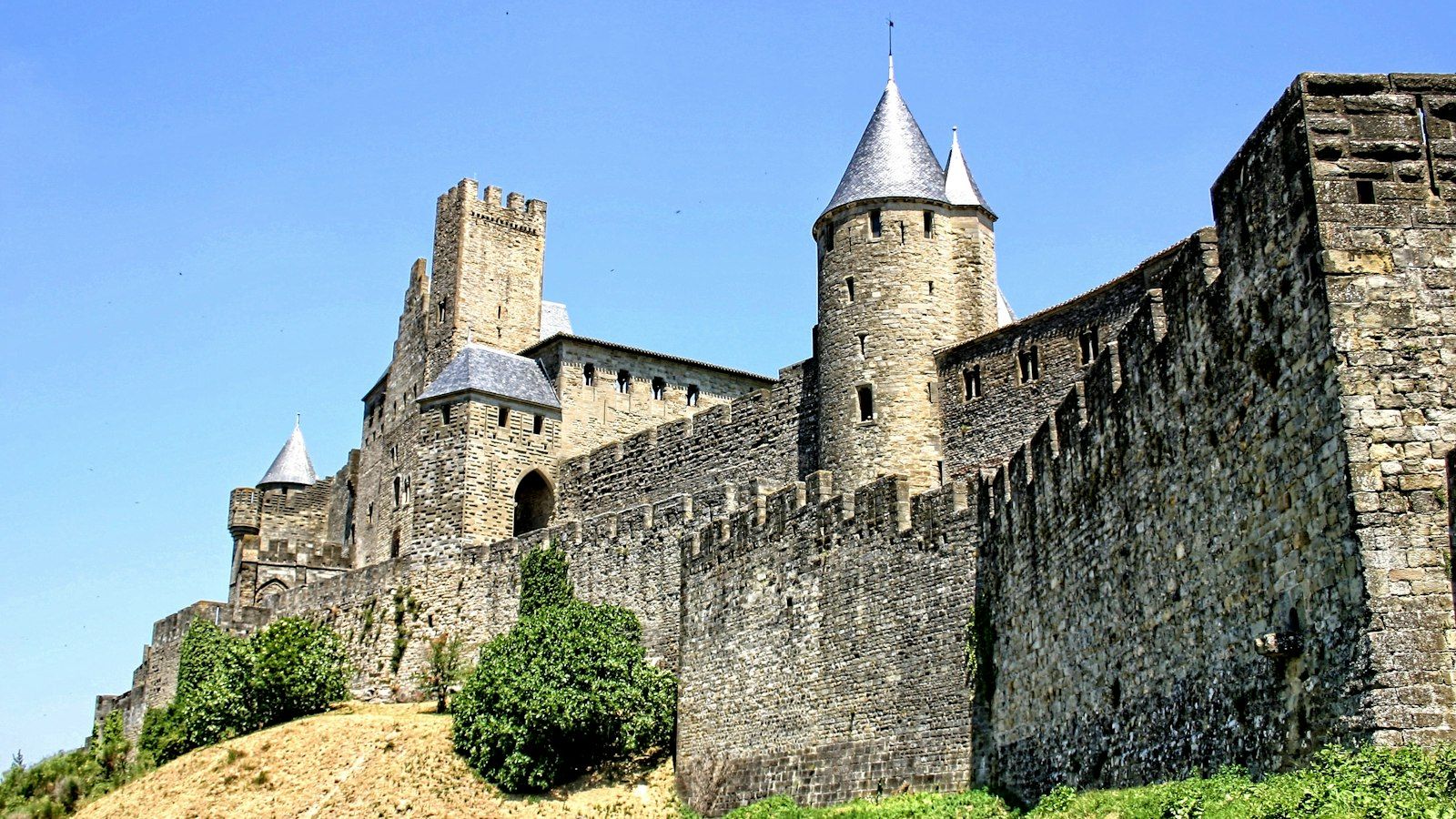
A walled medieval citadel above the Aude, with a grid-plan lower town, slow-cooked cassoulet, and ruined Cathar castles on the hills all around.
- Best time to visit: April to June and September to October
- Daily budget (budget traveller): $80 to $270 USD
- Ideal trip length: 3 to 7 days
Carcassonne is really two towns. On the hill east of the river Aude stands La Cité, a double ring of walls about 3km round, with towers, a counts' castle and a Gothic basilica. In the 19th century the architect Viollet-le-Duc restored it, and it is now on the UNESCO list. Across the Pont Vieux, the Bastide Saint-Louis is the everyday town. It was laid out on a grid in the 13th century and has a market square, cafés, covered halls and the Canal du Midi running past the station. Most visitors come up the hill for a few hours and leave. Solo travellers who stay the night get the walls almost to themselves after dark. Carcassonne also makes a cheap, easy base for the Cathar castles at Lastours and Peyrepertuse, for Corbières and Limoux wines, and for train trips to Narbonne and Toulouse. It is compact and walkable, and it feels safe. A bowl of cassoulet is never far away.
Carcassonne has around 45,000 residents and millions of visitors a year, and almost all of them head for the same few hundred metres of hilltop. La Cité is the reason: two rings of walls, dozens of towers, a 12th-century counts' castle and a basilica. Locals will cheerfully tell you it was heavily rebuilt in the 19th century by Viollet-le-Duc, whose pointed slate roofs still spark debate. Down the hill, across the Aude, the Bastide Saint-Louis is where people actually live, shop and eat. It is a 13th-century grid of streets around Place Carnot, with markets three mornings a week and menus du jour well below Cité prices. The trick for a solo traveller is to use both. Sleep near the walls for the evening atmosphere, then eat and shop in the Bastide.
Getting here is usually easy, but autumn 2026 is an exception. Carcassonne Airport, served mainly by Ryanair, is closed for runway works from 2 to 13 December 2026, so until then come by train via Toulouse, Narbonne or Montpellier. Once you arrive, you can walk everywhere. The station sits on the Canal du Midi at the top of the Bastide, and the Cité is around half an hour on foot. Local RTCA buses cost €1.20 a ride. The only place you'll miss wheels is the Cathar castles. Lastours is 25 to 30 minutes north by car, while Peyrepertuse and Quéribus are roughly 90 minutes south-east in the Corbières hills. Hire a car for a day or two, or join a small-group tour.
Timing changes the experience. In spring and autumn the town is warm and calm, the grape harvest runs through September, and you can get into the castle without queuing for long. July and August bring the Festival de Carcassonne, the 14 July fireworks over the walls, 35°C afternoons and coach parties. Winter is cold and windy, and some Cité shops and restaurants shorten their hours, but the castle stays open, entry is free on the first Sunday of each month from November to March, and you'll often have the ramparts to yourself. Carcassonne is safe, easy and good value by French standards. It is quiet in the evenings rather than a party town.
Carcassonne itinerary
Arrive, the Bastide and the canal
Morning: Arrive by train at Carcassonne station, or by the €6 RTCA airport shuttle, which leaves around 25 minutes after each flight lands. The airport is closed 2 to 13 December 2026. Drop your bags at your hotel.
Afternoon: Walk the Bastide Saint-Louis grid. Have a coffee on Place Carnot by the Neptune fountain, then walk to the Cathédrale Saint-Michel at the southern edge of the old town.
Evening: Sunset along the Canal du Midi by the station. Cassoulet dinner at La Demeure du Cassoulet in the Bastide, booked ahead.
La Cité, castle and ramparts
Morning: Walk over the Pont Vieux and up through La Trivalle to the Porte Narbonnaise, about 30 minutes. Be at the Château Comtal for opening (9:30am October to March, 10am April to September). Tickets are €13 or €19, there are no lockers, and large bags aren't allowed.
Afternoon: Visit the Basilique Saint-Nazaire (free) for its stained glass. Lunch in the Cité, then walk the full loop of the Lices between the two walls.
Evening: Stay up the hill as the crowds drain away. Dinner at Restaurant Comte Roger, then walk back over the floodlit Pont Vieux.
Market morning and Lac de la Cavayère
Morning: Go to the Place Carnot market (Tuesday, Thursday and Saturday mornings), then the Halles Prosper Montagné. Build a picnic of olives, cheese, saucisse sèche and fruit.
Afternoon: Walk or cycle out to Lac de la Cavayère, a few kilometres south-east of the Cité. Swim in summer, or take the forest trails the rest of the year.
Evening: Apéro with a glass of Blanquette de Limoux on a Place Carnot terrace, then dinner at a Bastide bistro such as Au Lard et au Cochon.
The four castles of Lastours
Morning: Pick up a hire car and drive around 25 to 30 minutes north into the Montagne Noire. Climb to the four Cathar castles at Lastours (€9 adults, opens 9:30am in winter, closed in January). Allow about 2 hours, in proper shoes.
Afternoon: In season, add the €3 belvédère opposite the castles (closed in November) for the famous view, or drive on to the Gouffre de Cabrespine cave, which is seasonal, so check the dates.
Evening: Back to Carcassonne. Easy dinner in the Bastide and an early night before the long drive.
Peyrepertuse and Quéribus
Morning: Leave by 8:30am for the Corbières, about 90 minutes south-east. Peyrepertuse stretches along a cliff-top ridge. Entry is roughly €8 to €10, and sites can close in strong wind, so check before setting off.
Afternoon: Lunch in Cucugnan, then climb up to Quéribus, the last Cathar stronghold, for views to the Pyrenees.
Evening: Drive back and return the car. Duck confit and a glass of Corbières red in town.
Train to Narbonne
Morning: TER train to Narbonne, about 40 minutes. Check fares on SNCF Connect. Head straight to Les Halles de Narbonne, the covered market, for a counter breakfast.
Afternoon: See the Cathédrale Saint-Just, the exposed stretch of the Roman Via Domitia on the town hall square, and the Narbo Via museum of Roman Narbonne.
Evening: Evening train back to Carcassonne. Light dinner and a final night walk round the Lices.
Canal du Midi towpath and farewell
Morning: Walk or cycle the Canal du Midi towpath east from the station, under plane trees and past locks. Turn back whenever you like, as Trèbes is roughly 10km away.
Afternoon: Pick up last bottles of Limoux bubbles or Cabardès red and some cassoulet tins in the Bastide. Make a final pass of the Pont Vieux for photos.
Evening: Shuttle or train onward, or one last cassoulet if you leave tomorrow.
Best neighbourhoods
- La Cité: The fortified old town on the hill. It has cobbled lanes, the Château Comtal, the Basilique Saint-Nazaire and the youth hostel. It gets crowded from late morning to late afternoon, then goes very quiet at night, which is when staying here pays off.
- Bastide Saint-Louis: The 13th-century grid-plan lower town and the real centre of Carcassonne. It has Place Carnot and its Neptune fountain, the Halles Prosper Montagné, the cathedral, cheaper hotels and restaurants, and all the bus connections.
- La Trivalle: The old faubourg between the Pont Vieux and the Cité gate. It's handy for small hotels and guesthouses, puts you a short uphill walk from the walls, and is cheaper than staying inside them.
- Gare and Port du Canal: The streets around the railway station on the Canal du Midi, a few minutes' walk north of Place Carnot. Good for early trains and towpath walks, and the airport shuttle stops here.
Must-do experiences
- Walk the ramparts of the Château Comtal: Buy a ticket for the counts' castle and the paid wall walk for views from the vineyards to the Pyrenees. Adults pay €13 from October to March and €19 from April to September. EU residents under 26 get in free. Get there at opening time.
- Stroll the Lices at dusk: The grassy strip between the two rings of walls is free to walk. It's at its best in the evening, when the day-trippers have gone and the floodlights come on.
- Look up in the Basilique Saint-Nazaire: The Romanesque and Gothic church inside the Cité is free to enter and has some of the finest stained glass in southern France. Visit late afternoon, when the low light comes through the rose windows.
- Cross the Pont Vieux: The medieval stone bridge over the Aude links the Bastide and the Cité. It's car-free and gives the classic view of the walls, best after dark with the Cité lit up.
- Shop the Place Carnot market: On Tuesday, Thursday and Saturday mornings, Place Carnot fills with fruit, cheese, olives and charcuterie stalls. Then walk round the corner to the Halles Prosper Montagné for butchers, fishmongers and a coffee at the counter.
- Walk or cycle the Canal du Midi: The UNESCO-listed canal passes right by the station. Follow the plane-tree-lined towpath east past locks and moored barges for a flat, peaceful half-day out.
- Climb to the four castles of Lastours: Four ruined Cathar towers stand on a rocky ridge in the Montagne Noire, around 25 to 30 minutes' drive north. Adults pay €9. On-site twin tickets with the Château Comtal are also sold.
- Eat a proper cassoulet: Beans, duck confit and Toulouse sausage baked slowly in an earthenware cassole. It is Carcassonne's signature dish, typically €18 to €25 in town. Order it at lunch, when it sits easier.
Hidden gems
- The night walk across the Pont Vieux and round the Lices, when the Cité is lit and nearly empty, a different place from the daytime crowds
- The counter at the Halles Prosper Montagné in the Bastide, where locals take coffee or a glass of wine between shopping on market mornings
- The Canal du Midi towpath east of the station towards Trèbes, a flat walk or ride under plane trees with barely another tourist
- Lac de la Cavayère, a leisure lake a few kilometres south-east of the Cité with beaches and forest trails, popular with locals for summer swims
- The Cathédrale Saint-Michel at the southern edge of the Bastide, a fortified Gothic church most visitors walk straight past on their way to the Cité
Daily budget
- Accommodation: budget €30-55 / night (hostel bed in the Cité or budget hotel room), mid-range €95-170 (boutique hotel or guesthouse double), splurge €300+ (Hôtel de la Cité inside the walls). Rooms inside or right below the Cité cost more than in the Bastide. Prices climb sharply in July and August and around the 14 July fireworks, so book early. A small tourist tax is added per night.
- Food: budget €25-35 / day (bakery breakfast, market picnic, one menu du jour), mid-range €50-80 (café lunch, sit-down dinner with wine), splurge €120+ (tasting menu at Le Parc Franck Putelat or La Barbacane). A lunch menu du jour in the Bastide usually beats Cité prices. Cassoulet typically costs €18-25. Market stalls at Place Carnot and the Halles Prosper Montagné make cheap picnics.
- Transport: budget €0-6 / day (walking, €1.20 bus ticket, €6 all-day airport shuttle ticket), mid-range €15-35 (TER return to Narbonne or Toulouse, bike hire), splurge €50-90 (hire car plus fuel for the Cathar castles). Book trains on SNCF Connect and check fares, as they vary by time and day. A car is only worth it for castle days. Parking near the Cité is paid.
- Activities: budget €0-19 / day (free Lices and basilica, plus the castle at €13 in winter or €19 in summer), mid-range €20-45 (Lastours €9, Peyrepertuse, a guided visit or audioguide), splurge €90+ (private guide or wine-estate tour with tastings). EU residents under 26 get into the Château Comtal free. A twin ticket with Lastours costs €19.50 from October to March and €24 from April to September, sold on site and valid for 7 days.
- Drinks & nightlife: budget €5-12 (a glass of local wine or a demi on Place Carnot), mid-range €15-35 (wine bar evening, a bottle of Blanquette), splurge €50+ (cocktails at a hotel bar inside the walls). Nightlife means apéro terraces and wine bars rather than clubs. Place Carnot is the evening hub. The Cité gets very quiet after about 10pm outside summer.
Where to stay
- Social hostel in La Cité (€30-55 / night (check current rates)): The Cœur de Cité youth hostel (HI), on rue Raymond Roger Trencavel inside the walls, has a patio, terrace and shared kitchen, and puts you in the Cité after dark. It is open all year.
- Boutique hotel in La Trivalle (€95-170 / night): Hôtel du Pont Vieux sits between the old bridge and the Cité, a short climb to the walls and a flat walk into the Bastide, so you can reach both halves of town easily.
- Apartment in Bastide Saint-Louis (€65-120 / night): Self-catering flats in the Bastide put you a few steps from Place Carnot, the Halles and the station. Cook with market produce and keep your food bill low.
- Splurge in La Cité (€300-700+ / night): Hôtel de la Cité is a neo-Gothic hotel built against the ramparts, with gardens, views over the walls and La Barbacane restaurant.
What to eat
- Cassoulet: white beans slow-baked with duck confit, Toulouse sausage and pork in a glazed clay dish. Try it at La Demeure du Cassoulet in the Bastide or Restaurant Comte Roger in the Cité
- Duck confit and magret: south-western duck in every form, from crisp confit legs with sautéed potatoes to pink-sliced breast with a red wine sauce
- Blanquette and Crémant de Limoux: sparkling wines from just south of Carcassonne, a cheap and local alternative to champagne by the glass
- Cabardès, Minervois and Corbières reds: the local wine regions. A glass in a Bastide bar is a few euros and goes well with cassoulet
- Lucques olives: plump, bright green Languedoc olives sold by the scoop at the Place Carnot market
- Market picnic: goat's cheese, saucisse sèche, fougasse and fruit from Place Carnot and the Halles, eaten on the Lices or by the canal
Day trips
- The four castles of Lastours (About 20km north, 25-30 minutes by car): Four ruined Cathar castles line a rocky ridge above the Orbiel valley in the Montagne Noire. The steep climb rewards you with views over the gorges. A belvédère across the valley gives the classic photo of all four towers. By hire car or taxi, as there is no practical bus. Castles are €9 for adults, 9:30am to 4:30pm in winter, closed in January. The belvédère is €3 and opens in spring. On-site twin tickets with the Château Comtal cost €19.50 to €24.
- Peyrepertuse and Quéribus (About 90km south-east, roughly 1.5 hours by car): The most dramatic of the Cathar castles. Peyrepertuse sprawls along a cliff-top ridge, and Quéribus perches on a rock spike with views to the Pyrenees and the Mediterranean. The village of Cucugnan between them makes a good lunch stop. By hire car or with a small-group tour from Carcassonne. Each castle charges roughly €8 to €10. Opening hours are shorter in winter and sites can close in high wind, so check on the day.
- Narbonne (About 60km east, roughly 40 minutes by TER train): A former Roman capital with Les Halles covered market, the tall unfinished Cathédrale Saint-Just, a section of the Via Domitia exposed in the main square, and the Narbo Via museum. Direct TER trains run regularly from Carcassonne station. Check times and fares on SNCF Connect. Narbonne's centre is a 10-15 minute walk from its station.
When to visit
- Spring (March - May): 12-23°C, mixed sun and showers, can be windy. Crowds: Moderate, rising at Easter and on May bank holidays. Good value and green. The castle switches to longer summer hours in April, and the Lastours viewpoint reopens. Book Easter weekends ahead.
- Summer (June - August): 27-35°C, dry and hot, occasional storms. Crowds: Very heavy in July and August, French holiday season. Peak atmosphere, with the Festival de Carcassonne, the 14 July fireworks over the Cité and lake swimming at Lac de la Cavayère. Expect higher castle prices, queues and full hotels. Visit the walls at opening time.
- Autumn (September - October): 17-27°C, settled and mild, rain building late October. Crowds: Moderate in September, quieter in October. The pick. The grape harvest is under way in the Corbières and Minervois, the light is soft, and castle hours and prices drop from 1 October.
- Winter (November - February): 3-13°C, cold Cers wind, some frosty mornings. Crowds: Low, apart from the Christmas period. Quiet and cheap. The castle opens 9:30am to 5pm and is free on the first Sunday of the month. Lastours stays open except 25 December and closes in January. The airport is shut from 2 to 13 December 2026. Some Cité restaurants cut their hours.
Entry rules for your passport
Visa rules for France depend on the passport you travel on. Check the official source before you book: European Commission: Schengen visa policy
Getting there
Carcassonne Airport (CCF) is about 3km west of the town and is served mainly by Ryanair. The airport is closed for runway works from 2 to 13 December 2026, and commercial flights resume on 14 December. When it's open, an RTCA shuttle leaves around 25 minutes after each arrival for the Cité, Square Gambetta, the station and Place Davilla. The €6 ticket covers all local buses that day, and a taxi into town costs roughly €12 to €20. Toulouse-Blagnac is the main alternative. Take public transport into Toulouse Matabiau station, then a TER or Intercités train to Carcassonne, about 45 minutes to an hour. Carcassonne station is on the Bordeaux to Sète line, with direct TER services to Toulouse and Narbonne, Intercités trains, and some TGV services towards Lyon and Paris. From the UK, Ryanair flies to Carcassonne seasonally, or you can take the Eurostar to Paris and connect by TGV, either direct or changing in Toulouse or Narbonne. Book through SNCF Connect for the best fares.
Border checks: non-EU visitors (other than Swiss, Norwegian, Icelandic, Liechtenstein, Andorran, Monegasque, San Marinese and Vatican citizens, and holders of an EU residence permit or long-stay visa) are registered in the EU's Entry/Exit System (EES) instead of getting a passport stamp. On your first crossing, officers take your photo and/or fingerprints, so allow extra time at passport control. ETIAS, the planned travel authorisation, is not in operation yet, so don't pay any website for one.
Getting around
Carcassonne is small enough to walk. From Place Carnot in the Bastide to the Cité's Porte Narbonnaise is roughly 25 to 30 minutes on foot over the Pont Vieux, with a steady climb at the end. The RTCA network runs local buses on a ticket of €1.20 valid for an hour, or €10 for a book of 10, sold on board or in the RTCA app. A bus links the Bastide and the station with the Cité médiévale stop. From June to September a free electric shuttle, the TOUC, loops around the Bastide from Tuesday to Saturday, and a tourist train runs up to the Cité for €7. The €6 airport shuttle ticket is valid all day on the whole RTCA network. You don't need a car in town, and parking near the Cité is paid. You do want one for the Cathar castles, as Lastours and Peyrepertuse have no practical bus service, so hire a car for one or two days only. TER trains from the station on the Canal du Midi reach Narbonne, Toulouse and Limoux quickly and cheaply.
Safety
Carcassonne is a safe, low-key town for solo travellers, and violent crime against visitors is rare. In summer, the Cité's narrow lanes and gates get packed, so keep phones and wallets zipped away. Pickpockets work crowds here as anywhere in France. Some Bastide side streets and the area around the station can feel deserted late at night, so stick to lit main streets or take a taxi. The castle bans large bags and suitcases and has no lockers, so check in before visiting. The local Cers wind can be fierce and may close exposed castle sites such as Peyrepertuse. In July and August temperatures can top 35°C, so carry water and visit castle ruins early. Wear shoes with grip, as the Cité's cobbles and the castle paths get slippery. In fire season, follow any trail closures in the hills.
Solo travel tips
- Sleep near the walls at least once: The Cité changes once the day crowds leave. Spend a night at the youth hostel inside the walls or a guesthouse in La Trivalle, and you get the floodlit Lices and empty lanes almost to yourself.
- Beat the castle queue: Arrive at the Château Comtal at opening time or buy an e-ticket in advance. Leave big bags at your hotel, as they're not allowed and there are no lockers. A reduced late-afternoon ticket is sold at the desk.
- Share the car for castle days: Lastours and Peyrepertuse are hard to reach without a car. Hire one for one or two consecutive days only, ask in the hostel if anyone wants to split it, or book a small-group Cathar castles tour.
- Eat lunch like a local: Lunch is the main meal, and the menu du jour in the Bastide is the best value in town. Tables fill from 12:15pm, and many kitchens stop taking orders around 2pm.
- Safety for solo travellers: Carcassonne is calm and safe. Watch your pockets in summer crowds at the Cité gates, use lit streets between the station and the Bastide late at night, and take a taxi if a walk back feels too quiet.
- Meet people at the market and hostel: The hostel patio and bar inside the Cité are the easiest place to meet other travellers. On market mornings, the Halles Prosper Montagné counter is where you'll end up chatting with locals.
Cultural etiquette
- Always start with 'Bonjour' when entering a shop, café or bus, and 'Bonsoir' in the evening. Skipping the greeting comes across as rude.
- Lunch runs roughly 12pm to 2pm and dinner from 7:30pm. Outside those hours many kitchens are closed, so plan around them.
- Service is included in French bills. Rounding up or leaving a couple of euros for good service is appreciated but not expected.
- Cassoulet is a point of local pride, and the rivalry with Castelnaudary and Toulouse is real. Don't call it a bean stew.
- Dress modestly and keep your voice down in the Basilique Saint-Nazaire and the Cathédrale Saint-Michel, especially during services.
- The Cathar story is still a sensitive part of local identity. The 13th-century crusade is remembered as an invasion from the north.
- Many small shops close at lunchtime and on Sunday afternoons and Mondays, especially in the Bastide and in villages.
Frequently asked questions
How do I get from Carcassonne Airport to the town?
Carcassonne Airport (CCF) is about 3km west of the town. An RTCA shuttle bus leaves around 25 minutes after each arriving flight and stops at the Cité, Square Gambetta, the station and Place Davilla. The €6 ticket is valid all day on the local bus network. Important: the airport is closed for runway works from 2 to 13 December 2026, with flights resuming on 14 December. During the closure, fly into Toulouse and take the train, which is about an hour from Toulouse Matabiau.
How many days do I need in Carcassonne?
Two days cover the Cité, the Bastide and the Canal du Midi at a relaxed pace, with one night inside or near the walls. Allow four to seven days to add the Cathar castles at Lastours and Peyrepertuse, a train trip to Narbonne and a slow market morning.
When is the best time to visit Carcassonne?
April to June and September to October bring warm, comfortable weather and manageable crowds. July and August are hot and busy but have the Festival de Carcassonne and the 14 July fireworks over the Cité. Winter is cold, windy and quiet, but the castle and ramparts stay open daily, apart from a few public holidays.
Is it free to visit the Cité?
Yes. The lanes, squares, the Lices between the walls and the Basilique Saint-Nazaire are free. You only pay for the Château Comtal and the rampart walk: €13 from October to March and €19 from April to September for adults, with free entry for EU residents under 26. Entry is free for everyone on the first Sunday of the month from November to March. Check the official site for current prices.
Do I need a car in Carcassonne?
Not in town. You can walk between the Bastide and the Cité, and buses and trains cover the rest. A car is worth it for one or two days to reach the Cathar castles, as Lastours, Peyrepertuse and Quéribus have no practical public transport.
Can I pay by card everywhere?
Cards, including contactless, work almost everywhere: hotels, restaurants, supermarkets, the castle and RTCA buses. Carry a little cash in euros for market stalls, small bakeries and some village cafés on day trips. ATMs are easy to find in the Bastide.
Is Carcassonne safe for solo female travellers?
Yes, it's generally very safe and relaxed. Use normal precautions. Stick to lit streets late at night, especially between the Bastide and the station, watch your drink in bars, and keep valuables zipped in summer crowds in the Cité.
What entry rules apply to visitors to France in 2026?
France is in the Schengen Area. Most non-EU visitors who don't need a visa can stay up to 90 days in any 180-day period. The EU Entry/Exit System became fully operational on 10 April 2026, so non-EU travellers have fingerprints and a photo taken at the border on first entry. The ETIAS travel authorisation is not yet operating, and no start date has been announced. Rules change, so confirm requirements on the official France-Visas government website and the EU's travel-europe.europa.eu portal before you book.
Tours and activities in Carcassonne | Carcassonne in 2 days | Carcassonne in 3 days | Carcassonne in 4 days | Carcassonne in 5 days | Carcassonne in 7 days
Can't decide? Compare Carcassonne with...
Joy Plus home | Destinations | Itineraries | Activities | Flights | Budget planner | Calendar | Map | Blog | Lifetime access