Carcassonne in 5 days
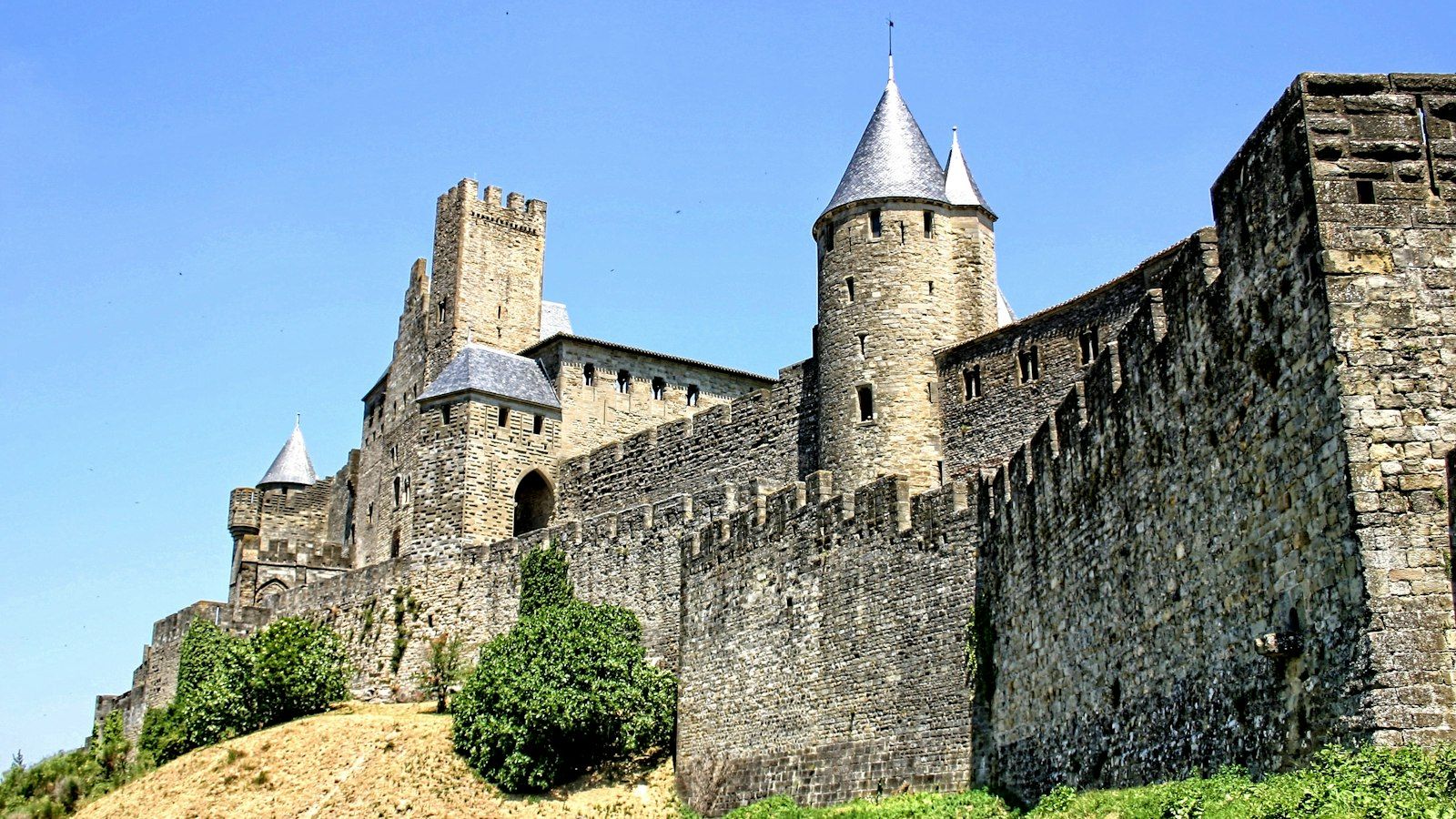
A walled medieval citadel above the Aude, with a grid-plan lower town, slow-cooked cassoulet, and ruined Cathar castles on the hills all around. Best time to visit: April to June and September to October. Daily budget (budget traveller): $80 to $270 USD.
Arrive, the Bastide and the canal
Morning: Arrive by train at Carcassonne station, or by the €6 RTCA airport shuttle, which leaves around 25 minutes after each flight lands. The airport is closed 2 to 13 December 2026. Drop your bags at your hotel.
Afternoon: Walk the Bastide Saint-Louis grid. Have a coffee on Place Carnot by the Neptune fountain, then walk to the Cathédrale Saint-Michel at the southern edge of the old town.
Evening: Sunset along the Canal du Midi by the station. Cassoulet dinner at La Demeure du Cassoulet in the Bastide, booked ahead.
La Cité, castle and ramparts
Morning: Walk over the Pont Vieux and up through La Trivalle to the Porte Narbonnaise, about 30 minutes. Be at the Château Comtal for opening (9:30am October to March, 10am April to September). Tickets are €13 or €19, there are no lockers, and large bags aren't allowed.
Afternoon: Visit the Basilique Saint-Nazaire (free) for its stained glass. Lunch in the Cité, then walk the full loop of the Lices between the two walls.
Evening: Stay up the hill as the crowds drain away. Dinner at Restaurant Comte Roger, then walk back over the floodlit Pont Vieux.
Market morning and Lac de la Cavayère
Morning: Go to the Place Carnot market (Tuesday, Thursday and Saturday mornings), then the Halles Prosper Montagné. Build a picnic of olives, cheese, saucisse sèche and fruit.
Afternoon: Walk or cycle out to Lac de la Cavayère, a few kilometres south-east of the Cité. Swim in summer, or take the forest trails the rest of the year.
Evening: Apéro with a glass of Blanquette de Limoux on a Place Carnot terrace, then dinner at a Bastide bistro such as Au Lard et au Cochon.
The four castles of Lastours
Morning: Pick up a hire car and drive around 25 to 30 minutes north into the Montagne Noire. Climb to the four Cathar castles at Lastours (€9 adults, opens 9:30am in winter, closed in January). Allow about 2 hours, in proper shoes.
Afternoon: In season, add the €3 belvédère opposite the castles (closed in November) for the famous view, or drive on to the Gouffre de Cabrespine cave, which is seasonal, so check the dates.
Evening: Back to Carcassonne. Easy dinner in the Bastide and an early night before the long drive.
Peyrepertuse and Quéribus
Morning: Leave by 8:30am for the Corbières, about 90 minutes south-east. Peyrepertuse stretches along a cliff-top ridge. Entry is roughly €8 to €10, and sites can close in strong wind, so check before setting off.
Afternoon: Lunch in Cucugnan, then climb up to Quéribus, the last Cathar stronghold, for views to the Pyrenees.
Evening: Drive back and return the car. Duck confit and a glass of Corbières red in town.
Heading home: Shuttle or train onward, or one last cassoulet if you leave tomorrow.
What to eat in Carcassonne
- Cassoulet: white beans slow-baked with duck confit, Toulouse sausage and pork in a glazed clay dish. Try it at La Demeure du Cassoulet in the Bastide or Restaurant Comte Roger in the Cité
- Duck confit and magret: south-western duck in every form, from crisp confit legs with sautéed potatoes to pink-sliced breast with a red wine sauce
- Blanquette and Crémant de Limoux: sparkling wines from just south of Carcassonne, a cheap and local alternative to champagne by the glass
- Cabardès, Minervois and Corbières reds: the local wine regions. A glass in a Bastide bar is a few euros and goes well with cassoulet
- Lucques olives: plump, bright green Languedoc olives sold by the scoop at the Place Carnot market
- Market picnic: goat's cheese, saucisse sèche, fougasse and fruit from Place Carnot and the Halles, eaten on the Lices or by the canal
Hidden gems
- The night walk across the Pont Vieux and round the Lices, when the Cité is lit and nearly empty, a different place from the daytime crowds
- The counter at the Halles Prosper Montagné in the Bastide, where locals take coffee or a glass of wine between shopping on market mornings
- The Canal du Midi towpath east of the station towards Trèbes, a flat walk or ride under plane trees with barely another tourist
- Lac de la Cavayère, a leisure lake a few kilometres south-east of the Cité with beaches and forest trails, popular with locals for summer swims
- The Cathédrale Saint-Michel at the southern edge of the Bastide, a fortified Gothic church most visitors walk straight past on their way to the Cité
Getting around
Carcassonne is small enough to walk. From Place Carnot in the Bastide to the Cité's Porte Narbonnaise is roughly 25 to 30 minutes on foot over the Pont Vieux, with a steady climb at the end. The RTCA network runs local buses on a ticket of €1.20 valid for an hour, or €10 for a book of 10, sold on board or in the RTCA app. A bus links the Bastide and the station with the Cité médiévale stop. From June to September a free electric shuttle, the TOUC, loops around the Bastide from Tuesday to Saturday, and a tourist train runs up to the Cité for €7. The €6 airport shuttle ticket is valid all day on the whole RTCA network. You don't need a car in town, and parking near the Cité is paid. You do want one for the Cathar castles, as Lastours and Peyrepertuse have no practical bus service, so hire a car for one or two days only. TER trains from the station on the Canal du Midi reach Narbonne, Toulouse and Limoux quickly and cheaply.
Safety
Carcassonne is a safe, low-key town for solo travellers, and violent crime against visitors is rare. In summer, the Cité's narrow lanes and gates get packed, so keep phones and wallets zipped away. Pickpockets work crowds here as anywhere in France. Some Bastide side streets and the area around the station can feel deserted late at night, so stick to lit main streets or take a taxi. The castle bans large bags and suitcases and has no lockers, so check in before visiting. The local Cers wind can be fierce and may close exposed castle sites such as Peyrepertuse. In July and August temperatures can top 35°C, so carry water and visit castle ruins early. Wear shoes with grip, as the Cité's cobbles and the castle paths get slippery. In fire season, follow any trail closures in the hills.
Frequently asked questions
What does this 5-day Carcassonne itinerary cover?
Day 1: Arrive, the Bastide and the canal. Day 2: La Cité, castle and ramparts. Day 3: Market morning and Lac de la Cavayère. Day 4: The four castles of Lastours. Day 5: Peyrepertuse and Quéribus.
Is 5 days enough for Carcassonne?
Our recommended trip length for Carcassonne is 3 to 7 days. This 5-day plan focuses on the highlights and groups sights by area so you spend less time travelling between them.
How much does 5 days in Carcassonne cost?
A budget traveller spends about $80 to $270 USD a day in Carcassonne, so roughly $400 to $1,350 USD for 5 days, not counting flights.
Where should I stay for 5 days in Carcassonne?
La Cité: The fortified old town on the hill. Bastide Saint-Louis: The 13th-century grid-plan lower town and the real centre of Carcassonne.
When is the best time to visit Carcassonne?
The best time to visit Carcassonne is April to June and September to October.
How do I get around Carcassonne?
Carcassonne is small enough to walk. From Place Carnot in the Bastide to the Cité's Porte Narbonnaise is roughly 25 to 30 minutes on foot over the Pont Vieux, with a steady climb at the end.
Is Carcassonne safe for solo travellers?
Carcassonne is a safe, low-key town for solo travellers, and violent crime against visitors is rare. In summer, the Cité's narrow lanes and gates get packed, so keep phones and wallets zipped away.
More 5-day guides
- Bayeux in 5 days
- Eguisheim in 5 days
- Gordes in 5 days
- Honfleur in 5 days
- Menton in 5 days
- Saint-Malo in 5 days
- Riquewihr in 5 days
- Arles in 5 days
Carcassonne in 2 days | Carcassonne in 3 days | Carcassonne in 4 days | Carcassonne in 7 days | Full Carcassonne guide
Joy Plus home | Destinations | Itineraries | Activities | Flights | Budget planner | Calendar | Map | Blog | Lifetime access