Destinations / Europe
Cascais, Portugal travel guide
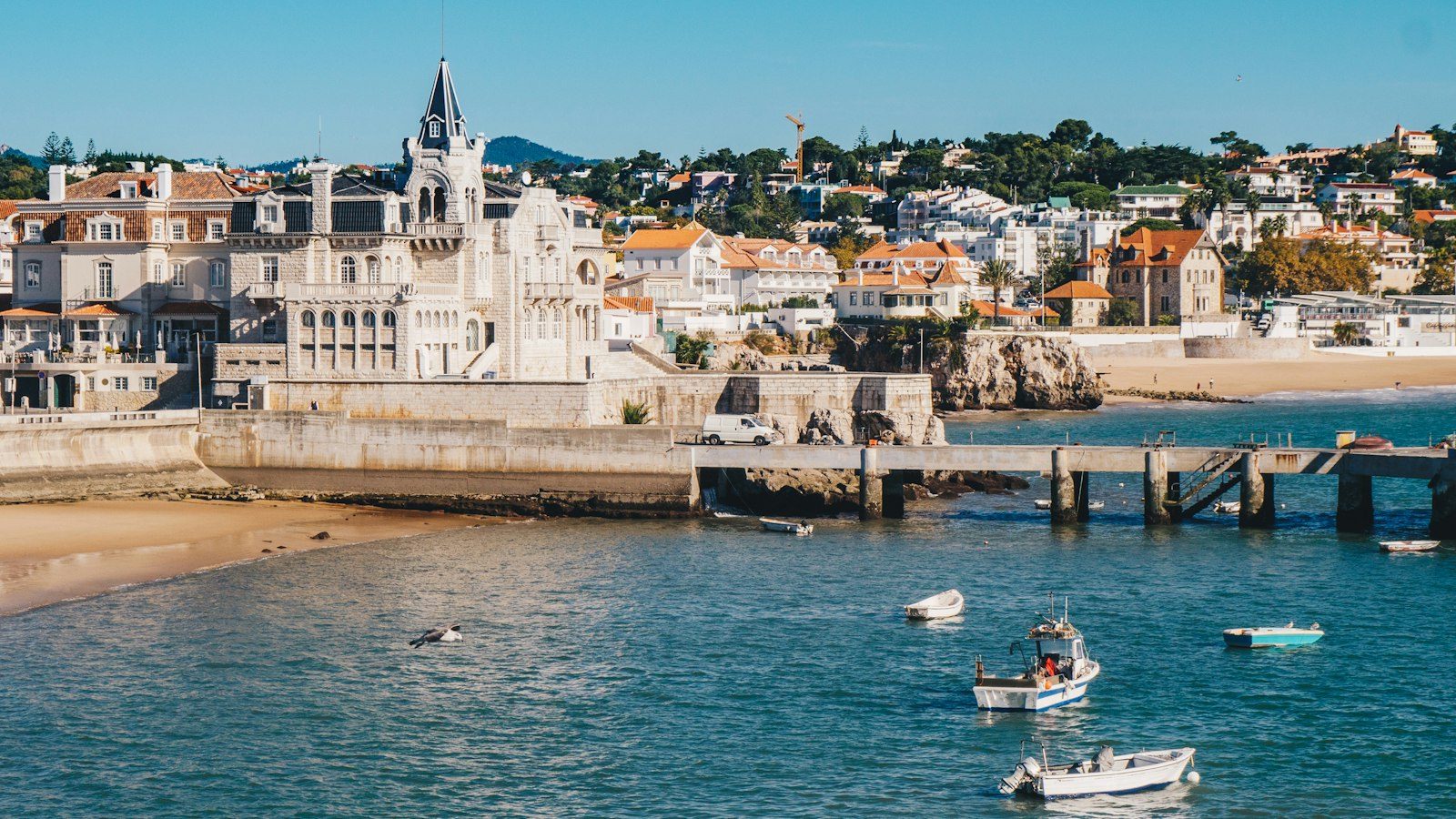
An old fishing town turned seaside resort at the mouth of the Tagus, 40 minutes from Lisbon by train. You swim in small sandy coves, walk the promenade to Estoril, watch waves smash into the Boca do Inferno and catch the bus out to wild Guincho and Cabo da Roca.
- Best time to visit: May to June and September
- Daily budget (budget traveller): $85 to $270 USD
- Ideal trip length: 3 to 5 days
Cascais sits on the coast west of Lisbon, where the Tagus estuary meets the Atlantic. Trains from Cais do Sodré in Lisbon get here in about 33 to 40 minutes. It was a fishing village until the Portuguese royal family started spending summers here in the late 19th century. Wealthy Lisbon families followed, and then the exiled kings and spies of the Second World War. Today it is a polished small town with cobbled lanes, a busy fishing beach, a marina beside a 17th-century fortress and a small cluster of good museums. The town beaches are small and pack out in summer, and the Atlantic stays cold even in August. Walk 20 minutes west and the coast turns to rough cliffs at the Boca do Inferno. Carry on by bus or bike and you reach the huge surf beach at Guincho and the cliffs of Cabo da Roca, the westernmost point of mainland Europe. Cascais is not cheap. Rooms cost about as much as in central Lisbon and seafront restaurants charge for the view. Even so, cheap trains and buses, free beaches, €5 museums and easy day trips to Sintra and Lisbon make it a comfortable, safe base for a solo traveller who wants the sea.
Cascais is the end of the line, in every sense. The suburban railway from Lisbon runs along the north bank of the Tagus and stops here, where the river opens into the Atlantic. The town has about 35,000 people, with many more in the wider municipality. It started as a fishing village, and fishermen still pull their boats up on Praia da Ribeira in the middle of town. In 1870 King Luís I made the Cidadela his summer residence, and the aristocracy, then the casino crowd at Estoril and then the exiled royals of the Second World War followed. That history left grand villas, gardens and a string of small museums. Most visitors come for an afternoon from Lisbon. Stay a few nights and you get the better version: the promenade empty at 8am, an evening walk to the Boca do Inferno, and buses out to the wild coast while the day trippers are still on the train.
Getting here is easy. Trains run from Cais do Sodré in Lisbon every 15 to 30 minutes, take 33 to 40 minutes and cost about €2.30 to €2.55 on a reusable card. The last trains leave around 1.30am. From Lisbon airport, take the metro to Cais do Sodré and change to the train, or take an Uber or taxi. Once you are here, walk. The centre, marina, museums and town beaches are all within 15 minutes of the station. Base yourself in the historic centre for cafés and the train, or around the marina and Monte Estoril for quieter nights. Use buses and the coastal cycle path for Guincho, Cabo da Roca and Sintra.
Timing matters. May, June and September bring warm, dry days and room on the sand. July and August are hot and crowded, with the highest room prices, and you will also get summer concerts and the Festas do Mar. The nortada, a strong north wind, often blows in summer afternoons, which is great for kitesurfers at Guincho and less fun on the beach. From November to March the town is quiet and mild, but some beach bars close and the buses to the cape run less often. Cascais is very safe and English is widely spoken. Evenings are more about long dinners and bars around Largo Camões than clubs. If you want big nights, go into Lisbon. If you want a cold swim, a grilled fish and a sunset over the Atlantic, stay here.
Cascais itinerary
Arrive and find your feet
Morning: Take the train from Cais do Sodré (33 to 40 minutes). Drop your bag and have a coffee and a pastel de nata near Largo Camões.
Afternoon: Wander the old town lanes and the Igreja Matriz, then go down to Praia da Ribeira to see the fishing boats. Have a first swim at Praia da Rainha.
Evening: Walk out past the marina for sunset by the Santa Marta lighthouse, then eat grilled fish in the old town and finish with a Santini ice cream.
Museums and the Boca do Inferno
Morning: Buy the €7.50 museum pass and start at the Casa das Histórias Paula Rego when it opens. Walk through Parque Marechal Carmona to Casa de Santa Maria and the lighthouse.
Afternoon: Look around the Cidadela courtyards and join a palace visit if one is running. Then walk the coast west to the Boca do Inferno.
Evening: A drink at a terrace near the Boca do Inferno while the sun drops, then walk back along the seafront to town for dinner.
Guincho by bike
Morning: Hire a bike and ride the coastal cycle path to Guincho, about 9km past cliffs and lighthouses. Go early, before the nortada wind picks up.
Afternoon: Walk the Cresmina dune boardwalk, then have lunch at Guincho and a careful swim near the lifeguards, or watch the kitesurfers.
Evening: Ride or take the bus back to town. A simple dinner and a glass of vinho verde near Largo Camões.
Sintra day trip
Morning: Catch an early 1623 bus to Sintra (about 30 minutes, €2.60). Use your pre-booked Pena Palace slot (about €20 for park and palace).
Afternoon: Walk down through the old town of Sintra and visit the Moorish Castle or Quinta da Regaleira if you have the energy. Have a travesseiro pastry at a local café.
Evening: Take the bus back to Cascais. Have an early night or a quiet drink on the seafront.
Cabo da Roca and the wild coast
Morning: Take the 1624 bus to Cabo da Roca (about 25 to 30 minutes). Walk around the lighthouse and the clifftop paths while it is still quiet.
Afternoon: If you are steady on your feet, walk the steep path down towards Praia da Ursa, or take the bus back via Malveira. Picnic with a view.
Evening: Back in Cascais, have arroz de marisco or clams at a marisqueira.
Promenade to Estoril and the beach line
Morning: Walk the paredão to Estoril and swim in the rock pool at Praia do Tamariz. Look at the Estoril casino gardens.
Afternoon: Take the train to Carcavelos for a surf lesson on its long beach, or carry on to Lisbon for an afternoon in Belém.
Evening: Back to Cascais by train. A farewell dinner of grilled fish by the fishermen's beach.
Market morning and depart
Morning: If it is a Wednesday or Saturday, go to the Mercado da Vila for fruit, cheese and a market breakfast. Have a last swim at Conceição.
Afternoon: Buy a bottle of Carcavelos or Colares wine, then take the train to Lisbon or an Uber to the airport. Check train times the day before.
Evening: Arrive in Lisbon, or carry on to your next stop.
Best neighbourhoods
- Historic centre: The old fishing town around Largo Luís de Camões, the fishermen's beach at Praia da Ribeira and the pedestrian Rua Frederico Arouca. The train station, the bus terminal, the market and most cafés are within ten minutes on foot. It gets loud in the bar streets on summer nights, so pick a room a lane or two back if you sleep lightly.
- Marina and Cidadela: The southern edge of town, with the fortress, the marina, Parque Marechal Carmona and the museum quarter. It is calmer than the centre and close to the walk to the Boca do Inferno. Hotels here lean upmarket, but you are still only ten minutes from the station.
- Monte Estoril: A hillside residential area between Cascais and Estoril, full of old villas, guesthouses and apartments. It has its own train station and drops straight down to the seafront promenade. It suits you if you want quieter nights and slightly lower prices than the centre.
- Estoril: The old resort next door, with the casino, the formal gardens and Praia do Tamariz with its rock pool. It is about 30 to 40 minutes' walk from Cascais along the promenade, or one stop by train. It has big hotels and a slightly older, quieter crowd.
- Guincho and the coast road: About 9km north-west of town, at the edge of the Sintra-Cascais Natural Park. There is a long, wild beach, dunes, surf and kite schools and a few hotels and seafood restaurants. It is beautiful but isolated, and after dark you rely on taxis or the last bus, so most solo travellers come here for the day.
Must-do experiences
- Walk to the Boca do Inferno: Follow the seafront west past the Cidadela and the Santa Marta lighthouse for about 20 minutes to the Boca do Inferno, a collapsed sea cave where waves crash through a rock arch. It is free. Go when the sea is rough and stay behind the railings, as the cliff edges are crumbly.
- See Paula Rego's work in the Casa das Histórias: Two red pyramid towers by architect Eduardo Souto de Moura hold a museum devoted to the Portuguese-British painter Paula Rego. Adult entry is €5, it opens Tuesday to Sunday and it is free on the first Sunday of the month. A 24-hour museum pass costs €7.50.
- Walk the promenade to Estoril: The paredão runs about 3km along the sea from Cascais to Estoril, past small beaches, cafés and rock pools. It is flat, free and best early in the morning or at sunset. Swim at Praia do Tamariz, then take the train back for a couple of euros.
- Ride or bus out to Guincho: A cycle path follows the coast road from Cascais to Guincho, about 9km past cliffs and dunes. You can hire a bike in town or take a local bus from the terminal next to the station. The beach is huge and wild, and the currents are strong, so only swim near the lifeguards.
- Stand at Cabo da Roca: The westernmost point of mainland Europe is a windy headland with a lighthouse, a stone monument and cliffs about 140m high. Bus 1624 gets there from Cascais in about 25 to 30 minutes for around €2.60. Check the return times first, as you will see it all in half an hour.
- Explore the Cidadela: The 17th-century fortress by the marina now holds a hotel, galleries, artists' studios and the Presidential palace. You can walk the courtyards for free. A guided visit to the palace or the exhibition gallery costs about €5 each, or €10 for both.
- Eat your way around the Mercado da Vila: The town market sells fish, fruit and local produce, with the busiest days on Wednesday and Saturday mornings. The covered food stalls around it are good for a cheap lunch. Finish with an ice cream from Santini, which has been making it on this coast since 1949.
Hidden gems
- Casa de Santa Maria, an early 20th-century house beside the lighthouse with tiled walls and painted ceilings, part of the museum quarter and usually quiet
- The Igreja Matriz (Nossa Senhora da Assunção) in the old town, plain outside but lined inside with blue-and-white azulejos and paintings by Josefa de Óbidos
- The wooden boardwalk over the Cresmina dunes near Guincho, where you can walk through shifting sand and scrub away from the beach crowds
- Praia do Abano, a small cove just north of Guincho, tucked under the hills and much calmer than the main beach
- Casa Duarte Pinto Coelho in the museum quarter, a free-entry house museum full of a collector's art and furniture that most visitors walk past
Daily budget
- Accommodation: budget €30-55 / night (hostel dorm), mid-range €110-180 (guesthouse or 3-star hotel), splurge €300+ (Pestana Cidadela, Farol Hotel or Fortaleza do Guincho). Prices peak in July and August and on summer weekends. A municipal tourist tax is charged per person per night, capped at seven nights. Single rooms go fast in summer, so book ahead.
- Food: budget €20-30 / day (pastelaria breakfast, market lunch, supermarket picnic), mid-range €45-70 (café lunch and a sit-down fish dinner), splurge €100+ (seafood platter or fine dining with wine). A prato do dia (dish of the day) at a local café costs about €10-14. Seafront mains run €18-30, and whole fish and shellfish are priced by the kilo. Bread and olives put on the table are charged if you eat them.
- Transport: budget €0-6 / day (walking, train, bus), mid-range €10-25 (buses plus a couple of Uber rides), splurge €40-60 (taxi to and from the airport). Lisbon trains cost about €2.30 to €2.55, and buses to Sintra or Cabo da Roca about €2.60. The €0.50 reusable card is needed for the train. Zapping credit makes fares a bit cheaper.
- Activities: budget €0-10 / day (beaches, Boca do Inferno, one museum at €5), mid-range €15-30 (museum pass at €7.50, Pena Palace at about €20), splurge €50+ (surf lesson, boat trip or guided Sintra tour). Most Cascais museums cost €5, close on Mondays and are free on the first Sunday of the month. A €9 combined ticket with CP covers a return train from Lisbon and four venues.
- Drinks & nightlife: budget €5-10 (a beer or a glass of wine on a terrace), mid-range €15-30 (a few drinks around Largo Camões), splurge €50+ (cocktails at a hotel bar or a night at Casino Estoril). A bica (espresso) costs about €1-1.50 and an imperial (small beer) €2-3.50, more on the seafront. Bars cluster in the lanes around Largo Camões and stay busy late in summer.
Where to stay
- Social hostel in Historic centre, near the station (€30-55 / night (dorm)): Cascais has a handful of small hostels in old townhouses close to the station and Largo Camões. You are a short walk from the beach, the bars and the bus terminal, and common rooms make it easy to find company for Sintra or the cape.
- Boutique hotel in Marina and Cidadela (€180-350 / night): Pestana Cidadela Cascais is a historic hotel built into the walls of the 17th-century fortress, with courtyards, a pool and the marina on the doorstep. The museums and the coast walk start outside.
- Apartment in Monte Estoril and the old town lanes (€90-170 / night): Apartments in older villas and townhouses give you a kitchen, which saves money in an expensive town. Monte Estoril has its own station, and the promenade is just below. Check for stairs if you have heavy bags.
- Splurge in Guincho (€300-600+ / night): Fortaleza do Guincho is a converted clifftop fort right on the wild beach, with Atlantic views from the rooms. It is isolated, so plan on taxis, but the sunsets are worth it.
What to eat
- Grilled fish: sardines in summer, or sea bass and bream sold by weight. Ask the price per kilo before you order
- Arroz de marisco: a soupy seafood rice served in a pot for one or two. Seafront places near Guincho and the Boca do Inferno are famous for it
- Pastel de nata: the custard tart, about €1.30 to €1.80 at any pastelaria, best eaten warm with cinnamon
- Santini ice cream: the old Estoril parlour with a branch in central Cascais. Expect a queue on summer evenings
- Percebes (goose barnacles) and amêijoas à Bulhão Pato (clams with garlic and coriander): classic snacks with a cold beer at a marisqueira
- Local wine: sweet fortified Carcavelos and the rare Colares reds from vines grown in sand near Sintra, plus cheap vinho verde by the glass
Day trips
- Sintra (About 15km north, 30 minutes by bus 1623): A hilltop town of palaces and forested gardens, including the brightly painted Pena Palace, the Moorish Castle and Quinta da Regaleira. Pena's full park and palace ticket costs about €20, and the park alone around €12. Take Carris Metropolitana bus 1623 from the Cascais terminal for about €2.60, or the 1624 via Cabo da Roca. Book Pena Palace timed slots online a few days ahead in summer, and use the local tourist buses or walk to get up the hill.
- Cabo da Roca and Guincho (About 15km north-west, 25 to 30 minutes by bus): The westernmost point of mainland Europe, with a lighthouse and huge cliffs, plus the wild surf beach and dunes at Guincho on the way. Entry to the cape is free. Take bus 1624 from the Cascais terminal for about €2.60, paying the driver in cash if needed. It runs less often in winter, so check the return times. Ride the coastal cycle path for the Guincho section.
- Lisbon (About 30km east, 33 to 40 minutes by train): Portugal's capital, with the Belém monuments, the Alfama hills, viewpoints and the food halls at Time Out Market next to Cais do Sodré. It is an easy contrast to small, quiet Cascais. Take the CP train to Cais do Sodré for about €2.30 to €2.55, stopping at Belém on the way if you like. Trains run until about 1.30am, so you can stay for dinner.
When to visit
- Spring (March - May): 16-22°C, mostly mild and bright with some rain, sea around 15-16°C. Crowds: Low to moderate, busier at Easter and on sunny weekends. Good for walking the coast, museums and Sintra before the summer queues. Swimming is only for the brave until late May.
- Early summer (June): 22-26°C, sunny, sea around 17-18°C. Crowds: Moderate, rising towards the end of the month. Arguably the best month. Long evenings, reliable sun and beaches that still have space on weekdays. Book Pena Palace slots early.
- High summer (July - August): 25-29°C, dry, sea around 18-19°C, windy afternoons. Crowds: Busy, very busy at weekends and in August. Great for beaches, festivals and late nights, but rooms cost the most and trains and town beaches are packed. Swim early and save the cape for weekdays.
- Autumn and winter (September - February): September 22-26°C, then cooling to 12-16°C in winter, with rain and big swells. Crowds: Moderate in September, quiet from October. September is the locals' pick, with warm days and calmer beaches. Winter is cheap and peaceful, with dramatic seas at the Boca do Inferno, but some beach places close.
Entry rules for your passport
Visa rules for Portugal depend on the passport you travel on. Check the official source before you book: European Commission: Schengen visa policy
Getting there
Cascais has no commercial airport. The nearest is Lisbon Humberto Delgado Airport, about 30 to 40 minutes away by road. By public transport, take the metro from the airport to Cais do Sodré, changing from the red line to the green line, then the CP train to Cascais. Allow about 1.5 hours in total. Trains from Cais do Sodré run every 15 to 30 minutes, take 33 to 40 minutes and cost about €2.30 to €2.55 on a reusable Viva Viagem or Navegante card. The first train leaves around 5.30am and the last around 1.30am. Cais do Sodré is very busy on summer mornings, so avoid peak beach hours if you can. An Uber, Bolt or taxi from the airport straight to Cascais is quicker with luggage and costs considerably more. From Sintra, Carris Metropolitana buses 1623 and 1624 reach Cascais in 30 to 60 minutes for about €2.60. Long-distance trains and buses from Porto and the Algarve arrive in Lisbon, from where you change to the Cascais line. If you drive, the A5 motorway links Lisbon and Cascais, but parking in the centre is limited and expensive.
Border checks: non-EU visitors (other than Swiss, Norwegian, Icelandic, Liechtenstein, Andorran, Monegasque, San Marinese and Vatican citizens, and holders of an EU residence permit or long-stay visa) are registered in the EU's Entry/Exit System (EES) instead of getting a passport stamp. On your first crossing, officers take your photo and/or fingerprints, so allow extra time at passport control. ETIAS, the planned travel authorisation, is not in operation yet, so don't pay any website for one.
Getting around
Central Cascais is small and flat enough to walk. It takes about ten minutes from the station to the marina and 20 minutes to the Boca do Inferno. The seafront promenade takes you to Estoril in 30 to 40 minutes. CP suburban trains run along the Cascais line to Cais do Sodré in Lisbon, stopping at Monte Estoril, Estoril, Carcavelos and other beach towns. A single to Lisbon costs about €2.30 to €2.55, and you will need a reusable Viva Viagem or Navegante card (€0.50). Loading it with Zapping credit makes each trip a little cheaper. Carris Metropolitana buses leave from the Cascais terminal beside the station. The 1623 goes to Sintra in about 30 minutes, and the 1624 takes the scenic route via Cabo da Roca. Single fares bought on board cost about €2.60, and some drivers only take cash. Other buses run out to Guincho. A cycle path runs along the coast road to Guincho, and bikes are easy to hire in town. Uber, Bolt and taxis are plentiful and fairly cheap for short hops. You do not need a car, and parking in the centre is expensive.
Safety
Cascais is one of the safest towns in Portugal, and violent crime against visitors is rare. Watch for pickpockets on crowded summer trains on the Cascais line, at Cais do Sodré station and on busy beaches. Never leave a bag alone on the sand while you swim. The real dangers are the sea and the cliffs. Guincho and the open Atlantic beaches have strong rip currents and big waves, so swim only between the flags when lifeguards are on duty, roughly June to September, and stay out on a red flag. Stay behind the railings at the Boca do Inferno and Cabo da Roca, where people have fallen. The sun is strong even when the nortada wind makes it feel cool. Tap water is safe to drink. The EU emergency number is 112. EU travellers should carry an EHIC and UK travellers a GHIC, and everyone else needs travel insurance with medical cover.
Solo travel tips
- Stay near the station: A bed within ten minutes of the station and bus terminal makes every day trip easy, and you can still walk to the beach in minutes. You will not need taxis after a late train from Lisbon.
- Beat the day trippers: The Lisbon crowds arrive by mid-morning and leave by early evening. Swim, walk to the Boca do Inferno and see the old town before 10am or after 6pm and you will have them almost to yourself.
- Book Sintra first: Pena Palace timed slots can sell out days ahead from May to September. Fix your Sintra day and book the ticket online, then plan the rest of the week around it.
- Eat like a local at lunch: The prato do dia at small cafés and the stalls by the market keep food costs low. Save the per-kilo fish and shellfish for one good dinner, and send back the starters you did not order.
- Safety for solo travellers: The main risks are the Atlantic and the cliff edges, not people. Swim only between the flags at lifeguarded beaches, stay behind railings at the cape and the Boca do Inferno, and keep your bag close on summer trains.
- Meet people on the water: Book a group surf lesson at Carcavelos or Guincho, or join a walking tour or a Sintra group trip. Hostel common rooms and the terraces around Largo Camões are easy places to start a conversation.
Cultural etiquette
- Greet people with 'bom dia' (good morning) or 'boa tarde' (good afternoon) and say 'obrigado' if you are a man or 'obrigada' if you are a woman. Do not open with Spanish.
- Bread, olives and cheese brought to the table before a meal (the couvert) are not free. Leave them untouched or send them back if you do not want to pay.
- Cover up when you leave the beach. Walking through town, into shops or into churches in swimwear is frowned upon.
- Dress modestly in the Igreja Matriz and other churches, with covered shoulders, and keep quiet if a service is on.
- Meals start late. Lunch runs from about 1pm to 3pm and dinner from 8pm, and many kitchens close in between.
- Rounding up or leaving 5 to 10% for good table service is appreciated, though not expected.
- Keep noise down in the old town lanes at night, as people live above the bars. Take your rubbish with you from the beaches and the dunes.
Frequently asked questions
How do I get from Lisbon airport to Cascais?
The cheapest way is the metro from the airport to Cais do Sodré, changing from the red line to the green line, then the train to Cascais. The train takes about 33 to 40 minutes and costs around €2.30 to €2.55. Allow about 1.5 hours in all. An Uber, Bolt or taxi straight to Cascais takes 30 to 40 minutes outside rush hour and costs much more, but it makes sense if you land late or have heavy bags. Cais do Sodré gets very busy on summer mornings, so travel outside peak hours if you can.
How many days do I need in Cascais?
Two nights covers the old town, the museums, the Boca do Inferno and a beach or two. Three to five nights lets you add Guincho, Cabo da Roca and a full day in Sintra. A week works if you also want a couple of days in Lisbon while keeping Cascais as a calmer seaside base.
When is the best time to visit Cascais?
May, June and September are the best months. Days are warm and long and the beaches are not yet packed. July and August are hot and busy, rooms cost the most and the town beaches fill up, though you get festivals such as the summer Festas do Mar. From October to April it is mild and quiet with lower prices, but expect rain, rough seas and fewer bus departures to Cabo da Roca.
Can I visit Sintra from Cascais?
Yes, and it is easy. Bus 1623 runs from the Cascais terminal to Sintra in about 30 minutes, and the 1624 takes a longer, scenic route past Cabo da Roca. Fares are about €2.60. Pena Palace uses timed entry slots, and a full park and palace ticket costs about €20, with a park-only ticket around €12. Book online a few days ahead between May and September, as morning slots sell out.
Is the sea warm enough to swim in Cascais?
It is cool all year. The Atlantic here is usually around 15 to 19°C even in midsummer, so swims are bracing but fine on a hot day. The town beaches such as Praia da Rainha, Conceição and Tamariz are sheltered and calm. Guincho is colder, windier and has strong currents, so it is better for surfing and walking than for casual swimming.
Do I need a car in Cascais?
No. The train links Cascais with Lisbon and the beach towns along the line, and buses reach Sintra, Cabo da Roca and Guincho. Uber and Bolt fill the gaps. Parking in the centre is expensive and hard to find in summer. A car only helps if you want to explore remote beaches in the natural park at your own pace.
Is Cascais safe for solo female travellers?
Yes. It is one of the calmest seaside towns in Europe to visit alone. The centre and the promenade are well lit and busy until late in summer. Take normal care with drinks in bars, watch your bag on crowded trains and beaches, and use a taxi or Uber rather than walking unlit coastal roads such as the route to Guincho at night.
What entry rules apply to Portugal in 2026?
Portugal is in the EU and the Schengen area. Many non-EU visitors, including those from the UK, US, Canada and Australia, can stay visa-free for up to 90 days in any 180-day period across Schengen. The EU's Entry/Exit System is now fully running and records non-EU travellers' fingerprints and photos at the external border. The ETIAS travel authorisation still had no confirmed start date in late 2026, and 2027 looks likely, so check before you travel. Confirm the rules on official EU and Portuguese government websites and check your own government's travel advice.
More about Cascais
- What To Do in Lisbon for 7 Days: Itinerary with Sintra, Cascais and Évora
- Hidden Gems in Lisbon: Quiet Viewpoints, Museums, Gardens and Markets
Tours and activities in Cascais | Cascais in 2 days | Cascais in 3 days | Cascais in 4 days | Cascais in 5 days | Cascais in 7 days
Can't decide? Compare Cascais with...
Joy Plus home | Destinations | Itineraries | Activities | Flights | Budget planner | Calendar | Map | Blog | Lifetime access