Cascais in 3 days
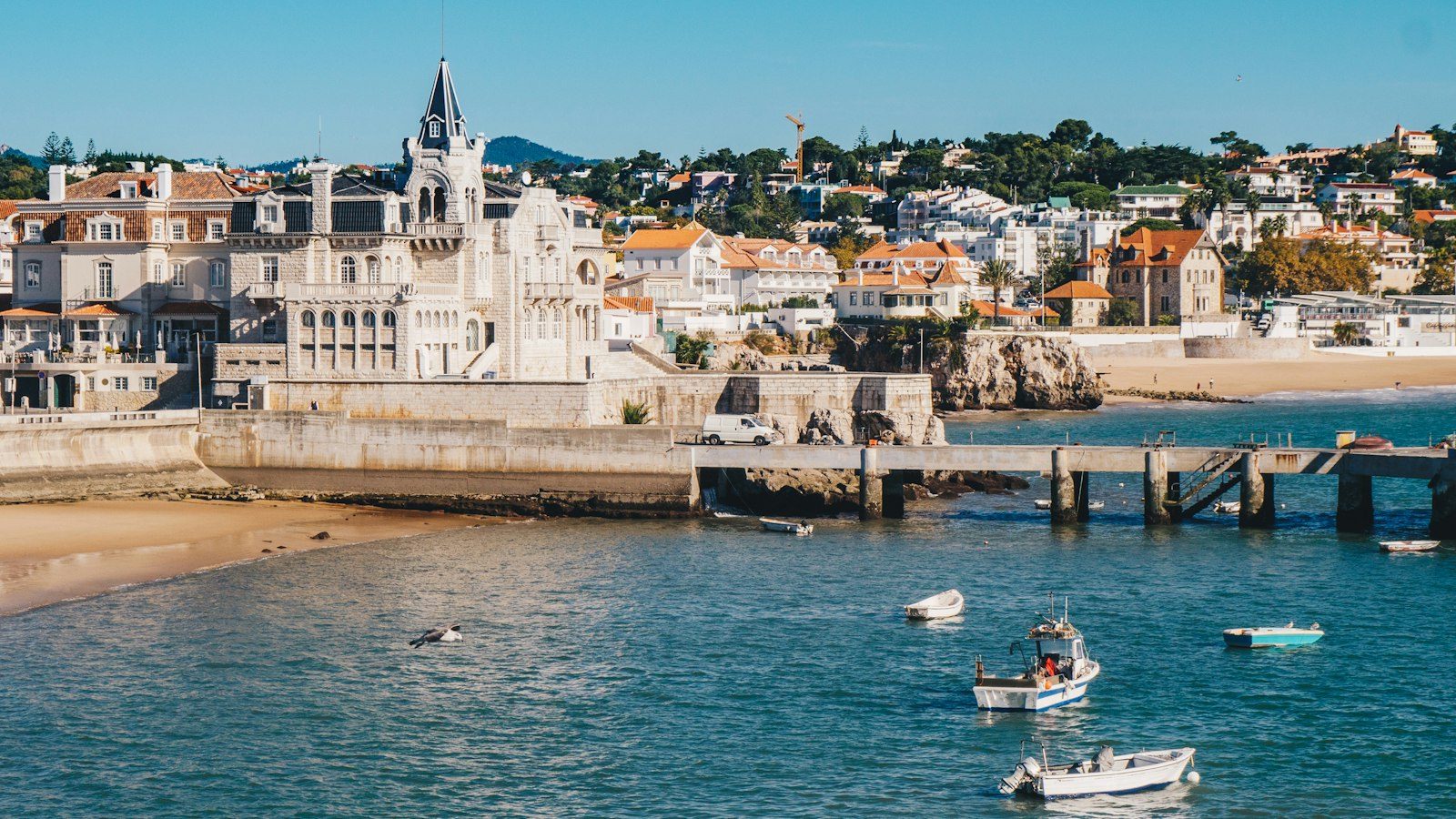
An old fishing town turned seaside resort at the mouth of the Tagus, 40 minutes from Lisbon by train. You swim in small sandy coves, walk the promenade to Estoril, watch waves smash into the Boca do Inferno and catch the bus out to wild Guincho and Cabo da Roca. Best time to visit: May to June and September. Daily budget (budget traveller): $85 to $270 USD.
Arrive and find your feet
Morning: Take the train from Cais do Sodré (33 to 40 minutes). Drop your bag and have a coffee and a pastel de nata near Largo Camões.
Afternoon: Wander the old town lanes and the Igreja Matriz, then go down to Praia da Ribeira to see the fishing boats. Have a first swim at Praia da Rainha.
Evening: Walk out past the marina for sunset by the Santa Marta lighthouse, then eat grilled fish in the old town and finish with a Santini ice cream.
Museums and the Boca do Inferno
Morning: Buy the €7.50 museum pass and start at the Casa das Histórias Paula Rego when it opens. Walk through Parque Marechal Carmona to Casa de Santa Maria and the lighthouse.
Afternoon: Look around the Cidadela courtyards and join a palace visit if one is running. Then walk the coast west to the Boca do Inferno.
Evening: A drink at a terrace near the Boca do Inferno while the sun drops, then walk back along the seafront to town for dinner.
Guincho by bike
Morning: Hire a bike and ride the coastal cycle path to Guincho, about 9km past cliffs and lighthouses. Go early, before the nortada wind picks up.
Afternoon: Walk the Cresmina dune boardwalk, then have lunch at Guincho and a careful swim near the lifeguards, or watch the kitesurfers.
Evening: Ride or take the bus back to town. A simple dinner and a glass of vinho verde near Largo Camões.
Heading home: Buy a bottle of Carcavelos or Colares wine, then take the train to Lisbon or an Uber to the airport.
What to eat in Cascais
- Grilled fish: sardines in summer, or sea bass and bream sold by weight. Ask the price per kilo before you order
- Arroz de marisco: a soupy seafood rice served in a pot for one or two. Seafront places near Guincho and the Boca do Inferno are famous for it
- Pastel de nata: the custard tart, about €1.30 to €1.80 at any pastelaria, best eaten warm with cinnamon
- Santini ice cream: the old Estoril parlour with a branch in central Cascais. Expect a queue on summer evenings
- Percebes (goose barnacles) and amêijoas à Bulhão Pato (clams with garlic and coriander): classic snacks with a cold beer at a marisqueira
- Local wine: sweet fortified Carcavelos and the rare Colares reds from vines grown in sand near Sintra, plus cheap vinho verde by the glass
Hidden gems
- Casa de Santa Maria, an early 20th-century house beside the lighthouse with tiled walls and painted ceilings, part of the museum quarter and usually quiet
- The Igreja Matriz (Nossa Senhora da Assunção) in the old town, plain outside but lined inside with blue-and-white azulejos and paintings by Josefa de Óbidos
- The wooden boardwalk over the Cresmina dunes near Guincho, where you can walk through shifting sand and scrub away from the beach crowds
- Praia do Abano, a small cove just north of Guincho, tucked under the hills and much calmer than the main beach
- Casa Duarte Pinto Coelho in the museum quarter, a free-entry house museum full of a collector's art and furniture that most visitors walk past
Getting around
Central Cascais is small and flat enough to walk. It takes about ten minutes from the station to the marina and 20 minutes to the Boca do Inferno. The seafront promenade takes you to Estoril in 30 to 40 minutes. CP suburban trains run along the Cascais line to Cais do Sodré in Lisbon, stopping at Monte Estoril, Estoril, Carcavelos and other beach towns. A single to Lisbon costs about €2.30 to €2.55, and you will need a reusable Viva Viagem or Navegante card (€0.50). Loading it with Zapping credit makes each trip a little cheaper. Carris Metropolitana buses leave from the Cascais terminal beside the station. The 1623 goes to Sintra in about 30 minutes, and the 1624 takes the scenic route via Cabo da Roca. Single fares bought on board cost about €2.60, and some drivers only take cash. Other buses run out to Guincho. A cycle path runs along the coast road to Guincho, and bikes are easy to hire in town. Uber, Bolt and taxis are plentiful and fairly cheap for short hops. You do not need a car, and parking in the centre is expensive.
Safety
Cascais is one of the safest towns in Portugal, and violent crime against visitors is rare. Watch for pickpockets on crowded summer trains on the Cascais line, at Cais do Sodré station and on busy beaches. Never leave a bag alone on the sand while you swim. The real dangers are the sea and the cliffs. Guincho and the open Atlantic beaches have strong rip currents and big waves, so swim only between the flags when lifeguards are on duty, roughly June to September, and stay out on a red flag. Stay behind the railings at the Boca do Inferno and Cabo da Roca, where people have fallen. The sun is strong even when the nortada wind makes it feel cool. Tap water is safe to drink. The EU emergency number is 112. EU travellers should carry an EHIC and UK travellers a GHIC, and everyone else needs travel insurance with medical cover.
Frequently asked questions
What does this 3-day Cascais itinerary cover?
Day 1: Arrive and find your feet. Day 2: Museums and the Boca do Inferno. Day 3: Guincho by bike.
Is 3 days enough for Cascais?
Our recommended trip length for Cascais is 3 to 5 days. This 3-day plan focuses on the highlights and groups sights by area so you spend less time travelling between them.
How much does 3 days in Cascais cost?
A budget traveller spends about $85 to $270 USD a day in Cascais, so roughly $255 to $810 USD for 3 days, not counting flights.
Where should I stay for 3 days in Cascais?
Historic centre: The old fishing town around Largo Luís de Camões, the fishermen's beach at Praia da Ribeira and the pedestrian Rua Frederico Arouca. Marina and Cidadela: The southern edge of town, with the fortress, the marina, Parque Marechal Carmona and the museum quarter.
When is the best time to visit Cascais?
The best time to visit Cascais is May to June and September.
How do I get around Cascais?
Central Cascais is small and flat enough to walk. It takes about ten minutes from the station to the marina and 20 minutes to the Boca do Inferno.
Is Cascais safe for solo travellers?
Cascais is one of the safest towns in Portugal, and violent crime against visitors is rare. Watch for pickpockets on crowded summer trains on the Cascais line, at Cais do Sodré station and on busy beaches.
Read more about Cascais
- What To Do in Lisbon for 7 Days: Itinerary with Sintra, Cascais and Évora
- Hidden Gems in Lisbon: Quiet Viewpoints, Museums, Gardens and Markets
More 3-day guides
- Ponta Delgada (Azores) in 3 days
- Lisbon in 3 days
- Porto in 3 days
- Sintra in 3 days
- Funchal in 3 days
- Faro in 3 days
- Coimbra in 3 days
- Albufeira in 3 days
Cascais in 2 days | Cascais in 4 days | Cascais in 5 days | Cascais in 7 days | Full Cascais guide
Joy Plus home | Destinations | Itineraries | Activities | Flights | Budget planner | Calendar | Map | Blog | Lifetime access