Destinations / Africa
Chefchaouen, Morocco travel guide
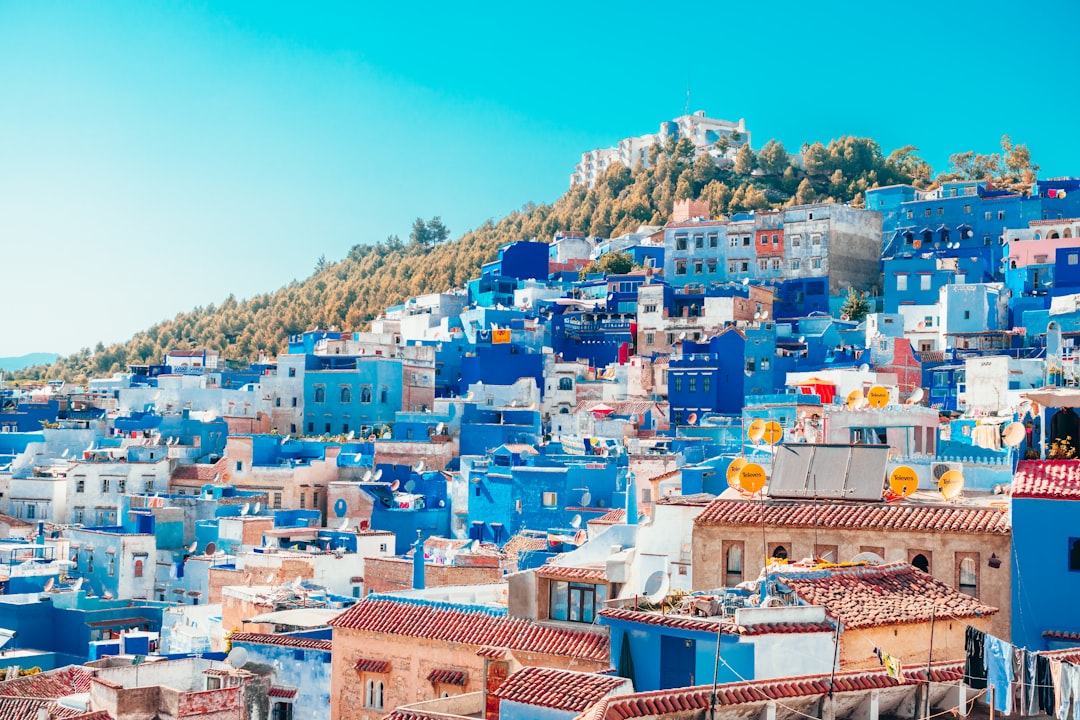
Morocco's blue pearl: indigo-washed lanes, Rif Mountain views and the country's most photogenic medina.
- Best time to visit: April-June, September-October
- Daily budget (budget traveller): $45 to $90 USD
- Ideal trip length: 2 days
Chefchaouen is a dream in blue: a 15th-century mountain town where every wall, stair and doorway is washed in shades of indigo and powder blue. Tucked into the Rif Mountains between Fes and Tangier, it moves at a walking pace, with rooftop cafes over the main square, waterfalls at the medina's edge and some of Morocco's gentlest hospitality.
Chefchaouen sits at about 600 metres in the Rif Mountains, between two limestone peaks the town is named for (the name means 'look at the horns'). Moulay Ali Ben Rachid built the kasbah here in 1471 to keep Portuguese raiders out of the north. Andalusian Muslims and Jews fleeing Spain then settled and shaped the lanes, the red-tiled roofs and, according to local lore, the habit of painting walls blue. Spain held the town from 1920 to 1956, which is why you'll hear Spanish as often as French, and why a Spanish Mosque stands on the hill opposite. Today about 40,000 people live here, and the rest of the world arrives with a camera.
The blue is real and it is stunning, but the timing matters more than the town. Day-trippers from Tangier, Tetouan and the Costa del Sol tour buses roll in around 10:30am and leave by 4pm, and in those hours the best staircases have a queue for photos. Be in the lanes by 7:30am, when bakers are firing ovens and the only other people are residents with brooms and buckets. Or sit on a rooftop at 5pm, when the light turns the whole slope amber and the crowds are already on the road back. Staying at least one night is the whole trick.
Beyond the painted walls, Chefchaouen is a mountain base. Ras El Maa, where the town's river pours out of the rock, is a 5-minute walk from the main square. The Spanish Mosque viewpoint is 35 minutes uphill. The Akchour waterfalls and the God's Bridge rock arch are an hour away by shared taxi, and the Talassemtane forests and Rif villages stretch beyond. Prices are low, hassle is lower than in Fes or Marrakech, and it's one of the easiest places in Morocco to eat well, sleep well and walk without a plan. Just pack light: every lane in the medina is a staircase.
How many days in Chefchaouen?
For Chefchaouen, we recommend 2 days. With more time, add a day trip to Talassemtane National Park and Bab Taza.
| Trip length | What you'll see | Itinerary |
|---|---|---|
| 2 days · Recommended | First rooftop; Blue lanes at dawn, Spanish Mosque at dusk | Chefchaouen in 2 days |
| 3 days | Adds: Akchour waterfalls and God's Bridge | Chefchaouen in 3 days |
| 4 days | Adds: Souk day or slow day | Chefchaouen in 4 days |
| 5 days | Adds: Tetouan day trip | Chefchaouen in 5 days |
| 7 days | Adds: Rif village hike | Chefchaouen in 7 days |
Chefchaouen itinerary
Arrive, settle, first rooftop
Morning: CTM bus into the new town bus station. Petit taxi (10-15 MAD) to Bab el Ain, where your riad host or a porter meets you at the gate. Ignore anyone telling you the hotel is closed.
Afternoon: Lunch at Restaurant Assaada near Bab el Ain, then a first loose wander to Plaza Uta el-Hammam. The Kasbah Museum (about 60 MAD) has Andalusian gardens and a good view from the tower.
Evening: Mint tea on a rooftop above the square at golden hour, then dinner at Beldi Bab Ssour. Early night.
Blue lanes at dawn, Spanish Mosque at dusk
Morning: Be in the medina by 7:30am. Do the Souika and Andalus quarters first, then breakfast of msemen and juice at a stall near the plaza.
Afternoon: Walk out to Ras El Maa, where locals still wash carpets in the stream. Lunch nearby, then a long rest while the day-trippers peak.
Evening: Leave about 90 minutes before sunset for the 35 minute climb to the Spanish Mosque. Bring a torch for the descent. Dinner at Restaurant Sofia.
Akchour waterfalls and God's Bridge
Morning: Shared grand taxi from the stand near the bus station at about 8am (40-50 MAD each, leaves when full). About an hour to Akchour village.
Afternoon: Hike about 1 hour to the lower waterfall and its pools, then continue about 2 hours more to the God's Bridge rock arch. Lunch at a riverside shack, cash only.
Evening: Taxi back before 5pm. Hammam to soak the legs, then a simple tagine.
Souk day or slow day
Morning: On Monday or Thursday, walk to the weekly souk, where Rif villagers sell cheese, olives, herbs and wool. Otherwise take a riad cooking class (300-450 MAD).
Afternoon: Buy goat cheese (jben), olives and local honey. Shop for wool blankets, woven bags and dyes, bargain gently and start at half the first price.
Evening: Dinner on the Parador terrace at Place el Makhzen for the lit-up view. A quiet beer here if you want one.
Tetouan day trip
Morning: Grand taxi or CTM bus to Tetouan (about 1h15 to 1h30). Walk into the UNESCO medina through Bab er-Rouah and see the Bab el-Okla gate.
Afternoon: Lunch at a local joint in the medina, then the Artisan School and the Archaeological Museum. Spanish colonial architecture on Place Moulay el Mehdi.
Evening: Bus or grand taxi back by 6pm, then sunset tea on your rooftop.
Rif village hike
Morning: Arrange a licensed local guide through your riad (about 300-500 MAD for a half day). Head into the Talassemtane forests and Rif villages.
Afternoon: Lunch in a village, then walk back or return by taxi.
Evening: Dinner at Beldi Bab Ssour or a rooftop cafe, then a last stroll through the lit-up medina.
Slow morning, depart
Morning: Final coffee, last photos while the lanes are empty, and breakfast with your host.
Afternoon: Porter to Bab el Ain, petit taxi to the bus station, then CTM to Fes, Tangier or Tetouan. Book the afternoon seat the day before.
Evening: Onward travel, with a stop in Tangier or Fes if you're continuing your route.
Best neighbourhoods
- The Blue Medina: The famous indigo core of stepped lanes, doorways and photo spots.
- Plaza Uta el-Hammam: The main square with the kasbah, the Grand Mosque and cafe terraces.
- Ras El Maa: The waterfall and washing place at the medina's eastern edge.
- Spanish Mosque Hill: The sunset viewpoint across the valley from the old town.
- The New Town: Practical lower town with bus stations, ATMs and cheaper eats.
Must-do experiences
- Wander the blue lanes: Get deliberately lost in the medina's painted alleys, staircases and doorways.
- Sunset at the Spanish Mosque: Climb 30 minutes across the river for the classic view over the blue town.
- Ras El Maa waterfall: Follow the stream where locals wash carpets at the medina's edge.
- Akchour waterfalls day trip: Hike to natural pools, cascades and the God's Bridge rock arch, 45 minutes away.
Hidden gems
- The kasbah's small ethnographic museum and Andalusian gardens.
- Rooftop mint tea above Place Outa el-Hammam at golden hour.
- The Monday and Thursday souks when Rif villagers come to town.
- Talassemtane National Park trails to remote Rif villages.
Daily budget
- Accommodation: budget 100-180 MAD / night (hostel dorm or basic pension), mid-range 400-800 MAD (riad double with breakfast), splurge 1,200+ MAD (Lina Ryad & Spa, Parador). Prices jump Friday to Sunday and in Moroccan school holidays. Check how many steps lead to your door before you book.
- Food: budget 100-150 MAD / day (msemen breakfast, sandwich, set menu), mid-range 200-320 MAD (tagine lunch, riad dinner), splurge 450+ MAD (multi-course dinner at a riad). Set menus at medina cafes are 60-90 MAD with soup, tagine and fruit. Fresh orange juice is 10-15 MAD.
- Transport: budget 20-60 MAD (walking plus a shared taxi to Akchour), mid-range 100-200 MAD (CTM onward plus petit taxis), splurge 600-1,000 MAD (private transfer from Tangier or Tetouan). The medina is walk-only. Petit taxi from the bus station is 10-15 MAD, a porter with a cart is 20-30 MAD.
- Activities: budget 0-60 MAD (free lanes, Ras El Maa, Spanish Mosque, optional Kasbah), mid-range 150-350 MAD (Akchour taxi plus a local guide for half a day), splurge 600+ MAD (private driver-guide, cooking class, hammam with massage). The Kasbah Museum is about 60 MAD. The Spanish Mosque hike is free. A hammam with scrub is 100-250 MAD.
- Drinks & nightlife: budget 20-40 MAD (mint tea, fresh juice), mid-range 60-120 MAD (rooftop cafes, a beer at a licensed spot), splurge 250+ MAD (wine with a riad dinner or a drink at Parador). Nightlife here means rooftops and conversation. Licensed venues are few, so ask your riad host where to go.
Where to stay
- Social hostel in Medina, near Bab el Ain (100-200 MAD / night): Hostel Aline or Dar Dalia, rooftop terraces, mixed dorms and cheap privates, and the easiest place to meet people for the Akchour taxi.
- Boutique hotel in Medina, around Plaza Uta el-Hammam (500-1,000 MAD / night): Casa Perleta or Dar Echchaouen, blue courtyards, rooftop breakfast and a short walk to everything, with hosts who book Akchour taxis for you.
- Apartment in Souika or Andalus quarters (300-550 MAD / night): Real residential lanes, flats with a terrace and a kitchen. Best value for a 4+ night stay, but check the number of steps from the gate.
- Splurge in Upper medina, near Place el Makhzen (1,000-1,800 MAD / night): Lina Ryad & Spa or the Parador Chaouen, with Rif Mountain views, hammams and good restaurants, and a short taxi from the bus station.
What to eat
- Goat cheese from the Rif, a regional specialty
- Tagine with local olives and preserved lemon
- Fresh orange juice and msemen in the square
- Harira soup and khlii eggs for a local breakfast
Day trips
- Akchour waterfalls and God's Bridge (About 30km, 1 hour by shared taxi): Rif gorge hiking with natural pools, a cascade and the God's Bridge rock arch. Plan 5 to 7 hours of walking, start early and bring water shoes in summer. Shared grand taxi from the stand near the bus station, 40-50 MAD each way, departs when full. Return before 5pm because taxis thin out.
- Tetouan (About 65km, 1h15 to 1h30): UNESCO-listed medina with Andalusian roots, Spanish colonial streets and a famous artisan school. Far fewer tourists than Chefchaouen. CTM or local bus from Chefchaouen (about 40 MAD), or a shared grand taxi (40-50 MAD). Return by 6pm.
- Talassemtane National Park and Bab Taza (About 40km, 1 hour): Cedar and fir forests, Rif villages and wide mountain views. Best with a local guide who knows the paths and the villages. Shared grand taxi toward Bab Taza (about 50 MAD), or a driver-guide via your riad (400-700 MAD per day).
When to visit
- Spring (April - June): 16-27°C, clear mountain light, a few showers in April, green hills. Crowds: Building, manageable midweek. The best window. Hiking weather at Akchour, flowers on the slopes, and the Rif is at its greenest. Book weekends ahead from May.
- Summer (July - August): 26-34°C days, cooler nights around 16°C, strong midday sun. Crowds: Heavy, Moroccan and Spanish holidaymakers, packed weekends. Hot at midday but far cooler than Fes or Marrakech. Do lanes at 7am and rooftops at sunset, hike Akchour early and swim in the pools.
- Autumn (September - October): 20-30°C in September, 14-24°C by late October, first rains arrive late in the month. Crowds: Moderate, easing after mid-October. The locals' pick. Warm days, cool nights, quieter lanes and the best light of the year for photos.
- Winter (November - March): 5-16°C, frequent rain and fog, snow on the peaks some years. Crowds: Low. Cheapest riads and empty lanes, but stone steps get slick and nights are cold. Ramadan runs about 8 Feb to 9 Mar in 2027, so expect daytime closures.
Entry rules for your passport
Visa rules for Morocco depend on the passport you travel on. Check the official source before you book: Morocco Ministry of Foreign Affairs
Getting there
There's no airport or train in Chefchaouen. The closest airports are Tangier Ibn Battouta (TNG, about 120km, 2.5 to 3 hours away) and Fes-Saiss (FEZ, about 200km, 4 hours). From Tangier, take a taxi to the Tangier bus station (150-200 MAD from the airport), then CTM to Chefchaouen (60-80 MAD, 2.5 to 3 hours). A grand taxi direct from TNG costs about 600-900 MAD. From Fes, CTM takes 4 hours (90-110 MAD). From Tetouan, buses take 1h30 and shared grand taxis cost about 40-50 MAD. From Casablanca, take the Al Boraq train to Tangier and change, or CTM direct (about 6 to 7 hours). Buses arrive at the new town bus station, about 1.2km below Bab el Ain: petit taxi 10-15 MAD, or a 20 minute uphill walk. Book CTM tickets a day ahead for the afternoon and evening runs.
Getting around
Chefchaouen has no airport or train station; CTM and local buses connect to Fes (4 hours), Tangier (2.5 hours) and Tetouan (1.5 hours), and grand taxis fill gaps. The medina is entirely walkable but steep, with steps everywhere, so pack light if staying inside the walls. Taxis from the bus station to the medina cost a few dirhams.
Safety
Chefchaouen is one of Morocco's safest and friendliest towns, with far less hassle than Fes or Marrakech. The main cautions are slippery stone steps in the rain, persistent but low-pressure cannabis offers from the surrounding Rif region (decline politely), and mountain roads that demand a careful driver. Dress modestly in the medina.
Solo travel tips
- Stay on a rooftop: A riad or hostel with a rooftop terrace is the easiest way to meet people. Hosts serve breakfast and mint tea up there, and by evening it's where every solo traveller ends up.
- Ask before you photograph people: Many residents dislike being photographed, especially women and older men. Ask first, accept a no, and don't block doorways. A smile and a few words of Arabic or Spanish go a long way.
- Skip the bus-station guides: Anyone who tells you your riad is closed or full is lying to earn a commission. Message your host in advance and ask for a porter to meet you at Bab el Ain.
- Join a shared taxi for Akchour: Taxis to Akchour leave when full, so join the queue at 8am and you'll meet other hikers. Hike in a group, not alone, and be back at the parking lot by 4pm.
- Solo female travellers: Chefchaouen is one of Morocco's easiest towns for women alone. Cover shoulders and knees, avoid empty paths after dusk, and use a firm 'la, shukran' for cannabis offers. Riad hosts are used to solo guests.
- Decline cannabis offers politely: Kif is grown in the surrounding Rif and sold quietly. It is still illegal for buyers, and checkpoints on the roads are common. Say no with a smile, keep walking, and never accept a 'tour' to a plantation.
Cultural etiquette
- Dress modestly. Cover shoulders and knees in the medina, and carry a light scarf for women and a long shirt for men. Beach clothes belong on the beach.
- Greet first. 'Salam alaikum' and a smile open doors, and 'shukran' (thank you) or 'la, shukran' (no, thank you) cover most situations. Spanish works here too.
- Ask before photographing people. Residents are used to cameras, but many still say no, and some doorways belong to families. A 5-10 MAD tip is sometimes expected for posed photos.
- Cannabis is illegal even though it's grown here. Decline offers politely, never buy from street sellers, and expect checkpoints on roads leaving the Rif.
- Accept mint tea as a gesture, not a transaction. Sip, say 'shukran', and don't expect a bill unless you ordered it.
- Eat with your right hand, and don't use your left to pass food or money. Wait for the host to start the tagine.
- Fridays and Ramadan change the rhythm. Many shops close around noon on Fridays for prayers, and during Ramadan (in February and March) avoid eating or drinking openly in the street.
Frequently asked questions
Why is Chefchaouen blue?
The tradition of painting the town blue is usually credited to Jewish refugees who settled here in the 15th century and again in the 1930s; blue symbolised the sky and heaven. Residents continue repainting their walls in shades of indigo, which also helps keep streets cool and, some say, deters mosquitoes.
How many days do you need in Chefchaouen?
Two days is ideal. One full day covers the blue medina, kasbah, Ras El Maa and the Spanish Mosque sunset, while a second allows the Akchour waterfalls hike or a slow photography morning before the day-trippers arrive. It pairs naturally with Fes or Tangier.
How do you get to Chefchaouen?
By bus or taxi. CTM buses run from Fes (about 4 hours), Tangier (2.5 hours) and Tetouan (1.5 hours). There's no train or airport. Many travellers visit as a stop between Fes and Tangier, and private transfers cost roughly 600 to 1,000 dirhams depending on origin.
When is the best time to visit Chefchaouen?
April to June and September to October, with warm days around 20 to 28°C and clear mountain light. Summer is hot at midday but cooler than Morocco's lowland cities, while winter brings rain, cold nights and occasional snow on the surrounding peaks. Arrive early or stay overnight to avoid midday crowds.
Is Chefchaouen worth visiting?
Yes, if you value atmosphere and photography over big-ticket sights. The blue medina is genuinely beautiful, the hiking around Akchour and Talassemtane is excellent, and the town's relaxed pace makes it many travellers' favourite Moroccan stop. Just temper expectations: it's small and can feel busy at midday.
Is Chefchaouen safe for solo female travellers?
Chefchaouen is considered one of Morocco's most comfortable towns for solo women, with noticeably less hassle than Fes or Marrakech. Standard precautions apply: dress modestly, avoid isolated mountain paths alone, and decline cannabis offers politely. Riads are used to solo guests and very welcoming.
Is Chefchaouen expensive?
No, it's one of Morocco's cheaper destinations. Budget $45 to $90 a day. Riad doubles run 250 to 700 dirhams, tagines 50 to 90 dirhams, and the Akchour shared taxi around 50 dirhams each way. Even the famous rooftop cafes over the square are affordable.
More about Chefchaouen
- Where to Travel in 2027: 15 Places Worth Planning a Trip Around
- Total Solar Eclipse 2 August 2027: Where to Watch It and How to Plan Now
Tours and activities in Chefchaouen | Chefchaouen in 2 days | Chefchaouen in 3 days | Chefchaouen in 4 days | Chefchaouen in 5 days | Chefchaouen in 7 days
Can't decide? Compare Chefchaouen with...
Joy Plus home | Destinations | Itineraries | Activities | Flights | Budget planner | Calendar | Map | Blog | Lifetime access