Destinations / Europe
Cochem, Germany travel guide
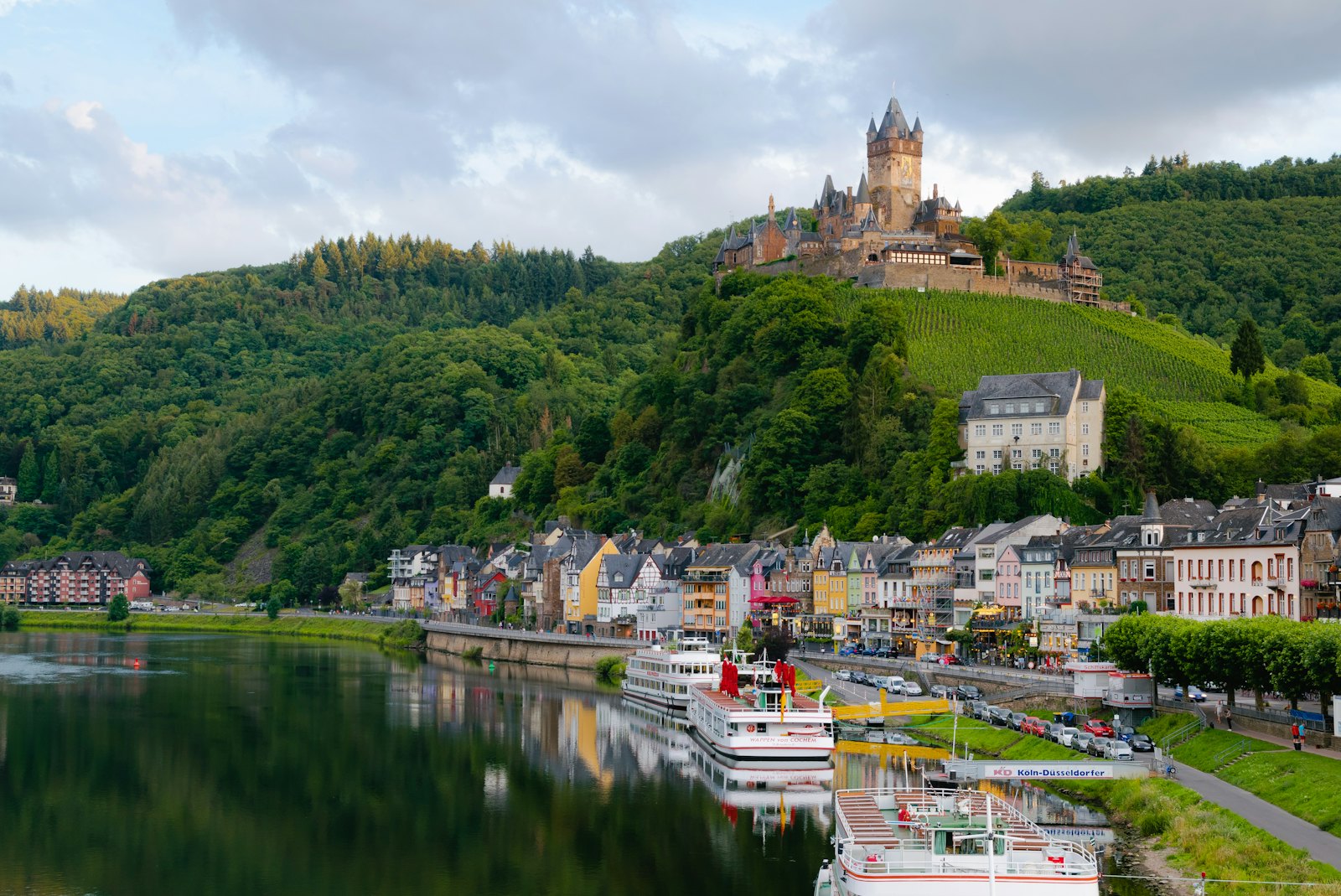
A small wine town on a bend of the Moselle, with a rebuilt castle above the rooftops, a chairlift up to the vineyards and trains that take you to castles and riverside villages without a car.
- Best time to visit: May to October
- Daily budget (budget traveller): $85 to $380 USD
- Ideal trip length: 3 to 7 days
Cochem sits on the Moselle about 35 to 50 minutes by train from Koblenz. It is a small town of around 5,000 people, built on both banks of the river, with steep slate vineyards running right down to the houses. The Reichsburg stands on a hill above the old town. It was wrecked by French troops in 1689 and rebuilt in a romantic neo-Gothic style in the 1870s, and you can only go inside on a guided tour. Lots of people visit on a coach day trip from the Rhine and leave by teatime. If you stay a few nights, you get a quieter version of the town: the castle lit up at night, a chairlift ride to the Pinnerkreuz viewpoint and boats to Beilstein. Burg Eltz, the Calmont vineyard climb and Roman Trier are all within reach by regional train. Cochem is easy to do alone. The station is a short walk from the old town, many hosts give you a free local transport pass, and wine taverns are happy to pour a single glass for one person. It gets crowded on sunny weekends in summer and autumn, and it is very quiet in deep winter.
Cochem is one of the best-known towns on the Moselle, and the reason is easy to see from the bridge. Half-timbered houses line the river, slate vineyards climb behind them and the Reichsburg sits on its own hill above everything. The castle you see is mostly a 19th-century rebuild. The original was destroyed in 1689, and a Berlin businessman, Louis Ravené, recreated it from the 1870s in a fairy-tale style. That does not spoil the view. Coach groups arrive mid-morning and leave by late afternoon, so the town has two moods: lively by day and calm by evening. Stay over and you get the evening one, with a glass of Riesling on the promenade and the castle lit up across the water.
Logistics are easy. Regional trains run along the river from Koblenz in about 35 to 50 minutes, and the station is a short walk from the old town. Base yourself in the old town for convenience, in Cond for castle views and lower prices, or in Sehl for quiet. Before you book, ask whether your host offers the free Gästeticket, which covers buses and regional trains across the wider VRM area. With it, Burg Eltz via Moselkern, the Calmont via Ediger-Eller and a day in Koblenz cost nothing to reach. Trier is outside the area, but it is about an hour away by train. In season, boats link Cochem with Beilstein and other wine villages.
Timing matters more than you might expect. From late March to October everything runs: the chairlift, the boats and the Burg Eltz tours. That is also when the crowds come. Summer weekends and public holidays can feel packed, and the wine festival at the end of August fills every bed. September and October are the local favourites, with the harvest, Federweißer and vineyards turning gold. Winter is quiet and cheap. The Reichsburg runs shorter hours before Christmas, there are Advent events and many attractions close until spring. Shops close on Sundays, and some restaurants have a rest day midweek. For a solo traveller who likes walking, wine and old stones, it is an easy place to slow down.
Cochem itinerary
Arrive and walk the old town
Morning: This plan assumes a visit between April and October. Take a regional train from Koblenz and sit on the left-hand side for river views. Drop your bags and ask your host for your Gästeticket.
Afternoon: Wander the Marktplatz and the lanes behind it, find the Enderttor and walk the Moselpromenade. Cross the Skagerrak bridge to Cond for the classic castle view.
Evening: Dinner and a first glass of Riesling in a wine tavern, then a walk back along the river to see the castle lit up.
Reichsburg and the Pinnerkreuz
Morning: Walk up to the Reichsburg for an early tour (€10), about 20 minutes uphill from the old town. Ask at the ticket desk whether an English tour is running, or take the printed translation.
Afternoon: Visit the Historische Senfmühle (tours €2.50), then ride the chairlift up to the Pinnerkreuz. Walk down through the vineyards, or follow the ridge towards the Winneburg ruin.
Evening: Book a tasting at a wine estate in Cond or Sehl, then eat Flammkuchen nearby.
Boat to Beilstein
Morning: Take a mid-morning boat from the Cochem landing to Beilstein, about an hour each way with a passage through the Fankel lock.
Afternoon: Climb to the Metternich castle ruin, explore the lanes and the Carmelite church steps, and have lunch with a glass of local wine. Take a later boat back, or cycle the flat river path.
Evening: A quiet supper in Sehl and an evening stroll on the riverside path.
Burg Eltz on foot
Morning: Take an early train to Moselkern (around 15 minutes), then walk the Elz valley for about an hour to Burg Eltz. Aim to arrive near opening time at 9:30am, before the crowds.
Afternoon: Join the guided tour and see the treasury (€14 together). Walk back the same way, or check whether bus 365 is running towards Hatzenport.
Evening: Back in Cochem for an early dinner. Rest your legs for tomorrow.
The Calmont climb
Morning: Train one stop through the tunnel to Ediger-Eller. Walk the Calmont climbing path towards Bremm with ladders, cables and big drops to the river. Allow two to three hours and go only in dry weather.
Afternoon: Lunch in Bremm, then walk or take a bus back to the station. If you prefer an easier day, ride the train on to Zell or Traben-Trarbach instead.
Evening: A relaxed tavern dinner in the old town. In autumn, order Federweißer and onion tart.
A day in Trier
Morning: Take a regional train to Trier, about an hour. Buy a ticket, because Trier is outside the guest ticket area. Start at the Porta Nigra, the huge Roman city gate.
Afternoon: Walk to the cathedral, the Roman basilica and the imperial baths, with a coffee stop on the Hauptmarkt.
Evening: Train back to Cochem and a last-but-one evening glass on the promenade.
Endert valley and depart
Morning: Walk from Endertplatz up the Endert valley towards Martental through woods and past old mills. Return on bus 713 if timings work.
Afternoon: Buy mustard or a bottle of wine to take home, then catch a train towards Koblenz for your onward connection.
Evening: Connect onwards from Koblenz, or stay a night there for an early flight from Frankfurt or Cologne/Bonn.
Best neighbourhoods
- Altstadt (old town): The left-bank centre around the Marktplatz, with half-timbered houses, narrow lanes up to the castle and the riverside Moselpromenade where the boats leave. It is the most convenient place to stay and the busiest. Day-trip crowds have mostly gone by early evening.
- Cond: The district across the Skagerrak bridge on the right bank. It has a long riverside row of hotels and guesthouses, the youth hostel and the best views of the castle and old town. It is a five to ten minute walk into the centre.
- Sehl: A quiet riverside strip upstream of the old town on the same bank. It has holiday flats, guesthouses and wine estates, plus a flat promenade for early walks. It suits slower stays and self-catering, and the centre is a 15 to 20 minute walk away.
- Endertplatz and the Endert valley: The north end of town, where the Endert stream meets the Moselle. The chairlift, the historic mustard mill and the Enderttor gate are here, the station is a short walk away and buses leave from here for walks up the valley.
- Beilstein: A tiny wine village about an hour upstream by boat, with a castle ruin and steep cobbled lanes. Staying here is a quiet alternative to Cochem, but you will rely on boats, buses or a bike, and evenings are very still.
Must-do experiences
- Tour the Reichsburg: Walk up the steep lanes from the old town in about 20 minutes, or take the shuttle bus. Visits are by guided tour only, about 40 minutes, for €10 an adult in 2026. Most tours are in German, with printed translations, and English tours are few. Go early on a weekday to avoid queues.
- Ride the chairlift to the Pinnerkreuz: The Cochemer Sesselbahn climbs from Endertstraße to a viewpoint about 255m above sea level, with the castle and river below you. In 2026 it cost €7.90 return or €5.90 one way. Ride up and walk down through the vineyards.
- Take a boat to Beilstein: Boats from the Cochem landing take about an hour each way and go through the Fankel lock. Wander Beilstein's lanes, climb to the Metternich castle ruin, then catch a later boat back.
- Walk to Burg Eltz: Take the train to Moselkern and follow the Elz stream through the forest for about an hour until the castle appears around a bend. The 2026 season ran from 29 March to 1 November, and the €14 ticket covers the guided tour and the treasury.
- Climb the Calmont: The Calmont between Bremm and Ediger-Eller is often called Europe's steepest vineyard. The marked climbing path uses ladders, steel cables and narrow ledges above the river. Start from Ediger-Eller station, one stop from Cochem through the tunnel.
- Taste Moselle Riesling: Many wine estates and taverns in Cochem, Cond and Sehl pour tasting flights or single glasses. Try a dry (trocken) and an off-dry Riesling side by side. In September and October, look for Federweißer, the new, half-fermented wine.
- Go down into the Bundesbank bunker: In Cond there is a Cold War bunker hidden under a pair of ordinary-looking houses. The Bundesbank once kept an emergency reserve currency here. Visits are by guided tour, so check times before you go.
Hidden gems
- The Endert valley walk from Cochem up to the old monastery site at Martental. Bus 713 from Endertplatz can bring you back if your legs give out
- The Historische Senfmühle on Endertstraße, a working mustard mill with short tours at €2.50 and a shop full of tastings. It is a good rainy-day stop
- The path from the Pinnerkreuz along the ridge towards the Winneburg, a castle ruin destroyed in 1689, with almost nobody else on it
- Cochem's old town gates, the Enderttor, Balduinstor and Martinstor. You will see bits of the medieval walls if you go looking for them
- An early walk along the Sehl riverside before the boats start, when the castle catches the morning light and the promenade is empty
Daily budget
- Accommodation: budget €35-60 / night (youth hostel bed or simple guesthouse single), mid-range €90-150 (old town hotel or riverside guesthouse), splurge €200+ (top riverside room with castle views). Many guesthouses quote per person with breakfast included. Single supplements are common, so compare. Book festival weekends and October well ahead, and ask about the Gästeticket.
- Food: budget €25-40 / day (bakery breakfast, Imbiss lunch, supermarket supper), mid-range €50-75 (café lunch and a sit-down dinner), splurge €100+ (multi-course dinner with paired wines). Main courses usually cost about €15-28 in town. Breakfast is often included in guesthouse rates. Prices are higher on the promenade than one street back.
- Transport: budget €0 / day (Gästeticket from your host), mid-range €10-25 (regional tickets, a bike hire day), splurge €40+ (e-bike hire, taxis, private transfers). A regional single from Koblenz is around €14. The Deutschlandticket is €63 a month in 2026 and covers all regional trains and buses. Trier is outside the guest ticket area.
- Activities: budget €10-20 / day (one ticket a day plus free hikes), mid-range €25-45 (castle, chairlift and a boat trip), splurge €80+ (guided wine tastings, boat day with lunch). 2026 prices: Reichsburg €10, chairlift €7.90 return, Burg Eltz €14, KD one-hour panorama boat €14. Longer Beilstein boat trips cost more.
- Drinks & nightlife: budget €5-10 (a glass of wine or a bottle from the shop), mid-range €20-35 (a tasting flight and a few glasses), splurge €50+ (good bottles with dinner, evening boat trip). A glass of local wine costs roughly €4-8. Nightlife means wine taverns and the odd party boat, and most places wind down by 11pm.
Where to stay
- Social hostel in Cond (€35-60 / night): The Jugendherberge Cochem youth hostel sits on the Cond side of the river, a short walk from the bridge. It has dorms and private rooms, breakfast is usually included, and it is the easiest place in town to meet other travellers.
- Boutique hotel in Altstadt (€110-180 / night): The Alte Thorschenke is a historic half-timbered hotel in the old town near the Enderttor. It puts you on the lanes to the castle and close to the station, and the evenings are calm once the day-trippers leave.
- Apartment in Sehl (€70-120 / night): Holiday flats (Ferienwohnungen) along the quiet Sehl riverside give you a kitchen and space for a longer stay, and many are attached to wine estates. Some ask for a minimum stay in high season.
- Splurge in Cond riverside (€180-300 / night): The best rooms in the riverside hotels on the Cond bank face straight across the water to the old town and the castle. Ask for a river-view room with a balcony and expect a good breakfast.
What to eat
- Moselle Riesling by the glass: crisp, mineral wine from the steep slate slopes, poured in nearly every tavern in town
- Federweißer and Zwiebelkuchen: cloudy new wine and a soft onion tart, sold together in September and October
- Döppekuchen: a crusty baked potato cake with bacon or sausage from the Eifel and Hunsrück hills on either side of the valley
- Flammkuchen: a thin, crisp flatbread with crème fraîche, onions and bacon. It is cheap, filling and goes well with a glass of wine
- Cochem mustard: Riesling and other flavoured mustards from the Historische Senfmühle, good with a bratwurst or packed as a light gift
- Kaffee und Kuchen: afternoon coffee and a slice of fruit cake or Black Forest gâteau at a café on the Moselpromenade
Day trips
- Burg Eltz (About 15 minutes by train to Moselkern, then an hour on foot through the Elz valley): This castle has stayed in the same family for more than 800 years. It sits on a rock in a wooded valley and looks almost untouched. The guided tour shows original rooms, and the treasury holds centuries of gold, silver and arms. Train to Moselkern and follow the signed path up the valley. Bus 365 serves the castle area on some days in season, so check the VRM timetable. Tickets are €14 for the tour and treasury. The 2026 season ran from 29 March to 1 November.
- Beilstein (About an hour upstream by boat, or 12km on the riverside bike path): A tiny wine village with a castle ruin, steep stairs and a Carmelite church above the rooftops. It is small enough to see in a couple of hours and very pretty early or late in the day. Take a boat from the Cochem landing between late March and October. The trip goes through the Fankel lock, and return fares for longer trips start at around €20-30. Cycling the flat river path is a good alternative, and local buses also run along the river.
- Calmont and Bremm (One train stop to Ediger-Eller, about 10 minutes): The Calmont slope is one of the steepest vineyards in Europe. The climbing path crosses it with ladders, cables and narrow ledges, and you get huge views of the Bremm river bend. It is exciting but exposed. Take the train to Ediger-Eller, walk to the start of the route and finish in Bremm, then return by bus or on foot. Allow half a day, wear proper shoes and go only in dry weather.
When to visit
- Spring (March - May): 8-20°C, cool mornings, blossom and fresh green vines. Crowds: Low in March, rising over Easter and May holidays. A good walking season. Boats and the chairlift start in late March, and Burg Eltz reopens around the end of March. Check for spring flood closures on the promenade.
- Summer (June - August): 18-28°C, warm, the occasional heatwave or thunderstorm. Crowds: Busy, especially weekends and the end-of-August wine festival. Long evenings and everything open. Book rooms early, visit the castle and Burg Eltz on weekday mornings and hike early before the slopes get hot.
- Harvest autumn (September - October): 10-21°C, crisp mornings, valley mist, golden vineyards. Crowds: Busy at weekends, calmer midweek. The locals' pick. Grape picking, Federweißer with onion tart and the best light for photos. Boat timetables thin out in October.
- Winter (November - February): 0-8°C, grey and damp, occasional frost or flooding. Crowds: Very quiet, apart from Advent weekends. Cheap rooms and an empty town. The castle runs shorter hours until 23 December, and Burg Eltz, the boats and the chairlift are closed for most of the season. Pick this only if you want quiet.
Entry rules for your passport
Visa rules for Germany depend on the passport you travel on. Check the official source before you book: European Commission: Schengen visa policy
Getting there
Cochem is on the main railway line between Koblenz and Trier. From Koblenz Hauptbahnhof, regional trains reach Cochem (Mosel) in about 35 to 50 minutes. Direct services run roughly hourly, with extra stopping trains. A regional single costs around €14, and the trip is covered by the Deutschlandticket (€63 a month in 2026) or by a Gästeticket if your host provides one. From Trier, the train takes about an hour. The nearest big airports are Frankfurt and Cologne/Bonn, each about two and a half to three hours away by rail with a change in Koblenz. Luxembourg Airport is another option via Trier. Long-distance trains from Cologne, Frankfurt and elsewhere stop in Koblenz, where you change to the Moselle line. In season, passenger boats also link Cochem with Koblenz and other Moselle towns. They are slow but scenic, and most people use them for day outings rather than arrival. Cochem station is a level walk of about 10 minutes from the old town.
Border checks: non-EU visitors (other than Swiss, Norwegian, Icelandic, Liechtenstein, Andorran, Monegasque, San Marinese and Vatican citizens, and holders of an EU residence permit or long-stay visa) are registered in the EU's Entry/Exit System (EES) instead of getting a passport stamp. On your first crossing, officers take your photo and/or fingerprints, so allow extra time at passport control. ETIAS, the planned travel authorisation, is not in operation yet, so don't pay any website for one.
Getting around
You do not need a car in Cochem. The old town is compact and walkable, but the lanes up to the castle are steep and cobbled. The Skagerrak bridge links the old town with Cond in a few minutes on foot. A shuttle bus runs up to the Reichsburg in season for a few euros. Cochem (Mosel) station is on the Koblenz to Trier line, with regional trains towards Koblenz, Moselkern, Ediger-Eller, Bullay and Trier. Local buses leave from Endertplatz and the station area, including line 713 up the Endert valley. Many hotels and guesthouses in the Cochem-Zell district give guests a free Gästeticket. It covers all buses and regional trains in second class across the VRM area, including Koblenz, but not IC or ICE trains. The Deutschlandticket (€63 a month in 2026) also covers regional transport anywhere in Germany. Passenger boats link Cochem with Beilstein and other villages, mainly from late March to October. The Moselle cycle path is flat and well signed, and bikes and e-bikes can be hired in town.
Safety
Cochem is a very safe town, and crime against visitors is rare. The main risks are physical. Vineyard paths and the castle lanes are steep and slippery when wet. The Calmont climbing path needs a good head for heights, proper shoes and dry weather. Do not attempt it in rain or alone late in the day. Do not swim in the Moselle. It is a busy shipping route with locks, barges and unexpected currents, so use the Moselbad pool instead. Winter and spring floods sometimes cover the riverside promenades and roads, so follow local closures. Ticks live in the woods and long grass, so check yourself after forest walks. Watch for cyclists on the riverside paths. On festival weekends and busy summer evenings, keep an eye on your bag in crowds and pace the wine. The emergency number is 112.
Solo travel tips
- Book a host with the Gästeticket: It makes the whole trip cheaper and simpler. You hop on any regional train or bus without working out tickets, and day trips to Burg Eltz, the Calmont and Koblenz cost nothing to reach.
- Ask about single rooms and supplements: Many Moselle guesthouses price per person and some charge extra for solo use of a double. Family-run places often have small singles, so email and ask, especially for festival weekends.
- Do the big sights on weekdays: The Reichsburg and Burg Eltz both get queues on sunny weekends and public holidays. Go at opening time on a weekday and you will have far more space.
- Sit at the tasting counter: Wine estates and taverns are the easiest places to chat as a solo traveller. Winemakers like explaining their slopes. A tasting flight lets you try several wines without ordering a bottle.
- Safety for solo travellers: Cochem is very safe. The real risks are slippery vineyard paths, the exposed Calmont route and the river. Hike in daylight, tell your host your route and never swim in the Moselle.
- Plan around Sundays: Shops and supermarkets close on Sundays, and trains and boats fill with day-trippers. Stock up on Saturday, make Sunday a hiking day and download offline maps, because signal drops in the side valleys and tunnels.
Cultural etiquette
- Say 'Guten Morgen' or 'Guten Tag' when you walk into a shop, bakery or tavern, and 'Tschüss' or 'Auf Wiedersehen' when you leave. Locals notice if you skip it.
- Sundays and public holidays are quiet days. Shops close, and noisy jobs and loud music are frowned on, especially in residential lanes.
- In wine taverns, it is normal to share a table if seats are free. Ask 'Ist hier noch frei?' before you sit down.
- Stay on marked paths in the vineyards. The vines are someone's livelihood, so do not pick grapes, even during the harvest.
- Bottles and cans often carry a deposit (Pfand). Return them to the machines in supermarkets rather than leaving them on benches.
- Wait for the green man at pedestrian crossings, even when the road is empty. Jaywalking is frowned on, particularly in front of children.
- Keep your voice down on trains and in churches, and keep to the right on stairs and riverside paths so cyclists can pass.
Frequently asked questions
How do I get to Cochem?
Take a train to Koblenz Hauptbahnhof, then change to a regional train along the Moselle. The fastest direct trains take about 35 to 40 minutes and run roughly hourly, with slower stopping trains in between. A single regional ticket costs around €14, or it is covered by the Deutschlandticket. From Frankfurt or Cologne/Bonn airports, allow about two and a half to three hours by rail. Trains from Trier take about an hour.
How many days do I need in Cochem?
Two nights covers the castle, the chairlift and a boat to Beilstein. Four or five nights adds Burg Eltz, the Calmont and a day in Trier at an easy pace. A week works well if you like walking, because the Moselsteig trail and side valleys keep giving you new routes.
When is the best time to visit Cochem?
May to October is the main season, when boats, the chairlift and Burg Eltz are all running. September and October bring the grape harvest, Federweißer and golden vineyards. Cochem's wine festival is usually held on the last weekend of August, so book early if you want to go. Summer weekends and public holidays get very busy, so plan day trips for weekdays.
What is open in Cochem in winter?
Less than in summer. In 2026 the Reichsburg ran a shorter winter timetable from 2 November to 23 December, with tours from 10am to 3pm. The chairlift ran on reduced hours until mid-November. KD's one-hour panorama boat trips ran from 28 March to 18 October 2026, and Burg Eltz closed on 1 November. Advent weekends bring Christmas markets, including events at the castle. January to March is very quiet, so check each opening before you travel.
What is the Gästeticket and how do I get one?
It is a free guest pass from participating hosts in the Cochem-Zell district. During your stay, it covers all buses and regional trains across the VRM area, which includes Koblenz and Moselkern. It also gives small discounts at places such as the Reichsburg and the chairlift. It does not cover IC or ICE trains, and Trier is outside the area. Ask before you book whether your host offers it. Hosts are not allowed to charge extra for it.
Do I need cash in Cochem?
Cards work in most hotels, larger restaurants and shops, but some bakeries, small wine taverns, kiosks and the Burg Eltz car park and shuttle still prefer cash. There are bank ATMs in the old town. Carry €50 to €100 in cash as a backup, especially on day trips.
Is Cochem safe for solo female travellers?
Yes. It is a small, calm town where people are used to visitors, and walking back through the old town or across the bridge after dinner feels relaxed. The usual sense applies on quiet riverside paths late at night and on festival evenings with lots of drinking. If you hike alone, tell your host your route, especially for the Calmont.
What entry rules apply to Germany in 2026?
Germany is in the Schengen area. Many non-EU visitors, including UK, US, Canadian and Australian passport holders, can visit without a visa for up to 90 days in any 180-day period. The EU's Entry/Exit System registers non-EU travellers' fingerprints and a photo at the external border. The ETIAS travel authorisation is due to follow, so check the official EU and German government websites and your own government's travel advice before you book.
More about Cochem
Tours and activities in Cochem | Cochem in 2 days | Cochem in 3 days | Cochem in 4 days | Cochem in 5 days | Cochem in 7 days
Joy Plus home | Destinations | Itineraries | Activities | Flights | Budget planner | Calendar | Map | Blog | Lifetime access