Destinations / South America
Colca Canyon, Peru travel guide
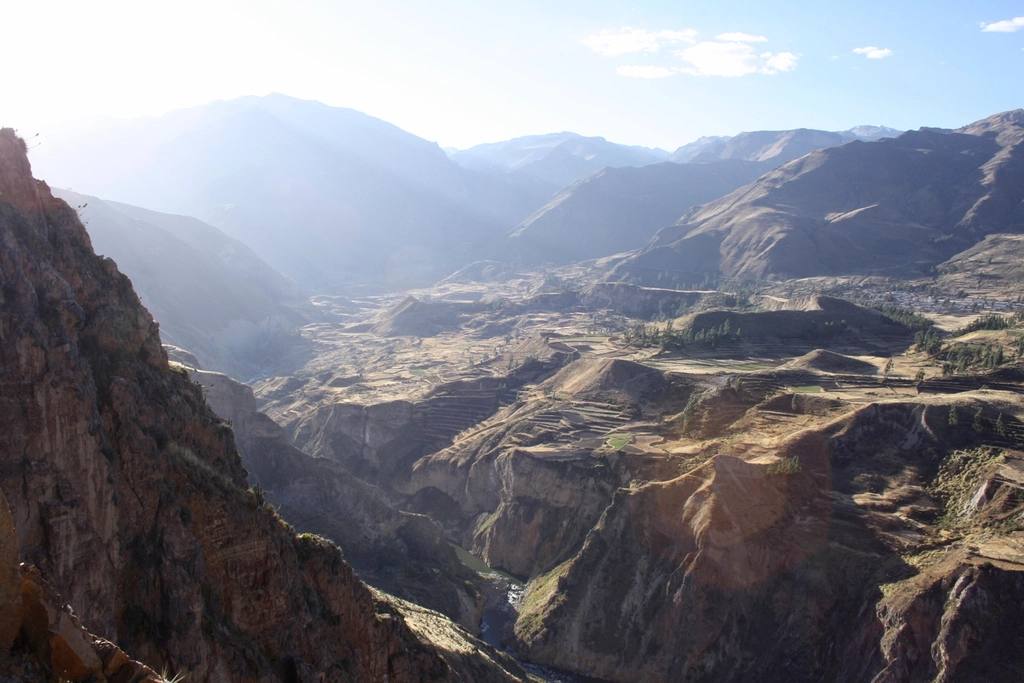
One of the deepest canyons on earth, where condors glide past a clifftop viewpoint at breakfast time, terraced villages fill the valley above and a steep trail drops to a palm-shaded oasis on the canyon floor.
- Best time to visit: May to November
- Daily budget (budget traveller): $35 to $160 USD
- Ideal trip length: 3 to 7 days
Colca Canyon is in the high Andes about 160km north of Arequipa. It is a long, deep gash cut by the Colca River and is often said to be more than twice as deep as the Grand Canyon. It has two halves. The upper valley, around Chivay, Yanque and Coporaque, is wide and farmed, with stone terraces older than the Incas, colonial churches and hot springs. Further west, past Maca and Pinchollo, the valley closes into a true canyon. Andean condors ride the morning thermals at Cruz del Cóndor. The village of Cabanaconde sits on the rim at about 3,290m, and trails drop more than 1,000m to the oases of Sangalle and Llahuar. Most visitors come on a one or two-day tour from Arequipa, which starts around 3am. Spend longer and the place opens up. You get quiet villages after the tour buses leave, nights in a canyon-floor lodge and the condors without the crowds. Colca is cheap, and local buses, simple hostels and set lunches keep costs low. It is also high and cold, so plan for the altitude.
Colca is a valley first and a canyon second. From Chivay westwards, the Colca River runs past farmed terraces, adobe villages and white colonial churches. The Collagua and Cabana peoples built many of these terraces long before the Incas, and they are still farmed today. Women in the villages still wear embroidered hats and skirts, and the style changes from one community to the next. Past Pinchollo the walls close in and the land falls away. This is the canyon, often quoted at more than 3,000m deep, with condors gliding past Cruz del Cóndor and oases far below. Most visitors see it from a tour bus window in one or two days. That works, but it means a 3am start and a rushed look at the viewpoints. If you stay longer, you get quiet plazas, cheap set lunches, hot pools under the stars and a night or two on the canyon floor.
The logistics are easy once you are in Arequipa. Local buses run to Chivay and Cabanaconde for roughly S/20-35, and colectivos link the villages. Every visitor needs the boleto turístico, which costs S/70 for foreign adults. Keep it with you, because it is checked at the viewpoints. Spend your first night in Chivay or Yanque to adjust to the altitude, then move west to Cabanaconde for the condors and the trails. Sangalle is the classic overnight trek. The Llahuar loop is longer and quieter, with the best hot springs in the canyon. Plan your trek around the bus times back to Arequipa, and keep a spare morning in case the condors stay away.
Timing matters. The dry season, from about May to November, gives clear skies, dusty trails and very cold nights, especially from June to August. July and August are the busiest months. From December to March, rain turns the valley green but brings landslides, cloud and slippery paths. Colca is safe, friendly and cheap, and Spanish helps a lot here, as English is limited outside the bigger hotels. Nightlife is a folk show at dinner in Chivay and a beer on a hostel terrace in Cabanaconde. Come for the hiking, the birds and the Andean village life.
Colca Canyon itinerary
Arequipa to Chivay over Patapampa
Morning: This plan assumes you have already spent two or three days in Arequipa. Take a morning bus or a shared tour transfer to Chivay. Tours stop at Pampa Cañahuas for vicuñas and at Patapampa at 4,910m. If you are on a local bus, buy your boleto turístico when the inspector boards.
Afternoon: Check in, have a set lunch near Chivay market and rest. Walk slowly, as you are now higher than Cusco.
Evening: Take a colectivo or taxi to La Calera hot springs (about S/15) for a late soak, then have soup for dinner and an early night.
Yanque, Uyo Uyo and Coporaque
Morning: Take an early colectivo to Yanque to see the children dancing on the plaza around 7am. Look inside the church, then walk down to the river and up to the Uyo Uyo ruins.
Afternoon: Cross the river to Coporaque and walk or cycle back towards Chivay on the quiet north bank road past the terraces. Stop at Chacapi hot springs if your legs need it.
Evening: Dinner in Chivay. Some restaurants put on a folk dance show, which is a relaxed way to see the Wititi and other local dances.
Condors and on to Cabanaconde
Morning: Catch an early bus or colectivo west and ask to be dropped at Cruz del Cóndor for about 8am. Watch the condors, then walk along the rim away from the tour groups.
Afternoon: Hop on a passing bus or colectivo to Cabanaconde, about 15 minutes away. Check in at Pachamama Home or similar and get a current trail map and advice.
Evening: Dinner on a hostel terrace, then pack light for the trek. Leave your big bag at the hostel and get to bed early.
Down to Llahuar
Morning: Leave Cabanaconde early on the western trail and drop to the river and the bridge. The descent takes most of the morning, so carry snacks and at least two litres of water.
Afternoon: Arrive at Llahuar, check into a lodge with simple rooms and dinner included, and soak in the hot pools beside the river.
Evening: A shared dinner with other trekkers, more time in the pools under the stars and an early night.
Llahuar to Sangalle
Morning: Walk through the small hamlets on the north side of the canyon, with views across the valley. The day has plenty of short climbs, so start early before the heat.
Afternoon: Drop steeply to Sangalle. Swim in a spring-fed pool and rest in the shade of the palms.
Evening: Dinner at your lodge. Settle any bills and arrange a mule now if you want help on the climb out.
Dawn climb and a slow afternoon
Morning: Start climbing by about 5am with a head torch. The 1,100m ascent to Cabanaconde takes most people two to four hours. Go slowly and make way for mules.
Afternoon: Breakfast, a shower and a long rest. Wander around Cabanaconde's plaza and the terraces at the edge of the village.
Evening: Watch the sunset from the San Miguel viewpoint above the canyon, then have a celebration dinner and pizza at your hostel.
Second condor morning and back to Arequipa
Morning: If the condors stayed away on day 3, take an early colectivo or taxi back to Cruz del Cóndor. Otherwise sleep in and have a slow breakfast.
Afternoon: Take a late-morning or early-afternoon bus back to Arequipa, about 5 to 6 hours. Check the times the day before at the bus offices on the plaza.
Evening: Arrive in Arequipa, or book a tourist transfer from Chivay to Puno instead if you are heading on towards Lake Titicaca.
Best neighbourhoods
- Chivay: The main town at the eastern end of the valley, at about 3,635m. It has the bus stop, the market, a few ATMs, most of the restaurants and the La Calera hot springs 3km away. It is practical rather than pretty, and a good first night to adjust to the altitude.
- Yanque: A quieter village about 15 minutes west of Chivay, with a white colonial church and a plaza where children in traditional dress dance around 7am. The Uyo Uyo ruins and Chacapi hot springs are close by. Better hotels such as Colca Lodge are out along this stretch of river.
- Coporaque: A small farming village on the north bank, opposite Yanque, with an old church, terraces all around and very few visitors. It suits slow travellers and cyclists. Bring cash and do not expect much open after dark.
- Cabanaconde: The trekking village on the canyon rim, at roughly 3,290m. It has simple hostels, a plaza where buses leave, and trailheads to Sangalle and Llahuar. Cruz del Cóndor is about 15 minutes away by bus. If you want to hike, this is your base.
- Sangalle and the canyon floor: At around 2,100m, Sangalle is a green oasis of lodges with spring-fed pools at the foot of a steep zigzag trail. Llahuar, further west, is smaller and quieter, with hot pools beside the river. San Juan de Chuccho and nearby hamlets sit on the north side. You can only get there on foot or by mule.
Must-do experiences
- Watch condors at Cruz del Cóndor: The viewpoint sits on the canyon edge at about 3,800m. Condors use the warming air to rise past the cliffs, usually from about 8am to 10am. Tour groups arrive around 8.30am, so come earlier or walk along the rim to quieter spots nearby.
- Trek down to Sangalle: The classic route drops about 1,100m from Cabanaconde to the oasis in roughly three hours. You spend the night in a simple lodge with a pool, then climb out at dawn before the sun reaches the trail. Going down is hard on the knees, and coming back up is the real test.
- Do the Llahuar loop: For two or three nights in the canyon, link Cabanaconde, Llahuar and Sangalle. Llahuar's hot pools by the river are the high point. It is longer and less busy than the direct Sangalle route.
- Soak at La Calera: The municipal hot springs outside Chivay have several outdoor pools at around 38°C, and entry is about S/15. Go late afternoon after the drive from Arequipa, then have an early night. A colectivo from Chivay market costs about S/1.
- Stop at Patapampa: At 4,910m this pass is the highest point on the road from Arequipa. On a clear day you can see Ampato, Hualca Hualca and the active Sabancaya volcano. Walk slowly, as the air is very thin up here.
- See Yanque's morning dances: Children in embroidered Colca dress dance on Yanque's plaza around 7am. Go early, look around the church, then walk down to the river and up to the Uyo Uyo ruins.
- Walk or cycle the north bank: The quiet road from Chivay through Coporaque and past the terraces towards Yanque makes a good half day by hired bike or on foot. You will pass farmers, llamas and very few tour vans.
Hidden gems
- The Chacapi hot springs below Yanque, smaller and more local than La Calera, with a short walk across the river
- Llahuar's riverside pools at night, when the day hikers have gone and the stars come out over the canyon
- The old church on Coporaque's plaza, often empty, in a village most tours drive straight past
- The stone cairns at Patapampa, built by travellers over the years as small offerings to the mountains
- The Infiernillo geyser above Pinchollo, a rough walk towards Hualca Hualca best done with a local guide, so ask in the village about current access
Daily budget
- Accommodation: budget S/35-80 / night (dorm or basic private room), mid-range S/150-300 (comfortable hotel in Chivay or Yanque), splurge S/800+ (Colca Lodge Spa & Hot Springs). Canyon-floor lodges at Sangalle and Llahuar are simple and often include dinner and breakfast. Book ahead in July and August. Bring cash for anything below the rim.
- Food: budget S/30-50 / day (set lunches and market food), mid-range S/70-120 (restaurant meals and a Colca sour), splurge S/180+ (hotel restaurants and buffet with folk show). A menú del día costs roughly S/10-20. Prices rise on the canyon floor because everything comes down by mule. Prices are rough guides, so check.
- Transport: budget S/10-30 / day (local buses and colectivos), mid-range S/60-150 (shared tour transport), splurge S/400+ (private driver from Arequipa). Arequipa to Chivay is roughly S/20-25 and to Cabanaconde roughly S/25-35. Chivay to Cabanaconde by colectivo is about S/10. A mule out of Sangalle is an extra cost, so agree the price first.
- Activities: budget S/0-15 / day (free trails, viewpoints, plus the S/70 ticket once), mid-range S/70-200 (group tour or guided trek day), splurge US$150-400 (private multi-day guided trek). The boleto turístico is S/70 for foreign adults and covers the whole visit. La Calera is about S/15. Llahuar's hot pools charge a small fee.
- Drinks & nightlife: budget S/5-15 (a beer or coca tea), mid-range S/30-60 (dinner with a folk show in Chivay), splurge S/100+ (hotel bar and cocktails). Nights are early and cold. Go easy on alcohol at altitude, especially on your first night. Most of the social life happens in hostel common areas.
Where to stay
- Social hostel in Cabanaconde (S/35-120 / night): Pachamama Home is a long-running family hostel with dorms and private rooms, a terrace and wood-fired pizza. Staff give trekking advice and can hold your bags while you are in the canyon.
- Boutique hotel in Yanque (S/200-350 / night): Killawasi Lodge is a small stone-built lodge in a quiet village, close to the morning dances, the Uyo Uyo ruins and Chacapi hot springs.
- Apartment in Coporaque or Sibayo (S/60-150 / night): Colca has few true apartments. The closest thing is a family homestay (casa vivencial), where you get a private room, home-cooked meals and a real sense of village life. Ask in Chivay or Arequipa for current options.
- Splurge in Between Yanque and Coporaque (S/800-1,500+ / night): Colca Lodge Spa & Hot Springs has hot pools by the river, a spa and rustic rooms in gardens. Recent listings start at around €220 a night.
What to eat
- Alpaca steak: lean, mild meat, often grilled with potatoes and salad, on most menus in Chivay
- Chairo: a hearty Andean soup of meat, chuño (freeze-dried potato), grains and vegetables, ideal on cold evenings
- Trout: fried or grilled river trout, cheap and fresh in the valley
- Quinoa soup: a warming, filling staple at almost every set lunch
- A Colca sour: the local twist on the pisco sour, made with sour sancayo cactus fruit
- The menú del día: a set lunch of soup, main and a drink for roughly S/10-20 at small places in Chivay and Cabanaconde
Day trips
- Sibayo (About 1 hour by road east of Chivay): A stone-built village beside the upper Colca River, known for its restored traditional houses and community tourism. It is a good look at highland life away from the canyon crowds. Take a colectivo from Chivay or hire a taxi for a half day. Agree the price before setting off and confirm return times.
- Pampa Cañahuas and the vicuña reserve (About 1.5 hours from Arequipa on the road to Chivay): Wild vicuñas graze on the high grasslands of the Salinas y Aguada Blanca reserve. Most tours stop here on the way to Colca. Join a shared tour or tourist transfer that includes the stop. Local buses do not usually wait while you look around.
- Infiernillo geyser above Pinchollo (About 30 minutes by road from Chivay to Pinchollo, then a long walk uphill): A steaming geyser on the slopes of Hualca Hualca, reached by a high-altitude hike through open country. It is rough, cold and remote. Take a colectivo to Pinchollo and hire a local guide. Ask in the village about current access and weather before setting out.
When to visit
- End of the rains (April - May): Days about 15-20°C, nights near freezing, showers fading. Crowds: Low to moderate, with an Easter bump. A good-value window. The terraces are still green, trails are drying out and the skies get clearer through May.
- Peak dry season (June - August): Sunny days around 15-18°C, frosty nights well below zero. Crowds: Busy, especially late July and August. The most reliable weather for trekking and condors, but pack for real cold. Book Cabanaconde hostels and canyon lodges ahead in July and August.
- Late dry season (September - November): Warmer days around 18-22°C, mostly dry, cold nights. Crowds: Moderate and easing. The locals' pick. Settled weather, quieter trails and good condor mornings. Afternoons on the canyon floor get very hot by November.
- Rainy season (December - March): Afternoon storms, mild days, cloud on the peaks. Crowds: Quiet, apart from Christmas and Carnival. Green and quiet, but trails get slippery and landslides can close trails or the road. Leave spare days, start treks early and ask locally before you set off.
Entry rules for your passport
Visa rules for Peru depend on the passport you travel on. Check the official source before you book: Peru Ministry of Foreign Affairs
Getting there
Arequipa is the gateway to Colca. Arequipa's Rodríguez Ballón airport (AQP) has frequent flights from Lima and some from Cusco. Overnight buses also run to Arequipa from Lima, Cusco and Puno. From Arequipa's Terminal Terrestre, local buses go to Chivay in about 3 to 4 hours for roughly S/20-25, and some carry on to Cabanaconde, about 5 to 6 hours in total, for roughly S/25-35. Andalucía, Reyna, Milagros and Transandino serve the route. Departures cluster in the very early hours and around midday, so check current times at the terminal or on redBus. Tourist buses and group tours pick up from Arequipa hotels and stop at the viewpoints on the way. Day tours cost roughly US$20-45 and two-day tours roughly US$35-100, usually without the S/70 entrance ticket. Several companies also run tourist transfers from Chivay on to Puno, which saves backtracking to Arequipa. The road climbs to 4,910m at Patapampa, so spend a few days in Arequipa first.
Getting around
Buses from Arequipa's Terminal Terrestre run to Chivay in about 3 to 4 hours for roughly S/20-25. Some carry on to Cabanaconde, about 5 to 6 hours in total, for roughly S/25-35. Andalucía, Reyna, Milagros and Transandino run the route, with departures in the very early hours and around midday. Check the times at the terminal or on redBus. Colectivos (shared vans) run between Chivay and Cabanaconde for about S/10. They leave from near the market, and the last ones usually go in the mid-afternoon. Early buses from Chivay to Cabanaconde pass Cruz del Cóndor at around 9am, so you can ask the driver to drop you there. Short colectivo hops to La Calera or Yanque cost a sol or two, and taxis in Chivay are cheap if you agree the price first. You can hire bikes in Chivay for the north bank road. The canyon floor has no roads, so you walk, and mules can be hired to carry you or your bag out of Sangalle. Group tours from Arequipa cover the main viewpoints and transport but are rushed.
Safety
Colca is a safe place for visitors and serious crime is rare. The real risks are altitude, cold, sun and the trails. Chivay is higher than Cusco and the road crosses a 4,910m pass, so spend a few days in Arequipa first, drink plenty of water and go easy on alcohol. Tell your accommodation if you get a bad headache that does not ease, feel confused or are struggling to breathe, and head for lower ground. Nights are close to freezing all year and well below in June to August. The UV is fierce, so wear a hat, sunglasses and sunscreen. The trails into the canyon are steep and loose. Start the climb out before dawn, carry at least two litres of water and step aside on the uphill side for mules. In the rainy season, landslides can block trails and the road. Sabancaya volcano is active, and ash sometimes drifts over the area, so follow local advice. Do not drink tap water. Medical care is basic, and serious cases go to Arequipa, so get insurance that covers trekking at altitude and evacuation.
Solo travel tips
- Base yourself in Cabanaconde for trekking: Hostels here are the best place to meet other hikers, compare routes and find people to walk with. Staff can hold your bags and give you a current trail map.
- Walk the canyon floor with others if you can: The trails are busy enough in the dry season that you will rarely be alone for long. Ask at your hostel about others setting off the same morning and swap plans at dinner in the oasis.
- Respect the altitude: Arequipa first, Chivay second and the canyon floor after that is a sensible order. Do not book the 3am day tour as your first trip above 3,000m.
- Plan around the buses: The last colectivos between Chivay and Cabanaconde usually leave in the mid-afternoon. Buy your bus ticket back to Arequipa the day before at the offices on the plaza.
- Safety for solo travellers: The main risks are falls, dehydration and altitude. Tell your hostel your route and when you plan to return, start climbs before dawn and do not trek in the dark on unfamiliar paths.
- Learn a little Spanish: English is limited outside the bigger hotels. A few phrases for buses, food and directions make a real difference, and offline maps help because the signal is patchy.
Cultural etiquette
- Greet people with 'buenos días' or 'buenas tardes' before asking anything. A greeting first is basic politeness in the villages.
- Ask before photographing people, especially women in traditional dress. Some will expect a small tip of a sol or two, and that is fair.
- Dress modestly in churches, take off your hat and keep your voice down during services.
- The terraces are working farmland. Stay on the paths, close any gates and do not walk through fields or water channels.
- Leave apachetas (stone cairns) and offerings at passes and viewpoints alone.
- Bargain gently at craft stalls, if at all. Prices are already low and the money stays in the village.
- Life starts early and ends early. Shops and restaurants may close soon after dark, especially outside Chivay.
Frequently asked questions
How do I get to Colca Canyon from Arequipa?
Local buses leave Arequipa's Terminal Terrestre for Chivay (about 3 to 4 hours, roughly S/20-25) and Cabanaconde (about 5 to 6 hours, roughly S/25-35). Andalucía, Reyna, Milagros and Transandino run the route, and times change, so check at the terminal or on redBus. The other option is a group tour, which costs roughly US$20-45 for a long day trip or US$35-100 for two days, with hotel pickup.
How much is the Colca entrance ticket?
The boleto turístico, issued by Autocolca, costs S/70 for foreign adults, S/40 for citizens or residents of listed Latin American countries and S/20 for children aged 6 to 15. Tours almost never include it. You can buy it online or at the checkpoint on the way into the valley, and inspectors sell it on public buses. Carry it with your passport, as it is checked at viewpoints.
How many days do I need?
Two days is the minimum to see the condors without a 3am start both ways. Three to four days lets you add a night on the canyon floor at Sangalle. With five to seven days you can do the Llahuar loop, spend time in Yanque and Coporaque and take things slowly at altitude.
Can I trek Colca Canyon without a guide?
Yes. The trails from Cabanaconde to Sangalle and Llahuar are well used and easy to follow in the dry season. Get a current map and trail advice from your hostel in Cabanaconde, set off early, carry plenty of water and tell someone your route. Hire a guide if you are new to steep trekking at altitude or travelling in the rainy season.
When is the best time to see condors?
Condors are most active from about 8am to 10am, when the sun warms the canyon walls. The dry months from May to November usually give the clearest skies. Sightings are never guaranteed, so if you stay in Cabanaconde you can go back on a second morning.
Will the altitude be a problem?
Chivay is at about 3,635m, Cabanaconde at roughly 3,290m and the Patapampa pass at 4,910m. Most people get a mild headache or sleep badly on the first night. Spend two or three days in Arequipa first, drink lots of water and take it slowly. If you are coming from Cusco or Puno you will already be adjusted.
Do I need cash?
Yes. The entrance ticket, hot springs, colectivos, set lunches and most guesthouses on the canyon floor take cash only. Chivay has a few ATMs, but Cabanaconde has few reliable options and the oases have none. Withdraw soles in Arequipa and bring small notes.
What are the entry rules for Peru in 2026?
Many nationalities, including UK, EU, US, Canadian and Australian passport holders, can enter Peru as tourists without a visa. The length of stay, often up to 90 days, is set at the border. You will need a passport valid for at least six months and may be asked for onward travel. Rules change, so check Peru's official migration website and your own government's travel advice before you book.
Tours and activities in Colca Canyon | Colca Canyon in 2 days | Colca Canyon in 3 days | Colca Canyon in 4 days | Colca Canyon in 5 days | Colca Canyon in 7 days
Joy Plus home | Destinations | Itineraries | Activities | Flights | Budget planner | Calendar | Map | Blog | Lifetime access