Colca Canyon in 5 days
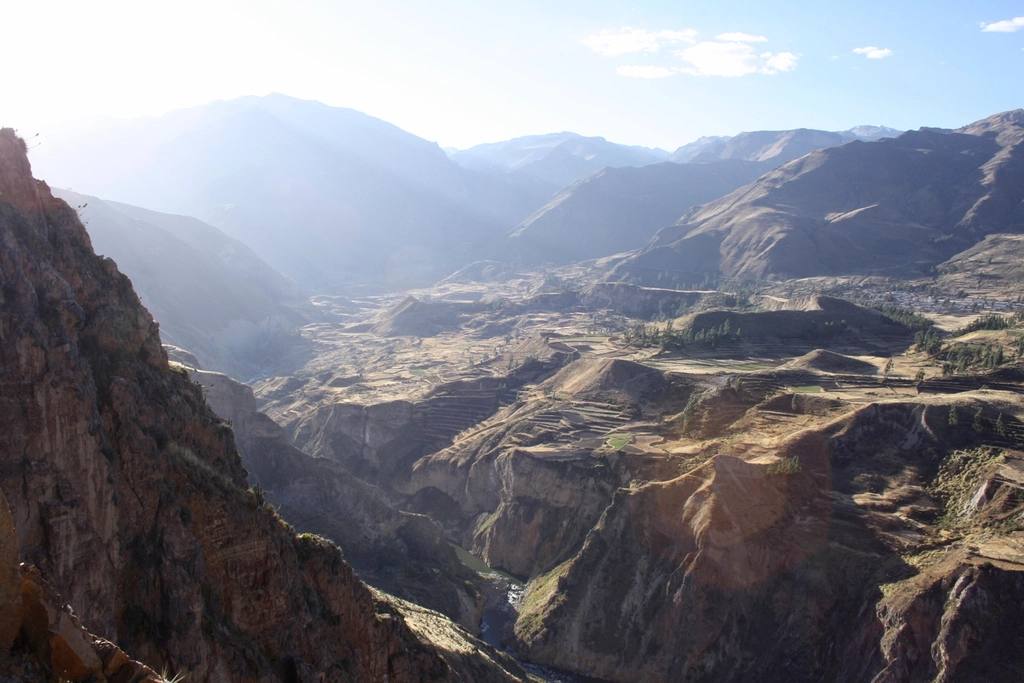
One of the deepest canyons on earth, where condors glide past a clifftop viewpoint at breakfast time, terraced villages fill the valley above and a steep trail drops to a palm-shaded oasis on the canyon floor. Best time to visit: May to November. Daily budget (budget traveller): $35 to $160 USD.
Arequipa to Chivay over Patapampa
Morning: This plan assumes you have already spent two or three days in Arequipa. Take a morning bus or a shared tour transfer to Chivay. Tours stop at Pampa Cañahuas for vicuñas and at Patapampa at 4,910m. If you are on a local bus, buy your boleto turístico when the inspector boards.
Afternoon: Check in, have a set lunch near Chivay market and rest. Walk slowly, as you are now higher than Cusco.
Evening: Take a colectivo or taxi to La Calera hot springs (about S/15) for a late soak, then have soup for dinner and an early night.
Yanque, Uyo Uyo and Coporaque
Morning: Take an early colectivo to Yanque to see the children dancing on the plaza around 7am. Look inside the church, then walk down to the river and up to the Uyo Uyo ruins.
Afternoon: Cross the river to Coporaque and walk or cycle back towards Chivay on the quiet north bank road past the terraces. Stop at Chacapi hot springs if your legs need it.
Evening: Dinner in Chivay. Some restaurants put on a folk dance show, which is a relaxed way to see the Wititi and other local dances.
Condors and on to Cabanaconde
Morning: Catch an early bus or colectivo west and ask to be dropped at Cruz del Cóndor for about 8am. Watch the condors, then walk along the rim away from the tour groups.
Afternoon: Hop on a passing bus or colectivo to Cabanaconde, about 15 minutes away. Check in at Pachamama Home or similar and get a current trail map and advice.
Evening: Dinner on a hostel terrace, then pack light for the trek. Leave your big bag at the hostel and get to bed early.
Down to Llahuar
Morning: Leave Cabanaconde early on the western trail and drop to the river and the bridge. The descent takes most of the morning, so carry snacks and at least two litres of water.
Afternoon: Arrive at Llahuar, check into a lodge with simple rooms and dinner included, and soak in the hot pools beside the river.
Evening: A shared dinner with other trekkers, more time in the pools under the stars and an early night.
Llahuar to Sangalle
Morning: Walk through the small hamlets on the north side of the canyon, with views across the valley. The day has plenty of short climbs, so start early before the heat.
Afternoon: Drop steeply to Sangalle. Swim in a spring-fed pool and rest in the shade of the palms.
Evening: Dinner at your lodge. Settle any bills and arrange a mule now if you want help on the climb out.
Heading home: For the airport or station, see Getting there in the full Colca Canyon guide.
What to eat in Colca Canyon
- Alpaca steak: lean, mild meat, often grilled with potatoes and salad, on most menus in Chivay
- Chairo: a hearty Andean soup of meat, chuño (freeze-dried potato), grains and vegetables, ideal on cold evenings
- Trout: fried or grilled river trout, cheap and fresh in the valley
- Quinoa soup: a warming, filling staple at almost every set lunch
- A Colca sour: the local twist on the pisco sour, made with sour sancayo cactus fruit
- The menú del día: a set lunch of soup, main and a drink for roughly S/10-20 at small places in Chivay and Cabanaconde
Hidden gems
- The Chacapi hot springs below Yanque, smaller and more local than La Calera, with a short walk across the river
- Llahuar's riverside pools at night, when the day hikers have gone and the stars come out over the canyon
- The old church on Coporaque's plaza, often empty, in a village most tours drive straight past
- The stone cairns at Patapampa, built by travellers over the years as small offerings to the mountains
- The Infiernillo geyser above Pinchollo, a rough walk towards Hualca Hualca best done with a local guide, so ask in the village about current access
Getting around
Buses from Arequipa's Terminal Terrestre run to Chivay in about 3 to 4 hours for roughly S/20-25. Some carry on to Cabanaconde, about 5 to 6 hours in total, for roughly S/25-35. Andalucía, Reyna, Milagros and Transandino run the route, with departures in the very early hours and around midday. Check the times at the terminal or on redBus. Colectivos (shared vans) run between Chivay and Cabanaconde for about S/10. They leave from near the market, and the last ones usually go in the mid-afternoon. Early buses from Chivay to Cabanaconde pass Cruz del Cóndor at around 9am, so you can ask the driver to drop you there. Short colectivo hops to La Calera or Yanque cost a sol or two, and taxis in Chivay are cheap if you agree the price first. You can hire bikes in Chivay for the north bank road. The canyon floor has no roads, so you walk, and mules can be hired to carry you or your bag out of Sangalle. Group tours from Arequipa cover the main viewpoints and transport but are rushed.
Safety
Colca is a safe place for visitors and serious crime is rare. The real risks are altitude, cold, sun and the trails. Chivay is higher than Cusco and the road crosses a 4,910m pass, so spend a few days in Arequipa first, drink plenty of water and go easy on alcohol. Tell your accommodation if you get a bad headache that does not ease, feel confused or are struggling to breathe, and head for lower ground. Nights are close to freezing all year and well below in June to August. The UV is fierce, so wear a hat, sunglasses and sunscreen. The trails into the canyon are steep and loose. Start the climb out before dawn, carry at least two litres of water and step aside on the uphill side for mules. In the rainy season, landslides can block trails and the road. Sabancaya volcano is active, and ash sometimes drifts over the area, so follow local advice. Do not drink tap water. Medical care is basic, and serious cases go to Arequipa, so get insurance that covers trekking at altitude and evacuation.
Frequently asked questions
What does this 5-day Colca Canyon itinerary cover?
Day 1: Arequipa to Chivay over Patapampa. Day 2: Yanque, Uyo Uyo and Coporaque. Day 3: Condors and on to Cabanaconde. Day 4: Down to Llahuar. Day 5: Llahuar to Sangalle.
Is 5 days enough for Colca Canyon?
Our recommended trip length for Colca Canyon is 3 to 7 days. This 5-day plan focuses on the highlights and groups sights by area so you spend less time travelling between them.
How much does 5 days in Colca Canyon cost?
A budget traveller spends about $35 to $160 USD a day in Colca Canyon, so roughly $175 to $800 USD for 5 days, not counting flights.
Where should I stay for 5 days in Colca Canyon?
Chivay: The main town at the eastern end of the valley, at about 3,635m. Yanque: A quieter village about 15 minutes west of Chivay, with a white colonial church and a plaza where children in traditional dress dance around 7am.
When is the best time to visit Colca Canyon?
The best time to visit Colca Canyon is May to November.
How do I get around Colca Canyon?
Buses from Arequipa's Terminal Terrestre run to Chivay in about 3 to 4 hours for roughly S/20-25. Some carry on to Cabanaconde, about 5 to 6 hours in total, for roughly S/25-35.
Is Colca Canyon safe for solo travellers?
Colca is a safe place for visitors and serious crime is rare. The real risks are altitude, cold, sun and the trails.
More 5-day guides
- Huaraz in 5 days
- Lima in 5 days
- Cusco in 5 days
- Arequipa in 5 days
- Trujillo in 5 days
- Iquitos in 5 days
- Puno in 5 days
- Máncora in 5 days
Colca Canyon in 2 days | Colca Canyon in 3 days | Colca Canyon in 4 days | Colca Canyon in 7 days | Full Colca Canyon guide
Joy Plus home | Destinations | Itineraries | Activities | Flights | Budget planner | Calendar | Map | Blog | Lifetime access