Destinations / Europe
Cortina d'Ampezzo, Italy travel guide
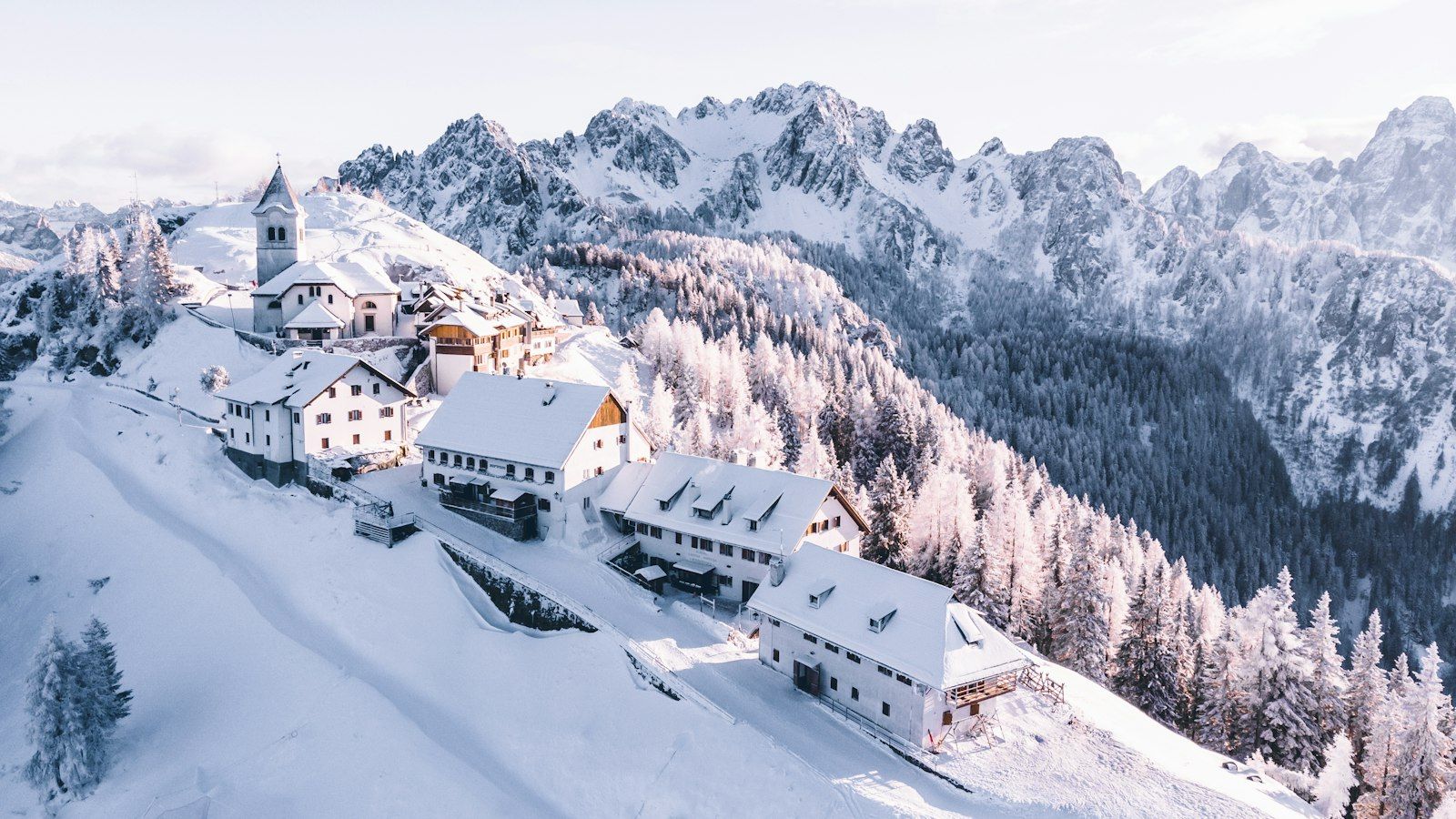
A Dolomites mountain town of First World War tunnels, turquoise lakes and Olympic ski runs. Cheap summer buses get you to top-class trails, and the rifugi serve lunch with the best views in the Alps.
- Best time to visit: Late June to mid-September for hiking, mid-December to March for skiing
- Daily budget (budget traveller): $95 to $380 USD
- Ideal trip length: 5 to 7 days
Cortina d'Ampezzo sits in a wide green bowl at about 1,224m in the Veneto Dolomites, ringed by the Tofane, Cristallo, Sorapis and Pomagagnon. It hosted the Winter Olympics in 1956 and again in February 2026 with Milan, and its main street, Corso Italia, is lined with fur shops and expensive cafés. It looks like a rich person's town, and in some ways it is. But Cortina also works very well for solo travellers on a sensible budget. Summer buses run hourly to the high passes, the trails are free, and a plate of canederli at a mountain hut costs less than a cocktail in town. In one week you can walk to the milky-blue Lago di Sorapis, explore the First World War tunnels inside the Lagazuoi, wander the open-air trench museum at Cinque Torri and walk around the Tre Cime di Lavaredo. Winter brings the Dolomiti Superski network, a 12-area lift pass, right to your door. The local Ladin culture, the Regole communities that have run the forests for centuries, and a strong café habit give the town a character that resort villages lack. Cortina is safe, well run and very walkable. Book the summer buses, huts and parking slots early.
Cortina d'Ampezzo is a town of about 5,800 people. Every winter and summer it fills with visitors who come for the mountains around it. The Tofane rise to the west, Cristallo and Pomagagnon to the north, and Sorapis and Antelao to the south and east. It hosted the 1956 Winter Olympics and co-hosted the 2026 Games, with curling in the old Olympic ice stadium and women's alpine racing on the Tofane. The reputation is designer shopping and fur coats, and the town centre prices show it: a spritz on Corso Italia can cost €10 or more. But there is a cheaper Cortina too. Trails cost nothing, a hut lunch of pasta or canederli is about €13-18, buses to the passes cost a few euros, and the best views are free. This guide shows you where that cheaper version is.
Logistics are simple once you know there is no train. The Cortina Express bus runs from Venice Marco Polo airport and Mestre in about 2 hours 15 minutes, and drops you a short walk from the centre. Stay in or near the centre so you can walk to the bus station. In summer, line 51 runs hourly to Passo Tre Croci and Misurina for Sorapis and Tre Cime, and line 52 goes to Passo Falzarego for Lagazuoi and Cinque Torri. The lifts do the hard climbing for you, but they have short seasons: the Lagazuoi cable car ran from 6 June to 18 October in 2026. You do not need a car. If you rent one, remember the Tre Cime road needs a €40 booked slot and the Sorapis car park fills soon after dawn.
Timing decides everything. Late June to mid-September is hiking season, with every hut open and buses running daily. August is the busiest month, especially around the 15 August holiday. Mid-September to early October brings golden larches, crisp air and fewer people, but some huts and lifts close. The ski season runs from December to March, with Dolomiti Superski day passes at €80-89 in 2026/27. April to early June and November are dead seasons, when much of the town shuts. Cortina is very safe, and Italian and English get you everywhere. Solo travellers make friends quickly at shared hut tables. If you want nightlife, this is the wrong valley. If you want a dawn bus, a big hike and a plate of casunziei, it is the right one.
Cortina d'Ampezzo itinerary
Arrive from Venice, settle into Corso Italia
Morning: Take the Cortina Express from Venice Marco Polo airport or Mestre, about 2 hours 15 minutes and roughly €17-27 one way. Book ahead in July and August. It stops at the bus station, a few minutes' walk from the centre.
Afternoon: Drop your bags and walk the length of Corso Italia. Step into the Basilica dei Santi Filippo e Giacomo below its tall bell tower. Buy a 1:25,000 trail map and check this week's summer bus timetables at the station.
Evening: Aperitivo at Enoteca Cortina, then casunziei for dinner. Stock up on picnic food and water for tomorrow's early start.
Lago di Sorapis
Morning: Take an early line 51 bus to Passo Tre Croci (hourly from 8am in summer). Walk trail 215 to the lake, about 2 hours each way. The last stretch has ledges with cables and short ladders, so take it slowly.
Afternoon: Picnic or lunch at Rifugio Vandelli by the lake. No swimming, paddling or boards: a 2019 ban carries fines of up to €500. Walk back the same way.
Evening: Summer buses stop around 6pm, so check the last one back. Canederli in town and an early night.
Lagazuoi cable car and the war tunnels
Morning: Take line 52 to Passo Falzarego (about 35 minutes). Ride the Lagazuoi cable car, about €20 one way in 2026, to nearly 2,750m for one of the widest views in the Dolomites.
Afternoon: Lunch on the Rifugio Lagazuoi terrace, then walk down through the First World War tunnels with a helmet and head torch, about 1.5-2 hours. If it is wet or icy, ride the cable car down instead.
Evening: Afternoon buses back run only every two hours, so check the times before you start down. Polenta and venison stew in town.
Cinque Torri, Averau and Nuvolau
Morning: Line 52 again, getting off at Bai de Dones. Take the chairlift to Rifugio Scoiattoli (about €28 return) and walk the open-air Great War trenches among the five towers.
Afternoon: Climb about 30 minutes to Rifugio Averau for lunch, then continue to Rifugio Nuvolau, perched on rock at 2,575m above Passo Giau. Return the same way to the chairlift.
Evening: Back in Cortina for the evening stroll along the Corso. Check tomorrow's Tre Cime shuttle rules and book a seat if needed.
Tre Cime di Lavaredo loop
Morning: Line 51 to Misurina, then the shuttle to Rifugio Auronzo (about €10 return; reservations were required in 2026). Walk anticlockwise past Rifugio Lavaredo to Forcella Lavaredo for the first view of the north faces.
Afternoon: Lunch at Rifugio Locatelli facing the three peaks, then finish the 10km loop, 4-5 hours with stops. Watch the sky and move on if storms build.
Evening: Shuttle down to Misurina, a short walk by the lake, then the bus back to Cortina. Strudel and bed.
Cycle the old Dolomites railway
Morning: Rent a bike or e-bike in town and pick up the cycle path on the old Cortina to Dobbiaco railway line. Climb gently north past Fiames and Ospitale through old rail tunnels.
Afternoon: Ride on to Cimabanche and the green water of Lago di Landro, about 20km from Cortina, with glimpses of the Cristallo and Tre Cime. The return is a long, easy downhill.
Evening: Book dinner at El Brite de Larieto, a farm restaurant north of town that makes its own cheese, and take a taxi there and back.
Lago Ghedina, museums and departure
Morning: Walk the forest path to Lago Ghedina, about an hour each way from the centre, a quiet green lake below the Tofane.
Afternoon: Visit the Regole museums for modern Italian art and the Zardini fossils, then coffee and a krapfen at Pasticceria Lovat before the afternoon Cortina Express.
Evening: Arrive at Venice airport or Mestre in about 2 hours 15 minutes. For an early flight, book a night near the airport.
Best neighbourhoods
- Centro and Corso Italia: The pedestrian main street and the streets off it, with the basilica and its tall bell tower, the Regole museums, cafés and wine bars. You are a five-minute walk from the bus station, the summer bus lines and the Faloria cable car.
- Cianderies and Alverà: Quieter residential streets east of the centre on the road towards Passo Tre Croci. Self-catering flats and family hotels here are often cheaper than on the Corso, and the centre is a 10 to 15 minute walk away.
- Zuel: A sunny, residential area south of the centre below the old Olympic ski jump. It has forest paths, apartment rentals and a calm local feel, about 20 minutes' walk from Corso Italia.
- Pocol: A small hamlet on the hairpin road above town towards Passo Falzarego and Passo Giau. It has a First World War memorial and views over the whole valley, and it puts you closer to Cinque Torri and Lagazuoi. You will want a car or the bus timetable.
- Fiames: The northern edge of the valley, under the Pomagagnon cliffs, with campsites and quick access to the old railway cycle path. It is also the way into the Fanes valley and the Ampezzo Dolomites Natural Park.
Must-do experiences
- Hike to Lago di Sorapis: Take bus 51 to Passo Tre Croci and walk trail 215 for about two hours each way to a glacier-fed lake of startling turquoise below the Sorapis cliffs. The final section has cables and short ladders. Swimming is banned.
- Ride the Lagazuoi cable car and walk down through the war tunnels: Go up from Passo Falzarego to nearly 2,750m, then walk down through restored First World War tunnels cut into the mountain. You need a helmet and head torch, and the descent takes about 1.5 to 2 hours.
- Walk the trenches at Cinque Torri: A chairlift from Bai de Dones takes you to the open-air Great War museum among the five rock towers. From there it is a short climb to Rifugio Averau and Rifugio Nuvolau for lunch with views over Passo Giau.
- Circle the Tre Cime di Lavaredo: The classic 10km loop around the Dolomites' most famous peaks starts at Rifugio Auronzo, reached by bus and shuttle via Misurina or on a €40 toll road with a booked slot.
- Cycle the old Dolomites railway: The former Cortina to Dobbiaco railway is now a gentle cycle path. It runs past Fiames, through old tunnels and over bridges to Cimabanche and the green water of Lago di Landro.
- Stroll Corso Italia at aperitivo hour: Join the early-evening walk down the pedestrian main street. Visit the Basilica dei Santi Filippo e Giacomo and the Regole museums, then have a spritz as the light goes pink on the Tofane.
- Ski the Olympic slopes: In winter, ski the Tofana, Faloria and Cinque Torri areas on a Cortina pass, or buy Dolomiti Superski to link into the Sella Ronda via Lagazuoi and the Armentarola run.
Hidden gems
- Lago di Federa below the Croda da Lago, a quiet green lake with a mountain hut on its shore, about two hours' walk up from the Passo Giau road
- Malga Ra Stua and the Fanes valley, an easy forest walk north of Fiames into the Ampezzo Dolomites Natural Park, with a summer hut serving polenta and cheese
- Lago Ghedina, a small forest-ringed lake below the Tofane, about an hour's walk from the centre and lovely on a cloudy day
- The Pocol war memorial, a stone tower above town that holds the remains of thousands of First World War soldiers, with wide views back over the valley
- The Rinaldo Zardini fossil collection in the Regole museums, which shows the Dolomites were once a tropical reef
Daily budget
- Accommodation: budget €80-140 / night (hut dorm with half board, simple central hotel single), mid-range €160-280 (family-run hotel or boutique double), splurge €600+ (Cristallo, a Luxury Collection Resort & Spa). Summer rooms often need a minimum stay in August, and winter prices peak at Christmas and in February. A per-person nightly tourist tax applies, so check whether it is included in your price.
- Food: budget €35-55 / day (supermarket picnic, one hut lunch), mid-range €70-110 (hut lunch, sit-down dinner with wine), splurge €180+ (tasting menu at Michelin-starred SanBrite). Hut mains are about €13-18. Restaurants in town often add a coperto (cover charge) of a few euros. Picnic supplies from the Cooperativa supermarket cut costs.
- Transport: budget €5-15 / day (Dolomiti Bus to the passes), mid-range €20-50 (Tre Cime shuttle about €10 return, bike hire), splurge €80+ (hire car plus €40 Tre Cime toll, taxis). The Cortina Express from Venice is roughly €17-27 one way. In winter, Cortina skibus lines are free with a valid ski pass.
- Activities: budget €0-30 / day (free trails, one lift ride), mid-range €30-90 (Lagazuoi about €20 one way or about €30 return, Cinque Torri chairlift about €28 return), splurge €150+ (guided via ferrata, Dolomiti Superski €80-89 a day). Lift prices vary by season and change each year, so check the operator before you go. Ski passes bought online two or more days ahead are 5% cheaper.
- Drinks & nightlife: budget €5-15 (coffee and one spritz), mid-range €25-45 (aperitivo with snacks, glass of Veneto wine), splurge €60+ (cocktails at a grand hotel bar). Nightlife means aperitivo on Corso Italia and après-ski in winter. Most places are quiet by midnight in summer.
Where to stay
- Social hostel in Passo Falzarego (Rifugio Lagazuoi) (€80-130 / night with half board): Cortina has no real hostel. The social equivalent is a mountain hut dorm with half board, like Rifugio Lagazuoi at the top of the cable car, where you share dinner tables and the sunrise. Bring a sleeping-bag liner and book months ahead for summer.
- Boutique hotel in Centro, Corso Italia (€120-240 / night): Hotel Montana is a simple family-run hotel right on Corso Italia, steps from the cafés, the bus station and the Faloria cable car. It suits solo travellers who want the centre without grand-hotel prices.
- Apartment in Cianderies or Zuel (€110-200 / night): Self-catering flats in these quieter residential areas give you a kitchen and a balcony with a mountain view. Cooking breakfasts and packing picnics saves a lot in an expensive town.
- Splurge in Above the centre, Via Menardi (€600-1,500+ / night): Cristallo, a Luxury Collection Resort & Spa, is a grand old hotel with a big spa and wide views over the valley. It is old-school Cortina glamour.
What to eat
- Casunziei all'ampezzana: half-moon ravioli filled with beetroot, served with melted butter, poppy seeds and grated cheese, Cortina's signature pasta
- Canederli: bread dumplings with speck or cheese, served in broth or with melted butter and sage, the standard hut lunch at about €13-18
- Polenta with venison or mushrooms: soft or grilled polenta with slow-cooked capriolo stew or wild mushrooms, ideal after a long day on the trail
- Schiz: a fresh mountain cheese from the Belluno area, pan-fried in butter and often served with polenta
- Apple strudel: thin pastry, apples, raisins and pine nuts, sold at almost every rifugio terrace as the reward for the climb
- Speck and malga cheese boards: smoked ham and hard pasture cheeses with rye bread, for picnics or an aperitivo
- Krapfen: jam- or custard-filled doughnuts from the town's pastry shops, best with a morning coffee before the bus
Day trips
- Tre Cime di Lavaredo and Lago di Misurina (About 25km, roughly 40 minutes by bus to Misurina, then a shuttle): Walk the 10km loop around the three peaks via Rifugio Lavaredo, Forcella Lavaredo and Rifugio Locatelli, then stroll by Lago di Misurina on the way back. Take Dolomiti Bus line 51 to Misurina, then the shuttle to Rifugio Auronzo (about €10 return, reservations required in 2026). Drivers must book a slot on the official Auronzo portal. The toll is €40 per car in 2026, and the road opens from late May to mid-October.
- Lago di Braies (About 45km north, roughly 1 hour 15 minutes by bus via Dobbiaco): The famous emerald lake below the Croda del Becco, with wooden rowing boats and an easy loop path of about an hour. Arrive early or late to avoid the midday crowds. Take the SAD bus to Dobbiaco and change for Braies. In peak summer, car access is restricted and you may need to book parking, so check the current rules and bus timetables before you go.
- Dobbiaco and the Puster Valley (About 30km north, roughly 50 minutes by SAD bus): A German-speaking South Tyrolean village with onion-domed churches, a calm lake and Gustav Mahler connections. The change in language and food after Cortina is striking. Take the SAD bus from Cortina bus station and check the summer timetable. Strong cyclists can ride all 30km on the old railway path.
When to visit
- Ski season (December - March): Around -10 to 5°C in town, colder up high, mostly dry and sunny between snowfalls. Crowds: Peak at Christmas, New Year and February; quieter in January and March. Excellent skiing on Tofana, Faloria and Cinque Torri, with links to the Sella Ronda via Lagazuoi. Dolomiti Superski high season runs 20 December to 9 January and 31 January to 20 March in 2026/27. Book rooms early.
- Spring thaw (April - mid-June): 5-18°C, snow lingering above 2,000m, changeable. Crowds: Very quiet. Skip it unless you want cheap valley walks. Many hotels, huts and lifts close between the ski and hiking seasons, and high trails such as Sorapis are still snowbound.
- Hiking summer (Late June - early September): 15-25°C in town, cooler up high, frequent afternoon thunderstorms. Crowds: Busy in July, very busy in August. The best season for this guide. All huts and lifts are open and buses 51, 52 and 53 run daily. Start hikes early to beat both the storms and the crowds.
- Golden autumn (Mid-September - October): 8-18°C, crisp clear days, first snow possible in October. Crowds: Low after mid-September. The locals' favourite. The larches turn gold and the light is sharp. Check opening dates, as huts close from late September and Lagazuoi's summer season ended on 18 October in 2026.
Entry rules for your passport
Visa rules for Italy depend on the passport you travel on. Check the official source before you book: European Commission: Schengen visa policy
Getting there
The nearest big airport is Venice Marco Polo (VCE), with Treviso as a budget-airline alternative and Innsbruck about 2.5 hours' drive to the north. The Cortina Express bus runs from Venice Marco Polo and Mestre to Cortina in about 2 hours 15 minutes, with one-way fares of roughly €17-27. Dolomiti Bus also runs direct services. Book online for July, August and the ski holidays. There is no railway to Cortina. The nearest stations are Calalzo di Cadore to the south, with connecting Dolomiti Bus services, and Dobbiaco to the north on the Puster Valley line, with SAD buses over Cimabanche. Italy is in the Schengen Area. Non-EU visitors are registered in the Entry/Exit System on first arrival, and the ETIAS authorisation was not yet running in autumn 2026. Drivers should note that the Venice to Cortina road climbs through the Cadore valleys and the last stretch can be slow in summer traffic. Winter tyres or chains are required in snowy months.
Border checks: non-EU visitors (other than Swiss, Norwegian, Icelandic, Liechtenstein, Andorran, Monegasque, San Marinese and Vatican citizens, and holders of an EU residence permit or long-stay visa) are registered in the EU's Entry/Exit System (EES) instead of getting a passport stamp. On your first crossing, officers take your photo and/or fingerprints, so allow extra time at passport control. ETIAS, the planned travel authorisation, is not in operation yet, so don't pay any website for one.
Getting around
Cortina has no train station, so buses do the work. Dolomiti Bus runs town routes and, in summer, three lines from Cortina to the passes. Line 51 goes to Passo Tre Croci and Misurina, hourly from 8am to 6pm. Line 52 goes to Passo Falzarego, hourly in the morning and every two hours in the afternoon. Line 53 goes to Passo Giau, with few departures. Standard tickets apply and short hops cost a few euros. Buy them at the bus station or a tabaccheria, and check the last return before you set off. In winter, the Cortina skibus lines are free with a valid ski pass. SAD buses go north to Dobbiaco for the Puster Valley and Lago di Braies. Lifts save hours of climbing: the Faloria cable car leaves from the centre, the Freccia nel Cielo climbs the Tofane, and lifts serve Cinque Torri and Lagazuoi in summer, roughly mid-June to late September or mid-October. The old railway cycle path is the easiest way to ride north. A hire car helps for sunrise starts, but trailhead car parks fill early, the passes are steep hairpins full of cyclists, and the Tre Cime road needs a paid, booked slot. Taxis are expensive, so pre-book them for early starts.
Safety
Cortina is a very safe town for solo travellers, and crime against visitors is rare beyond the occasional stolen ski or bike, so lock them. The mountains are the real risk. In July and August, thunderstorms often build by early afternoon. Start hikes early, check the forecast and get off ridges and exposed ground when clouds tower. Snow can linger on north-facing paths into June and return in October. Paths such as the last stretch to Sorapis have drops with cables and ladders, so wear proper boots and turn back if it feels beyond you. Vie ferrate need a harness, helmet and lanyard, or a guide. At Lagazuoi and Tofana you are above 2,700m, so carry warm layers even in August. Drink plenty of water and use high-factor sunscreen. Leave your route with your hotel, carry a charged phone, and call 112 or 118 in an emergency. Get travel insurance that covers mountain and helicopter rescue, as some callouts can be billed. Do not pick protected flowers, and keep dogs on a lead near livestock.
Solo travel tips
- Stay near the bus station: Everything starts at the bus station: the Venice coaches, lines 51 and 52 to the passes, and the Faloria cable car nearby. A room in the centre or in Cianderies means you can walk to the first bus without a taxi.
- Start early, finish early: Summer storms often arrive after lunch, trailhead car parks fill by mid-morning, and the last buses leave around 6pm. Be on the 8am bus, walk in the cool, and be back down before the weather turns.
- Eat at the huts: A hut lunch costs about the same as a sandwich and coffee in town, and the view is better. Sit at the long shared tables, and expect to leave knowing someone's route plans for tomorrow.
- Book the bottlenecks: Peak-season coaches, Tre Cime access and hut beds all sell out in July and August. Book them first, then plan the rest of your days around them.
- Safety for solo travellers: The town is very safe, including at night. In the mountains, leave your route with your hotel, carry layers and a charged phone, stick to marked paths, and know that 112 is the emergency number. Make sure your insurance covers mountain rescue.
- Find your people: Join a guided via ferrata or hike with the Cortina mountain guides (Gruppo Guide Alpine Cortina), book a night in a hut dorm, or sign up for ski lessons in winter. Download offline maps, as signal drops in the valleys.
Cultural etiquette
- Say 'buongiorno' when you walk into shops and cafés, and 'salve' or 'buongiorno' to other hikers. Italian is the main language, and many older locals also speak Ladin.
- The forests and pastures are managed by the Regole d'Ampezzo, communities that date back to the Middle Ages. Stay on trails, close gates and don't pick flowers, as edelweiss and many others are protected.
- Hut etiquette: take off your boots at the door, use a sleeping-bag liner in dorms, respect quiet hours, order at the bar if there is no table service, and carry cash.
- Shops often close from about 12:30 to 3:30pm and many are shut on Sunday, so buy picnic supplies the day before.
- Cortina dresses smart casual in the evening. Hiking gear is fine by day, but people do change for aperitivo on the Corso.
- Dress modestly in the basilica and keep quiet during services, especially on Sunday mornings.
- Coffee is drunk standing at the bar and is cheaper there than at a table. Cappuccino is for the morning, and a coperto on restaurant bills is normal, not a scam.
Frequently asked questions
How do I get from Venice to Cortina d'Ampezzo?
The easiest way is the Cortina Express bus from Venice Marco Polo airport or Mestre. It takes about 2 hours 15 minutes and one-way fares are roughly €17-27. Dolomiti Bus also runs direct services. Book online in July, August and the ski holidays. The bus stops at Cortina's bus station, a short walk from Corso Italia.
How many days do I need in Cortina?
Five days covers the big four in summer: Sorapis, Lagazuoi, Cinque Torri and Tre Cime. Seven days adds the old railway cycle path, a quieter lake hike and spare days for bad weather, which you will probably need. In winter, three to six days on the slopes suits most skiers.
When is the best time to visit Cortina?
For hiking, late June to mid-September, when the lifts, huts and summer buses all run. Mid-September to early October is quieter, with golden larches, but some huts and lifts start closing. For skiing, mid-December to March. April to mid-June and November are very quiet, with many hotels and lifts closed.
Can I explore Cortina without a car?
Yes, in summer. Dolomiti Bus lines 51 and 52 run daily to Passo Tre Croci, Misurina and Passo Falzarego, which gets you to Sorapis, Tre Cime, Lagazuoi and Cinque Torri. Passo Giau and some smaller trailheads are harder by bus. Outside the summer bus season, services are much thinner.
What should I book in advance?
In peak summer, book the Cortina Express, any mountain hut nights and your accommodation weeks ahead. If you drive to Tre Cime, you must book a slot online for the toll road, which costs €40 per car in 2026. In 2026 the Tre Cime shuttle buses also required seat reservations, so check the rules for your dates.
Is Cortina worth visiting in November or spring?
Only if you want quiet walks in the valley and lower prices. Most summer lifts and huts close by mid-October, and the ski season usually starts in late November or December, depending on snow. In April, May and early June, many hotels close and high trails are still snowbound. Check opening dates before you book.
Is Cortina safe for solo female travellers?
Yes. Cortina is a calm, well-run town with a strong family and hiking crowd, and solo women hike here all the time. The main risks are in the mountains, not the town. Start early, tell someone your route, don't walk exposed paths in storms, and stick to marked trails.
What entry rules apply to travellers visiting Italy in 2026?
Italy is in the Schengen Area. Many nationalities, including UK, US, Canadian and Australian citizens, can visit without a visa for up to 90 days in any 180-day period. Since 10 April 2026, the EU Entry/Exit System has been fully running, so non-EU visitors have fingerprints and a photo taken on their first entry. The ETIAS travel authorisation was not yet running in autumn 2026 and is expected to cost about €20 when it launches. Rules can change, so always confirm on the Italian government's official visa site and the EU's official travel website before you book.
More about Cortina d'Ampezzo
Tours and activities in Cortina d'Ampezzo | Cortina d'Ampezzo in 2 days | Cortina d'Ampezzo in 3 days | Cortina d'Ampezzo in 4 days | Cortina d'Ampezzo in 5 days | Cortina d'Ampezzo in 7 days
Joy Plus home | Destinations | Itineraries | Activities | Flights | Budget planner | Calendar | Map | Blog | Lifetime access