Destinations / Caribbean
Curaçao, Curaçao travel guide
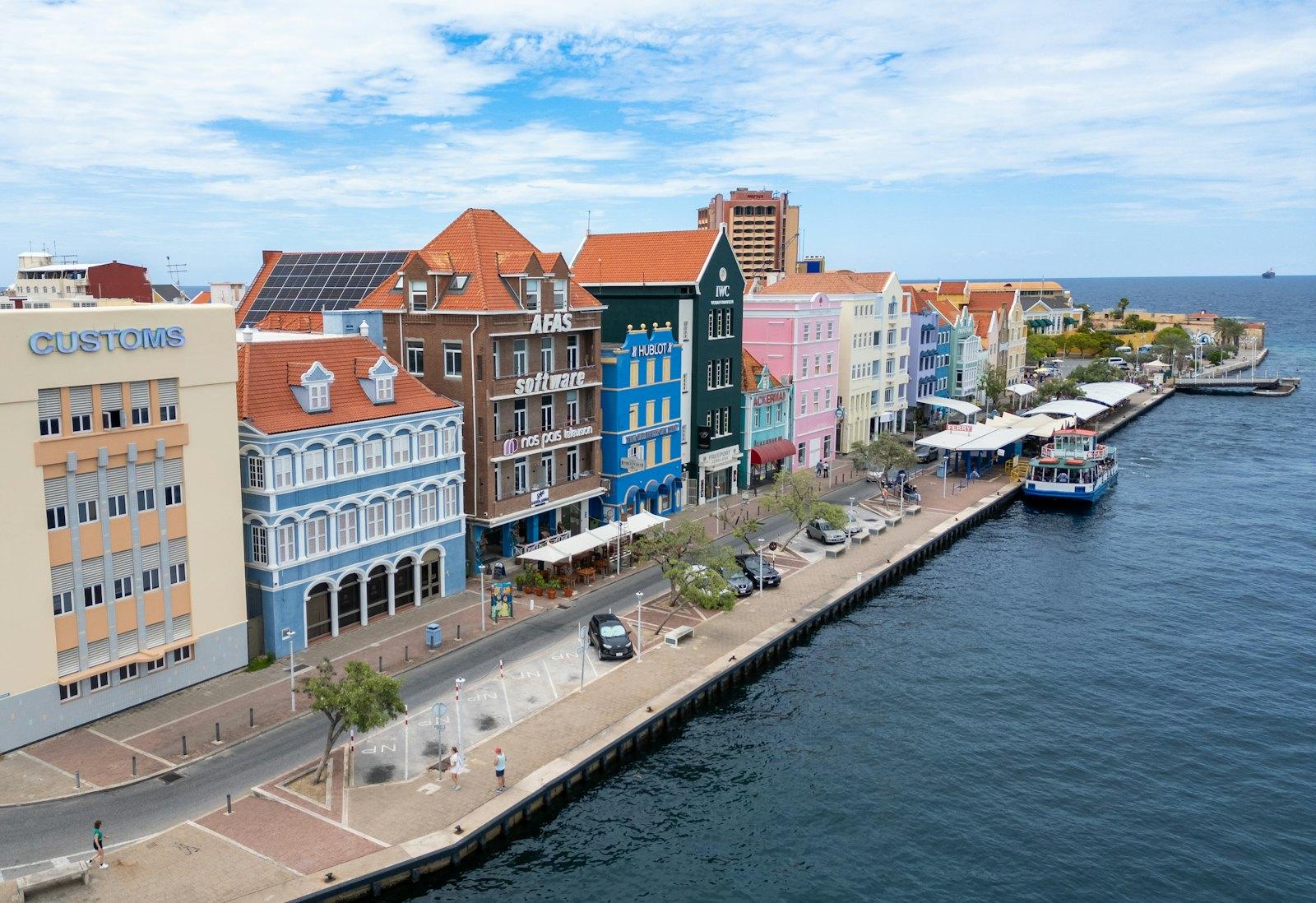
A sun-soaked Dutch Caribbean island of pastel colonial streets, hidden coves, and crystal clear reefs, with a relaxed, multicultural spirit.
- Best time to visit: February to September
- Daily budget (budget traveller): $90 to $250 USD
- Ideal trip length: 5 to 7 days
Lying south of the hurricane belt off the coast of Venezuela, Curaçao is a constituent country of the Kingdom of the Netherlands with a character all its own. The capital, Willemstad, is a UNESCO-listed harbour town whose candy-coloured Dutch merchant houses, floating pontoon bridge, and lively waterfront give it a personality quite unlike anywhere else in the Caribbean. Beyond the city, the island is arid and rugged, with cactus-studded hills, dramatic limestone coastline, and more than thirty beaches tucked into small coves, many of them backed by turquoise water perfect for snorkelling. Conversations flow easily between Papiamentu, Dutch, English, and Spanish, reflecting a blend of African, European, Latin American, and Caribbean heritage that shapes the food, music, and humour of daily life. For the solo traveller, Curaçao is welcoming and easy to navigate, with a good choice of boutique stays in Willemstad, a strong dive and snorkel scene, and a laid-back rhythm that makes it simple to strike up a conversation at a beach bar or a market stall.
Curaçao is the Caribbean island that doesn't try to be a postcard. Willemstad, a UNESCO-listed harbour of Dutch gables in sorbet colours, still works like a real port: Venezuelan boats unload produce at the floating market, the Queen Emma pontoon bridge swings open for tankers, and office workers queue for pastechi at 7am. Cross the harbour on foot, walk Handelskade, then spend an afternoon in Scharloo among crumbling merchant mansions. You'll see why Dutch families have been coming for decades and most North Americans are only now catching on.
The rest of the island is dry, spiky and gorgeous. Think cactus hills, limestone cliffs, flamingo salt pans and more than thirty small beaches, most of them coves where you wade in from sand and are over a reef within five minutes. The west coast (Grote Knip, Playa Lagun, Playa Piskado, Playa Forti) is the star, and it is the reason a rental car is worth Cg 90-150 a day. The south-east around Mambo Beach and Jan Thiel is the social side, with beach clubs, dive shops and calm water. The wild north, Shete Boka and Christoffel Park, is for early starts and sturdy shoes.
For solo travellers it is an easy island. English and Dutch are everywhere, Papiamentu is the language of the jokes, and the 1.79 peg to the US dollar makes budgeting simple. It is not cheap, since almost everything is imported, but the habits that save money are easy: lunch at Plasa Bieu, free beaches, pastechi for breakfast. Base yourself in Pietermaai for nightlife you can walk home from, hire a car for the west, and join one boat day to Klein Curaçao. You'll have people to talk to by lunchtime.
Curaçao itinerary
Arrive, Handelskade and the bridge
Morning: Land at Curaçao International (CUR). Take the fixed-rate airport taxi to Pietermaai, about Cg 45-55. Drop bags, then grab a cheese pastechi and coffee for under Cg 8.
Afternoon: Walk Handelskade from Punda, cross the Queen Emma pontoon bridge on foot, and wander Otrobanda's lanes to Rif Fort. If the bridge is open for a ship, just watch it swing.
Evening: Dinner on the Handelskade waterfront at Gouverneur de Rouville. Then live music at the Blues Bar at Avila Beach Hotel and an easy early night.
Punda, Scharloo and sunset in Otrobanda
Morning: Floating Market at 7am for Venezuelan fruit and fish, then Mikve Israel-Emanuel Synagogue on a weekday (closed Saturdays) for the sand floor.
Afternoon: Lunch at Plasa Bieu before 1pm: keshi yena or kabritu stobá with funchi. Walk Scharloo's merchant mansions and climb Fort Amsterdam.
Evening: Cross the bridge for sunset at Rif Fort, then local beers at Netto Bar in Otrobanda.
West coast beach loop
Morning: Pick up your rental car early. Drive to Playa Piskado for turtles before the crowds, then snorkel at Playa Lagun.
Afternoon: Grote Knip for turquoise water (arrive before 10am for parking), then lunch at Jaanchies in Westpunt. Iguana soup or goat stew are the local orders.
Evening: Sunset at Playa Forti, watching the cliff jumpers. Drive back before full dark, since rural roads are poorly lit.
Christoffel Park and Shete Boka
Morning: Be at Christoffel National Park at opening, 6am, for the Mount Christoffel summit hike. You must start the climb before 10am because of the heat. Bring at least 2L of water per person and follow ranger instructions.
Afternoon: Drive to Shete Boka National Park on the north coast. Watch the waves boom into the cave at Boka Tabla from the rails. Do not swim.
Evening: Dinner back in Pietermaai, a long shower, and a quiet drink.
Klein Curaçao day trip
Morning: Take an early boat from the south coast to Klein Curaçao. Crossing times depend on the vessel and sea conditions, often about an hour or more. Day trips start from about US$150 with meals and selected drinks; confirm the package, departure point and return time when booking.
Afternoon: White sand, the red-and-white lighthouse, the shipwreck and snorkelling in water you can see 30m into. Strong sun, so wear a rash vest.
Evening: Return by around 5pm. Easy dinner at your hotel and early bed.
Dive, snorkel and Mambo Beach
Morning: Boat dive or shore dive at the Tugboat or Director's Bay with Ocean Encounters at Lions Dive. Snorkellers can stay at Playa Kalki or Blue Bay.
Afternoon: Beach chairs and lunch at Mambo Beach or Jan Thiel. Entrances cost a few guilders and a lounger costs more at clubs.
Evening: Sunset cocktails at Zanzibar, then the Mambo Beach Boulevard bars if you want company.
Blue Curaçao and departure
Morning: Landhuis Chobolobo for the Blue Curaçao story (weekdays, check hours). Hato Caves near the airport are an easy last stop if time allows.
Afternoon: Final pastechi and a walk through Scharloo. Return the rental car and be at CUR at least 3 hours before an international flight.
Evening: Fly out, or squeeze in one last sunset at Rif Fort if you have a late flight.
Best neighbourhoods
- Punda: The historic commercial heart of Willemstad on the east side of the harbour, with colourful Handelskade facades, the floating market, old fortifications, shopping streets, and the centuries-old synagogue.
- Otrobanda: The characterful 'other side' of the harbour, reached by the Queen Emma pontoon bridge, with narrow lanes of restored townhouses, museums, street art, and the Rif Fort waterfront.
- Pietermaai District: A revitalised stretch of colonial mansions just east of Punda, now home to boutique hotels, cocktail bars, and restaurants, and a favourite base for solo travellers who want nightlife within walking distance.
- Mambo Beach and Jan Thiel: The island's main resort-style beach zone on the southeast coast, with beach clubs, dive shops, calm swimming areas, and easy social energy.
- Westpunt: The quiet western tip of the island, known for dramatic cliffs, small fishing villages, snorkelling coves, sunset viewpoints, and access to Christoffel National Park.
Must-do experiences
- Wander Willemstad's Punda and Otrobanda: Stroll the pastel Handelskade, cross the Queen Emma pontoon bridge on foot, browse the floating market, and step inside the Mikve Israel-Emanuel Synagogue with its famous sand floor.
- Beach hop the west coast: Spend a day among the coves of Grote Knip, Kleine Knip, and Cas Abao, where turquoise water meets rocky cliffs and the snorkelling is superb.
- Snorkel with sea turtles: Slip into the calm water at Playa Lagun or Playa Piskado, two west coast spots where green and hawksbill turtles are commonly seen grazing near the shore.
- Hike Christoffel National Park: Start early to climb Mount Christoffel, the island's highest point, for sweeping views over the arid landscape and out to the sea, and watch for iguanas, goats, and birdlife along the trails.
- Watch the waves at Shete Boka National Park: Walk the rugged north coast to see the Atlantic surge into limestone caves at Boka Tabla, one of the island's most dramatic natural sights.
- Take a day trip to Klein Curaçao: Sail to the uninhabited island southeast of the mainland for white sand, a historic lighthouse, an old shipwreck, and some of the clearest water in the Caribbean.
Hidden gems
- The Scharloo district, a quieter quarter of grand 19th-century merchant mansions behind Punda, ideal for photography and a slow morning walk
- The salt ponds around Jan Kok and Sint Willibrordus, where flamingos often feed in the shallow water, best visited quietly in the early morning
- Playa Forti at sunset, a dramatic cliff-edged spot at the island's western end where locals gather to watch the sky change colour (enjoy the viewpoint without jumping from the cliffs)
- A tour of the Landhuis Chobolobo distillery, the historic country house where the island's famous Blue Curaçao liqueur is produced
Daily budget
- Accommodation: budget Cg 90-160 / night (guesthouse room, basic dive lodge), mid-range Cg 250-400 (Pietermaai boutique double), splurge Cg 700+ (Renaissance Wind Creek, Baoase). True hostels are rare. Pietermaai gives the best value mid-range and you can walk to Punda. Check whether the rate includes the hotel's service charge and tax.
- Food: budget Cg 50-80 / day (pastechi, snèk bars, Plasa Bieu), mid-range Cg 150-250 (one sit-down dinner), splurge Cg 450+ (waterfront tasting menus). Plasa Bieu in Punda serves local plates (keshi yena, kabritu stobá, fried fish with funchi) for roughly Cg 18-30. Go before 1pm, it closes mid-afternoon and is quiet on Sundays.
- Transport: budget Cg 10-30 / day (buses from Willemstad), mid-range Cg 90-150 (compact rental car with insurance), splurge Cg 450+ (private driver and guide). Buses skip most beaches and thin out on evenings and Sundays. The airport taxi to Pietermaai is a fixed rate, roughly Cg 45-55, so agree it before you get in.
- Activities: budget Cg 20-60 / day (free beaches, one park or museum), mid-range Cg 120-250 (Christoffel, Hato Caves, snorkel hire), splurge Cg 450+ (Klein Curaçao day, two-tank boat dive). Grote Knip, Kleine Knip and Playa Piskado are free. Klein Curaçao packages vary by operator, from about US$150 with meals and selected drinks. A two-tank boat dive is roughly Cg 150-190.
- Drinks & nightlife: budget Cg 15-30 (local Amstel Bright at a snèk), mid-range Cg 60-110 (Pietermaai bar crawl), splurge Cg 200+ (beach club cabana and cocktails). Beer is Cg 5-8 at local bars, cocktails Cg 14-22 at beach clubs. The Blues Bar at Avila Beach Hotel has live music most weekends. Taste Blue Curaçao at its source, Landhuis Chobolobo.
Where to stay
- Social hostel in Pietermaai (Cg 90-160 / night): Proper hostels are few, so look at budget dive lodges like Scuba Lodge & Suites, where the dive-shop crowd does the socialising and Punda is a short walk.
- Boutique hotel in Pietermaai District (Cg 250-400 / night): Look for a boutique hotel in Pietermaai's restored mansions, with restaurants and nightlife nearby. Check the property's exact location and facilities before booking.
- Apartment in Jan Thiel or Mambo Beach (Cg 270-450 / night): A kitchen and a pool help on longer stays. Close to beach clubs and dive shops, though you'll want a car for supermarkets.
- Splurge in Otrobanda harbour or a private beach resort (Cg 700-1,400 / night): Renaissance Wind Creek sits right by Rif Fort with pools and the pontoon bridge outside. Baoase Luxury Resort is the quiet design-led option.
What to eat
- Keshi yena: a signature dish of cheese rind or a cheese shell stuffed with spiced chicken or meat, olives, and raisins, then baked until golden
- Kabritu stobá: tender goat stewed slowly with herbs and spices, a hearty local classic usually served with rice and funchi
- Pastechi: crisp, golden fried pastries filled with cheese, ham, tuna, or beef, eaten at any time of day as a snack or breakfast
- Funchi: a cornmeal side similar to polenta, served with stews and fried fish, best tried at a local lunch spot such as the Plasa Bieu food stalls in Punda
Day trips
- Klein Curaçao (About 2 hours by boat): An uninhabited island with white sand, a lighthouse, a rusting shipwreck and some of the clearest snorkelling in the Caribbean. Wear a rash vest, there is little shade. Book a day boat with an operator such as Miss Ann or Mermaid Boat; trips start from about US$150 with meals and selected drinks. Most leave early from the south coast; confirm pick-up and inclusions when booking.
- West coast loop and Westpunt (About 1 hour by car): Playa Piskado, Playa Lagun, Grote Knip, Playa Forti and Christoffel National Park in one day. Start early and finish with sunset. Rental car or taxi. Public buses run to Westpunt but do not serve the coves. Christoffel adult visitor entry is about US$15; the park opens at 6am and summit climbs must start before 10am.
- Shete Boka and Hato Caves (30 to 40 min by car): Boka Tabla's wave-battered caves on the north coast, plus the limestone caverns at Hato close to the airport, the old home of the island's bats. Rental car. Adult visitor entry is about US$15 at Shete Boka (8am to 4pm, last entry 3pm) and US$10 at Hato Caves (guided tours roughly hourly from 9am to 3pm). Check holiday hours before you set off.
When to visit
- Winter high season (December - April): About 28-31°C; December can still be wet, with generally drier conditions from February. Crowds: Heavy, Dutch and North American winter escape. Reliable sun and the Carnival build-up (Grand Parade in mid February). Hotels peak, so book Pietermaai three months ahead.
- Early summer (May - June): 29-32°C, mostly dry, winds easing, sea around 27°C. Crowds: Moderate, quiet after Easter. The sweet spot. Calmer water for snorkelling, lower rates, and no queue at Grote Knip before 10am.
- Dutch summer (July - September): 30-33°C, humid, warmest and clearest sea (28-29°C). Crowds: Busy in July and August with Dutch school holidays. Hot but excellent for diving and Klein Curaçao. Book cars and boat trips early, and plan beach time for morning and late afternoon.
- Rainy season (October - November): About 28-31°C, humid, with short heavy showers; the wetter stretch often runs through December. Crowds: Low. Cheapest rooms and empty coves. Showers are brief, but some small restaurants close and boat trips can cancel in rough weather.
Entry rules for your passport
Visa rules for Curaçao depend on the passport you travel on. Check the official source before you book: Government of the Netherlands (NetherlandsWorldwide)
Getting there
Curaçao International Airport (CUR, at Hato) is about 12km and 15 minutes from Punda. Direct flights come from Amsterdam (KLM, around 9.5 hours), Atlanta and New York (Delta, JetBlue), Miami and Charlotte (American), Newark (United), Toronto (Air Canada), and Panama and Bogota (Copa, Avianca). Fill in the online Digital Immigration Card before you fly. Taxis outside arrivals charge government set rates, roughly Cg 45-55 (US$ 25-30) to Pietermaai or Punda, so confirm before you load your bags. Rental desks (Avis, Budget, Hertz and local firms) are at the airport, and booking ahead in high season saves money. Public buses run to Willemstad but are infrequent and not practical with luggage.
Getting around
Willemstad's historic centre is compact and walkable, and the pontoon bridge is free for pedestrians, though it swings open for passing ships, so allow a little extra time. Beyond the city, a rental car is by far the easiest way to reach the west coast beaches, national parks, and viewpoints, and driving is on the right with generally good main roads, though lighting can be poor at night in rural areas. Local minibus services and public buses connect Willemstad with some parts of the island, but they are limited in the evenings and on Sundays and rarely serve the more remote beaches. Taxis operate on set government rates and are reliable but pricey for long distances, so agree on the fare before you set off. Curaçao International Airport (Hato) is a short drive from the centre of Willemstad. For Klein Curaçao, book a boat day trip, which usually departs from the southern coast near Jan Thiel. Many beaches charge a small entrance or facilities fee, so carry some cash.
Safety
Curaçao is generally safe for solo travellers, and tourist areas are well used to visitors. The most common issue is petty theft, especially break-ins at beach car parks and rental cars, so never leave valuables visible in a parked vehicle and bring only what you need to the beach. Take usual city precautions after dark, such as sticking to well-lit streets and using a taxi late at night. The sun is intense and the trade winds can mask how hot it feels, so use high SPF reef-safe sunscreen and drink plenty of water. Tap water is safe to drink. The sea on the north coast is rough, with strong currents and powerful waves, so only swim in the sheltered southern and western coves, wear reef shoes to avoid sea urchins, and use caution around cliff edges. Mosquitoes can carry dengue, so repellent is a good idea.
Solo travel tips
- Rent the car, but empty it: A car turns Curaçao from a pricey resort island into a beach-hopping island. Break-ins at beach car parks are the main crime, so leave nothing visible, empty the glovebox and leave it open, and carry your passport and phone with you.
- Base in Pietermaai: Walk to Punda in 10 minutes, eat and drink on the same few streets, and get home on foot. It's far easier alone than a beach-resort bubble 20 minutes from anywhere.
- Join one group day: Klein Curaçao boats, dive shops (Ocean Encounters, Go West Diving) and snorkel tours are where solos meet each other. One day out is enough to have beach and dinner plans for the week.
- Don't swim at Shete Boka or jump off Playa Forti alone: The north coast has rogue waves and no lifeguards. The Playa Forti jump is for locals who know the water. Stay behind the rails, and take a guide if you want to try.
- Solo female travellers: Curaçao is comfortable for women alone. Use the usual city rules at night, take taxis rather than walking unlit roads outside Pietermaai and Punda, and watch your drink at crowded beach clubs.
- Plan around Sundays: Many Willemstad shops and restaurants shut on Sunday and the buses thin out. Make it your beach or hike day, and stock up on water and cash on Saturday.
Cultural etiquette
- Greet before you ask. A 'bon dia' or 'bon tardi' to shopkeepers and drivers goes a long way, and 'danki' means thanks.
- Cover up away from the beach. Swimwear in Punda, restaurants and shops is frowned on, and cover shoulders for the synagogue.
- Never touch turtles, coral or iguanas. Don't stand on reef while snorkelling, and don't feed wildlife.
- Respect the Sabbath. Mikve Israel is closed Saturdays, and many shops and restaurants close or shorten hours on Sundays.
- Service is on the slow side by design. Don't rush your table, ask for the bill when you are ready.
- Restaurants often add a service charge of 10-12%. Check the bill and add a small extra only for great service.
- Drive calmly. Locals use the horn to say hello, and goats, iguanas and potholes are common on rural roads.
Frequently asked questions
How do I get from the airport to Willemstad?
Curaçao International Airport is a short drive from Willemstad, usually 15 to 25 minutes depending on traffic. Taxis run on set rates by destination, so confirm the fare before you leave, and your accommodation can often arrange a pick-up in advance. If you plan to rent a car, the major rental desks are at or near the airport.
How many days do I need in Curaçao?
Five to seven days lets you explore Willemstad at an easy pace, spend a couple of days on the west coast beaches and national parks, and add a Klein Curaçao day trip or some diving without rushing.
When is the best time of year to visit Curaçao?
The island is dry and sunny for most of the year and sits outside the main hurricane belt. February to September is generally the driest stretch, while the rainier months tend to fall between October and January. The busiest and priciest period is usually mid-December to April, so shoulder months can offer better value.
What currency is used and can I pay by card?
Curaçao uses the Caribbean guilder (XCG), which replaced the Netherlands Antillean guilder in 2025 and is pegged to the US dollar. US dollars are widely accepted in tourist areas, and major credit cards work in hotels, restaurants, and larger shops. Carry some cash for small beach entrance fees, snack stalls, and local eateries.
Do I need to rent a car in Curaçao?
If you want to visit the west coast beaches, national parks, and viewpoints at your own pace, a rental car is the most practical option. If you plan to stay in Willemstad and Pietermaai and take organised tours, you can manage without one, using taxis and walking for short hops.
What languages are spoken in Curaçao?
Papiamentu, Dutch, and English are the official languages, and Spanish is also widely understood. English is spoken in hotels, restaurants, and tourist services, and a few words of Papiamentu, such as bon dia for good morning, are always appreciated.
Is Curaçao safe for solo female travellers?
Yes, Curaçao is generally considered a comfortable destination for solo female travellers, with friendly locals and a well-developed tourism infrastructure. Standard precautions apply: avoid isolated beaches at night, keep valuables out of parked cars, watch your drinks in bars, and use a taxi after dark.
What entry rules apply to travellers visiting Curaçao in 2026?
Curaçao is part of the Kingdom of the Netherlands but is not part of the Schengen Area, so Schengen rules do not apply. Many nationalities, including citizens of the US, UK, Canada, and the EU, can generally enter without a visa for short tourist stays. You will normally need a passport valid for the length of your stay, proof of onward or return travel, and the mandatory Digital Immigration Card, completed at dicardcuracao.com within the seven days before departure. Requirements can change and vary by nationality, so always check the official Government of Curaçao immigration website and your own government's travel advice before you book.
Tours and activities in Curaçao | Curaçao in 2 days | Curaçao in 3 days | Curaçao in 4 days | Curaçao in 5 days | Curaçao in 7 days
Can't decide? Compare Curaçao with...
Joy Plus home | Destinations | Itineraries | Activities | Flights | Budget planner | Calendar | Map | Blog | Lifetime access