Destinations / Africa
Dakar, Senegal travel guide
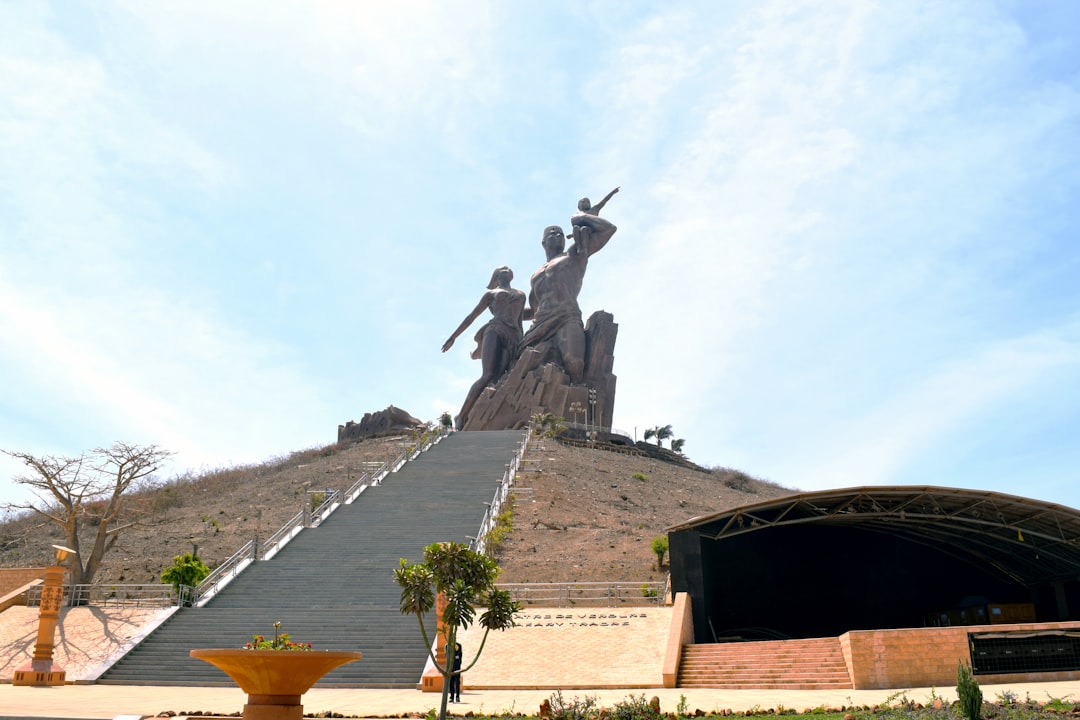
West Africa's edge-of-the-continent capital: Atlantic surf, Gorée Island, mbalax music and the African Renaissance Monument.
- Best time to visit: November-May
- Daily budget (budget traveller): $70 to $150 USD
- Ideal trip length: 3 to 4 days
Dakar sits on the Cap-Vert peninsula, the westernmost point of mainland Africa, where baobabs meet Atlantic surf and French colonial boulevards meet Wolof street markets. It's one of West Africa's most dynamic cities: the sobering history of Gorée Island, the colossal African Renaissance Monument, world-class surf breaks, and a music and fashion scene that punches far beyond its size.
Dakar sits on the tip of the Cap-Vert peninsula, the westernmost point of mainland Africa, and it feels like a city that knows it. French colonial boulevards in Plateau run into the noise of the street stalls around Sandaga, whose historic market hall was demolished in August 2021 and is still being rebuilt. Pirogues pull up on Ngor beach below surfers paddling out to the same reef Bruce Brown filmed for The Endless Summer in 1966. Car rapides painted in saints and slogans rattle past glass towers. It is loud, warm and a little chaotic, with the kind of hospitality Senegalese call teranga. Within an hour of landing, someone will have greeted you, asked where you are from and offered you tea.
Plan around four things. First, Gorée Island, a 20-minute ferry from the Gare Maritime, with the House of Slaves and a car-free lane of ochre houses and bougainvillea. Second, the African Renaissance Monument, a 52-metre bronze giant on the Ouakam hills with the best view of the whole peninsula. Third, the water: surf at Ngor and Ouakam, a pirogue to Île de Ngor, grilled capitaine at Almadies. Fourth, the music. Mbalax is the city's sound, and the clubs in Medina and Almadies do not warm up before midnight. Add the Musée des Civilisations noires, Kermel's market hall and Lac Rose, whose pink colour returned in March 2025 and shows best around midday in the dry season, and a week is easy to fill.
Dakar is not a polished city, and it rewards people who go with the flow. Traffic is heavy, fares are negotiated, and half of a good day is unplanned: a plastic stool at a gargote, a fataya from a street stall, a stranger pointing you to the right sept-place. Bring small CFA notes, a few words of Wolof and patience for the 5pm gridlock. In return you get one of Africa's best food, art and music cities, with a coastline you can walk. This guide gives you the lines, the fares and the timings that make the difference.
How many days in Dakar?
For Dakar, we recommend 3 to 4 days. With more time, add a day trip to Bandia Reserve or Toubab Dialaw.
| Trip length | What you'll see | Itinerary |
|---|---|---|
| 2 days | Plateau and Corniche sunset; Gorée Island | Dakar in 2 days |
| 3 days · Recommended | Adds: Monument, Ouakam and Almadies sunset | Dakar in 3 days |
| 4 days · Recommended | Adds: Museums, markets and mbalax | Dakar in 4 days |
| 5 days | Adds: Lac Rose | Dakar in 5 days |
| 7 days | Adds: Ngor island and surf; Medina, craft markets | Dakar in 7 days |
Dakar itinerary
Arrive, settle, Plateau and Corniche sunset
Morning: Land at AIBD, grab an Orange SIM, then take the TER to Gare de Dakar. Drop bags in Plateau and have a Café Touba from a street vendor on Place de l'Indépendance (100-200 CFA).
Afternoon: Walk the colonial core: Cathédrale du Souvenir Africain, then Marché Kermel's iron market hall. Lunch at Chez Loutcha, Cape Verdean plates and thieboudienne.
Evening: Yango to Soumbédioune on the Corniche Ouest. Watch the pirogues come in, eat fish grilled on the beach, and go to bed early.
Gorée Island
Morning: Be at the Gare Maritime for an early sailing (the 20-minute crossing costs about 5,200 CFA return for non-residents). Go straight to the House of Slaves (about 1,500 CFA) before the school groups.
Afternoon: Climb to the Castel viewpoint, then the IFAN Historical Museum and the Women's Museum. Lunch on grilled fish near the jetty, and swim off the small beach.
Evening: Take a late afternoon ferry back and shower. Eat dibi (grilled lamb with onions and mustard) from a Plateau street stand for 2,000-3,000 CFA.
Monument, Ouakam and Almadies sunset
Morning: Yango to the African Renaissance Monument, ideally before 11am. Climb to the observation deck (about 3,000 CFA), then walk to the Mamelles lighthouse for the second view.
Afternoon: Lunch thieboudienne at a gargote in Ouakam. Walk down to the Mosque of the Divinity on the shore (look from the beach, dress modestly, low tide is best).
Evening: Taxi to Pointe des Almadies, the westernmost tip of the continent, for sunset. Dinner of grilled capitaine at an Almadies beach restaurant.
Museums, markets and mbalax
Morning: Musée des Civilisations noires at opening (about 5,000 CFA, closed Mondays) for the best overview of African art and history. Then the IFAN Museum of African Arts nearby.
Afternoon: Bargain at the street stalls around Sandaga for wax fabric and leather, starting at 40% of the first price. Cool off with ginger juice and a fataya.
Evening: Rest, then go late (after 11pm) to Thiossane in Medina or another live mbalax club. Check the weekly lineup and take a Yango home.
Lac Rose
Morning: Leave around 8:30am by Yango or a hired taxi with a waiting driver (about 25,000-40,000 CFA round trip, 1 hour each way). Reach the lake around midday, when the pink colour shows best in the dry season.
Afternoon: Walk the salt flats and watch harvesters, who rub their arms in shea butter. Lunch lakeside, then a dune quad ride if you want (15,000-25,000 CFA).
Evening: Back by 5pm to beat the traffic. Dinner and a beer at a beach bar in Yoff.
Ngor island and surf
Morning: Surf lesson at Ngor with a local school, 8am for the best wind. The reef is rocky, so take booties and listen to your coach.
Afternoon: Take a pirogue from Ngor beach to Île de Ngor (about 1,000-2,000 CFA return, agree it first). Snorkel, lunch on the sand, walk the painted lanes.
Evening: Return before the last pirogue. Sunset drinks at a Ngor beach bar and a seafood dinner.
Medina, craft markets, depart
Morning: Walk Medina with a local guide (murals, Tilène market, the Grande Mosquée from the outside). Have a late coffee and sweets on a side street.
Afternoon: Browse the craft stalls at Soumbédioune and the Village des Arts for woodwork, paintings and leather. Pack and have a last thieboudienne.
Evening: Yango to Gare de Dakar for the TER to AIBD, leaving 3 to 4 hours before the flight.
Best neighbourhoods
- Plateau: The colonial downtown core with markets, museums and port views.
- Almadies: The western tip: surf beaches, seafood restaurants and nightlife.
- Ngor & Yoff: Fishing-village beaches with pirogues, laid-back bars and island views.
- Medina: Dense, characterful old quarter with markets and street life.
- Ouakam: Home of the African Renaissance Monument and Mosque of the Divinity.
Must-do experiences
- Gorée Island: Take the 20-minute ferry to the UNESCO-listed island and the haunting House of Slaves.
- African Renaissance Monument: Climb to the 52-metre bronze statue for the city's best panorama.
- Surf at Ngor or Vivier: Ride the same waves featured in The Endless Summer.
- Marché Kermel & the Sandaga quarter: Browse Kermel's covered market and the street stalls around Sandaga, whose historic hall was demolished in 2021 and is being rebuilt.
Hidden gems
- Île de Ngor's beach cafes and snorkeling, 10 minutes by pirogue.
- The Mosque of the Divinity on the Ouakam shoreline at low tide.
- Lac Rose's salt harvesters, an hour north: the pink colour, lost after floods in 2022, returned in 2025 and shows best around midday in the dry season.
- Live mbalax at a Thiossane-style club after midnight on weekends.
Daily budget
- Accommodation: budget 12,000-25,000 CFA / night (surf camp dorm or guesthouse), mid-range 55,000-95,000 CFA (boutique double, Plateau or Ngor), splurge 130,000+ CFA (Terrou-Bi, Radisson Blu Sea Plaza, King Fahd Palace). Ngor and Ouakam give the best value outside Plateau. Rooms on Gorée are charming but few, and sell out on weekends.
- Food: budget 6,000-10,000 CFA / day (gargotes, fataya, dibi, Café Touba), mid-range 18,000-30,000 CFA (one proper seafood dinner), splurge 50,000+ CFA (Almadies seafood, hotel dinner with wine). Thieboudienne at a local gargote is 1,500-2,500 CFA, at Chez Loutcha 4,000-8,000 CFA. Lunch is the main meal, order the plat du jour.
- Transport: budget 2,000-4,000 CFA / day (Dem Dikk bus, BRT, car rapide, shared taxi), mid-range 8,000-15,000 CFA (Yango or Heetch for most hops), splurge 45,000-70,000 CFA (car and driver for the day, Lac Rose round trip). Plateau to Almadies in a taxi is 4,000-6,000 CFA, less on Yango. Always settle the price before you get in, and avoid 4:30pm to 7:30pm if you can.
- Activities: budget 7,000-12,000 CFA / day (Gorée ferry 5,200 CFA return, House of Slaves, free beaches), mid-range 25,000-45,000 CFA (surf lesson, Monument, Musée des Civilisations noires), splurge 60,000+ CFA (private guide, Bandia safari, quad at Lac Rose). A 2-hour surf lesson with board is typically 20,000-30,000 CFA. The Monument is about 3,000 CFA for foreigners, the museum about 5,000 CFA, closed Mondays.
- Drinks & nightlife: budget 2,000-4,000 CFA (Gazelle or Flag beer, bissap, ginger juice), mid-range 10,000-20,000 CFA (Almadies cocktails, club entry), splurge 40,000+ CFA (rooftop at Terrou-Bi, table service). Senegal is mostly Muslim, so local bars are low-key and few. A beer is 1,000-1,500 CFA in a bar and 3,000+ at hotels. Clubs fill after midnight.
Where to stay
- Social hostel in Ngor (12,000-25,000 CFA / night): Ngor Surfcamp and the surf guesthouses around the village are steps from the pirogues and the reef. Shared dorms, group dinners and lessons make it the most social spot in the city.
- Boutique hotel in Plateau (55,000-95,000 CFA / night): Hôtel Djoloff is a calm courtyard hotel in the colonial core, close to Kermel market, the ferry terminal and the best restaurants. Walkable by day, short Yango rides at night.
- Apartment in Ouakam or Mermoz (30,000-60,000 CFA / night): Residential streets with local cafes and gargotes at the door, and an easy ride to the Monument and Almadies. Best value for 5+ night stays, often with a kitchen and a balcony.
- Splurge in Corniche Ouest / Almadies (130,000-250,000 CFA / night): Terrou-Bi and Radisson Blu Sea Plaza sit right on the ocean with pools and sea views. King Fahd Palace in Almadies has the biggest grounds. All three have decent restaurants and secure transport.
What to eat
- Thieboudienne, Senegal's national fish-and-rice dish
- Yassa poulet, lemon-and-onion marinated chicken
- Fresh grouper and capitaine grilled at Almadies beach shacks
- Café Touba, the local spiced coffee, from a street vendor
Day trips
- Lac Rose (Lac Retba) (35km, about 1 hour by road): A shallow salt lake ringed with dunes. The pink colour was lost after floods in 2022 and returned in March 2025. Salt harvesters work in the shallows, and the Dakar Rally used to finish here. Go around midday in the dry season for the colour, bring cash for the boat ride and quads. Hire a taxi with a waiting driver for 25,000-40,000 CFA round trip, or Yango one way. Public minibuses to Keur Massar are cheap but you will still need a taxi for the last leg.
- Bandia Reserve (65km, about 1 to 1.5 hours): A fenced private reserve with giraffes, rhinos, zebras, antelope and ancient baobabs. A guided 4x4 safari takes 2 to 3 hours and fits into a half day. Go early for the cooler air and active animals. Book a tour from Dakar for about 25,000-45,000 CFA including transport, or drive or taxi toward Mbour. Entry and safari alone are roughly 15,000-25,000 CFA depending on the operator.
- Toubab Dialaw (50km, about 1 hour 15): A cliff-top fishing village with painted houses, artists' studios and a big wide beach. It is a calm break from the city, great for a long lunch and a sunset walk, or an overnight. Taxi or Yango for about 25,000-35,000 CFA one way, or a sept-place from Petersen to Rufisque and another onward. Public routes are slow, so leave early.
When to visit
- Cool season (November - February): 18-27°C, dry, steady trade winds, cool evenings, some Harmattan dust haze in Dec and Jan. Crowds: Highest, European winter escapees and surf crowd. The best window for the city and the waves. Swells are strongest, the sky is clear, and the sea is cool (about 21°C) so bring a spring suit. Book Almadies and Ngor stays early for December.
- Warm dry season (March - May): 21-30°C, dry, sunny, warmer by May but breezy on the coast. Crowds: Moderate, easing off after Easter. The locals' pick. Rain is still months away, the ocean is warming up, and festivals fill the calendar. Ramadan runs about 8 Feb to 9 Mar in 2027 (daytime dining is quieter) and Tabaski is around 16 or 17 May, when the city empties for family visits.
- Rainy season (June - September): 26-33°C, humid, heavy downpours in August and September, flooded streets in low areas. Crowds: Low. Cheapest rooms and green hills, but sticky and muddy. Sea temperature peaks near 27°C, so swimming is lovely. Expect to wait out afternoon storms. Surf is mostly flat. Magal of Touba falls in this season (its date moves about 11 days earlier each year), and the roads to Touba jam up.
- Shoulder (October): 26-33°C, humidity fading, occasional late storms. Crowds: Low to moderate, early arrivals for the season. Underrated. The rains taper off, the peninsula is still green, and prices have not climbed yet. Swell starts to build toward the end of the month.
Entry rules for your passport
Visa rules for Senegal depend on the passport you travel on. Check the official source before you book: Embassy of Senegal in London
Getting there
Dakar's Blaise Diagne International Airport (DSS) is 45km east of the centre near Diass, and the old Yoff airport no longer handles commercial flights. The TER train connects AIBD to Gare de Dakar in about 55 minutes for 4,000 CFA in second class, as the airport extension only opened on 28 September 2026, so check the current timetable at the station, especially if you land late. A taxi from the airport to Plateau typically costs 20,000 to 30,000 CFA and takes 1 to 1.5 hours in traffic. Yango or Heetch is usually 12,000 to 20,000 CFA. Agree the fare before you get in, and avoid touts inside arrivals. Gorée ferries leave from the Gare Maritime near Place de l'Indépendance, and long-distance sept-places leave from the gares routières at Petersen and Pompiers.
Getting around
Dakar's Blaise Diagne airport is 45km east and, since 28 September 2026, linked by the TER train to the centre in about 55 minutes, for 4,000 CFA. In town, use registered taxis (agree the fare first) or ride-hailing apps like Yango and Heetch. The DDD ferry serves Gorée every hour or two, and sept-places shared taxis and the new BRT handle longer hops. Traffic is heavy at rush hours.
Safety
Dakar is one of West Africa's safer capitals, but petty theft happens around markets, the ferry terminal and crowded beaches, so keep valuables discreet. Avoid walking deserted beaches at night and use registered transport after dark. Ocean currents are strong at many beaches, so swim where locals do. Tap water is not recommended; stick to bottled.
Solo travel tips
- Fix the price before you move: Street taxis have no meters. Agree the fare before you get in, and expect to counter-offer at about 60% of the first quote. Or use Yango or Heetch, where the price is fixed in the app and you can share your trip.
- Greet first, always: A sincere 'Salaam aleikum' and 'Nanga def?' (how are you?) opens every conversation, and skipping it comes across as rude. Reply 'Maa ngi fi rekk' and 'Jërëjëf' for thank you. Greeting well changes the price you get and the welcome you receive.
- Handle faux guides with a smile: Around the ferry terminal, Sandaga and Gorée, friendly men may offer to guide you. A firm 'Non merci, pas aujourd'hui' while you keep walking works. If you want a guide, book one through your hotel or a licensed Gorée guide for 5,000-10,000 CFA.
- Stay at a surf camp to meet people: Ngor Surfcamp and the small guesthouses around Ngor and Yoff are the easiest place to meet other solo travellers. Group surf lessons, shared dinners and a pirogue to Île de Ngor are all low-pressure ways to find company.
- Solo female travellers: Dakar is manageable for women alone, but expect attention, and comments are usually harmless. Dress modestly beyond the beach (shoulders and knees), ignore catcalls, take Yango after dark, and avoid empty beaches at night. Ngor, Almadies and Plateau are the easiest areas.
- Use the Corniche on weekends: On Sunday mornings the Corniche Ouest fills with runners, fitness groups and families. It is the easiest, safest way to see local life, and a good place to meet people. Take a Yango to Soumbédioune and walk to the Monument side.
Cultural etiquette
- Greet everyone before you ask anything. 'Salaam aleikum', 'Nanga def?', a handshake and eye contact matter more than the question itself.
- Use your right hand to eat, pass money and shake hands. The left is considered unclean.
- Dress modestly outside the beach and surf zones, with shoulders and knees covered, especially around mosques and in Medina. Ask before entering any religious building.
- Ask before photographing people, and expect a request for payment around Gorée and Lac Rose. Never photograph the presidential palace, military or police.
- During Ramadan (in February and March), avoid eating, drinking or smoking in front of fasting people in daytime. Evening ndogou meals are a treat if you are invited.
- Bargain at markets and craft stalls, with a smile. Start around 40% of the first price, and walk away if it does not work, you will often be called back.
- If you are invited to share a meal, it is eaten from a communal bowl. Eat from your side, and accept at least one serving. Teranga means refusing hospitality is rude.
Frequently asked questions
Is Dakar safe for tourists?
Generally yes, by regional standards. Petty theft around Marché Sandaga, the ferry terminal and busy beaches is the main risk, so keep phones and bags close. Use registered taxis or ride-hailing at night, avoid empty beaches after dark, and you'll find Dakar welcoming and manageable.
How many days do you need in Dakar?
Three to four days. Allow a day for Gorée Island, a day for the Monument, markets and Plateau, a day for Ngor and Almadies beaches and surf, and a spare day for Lac Rose or a leisurely coastal loop. Dakar also works as a base for Saly day trips, and Saint-Louis, four to five hours north, makes a good overnight trip.
When is the best time to visit Dakar?
November to May, the dry season, with temperatures of 24 to 28°C, trade-wind breezes and almost no rain. June to October brings heat, humidity and the short rainy season, though the city stays lively. Harmattan dust haze can appear in December and January. Dakar hosted the Youth Olympic Games from 31 October to 13 November 2026, the first Olympic event held in Africa.
How do you get to Gorée Island?
Ferries leave from the Gare Maritime near Place de l'Indépendance roughly every 1 to 2 hours, taking 20 minutes and costing around 5,200 CFA return for non-residents. Go early to beat school groups and heat. The House of Slaves charges a small separate entry fee.
Is Dakar expensive?
Moderate for West Africa. Budget $70 to $150 a day. A thiéboudienne lunch runs 2,000 to 4,000 CFA, mid-range hotels $60 to $120, and taxis across town 2,000 to 5,000 CFA. Almadies restaurants and imported goods are pricier; local eateries are excellent value.
Can you surf in Dakar?
Yes, Dakar is a legendary surf destination, featured in The Endless Summer in 1966. Ngor Right and Left, Vivier, Ouakam and Yoff offer waves for all levels, with the best swells from November to March. Surf camps and board rental cluster around Almadies and Ngor.
Do you need a visa for Senegal?
Many nationalities, including EU citizens, Americans, Canadians and Britons, can enter Senegal visa-free for stays up to 90 days. Check current rules before travel, carry proof of onward travel, and note that a yellow fever certificate may be requested if arriving from an endemic country.
Tours and activities in Dakar | Dakar in 2 days | Dakar in 3 days | Dakar in 4 days | Dakar in 5 days | Dakar in 7 days
Joy Plus home | Destinations | Itineraries | Activities | Flights | Budget planner | Calendar | Map | Blog | Lifetime access